
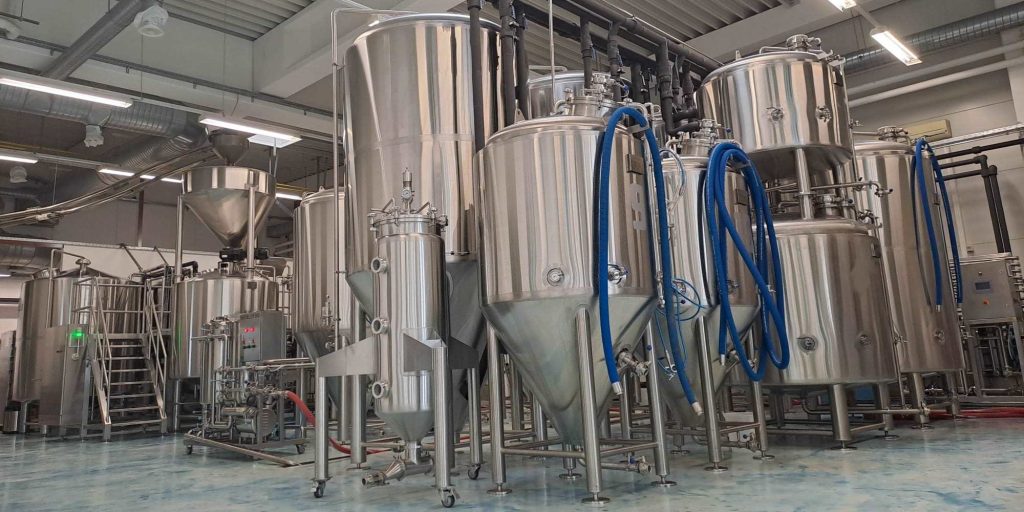
Beer production tanks Introduction
Beer production tanks are indispensable core equipment in the craft and industrial brewing systems. Their functions have long exceeded the scope of simple “storage containers” and are deeply involved in the entire process of beer flavor formation and quality stabilization. Every step, from the fermentation stage where sugars are converted into alcohol, to the clarification stage that removes impurities and optimizes taste, and then to the aging process where flavors settle and elevate, relies on the precise support of professional production tanks.
The rationality of tank design, safety of materials, and stability of performance directly determine the fermentation efficiency, flavor layers, hygiene standards, and batch consistency of beer. Whether you are a seasoned brewer with years of experience pursuing flavor innovation, or a passionate novice entrepreneur building a small craft brewery, choosing a set of high-quality production tanks that suit your brewing needs is a crucial prerequisite for achieving your brewing goals.
With years of technical accumulation in the brewing equipment field, strict production standards, and customized service capabilities, SKE provides reliable and practical beer production tanks for brewers worldwide, ensuring the integrity of high-purity raw materials like pharmaceutical purified water and helping every drop of craft beer showcase its unique charm.
Types of Beer Production Tanks
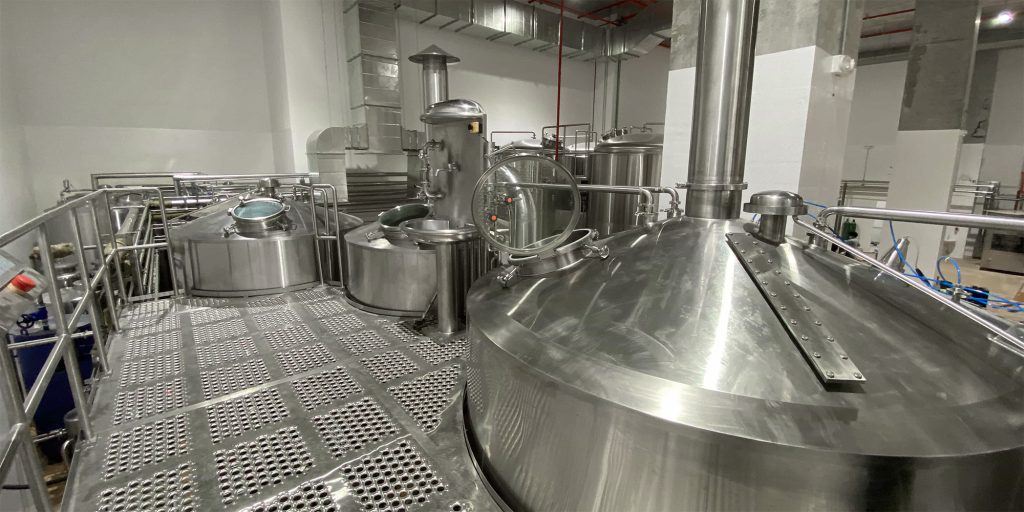
The complexity of the beer brewing process determines that beer production tanks must be subdivided by function. Each type is designed for specific process links to accurately match different needs in the brewing process. Combining mainstream industry processes and personalized brewing scenarios, SKE offers a full range of customized storage tanks. The core types and their functions are as follows:
Fermentation Tanks
As the “core engine” of beer brewing, fermentation tanks are key equipment for converting sugars into alcohol and carbon dioxide. Their design directly affects fermentation efficiency and the production of flavor substances. SKE fermentation tanks are equipped with a precise temperature control system, which can stably maintain the temperature inside the tank within the range of 1-21℃ according to the fermentation requirements of different beer styles (such as Ale and Lager), avoiding fermentation abnormalities caused by temperature fluctuations.
The tank is equipped with a high-efficiency stirring device that can evenly mix wort and yeast, enhance yeast activity, accelerate the fermentation process, and reduce the accumulation of local metabolites to ensure uniform beer flavor. In addition, the tank is reserved with sampling ports, pressure monitoring ports and other interfaces, facilitating brewers to real-time monitor fermentation progress and adjust process parameters to support precise brewing.
Bright Beer Tanks
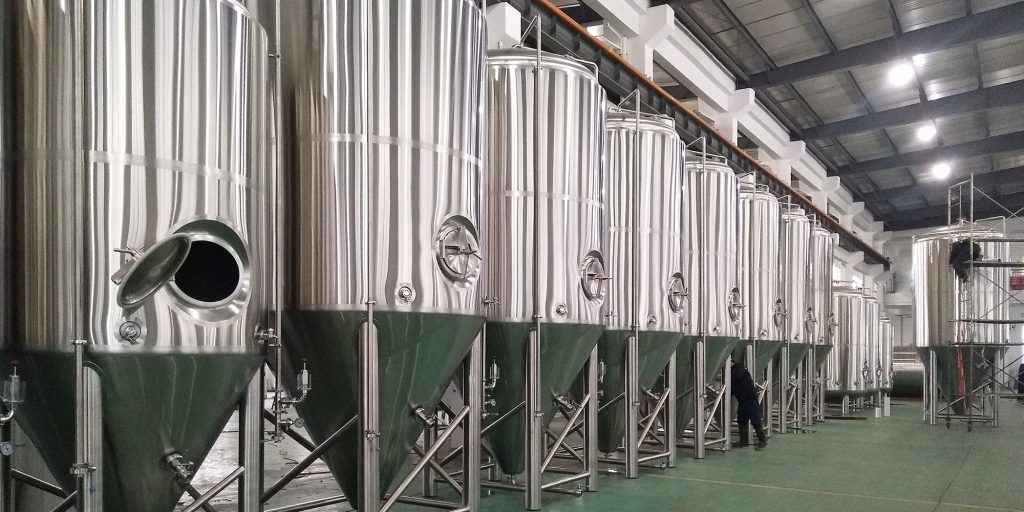
After fermentation, the beer still contains yeast residues, proteins and other impurities, which need to be transferred to bright beer tanks for subsequent treatment to prepare for the packaging stage. SKE bright beer tanks adopt a closed design to effectively isolate external air and pollutants, preventing beer oxidation and deterioration.
The tank is equipped with a low-temperature clarification system that promotes impurity sedimentation by controlling the low-temperature environment. At the same time, it can be connected to a carbonation device to accurately adjust the carbon dioxide content of beer according to product requirements, endowing beer with an appropriate sense of bubbles and taste layers.
Compared with ordinary storage tanks, SKE bright beer tanks have an optimized tank structure with fewer dead corners, facilitating subsequent cleaning and disinfection and ensuring beer hygiene and safety.
Materials and Structure
The materials and structure of beer production tanks are the foundation for ensuring equipment service life, brewing safety, and beer quality. Adhering to the principle of “quality first”, SKE strictly controls material selection and structural design to ensure that each piece of equipment meets high industry standards.
Material Selection
Considering the acidic nature of beer, hygiene requirements during fermentation, and equipment durability, SKE beer production tanks are all made of food-grade 304 or 316L stainless steel. Among them, 304 stainless steel has excellent corrosion resistance and oxidation resistance, can resist the erosion of media such as wort and alcohol, and is non-toxic and harmless, without chemical reactions with beer, ensuring the pure taste of beer.
It is suitable for most conventional brewing scenarios. On the basis of 304 material, 316L stainless steel adds molybdenum element, which has better corrosion resistance. It is especially suitable for brewing high-acidity and high-alcohol beer, or for long-term storage scenarios, further extending the service life of the equipment. All stainless steel materials have passed food-grade certification, and their surfaces are polished to reduce impurity adhesion, facilitate cleaning, and eliminate pollution risks from the source.

Structural Design
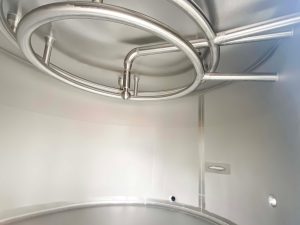
SKE beer production tanks adopt a modular structural design, balancing practicality and convenience. The tank body adopts an integrated forming process, and the welds undergo non-destructive testing to ensure airtightness and prevent liquid and gas leakage. The top of the tank is equipped with a safety valve and a pressure sensor, which can real-time monitor the pressure inside the tank to avoid equipment damage or beer deterioration caused by excessive pressure.
The bottom of the tank adopts an inclined design to facilitate sewage and slag discharge, reduce tank dead corners, and lower cleaning difficulty. In addition, according to customers’ on-site conditions and operating habits, vertical and horizontal structures can be customized, with adjustable brackets to improve the flexibility of equipment installation.
For large-scale production tanks, liquid level gauges and automatic control systems can also be configured to realize intelligent monitoring and regulation of tank operation status and reduce manual operation costs.
Importance of High-Quality Tanks
In the beer brewing process, high-quality beer production tanks are by no means “dispensable auxiliary equipment”, but core elements that determine brewing success or failure and ensure product competitiveness.
For breweries pursuing high-quality craft beer, choosing high-quality SKE tanks can empower brewing operations in multiple dimensions:
Firstly, ensuring the stability of the brewing process. The precise temperature control, pressure control, and airtight performance of high-quality tanks can effectively avoid the impact of external environmental fluctuations, equipment failures and other factors on fermentation, aging and other links, ensure consistent brewing parameters for each batch of beer, realize the standardization of product quality, and avoid losses such as batch differences and beer deterioration caused by equipment problems.
Secondly, safeguarding beer flavor and hygiene safety. High-quality stainless steel materials and dead-corner-free structural design can eliminate pollution of the beer by the tank itself, and effectively isolate the invasion of external microorganisms and air, preventing beer oxidation, deterioration, or bacterial growth, maximizing the retention of the original flavor and nutritional components of beer, and meeting food hygiene and safety standards.
Finally, improving brewing efficiency and comprehensive benefits. By optimizing structure and performance, SKE high-quality tanks can accelerate fermentation and clarification processes, shorten production cycles. At the same time, the equipment has high durability and low failure rate, reducing maintenance costs and downtime losses.
Long-term use can significantly improve the comprehensive production efficiency of breweries. Compared with ordinary storage tanks, the initial investment in high-quality tanks can be quickly recovered through stable product quality and efficient production processes, making it an important investment for the long-term development of breweries.
Maintenance and Upkeep
The maintenance and upkeep of beer production tanks are directly related to equipment service life, operation stability, and the sustainability of beer quality. Breweries need to establish a sound daily maintenance process, and do a good job in equipment cleaning, disinfection, and inspection in conjunction with professional guidance provided by SKE. The specific points are as follows:
Regular cleaning and disinfection are core links.
After each use, the tank must be emptied in a timely manner, and the inner wall of the tank, stirring device, interfaces and other parts should be rinsed with warm water to remove residual beer and impurities. Then, food-grade disinfectants (such as peracetic acid, chlorine dioxide) are used for immersion disinfection to kill potentially harmful microorganisms. After disinfection, rinse thoroughly with sterile water and drain. For parts such as tank dead corners and welds where impurities are likely to remain, special tools should be used for cleaning to avoid pollution risks caused by incomplete cleaning.
Daily inspection should not be ignored. Before daily operation, check whether the airtightness, pressure sensor, temperature control system, valves and other parts of the storage tank are working normally to ensure no liquid leakage, gas leakage, temperature out of control and other problems. Regularly inspect the surface of the stainless steel tank for scratches and rust. If problems are found, grind and repair them in a timely manner to prevent rust from expanding. For moving parts such as stirring devices and motors, regularly add lubricating oil to ensure smooth operation and reduce wear.
Targeted treatment is required for long-term idle maintenance. If the equipment is out of service for a long time, it should be thoroughly cleaned and disinfected, kept dry, all valves closed, and dust-proof and moisture-proof measures taken. Regularly check the inside of the tank for mildew and rust, and conduct a comprehensive maintenance every quarter to ensure that the equipment can operate normally when reactivated. SKE will provide customers with exclusive maintenance manuals, specifying the maintenance cycle, operation methods and precautions for different types of storage tanks, and provide professional technical support to help customers solve problems encountered in the maintenance process.
Conclusion
Beer production tanks run through the entire beer brewing process. Every link, from flavor generation in the fermentation stage, to quality optimization in the bright beer stage, and then to flavor elevation in the aging stage, cannot do without their precise support. High-quality beer production tanks are not only the basic equipment to ensure the smooth progress of brewing, but also the core carrier to improve beer quality and build product competitiveness. Understanding the functions, materials and structural characteristics of different types of tanks, and choosing suitable equipment according to their own brewing needs, is a necessary course for every brewer.
SKE always takes customer needs as the core, and provides high-quality beer production tanks for breweries around the world with professional R&D capabilities, strict production standards, comprehensive customized services and after-sales support.
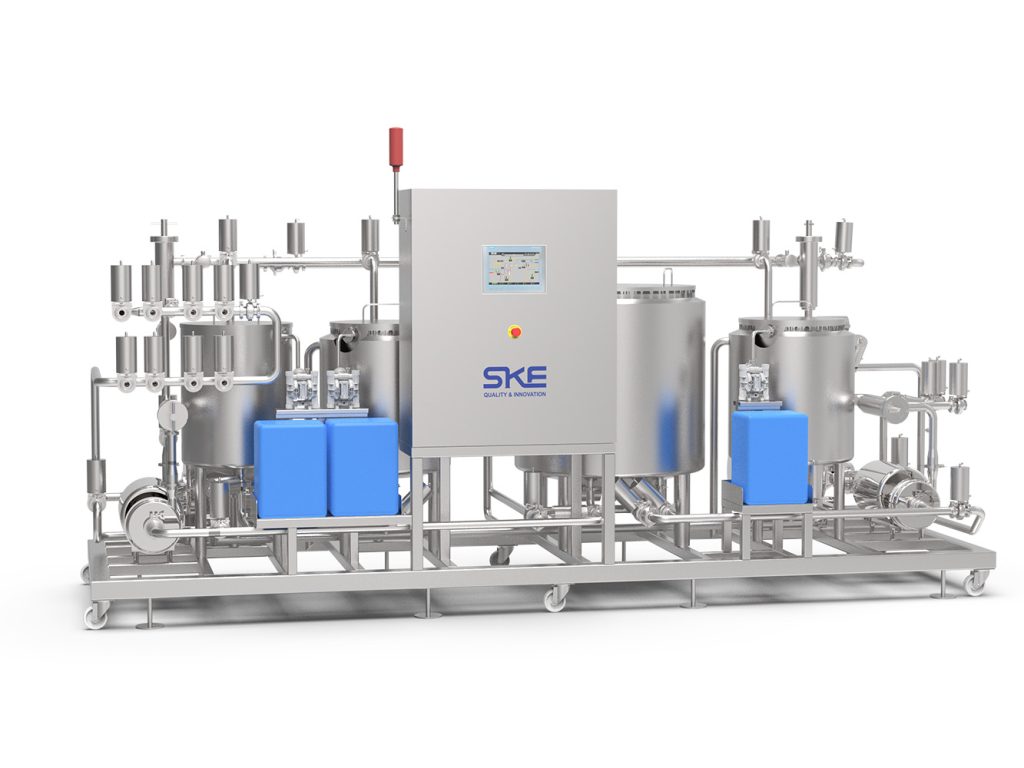
Whether it is the personalized needs of small craft workshops or the large-scale production needs of large breweries, SKE can tailor exclusive equipment solutions, providing full-process services from equipment design, production and manufacturing to installation, commissioning and maintenance guidance.
Choosing SKE beer production tanks means choosing stable brewing guarantee, excellent product quality and long-term development potential, helping you go further on the road of craft brewing and produce high-quality beer favored by the market.
Frequently Asked Questions (FAQs)
What is a beer production tank?
A beer production tank is a special container used in links such as fermentation, clarification, aging, and storage in the beer brewing process. It is core equipment to ensure the smooth progress of the beer production process and stable product quality. Its functions cover the entire chain from sugar conversion, flavor generation to impurity removal and finished product storage. The material, structure and performance must strictly match the hygiene requirements and process standards of beer brewing, and play a decisive role in the production of high-quality craft beer.
What types of beer production tanks are available?
The core types include fermentation tanks, bright beer tanks and aging tanks. Each type corresponds to a specific brewing link: fermentation tanks are used to realize wort fermentation and convert sugars into alcohol and carbon dioxide; bright beer tanks are used for clarification and carbonation of fermented beer to prepare for packaging; aging tanks are used for secondary fermentation or aging of beer to improve flavor layers and mellow taste.
In addition, SKE can also customize supporting equipment such as mashing auxiliary tanks and finished product storage tanks according to customer needs, forming a complete brewing equipment system.
How to maintain beer production tanks?
The core lies in regular cleaning, disinfection and inspection: clean the tank body in a timely manner after each use to remove residual impurities and disinfect with food-grade disinfectants to avoid microbial growth; check whether the airtightness, temperature control system, valves and other parts are normal before daily operation; regularly maintain moving parts, add lubricating oil, and repair tank scratches and rust; take dry, dust-proof and moisture-proof measures when idle for a long time, and conduct regular comprehensive inspections.
SKE will provide exclusive maintenance manuals and technical support to help customers standardize the maintenance process.
Contact Us
For more details about SKE beer production tanks, customized solutions, quotation information, or consulting on equipment selection, installation and commissioning, maintenance and upkeep, please contact us through the following methods. We will provide you with personalized assistance and professional solutions:
-
Facebook: Follow our official Facebook account to get the latest product updates, brewing technology sharing and customer cases, and leave messages for interaction at any time;
-
Email: Send your inquiry to info@skeequipment.com, and we will reply to your email within 24 hours with a detailed explanation;
-
Online Form: Please fill in the contact form at the bottom of this page, accurately provide your needs, contact information and region, and our professional consultant will contact you as soon as possible to tailor an equipment solution for you.
SKE looks forward to cooperating with every brewer who loves brewing, empowering the craft beer industry with high-quality equipment and jointly building a new height of flavor.