Introduction: The Backbone of Modern Manufacturing
In today’s highly competitive industrial landscape, the efficiency, quality, and cost-effectiveness of manufacturing operations are paramount. At the heart of every successful production line lies a robust suite of production machinery and equipment. These aren’t just tools; they are the sophisticated engines that transform raw materials into finished products, driving innovation and meeting consumer demands. From small-scale workshops to multi-national factories, the right selection and application of production machinery are crucial for achieving operational excellence and maintaining a competitive edge.
The role of advanced production machinery and equipment extends far beyond mere automation. It encompasses precision engineering, material handling, quality control, and even data analytics. Businesses, especially those in dynamic sectors like food and beverage processing, pharmaceuticals, and chemical industries, rely heavily on their equipment to ensure product integrity, safety, and compliance with stringent regulations. This blog post delves deep into the world of production machinery, exploring its significance, evolution, types, benefits, and how to make informed decisions when investing in these vital assets. We will also touch upon how leading providers like SKE are innovating in this space, offering cutting-edge solutions designed to elevate manufacturing capabilities.
Understanding the intricacies of various production machinery and equipment is essential for any business aiming to scale operations, reduce waste, and improve overall profitability. Whether it’s mixers, reactors, evaporators, pasteurizers, or filling machines, each piece of equipment plays a specific, critical role. The integration of these components into a seamless workflow is what differentiates a leading manufacturer from its competitors. As we navigate through the complexities of industrial production, the focus remains on how to leverage technology to achieve superior outcomes consistently and sustainably.
The Evolution of Production Machinery and Equipment
The journey of production machinery and equipment is a fascinating tale of human ingenuity, spanning from the rudimentary tools of the Industrial Revolution to the highly sophisticated, AI-driven systems of today. Early machines were primarily mechanical, powered by steam or water, and designed to automate labor-intensive tasks. Think of the textile looms and early printing presses that revolutionized craft production into mass manufacturing. These innovations laid the groundwork for future advancements, drastically increasing output and standardizing products for the first time.
The 20th century brought about significant leaps with the advent of electricity, enabling more powerful and precise machinery. Assembly lines became the norm, championed by figures like Henry Ford, and mass production became a reality. This era saw the rise of specialized production machinery for various industries, each designed to perform specific functions with greater speed and accuracy. The post-war boom further accelerated this, with new materials and engineering techniques pushing the boundaries of what these machines could achieve. The focus shifted from mere automation to optimization – how to make machines work faster, more reliably, and with less human intervention.
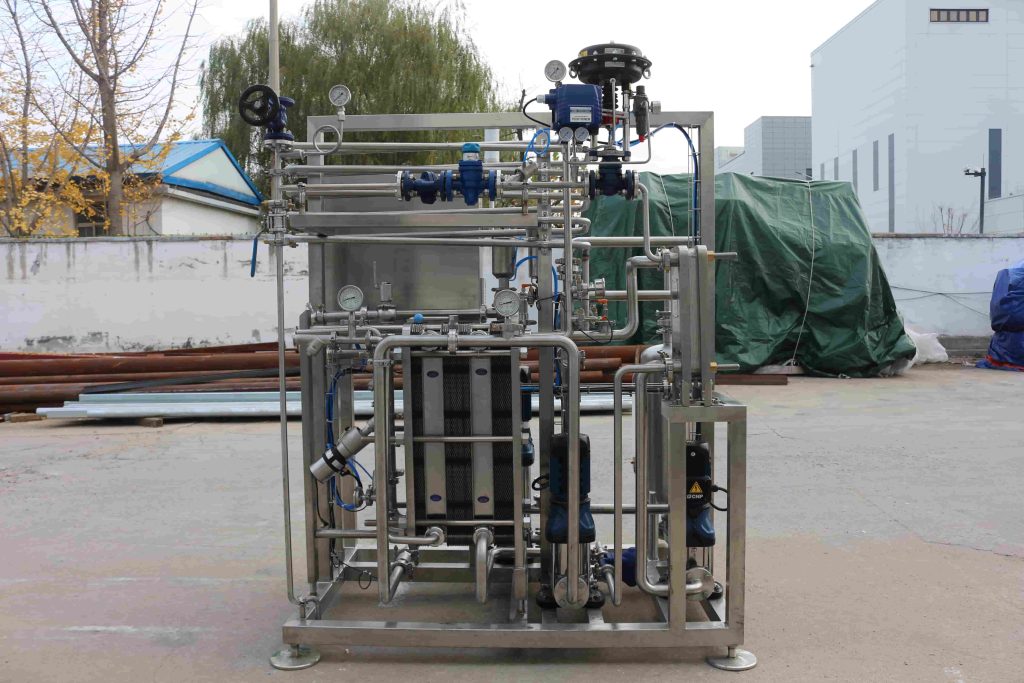
Today, we are in the midst of Industry 4.0, a revolution characterized by the integration of cyber-physical systems, the Internet of Things (IoT), and artificial intelligence into production processes. Modern production machinery and equipment are no longer isolated units; they are interconnected, smart devices that can communicate with each other, analyze data, and even self-optimize. This means predictive maintenance, real-time quality control, and unparalleled flexibility in manufacturing. For example, SKE’s advanced flash pasteurization systems exemplify this evolution, incorporating precise temperature control and automation for superior product safety and efficiency, moving far beyond the rudimentary heat exchangers of the past.
This ongoing evolution continues to reshape industries, allowing for customization on a grand scale, reducing waste through optimized resource utilization, and opening doors to innovative product development. The focus is now on smart factories where production machinery and equipment work in harmony to achieve maximum output with minimal downtime. The ability to monitor performance, diagnose issues remotely, and integrate seamlessly with enterprise resource planning (ERP) systems has elevated the role of these machines from simple tools to strategic assets crucial for growth and sustainability. Businesses that embrace this technological shift are better positioned to respond to market changes and secure a leading position in their respective sectors.
Key Types of Production Machinery and Equipment in Industry
The sheer variety of production machinery and equipment available today is vast, each category designed to address specific industrial needs and processes. Understanding these different types is crucial for businesses aiming to optimize their operations and select the most appropriate tools for their manufacturing goals. Generally, these machines can be categorized by their function within the production cycle, from raw material processing to final packaging.
Processing Equipment: This category forms the core of many industries, especially in food, beverage, chemical, and pharmaceutical sectors. It includes a wide array of machinery such as industrial mixers and blenders for homogeneous mixing, reactors for chemical transformations, evaporators for concentrating liquids, and heat exchangers for precise temperature control. SKE specializes in high-quality processing equipment, including innovative solutions like their vacuum evaporators which are critical for concentrating heat-sensitive products efficiently. The precision and reliability of this type of production machinery directly impact product quality and consistency.
Material Handling Equipment: Essential for the movement, storage, and control of materials throughout the manufacturing process. This includes conveyor systems, forklifts, robotics, and automated guided vehicles (AGVs). Efficient material handling minimizes manual labor, reduces the risk of damage, and speeds up the entire production flow. It’s the logistical backbone that ensures raw materials arrive at the right place at the right time and finished goods are moved to storage or shipment with ease.
Filling and Packaging Machinery: Once products are processed, they need to be packaged for distribution and sale. This involves an extensive range of production machinery such as filling machines (for liquids, powders, granules), capping machines, labeling machines, and various packaging equipment like cartoners and palletizers. The accuracy and speed of these machines are vital for maintaining product integrity, appealing presentation, and meeting market demands. For example, SKE provides advanced filling solutions tailored to hygienic industries, ensuring product safety and reducing waste during the packaging stage.
Quality Control and Inspection Equipment: Critical for ensuring that products meet specified standards and regulatory requirements. This includes vision inspection systems, metal detectors, X-ray inspection systems, checkweighers, and various analytical instruments. Integrating such production machinery into the production line allows for real-time monitoring and immediate identification of defects, preventing substandard products from reaching the market and protecting brand reputation.
Utility and Ancillary Equipment: While not directly involved in the product transformation, these pieces of equipment are indispensable for supporting the main production processes. This includes industrial boilers for steam generation, chillers for cooling, clean-in-place (CIP) systems for sanitation (an area where SKE offers robust solutions), air compressors, and water treatment systems. Their reliability directly impacts the uptime and efficiency of all other production machinery and equipment.
Each of these categories plays a vital role in creating a streamlined, efficient manufacturing environment. When considering new investments, businesses must look at how each piece of production machinery integrates with and supports the others, forming a cohesive and productive system. The right combination not only boosts output but also enhances safety, reduces operational costs, and ensures compliance with industry standards.
Benefits of Investing in Advanced Production Machinery and Equipment
Investing in advanced production machinery and equipment is not merely an expenditure; it’s a strategic move that yields substantial returns for businesses across all sectors. The benefits extend far beyond simple increased output, touching upon key areas of competitive advantage, operational efficiency, and long-term sustainability.
Increased Efficiency and Productivity: Modern production machinery is designed for speed and automation. By automating repetitive or complex tasks, businesses can significantly reduce cycle times and increase throughput. This means producing more in less time with fewer resources. For instance, an automated aseptic storage tank system from SKE not only maintains product sterility but also integrates seamlessly with filling lines, ensuring continuous, high-volume production without manual intervention, which dramatically boosts overall plant productivity.
Enhanced Product Quality and Consistency: Manual processes are prone to human error, leading to variations in product quality. Advanced production machinery offers precise control over parameters such as temperature, pressure, mixing ratios, and dispensing volumes. This consistency ensures that every product batch meets the exact specifications, leading to higher quality products and reduced waste from rejects. Digital controls and sensors on SKE’s equipment, for example, ensure unparalleled accuracy in processing, which is paramount in sensitive industries like dairy or pharmaceuticals.
Reduced Operational Costs: While initial investment might be significant, advanced production machinery often delivers considerable cost savings in the long run. These savings come from several avenues: reduced labor costs due to automation, lower energy consumption through more efficient designs, decreased raw material waste due to precision operations, and fewer product recalls due to improved quality. Furthermore, predictive maintenance capabilities minimize costly unplanned downtime.
Improved Safety for Workers: Many industrial processes involve hazardous conditions, repetitive motions, or heavy lifting. Modern production machinery can take over these dangerous tasks, significantly reducing the risk of workplace injuries. Robotic arms, automated conveying systems, and enclosed processing units create a safer working environment, protecting employees and reducing liability for the company.
Greater Flexibility and Scalability: Contemporary production machinery and equipment are often designed with modularity and adaptability in mind. This allows businesses to quickly reconfigure production lines for new products, adjust to changing customer demands, or scale operations up or down as needed. Such flexibility is crucial in today’s fast-evolving markets, enabling companies to remain agile and responsive.
Compliance with Industry Regulations: Many industries, particularly food, beverage, and pharma, are subject to strict regulatory standards regarding hygiene, safety, and traceability. Advanced production machinery, especially from reputable suppliers like SKE, is built to meet or exceed these standards, often featuring hygienic designs, validated processes, and comprehensive data logging capabilities to ensure full compliance and ease audit processes.
Ultimately, investing in advanced production machinery and equipment is about securing a future where operations are more efficient, products are superior, costs are lower, and the business is more resilient to market fluctuations. It’s an investment in growth, innovation, and sustained competitive advantage.
Choosing the Right Production Machinery and Equipment for Your Needs
Selecting the appropriate production machinery and equipment is a complex decision that can significantly impact a company’s success. It requires a thorough understanding of current and future operational needs, financial capabilities, and technological advancements. A hasty or uniformed decision can lead to inefficiencies, unnecessary costs, and missed opportunities. Here’s a detailed guide to navigating this critical selection process.
1. Define Your Production Requirements: Start by clearly outlining what you need the machinery to do. What products will be processed? What’s the required output volume (e.g., liters per hour, units per minute)? What are the specific processing steps (mixing, heating, cooling, filling)? What are the material properties (viscosity, abrasiveness, temperature sensitivity)? For instance, if you’re processing dairy, the need for stringent hygiene and precise temperature control will dictate specific requirements for pasteurization and storage equipment, where SKE’s expertise is particularly relevant.
2. Consider Scale and Future Growth: Think about your current production scale and anticipate future expansion. Will the equipment be able to handle increased demand without significant upgrades? Opting for modular or scalable production machinery can provide flexibility for growth, preventing the need for complete overhauls down the line. Investing in equipment that can accommodate future growth, even if it requires a slightly higher initial outlay, often proves more cost-effective in the long run.
3. Evaluate Automation Level: Determine the desired level of automation. While full automation offers maximum efficiency and reduced labor, it also comes with higher initial costs and potentially greater technical complexity. Semi-automated or manual solutions might be more suitable for smaller operations or specific tasks. Balance the benefits of automation against your budget and the complexity of your processes when assessing different types of production machinery.
4. Assess Quality, Reliability, and Durability: The longevity and consistent performance of your production machinery are crucial. Research the manufacturer’s reputation, read reviews, and ask for client testimonials. High-quality equipment from reputable suppliers like SKE a leading provider of production machinery for diverse industries, often means fewer breakdowns, less maintenance, and a longer operational life, even if the upfront cost is higher. Durability especially matters in continuous operation environments.
5. Energy Efficiency and Environmental Impact: In an era of rising energy costs and increased environmental awareness, opting for energy-efficient production machinery is a smart move. Look for equipment with low power consumption, optimized water usage, and designs that minimize waste. SKE is committed to developing sustainable solutions, offering equipment that not only performs efficiently but also helps reduce your carbon footprint.
6. Support and After-Sales Service: Excellent after-sales support is non-negotiable. What kind of warranty is offered? Is technical assistance readily available? What about spare parts accessibility and maintenance services? A reliable supplier provides comprehensive support, training for your staff, and prompt service to minimize downtime. This ensures your production machinery can operate smoothly for years.
7. Compliance and Safety Standards: Ensure that all selected production machinery and equipment comply with relevant industry regulations (e.g., FDA, USDA, CE) and safety standards. This is particularly important for food, beverage, and pharmaceutical industries where hygiene and product integrity are paramount. Proper certification ensures not only legal compliance but also the safety of your products and personnel.
8. Cost-Benefit Analysis: Beyond the initial purchase price, consider the total cost of ownership (TCO), which includes installation, training, energy consumption, maintenance, and potential downtime costs. A comprehensive cost-benefit analysis will help you understand the true value of the investment and project your return on investment (ROI).
By meticulously evaluating these factors, businesses can make informed decisions when acquiring production machinery and equipment, ensuring their investment contributes positively to their operational effectiveness and long-term success. The right choices now will lay a solid foundation for future growth and competitive advantage.
Maintenance and Longevity of Production Machinery
The lifespan and consistent performance of production machinery and equipment are heavily dependent on effective maintenance strategies. Neglecting maintenance can lead to unexpected breakdowns, costly repairs, significant downtime, and ultimately, a substantial loss in productivity and revenue. A proactive approach to machinery upkeep is essential for maximizing efficiency, ensuring safety, and extending the operational life of valuable assets.
Preventive Maintenance: This is the cornerstone of any robust maintenance program. Preventive maintenance involves scheduled inspections, cleaning, lubrication, and replacement of worn parts before they fail. By adhering to manufacturer-recommended maintenance schedules, businesses can identify potential issues early, addressing them before they escalate into major problems. This type of maintenance reduces the likelihood of sudden equipment failure, improves asset reliability, and helps in predicting the remaining useful life of components. For complex production machinery, detailed checklists and skilled technicians are non-negotiable.
Predictive Maintenance (PdM): Taking preventive maintenance a step further, predictive maintenance utilizes technology to monitor the condition of production machinery in real-time and predict when maintenance will be required. Techniques such as vibration analysis, thermal imaging, oil analysis, and acoustic monitoring can detect subtle changes that indicate impending failure. This allows maintenance to be performed precisely when needed, minimizing over-maintenance and preventing catastrophic failures. SKE’s modern equipment, for example, often incorporates sensors and data analytics capabilities that facilitate advanced PdM strategies, enhancing uptime and operational stability.
Corrective Maintenance: Also known as reactive maintenance, this type of intervention occurs after a failure has already happened. While inevitable at times, excessive reliance on corrective maintenance is inefficient and costly. It often leads to longer downtimes, higher repair costs, and potential secondary damage to other components. The goal of any modern facility should be to minimize corrective maintenance through robust preventive and predictive programs for their production machinery.
Routine Cleaning and Sanitation: Especially critical in the food, beverage, and pharmaceutical industries, regular cleaning and sanitation are paramount. Accumulation of product residue can not only affect product quality and hygiene but also lead to corrosion and premature wear of essential production machinery components. SKE designs its equipment with easy-to-clean surfaces and offers advanced CIP systems (Clean-in-Place), allowing for automated and highly effective cleaning without disassembly, significantly extending the life of the machinery and ensuring regulatory compliance.
Operator Training: A well-trained workforce is crucial for equipment longevity. Operators who understand the proper use, basic troubleshooting, and immediate reporting of anomalies can prevent minor issues from becoming major repairs. Regular training ensures that staff are up-to-date with best practices and can operate the production machinery safely and efficiently.
Spare Parts Management: Having a well-managed inventory of critical spare parts is vital. Delays in obtaining parts can prolong downtime. Businesses should work with their equipment suppliers to identify essential spares and maintain an appropriate stock level, balancing cost with availability. Timely replacement of wear-and-tear parts helps in maintaining the peak performance of your production machinery.
By integrating these maintenance strategies, businesses can significantly extend the operational life of their production machinery and equipment, reduce overall operating costs, and maintain consistent, high-quality production outputs. It’s an investment in the long-term health and profitability of the manufacturing operation.
The Future of Production Machinery and Equipment
The manufacturing landscape is undergoing a profound transformation, driven by emerging technologies that are redefining what’s possible with production machinery and equipment. The future promises even more intelligent, interconnected, and autonomous systems, fundamentally altering how goods are produced and delivered. This evolution, often referred to as Industry 5.0, emphasizes collaboration between humans and machines, hyper-personalization, and sustainable manufacturing practices.
Artificial Intelligence (AI) and Machine Learning (ML): AI is already revolutionizing production machinery by enabling predictive capabilities for maintenance, optimizing process parameters in real-time, and enhancing quality control through advanced vision systems. In the future, AI will allow equipment to learn from operational data, adapt to changing conditions, and even make autonomous decisions to improve efficiency and reduce waste. Imagine production lines that reconfigure themselves based on demand forecasts, or machines that fine-tune their operations to minimize energy consumption without human intervention.
Internet of Things (IoT) and Connectivity: The proliferation of IoT sensors will create vast networks of interconnected production machinery. This pervasive connectivity will enable seamless data exchange between machines, production lines, and enterprise systems, leading to a truly integrated manufacturing ecosystem. Real-time monitoring, remote diagnostics, and synchronized operations across different departments or even geographically dispersed plants will become standard. SKE is already incorporating smart sensors into its equipment, setting the stage for these advanced levels of connectivity.
Advanced Robotics and Cobots: While industrial robots have been a staple for decades, the next generation will feature more sophisticated, agile, and collaborative robots (cobots). These cobots will work alongside human operators, handling intricate tasks, providing assistance, and enhancing safety in ways previously unimaginable. Their ability to learn from demonstrations and adapt to unstructured environments will make production machinery more flexible and adaptable.
Additive Manufacturing (3D Printing): While not typically considered mainstream production machinery for mass production today, additive manufacturing is rapidly advancing. It offers unparalleled design freedom and the ability to produce complex geometries on demand, reducing waste and lead times for specialized components or even entire products. As speeds and material options improve, 3D printing could become an integral part of customizable production lines, complementing traditional manufacturing processes.
Sustainable and Green Manufacturing: The future of production machinery and equipment will heavily emphasize sustainability. This includes designing machines that are more energy-efficient, utilize fewer resources, and have a smaller carbon footprint. The focus will also be on circular economy principles, where equipment is designed for longevity, easy repair, and ultimate recyclability. SKE is actively at the forefront of this trend, developing solutions that not only meet production demands but also contribute to environmental responsibility.
Digital Twins and Simulation: The concept of a “”digital twin”” – a virtual replica of physical production machinery or an entire factory – will become more prevalent. These digital models allow manufacturers to simulate various scenarios, test new configurations, and predict equipment performance without impacting actual production. This capability will significantly reduce development costs, optimize operational parameters, and accelerate innovation.
The convergence of these technologies promises a future manufacturing world that is more efficient, resilient, and responsive to customer needs and environmental challenges. Businesses that embrace these advancements in production machinery and equipment will be well-prepared to thrive in the dynamic industrial landscape of tomorrow.
Conclusion: Driving Industrial Success with Production Machinery and Equipment
The journey through the world of production machinery and equipment reveals its undeniable and ever-growing importance in modern industry. From the foundational tools of early manufacturing to the sophisticated, smart systems of today, these machines are more than just assets; they are the strategic enablers of efficiency, quality, safety, and innovation. The right selection, diligent maintenance, and continuous upgrading of production machinery are paramount for any business aiming to achieve operational excellence and sustain long-term growth.
We’ve seen how the evolution of production machinery has led us to an era of unprecedented automation and intelligence, with technologies like AI, IoT, and advanced robotics shaping the factories of the future. The benefits of investing in cutting-edge equipment are clear: increased productivity, superior product quality, reduced operational costs, enhanced worker safety, and greater adaptability to market demands. Moreover, understanding the diverse types of equipment, from processing units like SKE’s specialized heat exchangers to crucial packaging and quality control systems, empowers businesses to build comprehensive and robust production lines.
For any manufacturing enterprise, making informed decisions about production machinery and equipment is a critical competitive differentiator. It involves careful consideration of current needs, future scalability, technological integration, and the level of support offered by suppliers. Companies like SKE stand at the forefront of this industry, providing not just machines, but complete solutions that are engineered for performance, reliability, and sustainability. Our commitment to innovation ensures that our clients receive production machinery that not only meets today’s stringent requirements but is also future-proofed for the challenges ahead.
As industries continue to evolve, the strategic role of production machinery and equipment will only become more pronounced. By embracing technological advancements and committing to best practices in equipment management, manufacturers can unlock new levels of potential, driving industrial success and contributing to a more efficient and sustainable global economy. The investment in quality production machinery is an investment in the future of your business.
Frequently Asked Questions About Production Machinery and Equipment
What is the primary role of production machinery in modern manufacturing?
The primary role of production machinery is to automate and optimize manufacturing processes, converting raw materials into finished products efficiently and consistently. It significantly increases output, ensures product quality, reduces labor costs, and enhances safety. For example, specialized equipment from SKE helps convert raw ingredients into commercial food products with high precision and hygiene.
How does advanced production machinery and equipment contribute to cost savings?
Advanced production machinery contributes to cost savings through several avenues: reducing labor costs via automation, minimizing raw material waste through precision processes, lowering energy consumption with more efficient designs, and extending equipment lifespan with predictive maintenance, which prevents costly unplanned downtime. High-quality SKE systems are designed for long-term operational economy.
What factors should be considered when choosing new production machinery?
Key factors to consider include specific production requirements (product type, volume), scalability for future growth, the desired level of automation, equipment quality and reliability, energy efficiency, after-sales support from the manufacturer (like SKE), compliance with industry regulations, and a comprehensive total cost of ownership analysis. It’s not just about the purchase price but the long-term value.
What is the significance of maintenance for production machinery and equipment?
Maintenance is critical for maximizing the lifespan, efficiency, and safety of production machinery. Regular preventive and predictive maintenance reduces unexpected breakdowns, minimizes downtime, ensures consistent product quality, and prevents costly repairs. Solutions like SKE’s CIP systems also facilitate efficient cleaning, which is a vital aspect of maintenance, particularly in hygienic industries.
How are technologies like AI and IoT impacting the future of production machinery?
AI and IoT are transforming production machinery by enabling smart, interconnected systems. AI allows for predictive maintenance, process optimization, and autonomous decision-making, while IoT facilitates real-time monitoring and data exchange across the production line. This leads to increased efficiency, flexibility, and a more adaptive manufacturing environment, aligning with SKE’s vision for future-proofed equipment.
Ready to Optimize Your Production with SKE?
Discover how SKE’s advanced production machinery and equipment can elevate your manufacturing capabilities. Our experts are ready to help you find the perfect solutions for your industrial needs.
Connect on Facebook
Email Us
Or fill out the contact form at the bottom of the page to get in touch with our team!