
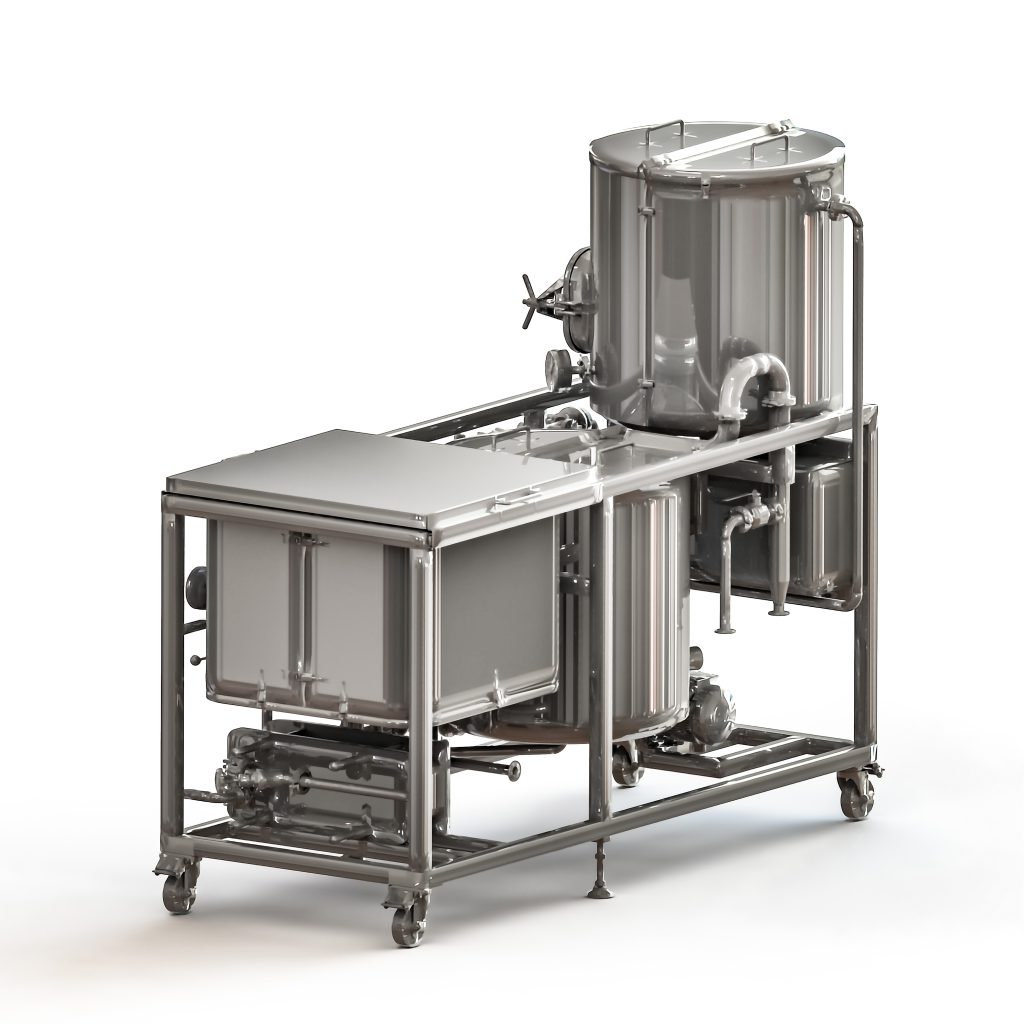
The Rise of the Portable Beer Brewing Machine
The craft beer revolution was built on passion, but its next frontier is being defined by flexibility. Enter the portable beer brewing machine, a technological evolution that is democratizing and decentralizing beer production. No longer confined to the massive capital expenditure and fixed footprint of a traditional brewery, today’s brewers—from ambitious hobbyists to innovative “gypsy” or contract brewers—are taking their operations on the road. This shift is about more than convenience; it’s a fundamental change in how we think about scale, experimentation, and market engagement.
At its heart, a modern portable beer brewing machine condenses the entire brewing process—mashing, boiling, whirlpooling, and often critical steps like cooling—into a single, integrated, and mobile unit. The driving forces behind this trend are multifaceted. Sky-high real estate costs in urban areas make compact systems invaluable. The desire for hyper-local brewing, where beer is made and served within the same community or even at festivals and events, demands mobility. Furthermore, the need for low-risk prototyping of new recipes before committing to a large-scale batch is perfectly served by a versatile, small-batch system. For a deeper look at scalable solutions that bridge the gap between portable and production systems, explore our guide on choosing the right nanobrewery equipment.
Companies like SKE have been instrumental in this shift. While renowned for industrial-scale thermal processing equipment, our engineering principles—efficiency, durability, and precision—are directly applicable to the portable market. By applying expertise in heat transfer and food-grade fluid handling to smaller-scale designs, we help ensure that “portable” doesn’t mean a compromise on quality. A portable beer brewing machine engineered with this mindset isn’t just a tool; it’s a complete, reliable micro-factory capable of producing exceptional beer anywhere there’s a power and water source.
Core Components & How a Portable System Works
Understanding the anatomy of a high-quality portable beer brewing machine is key to appreciating its capabilities. Unlike a collection of disparate pots and coolers, an integrated machine is designed for workflow efficiency and consistent results.
The Brew Vessel: This is typically a single, multi-purpose tank constructed from 304 or 316L food-grade stainless steel. It must handle the mashing stage (requiring precise temperature control), withstand vigorous boiling, and facilitate whirlpooling. Look for features like a conical bottom for better drainage, a perforated false bottom or basket for grain separation, and well-placed ports for valves, thermometers, and sight glasses.
The Heating System: Portability often means adapting to various power sources. Electric heating elements (immersion or external) are most common due to their controllability and safety. Advanced systems may use energy-efficient induction heating or be designed for compatibility with natural gas or propane burners for ultimate location independence. The system must deliver enough power to bring a full volume of liquid to a rolling boil in a reasonable time.
The Cooling System: This is where engineering excellence truly shines. Rapidly cooling wort after boiling is critical for flavor stability and preventing contamination. The most effective portable systems integrate a plate heat exchanger. Using SKE’s core technology as an example, a compact, efficient plate heat exchanger uses cold water (or glycol) flowing on one side and hot wort on the other to drop the temperature to yeast-pitching levels in minutes, a process far superior to immersion coils in terms of speed and water usage. For a technical deep dive into this crucial process, read our article on the importance of wort cooling in beer production.
Control & Automation: Even simple portable units have manual temperature controllers. More advanced machines feature programmable logic controllers (PLCs) that automate the entire mash temperature profile, boil timer, and pump sequences. This not only improves consistency batch-to-batch but also makes the portable beer brewing machine accessible to less experienced brewers.
Mobility Features: This includes the practical aspects: a sturdy, wheeled frame capable of handling the weight of a full batch; compact dimensions to fit through standard doorways; and clever cable/ hose management. The goal is a system that can be set up or broken down quickly by one or two people.