
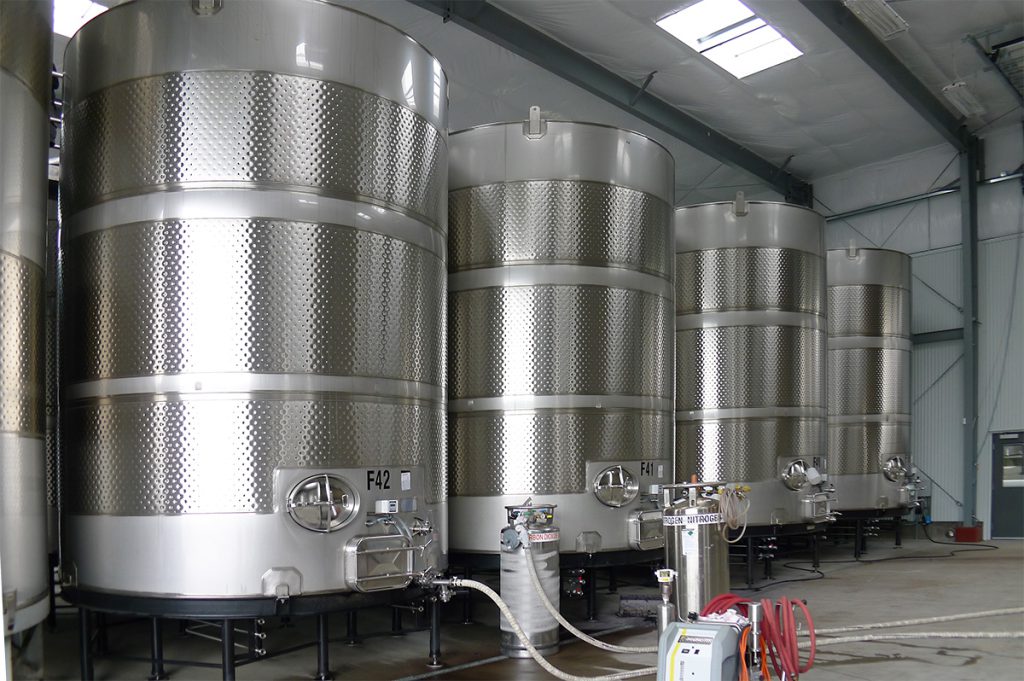
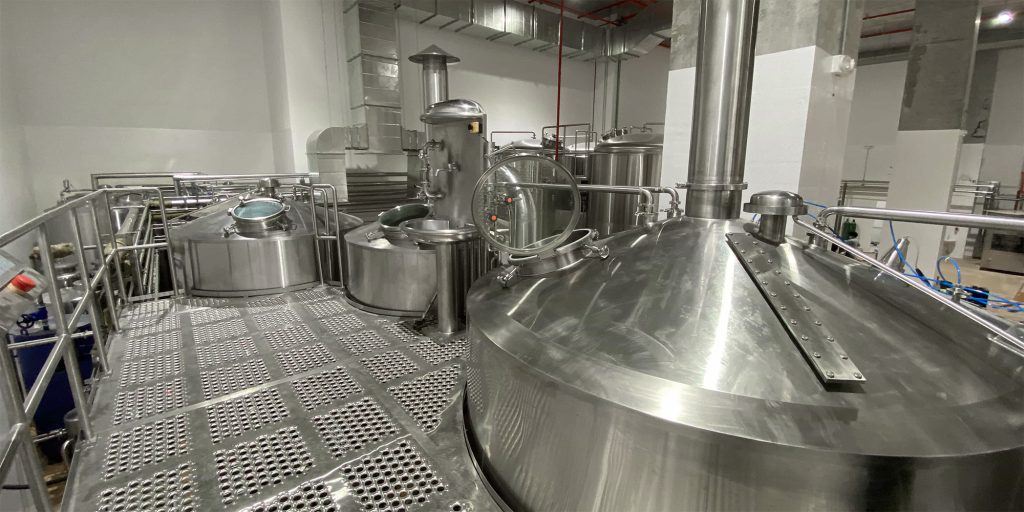
In the wine making industry, the quality of fermentation and storage equipment directly determines the flavor and stability of the final product. As a professional beer and brewing equipment manufacturer with years of expertise in stainless steel vessel R&D and production, SKE has developed the stainless wine tanks series—including closed-top, variable-capacity, and conical models. These tanks integrate food-grade materials, precise temperature control, and energy efficiency, catering to the entire workflow of red and white wine production from fermentation to aging. Trusted by wineries, craft workshops, and home brewers worldwide, SKE stainless wine tanks ensure pure fruit flavors and mellow taste in every batch.
Core Types of SKE Stainless Wine Tanks: Adapting to Diverse Brewing Scenarios
Wine making involves complex processes, with varying equipment requirements for different wine types (red/white) and stages (fermentation, aging, storage). SKE has engineered three core stainless wine tank models to meet the needs of small-scale home brewing to large-scale winery production, balancing professionalism and practicality.
1. Closed Top Wine Fermenter: Precise Temperature Control for Red & White Wine
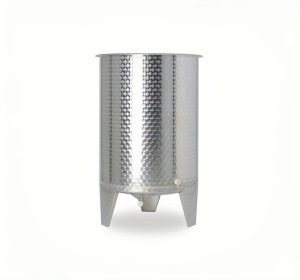
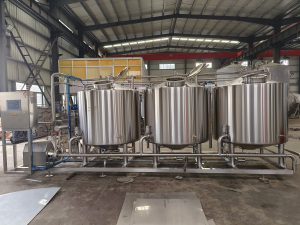
SKE’s closed-top stainless wine tank features a fully sealed design, insulated with thick polyurethane foam and equipped with a dimpled jacket cooling system—making it a “versatile solution” for both red and white wine fermentation. Its key advantages lie in precision temperature control and hygiene:
- Polyurethane foam insulation offers excellent thermal resistance, moisture protection, and low density, maintaining stable internal temperatures.
- The vertical dimpled jacket ensures efficient heat transfer even with partial tank filling, preventing temperature fluctuations that could affect yeast activity and fermentation progress.
The fully sealed structure isolates external air and impurities, reducing oxidation risks and supporting pressure fermentation—ideal for white wine production requiring a stable environment. The smooth food-grade stainless steel interior eliminates dead corners, facilitating easy cleaning and avoiding chemical reactions with wine, ensuring pure flavors. It is a cost-effective choice for small to medium-sized wineries and craft workshops.
2. Variable Capacity Tank: Flexible Integration of Red Wine Fermentation & Aging
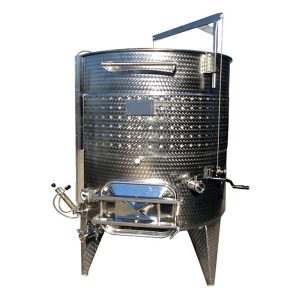
Designed to address the core need for “cap management” in red wine fermentation, SKE’s variable-capacity stainless wine tank combines an open top with a floating lid. In normal operation, the open top allows gentle manual or mechanical handling of grape pomace caps, preventing pomace breakdown that could compromise taste. During aging, the floating lid moves downward with the wine level, expelling internal air and enabling seamless transition from “open fermentation to closed aging”—eliminating the need for wine transfer and reducing oxidation/pollution risks.
The tank is equipped with a sloped bottom for easy separation of pomace and wine (minimizing residue) and a large square manhole for convenient internal cleaning and maintenance. Like the closed-top model, it features a dimpled jacket cooling system and polyurethane insulation, ensuring precise aging temperatures and stable wine quality over long-term storage. It is particularly suitable for wineries specializing in red wine production.
3. Tapered Conical Wine Fermenter: Easy Manual Punch-Down for Rich Red Wine Flavors
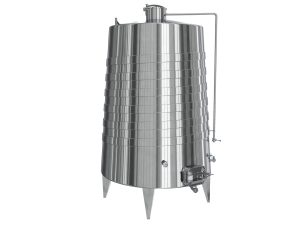
For brewers preferring traditional manual punch-down processes, SKE’s tapered conical stainless wine tank is an ideal choice. Its unique conical design leverages “thermal inertia” to maintain stable internal temperatures while concentrating grape pomace naturally in the middle of the tank. Brewers can easily perform punch-down operations without extensive tank access, minimizing pomace disturbance and enhancing the extraction of tannins and pigments—resulting in richer flavors and brighter colors for red wine.
The tank features a large central manhole for convenient punch-down, sampling, and cleaning, along with a conical bottom and drain valve for rapid pomace-wine separation (reducing wine loss). With optional accessories (e.g., filters, agitators), it can also adapt to white wine maceration, fermentation, and clarification—realizing “multi-functional use” and suiting small wineries and home brewers committed to traditional techniques.
Core Specifications of SKE Stainless Wine Tanks
To help customers quickly match their needs, SKE offers both standard and customized solutions. The following table outlines the standard specifications of the three core models, all complying with international food-grade brewing equipment standards. Customizations are available based on on-site space, production volume, and process requirements.
| Tank Type | Capacity Range | Core Material | Temperature Control System | Key Configurations | Application Scenarios |
|---|---|---|---|---|---|
| Closed Top Wine Fermenter | 100L-5000L | SUS304/SUS316L | Dimpled Jacket + Polyurethane Insulation | Fully Sealed Lid, Sampling Port, Drain Valve, Pressure Gauge | Universal Fermentation for Red/White Wine, Small-Medium Winery Mass Production |
| Variable Capacity Tank | 500L-10000L | SUS304/SUS316L | Dimpled Jacket + Polyurethane Insulation | Floating Lid, Sloped Bottom, Large Square Manhole | Red Wine Fermentation & Aging, Large-Scale Winery Production |
| Tapered Conical Wine Fermenter | 50L-2000L | SUS304 | Conical Tank Thermal Inertia Insulation + Optional Jacket | Large Manhole, Conical Bottom, Manual Punch-Down Aids | Red Wine Manual Punch-Down Fermentation, Home/Small-Scale Brewing |
| Custom Stainless Wine Tank | On-Demand (50L-20000L) | SUS304/SUS316L/Duplex Steel | Customizable (Jacket/Coil) | Custom Ports, PLC Automation System, Outdoor Protection | Special Process Requirements, Large-Capacity Storage, Outdoor Installation |
Core Advantages of SKE Stainless Wine Tanks: Reshaping the Wine Making Experience
Compared to ordinary stainless wine tanks, SKE products optimize the brewing process in four key dimensions—material, design, functionality, and service—delivering greater value to customers:
1. Food-Grade Stainless Steel: Safety, Durability, and Pure Wine Flavor
All SKE stainless wine tanks are constructed with SUS304 or SUS316L food-grade stainless steel, complying with GB 9684-2011 (National Food Safety Standard) and EU EC 1935/2004:
- SUS304 Stainless Steel: Offers excellent corrosion resistance and cost-effectiveness, suitable for brewing environments with pure water and low salt content (meets the basic needs of home brewers and small-medium wineries).
- SUS316L Stainless Steel: Molybdenum-enhanced for superior resistance to chloride ions, acids, and alkalis—ideal for long-term storage, high-acidity wines (e.g., sweet reds), or coastal high-salt environments. It boasts a service life of 15-20 years.
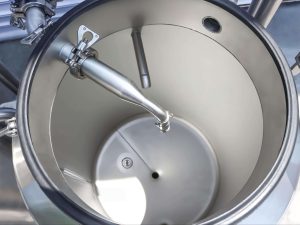
The tank interior features a mirror-polished finish (Ra ≤ 0.8μm), eliminating dead corners and preventing material buildup, thus inhibiting microbial growth and ensuring pure wine flavors free from equipment contamination.
2. Efficient Temperature Control & Insulation: Stable Fermentation, Reduced Energy Consumption
Temperature is a “critical variable” in wine fermentation and aging. SKE stainless wine tanks achieve precise temperature control and energy efficiency through a combined “jacket cooling + insulation” design:
- Cooling System: The dimpled jacket provides larger heat transfer area and higher efficiency than traditional coils, with a temperature control range of 0-25℃—adapting to red wine fermentation (20-25℃), white wine fermentation (10-15℃), and aging (8-12℃).
- Insulation System: Thick polyurethane foam insulation (low thermal conductivity) limits internal temperature fluctuations to ±1℃, reducing cooling system cycles and saving over 30% energy compared to uninsulated tanks—significantly lowering long-term operational costs.
3. Human-Centered Design: Easy Operation, Minimal Loss
SKE optimizes user experience through thoughtful structural details, based on in-depth research into brewers’ workflows:
- Easy Operation: The variable-capacity tank’s floating lid, conical tank’s large manhole, and closed-top tank’s sampling port can be opened without complex tools, reducing labor intensity. Sloped/conical bottoms minimize wine residue, with a per-batch loss rate of less than 1%.
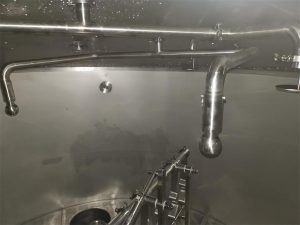
- Cleaning & Maintenance: The tank interior has no welding dead corners, and optional CIP (Clean-in-Place) connections enable automated cleaning—eliminating the need for manual tank entry, saving labor costs, and avoiding incomplete cleaning risks. Critical components (e.g., seals, valves) are made of food-grade EPDM, offering temperature/corrosion resistance and easy replacement.
4. Full-Scale Customization: Flexible Adaptation to All Scenarios
Whether for 50L home brewing or 20,000L large-scale winery production, SKE provides tailored customization:
- Size Customization: Adjust tank height and diameter to fit narrow workshops or outdoor installations.
- Function Customization: Add agitators (for white wine maceration), dry hopping ports (for oak chip addition), or PLC automation systems (remote temperature/pressure monitoring) as needed.
- Material Upgrade: For high-corrosion environments (e.g., coastal areas), upgrade to 2205 duplex steel to enhance corrosion resistance and extend service life.
Frequently Asked Questions (FAQ) About SKE Stainless Wine Tanks
To address common customer inquiries during selection and use, SKE has compiled the following answers to help customers understand product features and make informed decisions.
Q1: What are the core advantages of SKE stainless wine tanks compared to ordinary carbon steel tanks or oak barrels?
A1: Compared to ordinary carbon steel tanks, SKE stainless wine tanks use food-grade stainless steel—eliminating rust and heavy metal leaching risks, avoiding chemical reactions with wine, and preserving pure fruit flavors. Carbon steel tanks are prone to corrosion, require regular painting maintenance, and may compromise wine safety over time.
Compared to oak barrels, stainless steel tanks offer three key advantages: lower cost, easier maintenance, and controllable flavor. Oak barrels are expensive with a short service life (3-5 years) and require regular replacement. Stainless steel tanks have a 15-20 year service life, with maintenance limited to cleaning and seal replacement. Additionally, stainless steel tanks do not impart oak flavors, making them ideal for wines emphasizing pure fruit (e.g., crisp white wines). Oak flavors can be added via oak chips for precise control over intensity.
Q2: How to choose between closed-top, variable-capacity, and conical tanks based on brewing needs?
A2: Select based on core process requirements and wine type:
- For versatile fermentation of both red and white wine, with a focus on precise temperature control and sealed environments, choose the closed-top tank.
- For red wine-specific production requiring frequent pomace cap management and minimal wine transfer, choose the variable-capacity tank (integrated open fermentation and closed aging).
- For small-batch brewing (home or small workshop) preferring traditional manual punch-down, choose the conical tank (easy punch-down and efficient pomace separation).
Q3: How to choose between SUS304 and SUS316L stainless steel? Is an upgrade necessary?
A3: The core difference lies in corrosion resistance—select based on usage scenario and budget:
- For ordinary red/white wine brewing in dry environments with pure water (low salt content), SUS304 is sufficient (higher cost-effectiveness).
- For high-acidity wines (e.g., sour reds, sweet whites), coastal high-salt environments, or long-term storage (5+ years), choose SUS316L (molybdenum-enhanced corrosion resistance).
- For special high-corrosion scenarios (e.g., frequent cleaning with acidic detergents), upgrade to 2205 duplex steel—consult SKE’s technical team for customization.
Q4: Is equipment installation complex? Does it require professional personnel? What are the daily maintenance considerations?
A4: Installation and maintenance are user-friendly, requiring no long-term professional support:
- Installation: Small tanks (50L-500L) can be self-installed with simple bracket fixing and pipeline connection. For medium to large tanks (1000L+), SKE provides on-site installation and commissioning services.
- Daily Maintenance: ① Clean the tank interior with warm water and neutral detergent after each use to prevent bacterial growth from residual wine. ② Inspect seals quarterly for aging and replace if deformed or leaking. ③ Conduct annual external tank inspections—polish scratches to prevent rust. ④ Drain internal moisture and close all valves during long-term non-use to avoid internal oxidation.