
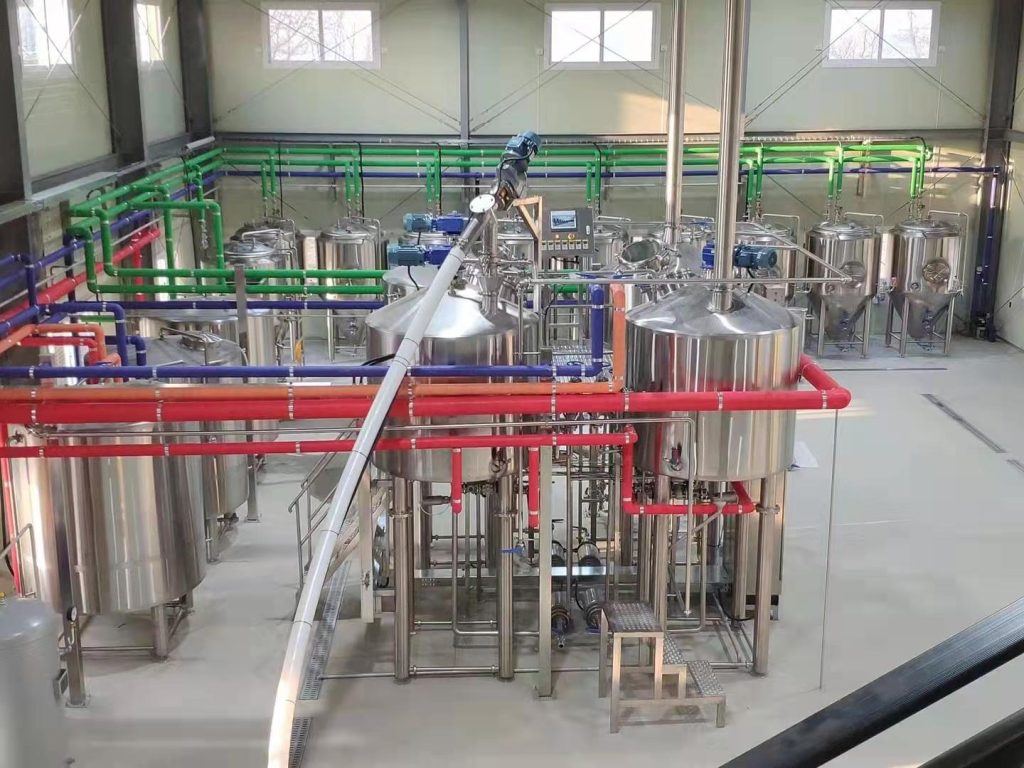
In the beer manufacturing industry, where hygiene, efficiency, and consistency are non-negotiable, conveyors and conveying systems play a pivotal role in streamlining operations from raw material handling to finished product packaging. Among all types of conveyors, the stainless conveyor stands out as the gold standard for breweries, offering unparalleled durability, sanitation, and adaptability. As a leading beer equipment manufacturer, SKE integrates high-quality stainless conveyors and advanced conveyor systems into our solutions, ensuring that breweries of all sizes achieve seamless, compliant, and cost-effective production.
What Is a Stainless Conveyor, and Why Is It Critical for Beer Production?
A stainless conveyor is a type of material handling equipment constructed primarily from stainless steel—typically 304 or 316 grade—which is chosen for its exceptional resistance to corrosion, moisture, and chemical cleaning agents. Unlike standard conveyors made from carbon steel or plastic, stainless conveyors are designed to meet the strict hygiene standards of the food and beverage industry, making them ideal for beer production environments where frequent washdowns and sanitization are required.
Beer production involves multiple stages—milling, mashing, boiling, fermenting, filtering, filling, and packaging—each requiring careful handling to avoid contamination. Stainless conveyors eliminate the risk of rust, particle shedding, and bacterial growth, which can compromise the quality and safety of the final product. Additionally, their smooth, non-porous surfaces make cleaning and sanitization quick and efficient, reducing downtime and ensuring compliance with FDA, EU, and other global food safety regulations.
For breweries, the durability of stainless conveyors is another key advantage. Beer production lines operate continuously for hours, if not days, and conveyors must withstand heavy loads, frequent use, and harsh cleaning protocols. Stainless steel’s strength and resistance to wear ensure that the conveyor system remains reliable for years, minimizing maintenance costs and unplanned downtime—critical factors for maintaining consistent production volumes.

Understanding Conveyors and Conveying Systems in Beer Manufacturing
Conveyors and conveying systems are more than just single pieces of equipment; they are integrated networks that connect every stage of beer production. A well-designed conveying system ensures that raw materials (such as malt, hops, and water), intermediate products (like wort and green beer), and finished goods (bottles, cans, or kegs) move smoothly and efficiently between processing stations, reducing manual labor and human error.
In beer manufacturing, conveying systems are tailored to the specific needs of each production stage. For example, raw material handling may use gentle conveyors to avoid damaging malt or hops, while filling lines require precise, high-speed conveyors to ensure accurate bottle or can placement. The stainless conveyor is a versatile component that can be adapted to nearly every stage, working in tandem with other specialized conveyors to create a cohesive, efficient system.
Powered Conveyor: Enhancing Efficiency in Stainless Conveyor Systems
A powered conveyor is a type of conveyor system that uses an electric motor, gearbox, or other power source to move materials, eliminating the need for manual pushing or gravity-fed movement. When combined with stainless steel construction, powered conveyors become a powerful tool for beer production, offering precise control over speed, direction, and throughput.
In beer manufacturing, powered stainless conveyors are used in high-demand areas such as filling lines, packaging stations, and keg handling. For example, a powered stainless conveyor can move bottles at a consistent speed through the filling machine, ensuring that each bottle is filled to the correct level without spillage. Similarly, powered conveyors are used to transport heavy kegs between storage and packaging, reducing the risk of injury to workers and improving operational efficiency.
Powered Flex Conveyor: Versatility for Dynamic Beer Production Lines
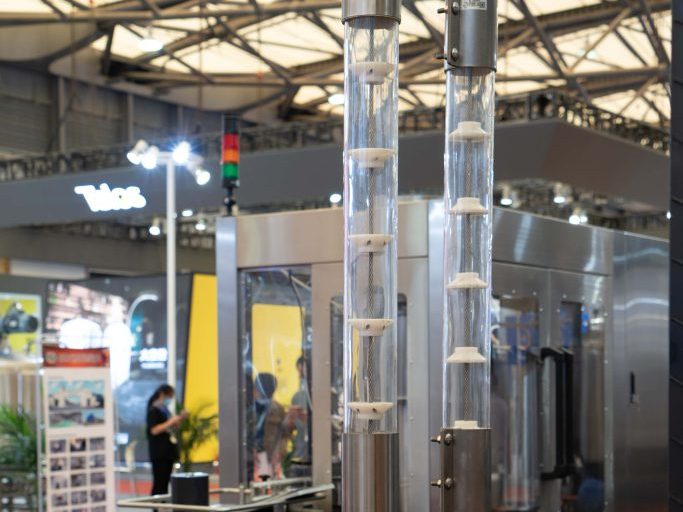
A powered flex conveyor (also known as a flexible powered conveyor) is a specialized type of powered conveyor that offers enhanced flexibility, allowing it to adapt to changing production layouts, tight spaces, and variable material sizes. When constructed from stainless steel, powered flex conveyors combine the hygiene and durability of stainless conveyors with the adaptability needed for dynamic beer production environments.
Craft breweries, in particular, benefit from powered flex conveyors, as they often have limited space and need to adjust their production lines to accommodate new beer styles or batch sizes. A stainless steel powered flex conveyor can be extended, retracted, or curved to fit into tight corners, connect different processing stations, or handle irregularly shaped items (such as specialty bottles or kegs).
In large-scale breweries, powered flex conveyors are used to connect different sections of the production line, such as moving finished cans from the filling machine to the labeling station, or transporting empty bottles from storage to the filling line. Their flexibility reduces the need for multiple fixed conveyors, saving space and reducing installation costs.
Types of Stainless Conveyors Used in Beer Production
Stainless conveyors come in various types, each designed to meet the specific needs of different stages in beer production. The choice of conveyor type depends on factors such as the material being transported, the production speed, the available space, and the hygiene requirements. Below is a breakdown of the most common types of stainless conveyors used in breweries, along with their applications and benefits.
|
Conveyor Type
|
Key Features
|
Beer Production Applications
|
Benefits for Breweries
|
|---|---|---|---|
|
Stainless Steel Belt Conveyor
|
Smooth stainless steel belt, powered or gravity-fed, easy to clean, resistant to corrosion
|
Filling lines, packaging, bottle/can transport, hop/malt handling
|
High hygiene, easy sanitization, consistent throughput, suitable for wet environments
|
|
Stainless Steel Roller Conveyor
|
Stainless steel rollers, powered or gravity-fed, durable, low maintenance
|
Keg handling, heavy load transport, storage transfer
|
Handles heavy loads, easy to clean, minimal friction, ideal for kegs and large containers
|
|
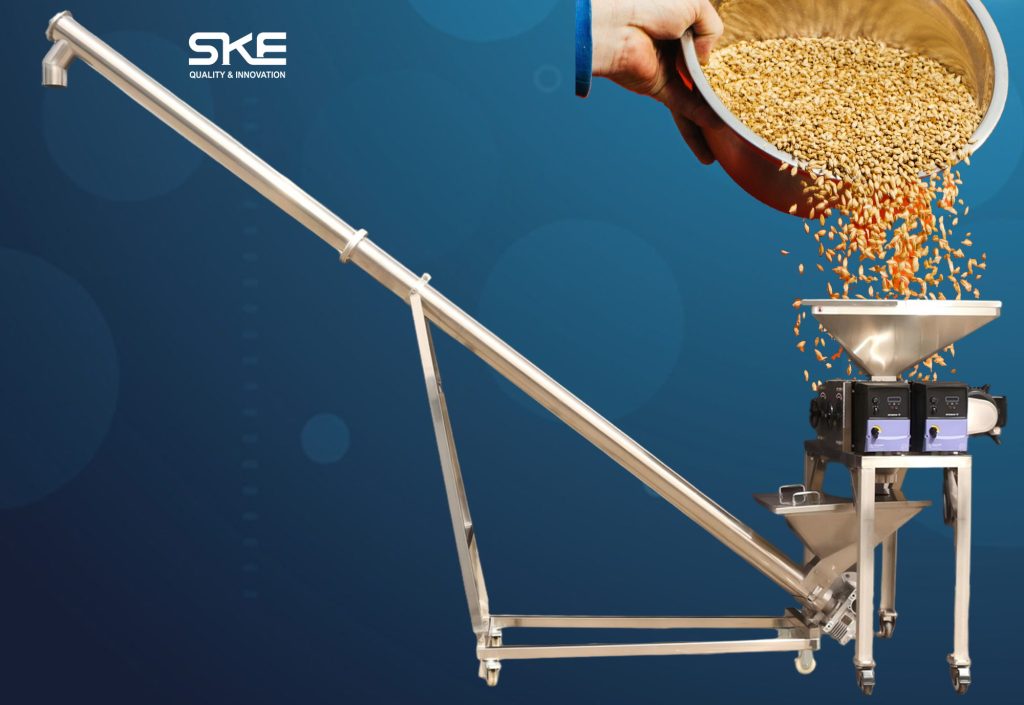
Stainless Steel Screw Conveyor
|
Stainless steel screw, enclosed design, powered, suitable for bulk materials
|
Malt handling, grain transfer, wort transfer (in some cases)
|
Prevents contamination, handles bulk materials efficiently, compact design
|
|
Stainless Steel Powered Flex Conveyor
|
Flexible frame, stainless steel construction, variable speed, extendable/curved
|
Craft brewery production lines, tight spaces, variable batch sizes
|
Versatile, space-saving, adaptable to changing layouts, easy to clean
|
|
Stainless Steel Chain Conveyor
|
Stainless steel chain, powered, durable, suitable for heavy loads
|
Keg transport, large bottle handling, high-temperature environments
|
Resistant to wear, handles heavy loads, suitable for harsh conditions
|
Maintenance Tips for Stainless Conveyors in Beer Production
Proper maintenance is essential to extend the lifespan of your stainless conveyor and ensure consistent performance. Beer production environments are harsh, with frequent washdowns, moisture, and heavy use, so regular maintenance is critical to prevent corrosion, wear, and breakdowns. Below are some practical maintenance tips for stainless conveyors in breweries.
Daily cleaning is a must. After each production shift, clean the conveyor thoroughly using food-grade cleaning agents and warm water. Pay special attention to crevices, rollers, and belt surfaces, as these areas can trap debris and bacteria. Avoid using abrasive cleaners or tools, as they can scratch the stainless steel surface, creating areas where bacteria can grow. Rinse the conveyor thoroughly after cleaning to remove any residue from cleaning agents.
Regular inspections are also important. Check the conveyor’s belt, rollers, motors, and gears for signs of wear, damage, or corrosion. Look for loose fasteners, misaligned rollers, or frayed belts, and address these issues promptly to prevent further damage. For powered conveyors, check the motor and gearbox for proper lubrication, and replace lubricants according to the manufacturer’s recommendations.
Prevent corrosion by ensuring that the conveyor is completely dry after cleaning. Moisture can lead to rust, even on stainless steel, so use a clean, dry cloth to wipe down the conveyor after rinsing. Additionally, avoid exposing the conveyor to harsh chemicals (other than approved cleaning agents) and ensure that any spills are cleaned up immediately.
Schedule regular professional maintenance. While daily cleaning and inspections can prevent many issues, it’s important to have a professional technician inspect and service the conveyor periodically.
SKE’s Stainless Conveyor Solutions for Breweries
As a leading beer equipment manufacturer, SKE specializes in designing and manufacturing high-quality stainless conveyors and conveyor systems tailored to the unique needs of breweries. Our stainless conveyors are built with premium grade 304 or 316 stainless steel, ensuring durability, corrosion resistance, and compliance with global food safety standards.
We offer a full range of stainless conveyor solutions, including belt conveyors, roller conveyors, screw conveyors, and powered flex conveyors, all customizable to fit your brewery’s size, production volume, and layout. Our conveyor systems are designed to integrate seamlessly with other SKE beer equipment, such as filling machines, fermenters, and packaging lines, creating a complete, efficient production solution.
At SKE, we prioritize quality and customer satisfaction. Our team of engineers works closely with you to understand your production needs, recommending the ideal conveyor system and configuration to optimize efficiency, reduce downtime, and ensure product quality. We also provide comprehensive installation, training, and maintenance services, ensuring that your stainless conveyor system operates smoothly for years to come.
FAQ: Common Questions About Stainless Conveyors in Beer Production
Q1: Why is stainless steel the best material for beer production conveyors?
Stainless steel is ideal for beer production conveyors because it is highly resistant to corrosion, moisture, and chemical cleaning agents—critical for the wet, harsh environment of breweries. It also has a smooth, non-porous surface that minimizes bacterial growth, ensuring compliance with food safety regulations. Unlike carbon steel, stainless steel does not rust or shed particles, which could contaminate the beer. Additionally, stainless steel is durable and long-lasting, reducing maintenance costs and downtime.
Q2: What is the difference between a powered conveyor and a gravity-fed conveyor?
A powered conveyor uses an electric motor or other power source to move materials, offering precise control over speed and direction. This makes it ideal for high-speed production lines, heavy loads, and applications where consistent movement is required (e.g., filling lines). A gravity-fed conveyor, on the other hand, relies on gravity to move materials, requiring no power source. It is best suited for simple, low-speed applications (e.g., moving empty bottles from a storage area to a filling machine) and is often more cost-effective for small-scale breweries.
Q3: How do powered flex conveyors benefit craft breweries?
Powered flex conveyors offer enhanced versatility, making them perfect for craft breweries with limited space or changing production needs. They can be extended, retracted, or curved to fit into tight corners, connect different processing stations, or handle variable batch sizes. This flexibility eliminates the need for multiple fixed conveyors, saving space and reducing installation costs. Additionally, their stainless steel construction ensures hygiene and durability, making them suitable for the strict requirements of beer production.
Q4: How often should I clean and maintain my stainless conveyor?
Daily cleaning is essential for stainless conveyors in beer production. After each production shift, clean the conveyor with food-grade cleaning agents and warm water to remove debris and bacteria. Regular inspections (weekly or monthly) should check for wear, damage, or corrosion, and address any issues promptly. Professional maintenance should be scheduled every 6–12 months, depending on usage, to ensure optimal performance and extend the conveyor’s lifespan. SKE provides maintenance guidelines tailored to your specific conveyor system.
Contact Us
If you have any further questions, feel free to reach out!
- Facebook: SKE Equipment Facebook
- Email: info@skeequipment.com
For more personalized assistance, please fill out the contact form at the bottom of this page. We look forward to helping you with your brewing needs!