
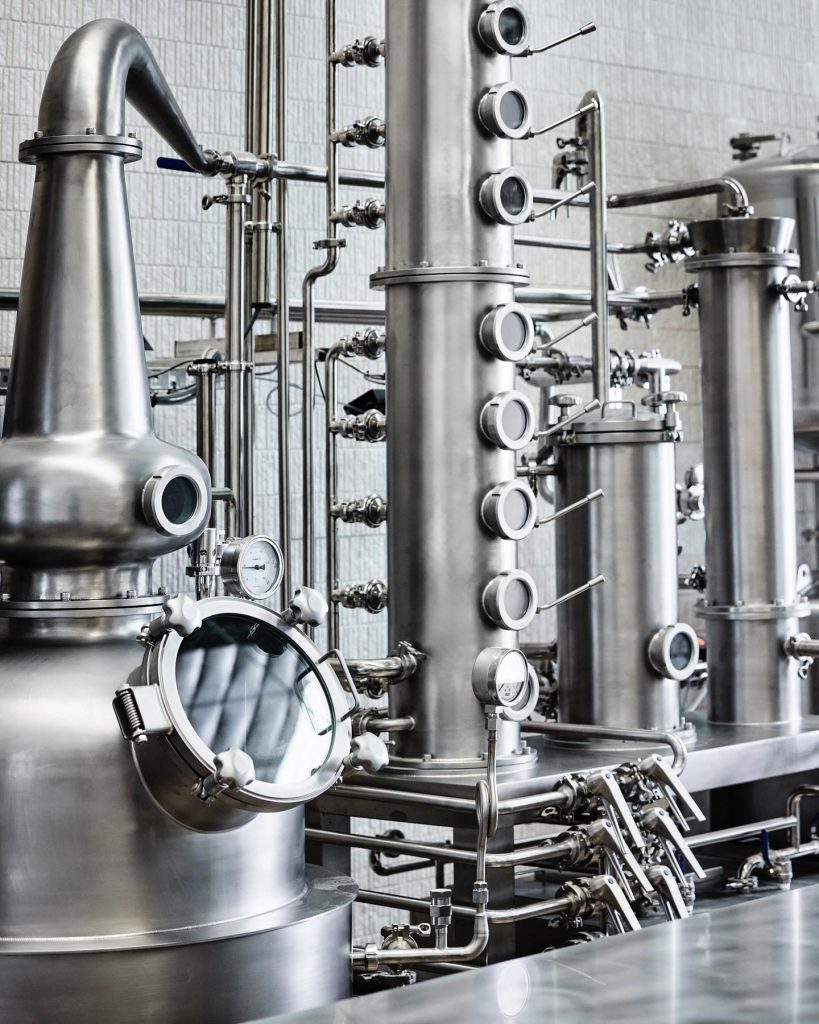
Core Definition: What Does “Still in Distillation” Mean for Professionals?
In industrial contexts, “still in distillation” refers to the entire operational cycle of a distillation still (the core equipment of the distillation process) from startup, stable operation, to shutdown—encompassing material feeding, heat supply, vapor-liquid mass transfer, distillate collection, and residue discharge. Unlike the basic conceptual understanding of distillation, for professionals, “still in distillation” focuses on the practical operation, parameter control, and technical optimization of the distillation still, which directly determines the separation effect, production efficiency, and operational safety of the entire distillation system.
The distillation still, as the core of “still in distillation,” is designed based on the principle of different volatility (or boiling points) of components in a homogeneous mixture: by heating the mixture to vaporize the component with higher volatility, then condensing the vapor to obtain a purified distillate, while the component with lower volatility remains in the still as residue, thereby achieving component separation. SKE’s distillation still series, including batch distillation stills, continuous distillation stills, and fractional distillation stills, are customized according to industry characteristics and process requirements to ensure stable and efficient operation during “still in distillation.”
Key Components of Distillation Still & Their Roles in “Still in Distillation”
A standard industrial distillation still consists of multiple functional components, each playing a critical role in the “still in distillation” process. The rationality of component design and matching directly affects the stability and efficiency of the distillation operation. Below is a detailed breakdown of the key components, their functions, and SKE’s optimized design highlights:
|
Key Component
|
Core Function in “Still in Distillation”
|
SKE Optimization Advantage
|
|---|---|---|
|
Still Body
|
The main container for material heating, vaporization, and vapor-liquid separation; provides a stable reaction space for the distillation process.
|
Adopts corrosion-resistant alloy materials (customizable according to medium); integrated molding to avoid leakage; optimized volume design to match production capacity and reduce dead volume.
|
|
Heating System
|
Provides heat for material vaporization; controls heating rate to ensure stable vapor generation (key to avoiding overheating or insufficient vapor).
|
Dual heating modes (electric heating + steam heating) optional; intelligent temperature control system with precision ±0.5℃; energy-saving insulation layer to reduce heat loss by 15-20%.
|
|
Condenser
|
Cools the vapor generated in the still body into liquid distillate; ensures high condensation efficiency to improve distillate yield.
|
Shell-and-tube condenser design; enhanced heat transfer area; adjustable cooling water flow rate; anti-scaling coating to extend service life and reduce maintenance frequency.
|
|
Thermometer & Pressure Gauge
|
Real-time monitoring of temperature and pressure in the still body; provides data support for process parameter adjustment (critical for ensuring product purity).
|
High-precision intelligent sensors; data real-time transmission to the control system; over-temperature/over-pressure alarm function to avoid operational risks.
|
|
Feed/Discharge Port
|
Realizes continuous feeding (continuous distillation) or batch feeding (batch distillation); discharges residue after distillation to ensure continuous operation.
|
Quick-connect flange design for easy disassembly and cleaning; anti-clogging structure for high-viscosity materials; automatic feeding/discharging optional to reduce manual operation.
|
|
Fractionating Column (Optional)
|
Enhances vapor-liquid mass transfer; separates components with similar boiling points to improve distillate purity (used in fractional distillation scenarios).
|
Packed column with high-efficiency packing; optimized internal structure to reduce pressure drop; easy packing replacement and maintenance.
|
Professional Operation Guidelines for “Still in Distillation”
For professionals, standardized operation of “still in distillation” is the key to avoiding operational failures, ensuring product quality, and prolonging equipment service life. Based on SKE’s years of engineering practice and hundreds of successful project cases, we summarize the three core stages of “still in distillation” and their professional operation points:
Pre-Startup Preparation (Critical for Stable Operation)
-
Equipment Inspection: Check the tightness of the still body, condenser, and connecting pipes (avoid air leakage affecting vapor pressure); confirm that the thermometer, pressure gauge, and control system are normal; check the heating system and cooling water circulation system for blockages or failures.
-
Material Preparation: Confirm the composition, concentration, and viscosity of the feed material; pre-treat the material (such as filtration to remove impurities) to avoid scaling or blockage of the still body and heating system; add the material to the still body according to the specified volume (not exceeding 80% of the still volume to avoid material splashing during heating).
-
Parameter Setting: Set the heating temperature, heating rate, cooling water flow rate, and distillate collection rate according to the distillation process requirements; for fractional distillation, set the temperature gradient of the fractionating column.
Stable Operation Stage (Key to Ensuring Product Purity)
-
Temperature Control: Real-time monitor the temperature in the still body; adjust the heating rate in time to keep the temperature stable (fluctuation range not exceeding ±1℃); avoid overheating, which may cause decomposition of heat-sensitive components, or insufficient heating, which may reduce vapor generation efficiency.
-
Pressure Control: Maintain stable pressure in the still body (normal pressure or negative pressure according to process requirements); if the pressure is too high, check whether the condenser is blocked or the cooling water flow rate is insufficient; if the pressure is too low, check for air leakage.
-
Distillate Collection: Collect the distillate according to the boiling point range of the target component; record the collection volume and concentration in real time; for multi-component separation, switch the collection container in time according to the temperature change.
-
Residue Monitoring: Regularly check the volume and viscosity of the residue in the still body; avoid excessive residue accumulation, which may affect heat transfer efficiency or cause local overheating.
Shutdown Operation (Avoid Equipment Damage)
-
Stop Heating: First turn off the heating system, and continue to supply cooling water until the temperature in the still body drops below 50℃ (avoid sudden cooling causing damage to the still body).
-
Discharge Residue: After the still body cools down, discharge the residue in time; clean the still body, condenser, and connecting pipes to avoid residue scaling and corrosion.
-
Equipment Shutdown: Turn off the cooling water circulation system, control system, and power supply; check the equipment status and record the operation data (for subsequent process optimization and equipment maintenance).
Common Challenges in “Still in Distillation” & SKE’s Professional Solutions
In industrial production, “still in distillation” often faces challenges such as low distillation efficiency, unstable product purity, high energy consumption, and equipment corrosion, which affect production benefits and product quality. Below are the most common challenges, their root causes, and SKE’s targeted solutions based on engineering practice:
|
Common Challenge
|
Root Cause
|
SKE Professional Solution
|
Application Effect
|
|---|---|---|---|
|
Low distillation efficiency, long cycle
|
Insufficient heat transfer efficiency; unreasonable still structure; low condensation efficiency.
|
Optimize the still body structure to increase heat transfer area; adopt high-efficiency condenser and heating system; add forced circulation device for high-viscosity materials.
|
Distillation cycle shortened by 20-30%; production efficiency significantly improved.
|
|
Unstable product purity, large fluctuation
|
Inaccurate temperature/pressure control; insufficient vapor-liquid mass transfer; impurities in feed material.
|
Equip intelligent control system with real-time parameter adjustment; add fractional distillation column (for similar boiling point components); provide pre-treatment equipment for feed material; optimize vapor-liquid contact structure.
|
Product purity fluctuation range reduced to ±0.3%; qualified rate of finished products ≥99.8%.
|
|
High energy consumption (heating/cooling)
|
Heat loss of still body; unreasonable heating mode; low cooling water utilization rate.
|
Add high-efficiency insulation layer; adopt waste heat recovery system (recycle condensation heat); optimize heating/cooling system matching; intelligent energy-saving control (adjust parameters according to material characteristics).
|
Energy consumption reduced by 15-25%; production cost significantly reduced.
|
|
Equipment corrosion, short service life
|
Corrosive components in feed material; high temperature/pressure environment; insufficient anti-corrosion treatment.
|
Adopt corrosion-resistant alloy materials (such as Hastelloy, titanium alloy) customized according to medium; inner wall anti-corrosion coating treatment; regular maintenance and inspection plan provided.
|
Equipment service life extended by 1.5-2 times; maintenance cost reduced by 40%.
|
|
Material splashing, affecting distillate quality
|
Excessive heating rate; too much material added; unstable vapor flow.
|
Optimize heating rate control program; set material level alarm; add anti-splashing device in the still body; stabilize vapor flow through pressure feedback adjustment.
|
Material splashing completely avoided; distillate purity not affected by impurities.
|
FAQ: Common Professional Questions About “Still in Distillation”
Below are the most common professional questions about “still in distillation” summarized by SKE based on customer consultation and engineering practice, with concise and direct answers to help professionals quickly solve doubts:
| FAQ | Professional Answer |
| What is the key parameter affecting product purity in “still in distillation”? | Temperature and pressure in the still body; precise control of these two parameters ensures stable vapor-liquid separation. |
| How to reduce energy consumption during “still in distillation”? | Adopt waste heat recovery system, optimize insulation design, use intelligent energy-saving control, and match heating/cooling systems reasonably. |
| What materials are suitable for SKE distillation stills in corrosive systems? | Customizable Hastelloy, titanium alloy, 316L stainless steel, etc., according to the type and concentration of corrosive medium. |
| Can batch distillation stills be transformed into continuous operation? | Yes; SKE can transform the equipment by adding continuous feeding/discharging systems and optimizing the control system according to the original equipment parameters. |
Contact Us
If you have any further questions, feel free to reach out!
Facebook: SKE Equipment Facebook
Email: info@skeequipment.com
For more personalized assistance, please fill out the contact form at the bottom of this page. We look forward to helping you with your brewing needs!