
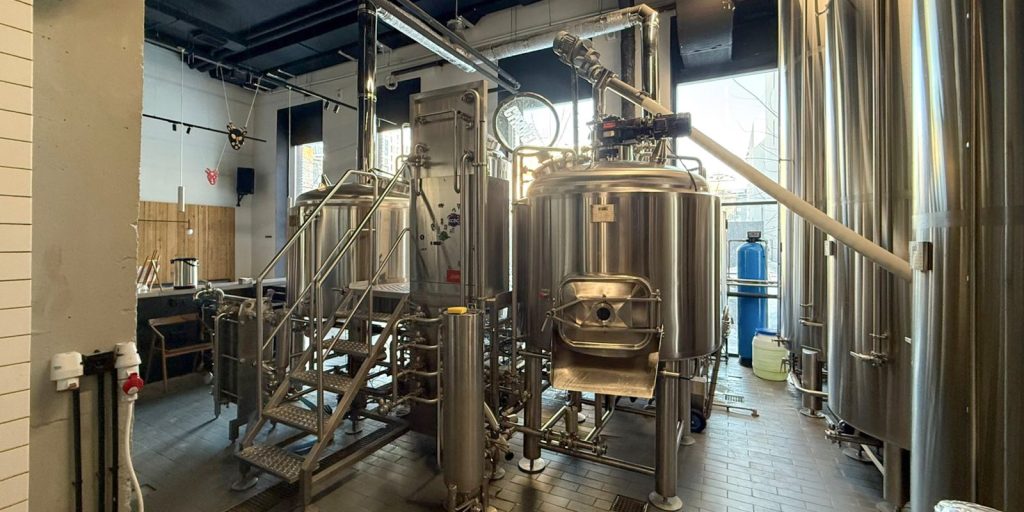
When it comes to running a successful brewery, the heart of your operation lies in the quality and functionality of your brewery tanks. Whether you’re a small craft brewery just starting out or a large-scale commercial facility looking to expand, choosing the right tanks brewery equipment is critical to producing consistent, high-quality beer. At SKE, we specialize in manufacturing top-tier brewery tanks and equipment designed to meet the unique needs of every brewery, no matter the size or style.
In this comprehensive guide, we’ll dive deep into everything you need to know about tanks brewery—from the different types of brewery tanks and their uses to key considerations when selecting equipment, maintenance tips, and why SKE is the trusted partner for breweries worldwide. Our goal is to provide you with valuable insights that will help you make informed decisions for your brewery, while highlighting how SKE’s expertise and products can elevate your brewing process.
What Are Tanks Brewery? Understanding the Core of Brewing
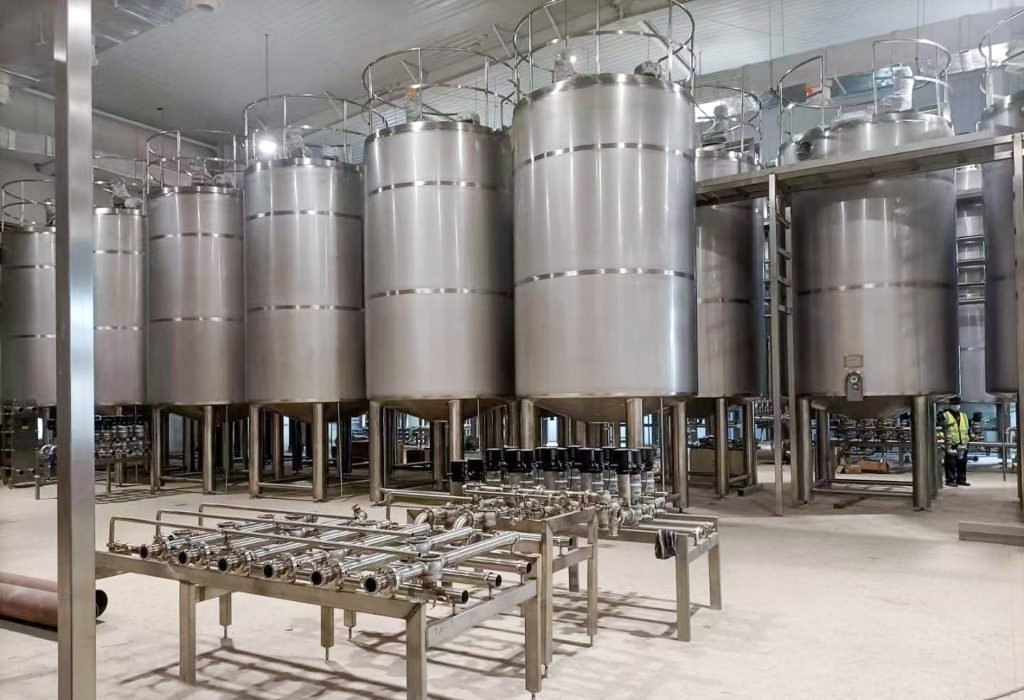
Tanks brewery refers to the specialized vessels and equipment used throughout the beer brewing process to store, process, and transform raw ingredients into the delicious beer your customers love. These tanks are not just simple containers—they are engineered to control critical factors like temperature, pressure, and sanitation, which directly impact the flavor, clarity, and consistency of your final product.
Every step of the brewing process requires a specific type of tank, each designed with unique features to optimize that stage. From mashing grains to fermenting wort, conditioning beer, and storing finished products, tanks brewery are essential to every phase. Without high-quality, properly designed tanks, even the best ingredients and brewing techniques will fail to produce exceptional beer.
At SKE, we understand that tanks brewery are the backbone of your brewery. That’s why we focus on crafting durable, efficient, and customizable tanks that align with the latest brewing standards and technologies. Our team of experts works closely with brewers to design equipment that fits their specific production needs, ensuring seamless integration into their existing operations or new brewery setups.
Types of Tanks Brewery: Which One Do You Need?
Breweries rely on a variety of tanks to complete the brewing process, each serving a distinct purpose. Understanding the different types of tanks brewery and their functions is key to choosing the right equipment for your operation. Below, we break down the most common types of brewery tanks, their uses, and how SKE’s offerings stand out in each category.
1. Mash Tuns
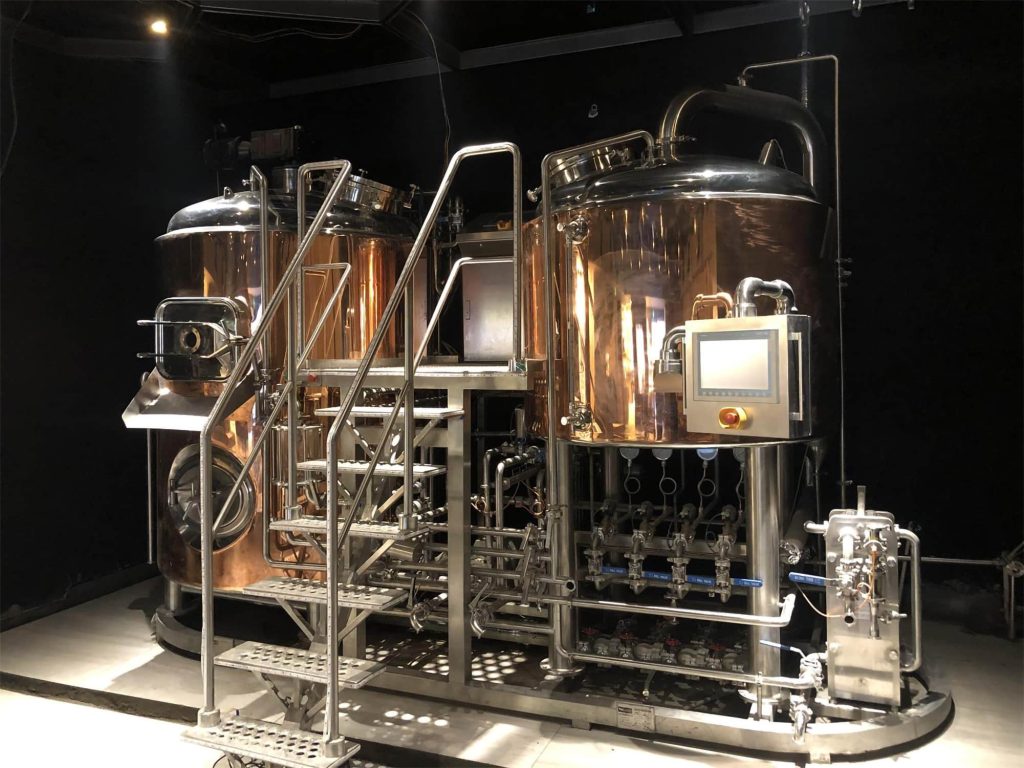
The mash tun is where the brewing process begins. This tank is used to mix milled grains (typically barley) with hot water, a process known as mashing. The goal of mashing is to activate enzymes in the grains that convert starches into fermentable sugars, which will later be turned into alcohol by yeast.
SKE’s mash tuns are designed with insulation to maintain consistent temperatures throughout the mashing process, ensuring optimal enzyme activity. They feature false bottoms or perforated plates to separate the sweet liquid (wort) from the spent grains, as well as adjustable rakes and sparging systems to maximize sugar extraction and minimize waste. Our mash tuns are available in various sizes, from small 5-barrel models for craft breweries to large 100-barrel+ units for commercial operations.
2. Lauter Tuns
After mashing, the mixture of grains and wort is transferred to the lauter tun, where the wort is separated from the spent grains. This process, called lautering, is critical to ensuring a clean, clear wort that will produce high-quality beer. Lauter tuns are designed to filter the wort efficiently, removing any solid particles that could affect the flavor or clarity of the final product.
SKE’s lauter tuns feature slotted screens and adjustable pressure systems to ensure smooth, efficient wort collection. They are constructed from high-grade stainless steel to prevent corrosion and maintain sanitation, and they can be customized with additional features like wort recirculation systems to improve clarity. Whether you need a standalone lauter tun or a combined mash-lauter tun to save space, SKE has a solution for you.
3. Brew Kettles (Boil Kettles)
Once the wort is separated from the spent grains, it is transferred to the brew kettle (also known as a boil kettle) for boiling. During the boil, hops are added to the wort to impart bitterness, flavor, and aroma—key characteristics that define different beer styles. The boil also helps to sterilize the wort, removing any unwanted bacteria that could spoil the beer.
SKE’s brew kettles are engineered for even heating, with steam jackets or electric heating elements that distribute heat uniformly to prevent scorching. They feature large openings for hop additions and cleaning, as well as whirlpool ports to help separate hop particles and other solids (known as trub) from the wort after boiling. Our brew kettles are available in a range of sizes and can be customized with insulation to reduce energy costs and maintain consistent boiling temperatures.
4. Whirlpool Tanks
While some breweries integrate whirlpool functionality into their brew kettles, many choose standalone whirlpool tanks to optimize the separation of trub and hop particles. After boiling, the wort is pumped into the whirlpool tank, where it is spun in a circular motion to create a vortex. This vortex pushes solids to the center of the tank’s bottom, making it easy to remove them before fermentation.
SKE’s whirlpool tanks are designed with tangential inlets to create a powerful, consistent vortex, ensuring efficient solids separation. They are constructed from stainless steel with smooth interiors to prevent solids from sticking, and they can be equipped with cooling jackets to quickly lower the wort temperature before fermentation. Our whirlpool tanks are available in sizes that match our brew kettles, ensuring seamless integration into your brewing line.
5. Fermentation Tanks
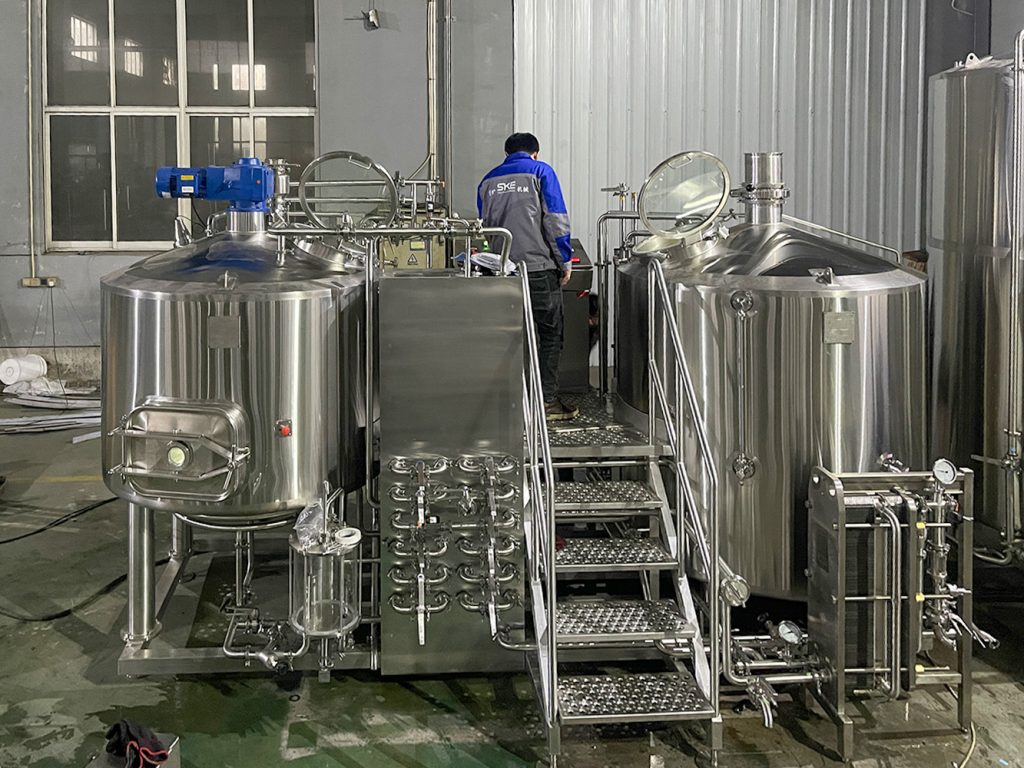
Fermentation tanks are where the “magic” happens—this is where yeast is added to the cooled wort, and the process of converting sugars into alcohol and carbon dioxide begins. Fermentation is a critical stage, and the right tank design is essential to controlling temperature, pressure, and oxygen levels, which all impact yeast activity and the final flavor of the beer.
SKE’s fermentation tanks are available in two main styles: cylindro-conical and horizontal. Cylindro-conical tanks are the most popular choice for breweries of all sizes, thanks to their cone-shaped bottom, which makes it easy to collect and remove yeast and trub. Our fermentation tanks are equipped with cooling jackets to maintain precise temperature control (critical for different yeast strains) and pressure relief valves to safely release carbon dioxide.
We also offer horizontal fermentation tanks for breweries with limited vertical space, such as small craft breweries or brewpubs. These tanks are designed to maximize space utilization while still providing the same level of temperature and pressure control as cylindro-conical models. All SKE fermentation tanks are constructed from food-grade stainless steel to ensure sanitation and durability.
6. Bright Beer Tanks (Conditioning Tanks)
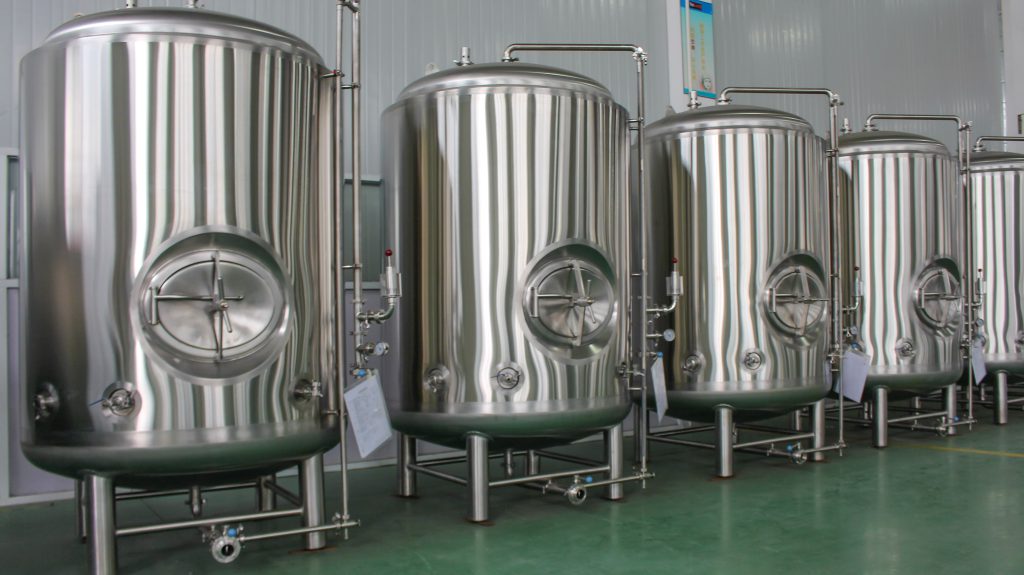
After fermentation is complete, the beer is transferred to bright beer tanks (also known as conditioning tanks) for final maturation, clarification, and carbonation. This stage is where the beer becomes clear, smooth, and ready for packaging. Bright beer tanks are designed to remove any remaining sediment and adjust the carbonation level to match the desired beer style.
SKE’s bright beer tanks feature polished interiors to prevent sediment from sticking and cooling jackets to maintain consistent temperatures during conditioning. They are equipped with carbonation stones to evenly distribute carbon dioxide into the beer, as well as sample ports to allow brewers to test the beer’s flavor and clarity before packaging. Our bright beer tanks are available in various sizes, from small 1-barrel models for brewpubs to large 200-barrel+ units for commercial breweries.
7. Yeast Tanks
For breweries that reuse yeast (a common practice to reduce costs and maintain consistency), yeast tanks are essential. These tanks are used to store and propagate yeast between batches, ensuring that the yeast remains healthy and active. Yeast tanks must be designed to maintain strict sanitation and temperature control to prevent contamination and preserve yeast quality.
SKE’s yeast tanks are electropolished to create a smooth, bacteria-resistant surface, making them easy to clean and sanitize. They are equipped with cooling jackets to maintain optimal yeast storage temperatures (typically between 34-40°F) and mixing systems to keep yeast suspended. Our yeast tanks can be customized with volume indicators and sampling ports to help brewers monitor yeast health and quantity.
8. Hot & Cold Liquor Tanks
Hot liquor tanks (HLT) and cold liquor tanks (CLT) are essential for storing and temperature-controlling water, a key ingredient in beer (accounting for 90-95% of the final product). Hot liquor tanks store hot water used for mashing and sparging, while cold liquor tanks store chilled water used for cooling wort after boiling and cleaning equipment.
SKE’s hot liquor tanks are insulated to maintain consistent hot water temperatures, reducing energy costs and ensuring optimal mashing conditions. They are equipped with heating elements or steam jackets to heat water to the desired temperature (typically between 150-170°F) and level indicators to monitor water volume. Cold liquor tanks are equipped with cooling jackets to chill water to the desired temperature (typically between 32-40°F) and are constructed from stainless steel to prevent corrosion.
SKE Tanks Brewery: Key Specifications & Customization Options
At SKE, we understand that every brewery is unique, which is why we offer a wide range of customization options for our tanks brewery. Whether you need a specific size, material, or feature, our team can design a solution that fits your exact needs. Below is a table outlining the key specifications of our most popular tanks brewery models, as well as the customization options available.
|
Tank Type
|
Capacity Range (Barrels)
|
Standard Material
|
Key Standard Features
|
Popular Customization Options
|
|---|---|---|---|---|
|
Mash Tun
|
5-100+
|
304 Stainless Steel
|
Insulation, false bottom, adjustable rake, sparging system
|
316 Stainless Steel, integrated lauter function, digital temperature control
|
|
Lauter Tun
|
5-100+
|
304 Stainless Steel
|
Slotted screens, adjustable pressure, wort collection system
|
316 Stainless Steel, wort recirculation system, automated raking
|
|
Brew Kettle
|
5-100+
|
304 Stainless Steel
|
Steam jacket, whirlpool port, hop addition opening
|
316 Stainless Steel, electric heating, insulation, sight glass
|
|
Whirlpool Tank
|
5-100+
|
304 Stainless Steel
|
Tangential inlet, smooth interior, drain valve
|
316 Stainless Steel, cooling jacket, automated solids removal
|
|
Cylindro-Conical Fermenter
|
5-200+
|
304 Stainless Steel
|
Cooling jacket, pressure relief valve, yeast collection port
|
316 Stainless Steel, digital temperature control, pressure gauge, sample port
|
|
Bright Beer Tank
|
5-200+
|
304 Stainless Steel
|
Cooling jacket, carbonation stone, polished interior
|
316 Stainless Steel, digital pressure control, sight glass, sampling port
|
|
Yeast Tank
|
2-50
|
304 Stainless Steel (Electropolished)
|
Cooling jacket, mixing system, drain valve
|
316 Stainless Steel, volume indicator, pH sensor
|
|
Hot/Cold Liquor Tank
|
10-200+
|
304 Stainless Steel
|
Insulation (HLT), cooling jacket (CLT), level indicator
|
316 Stainless Steel, digital temperature control, automated fill/empty
|
All SKE tanks brewery are manufactured to meet international brewing standards, including ISO 9001 and FDA certifications, ensuring that they are safe, durable, and efficient. We use only the highest-grade materials, and our tanks undergo rigorous quality control checks before leaving our factory to ensure they meet our strict standards.
Why Choose SKE for Your Tanks Brewery Needs?
With so many brewery equipment manufacturers on the market, choosing the right partner for your tanks brewery can be a challenge. At SKE, we stand out from the competition for several key reasons, making us the trusted choice for breweries worldwide.
1. Expertise & Experience
SKE has over 20 years of experience in manufacturing brewery equipment, including tanks brewery. Our team of engineers and brewing experts has a deep understanding of the brewing process, allowing us to design tanks that optimize every stage of production. We work closely with brewers of all sizes to understand their unique needs and challenges, and we use that knowledge to create tailored solutions that help them succeed.
2. High-Quality Construction
We believe that quality is non-negotiable when it comes to tanks brewery. That’s why we use only the highest-grade stainless steel (304 and 316) for our tanks, which is corrosion-resistant, easy to clean, and safe for food contact. Our tanks are welded using seamless, polished welds to prevent bacteria growth, and they undergo rigorous testing to ensure they can withstand the demands of daily brewery operations.
3. Customization Capabilities
No two breweries are the same, and we understand that a one-size-fits-all approach doesn’t work for tanks brewery. That’s why we offer full customization options, from size and shape to features and accessories. Whether you need a small, compact system for a brewpub or a large, automated line for a commercial brewery, we can design a solution that fits your space, budget, and production goals.
4. Energy Efficiency
Running a brewery is energy-intensive, and we’re committed to helping our customers reduce their energy costs with efficient tanks brewery. Our tanks are insulated to minimize heat loss (for hot liquor tanks and brew kettles) and heat gain (for fermentation and bright beer tanks), reducing the amount of energy needed to maintain optimal temperatures. We also offer energy-efficient heating and cooling systems that further lower operational costs.
5. Comprehensive Support
At SKE, we don’t just sell tanks brewery—we partner with our customers for the long term. We offer comprehensive support, including installation, training, maintenance, and repair services. Our team of technicians is available 24/7 to answer questions and resolve any issues, ensuring that your brewery operations run smoothly. We also provide spare parts and upgrades to help you keep your equipment in top condition as your brewery grows.
6. Competitive Pricing
We understand that budget is a key consideration for breweries, especially small and medium-sized operations. That’s why we offer high-quality tanks brewery at competitive prices, without compromising on quality or functionality. We work directly with our customers, cutting out middlemen to pass on cost savings. We also offer flexible financing options to help you invest in the equipment you need without straining your cash flow.
Tanks Brewery Maintenance: Tips to Extend the Life of Your Equipment
Proper maintenance is essential to ensuring that your tanks brewery last for years and continue to produce high-quality beer. Neglecting maintenance can lead to equipment failure, contamination, and costly repairs. Below are some key maintenance tips to help you extend the life of your SKE tanks brewery.
1. Regular Cleaning & Sanitization
Sanitation is critical in brewing, and your tanks must be cleaned and sanitized after every batch to prevent bacterial contamination. Use food-grade cleaning agents (avoid harsh chemicals that can damage stainless steel) and follow the manufacturer’s instructions for cleaning. Pay special attention to hard-to-reach areas, such as welds, valves, and ports. After cleaning, sanitize the tanks with a food-grade sanitizer to kill any remaining bacteria.
2. Inspect for Corrosion & Damage
Stainless steel is resistant to corrosion, but it can still be damaged by harsh chemicals, scratches, or improper cleaning. Regularly inspect your tanks for signs of corrosion (such as rust spots), scratches, or dents. If you notice any damage, address it immediately to prevent it from worsening. Avoid using abrasive cleaning tools (like steel wool) that can scratch the surface of the tanks.
3. Check Valves & Seals
Valves and seals are critical components of your tanks brewery, as they control the flow of wort, beer, and other fluids. Regularly inspect valves for leaks, and replace any worn or damaged seals. Lubricate valves as needed to ensure smooth operation. This will prevent leaks and ensure that your tanks maintain proper pressure and temperature control.
4. Maintain Temperature & Pressure Controls
Temperature and pressure controls are essential for optimal brewing, and they require regular maintenance to function properly. Calibrate temperature sensors and pressure gauges regularly to ensure accurate readings. Check cooling jackets and heating elements for leaks or damage, and clean them as needed to maintain efficiency. If you notice any issues with temperature or pressure control, contact SKE’s support team immediately.
5. Drain & Store Properly
If you’re not using a tank for an extended period (such as during a shutdown), drain it completely and clean/sanitize it before storing. Leave the tank’s lid or door slightly open to allow air circulation, which prevents mold and bacteria growth. Store any removable parts (such as valves or seals) in a clean, dry place to prevent damage.
6. Schedule Professional Maintenance
While regular in-house maintenance is important, it’s also a good idea to schedule professional maintenance with SKE at least once a year. Our technicians will perform a comprehensive inspection of your tanks brewery, identify any potential issues, and make necessary repairs or adjustments. This will help prevent costly breakdowns and ensure that your equipment is operating at peak efficiency.
Tanks Brewery FAQ: Answers to Common Questions
We understand that you may have questions about tanks brewery, from choosing the right type to maintenance and customization. Below are answers to some of the most common questions we receive from brewers. If you have additional questions, don’t hesitate to contact SKE’s team of experts.
Q1: What’s the difference between 304 and 316 stainless steel for tanks brewery?
A: Both 304 and 316 stainless steel are food-grade and suitable for tanks brewery, but 316 stainless steel is more corrosion-resistant, especially against chlorides (found in some water sources and cleaning agents). 304 stainless steel is a cost-effective option for most breweries, while 316 is recommended for breweries in coastal areas or those using harsh cleaning agents. SKE offers both options, depending on your needs.
Q2: Can SKE customize tanks brewery to fit my specific space?
A: Yes! We specialize in customizing tanks brewery to fit the unique space constraints of our customers. Whether you have limited vertical space (requiring horizontal tanks) or a small footprint (requiring compact systems), our team can design tanks that fit your space while still meeting your production needs. We’ll work with you to create detailed drawings and ensure that the equipment integrates seamlessly into your brewery.
Q3: Can I reuse yeast with SKE yeast tanks?
A: Yes! SKE yeast tanks are designed specifically for storing and propagating yeast, making them ideal for breweries that reuse yeast. Our yeast tanks feature smooth, electropolished interiors to prevent contamination, cooling jackets to maintain optimal storage temperatures, and mixing systems to keep yeast suspended. With proper cleaning and maintenance, you can safely reuse yeast for multiple batches, reducing costs and maintaining consistency.
Q4: What’s the difference between a cylindro-conical and horizontal fermentation tank?
A: Cylindro-conical fermentation tanks have a vertical cylindrical shape with a cone-shaped bottom, which makes it easy to collect and remove yeast and trub. They are ideal for breweries with vertical space and are the most popular choice for most operations. Horizontal fermentation tanks are laid on their side, making them ideal for breweries with limited vertical space (such as small craft breweries or brewpubs). They offer the same level of temperature and pressure control as cylindro-conical models but take up less vertical space.
Q5: How do I choose the right tanks brewery for my beer style?
A: Different beer styles require different brewing conditions, which can impact your choice of tanks brewery. For example, lagers require longer fermentation times at lower temperatures, so you’ll need fermentation tanks with precise cooling capabilities. IPAs require hop additions during boiling and whirlpooling, so you’ll need a brew kettle with a whirlpool port and a high-quality whirlpool tank. At SKE, our brewing experts can help you choose the right tanks based on the beer styles you plan to produce.
Contact Us
If you have any further questions, feel free to reach out!
- Facebook: SKE Equipment Facebook
- Email: info@skeequipment.com
For more personalized assistance, please fill out the contact form at the bottom of this page. We look forward to helping you with your brewing needs!