
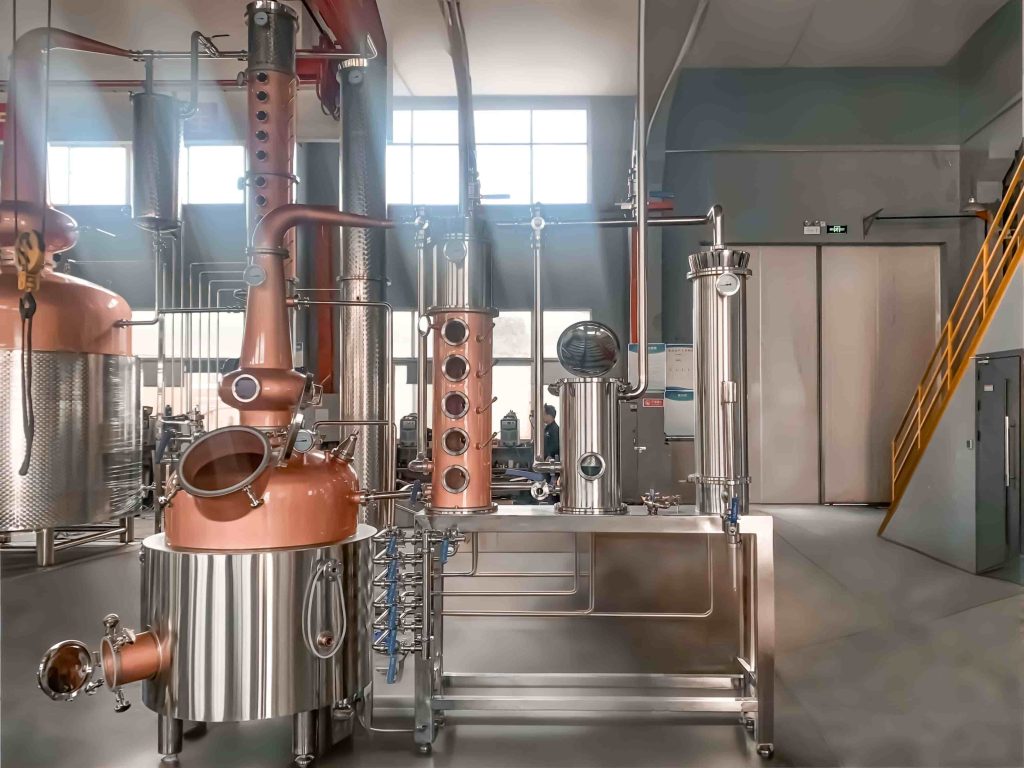
Introduction to Stainless Steel Distillation
Distillation is a fundamental separation process, critical across a myriad of industries, from pharmaceuticals and food & beverage to petrochemicals and fine chemicals. At its core, distillation involves heating a liquid mixture to create vapor, which is then cooled and condensed back into a liquid, resulting in a purified product. For this intricate process, the choice of material for the equipment is paramount, directly influencing product purity, operational efficiency, and the equipment’s lifespan. Among the various materials available, stainless steel distillation equipment stands out as the industry standard, revered for its exceptional properties. The use of stainless steel ensures that the equipment can withstand harsh operating conditions, resist corrosion, and maintain hygienic standards, making it indispensable for critical applications where contamination simply isn’t an option.
The demand for high-quality distilled products, whether it’s potable alcohol, essential oils, or ultra-pure water, necessitates robust and reliable processing solutions. Stainless steel, particularly grades like 304 and 316L, offers a unique combination of strength, corrosion resistance, and inertness, making it an ideal choice. These properties are crucial because they prevent undesirable interactions between the distillation medium and the equipment, safeguarding the integrity of the distilled substance. Furthermore, the smooth, non-porous surface of stainless steel greatly simplifies cleaning and sterilization processes, a vital factor in industries governed by strict regulatory standards. Understanding the nuances of stainless steel distillation equipment is key to optimizing production and ensuring consistent quality, which is a hallmark of SKE’s commitment to excellence in engineering and manufacturing.
Why Stainless Steel for Distillation? The Unmatched Advantages
The superiority of stainless steel distillation equipment stems from its inherent metallurgical properties, offering a range of benefits that far surpass other material options. When considering materials for distillation columns, condensers, reboilers, and receivers, stainless steel continually rises to the top for very compelling reasons. Firstly, its unparalleled corrosion resistance is a primary driver. Distillation often involves aggressive chemicals, acids, and high temperatures, which can rapidly degrade less resilient materials. Stainless steel, especially grades containing molybdenum like 316L, forms a passive chromium oxide layer that actively resists corrosion, pitting, and crevice attack, ensuring the longevity and structural integrity of the equipment. This resistance is crucial for maintaining product purity and preventing expensive replacements.
Beyond corrosion resistance, hygiene and ease of cleaning are critical, particularly in the pharmaceutical, food, and beverage industries. The non-porous, smooth surface of stainless steel discourages microbial growth and allows for thorough cleaning-in-place (CIP) and sterilization-in-place (SIP) procedures. This characteristic is vital for preventing cross-contamination and adhering to stringent sanitary regulations. Equipment from SKE, for example, is designed with these considerations in mind, ensuring that every piece of process equipment meets the highest hygienic standards. Furthermore, stainless steel exhibits excellent mechanical strength and ductility across a wide range of temperatures, making it suitable for both atmospheric and vacuum distillation processes. It can withstand significant pressure differentials and thermal stresses without deforming or failing, contributing to safer and more stable operations. Its robust nature also translates to a longer service life, reducing the total cost of ownership over time. The material’s high thermal conductivity also plays a role in efficient heat transfer for both heating and cooling stages, which is fundamental to effective distillation. These combined advantages make stainless steel the material of choice for reliable and efficient distillation applications, showcasing why opting for quality stainless steel distillation equipment is a smart investment.
Common Types of Stainless Steel Distillation Equipment
The world of distillation is diverse, and correspondingly, so is the array of stainless steel distillation equipment designed to meet specific process requirements. Understanding the different types is crucial for selecting the right system for a given application. Primarily, distillation systems can vary significantly in complexity and capacity, but they all rely on core components typically constructed from stainless steel. Essential pieces include distillation columns, which can range from simple pot stills to complex fractionating columns with multiple trays or packing. These columns, made from robust stainless steel, are designed to maximize surface area for vapor-liquid contact, facilitating efficient separation of components based on their boiling points.
Beyond the column itself, condensers are vital for cooling the vapor back into liquid form. Stainless steel shell-and-tube or plate condensers offer excellent heat transfer efficiency and corrosion resistance, ensuring effective condensation without material degradation. Reboilers, often steam-heated, are used at the base of the column to generate the vapor necessary for the separation process. Again, stainless steel is preferred for its ability to withstand high temperatures and prevent scaling or corrosion. Receivers, storage tanks for the distilled product, are also typically fabricated from stainless steel to maintain product purity post-distillation. For specialized applications, Clean-in-Place (CIP) systems are often integrated, showcasing how SKE provides comprehensive stainless steel solutions that extend beyond the main distillation unit to include essential auxiliary equipment. Furthermore, vacuum distillation setups often utilize stainless steel vacuum chambers and pumps due to the material’s strength and ability to maintain a vacuum. These systems are invaluable for distilling heat-sensitive compounds. From laboratory-scale units to large industrial plants, the foundational design principles revolve around leveraging the properties of stainless steel to achieve safe, efficient, and pure distillation. SKE provides a wide range of custom-designed stainless steel distillation equipment, tailored to specific industrial needs, ensuring optimal performance and compliance.
Key Applications and Industry Standards for Stainless Steel Distillation
The versatility and reliability of stainless steel distillation equipment make it indispensable across a broad spectrum of industries, each with its unique demands and regulatory landscape. In the pharmaceutical industry, for instance, distillation is paramount for producing highly purified water for injection (WFI), active pharmaceutical ingredients (APIs), and excipients. The stringent requirements for sterility and prevention of contamination mean that only hygienically designed stainless steel equipment, often 316L, is acceptable. Similarly, the food and beverage industry relies on stainless steel for producing spirits, essential oils, flavorings, and purified water, where maintaining product integrity and consumer safety is non-negotiable. SKE’s expertise in manufacturing high-grade stainless steel products ensures that these critical requirements are consistently met.
The chemical and petrochemical industries also heavily depend on stainless steel distillation equipment for separating complex mixtures, recovering solvents, and producing high-purity chemicals. The robust nature of stainless steel allows it to handle corrosive substances and extreme temperatures common in these sectors. Furthermore, in environmental applications, distillation plays a role in wastewater treatment and solvent recovery, contributing to sustainability initiatives. Adherence to industry standards such as ASME BPVC (Boiler and Pressure Vessel Code), cGMP (current Good Manufacturing Practices) for pharmaceuticals, and various hygienic design codes (like 3-A Sanitary Standards for food processing) is paramount. SKE ensures that all its stainless steel distillation solutions are designed and fabricated in compliance with these international standards, providing clients with not only state-of-the-art technology but also certified reliability and safety. The ability of stainless steel to meet these diverse application needs while conforming to rigorous standards underscores its status as the material of choice for high-performance distillation.
Choosing SKE for Your Stainless Steel Distillation Equipment Needs
When investing in stainless steel distillation equipment, selecting a manufacturing partner with proven expertise and a commitment to quality is crucial. SKE stands as a preeminent provider of advanced processing solutions, specializing in custom-engineered stainless steel equipment that meets the rigorous demands of various industries. Our philosophy centers on delivering not just products, but comprehensive solutions that optimize efficiency, ensure purity, and provide long-term reliability. Our team of experienced engineers and fabricators leverages cutting-edge technology and a deep understanding of distillation processes to design and construct equipment tailored to your specific operational requirements.
At SKE, we prioritize the use of high-grade stainless steel, typically 304 or 316L, ensuring that every piece of distillation equipment offers superior corrosion resistance, hygienic surfaces, and structural integrity. We understand that each client’s needs are unique, whether it’s for a small-scale laboratory setup or a large industrial distillation column. Our bespoke approach means that we engage closely with clients from conceptual design through to fabrication and installation, ensuring that the final fermentation tank or distillation unit perfectly integrates with their existing infrastructure and operational goals. Our commitment to quality extends beyond manufacturing; we provide thorough documentation, testing, and after-sales support to ensure seamless operation and peace of mind. By choosing SKE, you are partnering with a leader dedicated to excellence in stainless steel fabrication, ensuring your distillation processes achieve unparalleled levels of purity and performance. Trust SKE to deliver robust, efficient, and compliant stainless steel distillation equipment that empowers your business to thrive.
Maintenance and Longevity of Stainless Steel Distillation Equipment
To maximize the lifespan and operational efficiency of stainless steel distillation equipment, proper maintenance is not merely recommended—it is essential. While stainless steel is renowned for its durability and corrosion resistance, neglect can still lead to diminished performance and costly premature failures. A proactive maintenance strategy begins with regular cleaning. The non-porous nature of stainless steel makes it relatively easy to clean, but consistent removal of scale, residues, and deposits is crucial. Depending on the process fluid, periodic pasteurization machine or sterilization cycles might be necessary, alongside chemical cleaning agents compatible with stainless steel to prevent localized corrosion such as pitting or crevice corrosion.
Inspections are another cornerstone of effective maintenance. Regularly scheduled visual and, where appropriate, non-destructive testing (NDT) inspections can identify potential issues like cracks, wear, or thinning before they escalate. Particular attention should be paid to welds, gaskets, and seals, as these are common points of failure or leakage. Prompt replacement of worn components and proper torqueing of bolted connections are vital. Furthermore, ensuring process parameters, such as temperature, pressure, and chemical concentrations, remain within design specifications helps to prevent accelerated material degradation. Training operating personnel on correct equipment handling and identifying early warning signs of malfunction can significantly contribute to the longevity of the stainless steel distillation equipment. SKE provides comprehensive guidance and support on maintenance best practices, helping clients protect their investment and ensure their distillation systems continue to perform optimally for decades. By adhering to a diligent maintenance regimen, industries can fully leverage the inherent robust qualities of stainless steel, guaranteeing reliable and safe operation.
Innovation and the Future of Stainless Steel Distillation
The field of distillation, while ancient in principle, continues to evolve, driven by demands for greater efficiency, sustainability, and specific product purities. Innovations in stainless steel distillation equipment play a critical role in shaping this future. Advancements are focusing on smarter designs, enhanced energy efficiency, and integration with automation and digital control systems. For instance, manufacturers like SKE are exploring optimized column internals, such as advanced packing materials and tray designs that increase mass transfer efficiency, allowing for smaller equipment footprints and reduced energy consumption. The development of advanced thermal management systems, including highly efficient reboilers and condensers constructed from specialized stainless steel alloys, also contributes significantly to operational cost savings and environmental benefits.
Furthermore, the integration of Industry 4.0 technologies, such as real-time monitoring, predictive maintenance, and artificial intelligence, is transforming how stainless steel distillation equipment is operated and maintained. Sensors embedded within the equipment can provide continuous data on temperature, pressure, flow rates, and even product composition, allowing for dynamic adjustments and optimized performance. This level of control not only boosts efficiency but also enhances safety and product consistency. There’s also a growing emphasis on modular and scalable distillation systems made from stainless steel, which offer greater flexibility for various production scales and ease of expansion. As industries face increasing pressure to reduce their carbon footprint and operate more sustainably, the ongoing innovation in stainless steel distillation equipment, focusing on energy recovery, waste minimization, and environmentally friendly processes, will be key. SKE remains at the forefront of these developments, continuously researching and implementing the latest technologies to ensure our clients receive the most advanced and future-proof distillation solutions available, built to last with superior stainless steel.
Frequently Asked Questions about Stainless Steel Distillation Equipment
What are the primary advantages of using stainless steel for distillation equipment?
The primary advantages of using stainless steel for distillation equipment include superior corrosion resistance, excellent hygienic properties due to its non-porous surface, high mechanical strength, and inertness to most process fluids. These factors contribute to product purity, equipment longevity, and compliance with strict industry standards.
Which grades of stainless steel are commonly used in distillation equipment and why?
Two common grades of stainless steel used are 304 and 316L. Grade 304 is widely used for general purposes due to its good corrosion resistance and cost-effectiveness. Grade 316L (low carbon) is preferred for more aggressive environments and high-purity applications, especially in pharmaceutical and chemical industries, because its added molybdenum content provides enhanced resistance to pitting and crevice corrosion.
How does SKE ensure the quality and compliance of its stainless steel distillation equipment?
SKE ensures quality and compliance through several measures: utilizing high-grade stainless steel materials, adhering to international manufacturing standards (like ASME BPVC and cGMP), employing experienced engineers and fabricators, implementing rigorous quality control processes, and offering custom-engineered solutions tailored to specific client needs and industry regulations. We also provide comprehensive documentation and after-sales support.
What kind of maintenance is required for stainless steel distillation systems?
Maintenance for stainless steel distillation systems typically involves regular cleaning to prevent residue buildup, periodic visual inspections for signs of wear or damage, replacement of worn gaskets and seals, and ensuring process parameters remain within design limits. SKE provides guidance on best practices for cleaning-in-place (CIP) and other maintenance procedures specific to your equipment.
Ready to enhance your distillation processes with premium stainless steel distillation equipment?
Connect with SKE today to discuss your project needs!
Facebook |
Email: info@skeequipment.com
Or fill out the contact form at the bottom of our page for a personalized consultation!