

Introduction to Milk Cooling: A Cornerstone of Dairy Production
In the expansive and vital world of dairy farming, the journey from udder to table is fraught with challenges, none more critical than maintaining the pristine quality of milk. Raw milk, a highly perishable product, is an ideal breeding ground for bacteria if not handled promptly and correctly. This is where the stainless steel milk cooling tank emerges as an indispensable piece of equipment. Its primary role is to rapidly cool freshly drawn milk to temperatures that inhibit bacterial growth, typically between 2°C and 4°C (35°F to 40°F), and to hold it at this temperature until collection.
The importance of immediate and efficient milk cooling cannot be overstated. Without it, dairy farmers face significant risks of spoilage, loss of valuable product, and potential health hazards. A well-designed stainless steel milk cooling tank not only preserves the milk’s chemical composition and nutritional value but also its organoleptic properties, such as taste and smell. This foundational step ensures that when the milk reaches processing plants, it meets the stringent quality standards required for pasteurization, homogenization, and conversion into various dairy products like cheese, yogurt, and butter.
Modern dairy farms, regardless of their scale, recognize that investing in a reliable milk cooling tank is not just an expense but a critical investment in their operational efficiency, product reputation, and long-term profitability. As we delve deeper, we will explore the intricate details that make these tanks so vital, focusing on why stainless steel is the material of choice and how it contributes to the overall success of the dairy industry. The focus here is on understanding every facet of this essential equipment, ensuring dairy producers are well-informed when making such a crucial purchase.
Why Stainless Steel for Milk Cooling Tanks? The Ultimate Choice for Hygiene and Durability
When it comes to selecting materials for food-grade equipment, particularly in the sensitive environment of dairy processing, hygiene, durability, and non-reactivity are paramount. This is precisely why stainless steel milk cooling tanks dominate the market. The properties of stainless steel make it the ideal material for storing and cooling raw milk, offering a multitude of benefits that other materials simply cannot match.
Firstly, the unparalleled hygienic properties of stainless steel are a major factor. Its smooth, non-porous surface prevents bacterial adhesion and growth, making it incredibly easy to clean and sanitize. Unlike plastics or other metals, stainless steel does not leach chemicals into the milk, ensuring the purity and integrity of the product. This non-reactive nature is crucial for maintaining the milk’s natural flavor and nutritional profile, safeguarding it from any undesirable alterations. The robust construction of a milk cooling tank made from high-grade stainless steel – often 304 or 316 – ensures resistance to corrosion from milk acids and cleaning chemicals, contributing significantly to food safety standards.
Secondly, durability and longevity are inherent characteristics of stainless steel. Dairy environments can be demanding, involving continuous cycles of filling, emptying, cooling, and cleaning. A stainless steel milk cooling tank is built to withstand these rigorous conditions, resisting dents, scratches, and fatigue over years of service. This inherent strength translates into a lower total cost of ownership for farmers, as breakdowns and replacements are considerably less frequent. The robust nature of these tanks also means they can maintain their structural integrity and cooling efficiency over a long operational lifespan.
Finally, the thermal properties of stainless steel, while not as highly conductive as copper, are perfectly adequate when combined with efficient insulation and refrigeration systems. Modern stainless steel milk cooling tanks incorporate advanced insulation technologies to minimize heat gain from the environment, thereby reducing energy consumption and ensuring stable milk temperatures. This combination of hygiene, durability, and thermal efficiency positions stainless steel as the undisputed material of choice for safe and effective milk storage and cooling. For insights into related dairy processing equipment, explore our article on flash pasteurization systems, which often complement the initial cooling process.
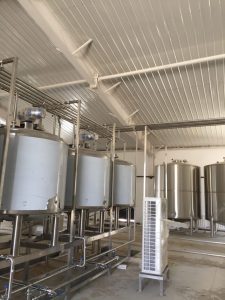
Types and Designs of Stainless Steel Milk Cooling Tanks: Tailoring to Every Dairy Need
The dairy industry is incredibly diverse, with farms ranging from small-scale operations to massive industrial complexes. To cater to this wide spectrum, stainless steel milk cooling tanks are available in various types and designs, each optimized for specific requirements. Understanding these variations is key to selecting the most appropriate milk cooling tank for a particular dairy farm.
The most common types include cylindrical (vertical or horizontal) and rectangular tanks. Horizontal cylindrical tanks are widely popular due to their stable footprint, ease of cleaning, and efficient stirring mechanisms, which prevent cream separation and ensure uniform cooling. Vertical cylindrical tanks, while occupying less floor space, can be taller and may require specific arrangements for cleaning access. Rectangular tanks are often used in smaller settings or where space optimization is critical, though their internal corners can sometimes present more challenges for thorough cleaning than their rounded counterparts.
Beyond the basic shape, the cooling mechanism itself defines different designs. Direct expansion (DX) tanks are the most prevalent, where refrigerant directly circulates through an evaporator coil attached to the inner wall of the stainless steel milk cooling tank. This method offers rapid cooling and is highly efficient. Another design involves ice-bank tanks, which first create a bank of ice, and then chilled water is circulated through a jacket in the tank to cool the milk. Ice-bank systems are excellent for farms with fluctuating power supply or when peak cooling demand exceeds the initial refrigeration capacity.
Manufacturers like SKE, a leader in dairy equipment, offer a comprehensive range of stainless steel milk cooling tank options, engineered with precision and compliance with international standards. SKE’s bulk milk coolers, for example, are meticulously designed for optimal thermal efficiency and ease of maintenance, reflecting a deep understanding of dairy farmers’ needs. These tanks often include features like automatic cleaning systems (CIP – Cleaning In Place), digital temperature control units, and robust agitators to ensure consistent cooling throughout the milk batch. For further reading on related equipment that integrates with these systems, consider our insights on steam kettle applications in food processing, which may share similar material requirements for hygiene.
The choice of a milk cooling tank also depends on capacity, which can range from a few hundred liters for smaller farms to tens of thousands of liters for large operations. Factors such as daily milk production, collection frequency, and future expansion plans all play a crucial role in determining the ideal size and design. SKE’s expertise in manufacturing durable and efficient equipment ensures that every farm can find a stainless steel solution perfectly tailored to its specific demands, guaranteeing maximum preservation of milk quality.
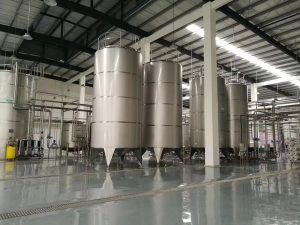
Benefits of Efficient Milk Cooling: Maximizing Profitability and Product Integrity
The efficient cooling provided by a top-tier stainless steel milk cooling tank transcends simple preservation; it is a fundamental driver of profitability, product integrity, and ultimately, consumer confidence in the dairy supply chain. The benefits extend far beyond merely preventing spoilage, impacting every facet of a dairy operation.
One of the most immediate and tangible benefits is the extension of milk’s shelf life. By quickly bringing down the temperature of raw milk to 2-4°C, the growth of psychrotrophic bacteria—those that thrive at cold temperatures—is significantly curtailed. This delay in bacterial proliferation means milk retains its freshness for longer, allowing for less frequent collections from processing plants (reducing transport costs) and providing greater flexibility in the supply chain. This is crucial for maintaining milk grade and avoiding costly penalties from processors for poor quality milk.
Furthermore, efficient cooling ensures higher payouts for farmers. Milk processors frequently offer premiums for milk that meets specific quality parameters, including low bacterial counts, somatic cell counts, and absence of inhibitors. A well-performing stainless steel milk cooling tank is instrumental in achieving these standards, directly contributing to a better return on investment for the farmer. The consistent quality of properly cooled milk also simplifies downstream processing steps, making it easier and more cost-effective to produce high-quality finished dairy products.
Beyond the economic advantages, there’s the undeniable impact on food safety and public health. Every stainless steel milk cooling tank plays a critical role in preventing the proliferation of potentially harmful pathogens. By arresting bacterial growth, these tanks safeguard consumers from foodborne illnesses, reinforcing the dairy industry’s commitment to delivering safe and wholesome products. This commitment is often supported by robust equipment from providers like SKE, whose manufacturing standards directly contribute to these crucial outcomes. The integration of advanced systems, such as those discussed in our review of jacketed kettles, further demonstrates how precision engineering in processing equipment translates to superior product quality and safety.
In essence, investing in an efficient milk cooling tank is an investment in the entire dairy ecosystem—from the farm’s financial health to the consumer’s plate. It’s about ensuring that every drop of milk maintains its intrinsic value, contributing positively to the overall reputation and sustainability of the dairy industry.
SKE’s Commitment to Quality Milk Cooling: Engineering Excellence in Stainless Steel Milk Cooling Tanks
At SKE, our philosophy is deeply rooted in providing dairy professionals with equipment that exceeds expectations in performance, reliability, and hygiene. Our range of stainless steel milk cooling tanks is a testament to this commitment, designed and manufactured with an unwavering focus on the unique demands of the modern dairy industry. We understand that a milk cooling tank is more than just a storage vessel; it’s a critical component that ensures the integrity of a farm’s most valuable product.
Our stainless steel bulk milk coolers are engineered using only premium-grade 304 or 316 stainless steel, ensuring maximum resistance to corrosion, unparalleled durability, and compliance with the strictest food safety regulations. Every SKE stainless steel milk cooling tank features a meticulously polished interior surface, guaranteeing a non-porous environment that inhibits bacterial growth and allows for effortless cleaning via integrated Cleaning-In-Place (CIP) systems. This attention to detail reflects our dedication to the highest standards of hygiene.
SKE tanks are characterized by their superior insulation properties, utilizing high-density polyurethane foam to minimize heat transfer and reduce energy consumption. Our advanced refrigeration units are optimized for rapid cooling, bringing milk down to target temperatures quickly and maintaining them consistently, even in challenging environmental conditions. Precision agitators ensure uniform temperature distribution throughout the milk, preventing fat separation and ensuring consistent quality from the first liter to the last.
We pride ourselves on offering a diverse selection of capacities and configurations to suit any dairy operation, from emerging farms to large-scale enterprises. Whether you require a horizontal or vertical stainless steel milk cooling tank, or a direct expansion versus an ice-bank system, SKE provides tailored solutions that integrate seamlessly into existing farm infrastructures. Our technical support and after-sales service are designed to ensure continuous, optimal operation of your SKE equipment, providing peace of mind and protecting your investment.
Choosing an SKE stainless steel milk cooling tank means investing in a legacy of engineering excellence, robust construction, and a partnership dedicated to the success and sustainability of your dairy farm. We invite you to experience the SKE difference, where quality meets innovation in every product we deliver.
Maintenance and Longevity of Your Stainless Steel Milk Cooling Tank
To maximize the lifespan and efficiency of your stainless steel milk cooling tank, regular and diligent maintenance is absolutely crucial. While stainless steel is inherently durable, neglecting proper care can lead to reduced performance, higher energy consumption, and, most critically, compromised milk quality. Understanding the key aspects of maintenance will ensure your milk cooling tank continues to operate flawlessly for many years.
The most important aspect of maintenance is rigorous cleaning and sanitization. Following each milk collection, the tank must be thoroughly cleaned using an approved Cleaning-In-Place (CIP) system or manual washing with food-grade detergents and sanitizers. This typically involves a rinse cycle, an alkaline wash to remove fat and protein residues, an acid wash to tackle mineral deposits (milkstone), and a final sanitization rinse. It’s imperative that all surfaces, including agitation blades, outlets, and lids, are meticulously cleaned to prevent bacterial biofilm formation. Regular checks for leaks or blockages in the CIP spray balls or nozzles are also essential.
Beyond cleaning, the refrigeration system of the stainless steel milk cooling tank requires attention. This includes checking refrigerant levels, cleaning condenser coils to ensure efficient heat dissipation, and inspecting fans for proper operation. Accumulation of dust and debris on condenser coils can significantly reduce cooling efficiency, leading to higher energy bills and slower cooling times. It’s also advisable to have a qualified technician perform routine checks on the compressor and electrical components according to the manufacturer’s recommendations, often yearly.
Structural integrity checks are also important. Regularly inspect the milk cooling tank for any signs of corrosion, pitting, or physical damage, particularly around welds and joints. Although stainless steel is resistant, certain harsh chemicals or prolonged exposure to stagnant water can sometimes cause issues. Addressing minor issues promptly can prevent them from escalating into major repairs. Ensuring insulation is intact also protects against energy loss and maintains cooling efficiency. A well-maintained stainless steel milk cooling tank is a direct contributor to the overall financial health and operational smoothness of a dairy farm.
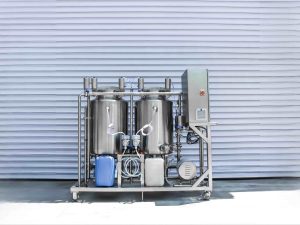
Investing in the Future of Dairy: Selecting Your Stainless Steel Milk Cooling Tank
Choosing the right stainless steel milk cooling tank is a pivotal decision for any dairy farmer, directly impacting milk quality, operational costs, and long-term profitability. It represents not just an equipment purchase, but an investment in the future viability and success of the dairy operation. Given the significant role this equipment plays, careful consideration of several factors is paramount before making a selection.
Firstly, assess your current and projected milk production. The capacity of the milk cooling tank must be sufficient to hold at least 2-3 days’ worth of milk production, accounting for collection schedules and potential peak production periods. Oversizing can lead to inefficient cooling and higher energy costs, while undersizing can result in compromised milk quality and potential losses. Future growth plans should also be factored in, making a slightly larger tank a wise long-term decision.
Secondly, consider the technical specifications and features. Look for tanks made from high-grade stainless steel (like SKE’s commitment to 304/316L), with robust insulation, efficient refrigeration units, and reliable agitation systems. Features such as automatic Cleaning-In-Place (CIP) systems, digital temperature controls, and data logging capabilities can significantly enhance efficiency, hygiene, and compliance. The type of cooling system—direct expansion or ice-bank—should be chosen based on your farm’s power supply stability and specific cooling needs.
Lastly, evaluate the manufacturer’s reputation, warranty, and after-sales support. A reputable supplier like SKE not only provides high-quality stainless steel milk cooling tanks but also offers comprehensive warranties, readily available spare parts, and responsive technical support. This level of support ensures that any issues can be quickly resolved, minimizing downtime and protecting your valuable milk supply. Investing in a quality tank from a trusted partner is an investment in peace of mind and the assurance of consistent milk quality.
By carefully considering these factors, dairy farmers can select a stainless steel milk cooling tank that not only meets their current needs but also serves as a robust and reliable foundation for future success in the dynamic dairy industry. This strategic decision underpins the entire process of delivering high-quality, safe milk to consumers worldwide.
Frequently Asked Questions About Stainless Steel Milk Cooling Tanks
What is the ideal temperature range for storing milk in a stainless steel milk cooling tank?
The ideal temperature range for storing raw milk in a stainless steel milk cooling tank is typically between 2°C and 4°C (35°F to 40°F). This range is crucial for effectively inhibiting bacterial growth and preserving the milk’s quality, freshness, and nutritional value until it can be collected for processing.
How often should a stainless steel milk cooling tank be cleaned?
To maintain optimal hygiene and milk quality, a stainless steel milk cooling tank should be thoroughly cleaned and sanitized after every milk collection. Modern tanks are often equipped with Cleaning-In-Place (CIP) systems that automate this process, ensuring all internal surfaces are free from milk residues and bacteria.
What are the main advantages of using direct expansion (DX) stainless steel milk cooling tanks?
Direct expansion (DX) stainless steel milk cooling tanks offer rapid cooling by circulating refrigerant directly through an evaporator coil in contact with the inner tank wall. Their main advantages include highly efficient cooling, lower initial energy consumption compared to some other systems, and straightforward operation, making them a popular choice for many dairy farms.
Can SKE provide customized stainless steel milk cooling tank solutions for specific farm needs?
Yes, SKE specializes in providing customized solutions for dairy operations of all sizes. We offer a wide range of stainless steel milk cooling tank capacities and designs and can work with farmers to tailor features, dimensions, and cooling systems (direct expansion or ice-bank) to meet specific production volumes, space constraints, and operational requirements.
Need a High-Quality Stainless Steel Milk Cooling Tank for Your Dairy Operation?
Contact SKE today to discuss your specific requirements. Our experts are ready to help you find the perfect solution to preserve your milk quality and optimize your dairy production.
Connect with us on Facebook | Email: info@skeequipment.com
Or, fill out the contact form at the bottom of our page, and a representative will get back to you shortly!