
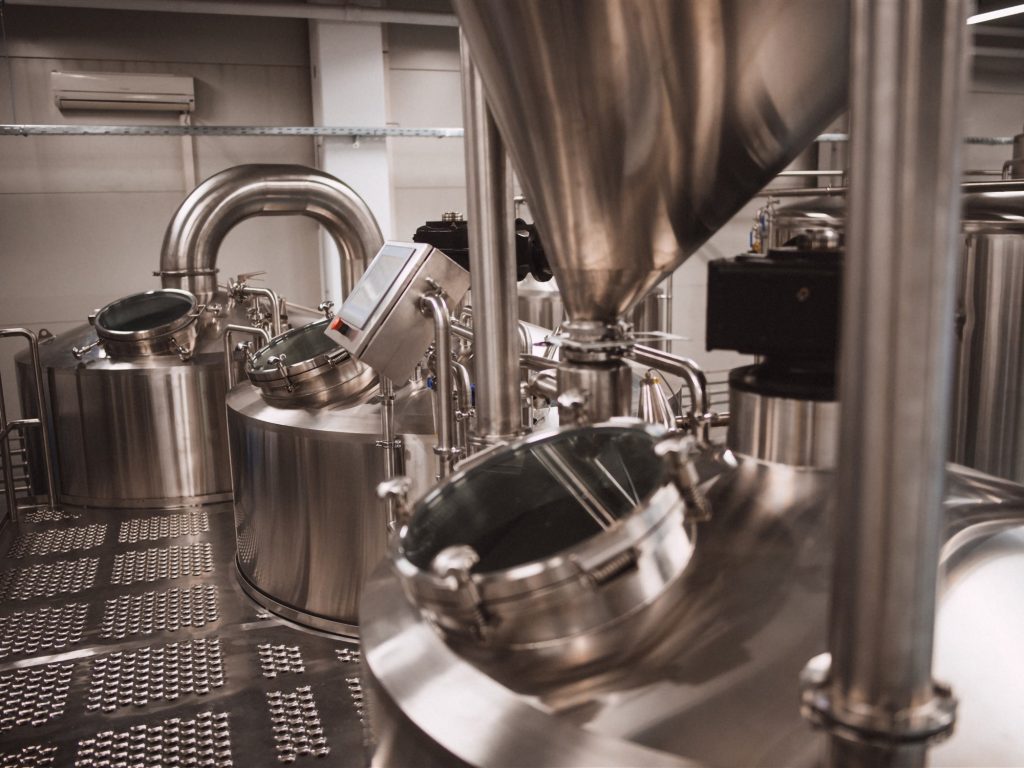
Introduction: Why Stainless Steel for Beer Brewing?
For centuries, brewing beer has been a delicate art, evolving from rustic wooden barrels to sophisticated industrial vessels. In today’s craft brewing landscape, one material stands head and shoulders above the rest: stainless steel. A high-quality stainless steel beer brewing system is not just a preference; it’s a fundamental requirement for producing consistent, high-quality beer. Its inert properties, ease of cleaning, and durability make it the ideal choice for brewers, whether they are small-scale enthusiasts or large commercial operations.
The journey from grain to glass is complex, involving numerous stages, each requiring precise control and hygienic conditions. Stainless steel provides that reliability. Unlike other materials, it does not react with the wort or beer, preventing unwanted flavors and ensuring the purity of your brew. This is paramount in beer making, where off-flavors can ruin an entire batch. Furthermore, the robust nature of stainless steel means your investment in a brewing system will stand the test of time, enduring high temperatures, caustic cleaning agents, and the rigors of daily operation.
At SKE, we understand the critical role material plays in brewing success. Our commitment to using premium stainless steel in every component of our brewing systems reflects our dedication to quality and longevity. We believe that a superior brewing system starts with superior materials, and stainless steel delivers on all fronts. From the mash tun to the fermenters, every piece of equipment in a modern brewery often relies on this versatile metal. This guide will delve deep into why a stainless steel beer brewing system is the cornerstone of any successful brewing venture, exploring its benefits, components, and how to choose the right one for your needs.
The Unmatched Advantages of a Stainless Steel Beer Brewing System
The choice of material for your brewing equipment is one of the most critical decisions a brewer will make. There are numerous compelling reasons why stainless steel has become the industry standard for any serious stainless steel beer brewing system. Its advantages span hygiene, durability, thermal efficiency, and overall operational safety and efficiency.
Firstly, hygiene is paramount in brewing. Stainless steel is non-porous, meaning it does not harbor bacteria or yeast, which are common culprits for contamination and off-flavors. Its smooth surface makes it incredibly easy to clean and sanitize, a process known as Clean-in-Place (CIP). This reduces the risk of cross-contamination between batches and helps maintain the integrity of your brew. Compare this to alternative materials like plastic or even some older metals, which can scratch easily and provide nooks and crannies for microorganisms to hide and flourish.
Secondly, durability is a significant benefit. Stainless steel is incredibly robust and resistant to corrosion, rust, and physical damage, even when exposed to harsh chemicals used in cleaning and sanitization. This longevity translates directly into a higher return on investment for brewers. A well-maintained stainless steel beer brewing system can last for decades, far outperforming cheaper, less durable alternatives.
Thermal conductivity and retention are also key. While stainless steel is not the best conductor of heat, its ability to retain heat once established is excellent, which is crucial for maintaining precise temperature control during mashing, lautering, and boiling. Many modern brewing systems, including those offered by SKE, integrate advanced heating elements and insulation with stainless steel vessels to optimize energy efficiency and ensure consistent temperatures throughout the brewing process.
Finally, safety and aesthetic appeal are not to be overlooked. Stainless steel is a safe material for food and beverage contact, releasing no harmful chemicals into the beer. Aesthetically, a gleaming stainless steel brewery presents a professional and clean image, which is important for attracting customers and building brand trust. From a functional standpoint, the material’s strength allows for the fabrication of complex designs, including jackets for heating and cooling, conical bottoms for efficient yeast harvesting, and robust CIP spray balls, all integral to modern brewing.
For more insights into modern brewing processes, consider reading our article on flash pasteurization system: what it is and how it works, which highlights another critical aspect of beverage production where hygiene and material quality are essential.
Key Components of a Modern Stainless Steel Beer Brewing System
A complete stainless steel beer brewing system is an intricate assembly of specialized vessels and components, each playing a vital role in transforming raw ingredients into finished beer. Understanding these components is crucial whether you’re designing a new brewery or upgrading an existing one. SKE provides a full suite of these components, engineered to work seamlessly together.
At the heart of the hot side are the brewhouse vessels. This typically includes a Mash Tun, Lauter Tun, Kettle (or Brew Kettle), and Whirlpool. Often, the Mash and Lauter Tuns are combined into a single vessel, as are the Kettle and Whirlpool for smaller or more compact systems. The Mash Tun is where milled grains are mixed with hot water to convert starches into fermentable sugars. Made from stainless steel, it ensures consistent temperature and easy cleaning. The Lauter Tun, usually with a false bottom, separates the sweet wort from the spent grains. Next, the wort moves to the Kettle, where it’s boiled, and hops are added for bitterness, aroma, and flavor. The Whirlpool then separates hop debris and other solids from the wort before cooling.
Once cooled, the wort is transferred to fermentation tanks. These are arguably the most iconic components of any stainless steel beer brewing system. Made with precision-welded stainless steel, conical fermenters are designed for optimal yeast health and efficient harvesting. Their conical bottom allows yeast to settle and be easily collected for reuse, while the stainless steel ensures a sterile environment. These fermenters often feature glycol jackets for precise temperature control, a critical factor for consistent fermentation profiles. Following fermentation, the beer might be transferred to bright tanks – also stainless steel – for conditioning, carbonation, and clarification before packaging. These bright tanks, or Brite Beer Tanks (BBT), are usually jacketed and serve as a holding vessel for finished beer ready for kegging, bottling, or canning.
Beyond these core vessels, other essential stainless steel components include pumps for transferring liquids, heat exchangers (chillers) for rapid wort cooling, piping, valves, and various fittings that connect the entire system. CIP (Clean-in-Place) skids, often automated, utilize stainless steel spray balls and lines to thoroughly clean and sanitize all vessels, critical for maintaining the hygiene demanded by a sophisticated stainless steel beer brewing system. For a deeper dive into optimizing your brewing process, our article on choosing the right grain handling system for your brewery discusses pre-brewhouse considerations that complement a robust stainless steel setup.
Sizing Your Stainless Steel Brewing System: From Pilot to Production
Choosing the right size for your stainless steel beer brewing system is a crucial decision that impacts everything from initial investment and operational costs to production capacity and future growth potential. There’s no one-size-fits-all answer, as the ideal system depends heavily on your specific goals, whether you’re a passionate homebrewer looking to scale up, a nano-brewery, or a large-scale commercial operation.
For homebrewers looking to step up their game, a small pilot stainless steel system, often ranging from 1 BBL (barrel) to 3 BBL, can be an excellent starting point. These systems allow for experimentation and recipe development with commercial-grade equipment without the massive overhead. They provide a realistic understanding of professional brewing processes and can often be scaled or expanded as the brewer’s expertise and demand grow.
Nano and microbreweries typically opt for systems in the 5 BBL to 15 BBL range. These sizes strike a balance between production capacity and manageability, allowing for local distribution and taproom sales. When considering a stainless steel beer brewing system of this size, it’s essential to not only think about the brewhouse capacity but also the corresponding fermentation and bright tank capacity. A common rule of thumb is to have at least 2-3 times your brewhouse volume in fermentation capacity to allow for sequential brews and different beer styles. SKE offers modular systems that can be easily expanded, providing flexibility for growing breweries.
Larger regional breweries and craft breweries with wider distribution demands will require larger systems, ranging from 20 BBL to 100 BBL or more. These systems are highly automated and custom-designed to maximize efficiency and output. Here, considerations such as mash filter presses, advanced CIP systems, and fully integrated controls become more prominent. For such significant investments, planning for future expansion is key; choosing a manufacturer like SKE that can provide scalable solutions and expert consultation is invaluable. Our project management team assists clients in determining optimal system sizes, ensuring that the chosen stainless steel beer brewing system aligns perfectly with their business model and growth trajectory. Proper planning at this stage, including considerations for utilities and space, can save significant costs and headaches down the road. You can learn more about optimizing your brewery’s overall layout and efficiency by checking out our articles on craft beer fermentation tank considerations, as fermentation capacity often dictates actual production output.
Maintaining Your Stainless Steel Beer Brewing System for Longevity
Investing in a high-quality stainless steel beer brewing system is a significant commitment, and proper maintenance is key to protecting that investment and ensuring its longevity, efficiency, and consistent beer quality. While stainless steel is renowned for its durability and ease of cleaning, neglecting basic maintenance can lead to issues ranging from cosmetic damage to severe operational problems.
The cornerstone of stainless steel maintenance in a brewery is effective cleaning and sanitization. After every use, all vessels – mash tun, lauter tun, kettle, fermenters, and bright tanks – must undergo a thorough CIP (Clean-in-Place) cycle. This typically involves rinsing with water, circulating an alkaline cleaner (like caustic soda) to remove organic matter, an acid wash to remove inorganic deposits (like beer stone), and then sanitization (often with a peracetic acid solution or steam). It’s crucial to use cleaning agents specifically designed for stainless steel and to follow recommended concentrations and contact times to prevent corrosion or pitting.
Regular inspection is also vital. Brewers should routinely check all welds for hairline cracks, inspect gaskets and seals for wear and tear, and examine valves and fittings for leaks. Even small issues, if left unattended, can escalate into costly repairs or jeopardize a batch of beer. Pay particular attention to sight glasses, pressure relief valves (PRVs), and rotary spray balls, ensuring they are clean and functioning correctly. For systems with insulation jackets, monitor for any signs of moisture ingress, which can compromise insulation efficiency and potentially lead to external corrosion if not addressed.
Finally, preventative maintenance extends beyond just cleaning. This includes lubricating moving parts, calibrating sensors and gauges, and scheduling periodic professional inspections. For instance, ensuring your glycol chiller system is running optimally is critical for maintaining precise fermentation temperatures. At SKE, we provide comprehensive manuals and support to help our clients implement robust maintenance routines for their stainless steel beer brewing system. Proper care not only prolongs the life of the equipment but also ensures that every batch of beer produced meets the highest standards of quality and consistency.
The SKE Difference: Crafting Superior Stainless Steel Brewing Solutions
At SKE, we don’t just sell equipment; we provide comprehensive brewing solutions built on a foundation of quality, innovation, and unwavering support. When you choose a stainless steel beer brewing system from SKE, you’re investing in decades of expertise and a commitment to excellence that permeates every single weld, polish, and control system. Our reputation is built on delivering reliable, efficient, and sanitary brewing equipment that empowers brewers to consistently produce exceptional beer.
What sets SKE apart begins with our meticulous material selection. We source only the highest-grade 304 and 316L stainless steel, specifically chosen for its food-grade properties, corrosion resistance, and durability. This commitment ensures that every vessel, pipe, and fitting in your stainless steel beer brewing system meets the strictest hygiene standards and will withstand the rigorous demands of daily brewery operations for years to come. Our skilled fabricators adhere to stringent quality control, employing advanced welding techniques and polishing standards to create seamless, easy-to-clean surfaces that minimize the risk of contamination.
Beyond superior craftsmanship, SKE offers customized solutions. We understand that every brewery is unique, with specific space constraints, production goals, and budget considerations. Our engineering team works closely with clients to design a tailored stainless steel beer brewing system, from compact pilot setups to large-scale multi-vessel brewhouses. This bespoke approach ensures optimal workflow, energy efficiency, and future scalability. We integrate cutting-edge automation and control systems, allowing brewers precise command over every stage of the brewing process, from mashing temperatures to fermentation profiles.
Our dedication extends far beyond the sale, offering unparalleled after-sales support, installation guidance, and training. We believe in building lasting partnerships with our clients, helping them succeed in a competitive industry. With SKE, you’re not just purchasing a stainless steel beer brewing system; you’re gaining a trusted partner committed to your brewing journey, ensuring that your equipment performs flawlessly and contributes directly to your liquid success.
Future Trends in Stainless Steel Beer Brewing Technology
The brewing industry is dynamic, constantly evolving with new technologies and increasing demands for efficiency and sustainability. The future of the stainless steel beer brewing system will undoubtedly see further innovation, building upon its inherent strengths to meet these challenges. Several key trends are already shaping the next generation of brewing equipment made from this versatile metal.
Automation and smart technology are at the forefront. While current systems offer considerable automation, future stainless steel brewing systems will likely feature even more advanced integrated sensors, AI-driven process optimization, and predictive maintenance capabilities. Imagine a system that not only monitors temperatures and pressures but also analyzes yeast health in real-time, adjusts hop additions based on desired bitterness units, and schedules CIP cycles autonomously. This level of ‘smart brewing’ will improve consistency, reduce human error, and free up brewers to focus more on creativity and recipe development.
Another significant trend is sustainability. Brewers are increasingly seeking ways to reduce their environmental footprint, and stainless steel systems are evolving to support this. Innovations include more efficient heat recovery systems to capture energy from boiling wort, water-saving CIP technologies, and designs that minimize thermal losses. Stainless steel’s durability already contributes to sustainability by reducing the need for frequent equipment replacement, but future designs will push for even greater resource efficiency throughout the brewing cycle.
Modularity and flexibility will also continue to be important. As craft breweries grow and diversify their product lines, the ability to easily add a new fermentation tank, bright tank, or even integrate a canning line seamlessly into an existing stainless steel beer brewing system will be crucial. Manufacturers like SKE are already designing modular systems that can expand or adapt to different brewing processes, ensuring that initial investments remain relevant and valuable as businesses evolve. The demand for compact, multi-functional vessels is also growing, allowing smaller spaces to host more extensive brewing operations. These trends ensure that stainless steel remains the material of choice, adaptable to the innovations that will define future brewing.
Frequently Asked Questions About Stainless Steel Beer Brewing Systems
Why is stainless steel the preferred material for professional beer brewing equipment?
Stainless steel is preferred due to its non-reactive nature, which prevents off-flavors and ensures beer purity. It’s also highly durable, resistant to corrosion, easy to clean and sanitize (non-porous), and offers excellent thermal retention, paramount for consistent brewing conditions and hygiene.
What are the essential components of a complete stainless steel beer brewing system?
A complete system typically includes a brewhouse (Mash Tun, Lauter Tun, Kettle/Whirlpool), fermentation tanks (conical fermenters), bright tanks, a chiller/heat exchanger, pumps, piping, valves, and a Clean-in-Place (CIP) system. SKE offers all these components, often integrated into a seamless brewing solution.
How do I properly maintain a stainless steel beer brewing system for optimal performance?
Proper maintenance involves diligent Clean-in-Place (CIP) procedures after each use, including alkaline and acid washes followed by sanitization. Regular inspection for leaks or damage, lubrication of moving parts, and calibration of sensors are also crucial to ensure longevity and efficiency.
Can a stainless steel beer brewing system be customized to fit specific brewery needs?
Absolutely. Manufacturers like SKE specialize in designing and fabricating custom stainless steel brewing systems. This includes tailoring brewhouse size, fermenter capacity, automation levels, and overall brewery layout to match a client’s specific production goals, space constraints, and budget.
Ready to Elevate Your Brewing?
Discover how a premium stainless steel beer brewing system from SKE can transform your brewery operations and beer quality.
Connect with us on social media: SKE on Facebook
Email us directly: info@skeequipment.com
Or, fill out the contact form at the bottom of our page to get a personalized quote or consultation!