Introduction to Stainless Steel Liquid Mixing Tanks
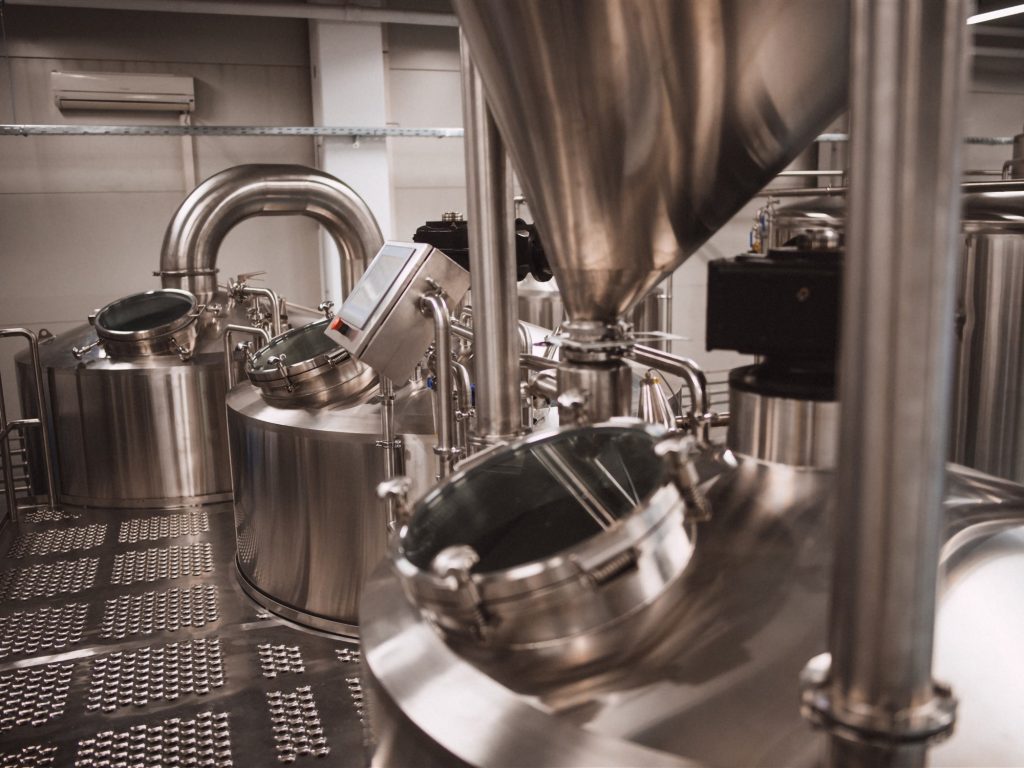
In countless industrial processes, from the creation of your favorite beverage to the formulation of life-saving medicines, the humble yet critical stainless steel liquid mixing tank plays an indispensable role. These robust vessels are the workhorses of fluid integration, ensuring homogeneity, reaction efficiency, and consistent product quality. When liquids need to be blended, diluted, dissolved, or chemically reacted under controlled conditions, a well-designed stainless steel liquid mixing tank is the core piece of equipment. At SKE, we understand that precision, hygiene, and durability are paramount, which is why our focus is on engineering tanks that meet the most stringent industry demands.
The global market for processing equipment relies heavily on materials that can withstand corrosive substances, maintain sterility, and operate reliably under various temperature and pressure regimes. Stainless steel, with its exceptional properties, emerges as the material of choice for the vast majority of liquid mixing applications. The demand for efficient and reliable mixing solutions continues to grow, driven by innovations in biotechnology, complex chemical formulations, and stringent food safety regulations. SKE is at the forefront of providing state-of-the-art stainless steel liquid mixing tank technologies that contribute to these advancements.
This comprehensive guide will delve deep into the world of stainless steel liquid mixing tanks, exploring their fundamental importance, the advantages of stainless steel, key design considerations, diverse applications, and how SKE’s expertise translates into superior mixing solutions for various industries. Whether you’re a food scientist looking to blend ingredients, a chemical engineer requiring precise reaction control, or a pharmaceutical manufacturer needing sterile mixing environments, understanding the intricacies of these tanks is crucial for operational success and product integrity. Our aim is to provide valuable insights into selecting, operating, and maintaining these vital pieces of equipment.
Why Stainless Steel? Unpacking the Material Advantages for Liquid Mixing Tanks
The choice of material for a liquid mixing tank is a critical decision that impacts not only the tank’s initial cost but also its operational lifespan, maintenance requirements, and crucially, the integrity of the product being processed. For applications involving liquids, especially those in sensitive industries, stainless steel stands out as the uncontested champion. The metallurgical composition of stainless steel, particularly its chromium content, forms a passive layer that provides exceptional corrosion resistance, making it an ideal material for a stainless steel liquid mixing tank.
One of the primary advantages is its unparalleled hygiene. Stainless steel’s smooth, non-porous surface prevents bacterial growth and makes cleaning and sterilization incredibly efficient. This is a non-negotiable feature in sectors like food and beverage, pharmaceutical, and cosmetics, where product purity and consumer safety are paramount. Grade 304 stainless steel is commonly used for general applications, while 316L, with its added molybdenum, provides enhanced resistance to chlorides and acidic environments, making it suitable for more aggressive chemical processing. SKE meticulously selects the appropriate grade of stainless steel for every stainless steel liquid mixing tank based on the client’s specific process and liquid characteristics.
Beyond hygiene and corrosion resistance, stainless steel offers superior mechanical properties, including high strength and durability. This allows for the construction of robust tanks that can withstand varying pressures, temperatures, and the forces exerted by powerful agitators. Its resistance to extreme temperatures also makes it ideal for tanks equipped with heating or cooling jackets, ensuring precise temperature control during mixing. Furthermore, stainless steel is a sustainable choice; it’s 100% recyclable, aligning with modern environmental standards. When considering an investment in a durable, safe, and efficient mixing solution, the benefits of a stainless steel liquid mixing tank are overwhelmingly clear, providing long-term value and operational peace of mind.

Key Design and Components of a Stainless Steel Liquid Mixing Tank
A sophisticated stainless steel liquid mixing tank is far more than just a metal cylinder; it’s a precisely engineered system designed to achieve specific processing outcomes. Understanding its key components and design principles is essential for optimizing performance and selecting the right tank for your operation. The core of any mixing tank is its vessel, typically cylindrical, constructed from high-grade stainless steel such as SS304 or SS316L, ensuring structural integrity and compatibility with varied liquids.
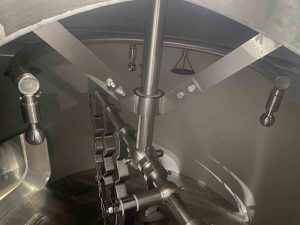
The most crucial functional component is the agitator system. This includes the motor, gearbox, shaft, and impellers. The type of impeller chosen—propeller, turbine, paddle, anchor, or custom-designed—depends heavily on the viscosity of the liquid, the desired mixing intensity, and whether solid particles need to be kept in suspension. For instance, viscous liquids often require anchor or helical ribbon agitators to ensure effective wall-scraping and heat transfer, while low-viscosity solutions might employ high-shear mixers or propellers. SKE offers a range of mixing tank agitator types, carefully matching them to specific process requirements.
Other vital design elements include dished or conical bottoms for complete drainage, especially crucial for hygienic applications and efficient cleaning. Jackets for heating or cooling (dimple, half-pipe, or full jacket) allow precise temperature control during mixing, which is vital for chemical reactions, pasteurization, or maintaining product consistency. Inlet and outlet ports, manways for access, sight glasses for monitoring, and various sensors (temperature, pressure, level) are also integral. The sealing arrangements for agitator shafts are also critical, ranging from mechanical seals to stuffing boxes, chosen based on product characteristics and pressure requirements. SKE’s expertise ensures that every aspect of the stainless steel liquid mixing tank design is optimized for performance, safety, and longevity, contributing significantly to overall process efficiency. Attention to detail, from internal finishes to specialized baffles for enhanced mixing, marks the commitment to superior engineering.
Types and Diverse Applications of Stainless Steel Mixing Tanks
The versatility of a stainless steel liquid mixing tank is truly remarkable, leading to its widespread adoption across a multitude of industries. While the basic principle remains the same – blending liquids – the specific tank configurations, agitator types, and integrated features vary significantly depending on the application. Understanding these variations is key to harnessing the full potential of these indispensable industrial workhorses. From pharmaceutical sterile compounding to robust chemical blending, the adaptability of stainless steel allows for tailored solutions.
Common Types of Stainless Steel Liquid Mixing Tanks:
- Simple Blending Tanks: Equipped with basic agitators (e.g., propellers) for low-viscosity solutions, ideal for diluting or simple mixing.
- High-Shear Mixing Tanks: Feature high-speed impellers or rotor-stator systems for emulsifying, homogenizing, and rapidly dissolving solids into liquids.
- Jacketed Mixing Tanks: Incorporate heating or cooling jackets (like dimple jackets, as seen in many SKE designs) to maintain precise temperature control during mixing, crucial for reactions or temperature-sensitive products. These are often used for applications like thermal mixing, such as thermal mixing.
- Vacuum Mixing Tanks: Designed to operate under vacuum conditions, preventing oxidation, air entrapment, or facilitating solvent recovery, especially important in pharmaceutical and cosmetic production.
- Pressure Vessels: Built to withstand internal pressure, ideal for processes involving gases or superheated liquids, often found in chemical and biotechnological industries.
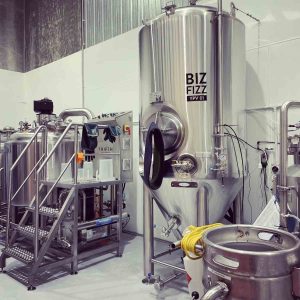
- Storage/Mixing Tanks: Tanks that serve a dual purpose, allowing for both mixing and subsequent storage, common in breweries or bulk chemical storage.
Diverse Applications:
- Food & Beverage: Blending juices, dairy products, sauces, syrups, vegetable oils, and craft beverages like beer and cider. The hygienic properties of the stainless steel liquid mixing tank are critical here.
- Pharmaceuticals: Preparing active pharmaceutical ingredients (APIs), sterile solutions, vaccine production, and cosmetic emulsions. 316L stainless steel is often mandated for its extreme purity and corrosion resistance.
- Cosmetics: Manufacturing lotions, creams, shampoos, conditioners, and liquid soaps, requiring particle dispersion and emulsification.
- Chemical Industry: Mixing acids, bases, solvents, polymers, adhesives, paints, and coatings, where resistance to aggressive chemicals is crucial.
- Biotechnology: Cell culture media preparation, fermentation, and bioreactor applications, demanding strict sterility and often precise heating/cooling capabilities.
- Water Treatment: Preparing flocculants, disinfectants, and other chemical solutions for water purification.
Each sector leverages the specific advantages of a stainless steel liquid mixing tank to meet its unique production challenges, underscoring the material’s adaptability and critical role in modern manufacturing. SKE’s comprehensive range of custom-built tanks ensures that regardless of the industry or application, our clients receive a solution perfectly tailored to their operational needs.
SKE’s Approach to High-Performance Stainless Steel Mixing Solutions
At SKE, we don’t just build tanks; we engineer comprehensive, high-performance mixing solutions. Our reputation as a leading manufacturer of industrial process equipment is built on a deep understanding of fluid dynamics, material science, and the specific operational challenges faced by our clients. When it comes to a stainless steel liquid mixing tank, our approach is holistic, covering everything from initial design consultation to manufacturing, installation, and after-sales support.
Our commitment to quality begins with material selection. We utilize only certified, high-grade stainless steel, primarily SS304 and SS316L, ensuring optimal chemical resistance, hygienic integrity, and long-term durability for every stainless steel liquid mixing tank. Each tank is meticulously fabricated following strict international standards, incorporating precision welding and finishing techniques to prevent contamination and facilitate easy cleaning. We understand that the internal finish is as important as the external structure, especially for pharmaceutical and food-grade applications.
A key differentiator for SKE is our expertise in agitator design. We recognize that effective mixing is crucial, and a one-size-fits-all approach is rarely sufficient. Our engineering team analyses liquid viscosity, density, shear requirements, and desired mixing outcomes to select and customize the most appropriate agitator type and power. This could range from gentle blending to high-shear dispersion, ensuring optimal energy transfer and homogeneity within the stainless steel liquid mixing tank. We also integrate advanced features like heating/cooling jackets, sophisticated contro systems, and bespoke access solutions to meet unique project specifications. For complex processes our reactor tanks often incorporate these specialized mixing capabilities.
Furthermore, our rigorous quality control processes ensure that every SKE stainless steel liquid mixing tank undergoes thorough inspection and testing before leaving our facility. This commitment to excellence guarantees reliability, efficiency, and compliance with industry regulations. We pride ourselves on building lasting partnerships with our clients, providing not just equipment, but a robust solution that enhances their production capabilities and contributes to their success. Our aim is to deliver equipment that is not only functional but also highly efficient, reducing operational costs and maximizing throughput for your industrial processes.
Factors to Consider When Choosing a Stainless Steel Liquid Mixing Tank
Selecting the right stainless steel liquid mixing tank can significantly impact your operational efficiency, product quality, and bottom line. It’s a decision that requires careful consideration of various technical and practical factors. Rushing this choice can lead to suboptimal performance, increased maintenance, or even product contamination.
- Capacity and Dimensions: Start with the volume of liquid you need to process. Consider not just the working volume but also any potential for foaming or expansion. Tank dimensions (diameter-to-height ratio) can also influence mixing efficiency.
- Material Grade: As discussed, SS304 is suitable for general applications, while SS316L offers superior corrosion resistance against chlorides and acids, crucial for pharmaceuticals, aggressive chemicals, or saltwater solutions. Ensure the chosen grade is compatible with your specific liquid media.
- Agitator Type and Power: This is arguably the most critical component. Match the agitator type (propeller, turbine, anchor, high-shear, helical ribbon) to your liquid’s viscosity, desired shear, and mixing objective (e.g., blending, solids suspension, emulsification). The motor power must be sufficient to drive the agitator under full load. Also consider how to size and select a mixing tank agitator correctly for optimum performance.
- Heating & Cooling Requirements: If temperature control is necessary, specify suitable jacketing (dimple, half-pipe, full), insulation, and the heating/cooling medium.
- Pressure and Vacuum Capabilities: Determine if your process requires the tank to operate under pressure or vacuum. This affects wall thickness, lid design, and sealing mechanisms.
- Hygienic Requirements & Finish: For food, pharma, and biotech, internal surface finishes (e.g., Ra values) are critical to prevent bacterial adhesion. Specify polished finishes and consider CIP (Clean-in-Place) compatibility.
- Ancillary Equipment & Automation: Think about necessary inlets/outlets, sensors (temperature, pressure, level), spray balls for CIP, manways, sight glasses, and integration with existing control systems.
- Safety Features: Overpressure/vacuum relief valves, emergency stop buttons, and safety interlocks are vital.
- Budget and Lead Time: While a critical factor, don’t let it compromise essential functional requirements. A cheaper tank that doesn’t perform adequately will cost more in the long run.
Engaging with an experienced manufacturer like SKE early in the design phase allows for detailed consultation, ensuring that your stainless steel liquid mixing tank is perfectly aligned with your operational goals and delivers maximum efficiency and longevity.
Maintenance and Longevity of Your Stainless Steel Mixing Tank
Investing in a high-quality stainless steel liquid mixing tank from SKE is a commitment to long-term operational efficiency and product integrity. To ensure this investment provides decades of reliable service, proper maintenance is not just recommended, it’s essential. The inherent durability of stainless steel makes it a low-maintenance material, yet certain practices are crucial to preserve its performance and extend its lifespan.
- Regular Cleaning and Sterilization: This is paramount, especially for hygienic applications. Implement a robust Clean-in-Place (CIP) or Clean-Out-of-Place (COP) protocol to remove product residues. Choose appropriate cleaning agents that are compatible with stainless steel and rinse thoroughly to prevent chemical build-up. Neglecting this can lead to biofilm formation or corrosion over time.
- Agitator System Inspection: The agitator, gearbox, and motor are the dynamic heart of the stainless steel liquid mixing tank. Regularly check for wear and tear on impellers, shaft seals (mechanical seals require periodic attention), and bearings. Lubricate moving parts according to manufacturer guidelines. Any unusual noises or vibrations should be investigated immediately.
- Seal Integrity Checks: Gaskets and O-rings on manways, ports, and agitator shafts are critical for maintaining tank integrity, especially for pressure or vacuum operations. Inspect them for cracks, hardening, or signs of leakage and replace as necessary to prevent contamination or operational losses.
- Surface Inspection: Periodically inspect both internal and external stainless steel surfaces for any signs of pitting corrosion, crevice corrosion, or stress cracks. While stainless steel is highly resistant, prolonged exposure to aggressive chemicals or improper cleaning can cause localized damage. Address any issues promptly, possibly with passivation treatments to restore the protective chromium oxide layer.
- Instrumentation Calibration: Ensure that all sensors (temperature, pressure, level) are regularly calibrated to guarantee accurate process control. Faulty instrumentation can lead to inefficient mixing, product spoilage, or unsafe operating conditions within the stainless steel liquid mixing tank.
- Preventive Maintenance Schedule: Establish a comprehensive preventive maintenance schedule based on manufacturer recommendations and your operational demands. This should include routine inspections, lubrication, component replacement, and system checks.
By adhering to these maintenance practices, you not only ensure the continuous peak performance of your SKE stainless steel liquid mixing tank but also safeguard your product quality, reduce unscheduled downtime, and maximize the return on your capital investment. SKE also provides comprehensive after-sales support and spare parts to assist our clients in maintaining their equipment for years to come.
Ready to elevate your liquid mixing processes with a custom SKE Stainless Steel Liquid Mixing Tank?
Contact us today to discuss your specific requirements or to learn more about our state-of-the-art solutions.
Find us on Facebook
Email us at info@skeequipment.com
Or, simply fill out the contact form at the bottom of the page, and our experts will get in touch!
Frequently Asked Questions about Stainless Steel Liquid Mixing Tanks
What are the primary benefits of using a stainless steel liquid mixing tank?
Stainless steel liquid mixing tanks offer superior corrosion resistance, hygienic properties, durability, and ease of cleaning, making them ideal for sensitive applications in food, pharmaceutical, and chemical industries. Their robust construction ensures long operational lifespans and maintains product integrity.
How does SKE ensure the quality and efficiency of its stainless steel mixing tanks?
SKE integrates advanced engineering, high-grade stainless steel materials (like 304 and 316L), customizable agitator designs, and stringent quality control protocols. We focus on optimizing mixing efficiency, ensuring hygienic standards, and providing durable, energy-efficient solutions tailored to specific client needs.
What industries commonly use stainless steel liquid mixing tanks?
These tanks are indispensable across a wide range of sectors including food and beverage (dairy, juices, sauces), pharmaceuticals (drug formulations, vaccines), cosmetics (lotions, shampoos), chemicals (solutions, coatings), and biotechnology. Their versatility and hygienic design make them suitable for diverse liquid processing tasks.
Can SKE provide customized stainless steel mixing tank solutions?
Absolutely. SKE specializes in providing bespoke stainless steel liquid mixing tank solutions. We work closely with clients to understand their specific requirements regarding capacity, agitation type, heating/cooling jackets, pressure capabilities, and integration with existing systems to deliver highly customized and efficient equipment.