- What Is Unitank Beer?
- History and Evolution of the Unitank
- Core Working Principles of Unitank Beer Systems
- Key Design Features of SKE Unitanks
- Full Brewing Process with a Unitank
- Benefits of Using Unitanks for Beer Production
- Unitank vs. Traditional Fermenter vs. Bright Tank (Comparison Table)
- Applications of Unitank Beer Systems
- Materials, Hygiene, and Cleaning Best Practices
- How to Select the Right Unitank for Your Brewery
- SKE Unitank Product Line and Custom Solutions
- Maintenance and Troubleshooting
- Future Trends in Unitank Beer Technology
- Frequently Asked Questions (FAQ)
- Conclusion: Why Choose SKE Unitanks for Your Brewery
What Is Unitank Beer?
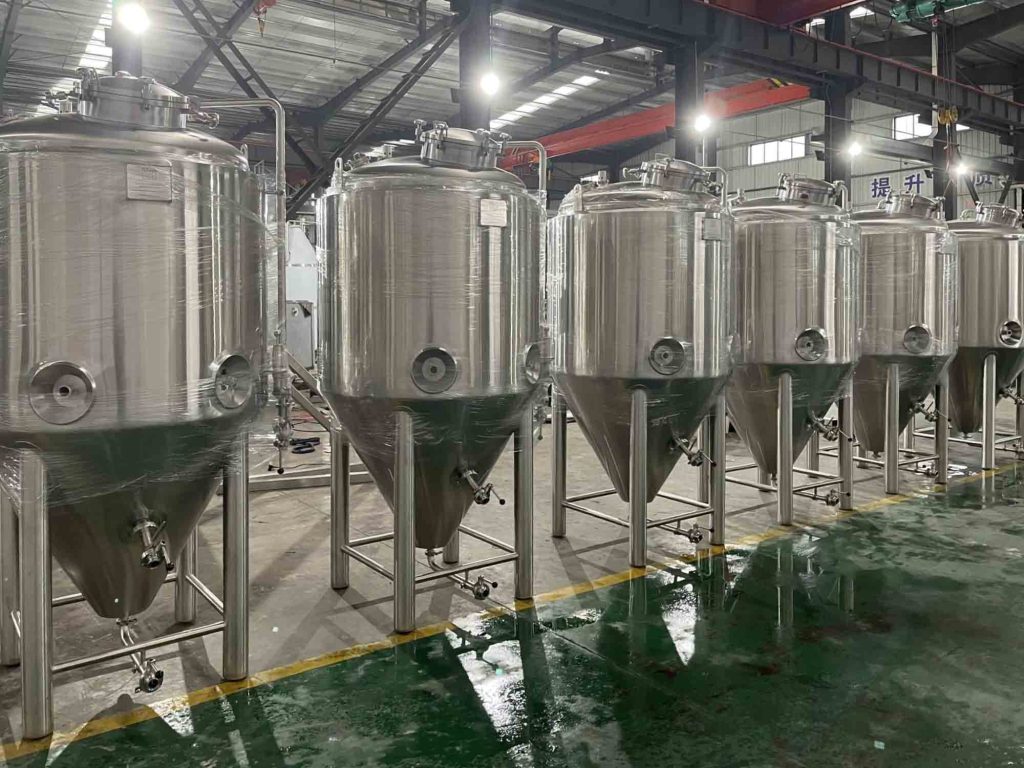
Unitank beer refers to beer produced using a Unitank—a versatile, all-in-one vessel that combines fermentation, maturation, clarification, carbonation, and storage in a single tank. Unlike traditional brewing setups that require separate fermenters and bright tanks, the unitank streamlines the entire process.
The term “unitank beer” highlights a modern, efficient brewing method that reduces handling, lowers contamination risk, saves space, and cuts operational costs. For craft breweries, brewpubs, mid-sized facilities, and even industrial plants, unitanks have become a standard solution for consistent, high-quality beer.
As a professional beer equipment manufacturer, SKE designs and manufactures food-grade, pressure-rated unitanks that support every stage of unitank beer production. Our systems are engineered for reliability, ease of use, and long-term performance.
History and Evolution of the Unitank
The unitank was first introduced in the late 1960s, with Rainier Brewery credited as an early adopter of the concept. The design evolved from traditional cylindroconical fermenters (CCTs) by adding pressure resistance, improved cooling, and sanitary features to support multiple process steps.
Early fermentation systems forced brewers to transfer beer between tanks for fermentation, conditioning, and carbonation. Each transfer increased oxidation and contamination risks. The unitank eliminated these weak points by allowing static processing.
Over decades, engineering improvements—including dual cooling jackets, precision pressure control, sanitary tri-clamp connections, and automated controls—turned unitanks into industry-standard workhorses. Today, unitank beer production is synonymous with efficiency and quality across the global brewing sector.
SKE has studied decades of industry innovation to refine our unitank designs. We combine proven legacy principles with modern manufacturing to deliver robust, future-ready equipment for unitank beer production.
Core Working Principles of Unitank Beer Systems
A unitank operates on a few simple but powerful principles that make unitank beer consistent and high-quality.
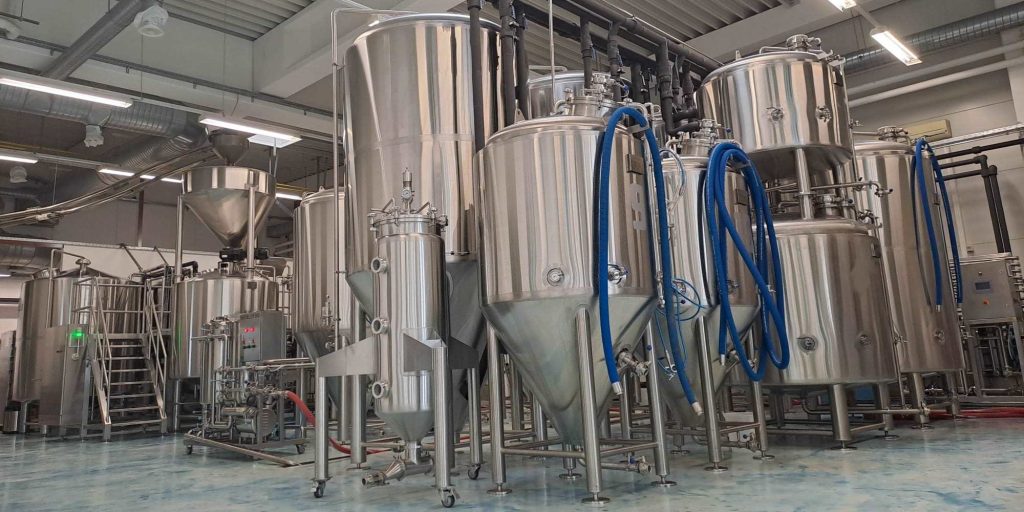
First, the tank uses a cylindroconical structure to allow yeast and solids to settle into the cone for easy removal. This eliminates the need for filtering in many cases and supports natural clarification.
Second, the unitank is fully pressure-rated, typically from 15 psi to over 30 psi, depending on the model. This allows natural carbonation during fermentation or forced carbonation using CO₂ after fermentation is complete.
Third, jacketed cooling provides precise temperature control for ale, lager, cold crashing, and lagering. Uniform cooling ensures stable fermentation and repeatable batch profiles.
Finally, a closed system prevents oxygen intrusion and microbial contamination. Beer stays in one tank from start to finish, which is the foundation of reliable unitank beer production.
SKE unitanks are engineered to maximize these principles, ensuring stable performance for every style of unitank beer.
Key Design Features of SKE Unitanks
SKE unitanks are purpose-built for unitank beer production with professional-grade features that improve performance and longevity.
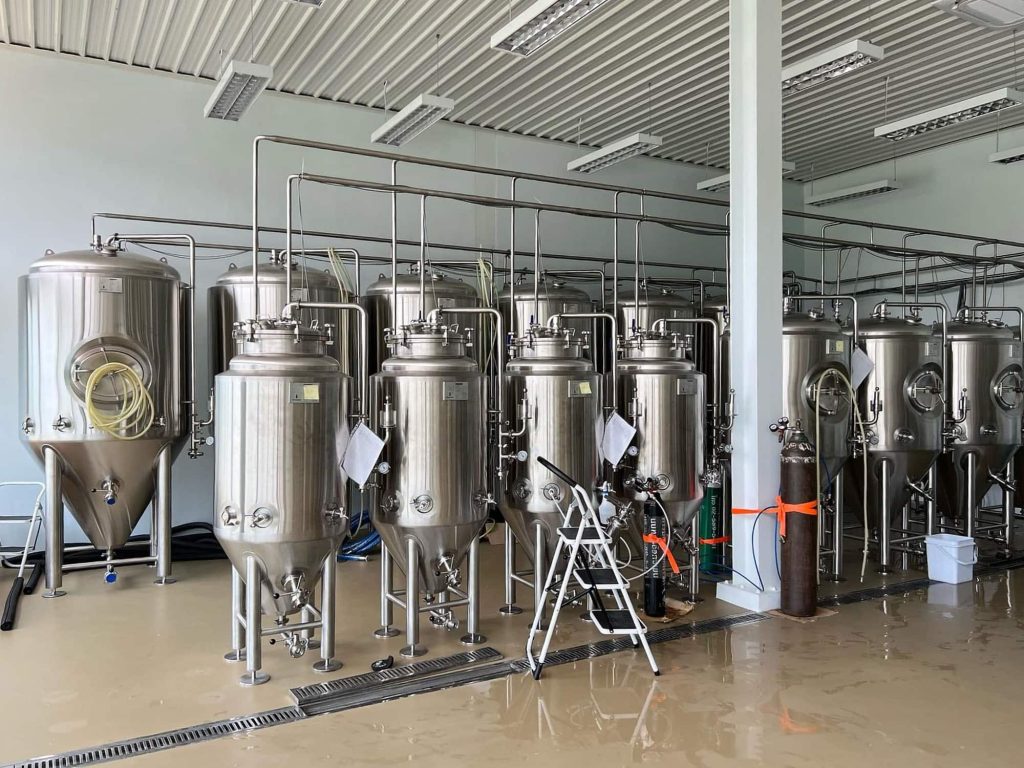
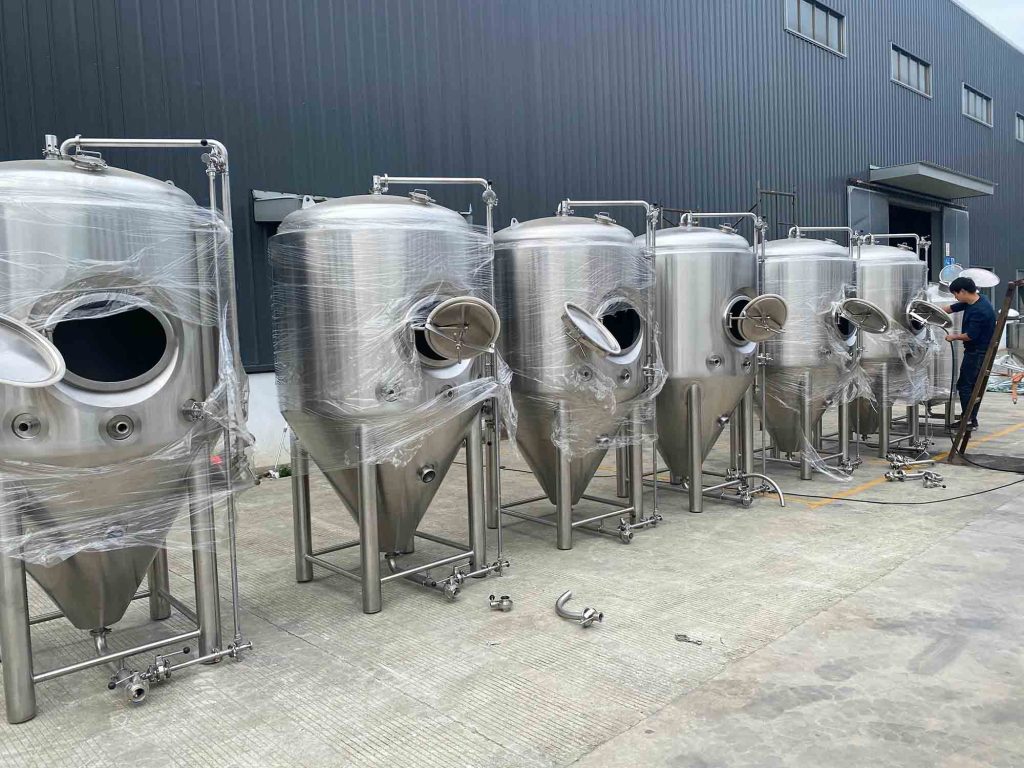
All SKE unitanks use food-grade 304 or 316L stainless steel with electro-polished interior surfaces for superior hygiene, easy cleaning, and resistance to corrosion. The smooth interior prevents beer residue buildup and supports CIP cleaning.
Dual cooling jackets—one on the cylinder and one on the cone—deliver fast, uniform temperature control. This is critical for lagering, cold crashing, and maintaining stable fermentation temperatures for unitank beer.
Standard features include pressure relief valves, vacuum protection, sample valves, temperature sensors, dry hopping ports, yeast drains, and butterfly valves. These make daily operation intuitive and efficient.
SKE unitanks also include reinforced legs, lifting lugs, and pressure testing to meet international safety standards. Every tank is designed for real-world brewery use.
Full Brewing Process with a Unitank
Producing unitank beer follows a logical, linear process inside one tank, reducing labor and risk.
- Wort Cooling & Transfer: Chilled wort moves into the sanitized unitank, where oxygen is properly managed for yeast health.
- Fermentation: Yeast converts sugars to alcohol and CO₂. The closed system retains pressure or vents as needed.
- Yeast Removal: After fermentation, yeast settles into the cone and is drained easily.
- Cold Crashing: Temperature is lowered to drop remaining solids, clarifying the unitank beer naturally.
- Maturation / Lagering: Beer conditions at low temperatures to develop flavor and smoothness.
- Carbonation: CO₂ is added for precise carbonation levels.
- Storage & Packaging: Finished unitank beer is held safely until dispensing or bottling.
This single-tank workflow is the biggest advantage of unitank beer production. SKE tanks support every step without transfers.
Benefits of Using Unitanks for Beer Production
Unitanks deliver clear advantages that make unitank beer more profitable and consistent.
Reduced Contamination Risk: With no transfers between tanks, bacteria and wild yeast have fewer opportunities to infect beer.
Lower Oxidation: Less handling means fresher flavor, longer shelf life, and better stability in unitank beer.
Space Savings: One tank replaces two or three, making unitanks ideal for small breweries and brewpubs.
Labor Efficiency: Less moving, monitoring, and cleaning reduce daily workloads.
Flexibility: Unitanks produce ales, lagers, sours, IPAs, and other styles with equal success.
Cost Savings: Lower capital investment, smaller cooling systems, and less maintenance reduce expenses.
Lower Oxidation: Less handling means fresher flavor, longer shelf life, and better stability in unitank beer.
Space Savings: One tank replaces two or three, making unitanks ideal for small breweries and brewpubs.
Labor Efficiency: Less moving, monitoring, and cleaning reduce daily workloads.
Flexibility: Unitanks produce ales, lagers, sours, IPAs, and other styles with equal success.
Cost Savings: Lower capital investment, smaller cooling systems, and less maintenance reduce expenses.
For breweries of all sizes, switching to unitank beer production improves both quality and margins. SKE unitanks amplify these benefits through durable design and precision engineering.
Unitank vs. Traditional Fermenter vs. Bright Tank
To understand why unitank beer is so popular, compare the three most common brewing vessels.
| Feature | Unitank | Traditional Fermenter | Bright Tank |
|---|---|---|---|
| Fermentation | ✅ Full support | ✅ Primary use | ❌ Not recommended |
| Maturation / Lagering | ✅ Excellent | ✅ Limited | ✅ Good |
| Carbonation | ✅ Natural & forced | ❌ Poor | ✅ Primary use |
| Clarification | ✅ Natural settling | ✅ Limited | ✅ Good |
| Storage | ✅ Long-term | ✅ Short-term | ✅ Long-term |
| Pressure Rating | ✅ High | ❌ Low/None | ✅ High |
| Cooling Jacket | ✅ Dual-zone | ✅ Often single | ✅ Often single |
| Conical Bottom | ✅ Standard | ✅ Standard | ❌ Usually flat |
| Best For | Unitank beer, all stages | Fermentation only | Carbonation & storage |
| Space Usage | High efficiency | Medium | Medium |
| Overall Versatility | Highest | Medium | Medium |
This table explains why modern breweries choose unitanks for full-process unitank beer production.
Applications of Unitank Beer Systems
Unitanks support a huge range of brewing operations, making unitank beer adaptable to any business model.
Craft Breweries: Small to mid-sized facilities use unitanks to maximize flexibility and batch variety.
Brewpubs & Taprooms: Limited space benefits greatly from all-in-one unitank design.
Industrial Breweries: Large-scale unitank systems streamline high-volume production.
Pilot & R&D Systems: Test batches and new recipes efficiently with compact unitanks.
Contract Brewing: Consistent, repeatable unitank beer ensures client satisfaction.
Mixed Fermentation & Sour Beer: Closed, sanitary design protects sensitive cultures.
No matter your brewery type, unitank beer systems improve workflow and product quality. SKE provides custom sizes from small pilot systems to large industrial skid-mounted units.
Materials, Hygiene, and Cleaning Best Practices
Quality unitank beer starts with hygienic design and proper cleaning. SKE unitanks are built to simplify sanitation.
We use AISI 304 and 316L stainless steel for all wort and beer-contact surfaces. These materials are inert, easy to clean, and resistant to staining and corrosion.
Interior electro-polishing creates a smooth surface that resists biofilm and improves CIP performance. This is critical for maintaining consistent unitank beer quality.
Cleaning best practices include:
- Complete CIP cycles with caustic and acid solutions
- Regular sanitization before each batch
- Proper draining and drying
- Avoiding abrasive tools or chlorine-based cleaners
SKE includes dedicated CIP ports and flow dynamics optimized for full coverage. Our tanks ensure every batch of unitank beer starts clean.
How to Select the Right Unitank for Your Brewery
Choosing the correct unitank directly affects the quality and efficiency of your unitank beer production.
First, calculate your batch size and growth plans. Common sizes include 1BBL, 3BBL, 5BBL, 10BBL, 15BBL, 30BBL, 50BBL, and custom industrial volumes.
Second, confirm pressure requirements. Most breweries need 15–30 psi for carbonation and safety.
Third, check cooling performance. Dual jackets are strongly recommended for lagers and consistent unitank beer.
Fourth, verify sanitary design: tri-clamp fittings, full drainability, no dead legs, and easy access.
Finally, choose a manufacturer with strong after-sales support, testing, and customization.
SKE provides free sizing and layout consultation to match you with the ideal unitank for your beer production.
SKE Unitank Product Line and Custom Solutions
As a professional beer equipment manufacturer, SKE offers a full lineup of unitanks optimized for unitank beer.
Our standard unitank series ranges from small pilot systems to large industrial fermenters. All include dual cooling jackets, pressure control, sanitary design, and robust construction.
We also provide custom unitanks for unique requirements:
- Higher pressure ratings
- Specialized ports for dry hopping, sensors, or additives
- Insulation and jacket upgrades
- Skid-mounted systems with pumps and controls
- Complete turnkey brewing lines
Every SKE unitank is pressure-tested, welded to high standards, and designed for years of trouble-free unitank beer production.
Maintenance and Troubleshooting
Proper maintenance keeps your unitank running smoothly and your unitank beer consistent.
Routine maintenance includes:
- Checking valves and gaskets for wear
- Calibrating pressure and temperature sensors
- Inspecting cooling jackets for leaks
- Cleaning and sanitizing all ports
- Testing safety valves
Common issues and solutions:
- Slow cooling: Check glycol flow, clean jackets, or verify insulation.
- Pressure leaks: Replace gaskets, tighten fittings, or test valves.
- Poor clarification: Improve cold crashing time or temperature.
- Yeast removal issues: Verify cone angle and drain valve function.
SKE provides detailed manuals and technical support to keep your unitank beer production on track.
Future Trends in Unitank Beer Technology
Unitank design continues to evolve, and SKE is actively developing next-generation systems for unitank beer.
Automation & IoT: Remote monitoring, automated cycles, and data logging improve consistency.
Energy Efficiency: Improved jackets and insulation reduce glycol and power use.
Hygienic Advancements: Smoother interiors and better drainability lower cleaning costs.
Modularity: Skid-based, easy-to-install unitanks speed up setup.
Sustainability: Water-saving CIP and heat recovery systems reduce waste.
Energy Efficiency: Improved jackets and insulation reduce glycol and power use.
Hygienic Advancements: Smoother interiors and better drainability lower cleaning costs.
Modularity: Skid-based, easy-to-install unitanks speed up setup.
Sustainability: Water-saving CIP and heat recovery systems reduce waste.
The future of unitank beer is smarter, cleaner, and more efficient. SKE is committed to leading these innovations.
Frequently Asked Questions (FAQ)
1. What is unitank beer?
Unitank beer is beer brewed, fermented, conditioned, carbonated, and stored in a single unitank vessel, rather than being transferred between multiple tanks.
2. Can you really carbonate beer in a unitank?
Yes. Unitanks are pressure-rated to safely hold CO₂ for natural or forced carbonation, eliminating the need for a separate bright tank.
3. What materials are used in SKE unitanks?
We use food-grade 304 stainless steel as standard, with 316L available for more corrosive beer styles or extended use.
4. Can I make lager beer in a unitank?
Yes. Dual cooling jackets allow precise low-temperature lagering, making unitanks excellent for lager unitank beer.
5. How long does it take to make unitank beer?
Timing depends on style, but typical unitank beer takes 7–21 days from fermentation to packaging, similar to traditional methods but with fewer steps.
6. Are unitanks easy to clean?
Yes. SKE unitanks feature full drainability, CIP compatibility, and smooth interiors for fast, effective cleaning.
Contact Us
If you have any further questions, feel free to reach out!
- Facebook: SKE Equipment Facebook
- Email: info@skeequipment.com
For more personalized assistance, please fill out the contact form at the bottom of this page. We look forward to helping you with your brewing needs!