Introduction to the Stainless Mixer Tank
In the vast landscape of industrial processing, certain pieces of equipment stand out not just for their functionality but for their fundamental role in ensuring product quality, purity, and operational efficiency. Among these, the stainless mixer tank holds a paramount position. From pharmaceutical formulations to food and beverage production, and from chemical synthesis to cosmetic manufacturing, the need for precise, sanitary, and robust mixing solutions is universal. A stainless mixer tank is not merely a container; it is a critical engineering component designed to facilitate a wide array of processes including blending, dissolving, emulsifying, suspending, and reacting various substances under controlled conditions. Its construction from high-grade stainless steel is key, offering unparalleled advantages in terms of hygiene, corrosion resistance, and durability, which are absolutely essential in regulated industries. Understanding the intricate details of what makes a high-quality stainless mixer tank indispensable for modern industrial operations is crucial for any business looking to optimize its production lines. This article will delve into the core aspects of these vital pieces of equipment, highlighting their design, applications, and the significant impact they have on diverse industries. The inherent properties of stainless steel, such as its anti-corrosive nature and ease of cleaning, directly contribute to the longevity and reliability of these tanks, making them a wise investment for long-term operational success. We’ll explore how different agitation methods are integrated into the stainless mixer tank design to achieve specific mixing outcomes, thereby catering to the nuanced requirements of liquid-liquid, solid-liquid, and even gas-liquid systems. The selection of the right mixer tank involves considering factors such as capacity, operating temperature, pressure, and the rheological properties of the materials being processed. Furthermore, the role of automation and control systems in modern stainless mixer tanks cannot be overstated, as they allow for precise parameter management, ensuring consistency and repeatability batch after batch. This foundation sets the stage for a deeper exploration into the world of industrial mixing technology, with the stainless mixer tank at its very core, guiding industries towards greater purity and efficiency.
Key Advantages of a Stainless Mixer Tank
The widespread adoption of the stainless mixer tank across myriad industries is not accidental; it is a direct consequence of the unique and compelling advantages offered by its primary material, stainless steel, coupled with innovative engineering designs. These advantages directly address some of the most pressing concerns in industrial processing today: product integrity, operational longevity, and compliance with stringent regulatory standards.
Superior Hygiene and Sanitation
Perhaps the most critical advantage, particularly in the food, beverage, pharmaceutical, and cosmetic sectors, is the inherent hygienic property of stainless steel. Its non-porous surface prevents bacterial growth and contamination, making it exceptionally easy to clean and sterilize. This is paramount for maintaining product purity and preventing cross-contamination, directly impacting consumer safety and brand reputation. The smooth finish typically achievable on a stainless mixer tank means residues are less likely to adhere, simplifying the CIP (Clean-in-Place) and SIP (Sterilize-in-Place) processes.
Exceptional Corrosion Resistance
Many industrial processes involve corrosive chemicals, high-acidity ingredients, or extreme temperatures. Stainless steel, especially grades like 304 and 316L (often used by SKE for its robust equipment), offers remarkable resistance to corrosion, rust, and chemical degradation. This longevity means a substantial return on investment, as tanks do not need frequent replacement due to material degradation, ensuring that your stainless mixer tank operates reliably for decades. This resistance is vital when handling diverse substances, from strong acids to saline solutions, without compromising the tank’s structural integrity or the purity of its contents.
Durability and Longevity
Beyond corrosion resistance, stainless steel is known for its incredible strength and durability. A properly fabricated stainless mixer tank can withstand significant operational stresses, including high pressures, vacuum conditions, and abrasive materials, without deformation or failure. This robustness reduces downtime for repairs and maintenance, enhancing overall productivity and extending the lifecycle of the equipment. Such resilience is a testament to the engineering quality that goes into every stainless mixer tank, ensuring it can cope with the rigors of continuous industrial use.
Temperature Resistance
Industrial mixing often requires precise temperature control, ranging from chilling and freezing to heating and boiling. Stainless steel performs excellently across a broad spectrum of temperatures, maintaining its structural integrity and chemical inertness. This makes a stainless mixer tank suitable for processes that involve significant temperature differentials, such as pasteurization or exothermic reactions, where consistent thermal performance is crucial. The ability to handle extreme temperatures without affecting the product or the tank itself is a significant operational benefit.
Aesthetic Appeal and Compliance
While often overlooked in industrial settings, the polished, clean appearance of a stainless mixer tank contributes to a perception of professionalism and adherence to high standards. More importantly, it facilitates easier inspection and compliance with regulatory bodies like the FDA, USDA, and other international standards that often mandate specific material usage for contact surfaces. This ease of compliance streamlines audits and ensures continuous operation free from regulatory impediments.
Versatility in Design
Stainless steel is highly malleable, allowing for a wide range of designs and customizations to meet specific process requirements. Whether it’s jacketed tanks for heating/cooling, specialized agitator types, or integrated CIP spray balls, a stainless mixer tank can be engineered to exact specifications. This versatility ensures that businesses can acquire equipment perfectly tailored to their unique operational needs, from small-batch artisanal production to large-scale continuous manufacturing processes. For specialized applications such as those needing specific heat distribution, exploring solutions like a jacketed kettle from SKE can further optimize processes involving a stainless mixer tank.
In summary, the advantages of a stainless mixer tank – ranging from superior hygiene and corrosion resistance to exceptional durability and versatile design – make it an unmatched asset in any modern industrial setup. These qualities not only ensure product safety and quality but also contribute significantly to the economic viability and operational efficiency of processing plants worldwide.
Diverse Applications of the Stainless Mixer Tank
The versatility and robust nature of the stainless mixer tank mean it is not confined to a single industry but is, in fact, a cornerstone across a breathtaking array of manufacturing and processing sectors. Its ability to handle diverse materials under varying conditions makes it an indispensable tool for achieving consistent product quality and efficient operations.
Food and Beverage Industry
This is arguably where the stainless mixer tank truly shines, primarily due to its hygienic properties. Within the food and beverage sector, these tanks are critical for:
- Dairy Processing: Mixing milk, cream, and other dairy ingredients for products like yogurt, cheese, and ice cream mixes. The tanks handle pasteurization and homogenization processes.
- Brewing and Winemaking: Used for wort mixing, fermentation, and conditioning of beer, as well as for blending and aging wine. The stainless mixer tank’s inertness ensures no flavor contamination. For more on fermentation, refer to a detailed article on the beer fermentation process.
- Juice and Soft Drink Production: Blending concentrates, water, sweeteners, and flavorings to create various beverages.
- Sauces and Dressings: Emulsifying and mixing ingredients for mayonnaise, ketchup, salad dressings, and other condiments, often requiring precise temperature control.
- Confectionery: Preparing syrups, chocolate mixtures, and other sweet ingredients, often involving heating and cooling jackets.
Pharmaceutical Industry
In pharmaceuticals, precision, sterility, and contamination prevention are paramount. The stainless mixer tank is vital for:
- Drug Formulation: Mixing active pharmaceutical ingredients (APIs) with excipients to create suspensions, solutions, and emulsions for oral, topical, or injectable medications.
- Vaccine Production: Blending media and components under sterile conditions.
- Biopharmaceutical Processing: Used in cell culture, fermentation, and purification stages for biologics and biotechnological products, where aseptic conditions are critical.
Chemical Industry
The chemical industry benefits from the stainless mixer tank’s corrosion resistance and durability for a multitude of processes:
- Chemical Synthesis: Facilitating reactions between various chemical compounds under controlled temperatures and pressures.
- Paint and Coatings: Mixing pigments, binders, and solvents to produce homogeneous paints, varnishes, and protective coatings.
- Adhesives and Sealants: Blending polymers and additives for consistent adhesive formulations.
- Detergents and Cleaning Agents: Mixing surfactants, builders, and other ingredients for household and industrial cleaning products.
Cosmetic and Personal Care Industry
For products applied directly to the skin or hair, purity and consistency are key. A stainless mixer tank is used for:
- Cream and Lotion Production: Emulsifying oil and water phases, blending active ingredients, and ensuring smooth textures for skincare products.
- Shampoos and Conditioners: Mixing surfactants, emollients, and fragrances.
- Makeup: Blending pigments and binders for liquid foundations, mascaras, and other cosmetic formulations.
Other Industries
- Water Treatment: Used for mixing chemicals for coagulation, flocculation, and disinfection processes.
- Biotechnology: Cultivating microorganisms and cells in bioreactors, which are specialized forms of stainless mixer tank systems.
- Petrochemicals: Blending additives and catalysts, especially where corrosion resistance is essential.
The ubiquity of the stainless mixer tank in these diverse applications underscores its foundational importance to global manufacturing. Its adaptability, coupled with the inherent advantages of stainless steel, ensures that it remains a preferred solution for any process requiring precise, sanitary, and reliable mixing.
Design and Components of a High-Quality Stainless Mixer Tank
The effectiveness and reliability of a stainless mixer tank are not solely due to the material itself, but also to its meticulous design and the careful selection of its integrated components. A high-quality stainless mixer tank is a complex engineered system, optimized for specific mixing tasks and operational environments. Understanding these elements is crucial for appreciating the value such equipment brings to industrial processes.
Tank Body and Material Grade
The primary component is, of course, the tank body, typically constructed from high-grade stainless steel. Common grades include:
- 304 Stainless Steel: A widely used austenitic stainless steel, offering good corrosion resistance and strength. It’s suitable for a broad range of food and beverage applications and less corrosive environments.
- 316L Stainless Steel: This grade contains molybdenum, significantly enhancing its resistance to pitting and crevice corrosion, especially in chloride environments (e.g., saline solutions) and at elevated temperatures. The ‘L’ denotes low carbon content, which improves weldability and reduces carbide precipitation during welding, a crucial factor in maintaining corrosion resistance in the heat-affected zones. This makes 316L the preferred choice for pharmaceutical, aggressive chemical, and some advanced food processing applications where extreme hygiene and corrosion resistance are non-negotiable. SKE frequently utilizes 316L for its premium offerings due to these superior properties.
The tank itself can be single-wall, jacketed (for heating or cooling), or insulated. Jacketed designs, including dimpled, baffled, or half-pipe coil jackets, allow for precise temperature control during mixing, which is vital for many chemical reactions and food processing steps. For example, a jacketed kettle from SKE offers excellent temperature regulation within its stainless steel construction, ensuring product integrity and process efficiency.
Agitation System
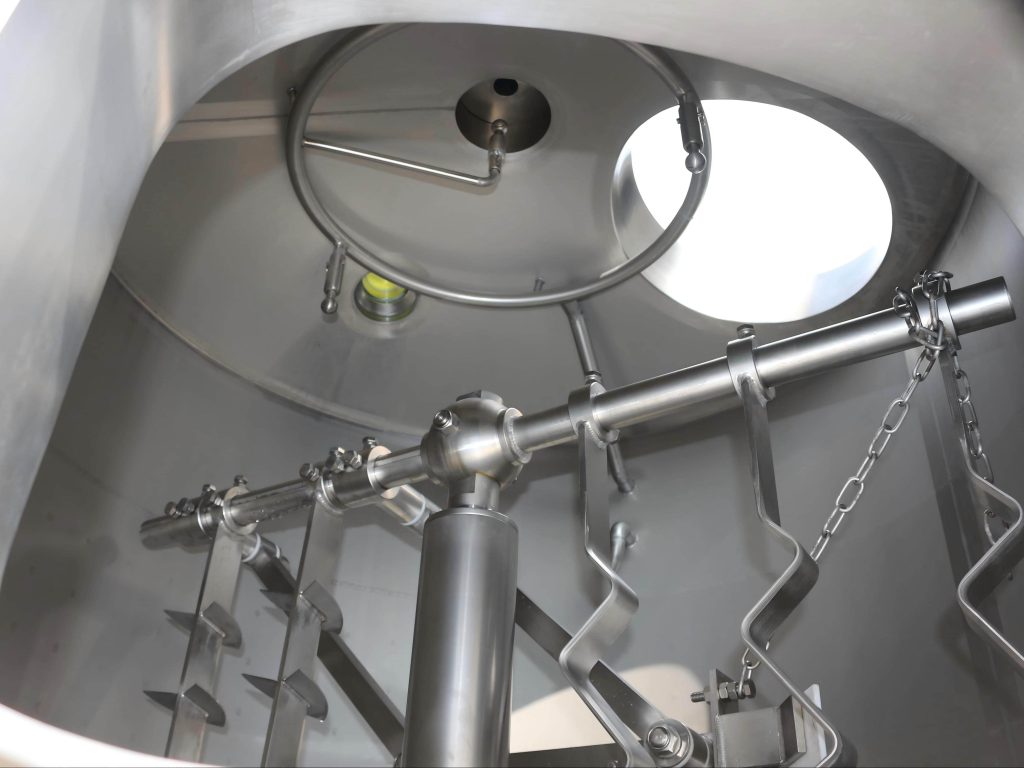
The heart of any mixer tank is its agitator, designed to impart mechanical energy to the fluid, ensuring thorough blending, suspension, dispersion, or dissolution. The choice of agitator depends heavily on the viscosity of the product, the desired mixing outcome, and the product’s shear sensitivity. Common types of agitators include:
- Propellers: High-speed, provide axial flow, suitable for low-viscosity liquids.
- Turbines: Radial flow impellers, effective for medium viscosity and gas dispersion.
- Paddles: Low-speed, provide gentle mixing for delicate products or those prone to shear degradation.
- Anchors: Hug the tank wall, ideal for high-viscosity fluids to prevent material accumulation on surfaces and improve heat transfer in jacketed tanks.
- High-Shear Mixers: (e.g., rotor-stator mixers) create intense shear forces for emulsification, homogenization, and fine dispersion.
Many modern stainless mixer tanks feature variable speed drives, allowing operators to adjust agitation intensity to suit different stages of a process or various product formulations.
Sealing Mechanisms
To prevent leakage and product contamination, robust sealing mechanisms are essential, especially where the agitator shaft enters the tank. Mechanical seals are prevalent due to their effectiveness in maintaining a sterile or contained environment, crucial for pharmaceutical or hazardous chemical applications.
Inlets, Outlets, and Vents
A well-designed stainless mixer tank includes carefully positioned inlets for adding raw materials, outlets for draining finished products (often with sanitary diaphragm valves), and vents for pressure equalization or vacuum operations. CIP spray balls are often integrated into the tank’s interior to facilitate automated cleaning.
Instrumentation and Controls
Advanced stainless mixer tanks come equipped with a range of instrumentation to monitor and control the mixing process. This can include temperature probes, pressure sensors, pH meters, level sensors, and load cells for precise ingredient weighing. Integrated PLC-based control systems enable automation of mixing sequences, recipe management, and data logging, ensuring repeatability and compliance.
Support Structure and Mountings
The tank is supported by a robust frame, often also made of stainless steel, designed to withstand the weight of the tank and its contents, as well as the dynamic forces generated by the agitator. These structures ensure stability and safety during operation.
Each component of a stainless mixer tank is chosen and designed to collaboratively achieve optimal mixing performance, product integrity, and operational safety. This comprehensive approach to design is a hallmark of quality manufacturers like SKE, ensuring that every piece of equipment delivers superior performance and reliability.
Selecting and Maintaining Your Stainless Mixer Tank
Choosing the right stainless mixer tank and implementing proper maintenance routines are critical steps for maximizing efficiency, ensuring product quality, and extending the lifespan of this essential industrial equipment. A well-informed decision at the procurement stage, coupled with diligent upkeep, can prevent costly downtime and maintain compliance with regulatory standards.
Key Considerations for Selection
- Capacity Requirements: Determine the volume needed based on batch size, production targets, and future expansion plans, allowing for sufficient head space.
- Material Grade: Select the stainless steel grade (e.g., 304 vs. 316L) based on the corrosiveness of the materials being processed, operating temperatures, and industry regulations (e.g., pharmaceutical-grade requirements). For applications involving harsh chemicals or high salinity, 316L is generally preferred for its enhanced corrosion resistance.
- Agitation System: The type of agitator is paramount. Consider the viscosity of your product, the desired mixing outcome (e.g., blending, emulsifying, suspending), and shear sensitivity. Different impellers excel at different tasks. For high viscosity or delicate products, SKE offers customized agitation solutions to ensure optimal mixing without product damage.
- Temperature Control: If heating or cooling is required, opt for a jacketed stainless mixer tank. Evaluate the type of jacket (e.g., dimpled, half-pipe, baffled) and the heating/cooling medium (steam, hot water, chilled water, glycol).
- Pressure and Vacuum Capabilities: If your process involves positive pressure or vacuum, ensure the tank is ASME certified or designed according to relevant pressure vessel codes.
- Sanitation and CIP/SIP: For hygienic applications, features like polished internal surfaces, sanitary fittings, and integrated CIP spray balls are essential to facilitate thorough cleaning and sterilization.
- Instrumentation and Automation: Evaluate the necessity for sensors (temperature, pressure, level, pH) and integration with control systems for precise process management and data logging.
- Regulatory Compliance: Ensure the tank meets all relevant industry standards (e.g., FDA, GMP, ASME, ATEX for hazardous environments). For example, in pharmaceutical applications, documentation and material traceability are often required.
- Manufacturer Reputation and Support: Choose a reputable manufacturer like SKE known for quality, customization capabilities, and after-sales support. Their expertise ensures that the stainless mixer tank you acquire is fit for purpose and comes with reliable service.
Essential Maintenance Practices
Proper maintenance of a stainless mixer tank ensures its longevity, efficiency, and continued adherence to sanitary standards.
- Regular Cleaning: Implement a strict cleaning schedule. For products requiring high hygiene, utilize CIP/SIP systems with appropriate cleaning agents and cycles to prevent biofilm formation and cross-contamination. Follow manufacturer guidelines for cleaning chemical compatibility with the stainless steel.
- Inspection of Agitator and Seals: Regularly inspect the agitator blades for wear, corrosion, or damage. Check mechanical seals for leaks, wear, or degradation. Worn seals can lead to product loss, contamination, or motor damage. Replacement should be performed as recommended by the manufacturer.
- Motor and Gearbox Maintenance: Follow the manufacturer’s recommendations for lubricating the motor and gearbox. Check for unusual noises, vibrations, or excessive heat, which could indicate impending failure.
- Gasket and O-Ring Inspection: Gaskets and O-rings at connections, manways, and sight glasses can degrade over time. Inspect them regularly for cracks, hardening, or signs of leakage and replace as needed to maintain a tight seal.
- Surface Integrity Check: Periodically inspect the internal and external surfaces of the stainless mixer tank for signs of pitting corrosion, stress cracks, or physical damage. Small imperfections can become sites for bacterial growth or structural weaknesses. Repair any damage promptly.
- Instrumentation Calibration: Ensure all sensors (temperature, pressure, level, pH) are accurately calibrated at regular intervals to maintain process precision and product consistency.
- Pressure Relief Devices: If the tank operates under pressure or vacuum, inspect and test pressure relief valves and rupture discs to ensure they are functional and correctly set. This is a critical safety measure.
- Documentation and Records: Maintain detailed records of all cleaning cycles, inspections, repairs, and part replacements. This documentation is vital for traceability, compliance, and troubleshooting.
By diligently applying these selection criteria and maintenance practices, businesses can ensure their stainless mixer tank remains a highly reliable and productive asset within their operations. The commitment to quality both during purchase and throughout the equipment’s operational life pays significant dividends in terms of product quality, operational efficiency, and long-term cost savings.
SKE’s Commitment to Advanced Stainless Mixer Tank Solutions
At SKE, we understand that a stainless mixer tank is more than just a vessel; it’s a pivotal component in your production line, directly influencing product quality, process efficiency, and operational safety. With decades of expertise in industrial processing equipment, SKE is dedicated to designing, manufacturing, and delivering state-of-the-art stainless mixer tanks that not only meet but exceed the stringent demands of modern industries.
Engineering Excellence and Customization
Our commitment begins with engineering excellence. Every SKE stainless mixer tank is fabricated using premium-grade stainless steel – primarily 304 and 316L – ensuring exceptional corrosion resistance, durability, and compliance with sanitary standards. We understand that no two processes are identical, which is why we specialize in customization. Whether you require a specific agitator type (propeller, turbine, paddle, anchor, or high-shear), precise temperature control via sophisticated jacketing systems, or specialized pressure/vacuum capabilities, SKE engineers work closely with clients to tailor solutions that perfectly align with their unique operational needs. For instance, our expertise extends to complex systems similar to the flash pasteurization systems, where integrated mixing is a key component, ensuring precise temperature and ingredient distribution.
Hygiene and Compliance at the Core
For industries where hygiene is non-negotiable—such as food & beverage, pharmaceutical, and cosmetic—SKE places an unwavering emphasis on sanitary design. Our stainless mixer tanks feature highly polished internal surfaces, crevice-free welding, and sanitary fittings that prevent product accumulation and facilitate highly effective Clean-in-Place (CIP) and Sterilize-in-Place (SIP) operations. We ensure that our equipment is designed to meet or surpass international regulatory standards, making compliance straightforward for our clients.
Advanced Agitation Technology
Mixing is an art and a science, and SKE offers a comprehensive range of agitation solutions. From gentle blending for delicate products to intense emulsification for complex formulations, our engineers recommend and integrate the suitable agitator type, size, and speed to achieve optimal mixing efficiency and product consistency. We also incorporate variable frequency drives (VFDs) to provide operators with granular control over agitator speed, enabling adaptability across different product runs and process stages.
Integrated Solutions and Automation
Beyond the standalone stainless mixer tank, SKE provides integrated processing solutions. This includes seamlessly incorporating essential instrumentation (temperature, pressure, level, pH sensors), robust control panels, and automation systems. Our PLC-driven systems allow for precise recipe management, automated process sequencing, and comprehensive data logging, which are crucial for quality control, traceability, and operational efficiency in today’s data-driven manufacturing environments.
Reliability and Global Support
Choosing an SKE stainless mixer tank means investing in reliability. Our equipment is built to last, designed for continuous operation under demanding industrial conditions. We back our products with comprehensive technical support and after-sales service, ensuring that your SKE equipment performs optimally throughout its long service life. Our global reach means that no matter where your operations are situated, SKE’s expertise and support are readily available.
In partnering with SKE, you’re not just purchasing a piece of equipment; you’re gaining a partner committed to your success. Our advanced stainless mixer tanks are designed to empower your production, enhance your product quality, and secure your operational excellence.
Conclusion
The journey through the applications, design, and advantages of the stainless mixer tank underscores its critical and multifaceted role in modern industrial processing. Far from being a simple containment vessel, it stands as a sophisticated piece of engineering, elemental to maintaining product integrity, ensuring operational efficiency, and upholding the highest standards of hygiene and safety across a diverse spectrum of industries. From the delicate precision required in pharmaceutical formulations to the robust blending in chemical manufacturing, and from the sanitary needs of the food and beverage industry to the aesthetic standards of cosmetics, the stainless mixer tank is an indispensable asset.
Its inherent properties—superior corrosion resistance, exceptional durability, and ease of cleaning—make stainless steel the material of choice, offering a long-term, reliable solution for demanding environments. The continuous advancements in agitator technology, temperature control, and automation mean that today’s stainless mixer tanks are more versatile and efficient than ever before, capable of achieving complex mixing outcomes with repeatable precision. Companies like SKE are at the forefront of this evolution, offering customized, high-quality stainless mixer tank solutions engineered to meet the specific challenges and regulatory requirements of each client.
Investing in the right stainless mixer tank, supported by a reputable manufacturer committed to engineering excellence and comprehensive after-sales support, is a decision that pays dividends in terms of enhanced product quality, reduced operational costs, and sustained compliance. As industries continue to evolve, the demand for advanced, reliable, and hygienically designed mixing equipment will only grow, solidifying the status of the stainless mixer tank as a truly indispensable tool in the pursuit of processing perfection.
Frequently Asked Questions About Stainless Mixer Tanks
What are the primary advantages of using a stainless mixer tank over other materials?
The main advantages include superior hygiene due to its non-porous surface, excellent corrosion resistance (especially with grades like 316L, often used by SKE), exceptional durability and longevity, and its ability to withstand a wide range of temperatures. These qualities prevent contamination, extend the equipment’s lifespan, and allow for a broad spectrum of processing applications.
How do I choose the correct type of agitator for my stainless mixer tank?
Choosing the correct agitator depends on several factors: the viscosity of the material, the desired mixing outcome (e.g., blending, emulsifying, dissolving, suspending), and the product’s shear sensitivity. Propellers are good for low viscosity, turbines for medium, paddles for gentle mixing, and anchor impellers for high viscosity. High-shear mixers are used for emulsification. SKE’s experts can help assess your specific needs and recommend the optimal agitator design.
Is a jacketed stainless mixer tank necessary for all applications?
A jacketed stainless mixer tank is not necessary for all applications, but it is crucial when your process requires precise temperature control. This includes heating materials for reactions, cooling exothermic processes, or maintaining specific temperatures for sensitive products like in the dairy or pharmaceutical industries. If temperature management is key to your product quality or reaction kinetics, a jacketed tank is essential.
What distinguishes 304 from 316L stainless steel for mixer tanks?
The primary distinction lies in their corrosion resistance. 316L stainless steel contains molybdenum, which grants it superior resistance to pitting and crevice corrosion, especially in chloride-rich environments or at elevated temperatures, making it ideal for pharmaceutical or aggressive chemical applications. 304 stainless steel is a more general-purpose grade, offering good resistance for many food and beverage applications where conditions are less severe. For demanding or critical processes, SKE often recommends 316L for optimal longevity and performance.
How often should a stainless mixer tank be cleaned, and what procedures are typically involved?
The frequency of cleaning depends on the product being processed and regulatory requirements, but it’s typically after each batch or shift, especially for hygienic industries. Common procedures involve a Clean-in-Place (CIP) system, which circulates cleaning solutions (e.g., caustic, acid, rinse water) through spray balls and drainage outlets, followed by sterilization (SIP) if necessary. Manual cleaning might be required for stubborn residues. Regular inspection of the tank’s interior and agitator is also vital to ensure cleanliness.
Need a Custom Stainless Mixer Tank Solution?
Our experts at SKE are ready to assist you in designing and implementing the perfect stainless mixer tank for your industrial needs. From conceptualization to installation, we ensure precision, quality, and efficiency.
Connect with us:
Facebook |
Email: info@skeequipment.com
For a personalized consultation and a detailed quote, please fill out the contact form at the bottom of the page. We look forward to powering your success!