
Table of Contents:
- Key Benefits of Using a Stainless Steel Tank with Agitator
- Design and Customization Considerations for Stainless Steel Tank with Agitator
- Types of Agitators and Their Applications
- Industry Applications of Stainless Steel Tanks with Agitators
- Maintenance and Safety for Stainless Steel Tank with Agitator Systems
- Choosing the Right Stainless Steel Tank with Agitator System
Key Benefits of Using a Stainless Steel Tank with Agitator
Investing in a stainless steel tank with agitator system brings a myriad of advantages that directly impact product quality, operational efficiency, and long-term cost savings. These benefits are particularly pronounced in industries where hygiene, precision, and material integrity are non-negotiable.
Superior Corrosion Resistance and Hygiene
One of the foremost benefits of stainless steel is its exceptional resistance to corrosion, rust, and staining. This property is vital, especially when handling aggressive chemicals, acidic solutions, or food-grade products where contamination must be rigorously avoided. Stainless steel alloys, such as 304 and 316L, offer different levels of corrosion resistance, with 316L being preferred for highly corrosive environments or sanitary applications due to its molybdenum content. The smooth, non-porous surface of stainless steel also prevents bacterial growth, making it incredibly easy to clean and sterilize, fulfilling stringent regulatory requirements like those in the pharmaceutical and food sectors. This directly translates to reduced cleaning time, lower risk of cross-contamination, and superior product safety.
Durability and Longevity
Stainless steel is renowned for its strength and durability. A stainless steel tank with agitator is built to withstand rigorous industrial operations, including high pressures, varying temperatures, and continuous mechanical stress from the agitator. This robustness ensures a long operational lifespan for the tank, reducing the need for frequent replacements and minimizing downtime, thereby offering a significant return on investment. The structural integrity of stainless steel also allows for the integration of complex internal components and support structures necessary for effective agitation.
Enhanced Mixing Efficiency and Product Consistency
The core function of an agitator is to mix. When paired with a meticulously designed stainless steel tank, an agitator can achieve highly efficient and consistent mixing. Whether it’s dissolving powders, blending immiscible liquids, maintaining particulate suspension, or accelerating heat and mass transfer, the right agitator type and speed within a properly sized tank ensure product homogeneity. This consistency is crucial for quality control and batch reproducibility, reducing material waste and ensuring that every batch meets specific formulation requirements.
Temperature Control Capabilities
Many industrial processes require precise temperature regulation during mixing. Stainless steel tanks can be easily equipped with heating and cooling jackets (e.g., dimple jackets, half-pipe coils, or external coils) to maintain optimal process temperatures. The excellent thermal conductivity properties of stainless steel, combined with efficient agitation, facilitate rapid and uniform heat distribution throughout the tank’s contents. This is essential for reactions that are temperature-sensitive, for maintaining product viscosity, or for pasteurization processes, such as those that might rely on a efficient mixing for even heat distribution.
Versatility and Customization
A stainless steel tank with agitator is incredibly versatile. It can be customized in terms of size, shape (cylindrical, conical, rectangular), agitator type (propeller, turbine, anchor, helix), drive mechanism, and auxiliary fittings (e.g., baffles, spray balls, level sensors, sight glasses). This adaptability allows for precise tailoring to specific process requirements, accommodating diverse viscosities, shear sensitivities, and batch sizes.
Design and Customization Considerations for Stainless Steel Tank with Agitator
Designing an effective stainless steel tank with agitator system is a complex process that requires careful consideration of numerous factors. The goal is to optimize mixing performance, ensure product integrity, and support operational efficiency. Here’s a detailed look at the key design and customization considerations:
Tank Geometry and Volume
The shape and size of the tank significantly influence mixing dynamics. Cylindrical tanks are most common, often with dished, conical, or flat bottoms. The bottom design impacts drainage and solid suspension. Tank height-to-diameter ratio is critical; for very tall tanks, multiple agitators or specialized impeller designs might be needed to achieve uniform mixing throughout. The working volume dictates the size of the agitator and motor required. Proper sizing prevents overflow and ensures efficient use of the agitator’s power.
Material Grade and Surface Finish
While stainless steel is the material of choice, the specific grade matters. SS304 is widely used for general-purpose applications due to its good corrosion resistance. However, for corrosive media, high-purity applications, or sanitary environments, SS316L is preferred. The “”L”” denotes lower carbon content, improving weldability and resistance to sensitization (carbide precipitation during welding). The internal surface finish is equally important, especially in sanitary applications. A highly polished surface (e.g., Ra < 0.6 µm, or even electropolished) minimizes product adhesion, facilitates cleaning-in-place (CIP), and reduces the risk of bacterial growth. Detailed specifications for such surfaces often align with stringent guidelines, similar to those found in aseptic storage tank design principles, where surface integrity is paramount for preventing contamination.
Agitator Type and Impeller Design
The choice of agitator and impeller is perhaps the most critical design decision. Different impeller types are optimized for specific mixing tasks:
- Propellers: High-speed, axial-flow impellers suitable for low-viscosity liquids, often used for blending, dissolution, and heat transfer.
- Turbines (e.g., Rushton, pitched-blade): Versatile, providing radial or axial flow depending on blade angle. Used for dispersion, emulsification, and suspension of solids.
- Anchors/Paddles: Slow-speed, wall-scraping impellers ideal for high-viscosity fluids to promote heat transfer and prevent product buildup on tank walls.
- Helical Ribbons/Screws: Excellent for very high-viscosity materials, creams, and pastes, providing gentle but effective mixing by lifting and folding the product.
The number, size, and placement of impellers on the shaft are also critical for optimizing flow patterns and preventing dead zones within the tank.
Motor and Drive System
The agitator motor must be sized correctly to handle the process fluid’s viscosity and density, as well as the required mixing intensity. Variable frequency drives (VFDs) are often incorporated to allow for adjustable mixing speeds, providing flexibility for different products and process stages. The drive system usually consists of a motor, gearbox, and coupling, all chosen for reliability and efficiency.
Sealing Mechanisms
To prevent leakage of product and ingress of contaminants, appropriate shaft sealing is crucial. Common types include:
- Stuffing Box (Gland Packing): Cost-effective but requires maintenance and can lead to minor product leakage during operation.
- Mechanical Seals: Offer superior sealing and are suitable for sanitary and high-pressure applications. Single or double mechanical seals with barrier fluids are used depending on the application’s criticality.
- Magnetic Drives: For completely leak-proof operations, often used in highly critical, sterile, or hazardous environments.
Baffles and Internal Components
Baffles are vertical strips typically mounted on the tank wall. Their primary function is to disrupt the swirling flow created by the agitator, converting it into turbulent flow and improving mixing efficiency. Without baffles, especially in low-viscosity applications, the liquid might simply spin around the tank (vortexing) without effective mixing. Other internal components like spargers, dip tubes, and temperature probes also need careful integration to avoid interfering with agitation patterns.
Heating and Cooling Jackets
For processes requiring temperature control, tanks can be furnished with various jacket designs:
- Dimple Jackets: Provide efficient heat transfer and are cost-effective for smaller tanks.
- Half-Pipe Coils: Robust design suitable for higher pressures and larger tanks, offering excellent heat transfer.
- Internal Coils: Used when large heat transfer areas are required, but can interfere with cleaning and mixing.
These jackets, especially when combined with efficient agitation, ensure uniform heat distribution and precise temperature management, which is vital for processes like pasteurization or chemical synthesis.
Instrumentation and Control
Modern stainless steel tank with agitator systems often include sophisticated instrumentation for monitoring and control. This can include temperature sensors, pressure transmitters, level indicators, pH probes, and dissolved oxygen sensors. Integration with a programmable logic controller (PLC) or Distributed Control System (DCS) allows for automated control of agitation speed, temperature, and ingredient addition, enhancing process accuracy and reproducibility.
At SKE, our engineering team works closely with clients to understand their specific process requirements, enabling us to design and manufacture custom stainless steel tanks with agitators that deliver optimal performance, compliance, and longevity.
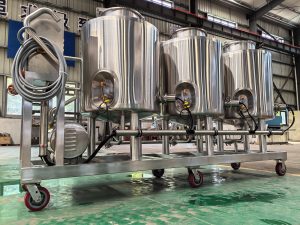
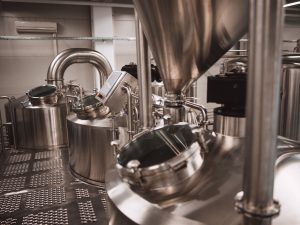
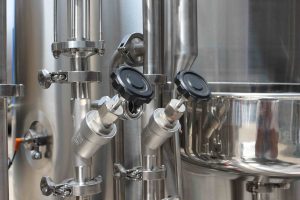
Industry Applications of Stainless Steel Tanks with Agitators
The versatility and hygienic properties of a stainless steel tank with agitator make it a cornerstone in a vast array of industries. From vital life sciences to essential consumer goods, these tanks are central to processes that require precise mixing, temperature control, and contamination-free environments.
Food and Beverage Industry
This sector relies heavily on stainless steel tanks for almost every processing stage. Agitated tanks are used for:
- Blending: Juices, beverages, dairy products (milk, yogurt), sauces, and dressings.
- Dissolving: Sugar, salts, and thickeners into liquid bases.
- Cooking/Cooling: Soups, stews, caramels, and syrups, often with heating/cooling jackets and anchor agitators for consistent heat transfer.
- Fermentation: Beer, wine, and other fermented products, where a gentle mixing helps uniform yeast distribution and gas exchange.
- Homogenization: Creating stable emulsions for products like mayonnaise or dairy creams.
- Storage with Agitation: Preventing sedimentation in milk, fruit pulp, or other suspensions before packaging.
SKE‘s stainless steel tank with agitator solutions are designed to meet stringent food safety standards, ensuring product integrity from preparation to storage.
Maintenance and Safety for Stainless Steel Tank with Agitator Systems
Proper maintenance and adherence to safety protocols are paramount for ensuring the longevity, efficiency, and safe operation of any stainless steel tank with agitator system. Neglecting these aspects can lead to costly downtime, premature equipment failure, product contamination, and serious safety hazards.
Routine Maintenance Practices
- Regular Cleaning and Inspection:
- Daily/Batch-wise: After each batch or production run, thorough cleaning is essential. For sanitary applications, this often involves Clean-in-Place (CIP) systems using automated cycles of rinsing, chemical washes, and sanitization. For non-sanitary uses, manual cleaning or specific rinse cycles suffice.
- Visual Inspection: Regularly inspect the tank’s internal and external surfaces for signs of corrosion, pitting, cracks, or damage, especially in weld areas. Check the agitator shaft, impellers, and baffles for wear, erosion, or material buildup.
- Agitator System Checks:
- Lubrication: Adhere strictly to the manufacturer’s lubrication schedule for the gearbox, bearings, and motor. Use only recommended lubricants.
- Seal Inspection: Mechanical seals and packing glands require regular inspection for leakage. Mechanical seals may need periodic replacement, while packing glands might need adjustment or repacking. Leak-free operation is crucial to prevent product loss and maintain hygiene.
- Shaft Alignment and Balance: Over time, agitator shafts can become misaligned or impellers can lose balance due to wear or damage. This can lead to excessive vibration, noise, and premature bearing failure. Regular checks and re-alignment, if necessary, are vital.
- Motor and Drive System: Monitor motor current and temperature for signs of overloading. Inspect belts (if applicable) for tension and wear. Ensure all electrical connections are secure and free from corrosion.
- Instrumentation Calibration:
- Regularly calibrate temperature sensors, pressure transmitters, level sensors, and any other integrated instrumentation to ensure accurate process control.
- Preventive Maintenance Schedule:
- Establish a comprehensive preventive maintenance (PM) schedule based on manufacturer recommendations, operational hours, and criticality of the equipment. This includes scheduled shutdowns for detailed inspections, component replacements (e.g., bearings, seals, impellers), and structural integrity checks.
Choosing the Right Stainless Steel Tank with Agitator System
Selecting the optimal stainless steel tank with agitator system is a critical decision that directly impacts process efficiency, product quality, and overall operational costs. It’s not a one-size-fits-all solution; the choice depends heavily on the specific application, properties of the materials being processed, and regulatory requirements. Here’s a framework for making an informed decision:
1. Clearly Define Your Process Requirements
- Product Characteristics: What are the viscosity, density, shear sensitivity, corrosivity, and abrasiveness of the liquids, solids, or gases you’ll be processing? Is the product sensitive to oxidation or contamination?
- Mixing Objective: What precisely do you need the agitator to achieve? (e.g., blending, dissolution, suspension, emulsification, dispersion, heat transfer, gas absorption).
- Batch Volume and Size: What is the minimum and maximum batch size? This determines the tank volume and agitator sizing.
- Temperature and Pressure: What operating temperatures and pressures will the tank and agitator be subjected to? This influences material grade, wall thickness, and sealing mechanisms.
- Cycle Time: How quickly does the mixing need to occur? This impacts agitator power and speed.
- Sanitary Requirements: Are there stringent hygiene standards (e.g., food-grade, pharmaceutical cGMP) that require specific surface finishes, cleaning-in-place (CIP) capabilities, or sterilization-in-place (SIP) features?
2. Evaluate Tank Design Elements
- Material Grade: SS304 for general use, SS316L for corrosive or sanitary applications. Consider higher alloys if extreme corrosion is a concern.
- Surface Finish: Rougher finishes for utility, highly polished and electropolished for sanitary applications to prevent adhesion and facilitate cleaning.
- Tank Geometry: Cylindrical with dished or conical bottoms are common. Consider height-to-diameter ratio for effective mixing.
- Heating/Cooling: Determine if jackets (dimple, half-pipe) or internal coils are needed for temperature control.
- Ancillary Fittings: Factor in requirements for manways, sight glasses, spray balls for CIP, load cells, vents, drain valves, sampling ports, and instrumentation ports.
3. Select the Appropriate Agitator System
- Impeller Type: Based on fluid viscosity and mixing objective (propeller, turbine, anchor, helical ribbon, high-shear rotor-stator). Multiple impellers may be necessary.
- Agitator Placement: Top-entry, side-entry, or bottom-entry. Top-entry is most common for versatility.
- Motor and Gearbox: Select based on power requirements, desired speed range, and whether variable speed control (VFD) is needed.
- Sealing Mechanism: Choose between packing glands, single mechanical seals, double mechanical seals, or magnetic drives based on leak-tightness requirements and product characteristics.
- Baffles: Almost always necessary for efficient mixing in low-to-medium viscosity fluids. Their design and number are crucial.
4. Consider Regulatory Compliance and Standards
- Industry-Specific Standards: FDA, USDA, cGMP for food, pharma, and biotech. ASME BPE for bioprocessing equipment.
- Codes and Certifications: ASME pressure vessel code (if applicable), ATEX for hazardous environments, CE marking for European markets.
5. Partner with an Experienced Manufacturer
Working with a reputable manufacturer like SKE is paramount. An experienced provider can offer:
- Expert Consultation: Guidance on optimal design based on your specific process needs.
- Customization Capabilities: Ability to engineer and fabricate a bespoke system that precisely meets your requirements.
- Quality Assurance: Adherence to strict manufacturing standards and quality control processes.
- After-Sales Support: Installation assistance, training, spare parts, and maintenance services.
- Integrated Solutions: Ability to provide not just the tank but also control systems, pumps, and other integrated components, ensuring seamless operation.
By meticulously addressing each of these points, you can ensure that the stainless steel tank with agitator system you choose is not only technically sound but also a cost-effective and reliable asset for your operations, delivering consistent performance for years to come. Our team at SKE is ready to assist you in navigating these choices to create the perfect solution for your needs.
Frequently Asked Questions about Stainless Steel Tanks with Agitators
What are the primary differences between stainless steel grades 304 and 316L for agitated tanks?
Stainless steel 304 is a good general-purpose grade, offering strong corrosion resistance and weldability, suitable for many industrial applications. However, stainless steel 316L contains molybdenum, which significantly enhances its resistance to pitting corrosion, especially in chloride-rich environments or when exposed to acidic and alkaline solutions. The ‘L’ denotes lower carbon content, improving weldability and reducing carbide precipitation (sensitization) during welding, making it superior for sanitary, pharmaceutical, food, and highly corrosive chemical applications where product purity and easy cleaning are critical. For a stainless steel tank with agitator used in sensitive processes, 316L is typically the preferred choice.
How do I choose the correct agitator type for my product?
Choosing the correct agitator type depends on several factors: your product’s viscosity, density, shear sensitivity, and your specific mixing objective (e.g., blending, solid suspension, emulsification, heat transfer). For low-viscosity fluids and fast blending, propeller or pitched-blade turbine agitators are common. For medium to high-viscosity liquids or solid dispersion, Rushton turbines or open impeller designs might be used. Very high-viscosity products, pastes, or gels often require anchor, helical ribbon, or paddle agitators to ensure effective wall scraping and thorough mixing. High-shear mixers are ideal for emulsification and fine dispersion. It’s best to consult with an expert or perform pilot testing to determine the optimal agitator for your specific stainless steel tank with agitator system.
What is the purpose of baffles in a stainless steel tank with agitator?
Baffles are vertical strips typically installed on the inside walls of a stainless steel tank with agitator. Their primary purpose is to disrupt the swirling flow (or “”vortexing””) that occurs when an agitator operates in low-viscosity liquids within an unbaffled tank. By interrupting this tangential flow, baffles convert laminar flow into turbulent flow, enhancing mixing efficiency by promoting axial and radial fluid movement. This prevents the liquid from simply rotating as a single body, ensuring better homogenization, dispersion, and overall process effectiveness. Without baffles, many agitators would struggle to achieve adequate mixing in non-viscous solutions.
Ready to revolutionize your mixing processes with a state-of-the-art stainless steel tank with agitator? Discover how SKE’s custom-engineered solutions can elevate your production efficiency and product quality.
Connect with us or get in touch for a personalized consultation:
Find us on Facebook
Email Us: info@skeequipment.com
Alternatively, fill out the contact form at the bottom of the page to discuss your specific requirements!