What is a Unitank? Understanding the “All-in-One” Fermenter
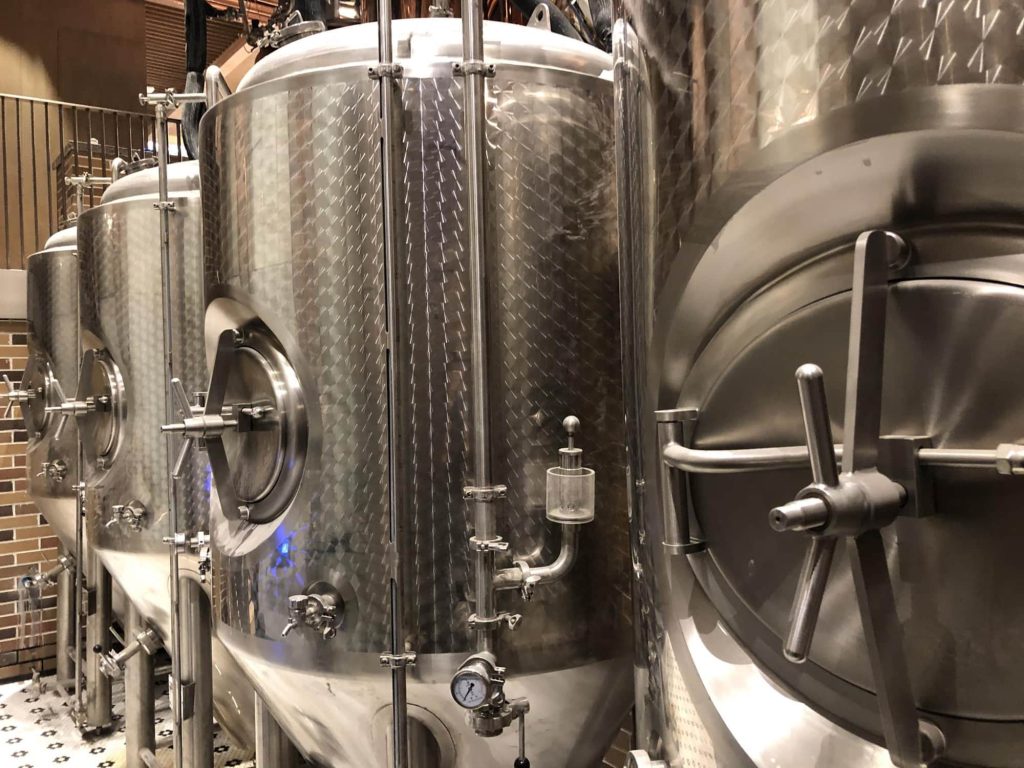
The term “Unitank” is a portmanteau of “Universal” and “Tank,” which perfectly encapsulates its primary function. Unlike traditional brewery setups that require separate vessels for fermentation, maturation, conditioning, and sometimes even serving, a Unitank is a single, multifunctional tank designed to handle the entire post-boil process.
At its core, a Unitank brewing system is a vertically oriented, cylindroconical tank constructed from high-grade stainless steel (typically AISI 304 or 316L). Its defining feature is its ability to perform both fermentation and conditioning under controlled pressure. Equipped with cooling jackets for precise temperature control, a sloped cone bottom for yeast collection, and a suite of accessories for pressure management, carbonation, and sampling, the Unitank consolidates multiple steps into one intelligent vessel. This integration represents a paradigm shift from linear, multi-vessel workflows to a streamlined, space-saving, and highly controllable process.
The Core Advantages of Adopting a Unitank Brewing System
Transitioning to a Unitank system offers a compelling array of benefits for breweries of all sizes, from ambitious nanobreweries to large-scale production facilities. The advantages are tangible and impact every aspect of the operation.
First and foremost is dramatic space and capital savings. By eliminating the need for separate bright beer tanks, conditioning tanks, and sometimes brite tanks, a brewery can effectively double or triple its fermentation capacity within the same footprint. This reduces the initial investment in multiple tanks and the associated piping, valves, and fittings. Secondly, enhanced quality and consistency are achieved through superior process control. Brewers can precisely manage temperature, pressure, and carbonation throughout the entire cycle, minimizing oxygen pickup—the enemy of beer freshness—at every transfer point. This leads to a purer, more stable final product with a longer shelf life.
Furthermore, Unitanks offer operational flexibility and efficiency. They are ideal for brewing a wide range of beer styles, from lagers requiring cold conditioning to ales and modern hazy IPAs. The closed pressure system allows for natural carbonation (spunding), saving on CO2 costs. Cleaning is also streamlined; instead of cleaning three or four vessels, the crew only needs to clean one, reducing labor, water, and chemical usage through efficient Clean-in-Place (CIP) systems.
SKE’s Engineering Philosophy: Building the Ultimate Unitank for Modern Breweries
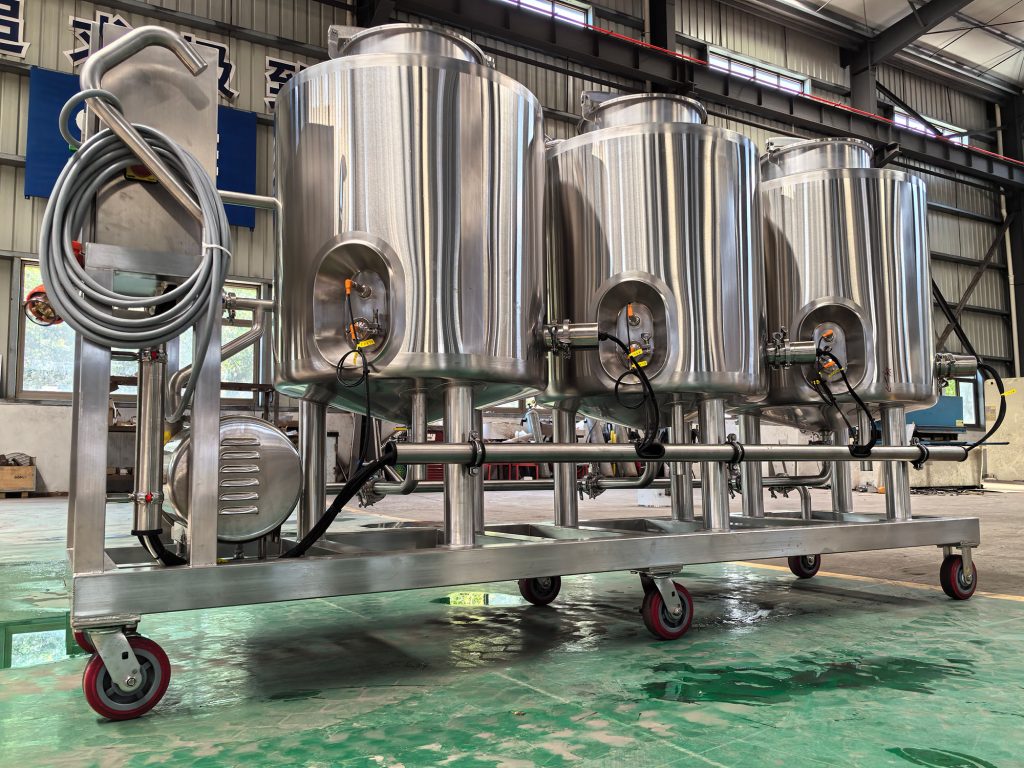
At SKE, we understand that a Unitank is more than just a tank; it is the heart of the modern brewery’s cold side operations. Our design and manufacturing philosophy is built on three pillars: Hygienic Integrity, Precision Control, and Operational Reliability. Every SKE Unitank is engineered to be a long-term asset that protects your beer and enhances your productivity.
We begin with the highest quality, food-grade stainless steel, polished to a specific Ra (roughness average) microfinish to create an ultra-smooth surface that resists biofilm adhesion and ensures effortless, effective cleaning. Our jackets are designed for optimal heat transfer, utilizing turbulent flow technology to ensure rapid and uniform cooling or heating, which is critical for precise temperature ramps and crash-cooling. All internal welds are ground and polished to a sanitary finish, and we employ a fully orbital welding process for all critical pipe connections to eliminate potential contamination points. This commitment to sanitary design ensures that every SKE Unitank meets the highest global standards for food and beverage production.
In-Depth Look: Key Components and Features of an SKE Unitank
To fully appreciate the capability of a modern Unitank, it’s essential to understand its key components. Each element plays a crucial role in the brewing symphony.
-
Tank Body & Insulation: Constructed from single sheets of stainless steel for a seamless interior, our tanks feature polyurethane foam insulation clad in a durable stainless steel jacket. This ensures minimal thermal loss, maintaining stable temperatures and reducing energy costs.
-
Cooling/Heating Jackets: Strategically placed jackets cover the cone and multiple zones on the tank body. This allows brewers to control temperature gradients, manage convection currents during fermentation, and achieve a sharp, uniform crash.
-
Pressure Management System: This is the system that defines pressurized fermentation. It includes a pressure gauge, a safety relief valve (PRV), and a precision pressure control valve. SKE integrates top-tier components from brands like IFM and Siemens to allow for automatic pressure profiling, enabling flawless natural carbonation.
-
CIP System: An integrated spray ball (often a dynamic, rotating type) is mounted at the top. Connected to a central CIP system, it ensures complete coverage and cleaning of the entire tank interior without manual intervention.
-
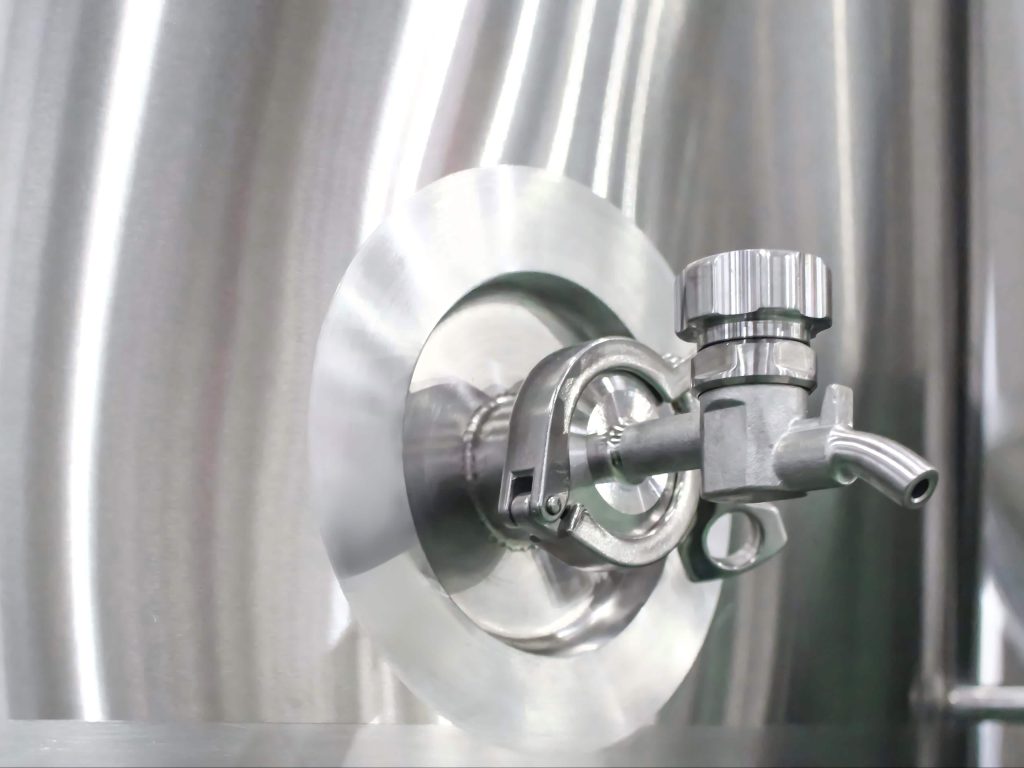
Sample Valve & Sight Glass: A dedicated, sanitary sample valve allows for aseptic sampling for gravity readings and quality checks. A sight glass on the cone provides visual confirmation of yeast and trub levels.
-
Carbonation Stone (Optional): For forced carbonation, a high-quality diffusion stone can be fitted, allowing for rapid and efficient CO2 dissolution into the beer.
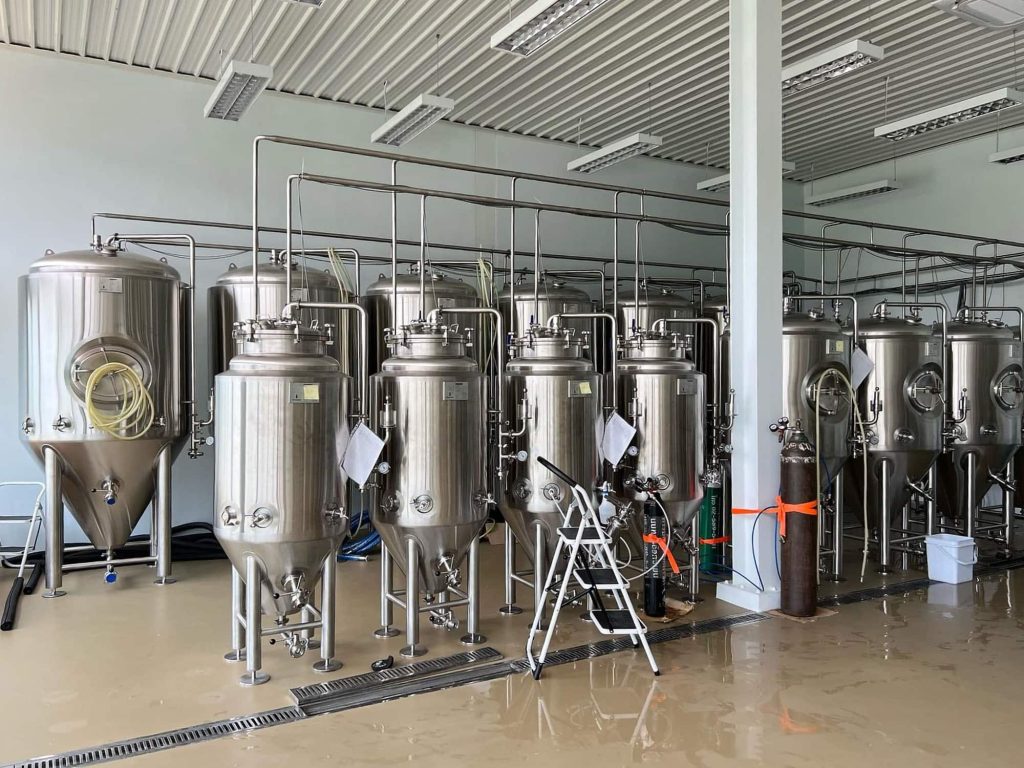
Traditional Fermentation vs. Unitank Brewing: A Comparative Analysis
The following table provides a clear, side-by-side comparison of the traditional multi-vessel approach versus the integrated Unitank method.
| Feature | Traditional Multi-Vessel System | SKE Unitank Brewing System |
|---|---|---|
| Process Flow | Linear: Fermenter -> Transfer -> Bright Tank -> Transfer -> Packaging | Consolidated: All post-boil steps in one vessel. |
| Vessel Count | Multiple tanks required (FVs, BBTs, conditioning tanks). | Single vessel per batch, drastically reducing footprint. |
| Oxygen Exposure | High risk during multiple transfers between vessels. | Extremely low; closed transfers are the standard. |
| Carbonation | Primarily forced carbonation in BBT, using more CO2. | Enables natural carbonation (spunding), saving CO2. |
| Cleaning (CIP) Load | High; multiple tanks, valves, and transfer lines require cleaning. | Low; one tank and fewer connection points. Saves time, water, and chemicals. |
| Process Control | Good, but variables change between vessels. | Excellent. Unified control over temperature, pressure, and timeline in one place. |
| Flexibility | Can be dedicated to specific stages, limiting tank use. | Highly flexible; can ferment lager, ale, condition, carbonate, and serve. |
| Capital Cost | Higher initial investment for multiple tanks and infrastructure. | Lower per-function cost; higher efficiency per tank. |
| Ideal For | Breweries with abundant space and traditional beer styles. | Modern breweries of all sizes focusing on quality, efficiency, and hazy/hoppy styles. |
Optimizing Your Brewing Process: A Step-by-Step Guide in an SKE Unitank
Let’s walk through a typical brewing cycle in an SKE Unitank to illustrate its operational simplicity and effectiveness.
Step 1: Knockout & Fermentation. After the boil, wort is transferred (“knocked out”) into the sanitized Unitank. Oxygen is injected inline if required for the yeast strain. The tank is sealed, and the cooling system is set to the desired fermentation temperature. As fermentation begins, CO2 is produced.
Step 2: Pressure Fermentation & Spunding (Optional). For many styles, the pressure control valve is set to a specific psi (e.g., 10-15 psi). This allows CO2 to naturally carbonate the beer as fermentation finishes—a process called spunding. Pressure also suppresses ester formation, leading to a cleaner profile.
Step 3: Dumping Yeast & Trub. Post-fermentation, yeast and protein trub settle in the steep cone. They can be dumped in stages through the bottom dump valve without opening the tank, preserving the inert CO2 blanket.
Step 4: Cold Crashing & Conditioning. The temperature is dropped sharply to near-freezing (cold crashing). This promotes further clarification and the precipitation of chill haze. The beer can then condition under pressure for days or weeks.
Step 5: Carbonation & Finishing. If not already carbonated via spunding, the beer can be carbonated using the in-tank carbonation stone. Dry hops or other finings can be added through dedicated ports.
Step 6: Transfer to Packaging. Finally, using the pressure within the tank or a gentle push with sterile CO2, the bright, finished beer is transferred directly to a canning line, bottling line, or kegs in a completely closed, oxygen-free environment.
SKE Unitanks: Tailored Solutions for Every Brewery
We recognize that no two breweries are identical. SKE offers a fully customizable range of Unitanks to meet specific needs. Our standard sizes range from 1,000L to 10,000L per vessel, with the capability to engineer larger systems. Key customization options include:
-
Capacity and Dimensions: Tailored to your brewhouse size and facility ceiling height.
-
Pressure Rating: Designed for low-pressure (2-3 bar) or high-pressure (up to 4-5 bar) applications for specific styles.
-
Instrumentation Level: From manual valves to fully automated systems with Siemens PLCs and touchscreen HMIs for complete recipe management and data logging.
-
Accessory Packages: Choose from options like carbonation stones, extra sample ports, dedicated dry-hop ports, and advanced CIP integration.
Frequently Asked Questions (FAQ) About Unitank Brewing
Q1: Is a Unitank only suitable for large commercial breweries?
A: Absolutely not. While beneficial for large-scale efficiency, Unitanks are perhaps even more transformative for small and medium craft breweries. They maximize output in limited spaces, simplify operations with smaller crews, and provide the control needed to produce award-winning, consistent beer. SKE provides solutions scalable from nano to macro levels.
Q2: Can I brew both ales and lagers in a Unitank?
A: Yes, that’s one of its greatest strengths. The precise temperature control allows for traditional ale and lager fermentation profiles. The pressure capability is particularly beneficial for lagers, as it can suppress off-flavors and enable fast-lagering techniques, speeding up production cycles without sacrificing quality.
Q3: How does cleaning a Unitank compare to cleaning multiple tanks?
A: It is significantly easier and more efficient. You have one primary vessel to clean instead of several. SKE designs its tanks with hygienic fittings, minimal dead legs, and self-draining slopes. When paired with an effective CIP system, the cleaning cycle is automated, reproducible, and uses less resources, ensuring impeccable sanitary standards every time.
Q4: What about dry-hopping in a pressurized Unitank?
A: Dry-hopping under pressure is a major advantage for hop-forward styles like IPAs. SKE Unitanks can be fitted with a dedicated, sanitary dry-hop port. Hops can be introduced without depressurizing the tank, preventing oxygen ingress and the loss of volatile aromatics. Some brewers also use a “hop doser” for continuous hopping.
Q5: How does SKE ensure the quality and durability of its Unitanks?
A: SKE’s commitment is to industrial-grade, professional equipment. We use certified materials, advanced automated welding, and rigorous pressure testing (hydrostatic and pneumatic) on every vessel. Critical components like valves, sensors, and pumps are sourced from world-leading manufacturers like Grundfos, IFM, and Siemens. Each tank is accompanied by full documentation and traceability certificates.
Contact Us
If you have any further questions, feel free to reach out!
- Facebook: SKE Equipment Facebook
- Email: info@skeequipment.com
For more personalized assistance, please fill out the contact form at the bottom of this page. We look forward to helping you with your brewing needs!