This guide dives deep into the world of
beer fermenters, breaking down their types, working principles, key features, and how to select the perfect one for your brewing needs. We’ll explore the differences between a fermentation conical, fast fermenter, and fermenting bucket, provide expert insights to optimize your fermentation process, and address common questions brewers have about these essential tools. Whether you’re a homebrewer just starting out or a commercial brewer scaling up, this guide is designed to elevate your brewing game.
What Is a Beer Fermenter? Core Function and Importance
A beer fermenter is a specialized container designed to facilitate the fermentation process, providing a controlled environment for yeast to thrive. Unlike ordinary containers, beer fermenters are engineered to prevent contamination, regulate temperature, and allow for the safe release of carbon dioxide—all critical factors for producing high-quality beer. Without a proper fermenter, even the best ingredients can result in off-flavors, spoilage, or inconsistent batches.
The primary role of a beer fermenter is to create an oxygen-free (anaerobic) environment where yeast can metabolize sugars. Oxygen exposure during fermentation can lead to oxidation, which causes stale, cardboard-like flavors in the final beer. Additionally, fermenters must be made of food-grade materials to ensure safety and avoid leaching harmful substances into the brew.
Every component of a beer fermenter—from the lid and airlock to the valves and ports—serves a purpose. The airlock, for example, allows carbon dioxide to escape while preventing air and bacteria from entering. Valves enable easy sampling, transferring, and cleaning, while temperature control features (common in advanced models like fermentation conicals and fast fermenters) ensure yeast performs optimally at specific temperatures.
Types of Beer Fermenters: Comparing Fermentation Conical, Fast Fermenter, and Fermenting Bucket
Beer fermenters come in various types, each tailored to different brewing scales, budgets, and goals. The three most common options—fermentation conical, fast fermenter, and fermenting bucket—each have unique advantages and use cases. Below is a detailed comparison to help you understand which one is right for you, followed by an in-depth look at each type.
| Feature |
Fermentation Conical |
Fast Fermenter |
Fermenting Bucket |
| Design |
Cone-shaped bottom, cylindrical body; allows sediment separation |
Streamlined, often conical or cylindrical; optimized for rapid fermentation |
Flat-bottomed, cylindrical; simple, wide-mouth design |
| Fermentation Speed |
Moderate to fast; efficient yeast activity due to design |
Fastest; engineered to accelerate yeast metabolism and reduce fermentation time |
Slowest; basic design offers minimal optimization for speed |
| Sediment Handling |
Excellent; sediment collects at cone bottom, easy to drain without disturbing beer |
Good; often includes sediment collection features for quick removal |
Poor; sediment settles on flat bottom, requires siphoning to avoid disturbance |
| Yeast Harvesting |
Easy; pure yeast can be collected from the cone bottom for reuse |
Possible; some models include yeast collection ports |
Difficult; yeast mixes with sediment, hard to separate |
| Material |
Stainless steel (commercial), food-grade plastic (homebrew) |
Stainless steel or high-quality food-grade plastic |
Food-grade plastic (HDPE), occasionally glass |
| Best For |
Commercial breweries, serious homebrewers, consistent quality batches |
Brewers prioritizing speed, small to medium commercial operations |
Beginner homebrewers, small batches, budget-friendly setups |
1. Fermentation Conical: The Gold Standard for Quality and Efficiency
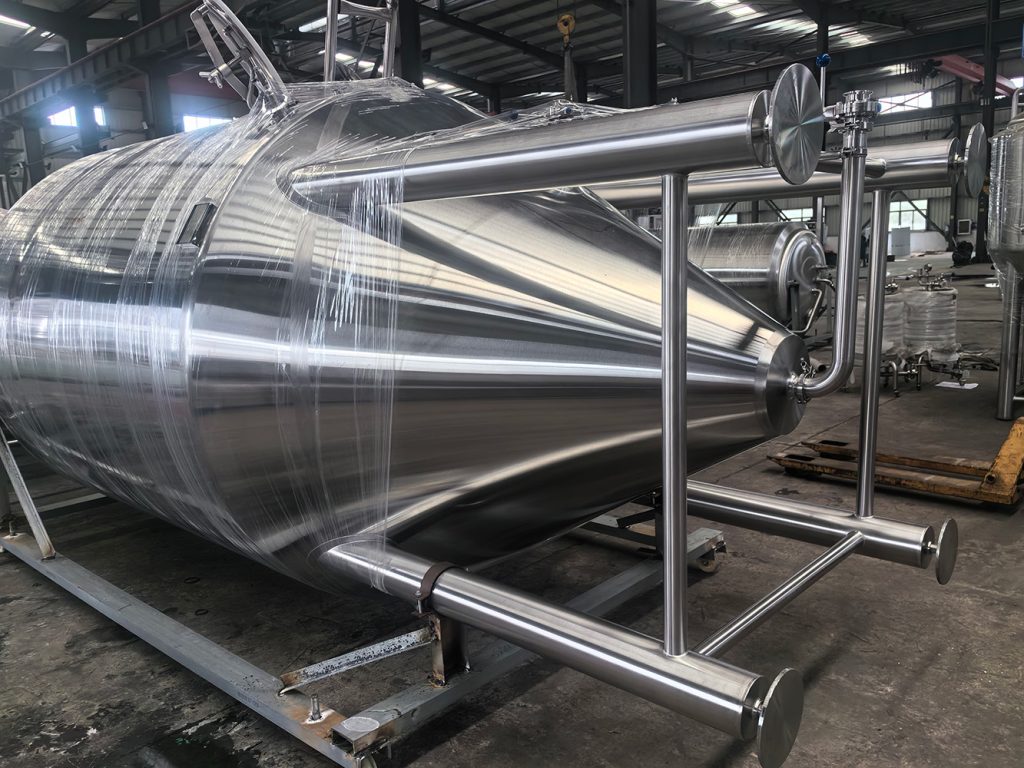
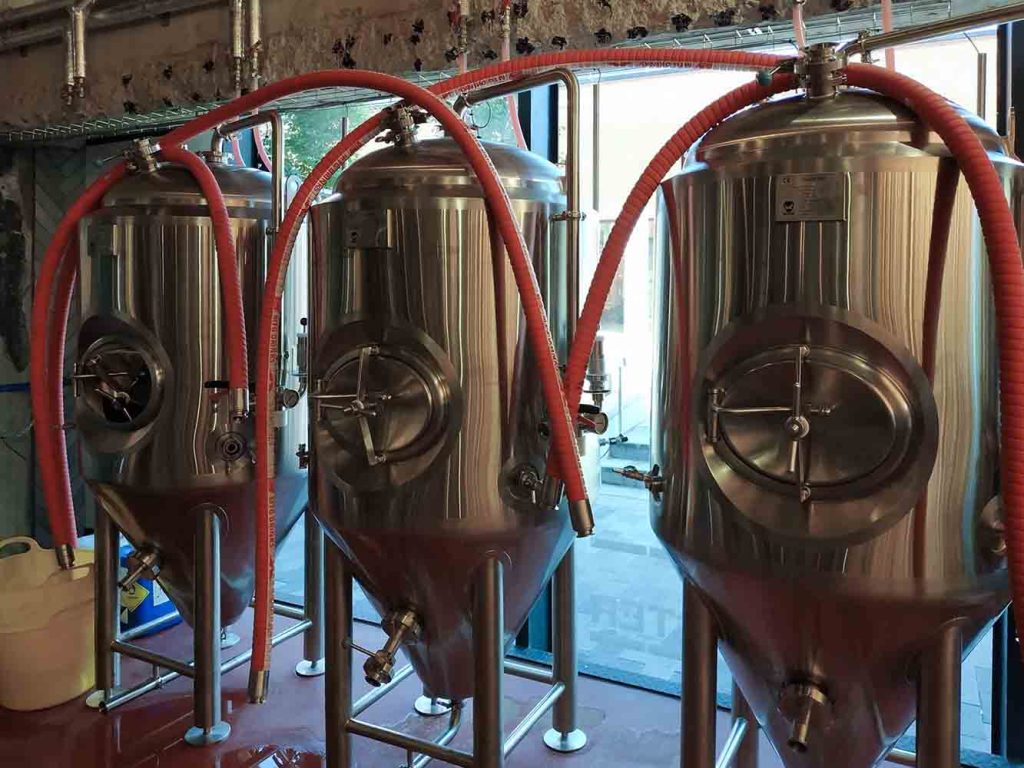
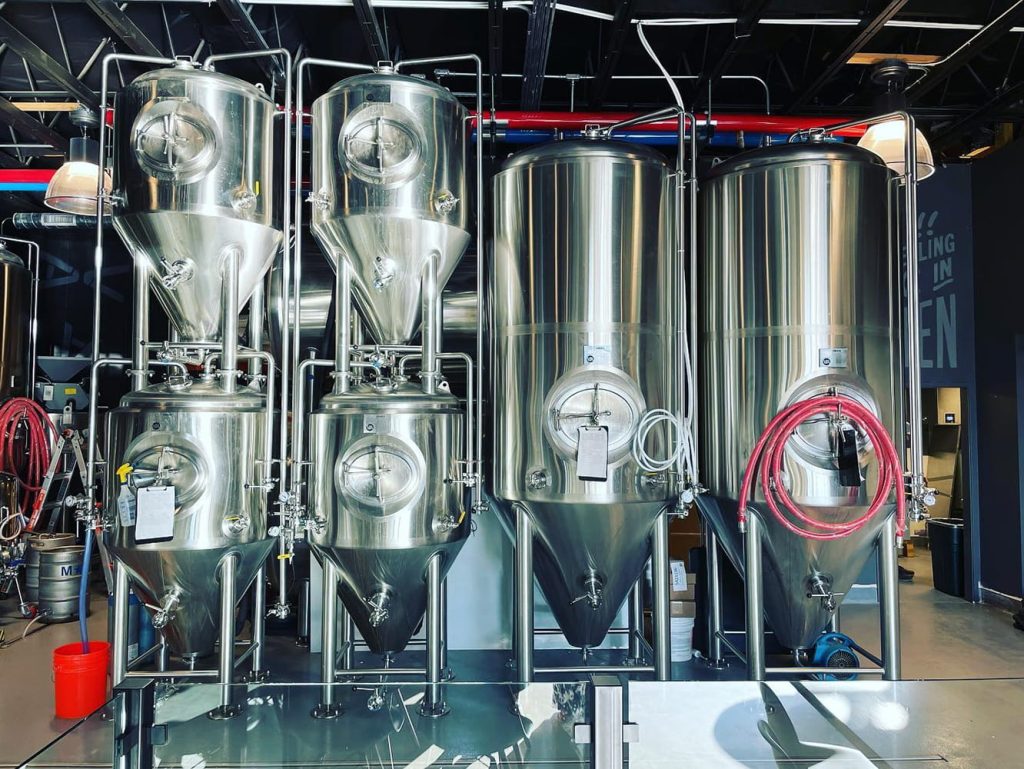
The fermentation conical (also known as a conical fermenter) is widely regarded as the best option for brewers seeking consistency, quality, and ease of use. Its signature cone-shaped bottom is the key to its superiority, as it allows sediment—including dead yeast, hop particles, and protein trub—to settle at the lowest point of the vessel. This design eliminates the need for siphoning, which can introduce oxygen and contamination, and makes sediment removal a simple process.
Most fermentation conicals feature a valve at the bottom of the cone, allowing brewers to drain sediment without disturbing the beer above. This not only improves the clarity of the final product but also makes yeast harvesting possible. Harvesting yeast from a fermentation conical is straightforward: simply drain a small amount of the sediment (which contains viable yeast) into a sterile container, clean it, and reuse it for future batches—saving money and ensuring consistent yeast performance.
SKE’s fermentation conicals are built with professional brewers in mind. Our stainless steel conicals are constructed using food-grade 304 or 316 stainless steel, which is corrosion-resistant, easy to clean, and does not impart any off-flavors to the beer. We offer a range of sizes, from 50L models for homebrewers to 10,000L+ units for large commercial breweries, all equipped with temperature control jackets, sampling ports, and pressure relief valves for optimal fermentation control.
2. Fast Fermenter: Accelerate Your Brewing Process Without Sacrificing Quality
A fast fermenter is designed to reduce fermentation time while maintaining the quality of the beer. Traditional fermentation can take 7–14 days (or longer for lagers), but a fast fermenter can cut this time in half, allowing brewers to produce more batches in less time. This is especially beneficial for commercial breweries looking to increase throughput or homebrewers who want to enjoy their beer sooner.
The key to a fast fermenter’s efficiency lies in its design and technology. Many fast fermenters feature a conical shape (similar to a fermentation conical) to optimize yeast activity and sediment separation. Additionally, they may include features like aeration systems, yeast activation chambers, or temperature control to create the ideal environment for yeast to metabolize sugars quickly.
Fast fermenters are ideal for brewers who need to scale up production without investing in additional fermentation space. They are also a great option for specialty breweries that experiment with multiple recipes, as they allow for faster turnaround between batches. SKE’s fast fermenters are available in both stainless steel and high-quality plastic, with sizes ranging from 30L to 5,000L, making them suitable for both home and commercial use.
3. Fermenting Bucket: The Perfect Starter Option for Beginner Brewers
The fermenting bucket is the most basic and affordable type of beer fermenter, making it the go-to choice for beginner homebrewers. It is a simple, flat-bottomed container typically made of food-grade high-density polyethylene (HDPE) or glass, with a tight-fitting lid that includes a grommet for an airlock. Despite its simplicity, a well-maintained fermenting bucket can produce high-quality beer when used correctly.
Fermenting buckets are easy to use: simply transfer cooled wort into the bucket, add yeast, seal the lid with an airlock, and let the fermentation process begin. Their wide mouth makes them easy to clean and sanitize, and they are lightweight and portable—perfect for homebrewers with limited space. However, their flat-bottomed design has limitations, particularly when it comes to sediment handling and yeast harvesting.
Because sediment settles on the flat bottom of the bucket, siphoning is required to transfer the beer to a secondary fermenter or bottling bucket, which can introduce oxygen and increase the risk of contamination. Additionally, harvesting yeast from a fermenting bucket is difficult, as the yeast is mixed with sediment and hard to separate. For these reasons, fermenting buckets are best suited for beginners or brewers who brew small batches occasionally.
Key Factors to Consider When Choosing a Beer Fermenter
Choosing the right beer fermenter depends on several factors, including your brewing scale, budget, quality goals, and experience level. Below are the most important considerations to keep in mind when selecting a fermenter—whether you’re choosing between a fermentation conical, fast fermenter, or fermenting bucket.
Brewing Scale
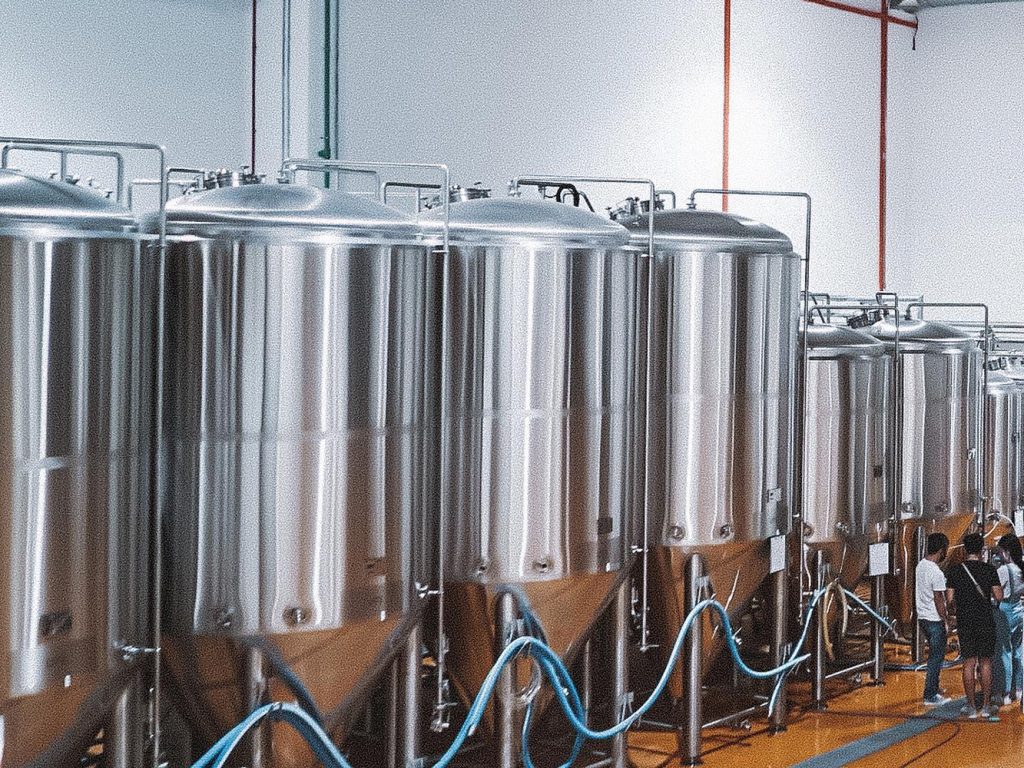
The size of your batches will dictate the size of the fermenter you need. Homebrewers typically brew 5–10 gallon (19–38L) batches, so a 20–40L fermenter is sufficient. Commercial breweries, on the other hand, may need fermenters ranging from 1,000L to 10,000L+ to keep up with demand. SKE offers fermenters in a wide range of sizes, from small homebrew models to large commercial units, ensuring that we have a solution for every brewing scale.
Quality Goals
If you prioritize consistent, high-quality beer with clear flavor and minimal off-notes, a fermentation conical is the best choice. Its design allows for better sediment separation, yeast harvesting, and temperature control—all of which contribute to a superior final product. Fast fermenters are a good middle ground, offering speed without sacrificing quality, while fermenting buckets are suitable for brewers who are just starting out or don’t require the highest level of precision.
Temperature Control
Temperature control is critical for fermentation, as yeast performs best at specific temperatures (typically 18–22°C for ales and 7–13°C for lagers). Advanced fermenters like fermentation conicals and fast fermenters often include built-in temperature control features, such as cooling jackets or heating elements, to maintain stable temperatures. Fermenting buckets, on the other hand, require external temperature control (like a water bath or heating pad) to regulate temperature.
Maintenance and Cleaning
Cleaning and sanitizing your fermenter is essential to prevent contamination. Fermenting buckets are easy to clean due to their wide mouth, while fermentation conicals and fast fermenters may require more thorough cleaning (especially if they have complex components like valves and ports). SKE’s fermenters are designed with ease of maintenance in mind, with smooth surfaces, detachable components, and CIP compatibility for commercial models.
SKE Beer Fermenters: Engineering Excellence for Every Brewer
As a leading beer equipment manufacturer, SKE is committed to designing and producing high-quality beer fermenters that meet the needs of brewers worldwide. With over a decade of experience in the industry, we combine engineering innovation, premium materials, and customer-centric design to create fermenters that deliver consistent results, ease of use, and durability.
Our product line includes fermentation conicals, fast fermenters, and fermenting buckets, all built to the highest standards. SKE’s stainless steel fermenters are made from food-grade 304 or 316 stainless steel, which is corrosion-resistant, non-reactive, and easy to clean. Our plastic fermenters are made from BPA-free, food-grade HDPE, ensuring safety and durability.
What sets SKE apart from other manufacturers is our commitment to customization. We understand that every brewer has unique needs, so we offer custom fermenter designs tailored to your specific brewing process, batch size, and budget. Whether you need a small homebrew fermenting bucket or a large commercial fermentation conical with advanced temperature control, SKE can create a solution that fits your needs.
In addition to high-quality fermenters,
SKE provides comprehensive support to our customers, including installation, maintenance, and technical assistance. Our team of experienced engineers and brewing experts is available to answer your questions and help you optimize your fermentation process. We also offer a warranty on all our products, ensuring peace of mind and long-term reliability.
Frequently Asked Questions (FAQ)
Q: Is a conical fermenter worth the investment over a basic bucket?
A: From a quality and consistency standpoint, yes. While a fermenting bucket is fine for learning, a stainless steel fermentation conical provides the ability to control temperature, dump trub without opening the vessel, and harvest clean yeast. This directly translates to better tasting beer with a longer shelf life and lower risk of infection. For commercial entities, it is a necessity .
Q: Can I perform primary and secondary fermentation in a conical?
A: Absolutely. This is one of the primary advantages of a conical. The need for “secondary” fermentation in a separate vessel is largely outdated for most styles. In a SKE conical, you can ferment the beer, dump the yeast, and then age or “lager” the beer in the same tank. This reduces oxygen exposure and labor .
Q: What size fermenter do I need for my brewery?
A: This depends on your sales volume and brewhouse size. It is common to have fermenters that are the same size as your brewhouse batch size (e.g., a 10 BBL brewhouse feeding 10 BBL fermenters). However, many breweries use larger fermenters (e.g., 20 BBL) to allow a high-gravity batch to be diluted, or to turn two batches into one tank. SKE recommends planning for future growth when sizing your vessels .
Q: How does a “Fast Fermenter” differ from a professional conical?
A: The term fast fermenter often refers to a simplified, usually plastic, homebrew-scale conical. It shares the principle of collecting sediment in a ball at the bottom. However, a professional beer fermenter from SKE offers critical features the plastic versions lack: pressure rating for closed transfers, robust glycol temperature control, and Clean-in-Place (CIP) capabilities .
Q: What maintenance does a stainless steel fermenter require?
A: Between batches, the tank should be thoroughly cleaned using a CIP cycle with caustic and acid solutions to remove organic soil (beerstone) and sanitized with PAA (Peracetic Acid) or similar. Regular inspection and replacement of gaskets (seals) on manways and valves is also crucial to prevent oxygen leaks and pressure loss
Contact Us
If you have any further questions, feel free to reach out!
- Facebook: SKE Equipment Facebook
- Email: info@skeequipment.com
For more personalized assistance, please fill out the contact form at the bottom of this page. We look forward to helping you with your brewing needs!