
In the beer brewing process, temperature control is a critical factor that directly determines the flavor, quality, and consistency of the final product. From wort boiling to fermentation and cold maturation, every stage requires precise heat management. At the heart of this temperature regulation system is the beer heat exchanger—a specialized piece of equipment designed to transfer thermal energy between two fluids without mixing them.
This article will delve into the professional knowledge of beer heat exchangers, focusing on their working principle, types, and the crucial integration with shell and tube heat exchangers, hot water tanks, and water heater tanks. We will also address common questions breweries have about these components, providing practical insights for both small craft breweries and large-scale production facilities. Whether you are upgrading your existing brewing system or building a new one, understanding these components will help you make informed decisions to enhance your brewing process.
What is a Beer Heat Exchanger? Core Function and Working Principle
A beer heat exchanger is a specialized thermal transfer device tailored to the unique needs of the brewing industry. Unlike general-purpose heat exchangers, it is designed to handle the sensitivity of beer and wort, ensuring that heat transfer occurs efficiently without compromising the integrity of the product. The core function of a beer heat exchanger is to either cool or heat beer, wort, or other brewing fluids to the precise temperature required for each stage of the brewing process.
The working principle of a beer heat exchanger is based on the second law of thermodynamics, which states that heat naturally flows from a hotter fluid to a colder one. The exchanger consists of two separate flow paths: one for the brewing fluid (wort or beer) and one for a heat transfer medium (such as cold water, glycol, or hot water). These two fluids flow in close proximity to each other, separated by a thin, heat-conductive surface (usually stainless steel, which is food-grade and corrosion-resistant).
As the two fluids pass through the exchanger, thermal energy is transferred through the conductive surface—hot fluid releases heat, and cold fluid absorbs it. This process is efficient and rapid, allowing breweries to maintain tight temperature control. For example, after boiling, wort needs to be cooled from 95°C to 8–20°C (fermentation temperature) quickly to prevent bacterial contamination and preserve the desired flavor compounds. A beer heat exchanger accomplishes this in minutes, far faster than traditional cooling methods.
Types of Beer Heat Exchangers: Focus on Shell and Tube Heat Exchangers
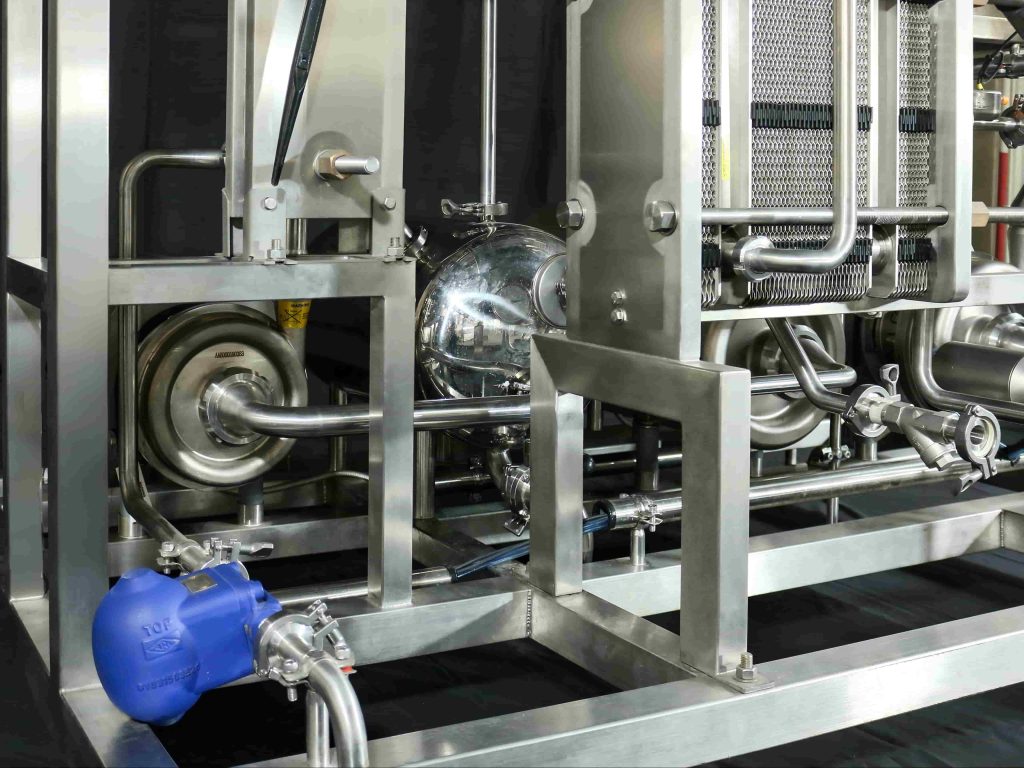
There are several types of beer heat exchangers used in the brewing industry, each with its own advantages and applications. The most common types include plate heat exchangers, shell and tube heat exchangers, and tubular built-in heat exchangers. Among these, the shell and tube heat exchanger is particularly popular for large-scale breweries and applications that require high temperature and pressure resistance.
A shell and tube heat exchanger consists of a cylindrical shell (outer chamber) and a bundle of tubes (inner channels) that run through the shell. In the context of beer brewing, the shell and tube heat exchanger is often used to heat or cool large volumes of fluid, such as wort or hot water. The design is simple yet robust, making it ideal for harsh brewing environments where reliability and durability are paramount.
In a shell and tube heat exchanger for beer brewing, one fluid (e.g., hot wort) flows through the tubes, while the other fluid (e.g., cold water or glycol) flows through the shell surrounding the tubes. This configuration provides a large heat transfer surface area, ensuring efficient thermal exchange. The shell and tube design is also less prone to clogging, making it suitable for fluids containing small solid particles (such as hop residues) or high-viscosity media.
Compared to plate heat exchangers, shell and tube heat exchangers offer superior resistance to high temperatures and pressures, making them ideal for large-scale hot water tank heating or wort cooling. They are also easier to maintain in high-volume operations, as the tube bundle can be removed for cleaning or replacement without disassembling the entire unit. SKE offers a range of shell and tube heat exchangers tailored to brewing applications, with customizable tube sizes and shell capacities to match your brewery’s production needs.
Integration of Beer Heat Exchanger with Hot Water Tank and Water Heater Tank
A beer heat exchanger does not operate in isolation—it works in tandem with other key components of the brewing system, including hot water tanks and water heater tanks. These components work together to optimize energy efficiency, reduce waste, and ensure a consistent supply of heated or cooled fluids for the brewing process. Understanding how these components integrate is essential for designing a efficient and cost-effective brewing system.
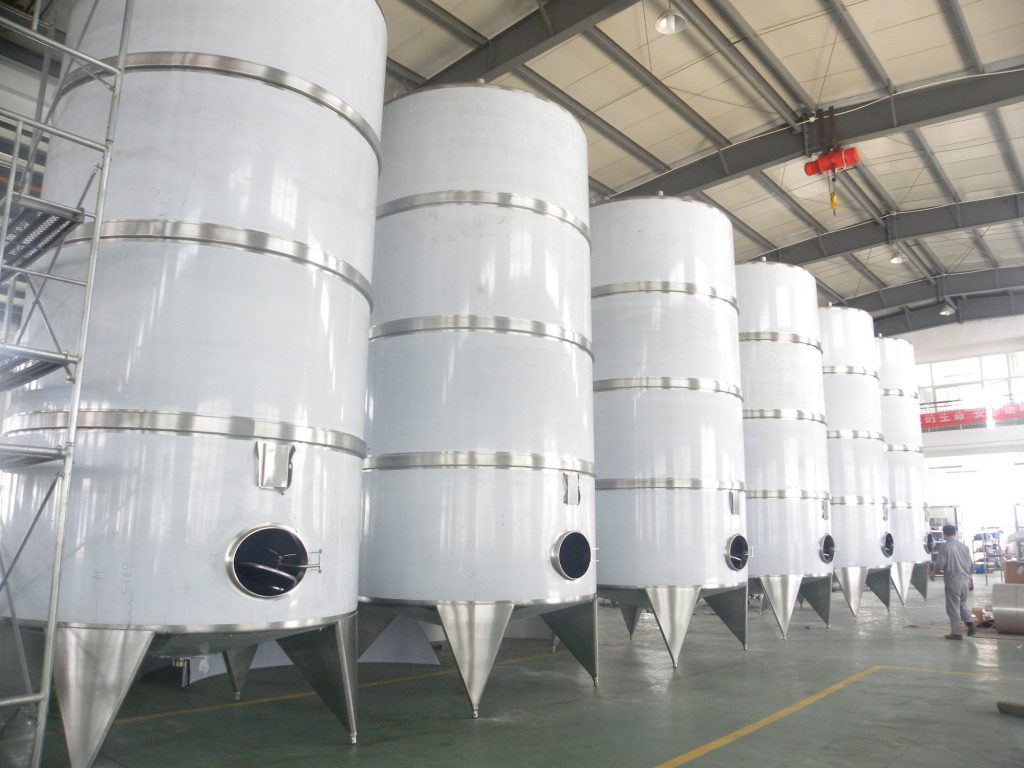
A hot water tank (also known as a hot liquor tank, HLT) is a critical component in brewing, used to store and supply hot water for mashing, sparging, and cleaning. The hot water tank is often paired with a beer heat exchanger to recover heat that would otherwise be wasted. For example, when cooling hot wort using a heat exchanger, the cold water used for cooling absorbs heat from the wort and is then transferred to the hot water tank for reuse in subsequent brewing steps.
This heat recovery process significantly reduces energy consumption, as the brewery does not need to heat cold water from scratch for each batch. SKE’s hot water tanks are designed to work seamlessly with our beer heat exchangers, featuring insulation (usually 80mm PU insulation) to retain heat and minimize energy loss. Our tanks are made of food-grade stainless steel, with hygienic polishing to meet 3A standards, ensuring the purity of the hot water used in brewing.
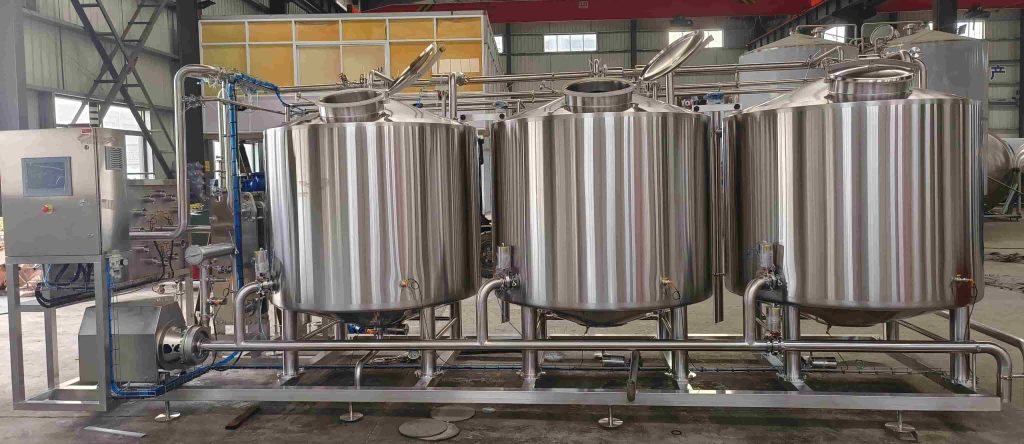
A water heater tank, on the other hand, is used to heat cold water to the desired temperature for the hot water tank or directly for brewing processes. While some breweries use a separate water heater tank, others integrate the heating function into the hot water tank itself (e.g., using steam or electric heating elements). The beer heat exchanger can also work with the water heater tank to regulate the temperature of the water, ensuring it meets the precise requirements for mashing (typically 60–70°C) or sparging (typically 77–79°C).
The integration of a beer heat exchanger with a hot water tank and water heater tank creates a closed-loop system that maximizes energy efficiency. For example, cold water from the water heater tank is used to cool wort in the heat exchanger, absorbing heat and becoming hot water, which is then stored in the hot water tank for future use. This cycle reduces energy waste and lowers operational costs for breweries of all sizes.
Comparison of Beer Heat Exchanger Types: Shell and Tube vs. Other Designs
|
Heat Exchanger Type
|
Key Features
|
Integration with Hot Water Tank/Water Heater Tank
|
Advantages
|
Ideal Applications
|
SKE Recommended Configuration
|
|---|---|---|---|---|---|
|
Shell and Tube Heat Exchanger
|
Cylindrical shell, tube bundle, high temp/pressure resistance, large heat transfer area
|
Ideal for heating large hot water tanks; heat recovery from wort cooling to preheat water heater tank supply
|
Robust, clog-resistant, easy maintenance, suitable for high flow rates
|
Large-scale breweries, high-volume wort cooling, hot water tank heating
|
316L stainless steel, customizable tube count, shell insulation, CIP cleaning compatibility
|
|
Plate Heat Exchanger
|
Stacked plates, compact design, high heat transfer efficiency, double-section option
|
Efficient heat recovery for small to medium hot water tanks; single-section for cold liquor tank integration
|
Compact, energy-efficient, fast cooling, easy to clean
|
Craft breweries, brewpubs, small to medium production batches
|
Double-section design (glycol + city water), food-grade gaskets, 304 stainless steel plates
|
|
Tubular Built-in Heat Exchanger
|
Tubes integrated into kettle tun, direct heating/cooling, space-saving
|
Works with hot water tanks to supplement kettle heating; no direct integration with water heater tanks
|
Space-saving, direct heat transfer, compatible with large kettle tuns
|
Large breweries with big kettle tuns, supplementary heating/cooling
|
Stainless steel tubes, customizable length, compatible with SKE kettle tuns
|
Key Considerations for Choosing a Beer Heat Exchanger (SKE Expert Advice)
First, consider your production volume. Large-scale breweries (producing 5,000L or more per batch) will benefit from a shell and tube heat exchanger, which can handle high flow rates and large heat transfer volumes. Smaller craft breweries (500–2,000L per batch) may prefer a plate heat exchanger, which is more compact and energy-efficient for smaller batches.
Second, evaluate your heat recovery needs. If you want to maximize energy efficiency, choose a beer heat exchanger that can recover heat from wort cooling to preheat water for your hot water tank. SKE’s heat exchangers are designed with heat recovery in mind, allowing you to reduce energy consumption by up to 30% compared to systems without heat recovery.
Third, consider the compatibility with your hot water tank and water heater tank. Ensure that the heat exchanger’s capacity matches the size of your hot water tank—an undersized exchanger will not be able to heat or cool the water efficiently, while an oversized one will waste energy. SKE’s team can help you calculate the optimal size based on your tank capacity and production volume.
Fourth, prioritize hygiene and maintenance. Brewing equipment must meet strict food safety standards, so choose a heat exchanger made of food-grade stainless steel (304 or 316L) with easy-to-clean surfaces. SKE’s heat exchangers are designed with CIP (Clean-in-Place) compatibility, allowing you to clean the unit without disassembly, saving time and labor.
Finally, consider customization options. Every brewery has unique needs, so look for a manufacturer that can customize the heat exchanger to fit your specific brewing process. SKE offers customizable tube sizes, plate counts, and connection types, ensuring that the exchanger integrates seamlessly with your existing hot water tank, water heater tank, and other brewing equipment.
Maintenance and Troubleshooting for Beer Heat Exchangers, Shell and Tube Units, and Water Tanks
Proper maintenance is essential to ensure the longevity and performance of your beer heat exchanger, shell and tube heat exchanger, hot water tank, and water heater tank. Neglecting maintenance can lead to reduced heat transfer efficiency, increased energy consumption, and even equipment failure, which can disrupt your brewing process.
For beer heat exchangers (including shell and tube units), regular cleaning is the most important maintenance task. Over time, wort residues, hop particles, and mineral deposits (beer stone) can build up on the heat transfer surfaces, reducing efficiency. SKE recommends cleaning the exchanger with a caustic solution at the end of each brew day and performing an acid wash every 2–3 brews to remove calcium oxalate deposits.
For shell and tube heat exchangers, additional maintenance steps include inspecting the tube bundle for leaks or corrosion, checking the gaskets (if applicable) for wear, and ensuring that the shell is free of debris. The tube bundle can be removed for thorough cleaning, and any damaged tubes should be replaced promptly to prevent cross-contamination between fluids.
Hot water tanks and water heater tanks require regular maintenance to ensure they retain heat efficiently and operate safely. This includes inspecting the insulation for damage, checking the heating elements (electric) or steam jacket (steam-heated) for wear, and draining the tank periodically to remove sediment buildup. SKE’s hot water tanks are equipped with sight glasses and sampling valves, making it easy to monitor the tank’s condition and perform maintenance.
Common troubleshooting issues for these components include reduced heat transfer efficiency, leaks, and temperature fluctuations. If your heat exchanger is not cooling or heating efficiently, check for fouling or blockages in the flow paths. For leaks, inspect gaskets, tube connections, and tank seams. Temperature fluctuations may indicate a problem with the water heater tank’s heating element or the heat exchanger’s flow rate—adjusting the flow rate or replacing the heating element can resolve this issue.
SKE provides comprehensive maintenance guidelines for all our equipment, and our technical support team is available to assist with troubleshooting. We also offer replacement parts (such as gaskets, tubes, and heating elements) to ensure that your equipment remains in optimal working condition.
FAQ: Common Questions About Beer Heat Exchangers, Shell and Tube Design, Hot Water Tanks, and Water Heater Tanks
Q1: What is the difference between a beer heat exchanger and a shell and tube heat exchanger?
A: A beer heat exchanger is a specialized type of heat exchanger designed specifically for brewing applications, tailored to handle the sensitivity of wort and beer. A shell and tube heat exchanger is a type of heat exchanger (one of several) that can be used as a beer heat exchanger. In other words, all shell and tube heat exchangers used in brewing are beer heat exchangers, but not all beer heat exchangers are shell and tube designs. Shell and tube heat exchangers are distinguished by their cylindrical shell and tube bundle, making them ideal for large-scale, high-pressure applications.
Q2: Do I need both a hot water tank and a water heater tank for my brewery?
A: It depends on your production volume and heat recovery needs. Many breweries integrate the heating function into the hot water tank (using steam or electric heating elements), eliminating the need for a separate water heater tank. However, large-scale breweries with high hot water demand may benefit from a separate water heater tank to ensure a consistent supply of heated water. SKE recommends assessing your daily hot water usage and heat recovery capacity—if your beer heat exchanger recovers enough heat to meet your hot water needs, a separate water heater tank may not be necessary.
Q3: How do I size a beer heat exchanger for my hot water tank?
A: The size of the beer heat exchanger depends on the volume of your hot water tank, the desired temperature change, and your production volume. As a general rule, the heat exchanger should be able to transfer enough heat to heat the hot water tank to the desired temperature (usually 77–85°C) within your brewing cycle. SKE’s technical team can calculate the optimal size using factors such as the tank’s capacity, the inlet/outlet temperatures of the fluids, and the flow rate. For example, a 2,000L hot water tank typically requires a shell and tube heat exchanger with a heat transfer area of 5–8 m².
Q4: Can a shell and tube heat exchanger be used for both heating and cooling in brewing?
A: Yes, shell and tube heat exchangers are versatile and can be used for both heating and cooling. For cooling, hot wort flows through the tubes, and cold water or glycol flows through the shell, transferring heat from the wort to the cooling medium. For heating, hot water or steam flows through the shell, and cold water (for the hot water tank) flows through the tubes, transferring heat to the water. SKE’s shell and tube heat exchangers are designed to handle both functions, making them a cost-effective solution for breweries.
Q5: How often should I clean my beer heat exchanger and hot water tank?
A: For beer heat exchangers, SKE recommends cleaning with a caustic solution at the end of each brew day to remove wort residues and hop particles. An acid wash should be performed every 2–3 brews to remove mineral deposits. For hot water tanks, drain and clean the tank every 1–2 months to remove sediment buildup. Additionally, inspect the tank’s insulation and heating elements quarterly to ensure optimal performance. Regular cleaning not only improves efficiency but also extends the lifespan of your equipment.
Conclusion: The Importance of a Well-Integrated Beer Heat Exchanger System
A beer heat exchanger is a critical component of any brewing system, and its integration with a shell and tube heat exchanger, hot water tank, and water heater tank can significantly improve efficiency, reduce energy costs, and enhance product quality. By understanding the working principle of these components, choosing the right type for your production needs, and maintaining them properly, you can ensure a consistent and high-quality brewing process.
If you have any further questions, feel free to reach out!
- Facebook: SKE Equipment Facebook
- Email: info@skeequipment.com
For more personalized assistance, please fill out the contact form at the bottom of this page. We look forward to helping you with your brewing needs!