For any brewer, the mantra is simple: clean beer is good beer. However, achieving that pristine clarity and stable flavor profile relies on more than just a great recipe; it relies on stainless steel hygiene. In the modern brewing industry, manual scrubbing is a relic of the past.
Enter the world of CIP Stations. Whether you are a 5-barrel nanobrewery or a 100-hectoliter regional powerhouse, the CIP cart is the heart of your cellar’s cleanliness. At SKE, we have spent over two decades engineering these critical systems. We often get asked: What is the difference between a makeshift cleaning setup and a true professional CIP cart?
The answer lies in automation, consistency, and safety. A dedicated brewery CIP cart ensures that every surface that touches your beer—from the fermenter to the heat exchanger—is sanitized without human error. This article explores the engineering behind these systems, benchmarked against global standards.
What Exactly is a CIP Station?
CIP stands for Cleaning-in-Place. Unlike manual cleaning (COP) where you have to disassemble valves and clamps, CIP allows you to clean the interior surfaces of tanks, pipes, and vessels without disassembly.
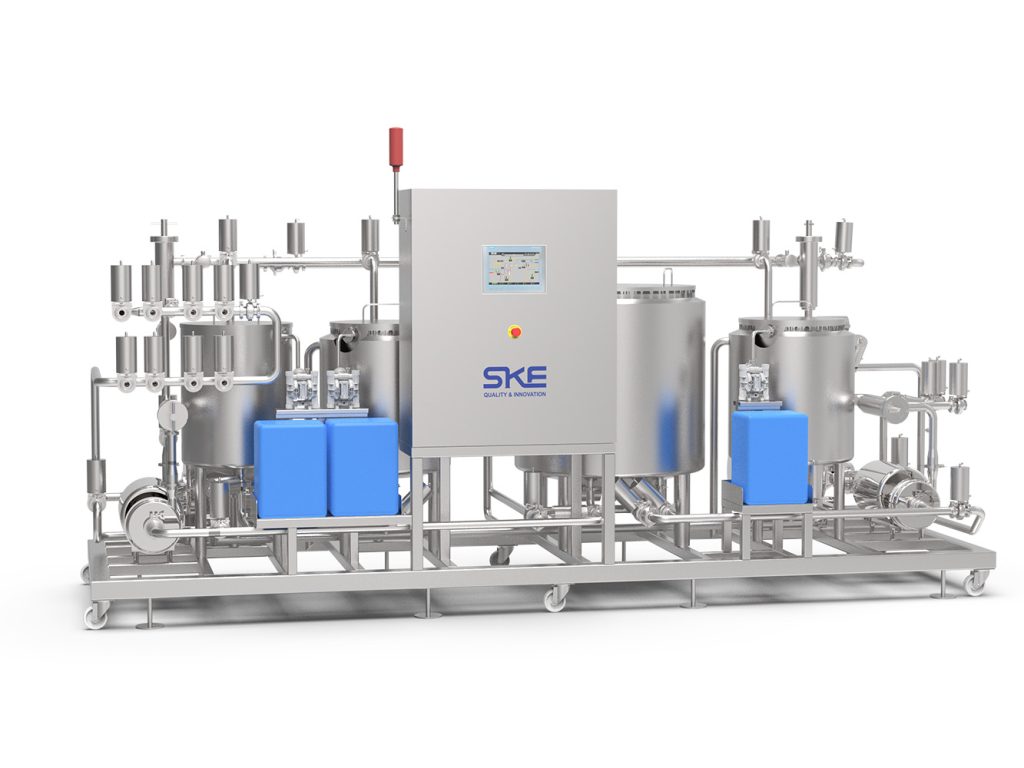
A CIP Station (or CIP cart) is a mobile or skid-mounted unit that contains pumps, heat exchangers, and chemical tanks. It circulates water, caustic solutions, and acids at specific temperatures and flow rates to scour away yeast, trub, and beer stone.
For small to mid-sized breweries, portability is key. This is where the brewery cip cart shines. It can be rolled from the fermenter room to the brewhouse, serving multiple vessels with one investment. At SKE, our designs focus on modularity, allowing you to start with a manual cart and upgrade to fully automated controls as you scale.
The Anatomy of a Professional CIP Cart
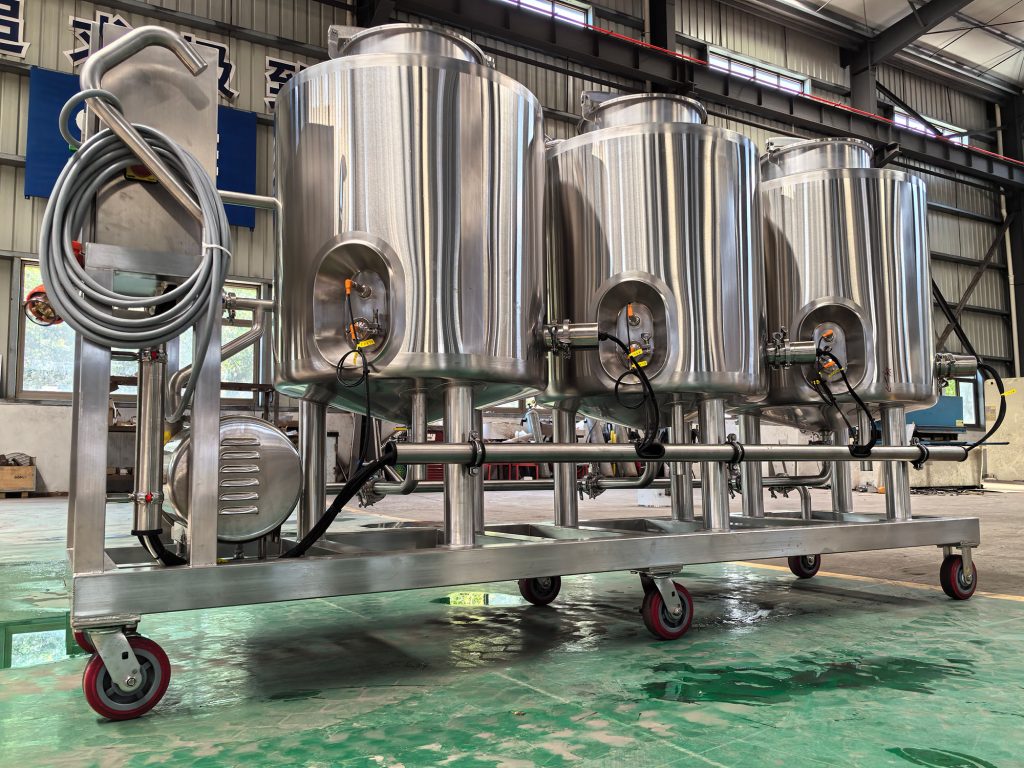
Not all CIP carts are created equal. A simple pump in a bucket is risky; it lacks the thermal energy and flow dynamics required to kill bacteria. A professional CIP Station from a reputable beer equipment manufacturer includes specific components that guarantee results.
Here is the technical breakdown of a standard SKE CIP Cart:
| Component | Function | SKE Advantage |
|---|---|---|
| Reservoir Tanks | Holds caustic, acid, and rinse water. | Insulated, double-walled to retain heat and save energy. |
| Centrifugal Pump | Provides the “scrubbing” pressure. | High-head impellers designed for spray ball impact. |
| Heat Exchanger | Maintains 70°C-85°C temperatures. | Instant electric or steam heating, eliminating temperature drop. |
| Control Panel | Manages cycles and times. | Intuitive HMI touchscreen with recipe saving. |
| Flow Meter | Measures velocity. | Ensures turbulent flow (Reynolds number > 4000) for mechanical removal. |
CIP Cart Brewing: Step-by-Step Process
How does a CIP cart brewing setup actually clean a 100hl fermenter? The process is a science. SKE programs our systems to follow a strict protocol based on the guidelines used by the world’s most famous brewery standards.
The process consists of five critical phases, monitored by sensors to prevent chemical residue or bacterial growth.
1. Pre-Rinse
The cart pumps lukewarm water into the tank. This is not about cleaning yet; it’s about recovery. This water removes loose solids (trub/hops) and pre-heats the tank walls. At SKE, we design recovery lines to reuse this water, significantly lowering your utility bill.
2. Hot Caustic Circulation
The heart of the clean. The CIP cart heats a caustic solution (usually NaOH) to 75°C-85°C. This hot chemical is blasted through the spray ball. The combination of heat + chemical + mechanical impact melts proteins and dissolves organic soils. Our carts monitor pH levels to ensure the caustic isn’t exhausted.
3. Intermediate Rinse
Once the caustic is drained back to the cart (yes, we reuse it for 3-4 cycles), fresh water rinses the tank. This step neutralizes the pH and washes away the now-emulsified soil.
4. Acid Rinse
Beer stone (calcium oxalate) is the enemy of clarity. The CIP Station switches to an acid solution (Nitric/Phosphoric). This passivates the stainless steel, removing mineral deposits and creating a corrosion-resistant surface.
5. Final Sanitizer Rinse
Just before the next brew, a no-rinse sanitizer (like PAA) is circulated. This is a cold-water step that sterilizes the tank. SKE systems ensure that no air locks remain, keeping the vessel oxygen-free.
Benchmarks: Learning from the World’s Best Breweries
What do the world’s best breweries do differently? They do not cut corners on contact time. When you look at the world’s most famous brewery operations, you will notice they prioritize automation and validation.
At SKE, we have studied the production schedules of top-tier facilities. The key takeaway is repeatability. A master brewer cannot be guessing if a tank is clean.
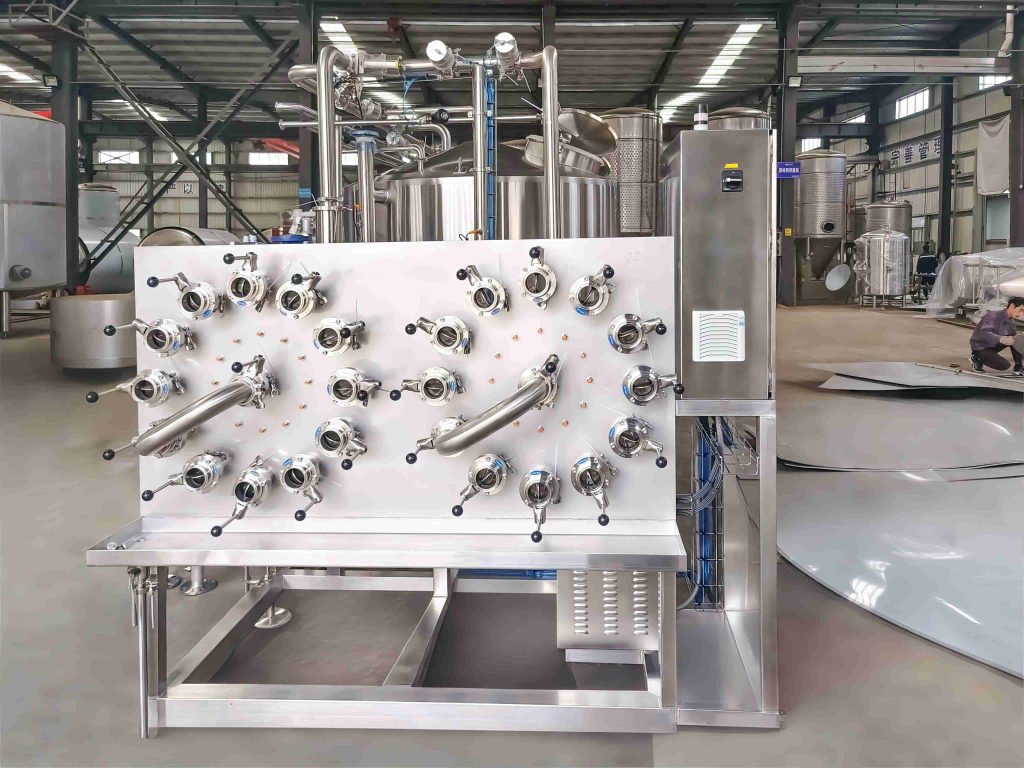
Leading breweries use conductivity sensors—standard on SKE automated skids—to verify chemical presence. Furthermore, the trend among the world’s best breweries is moving toward centralized CIP stations. Instead of one cart, they use a dedicated plant room (CIP Station) that pipes chemicals to multiple outlets, reducing downtime. For growing breweries, SKE offers this scalable architecture: start with a mobile cart and plumb it into a permanent loop as you expand.
SKE Customization: Matching the Cart to the Brewery
Not every brewery needs the same setup. A brewpub has different space constraints than a regional production facility. SKE recognizes that flexibility is the hallmark of a great beer equipment manufacturer.
We build CIP carts ranging from 75L portable units (perfect for distilleries and pilot systems) to 1000L+ dual-basket skids.
Single Vessel Carts (The Workhorse)
Ideal for breweries under 15bbl. This cart holds one chemical (Caustic) and relies on the brewery’s HLT (Hot Liquor Tank) for rinse water. It is compact, cost-effective, and fits in tight spaces.
Dual Vessel Carts (The Professional Standard)
This is the brewery cip cart configuration we recommend for most microbreweries. It features two separate tanks: one for Caustic, one for Acid. It allows you to switch between cleaning modes instantly without draining and refilling hoses, saving 30 minutes per tank clean.
Multi-Skid Stations (The Industrial Standard)
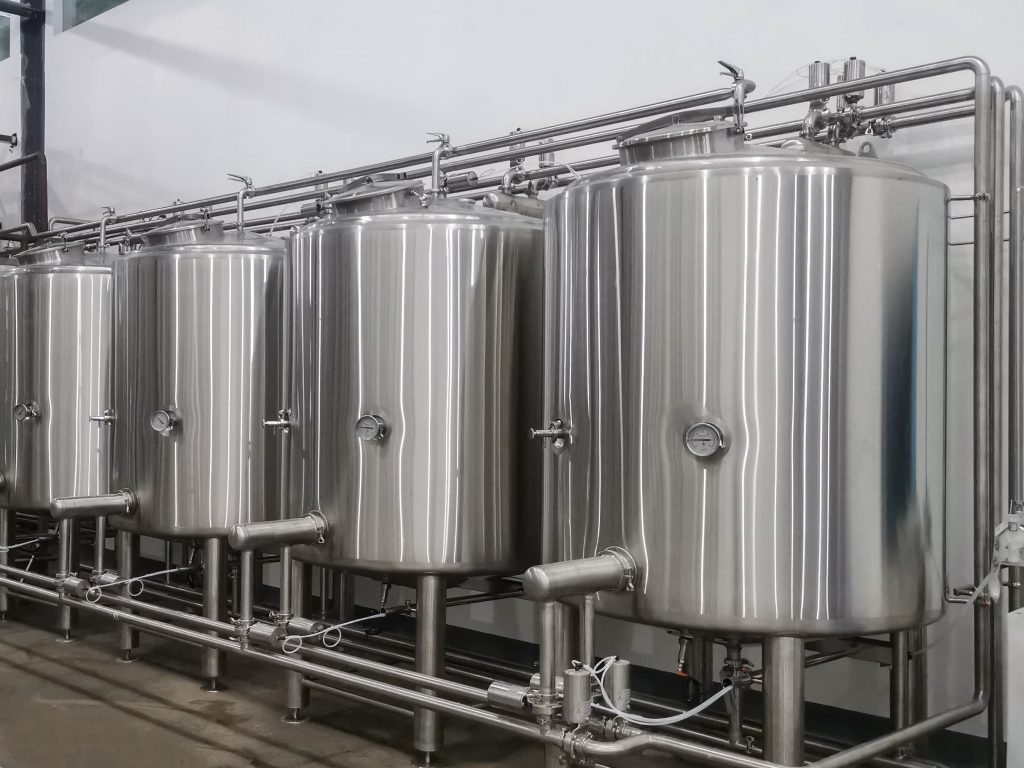
For breweries producing over 50,000 bbl/year. These are stationary skids with dedicated supply and return lines. SKE engineers these with Variable Frequency Drives (VFDs) to adjust pressure for different tank sizes automatically.
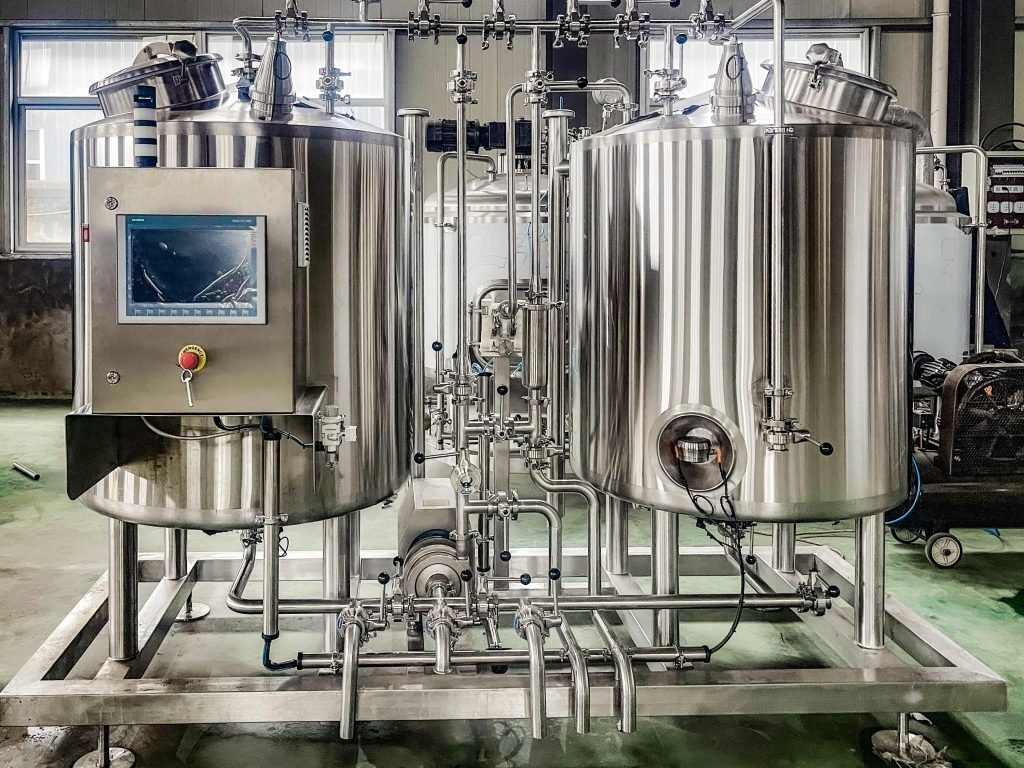
The ROI of a Quality CIP Cart
Why invest in a high-quality CIP Station when you could build a DIY version? Safety and chemistry.
First, worker safety. Handling concentrated caustic soda is dangerous. SKE carts feature closed-loop transfers and auto-dosing pumps. The operator never touches the chemical. Secondly, water usage. A professional CIP cart reduces water consumption by up to 80% compared to manual hose cleaning. Thirdly, beer loss. Dirty tanks cause refermentation and infections.
We often tell clients: A leaking valve wastes money, but a dirty tank wastes the entire batch. By automating your CIP cart brewing schedule, you ensure that every tank is cleaned exactly the same way every time, removing human error from the hygiene equation.
Conclusion: Cleanliness is Next to Godliness
In the competitive craft beer landscape, consistency is king. Whether you aspire to be listed among the world’s best breweries or simply want to serve the freshest pints in your town, the journey starts with a stainless steel vessel that is surgically clean.
The CIP Station is not just a cleaning tool; it is an insurance policy for your brand. At SKE, we manufacture these systems with the same precision as our brewhouses. We know that if you cannot clean it, you cannot brew it.
Ready to upgrade your cellar hygiene? Contact SKE today to discuss a brewery cip cart tailored to your specific tank layout and production volume.
- Facebook: SKE Equipment Facebook
- Email: info@skeequipment.com
For more personalized assistance, please fill out the contact form at the bottom of this page. We look forward to helping you with your brewing needs!
Frequently Asked Questions (FAQ)
Q1: How often should I replace the chemicals in my CIP cart?
A: It depends on the soil load. Generally, caustic can be reused for 3-5 cycles if you filter out solids. SKE recommends using conductivity sensors to measure strength. If the pH drops below 11, it is time to dump and refill.
Q2: Can I use a CIP cart to clean my heat exchanger?
A: Absolutely. In fact, the brewery cip cart is the only safe way to clean a plate heat exchanger. You must back-flush the PHE immediately after brewing. SKE carts include bypass valves specifically to divert flow through the PHE without sending solids into the plates.
Q3: Is steam or electric heating better for a CIP station?
A: For carts under 200L, electric is simpler and cheaper to install. For larger volumes, steam is faster to heat and more cost-effective long-term. SKE offers both configurations depending on your utility access.
Q4: What is the ideal flow rate for cleaning a fermenter?
A: You need a flow rate high enough to keep the spray ball spinning. A general rule is 10-15 m³/hour for a 30bbl tank. SKE equips our carts with oversized pumps to ensure mechanical impact, not just chemical soaking.
Q5: Does SKE provide training for CIP processes?
A: Yes. With every CIP Station purchase, SKE provides on-site or remote commissioning and SOP (Standard Operating Procedure) documentation. We ensure your team understands titration, temperature requirements, and safety protocols.