
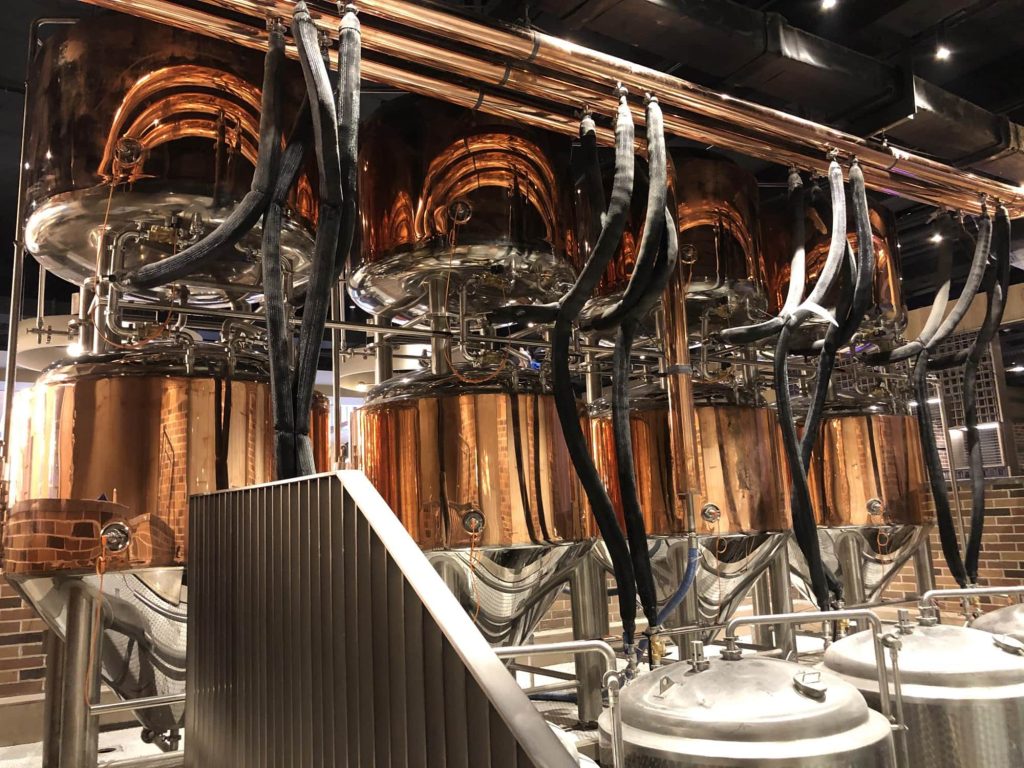
Introduction: The Evolution of Beer Making Systems
Beer is one of the oldest and most beloved beverages in human history, with brewing traditions dating back thousands of years. Yet, despite its ancient roots, the art and science of beer making have undergone a remarkable transformation in recent decades. What was once a labor-intensive craft practiced in small batches has evolved into a sophisticated industry powered by advanced engineering and automation.
At the heart of this transformation lies the beer making system—the integrated equipment that converts raw grains, water, hops, and yeast into the finished product we enjoy today. From the simplest homebrew setup to fully automated commercial breweries, the beer making system defines not only the scale of production but also the quality, consistency, and efficiency of the final beer.
Whether you are a homebrewer looking to upgrade your setup, a craft brewery owner planning to expand, or a commercial operator seeking the best brewery systems on the market, understanding the components, capabilities, and innovations in modern beer making systems is essential. This comprehensive guide will walk you through everything you need to know about beer making systems—from the fundamental brewing process to the latest in automation technology.
The Beer Making Process: From Grain to Glass
Understanding how a beer making system works begins with understanding the brewing process itself. Every beer making system, whether manual or fully automated, follows the same fundamental sequence of steps that convert raw ingredients into a finished beverage.
Step 1: Malting and Milling
The beer making process begins with malt—typically barley that has been soaked in water to begin germination, then dried in a kiln to stop the process. This malting step activates enzymes that will later convert starches into fermentable sugars. The malted barley is then passed through a malt mill (also called a grist mill) that cracks open the husks to expose the starches inside.
Step 2: Mashing
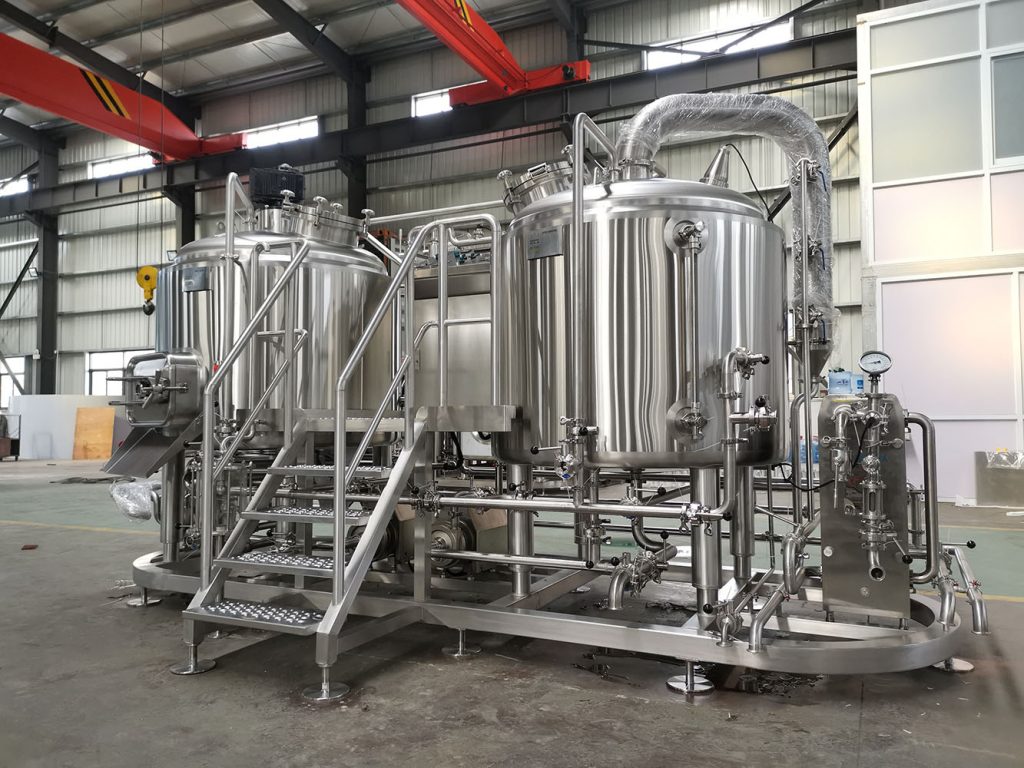
The milled grains, now called grist, are transferred to the mash tun and combined with hot water. During this process, natural malt enzymes break down the starches into simple sugars, creating a sweet liquid called wort. The mash is held at specific temperatures to allow the enzymes to work optimally, typically between 148°F and 158°F (64°C to 70°C).
Step 3: Lautering
After mashing, the wort must be separated from the spent grain solids. This separation occurs in a lauter tun, which has a screen-like bottom that allows liquid to flow through while retaining the grain husks. Hot water is sprayed over the grain bed in a process called sparging to rinse out as many fermentable sugars as possible.
Step 4: Boiling
The wort is transferred to a brew kettle and brought to a rolling boil, typically for 60 to 90 minutes. Boiling sterilizes the wort, stops enzymatic activity, and allows brewers to add hops at different stages for bitterness, flavor, and aroma. Bittering hops are added early in the boil, while aroma hops are added near the end.
Step 5: Whirlpool and Cooling
After boiling, the wort is transferred to a whirlpool tank where centrifugal force separates solid particles (hot trub) from the liquid. The wort is then rapidly cooled using a heat exchanger to a temperature suitable for yeast fermentation, typically around 68°F (20°C) for ales or 50°F (10°C) for lagers.
Step 6: Fermentation and Conditioning
The cooled wort is transferred to a fermentation tank, and yeast is pitched. During primary fermentation, yeast converts sugars into alcohol and carbon dioxide. The beer then undergoes conditioning or maturation, where flavors develop and clarify. Finally, the beer is filtered, carbonated, and packaged into bottles, cans, or kegs for consumption.
Automatic Beer Brewing Machine vs. Manual Systems
One of the most important decisions when selecting a beer making system is choosing between manual and automatic operation. Each approach offers distinct advantages depending on your scale, budget, and brewing philosophy.
Manual beer brewing equipment relies primarily on hands-on operation throughout the brewing process. Brewers manually control heating, stirring, timing, and temperature adjustments. This approach is typically more affordable and offers greater creative control, making it popular among homebrewing enthusiasts and small craft breweries that value artisanal craftsmanship.
The advantages of manual brewing include lower initial equipment costs, greater flexibility for recipe experimentation, and the ability to make fine adjustments based on sensory feedback. However, manual brewing requires significant time, labor, and expertise. Each batch can vary due to human factors, and scaling up production becomes increasingly challenging.
Automatic beer brewing machines, by contrast, use computer programs, sensors, pumps, and automated controls to manage the brewing process with minimal human intervention. Modern automatic systems can precisely control mash temperatures, hop addition timing, fermentation conditions, and cleaning cycles.
The benefits of automation are substantial. Automated systems deliver unparalleled consistency from batch to batch, reduce labor requirements, and minimize the risk of human error. They also enable remote monitoring and data logging, allowing brewers to track performance metrics and optimize recipes over time. For commercial operations, automation is often the key to scaling production while maintaining quality standards.
Here is a comparison of manual versus automatic beer making systems:
| Feature | Manual Brewing System | Automatic Brewing Machine |
|---|---|---|
| Initial Investment | Lower (thousands of dollars) | Higher (tens of thousands to millions) |
| Labor Requirement | High—constant attention needed | Low—monitoring only |
| Batch Consistency | Variable—depends on brewer skill | Excellent—reproducible every time |
| Control Over Process | Full hands-on control | Programmable control via interface |
| Skill Level Required | Advanced brewing knowledge needed | Beginner-friendly with guided operation |
| Production Capacity | Small to medium batches | Scalable from home to industrial |
| Energy Efficiency | Less optimized | Highly efficient with automation |
| Best For | Homebrewers, brewpubs, experimental batches | Commercial breweries, chain operations |
Best Beer Brewing Machine: Key Features to Consider
When evaluating the best beer brewing machine for your needs, several critical factors should guide your decision. Understanding these features will help you select a system that matches your production goals and delivers long-term value.
Capacity and Batch Size are the most fundamental considerations. Home brewing machines typically range from 1 to 10 gallons per batch, while commercial systems range from 1 barrel (31 gallons) to 100 barrels or more. Choose a capacity that meets your current demand with room for growth. For most new craft breweries, a 3 to 7 BBL system hits the sweet spot—large enough for commercial production but manageable for a startup operation.
Material Quality directly impacts durability, hygiene, and beer quality. The best beer brewing machines use SUS304 or SUS316L food-grade stainless steel, with smooth welds and inner wall polishing ≤ Ra0.4μm to prevent bacterial growth and ensure easy cleaning.
Heating Method options include electric, steam, or direct-fire. Electric heating offers precise temperature control and is ideal for smaller systems. Steam provides even heating for larger vessels and is common in commercial breweries. Direct-fire is traditional and cost-effective but requires more careful monitoring.
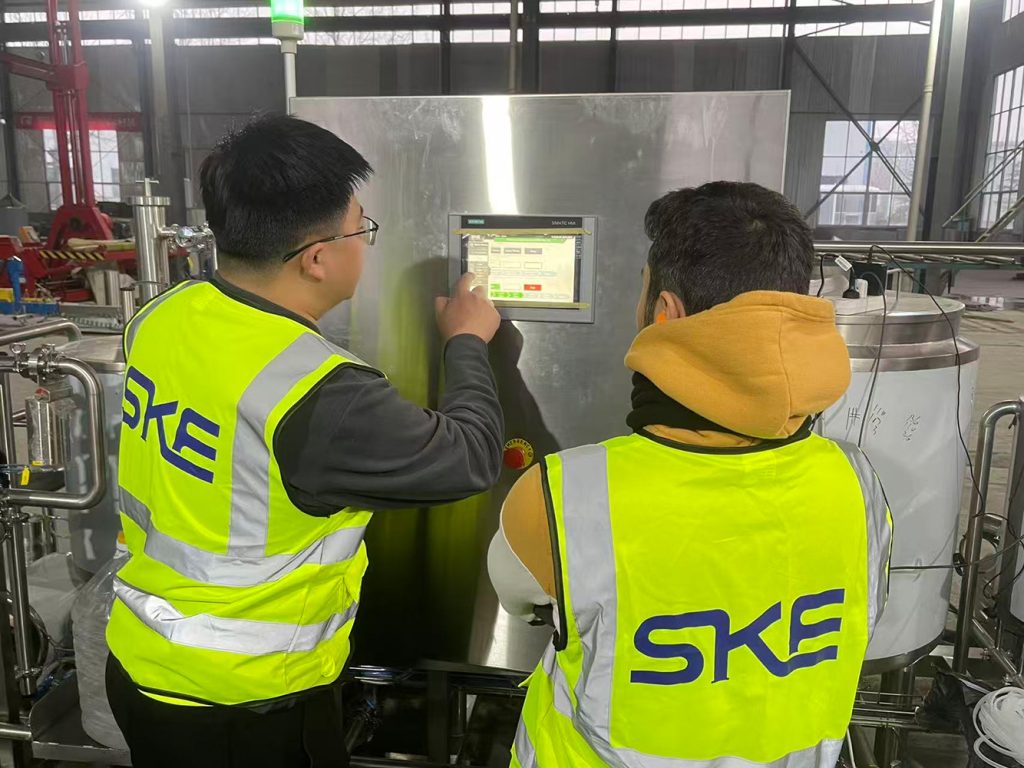
Control System sophistication varies widely. Entry-level systems may use simple thermostat controls, while high-end automatic beer brewing machines feature PLC (Programmable Logic Controller) systems with touchscreen HMIs. Advanced systems offer recipe storage, programmable temperature profiles, automated CIP (Cleaning-in-Place) cycles, and remote monitoring capabilities.
Energy Efficiency should not be overlooked. Modern systems incorporate features like insulated vessels, heat recovery systems, and variable frequency drives (VFDs) on pumps to reduce energy consumption. Given rising energy costs worldwide, efficiency translates directly to operating profit.
Scalability is crucial for commercial operators. The best systems are designed to grow with your business, allowing you to add fermenters, expand capacity, or integrate additional automation modules without replacing core equipment.
For home brewers, automatic countertop beer brewers have become increasingly sophisticated. Products like the iGulu S1 and Brewart BeerDroid offer one-touch operation, built-in recipes, temperature and pressure control during fermentation, and even chilled dispensing. These compact automatic beer brewing machines have lowered the barrier to entry for aspiring home brewers while delivering professional-quality results.
Best Brewery Systems for Commercial Production
For commercial brewers seeking the best brewery systems, the choice extends far beyond the brewhouse itself. A complete commercial brewery system encompasses multiple integrated subsystems, each critical to production quality and efficiency.
Brewhouse System
The brewhouse is the heart of any beer making system, where grains are converted into wort. Commercial brewhouses typically feature 2, 3, or 4 vessels. A 2-vessel system combines the mash tun and lauter tun, while a 4-vessel system separates mash tun, lauter tun, kettle, and whirlpool into dedicated tanks. More vessels generally offer greater control and efficiency but require more space and capital.
Fermentation System
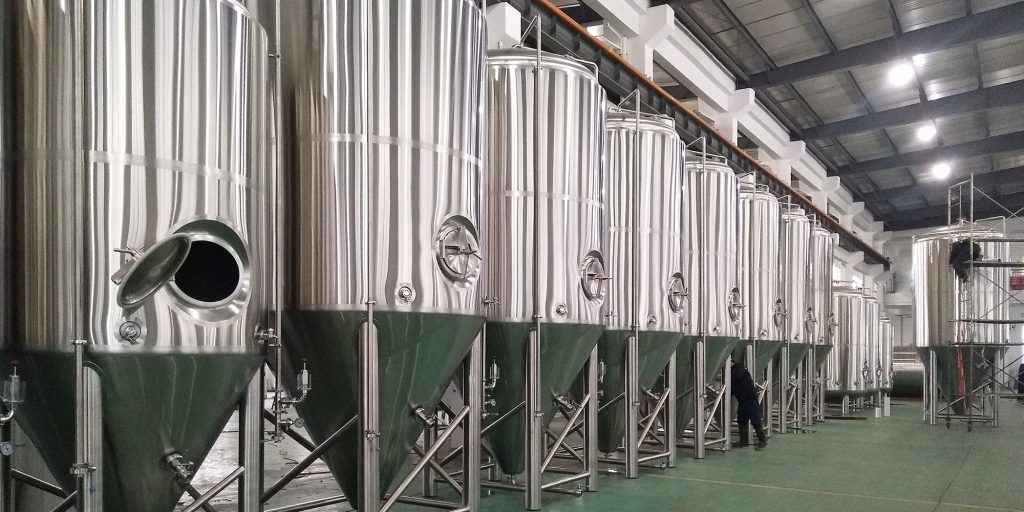
The fermentation system determines the beer’s taste, aroma, and alcohol content. Conical fermenters are standard in commercial operations, as their shape allows yeast to settle at the bottom for easy removal. Modern fermentation tanks feature glycol cooling jackets for precise temperature control, pressure valves for carbonation management, and CIP spray balls for automated cleaning.
A quality fermentation system includes properly sized fermenters with accurate temperature control. Glycol chillers are the preferred cooling method for multiple tanks, offering efficiency and reliability.
Cleaning-in-Place (CIP) System
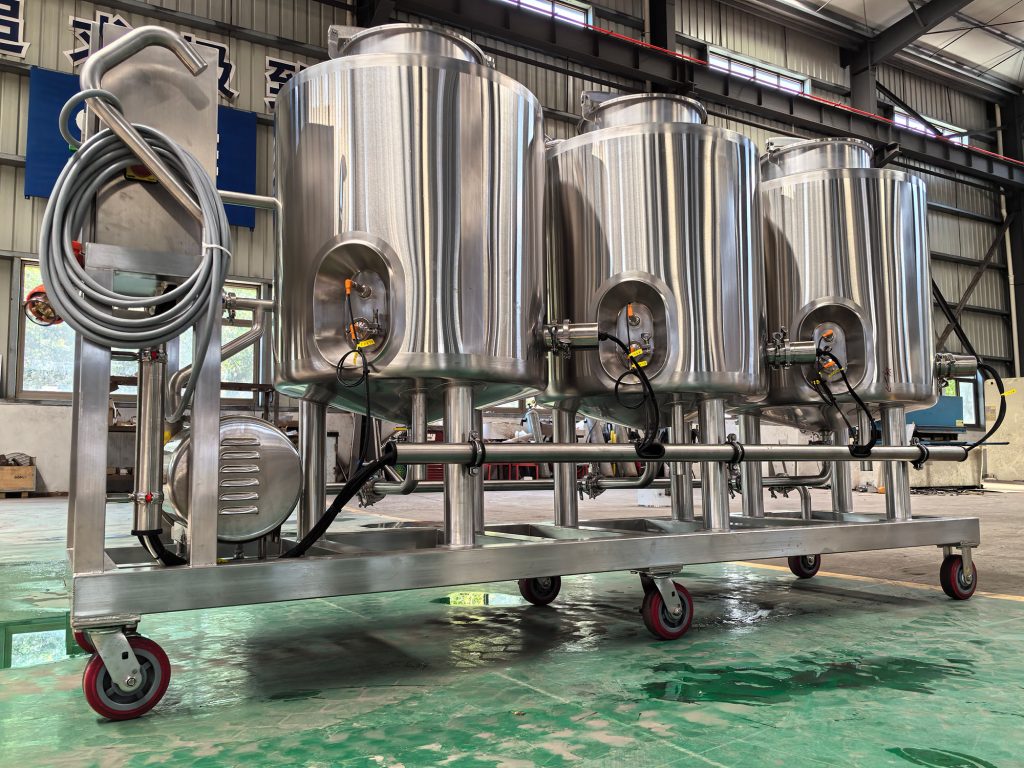
Perhaps the most underappreciated component of professional beer making systems is the CIP system. Automated CIP systems use programmed cycles of caustic, acid, and hot water to clean tanks and piping without disassembly. This not only saves enormous labor time but also ensures consistent sanitation, preventing contamination and off-flavors.
Control and Monitoring
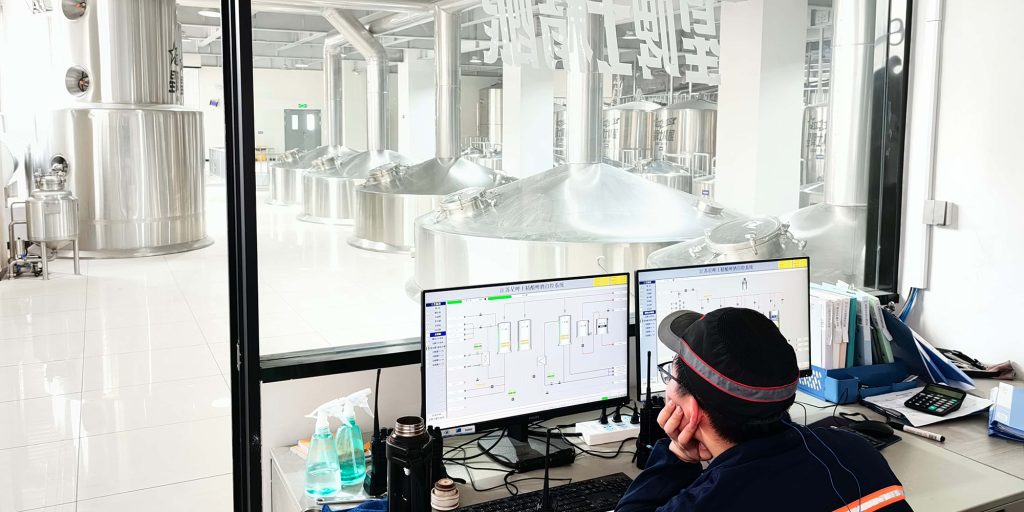
The best brewery systems incorporate comprehensive automation control. ABB’s Ability™ BeerMaker, for example, offers a brewery-specific control solution that supports safety and quality improvements while boosting productivity and operational efficiency. These systems enable real-time monitoring of temperature, pressure, flow rates, and fermentation curves, with data logging for quality assurance and recipe optimization.
Turnkey Solutions
Many equipment manufacturers now offer turnkey brewery solutions—complete packages that include all equipment, installation, training, and commissioning. For new breweries, a turnkey solution simplifies the startup process and ensures that all components work together seamlessly.
Core Components of a Professional Beer Making System
Understanding the individual components of a beer making system helps brewers make informed purchasing decisions and optimize their operations.
| Component | Function | Key Specifications |
|---|---|---|
| Malt Mill | Crushes malted grains to expose starches | 2 or 4 rollers, adjustable gap setting |
| Mash Tun | Mixes grist with hot water for starch conversion | Insulated, false bottom for filtration |
| Lauter Tun | Separates wort from spent grain | Slotted plates, raking mechanism, sparge system |
| Brew Kettle | Boils wort and facilitates hop addition | Steam/electric/direct-fire heating, ≥70% headspace |
| Whirlpool Tank | Separates hot trub from wort | Tangential inlet for centrifugal separation |
| Heat Exchanger | Rapidly cools wort to fermentation temperature | Plate or tube-in-shell, glycol + water stages |
| Fermentation Tank | Converts sugar to alcohol with yeast | Conical bottom, glycol jacket, pressure-rated |
| Bright Beer Tank | Conditions and carbonates finished beer | Pressure-rated, carb stone, sampling valve |
| CIP System | Automates cleaning of tanks and piping | Caustic/acid/hot water tanks, spray balls |
| Control Panel | Manages temperature, timing, and automation | PLC/HMI, temperature controllers, VFDs |
Market Trends and Future Outlook
Automation and Industry 4.0 are transforming brewing operations. IoT-enabled sensors, cloud-based data analytics, and AI-powered process optimization are becoming standard features in advanced brewery systems. Telenor IoT’s collaboration with PLAATO, for example, enables real-time production data collection from PLCs, giving brewers continuous visibility into fermentation activity, cleaning cycles, and bottleneck detection.
Sustainability is a major focus for both equipment manufacturers and brewers. Energy-efficient designs, water-saving technologies, and heat recovery systems are increasingly prioritized. The industry is moving toward closed-loop systems that minimize resource consumption and waste.
Craft beer culture continues to expand globally, particularly in emerging markets across Asia-Pacific and Latin America. This expansion drives demand for flexible, scalable brewing equipment that can adapt to local tastes and production volumes.
Digital twins and remote monitoring are emerging as powerful tools for breweries of all sizes. These technologies allow brewers to simulate and optimize production processes before implementation, reducing time to market and improving quality control.
For 2026, the smartest approach to purchasing commercial brewing equipment is to match your equipment to your brewing goals, real production volume, and site utilities. Equipment that is CIP-ready, maintains stable temperature control, and scales without rebuilds delivers the best long-term value.
Frequently Asked Questions (FAQ)
Q1: What is a beer making system and how does it work?
A beer making system is an integrated set of equipment that automates or facilitates the brewing process. It typically includes a mash tun for converting grain starches into sugars, a lauter tun for separating liquid wort from solids, a brew kettle for boiling with hops, a whirlpool for trub separation, fermentation tanks for alcohol production, and bright beer tanks for conditioning. The system guides wort through each stage, with temperature and timing precisely controlled to produce consistent, high-quality beer.
Q2: How do I choose between a manual and an automatic beer brewing machine?
Choose manual brewing if you have a limited budget, enjoy hands-on control over every variable, and produce small batches where craftsmanship is your priority. Choose an automatic brewing machine if you need consistent, repeatable results, want to scale production, minimize labor costs, or are new to brewing and want guided operation. Commercial breweries almost universally benefit from automation, while homebrewers may prefer manual systems for their lower entry cost and greater creative freedom.
Q3: What capacity beer making system do I need?
For home use, 1-5 gallon systems suffice for personal consumption. For a brewpub or nano-brewery, 1-3 BBL (barrel) systems are ideal. For a microbrewery focusing on taproom sales, 3-7 BBL hits the sweet spot. Regional breweries distributing across wider areas typically require 10-30 BBL systems or larger. Always choose capacity based on realistic weekly sales projections, with room for 20-30% growth.
Q4: How important is automation in modern beer making systems?
Automation is increasingly essential for commercial operations. Automatic systems reduce labor costs by 50-70%, eliminate batch-to-batch variation, enable remote monitoring and data logging, and optimize energy and water usage. Even small brewpubs benefit from semi-automated controls that manage mash temperatures and hop additions while leaving creative decisions to the brewer.
Q5: What is CIP and why do I need it?
CIP (Cleaning-in-Place) is an automated system that cleans tanks, piping, and equipment without disassembly. A CIP system pumps caustic, acid, and hot water through the system in programmed sequences, removing organic residue and sanitizing all surfaces. CIP is essential for commercial operations to maintain hygiene standards, reduce labor costs, and prevent contamination between batches.
Conclusion
The beer making system you choose will fundamentally shape your brewing experience and business outcomes. From the humble homebrew setup to fully automated commercial breweries, modern beer making systems offer unprecedented precision, efficiency, and consistency.
For homebrewers, automatic beer brewing machines have democratized access to quality brewing, enabling anyone to produce professional-grade beer with minimal experience. For commercial brewers, investing in the best brewery systems delivers tangible returns through reduced labor costs, eliminated waste, and consistent product quality that builds brand loyalty.
For more information about SKE’s beer making systems, visit skeequipment.com or contact the SKE team to discuss your custom brewing equipment requirements.
- Facebook: SKE Equipment Facebook
- Email: info@skeequipment.com
For more personalized assistance, please fill out the contact form at the bottom of this page. We look forward to helping you with your brewing needs!