
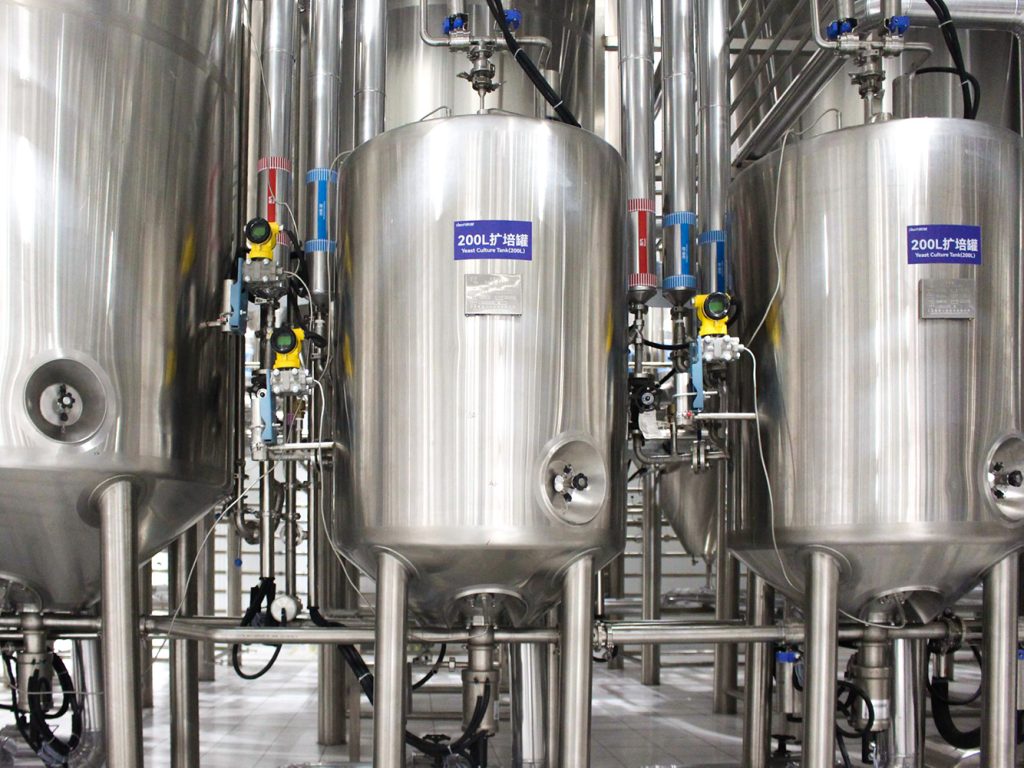
In the craft brewing and commercial beer industry, yeast is far more than just an ingredient; it is the heart of fermentation. The quality of your beer is intrinsically linked to the health, purity, and viability of your yeast. For breweries looking to scale production while maintaining consistency, relying on dry yeast or simply repitching slurry without proper handling is a gamble.
This is where specialized yeast propagation equipment becomes indispensable. Proper propagation systems allow breweries to cultivate pure, healthy yeast cultures from a small lab sample to a full commercial pitch. At SKE, we specialize in manufacturing stainless steel solutions that bridge the gap between laboratory science and commercial brewing reality.
In this guide, we will explore the critical components of yeast management, focusing on the Yeast Brink(Yeast Brink tanks), the yeast propagation tank, and the broader yeast propagation vessel ecosystem. Whether you are a microbrewery planning your expansion or an established regional brewery looking to optimize your cellar operations, understanding this equipment is key to flavor stability and cost efficiency.
Why Dedicated Yeast Propagation Equipment Matters
Many new breweries attempt to save capital investment by propagating yeast in standard unitanks or kegs. While this is possible, it is fraught with risks. Standard fermentation tanks are not designed for the specific demands of yeast propagation, which requires precise aseptic conditions, oxygenation control, and temperature management tailored for growth rather than fermentation.
Dedicated yeast propagation vessel systems are engineered to maximize cell growth while minimizing contamination risks. When you invest in purpose-built equipment, you gain the ability to:
-
Control Oxygenation: Yeast requires oxygen during the aerobic growth phase, but oxygen is detrimental during fermentation. Propagation tanks allow for sterile air or oxygen injection.
-
Maintain Sterility: Proper vessels are designed with CIP (Clean-in-Place) spray balls, steam sterilization capabilities, and sanitary fittings that prevent bacterial and wild yeast contamination.
-
Monitor Growth: Unlike makeshift solutions, dedicated tanks allow for accurate sampling and density monitoring.
For breweries aiming for consistency across batches, the initial investment in yeast propagation equipment pays for itself through reduced fermentation lag times, lower risk of infected batches, and the ability to harvest and repitch healthy yeast for multiple generations.
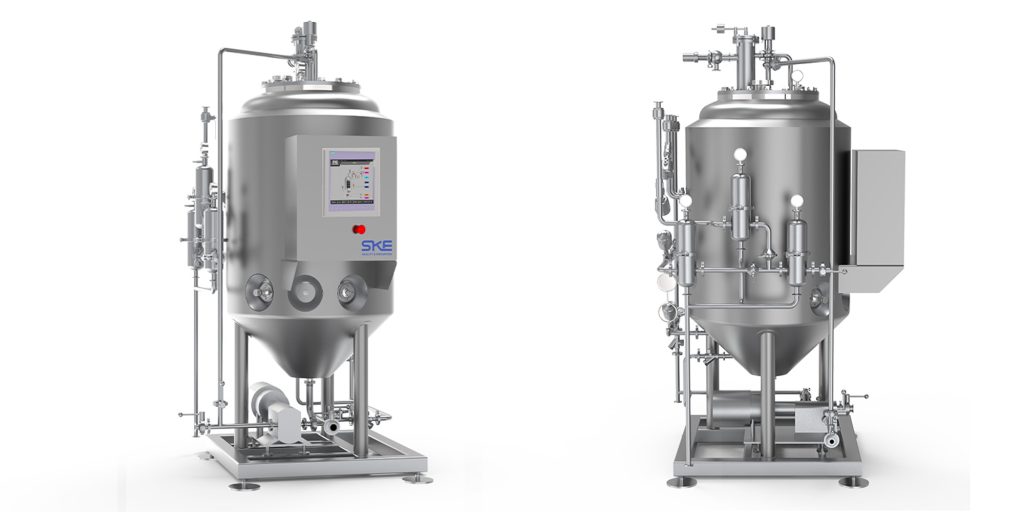
The Yeast Brink: The Unsung Hero of Pitching
When discussing propagation, the term “Brink” often causes confusion. In brewery parlance, a Yeast Brink is typically a portable, smaller-scale pressure vessel used for collecting, storing, and pitching yeast. While a propagation tank grows the yeast, the brink acts as the delivery mechanism.
A Yeast Brink is usually a small, jacketed tank (typically 50L to 200L) mounted on wheels. It serves several critical functions in the brewhouse:
-
Harvesting: It collects surplus yeast from the cone of a fermenter.
-
Dosing: It allows brewers to precisely pitch a measured volume of yeast slurry into a fermenter using CO2 pressure.
-
Acid Washing: Brewers can perform acid washes in the brink to reduce bacterial load before pitching.
Yeast Brink tanks are essential for maintaining hygiene between the propagation system and the fermenter. By using a brink, breweries prevent the contamination of the main propagation vessel and ensure that the yeast is transferred in a closed, oxygen-free environment to preserve its viability.
At SKE, our brinks are constructed from 304 or 316 stainless steel, featuring cone bottoms for efficient harvesting, insulated jackets for temperature control, and casters for easy maneuverability across the brewery floor.
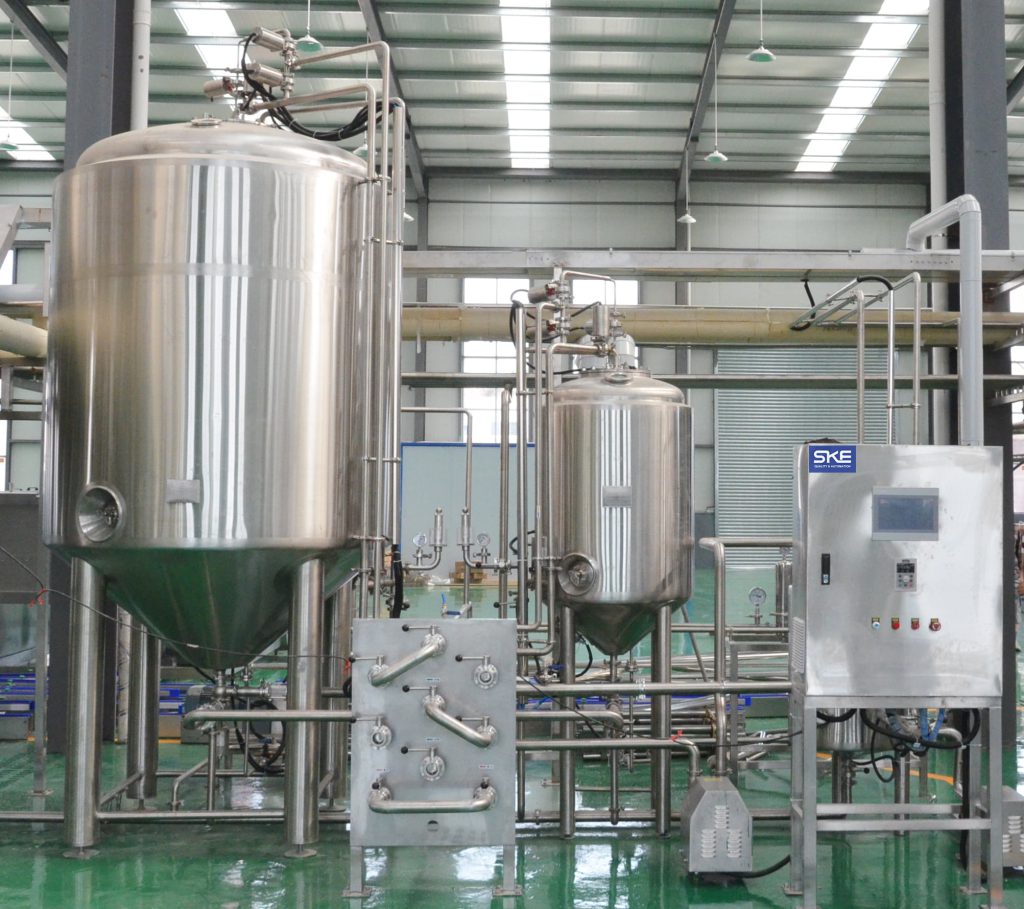
Yeast Propagation Tanks: Engineering for Growth
The yeast propagation tank is the core of the system. Unlike a unitank, which is optimized for fermentation (anaerobic conditions), a propagation tank is optimized for the aerobic reproduction of yeast cells.
These tanks are distinct in their design features. Most commercial yeast propagation vessel systems follow a step-up process. Breweries often use a three-stage system:
-
Lab Stage: Starting from a slant or agar plate in a flask.
-
Intermediate Stage: A 20L to 100L vessel (often a brink or small tank).
-
Commercial Stage: The yeast propagation tank, ranging from 500L to 2,500L or more, which produces enough slurry to pitch multiple fermenters.
Key engineering features of a quality yeast propagation tank include:
-
Aseptic Design: All ports, including sample valves and inlet/outlet connections, must be designed to withstand steam sterilization (SIP).
-
Aeration Assembly: A specialized sparge stone (sintered metal) is integrated to introduce sterile air or oxygen. The flow rate is critical; too little oxygen starves the yeast, too much creates foaming and stress.
-
Cone Geometry: A steeper cone angle (60 to 70 degrees) ensures that the yeast slurry is harvested efficiently without leaving dead zones where contamination can take hold.
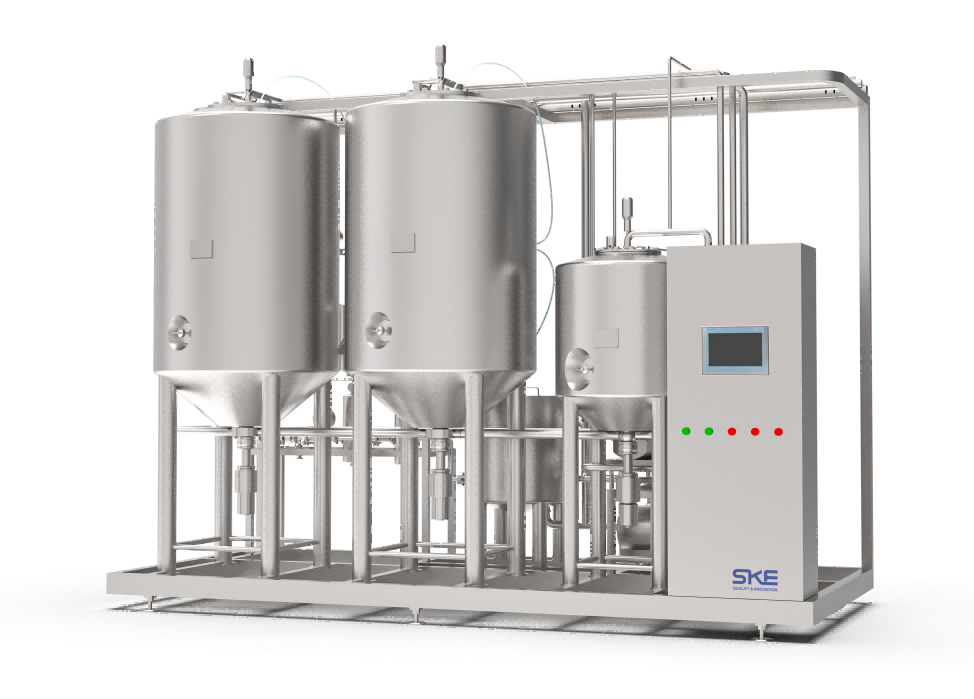
Technical Specifications: What to Look For
When sourcing yeast propagation equipment, the technical specifications determine the longevity and functionality of the system. As a manufacturer, SKE recommends paying close attention to the following components.
Material and Finish
The interior surface finish is critical. A Ra (Roughness Average) value of less than 0.8 µm is standard for sanitary applications. Poorly polished tanks harbor bacteria in microscopic scratches. All our tanks are electropolished to enhance corrosion resistance and cleanability.
Sterilization Capability
The ability to perform Steam-in-Place (SIP) is non-negotiable for a yeast propagation vessel. The tank should be rated for low-pressure steam (15-30 PSI). The design must include a pressure relief valve to protect the vessel during sterilization cycles.
Instrumentation
Precise control is necessary for propagation. Look for:
-
Temperature Probes: Accurate RTD sensors for glycol jacket control.
-
Dissolved Oxygen (DO) Meters: While optional, these are vital for optimizing growth rates in larger vessels.
-
Mass Flow Controllers: For precise metering of air/oxygen into the vessel.
Below is a comparison table outlining the typical differences between standard unitanks and dedicated propagation tanks to help brewers understand the investment.
| Feature | Standard Unitank (Fermenter) | Dedicated Yeast Propagation Tank |
|---|---|---|
| Primary Function | Anaerobic fermentation | Aerobic cell growth |
| Aeration System | None (or rudimentary) | Sintered sparge stone with sterile filter |
| Sterilization | CIP only (chemical) | CIP + SIP (Steam-in-Place) capability |
| Volume Range | 5 HL – 500 HL+ | 1 HL – 30 HL (typically) |
| Bottom Outlet | Standard cone valve | Oversized valve for slurry harvesting |
| Pressure Rating | 15 PSI / 1 Bar (typical) | 15-30 PSI for sterile transfer |
The Propagation Process: From Lab to Fermenter
Understanding how yeast propagation equipment is used in sequence is vital for appreciating its value. The process transforms a tiny culture into millions of cells ready for fermentation.
Step 1: Sterilization
Before any wort or yeast enters the system, the yeast propagation tank must be sterile. This is achieved via SIP. Steam is injected into the jacket and through the sparge arm to kill any microorganisms. After sterilization, the tank is purged with sterile air or CO2 to create positive pressure, preventing airborne contaminants from entering.
Step 2: Wort Preparation
Wort for propagation differs from standard brewing wort. It is typically lower in gravity (8-12°P) and is often fortified with yeast nutrients (zinc, specific amino acids) to maximize budding rates. This wort is sterilized separately (either by boiling or filtration) and transferred into the propagation vessel.
Step 3: Inoculation and Aeration
The lab-grown culture is introduced into the tank. Immediately, the aeration system kicks in. During this aerobic phase, the yeast consumes oxygen to synthesize sterols and unsaturated fatty acids, which are crucial for building strong cell walls. This phase lasts 24 to 72 hours, depending on the desired cell count.
Step 4: Transfer
Once the required cell count and viability are reached, the yeast is transferred via sterile pressure to a Yeast Brink or directly to the fermenter. At this point, the yeast is in a state of high activity, ensuring a quick start to fermentation.
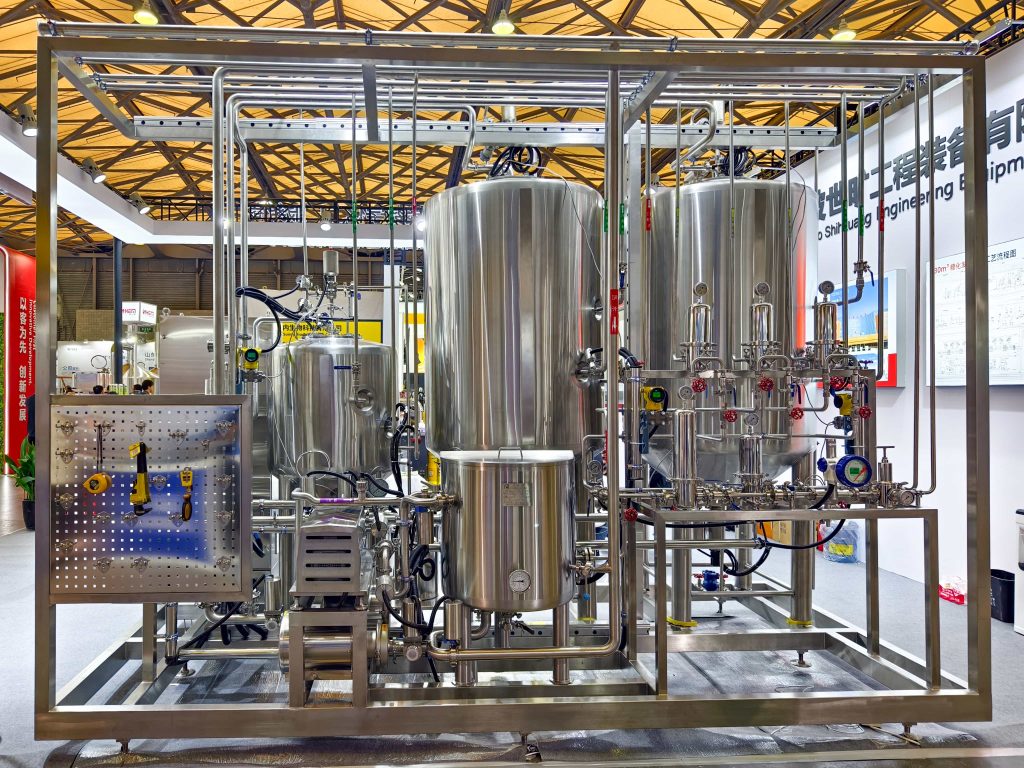
SKE’s Approach to Yeast Management Systems
At SKE, we understand that no two breweries are the same. A 10-barrel brewpub has vastly different needs than a 100-barrel regional facility. Our philosophy is to provide modular, scalable yeast propagation equipment that integrates seamlessly with existing brewhouses.
We design our Yeast Brink tanks and propagation vessels with the operator in mind. Ease of cleaning is paramount; therefore, we utilize tri-clamp fittings for all connections, allowing for quick disassembly and sanitation. Furthermore, our tanks feature dimple jackets for efficient heating and cooling, ensuring that the propagation temperature (typically 68-78°F / 20-25°C for ales) is maintained uniformly throughout the vessel.
Our commitment to quality means that every yeast propagation vessel we manufacture is pressure-tested and certified, offering brewers peace of mind that their yeast culture—often worth thousands of dollars in potential revenue—is safe from contamination.
Cost Efficiency: Why Propagation Pays Off
For breweries producing over 500 barrels annually, relying solely on purchased liquid yeast or dry yeast becomes financially burdensome. A single brick of commercial liquid yeast can cost several hundred dollars. By investing in yeast propagation equipment, a brewery can produce a pitch for the cost of the raw materials (wort, nutrients, and a small lab culture).
Moreover, having your own yeast propagation tank allows for true strain independence. Brewers can experiment with unique house strains, cultivate seasonal yeasts, and maintain genetic consistency across batches. When you control the propagation, you control the flavor profile of your flagship beers.
Frequently Asked Questions (FAQ)
Q1: What is the difference between a yeast propagation tank and a Yeast Brink?
Q2: How many stages of propagation does a typical brewery need?
Q3: Can SKE’s yeast propagation equipment handle different yeast strains?
Q4: How long does a typical yeast propagation cycle take?
Q5: Is it difficult to clean and sanitize yeast propagation equipment?
Contact Us
If you have any further questions, feel free to reach out!
- Facebook: SKE Equipment Facebook
- Email: info@skeequipment.com
For more personalized assistance, please fill out the contact form at the bottom of this page. We look forward to helping you with your brewing needs!