
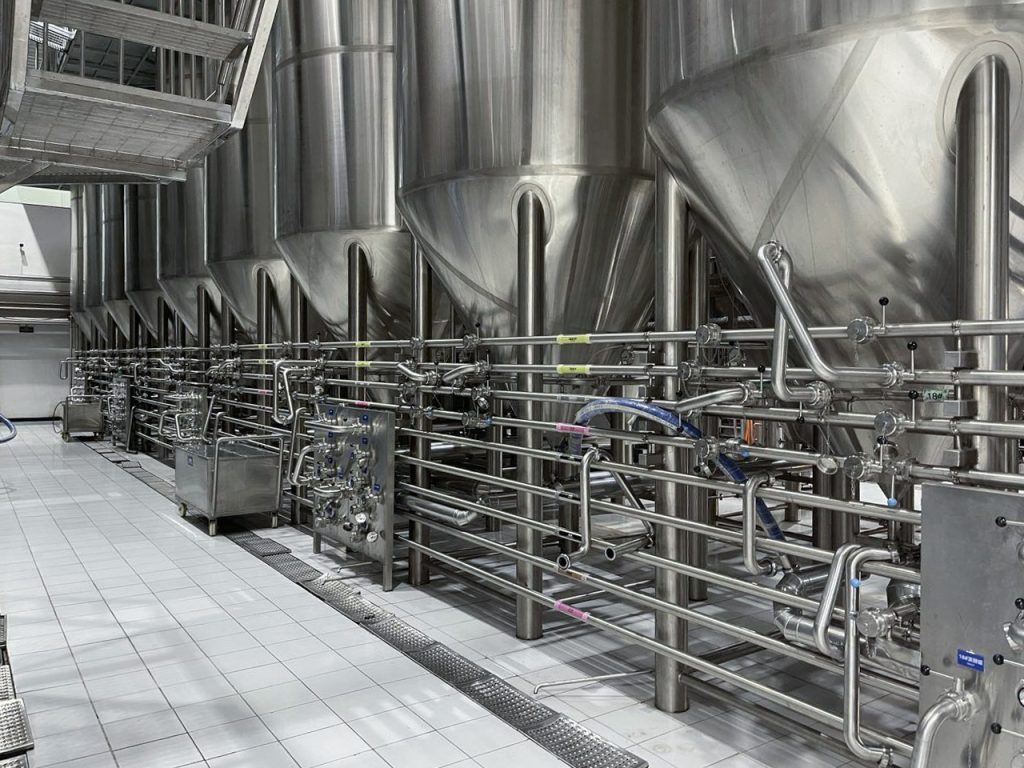
In the world of brewing, the alcohol fermenter is where the magic happens. It is in these vessels that sweet wort transforms into the beer we love, thanks to the metabolic magic of yeast. For any brewery—from a modest nanobrewery to a large-scale industrial facility—understanding the nuances of fermentation vessels is crucial for producing high-quality, consistent, and flavorful beer.
As a professional manufacturer of brewing equipment, SKE understands that selecting the right tank is not just about capacity; it is about process control, ease of cleaning, and ultimately, the character of your beer. This guide will walk you through the evolution of these vessels, from the rustic charm of a fermenting barrel to the technological sophistication of a beer fermentation tank. We will also explore the role of a keg fermenter and supporting equipment like the kegerator, providing a 360-degree view of the fermentation and serving process.
The Primary Mission: What is an Alcohol Fermenter?
At its core, a fermenter is a controlled environment designed to optimize the growth of microorganisms—in brewing, specifically yeast—to produce a desired product . In the context of an alcohol fermenter, the goal is the efficient conversion of sugars (glucose, fructose, maltose) into ethanol and carbon dioxide.
While the biological process is ancient, the technology housing it has evolved dramatically. A modern fermenter must perform several critical functions:
-
Containment: It must hold the liquid safely without leaks or contamination.
-
Temperature Control: Fermentation is exothermic; it generates heat. The tank must manage this heat to keep the yeast within its optimal temperature range.
-
Sanitation: It must be cleanable to prevent infections that could ruin a batch.
-
Pressure Management: Some beers require fermentation under pressure to modify yeast behavior and naturally carbonate the beer.
-
Yeast Management: The ability to harvest and remove yeast efficiently is key to consistency and cost-effectiveness.
A Journey Through Vessel Types: From Wood to Steel
The history of brewing is written in the materials of its vessels. Let’s explore the primary types of fermenters, linking the tradition of the past with the efficiency of the present.
1. The Traditional Fermenting Barrel: A Nod to Heritage
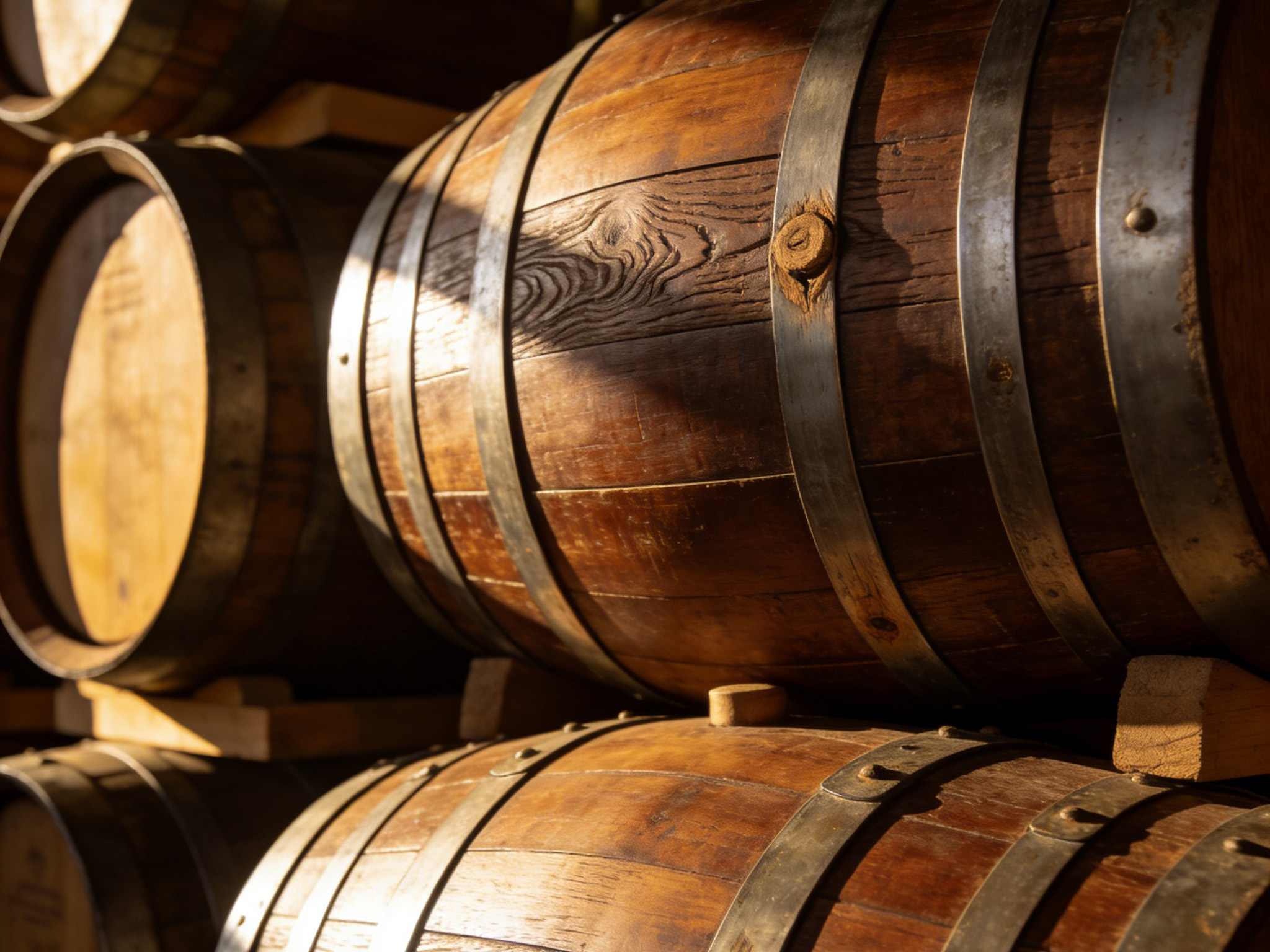
Long before stainless steel, there was the barrel. A fermenting barrel, traditionally made from oak, is more than just a container; it is an active participant in the flavor development of beer and wine.
Characteristics and Function:
-
Material Interaction: Wood is porous, allowing for micro-oxygenation. This slow ingress of oxygen can soften harsh flavors and add complexity, which is highly desirable in styles like lambics, Flanders red ales, and many wines.
-
Flavor Impartation: Barrels previously used for spirits or wine can impart vanilla, tannins, or other complex compounds to the beer fermenting inside.
-
Construction: A traditional barrel is a marvel of cooperage, consisting of a barrel body made from individual staves, held together by retaining elements (hoops). Modern innovations have even introduced barrels with sealed plates and pressure control devices to overcome traditional issues like leaks and uncontrolled oxidation.
Pros and Cons for Modern Brewers:
While romantic, wooden fermenting barrels present challenges. They are difficult to clean and sanitize thoroughly, they are prone to microbial infections (sometimes a desired trait, often not), and they offer very little control over temperature or pressure. For these reasons, they are typically reserved for specialty aging programs rather than primary fermentation in commercial craft breweries focused on consistency.
2. The Modern Standard: The Beer Fermentation Tank
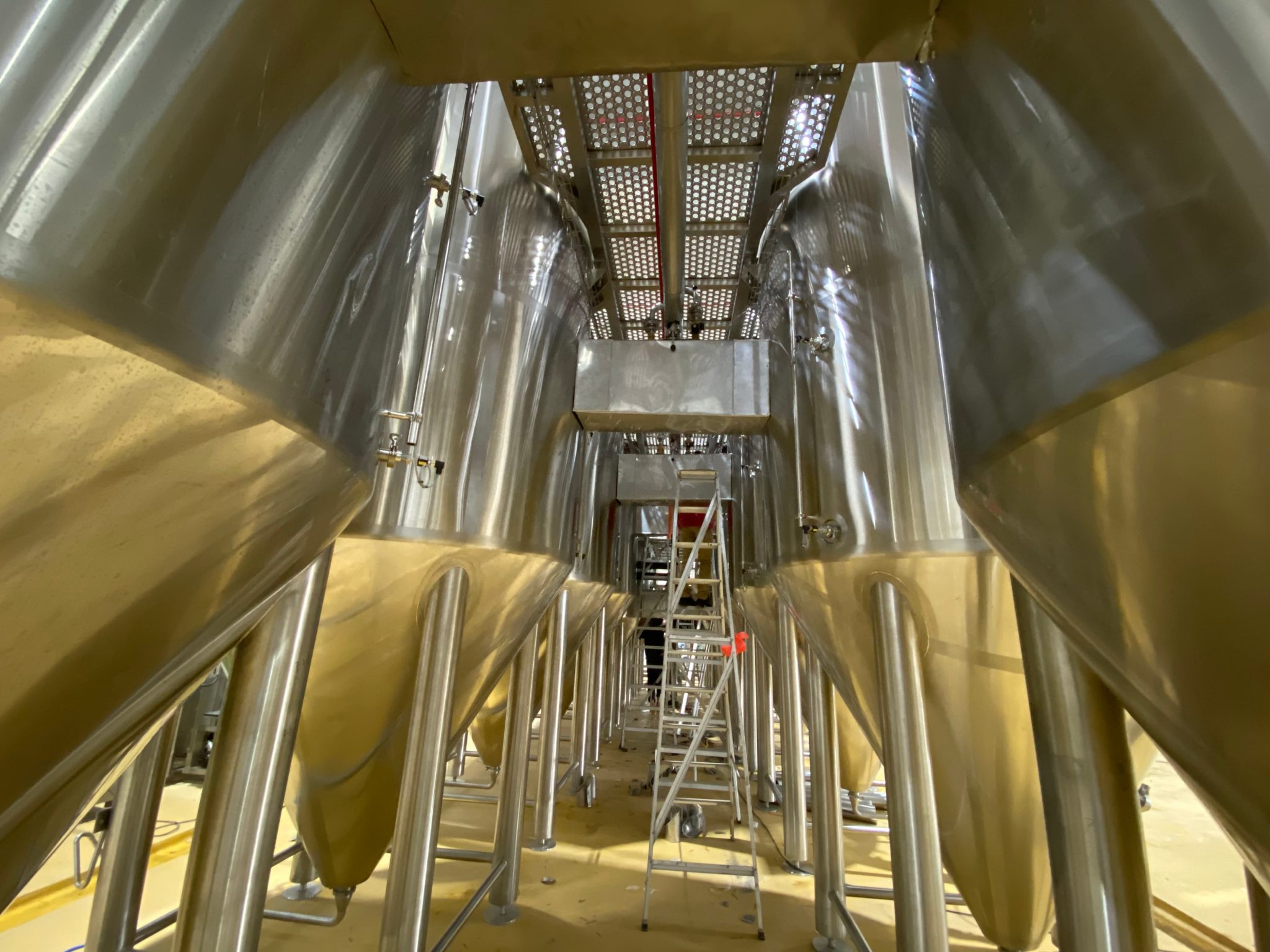
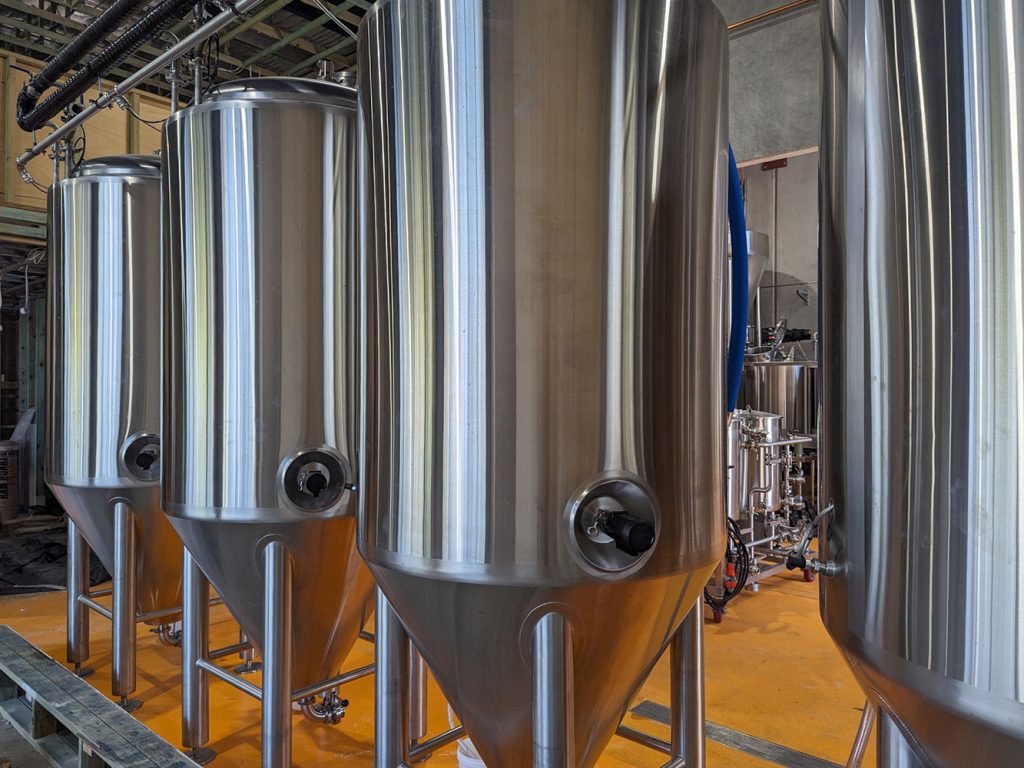
When we discuss a modern beer fermentation tank, we are almost invariably talking about a stainless steel vessel, specifically the Cylindro-Conical Tank (CCT). As noted by industry experts, the CCT is the most widely used fermenter in commercial craft breweries today.
Why Stainless Steel?
Stainless steel, particularly grades 304 or 316L, is the gold standard for a reason. It is incredibly durable, non-reactive, and has a smooth, non-porous surface that is easy to clean and sanitize. At SKE, we ensure our tanks are manufactured with high-quality stainless steel and feature polished internal surfaces (Ra ≤ 0.8 µm) to prevent bacteria from finding a foothold.
The Genius of the Cylindro-Conical Design
The “cylindro-conical” shape is purpose-built for fermentation.
-
Cylindrical Body: Offers an efficient volume-to-surface-area ratio, making good use of brewery floor space.
-
Conical Bottom: This is the key feature. As fermentation completes, yeast and other sediments (trub) settle by gravity into the cone, where they can be easily removed (or “cropped”) without having to open the tank or move the beer. This allows for yeast harvesting for future batches and clarifies the beer more effectively.
-
Cooling Jackets: Modern beer fermentation tanks are equipped with cooling jackets (often dimple plates or pillow plates laser-welded to the exterior) through which a cooling medium like glycol circulates. This allows brewers to precisely control the temperature during fermentation and subsequent cold crashing.
| Feature | Traditional Fermenting Barrel | Modern CCT (Beer Fermentation Tank) |
| Material | Wood (Oak) | Stainless Steel (304/316L) |
| Shape | Barrel (Bulged) | Cylindrical with Conical Bottom |
| Oxygen Control | Porous, allows micro-oxygenation | Airtight, allows zero O2 transfer |
| Cleaning | Difficult, manual | Easy, Clean-in-Place (CIP) compatible |
| Temp Control | Passive (Ambient) | Active (Glycol Cooling Jackets) |
| Yeast Harvest | Difficult, requires manual digging | Simple, via cone valve |
| Best For | Aging, Sour Beers, Specialty Styles | All Commercial Beer Production |
3. The Specialized Role: The Keg Fermenter and the Kegerator
The term keg fermenter can be slightly misleading, as it often points to two different concepts in the industry: pressure fermentation in standard tanks and the use of kegs as serving vessels.
-
Pressure Fermentation: Many modern CCTs are designed to withstand pressure (1-2 bar). When used in this mode, they function as a keg fermenter in the sense that the fermentation and carbonation processes are combined. By fermenting under pressure, ester formation is suppressed (great for lagers and crisp ales), and the CO2 produced dissolves back into the beer, naturally carbonating it. This eliminates the need for forced carbonation in a separate bright beer tank, saving time and money.
-
From Fermenter to Glass: Once fermentation and conditioning are complete, the beer is often transferred to serving vessels.
-
The Keg: A keg is a single-wall container used for storing, transporting, and dispensing beer. It is not a fermenter (though some homebrewers do ferment in them), but it is the final package before the beer reaches the consumer.
-
The Kegerator: This is a refrigeration unit designed to hold a keg and dispense beer at the perfect temperature and pressure. Companies like Keg King pioneered the home kegerator market, making draft beer accessible in homes, offices, and motorhomes . Modern units, such as those from Summit, have evolved into combination units that can dispense beer, wine, and even cold brew coffee from the same appliance, using dedicated tanks for CO2 and nitrogen . For a brewery, understanding the kegerator is important as it represents the final link in the cold chain, ensuring the consumer enjoys the product as intended.
-
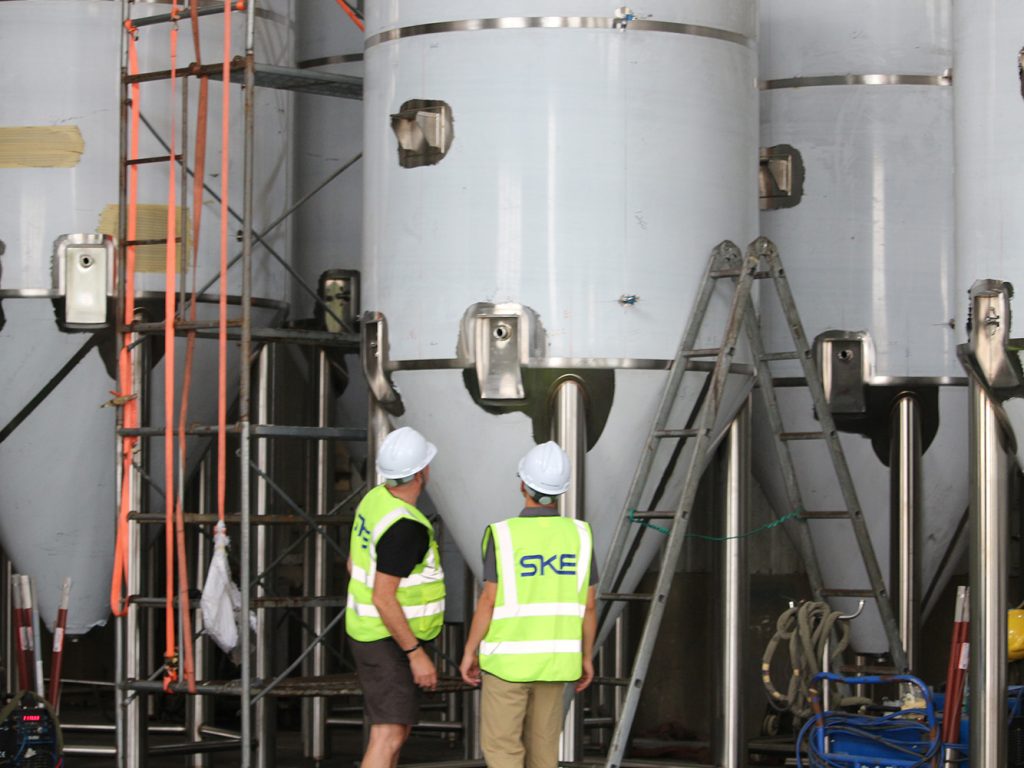
Material Science and Design: What Makes a Tank “SKE Quality”?
For a professional brewery, the choice of material and design is non-negotiable. While wood and plastic have their niches, commercial success is built on stainless steel.
The Case for Stainless Steel
-
Hygiene: Its non-porous nature means it does not harbor bacteria. When combined with electropolishing, the surface becomes incredibly smooth, making Clean-in-Place (CIP) systems highly effective.
-
Longevity: With proper care, a stainless steel tank can last for decades. At SKE, our vessels are engineered and manufactured in accordance with international standards like ASME, PED, and AS1210, ensuring they are built to last .
-
Thermal Conductivity: Stainless steel, combined with advanced cooling jacket technology, allows for precise thermal regulation. SKE utilizes advanced laser welding techniques for cooling jackets, ensuring efficient and even glycol circulation, which is vital for consistent fermentation temperatures .
-
Process Safety: Fermentation produces pressure. Stainless steel tanks can be engineered with precise pressure ratings, complete with relief valves and safety accessories, to handle this safely.
Why Not Other Materials?
-
Food-Grade Plastic: While affordable and portable, plastic is prone to scratching, which creates hiding places for bacteria. It is also difficult to cool effectively and cannot withstand pressure, limiting its use to homebrewing and experimental batches.
-
Concrete: Known for its thermal mass, concrete offers stable temperatures. However, it requires a food-grade epoxy liner, which can degrade over time. It is heavy, expensive to ship, and rarely used for primary fermentation in beer.
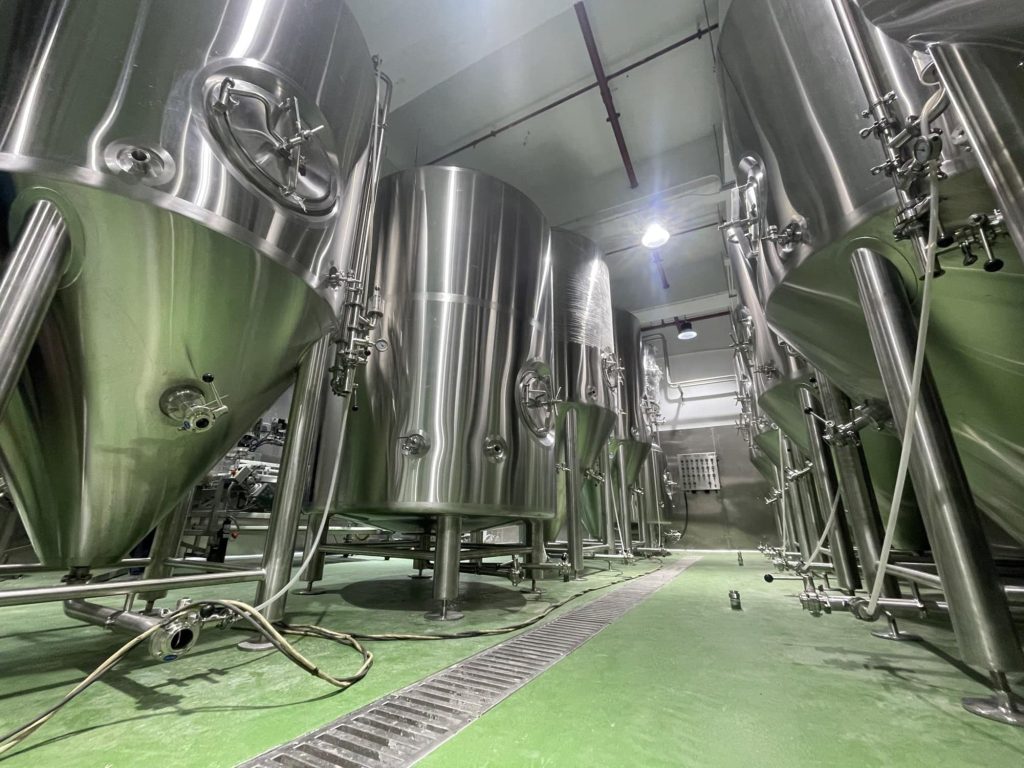
SKE believes that the upfront investment in a high-quality stainless steel beer fermentation tank pays dividends in product quality, reduced maintenance, and operational safety for years to come.
Practical Applications: Sizing and Use Cases
Choosing the right size of an alcohol fermenter is a critical business decision. Volumes are often measured in barrels (bbls), where 1 bbl = 31 gallons (approx. 117 liters) in the US, or in hectoliters (hL) elsewhere. The 8 BBL (approx. 940 liters) size is a popular “sweet spot” for many small breweries.
-
Craft Breweries & Brewpubs: An 8 BBL system is ideal for microbreweries producing 300–1,000 barrels annually or for brewpubs that want to keep several house beers on tap. It provides enough volume to be commercial without requiring massive infrastructure.
-
Restaurant Brewing Systems: For an on-site brewpub, an 8 BBL fermenter can produce enough beer (roughly 800-1000 pints per batch) to supply the restaurant’s demand without overproduction, ensuring freshness.
-
Specialty and Experimental Brewing: This size is perfect for testing new recipes or creating seasonal specialties. It allows brewers to gauge market response to a new style without committing to a full-scale production run.
-
Pilot Systems: Larger breweries often use smaller (3-5 BBL) fermenters as a pilot system for R&D before scaling up successful recipes to their main production lines.
SKE specializes in custom dimensioning tanks. We understand that your space, production goals, and local building codes all dictate the perfect tank geometry. Whether you need an indoor unit with a tight height clearance or an outdoor Tank-Out-Door (TOD) rated for weather exposure, our engineering team can design it.
The Final Step: Bright Beer Tanks and Beyond
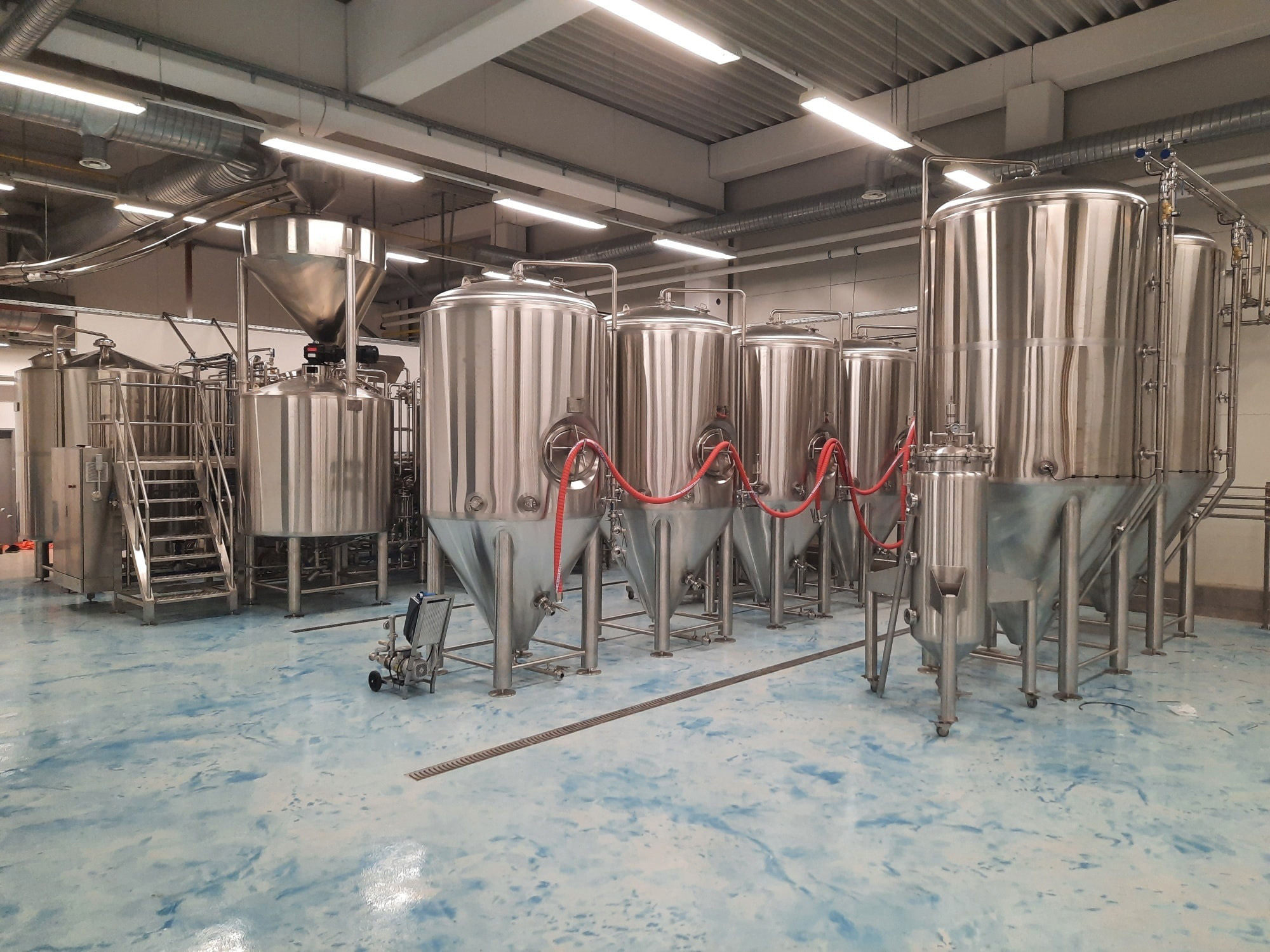
After primary fermentation in a CCT, the “green” beer is often transferred to a Bright Beer Tank (BBT) or a Finished Beer Tank (TBF). While sometimes confused with fermenters, BBTs serve a different purpose. They are designed for:
-
Conditioning: Holding beer at near-freezing temperatures to precipitate chill haze and allow flavors to meld.
-
Carbonation: Forcing carbon dioxide (CO2) into the beer to achieve the desired carbonation level.
-
Clarity: Allowing any remaining particulates to settle out, resulting in a “bright,” clear beer ready for packaging.
-
Bright Beer Tanks are typically built to withstand higher pressures than fermenters, as they are constantly under counter-pressure to keep the CO2 in solution. At SKE, we ensure these tanks feature impeccable sanitary finishes and high-performance insulation to maintain stability until the beer is ready for the bottle, can, or keg.
Frequently Asked Questions (FAQ)
Q1: What is the main difference between a fermenting barrel and a stainless steel fermenter?
A: The primary difference is control. A wooden fermenting barrel is porous and passive, contributing unique flavors through micro-oxygenation and wood compounds but offering little temperature or sanitation control. A stainless steel beer fermentation tank is a sealed, sterile environment that allows for precise management of temperature, pressure, and yeast health, ensuring consistency and quality batch after batch.
Q2: Can I ferment beer in a keg?
A: While some homebrewers practice “fermenting in a keg” to simplify their process (using a keg fermenter setup with a modified lid and dip tube), it is not standard commercial practice. Commercial breweries use dedicated CCTs for fermentation and then transfer the finished beer to kegs for serving. Serving vessels like kegerators are designed to hold and dispense from these kegs, not to ferment.
Q3: Why are most commercial fermentation tanks shaped like a cone?
A: The cylindro-conical shape is specifically designed for yeast management. The cone at the bottom allows yeast and trub to settle by gravity, where they can be easily flushed out through a valve at the apex of the cone. This makes it simple to harvest healthy yeast for repitching and to clarify the beer without opening the tank.
Q4: What kind of maintenance does a stainless steel fermenter require?
A: The primary maintenance is cleaning and sanitation, typically performed with a Clean-in-Place (CIP) system that cycles caustic and acid solutions through the tank. External maintenance includes checking gaskets, valves, and pressure relief valves for wear and tear, and ensuring the glycol cooling system is functioning correctly. With proper care, a stainless steel tank from SKE can last over 20 years.
Q5: How does SKE ensure the quality of its tanks?
A: At SKE, quality is integral to our process. We start with premium raw materials and employ advanced automated fabrication equipment, including laser cutting and robotic welding. Our quality control includes rigorous in-process inspections, spectral analysis of welds, pressure and leakage tests, and a comprehensive Factory Acceptance Test (FAT) before the tank ever leaves our facility. We hold certifications like ASME, PED, and CE to guarantee our equipment meets the highest global standards.
Conclusion: Choosing Your Fermentation Partner
The journey from a simple fermenting barrel to a sophisticated, automated beer fermentation tank reflects the evolution of brewing itself—from an artisanal craft to a precise science. Yet, the goal remains the same: to provide the perfect environment for yeast to create a delicious and memorable beverage.
For the modern brewer, whether you are just starting out or scaling up for global distribution, your choice of alcohol fermenter is your most critical decision. It impacts your efficiency, your consistency, and the very quality of your beer.
At SKE, we are more than just a manufacturer. We are engineers, project managers, and brewing enthusiasts dedicated to advancing processing technology. Our custom solutions are designed to grow with you, backed by comprehensive engineering documentation and a commitment to superior service.
Are you ready to equip your brewery with the heart of the operation? Contact SKE today to discuss your custom fermentation tank solution.
• Facebook: SKE Equipment Facebook
• Email: info@skeequipment.com
For more personalized assistance, please fill out the contact form at the bottom of this page. We look forward to helping you with your brewing needs!