
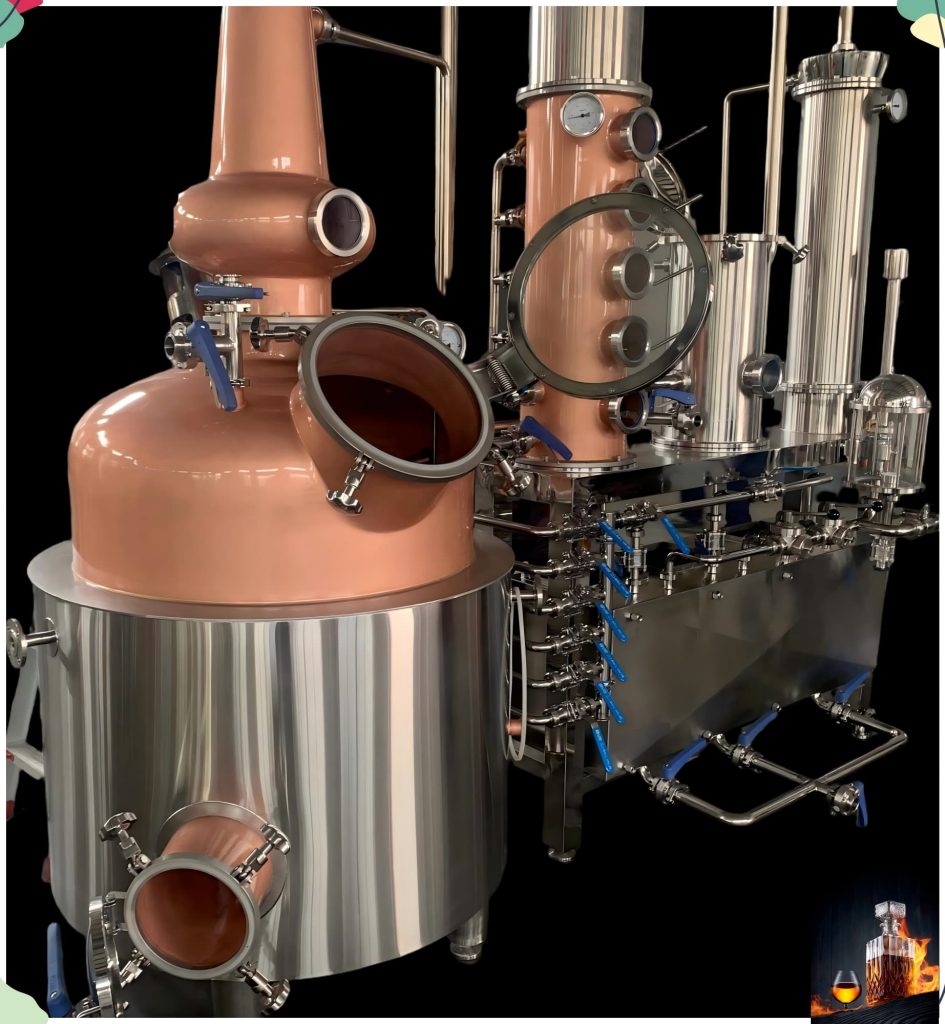
Introduction to Pot Still Distillation
Unlike column stills that continuously process fermented wash, a pot still operates in discrete batches. This means that the distillation vessel, typically made of copper, is filled, heated, and emptied after each cycle. This methodical approach allows for more nuanced control over the spirit’s production, leading to a product rich in congeners—the flavorful non-alcoholic compounds that contribute significantly to a spirit’s aroma and taste profile.
The Rich History and Evolution of Pot Stills
The origins of distillation can be traced back thousands of years, with evidence suggesting its practice in ancient Mesopotamia and Egypt for perfumes and medicinal purposes. However, the development of alcohol distillation, particularly using a primitive form of what we now recognize as a pot still, gained significant traction in the Arab world during the Middle Ages. Al-Kindi, an Arab scholar in the 9th century, is credited with refining the technique for distilling alcohol. From there, the knowledge spread across Europe, notably through monasteries, where spirits like “”aqua vitae”” (water of life) were first produced.
The basic design of the pot still, characterized by a heated vessel (the pot or boiler), a swan neck leading to a condenser (often a worm coil immersed in water), has remained remarkably consistent over centuries. Early stills were often crude, made from ceramic or various metals, but the adoption of copper became widespread due to its excellent thermal conductivity and its ability to react with sulfur compounds in the spirit, resulting in a smoother, cleaner product. This inherent property of copper is a critical factor in the quality of spirits produced by pot still distillation and is why high-quality copper remains the material of choice for reputable manufacturers like SKE.
The evolution of the pot still has been less about radical design changes and more about incremental improvements in efficiency, safety, and control. In places like Scotland and Ireland, the pot still became synonymous with whisky production, with distilleries developing their unique still shapes and sizes, each contributing to the distinctive character of their spirits. The varying heights of the swan neck, the angle of the lyne arm (the pipe connecting the pot to the condenser), and the design of the condenser itself all play a significant role in determining how much reflux occurs and, consequently, the final spirit’s profile. A taller neck or a more angled lyne arm can encourage more reflux, leading to a lighter, more refined spirit, while a shorter, wider setup often yields a heavier, more robust distillate. These subtle design elements are critical considerations for distillers and directly influence the complexity and flavor profile of the end product. Further insights into how different still designs impact flavor can be found in our comprehensive guide on types of distillation equipment.
The Industrial Revolution brought advancements in metalworking and heating methods, making larger, more durable pot stills possible. Modern pot stills incorporate advanced heating systems (steam jackets, internal steam coils), sophisticated cooling systems, and precise temperature controls, yet the fundamental principle of batch pot still distillation remains unchanged. This blend of tradition and technology ensures that today’s distillers can produce spirits of unparalleled quality, honoring the legacy of their predecessors while embracing modern efficiencies. SKE leverages this historical knowledge with current technological advancements to build pot stills that are both efficient and true to the artisanal spirit of distillation.
Understanding the Core Principles of Pot Still Distillation
At its heart, pot still distillation is a physical separation process based on the differences in boiling points of the components in a liquid mixture, primarily alcohol (ethanol) and water. Ethanol has a boiling point of approximately 78°C (173°F), while water boils at 100°C (212°F) at standard atmospheric pressure. When a fermented wash (typically 5-10% alcohol by volume) is heated in the pot still, the more volatile alcohol vaporizes first, along with a portion of the water and other aromatic compounds.
The vapors rise into the head of the still and then travel through the lyne arm to the condenser. In the condenser, these hot vapors are cooled, causing them to condense back into liquid form. This condensed liquid, known as the distillate, is now richer in alcohol than the original wash. However, a single run in a pot still rarely yields a spirit of sufficient purity or strength. Therefore, multiple distillations are often required, especially for spirits like single malt whisky or cognac, to achieve the desired alcohol content and flavor profile.
A crucial concept in pot still distillation is “”reflux.”” Reflux refers to the process where some of the vapor, as it rises through the still, condenses on cooler surfaces (like the upper part of the still neck or the lyne arm) and falls back into the boiling liquid in the pot. This re-vaporization and re-condensation cycle effectively increases the contact time between the vapor and liquid phases, allowing for a more efficient separation of alcohol from water. More reflux generally leads to a lighter, purer spirit, as heavier, less volatile compounds are more likely to fall back into the pot. Factors influencing reflux include the shape and height of the still, the rate of heating, and the presence of any reflux plates or cooling jackets.
The distiller’s skill in managing these principles is paramount. They must make “”cuts”” during the distillation run, separating the distillate into “”heads,”” “”hearts,”” and “”tails.”” The “”heads”” are the first part of the distillate, rich in highly volatile compounds like methanol and acetone, which are undesirable and often discarded or redistilled. The “”hearts”” are the desirable middle cut, comprising the purest and most flavorful alcohol fit for consumption. The “”tails”” are the last part of the distillate, characterized by heavier, oilier compounds that can impart off-flavors; these are also typically discarded or redistilled. The precision of these cuts is what defines the quality and specific character of the final spirit. Achieving optimal cuts and maximizing recovery efficiency is a common challenge for distilleries, and SKE offers solutions that can greatly enhance this aspect of the process. For insights into managing efficiency, you might find our article on distillery efficiency tips useful.
Understanding these core principles—differential boiling points, condensation, and reflux—is fundamental to mastering pot still distillation. It allows distillers to manipulate the process to create spirits that are unique, complex, and highly sought after by connoisseurs worldwide. SKE’s distillation systems are designed to give distillers precise control over these variables, enabling them to perfectly execute their vision.
Key Components of a Modern Pot Still
While the fundamental design of a pot still has roots in antiquity, modern versions, like those provided by SKE, incorporate advanced engineering and safety features. Understanding each component is crucial for anyone involved in pot still distillation.
The Pot (or Boiler)
This is the main vessel where the fermented wash is heated. Traditionally made from copper, the pot’s shape and size significantly influence the spirit’s character. Wide, squat pots tend to produce heavier, more robust spirits, while tall, narrow pots promote more reflux, leading to lighter, more delicate distillates. Modern SKE pot stills often feature steam jackets or internal steam coils for efficient and controlled heating, preventing scorching and ensuring an even boil. The material, almost exclusively high-grade copper, is vital not only for its excellent thermal conductivity but also because it reacts chemically with sulfur compounds in the wash, removing them and creating a cleaner, smoother spirit.
The Swan Neck and Lyne Arm
As vapors rise from the pot, they enter the swan neck, a tapered section that narrows as it rises, then arches over and connects to the lyne arm. The swan neck’s height and curvature influence the amount of reflux. A taller swan neck provides more surface area for vapors to condense and fall back, enhancing purity. The lyne arm, typically angled downwards, directs the reformed vapors towards the condenser. The angle and length of the lyne arm are also critical variables that savvy distillers can manipulate to modify their spirit’s profile. Our SKE engineers meticulously design these components to optimize vapor flow and reflux characteristics, ensuring consistency and quality in your spirit production.
The Condenser
The condenser is where the alcohol and water vapors are cooled and returned to liquid form. The most traditional type is a “”worm tub,”” a coiled copper tube (the worm) submerged in a tank of cold water. While still used, many modern pot stills utilize more efficient shell-and-tube condensers, where numerous small copper tubes are enclosed in a larger cylindrical shell. Cold water flows through the jacket, while hot vapors pass through the inner tubes, rapidly condensing into distillate. The efficiency of your cooling system is paramount in achieving a steady flow of high-quality spirit.
Parrot Beak (or Spirit Safe)
After condensation, the liquid distillate flows out through a component known as the parrot beak. This device allows the distiller to continuously monitor the alcohol strength of the spirit as it emerges, typically using a hydrometer or alcoholmeter. In many traditional distilleries, especially in Scotland, a “”spirit safe”” is used, a locked glass-encased box through which the distillate flows, allowing the distiller to make the precise “”cuts”” into heads, hearts, and tails without being able to touch the spirit directly—a historical measure to prevent illicit taxation avoidance. SKE equipment prioritizes both accuracy and user-friendliness in these critical monitoring stages. Comprehensive details about monitoring and control systems in distillation are available in our technical discussion on distillery automation and control systems.
Heating and Control Systems
Modern pot still distillation setups often feature sophisticated heating options such as steam heating, direct fire, or electric heating elements. Steam heating, facilitated by a steam generator, offers the most precise and even temperature control, critical for preventing scorching and ensuring consistent results batch after batch. Automated control systems allow distillers to closely monitor and adjust temperature, pressure, and flow rates, optimizing the distillation process and ensuring repeatability, which is a hallmark of professional operations. SKE designs its pot stills with robust control systems that are both intuitive and highly dependable, built for longevity and peak performance.
Each element of the pot still plays a vital role in shaping the final product. The careful selection, design, and manufacturing of these components are what distinguish a professional-grade still from a rudimentary one. SKE is dedicated to providing distillers with equipment that embodies precision, durability, and the finest craftsmanship, empowering them to produce exceptional spirits.
The Pot Still Distillation Process: Step-by-Step
The journey from a fermented wash to a refined spirit through pot still distillation is a meticulous process that demands attention to detail at every stage. Far from a simple boiling procedure, it involves several critical steps, each impacting the final character and quality of the spirit. Let’s break down the typical process.
1. Charging the Still
The first step begins with charging the pot still. This involves filling the still’s boiler with the fermented liquid, often called “”wash”” (for whisky) or “”wine”” (for brandy). The wash is typically a low-alcohol liquid, usually between 5% and 10% ABV, produced from the fermentation of grains, fruits, or other sugar sources. It’s crucial not to overfill the still, as this can lead to “”foaming over”” or “”puking,”” where the liquid bubbles up and enters the condenser, contaminating the distillate. Most stills are filled to about 70-80% capacity to allow for expansion during heating.
2. Heating and Vaporization
Once charged, the wash is slowly heated. The goal is to bring the liquid to a boil without excessive foaming. As the temperature rises, alcohol, being more volatile than water, begins to vaporize preferentially. Along with ethanol, various other volatile compounds (congeners) also turn into vapor. The rate of heating is a critical control point; a slower, gentler heat can promote better separation and more controlled reflux, while too rapid heating can compromise the purity of the distillate. Modern SKE pot stills utilize precise heating elements and controls, such as steam injection or steam jackets, to ensure optimal temperature management throughout this phase.
3. Condensation and Collection
The hot vapors travel up the swan neck, through the lyne arm, and into the condenser. Here, they encounter cool surfaces, causing them to condense back into liquid form. This liquid distillate then flows out of the condenser, typically through a parrot beak, where its alcohol strength can be measured in real-time.
4. Making the “”Cuts”” (Heads, Hearts, Tails)
This is arguably the most skillful and critical part of pot still distillation. As the distillate begins to flow, the distiller must make precise “”cuts”” to separate different fractions of the spirit.
- Heads (Foreshots): These are the very first vapors to condense, high in volatile, undesirable compounds like acetone, acetaldehyde, and methanol. They often have a harsh, solvent-like aroma and are usually discarded or set aside for redistillation in a future run. Collecting the heads takes experience, recognizing cues such as smell and taste even before the hydrometer confirms high alcohol readings.
- Hearts (Potable Spirit): After the heads have been collected, the spirit entering the parrot beak becomes smoother, cleaner, and more aromatic. This middle portion, known as the “”hearts”” or “”middle cut,”” is the desirable spirit that will be aged or bottled. It contains the ideal balance of alcohol and flavorful congeners. The distiller judges when to start collecting the hearts based on alcohol strength, taste, and aroma.
- Tails (Feints): As distillation progresses, the alcohol content in the vapor decreases, and heavier, oilier compounds with undesirable flavors (often described as cardboard, wet dog, or cheesy notes) begin to evaporate. These are the “”tails”” or “”feints.”” Again, the distiller must make a careful cut, stopping the collection of hearts before the tails begin to spoil the quality. Tails are typically collected and often added to the next batch of wash for redistillation to maximize alcohol recovery.
The point at which these cuts are made varies significantly depending on the type of spirit being produced, the distiller’s specific preferences, and the characteristics of the still. This intricate process transforms the raw distillate into a future masterpiece. Discover more about improving spirit quality through careful process management in our article on improving spirit quality in distillation.
5. Draining and Cleaning
Once the tails have been collected and the still has cooled sufficiently, the remaining liquid in the pot (known as “”spent wash”” or “”stillage””) is drained. The still is then thoroughly cleaned to prevent off-flavors from accumulating in subsequent runs.
6. Second (or Multiple) Distillations
For many spirits, a single run through a pot still is not enough to achieve the desired purity and alcohol strength. For example, Scotch whisky is traditionally double-distilled, and Irish whiskey often thrice-distilled. The “”low wines”” (the collected hearts and some redistilled heads/tails from the first run) are then put back into a “”spirit still”” (a second pot still) for a second distillation, following the same head, heart, and tail cuts. This multi-stage approach is key to refining the spirit and concentrating its desirable flavors.
This step-by-step process highlights why pot still distillation is considered an art. The decisions made by the distiller at each stage, especially during the crucial cuts, are what define the particular character and quality of the final spirit. SKE provides robust and reliable still systems designed to empower distillers in executing these intricate processes with confidence and precision.
Advantages and Disadvantages of Pot Still Distillation
The choice between pot still distillation and column still distillation is a foundational decision for any distillery, heavily influencing the character and economic viability of the final product. Each method has its unique set of advantages and disadvantages.
Advantages of Pot Still Distillation:
- Flavor Retention and Complexity: This is arguably the primary advantage. The batch nature of pot still distillation, coupled with its relatively inefficient separation compared to column stills, means that more of the flavorful congeners (non-alcoholic compounds) from the wash are carried over into the distillate. This results in spirits with greater complexity, body, and a pronounced character directly reflective of the raw materials and fermentation. Think of the rich, nuanced flavors of single malt Scotch or artisanal rum—these are hallmarks of pot still production.
- Artisanal and Traditional Appeal: Pot still distillation is deeply rooted in history and tradition. For consumers seeking authenticity and a connection to heritage, spirits produced this way often carry a premium perception. This artisanal appeal is a significant marketing advantage for craft distilleries and those producing traditional spirits.
- Smaller Scale Flexibility: Pot stills are generally well-suited for smaller-batch production, allowing distilleries (especially craft operations) to experiment with different recipes, ingredients, and processing techniques without committing to massive production runs. This flexibility is invaluable for innovation and niche market targeting. SKE’s range of stills caters to various capacities, from pilot systems to commercial-scale installations.
- Specific Spirit Styles: Certain spirits, by definition and tradition, must be made in pot stills. Cognac, Armagnac, Mezcal, and most whiskies are prime examples where the unique flavor profile imparted by the pot still is essential to their identity.
- Copper Contact Benefits: The extensive copper surface inside a pot still interacts chemically with the distillate, removing undesirable sulfur compounds and contributing to a cleaner, smoother spirit. While column stills can also be made of copper, the batch cycling and specific designs of pot stills maximize this beneficial contact.
Disadvantages of Pot Still Distillation:
- Lower Efficiency and Higher Cost: Pot stills are inherently less efficient than column stills. They operate in batches, meaning the still must be filled, heated, emptied, and cleaned after each run, leading to significant downtime. They also require multiple distillations to reach desired alcohol strengths, consuming more energy and time per liter of pure alcohol. This translates to higher operational costs and lower production volumes compared to continuous column stills.
- Labor-Intensive: The batch process and the critical “”cuts”” require skilled and attentive distillers to monitor the process, taste, and make adjustments. This manual intervention, while contributing to the artisanal nature, adds to labor costs.
- Lower Alcohol Purity: While a strength for flavor, the lower separation efficiency of pot stills means that the raw distillate (even the hearts cut) contains more water and other congeners compared to column-distilled spirits, which can achieve very high purity in a single pass. This necessitates aging or careful blending to mellow and balance the spirit’s character.
- Space Requirements: For a given output of high-proof spirit, a single pot still might require multiple distilling cycles, potentially implying more equipment or larger stills than a column still producing similar volumes.
- Limited Versatility for Neutral Spirits: If a distillery aims to produce a highly rectified, neutral spirit (like vodka or grain neutral spirit), a pot still is not the ideal choice. Its design is meant to retain flavor, whereas neutral spirits require maximum impurity removal and high alcohol percentages, which column stills excel at.
Ultimately, the choice of pot still distillation is a strategic one, often driven by the desired character of the spirit and the brand’s philosophy. For those prioritize rich flavor, complexity, and a traditional process, pot stills remain the gold standard. SKE understands these nuances and offers robust, efficient pot still systems tailored to distillers who wish to harness these advantages to create truly exceptional products.
Applications of Pot Still Distillation in Craft Spirits
The distinctive characteristics imparted by pot still distillation make it the preferred method for producing a wide array of premium and craft spirits globally. Its ability to capture and concentrate specific flavor compounds gives distillers unparalleled control over the final product’s sensory profile.
Whisky (Scotch, Irish, Craft American Single Malts)
Perhaps the most iconic application of pot still distillation is in the production of single malt whiskies. In Scotland and Ireland, traditional laws often mandate the use of pot stills. The shapes and sizes of these stills are legendary, with distilleries fiercely guarding their unique designs, which are believed to contribute directly to their whisky’s signature taste. Scotch whisky, for instance, typically undergoes double pot still distillation, while Irish whiskey is often triple-distilled for an exceptionally smooth character. Craft American single malt distilleries are also increasingly embracing pot stills to create complex, terroir-driven whiskies that stand apart from their column-distilled bourbon and rye counterparts.
Brandy (Cognac, Armagnac, Applejack)
Fine brandies like Cognac and Armagnac from France are exclusively produced using pot stills (specifically, the traditional Charentais alembic still for Cognac). The batch process allows for the retention of the delicate fruit aromas and flavors from the fermented grape wine. This method ensures that the essence of the fruit is carried through distillation, leading to the complex, aromatic profiles that these aged spirits are famous for. Similarly, Applejack, a traditional American apple brandy, often relies on pot stills to maintain the vibrant apple character.
Rum (Artisanal and Jamaican Styles)
While much industrial rum is produced using column stills, many artisanal and high-ester rums, particularly those from Jamaica and other Caribbean islands, are made using pot still distillation. This method is crucial for concentrating the complex, funky, and often savory flavor compounds that are cherished by rum aficionados. Pot stills allow distillers to create rums with a much richer mouthfeel and a broader spectrum of flavors than typically found in column-distilled rums.
Gin (Traditional Gin Stills)
Though gin itself is not fermented in the still, the re-distillation of neutral spirit with botanicals often occurs in a pot still, frequently equipped with a “”gin basket”” or “”vapor basket”” through which the alcohol vapors pass, extracting essential oils and flavors from the botanicals. This batch process, combined with careful botanical selection, allows gin distillers immense creative freedom to craft unique and aromatic gins. At SKE, our distillation equipment is versatile enough to support both traditional methods and innovative approaches for special spirits like gin.
Mezcal and some Tequilas
In Mexico, traditional Mezcal production almost exclusively relies on small, often wood-fired, copper pot stills. This method is fundamental to capturing the smoky, earthy, and complex agave flavors that define this distinctive spirit. While most mass-market Tequila uses column stills, some artisanal Tequilas also employ pot stills to achieve a richer, more traditional flavor profile.
The enduring relevance of pot still distillation in the modern craft spirit movement is a testament to its unparalleled ability to produce spirits with depth, character, and a true sense of place. For distillers, it’s not just about making alcohol; it’s about crafting an experience. SKE is proud to equip these artisans with the finest pot stills, from pilot systems to large commercial setups, ensuring they have the tools to bring their unique spirit visions to life. Our expertise in crafting bespoke distillation solutions means that whether you are producing a fine whiskey or an exotic rum, choosing the right distillation system from SKE will empower your production.
SKE’s Commitment to Quality Pot Still Equipment
At SKE, we understand that a truly exceptional spirit begins with exceptional equipment. Our dedication to crafting high-quality pot still distillation systems is rooted in a deep respect for tradition, combined with a relentless pursuit of engineering excellence. We don’t just build stills; we forge the heart of distilleries, enabling our clients to produce spirits that stand out in a competitive market.
Precision Engineering and Superior Materials
Every SKE pot still is a testament to precision engineering. We utilize only the highest grade of copper and stainless steel, ensuring durability, longevity, and optimal performance. Our copper stills are meticulously crafted to maximize the beneficial chemical interactions that remove sulfur compounds, leading to a smoother, cleaner distillate. From the robust construction of the pot to the precise angles of the swan neck and lyne arm, every detail is considered to enhance the reflux and flavor development characteristic of traditional pot still operations.
Customization for Unique Spirit Profiles
We recognize that no two distilleries are exactly alike, and each master distiller has a unique vision for their spirits. That’s why SKE offers extensive customization options for our pot still distillation equipment. Whether you require specific still dimensions to replicate a historical design, particular heating mechanisms (steam, direct flame, electric), or integrated automation features, our experienced engineers work closely with you. This collaborative approach ensures that your SKE pot still is perfectly tailored to your production goals, allowing you to fine-tune your cuts and achieve the exact flavor profile you desire, from heavy, characterful whiskies to delicate, aromatic brandies.
Reliability and Support
Investing in a SKE pot still means investing in reliability. Our systems are built for demanding commercial operations, designed to provide consistent performance batch after batch, year after year. Beyond manufacturing, SKE offers comprehensive support, from initial consultation and design to installation and after-sales service. Our commitment extends to ensuring that your distillation process runs smoothly, efficiently, and safely, allowing you to focus on the art of spirit making.
Embracing Tradition with Modern Innovation
While deeply respecting the historical methods of pot still distillation, SKE also integrates modern innovations to enhance efficiency, safety, and control. Our stills feature advanced temperature monitoring systems, highly efficient condensers, and optional automation packages that simplify complex operations while preserving the artisanal essence of batch distillation. This blend of tradition and technology empowers distillers to achieve both consistency and artisanal quality.
The journey of crafting exceptional spirits through pot still distillation is a blend of science, art, and passion. At SKE, we are proud to be a partner in this journey, providing the foundational equipment that allows distillers to turn their raw ingredients into liquid masterpieces. When you choose an SKE pot still, you’re not just buying equipment; you’re acquiring a legacy of quality, performance, and dedicated support that will elevate your distillates to new heights. Explore our range and discover how SKE can equip your distillery for success in the world of fine spirits.
Frequently Asked Questions About Pot Still Distillation
What is the primary difference between a pot still and a column still?
The primary difference lies in their operation and the spirits they produce. A pot still operates in batches, meaning it’s filled, distilled, and emptied in cycles. It’s less efficient in separating alcohol from water, resulting in spirits with a richer, more complex flavor profile due to the retention of more congeners. In contrast, a column still (or continuous still) operates continuously, can achieve much higher alcohol purity in a single pass, and is typically used for producing lighter spirits like vodka or industrial alcohol, as it strips out more flavors.
Why is copper often used in pot stills for distillation?
Copper is highly preferred for pot still distillation due to two main reasons: its excellent thermal conductivity, which ensures even heating and efficient vaporization, and its chemical reactivity. Copper reacts with and removes undesirable sulfur compounds that can form during fermentation and distillation, which would otherwise impart off-flavors to the spirit. This reaction helps create a smoother, cleaner, and more palatable distillate.
What are “”heads,”” “”hearts,”” and “”tails”” in pot still distillation?
These terms refer to the different fractions of distillate collected during a pot still distillation run. The “”heads”” (foreshots) are the first fraction, containing highly volatile, often undesirable compounds. The “”hearts”” (potable spirit) are the middle fraction, the purest and most flavorful alcohol suitable for drinking. The “”tails”” (feints) are the final fraction, containing heavier, oily compounds with off-flavors. Distillers make precise “”cuts”” to separate these fractions, ensuring only the highest quality “”hearts”” are kept for the final spirit.
How does the shape of a pot still affect the spirit it produces?
The shape of a pot still significantly influences the amount of reflux, which in turn affects the spirit’s character. Taller, narrower stills with longer swan necks promote more reflux, leading to a lighter, more refined, and purer spirit. Shorter, wider stills with broader swan necks allow more heavier compounds to pass through, resulting in a heavier, more robust, and characterful spirit. These design choices are crucial for achieving specific desired flavor profiles, like those in different styles of whisky or rum.
What types of spirits are typically made using pot still distillation?
Pot still distillation is essential for spirits where rich flavor and character retention are paramount. Common examples include single malt Scotch whisky, Irish whiskey, Cognac, Armagnac, artisanal rum (especially Jamaican high-ester rums), Mezcal, and many craft gins. These spirits benefit from the batch process which allows for greater retention of flavorful congeners from the original fermented wash or botanical infusion.
Ready to Elevate Your Craft with SKE Pot Still Distillation Equipment?
Whether you’re starting a new distillery or upgrading your existing setup, SKE offers bespoke pot still distillation solutions designed for precision, efficiency, and exceptional spirit quality.
Connect with us: