Introduction to Stainless Steel Blending Tanks
In countless industrial processes, from food and beverage to pharmaceuticals and cosmetics, the ability to effectively mix, blend, and maintain the integrity of various ingredients is paramount. This is where stainless steel blending tanks emerge as indispensable assets. These robust vessels are specifically engineered to facilitate homogeneous mixing, reacting, or holding of liquids, semi-liquids, and slurries, ensuring consistent product quality and process efficiency. The choice of stainless steel as the primary construction material is not accidental; its inherent properties offer a unique combination of corrosion resistance, hygiene, durability, and ease of cleaning, which are critical in environments demanding stringent sanitary standards and long-term operational reliability.
Stainless steel blending tanks are a cornerstone in modern manufacturing, playing a pivotal role in the production of everything from dairy products and craft beers to pharmaceutical compounds and chemical solutions. Their design often incorporates sophisticated agitators or mixing systems to achieve optimal blending efficiency, whether it’s for simple dissolution, emulsification, or complex chemical reactions. Understanding the nuances of these tanks, including their various types, design considerations, and operational benefits, is crucial for any business looking to optimize its production lines. The focus on high-quality materials and precision engineering ensures that these blending tanks can withstand rigorous use while meeting specific processing requirements, making them a wise long-term investment for businesses aiming for excellence in their product output.
At SKE, we recognize the diverse and demanding needs of various industries. Our commitment to innovation and quality drives our approach to designing and manufacturing superior stainless steel blending tanks. We understand that each application presents unique challenges, which is why our solutions are not just off-the-shelf but often tailored to exact specifications. These tanks are more than just containers; they are integral components of a sophisticated production ecosystem, designed to perform reliably day in and day out. This introduction serves as a gateway to understanding the profound impact and versatility of these essential pieces of equipment in the industrial landscape.
Key Advantages of Stainless Steel in Blending Operations
The superior performance of stainless steel blending tanks is largely attributed to the remarkable properties of stainless steel itself. This alloy, primarily composed of iron, chromium, and often nickel, molybdenum, and other elements, offers a suite of advantages that make it the material of choice for critical blending applications. These advantages translate directly into operational efficiency, product safety, and long-term economic benefits for businesses.
Firstly, paramount among these benefits is its exceptional corrosion resistance. Unlike other materials, stainless steel forms a passive layer of chromium oxide on its surface when exposed to oxygen, which acts as a protective barrier against rust and corrosion. This resistance is crucial when blending diverse substances, including acidic, alkaline, or abrasive materials, which could otherwise degrade tanks over time, leading to contamination and costly downtime. For instance, in the chemical industry, blending tanks must withstand aggressive reagents without compromising the integrity of the product or equipment. This corrosion resistance ensures the longevity of the stainless steel blending tanks and maintains the purity of the blended material.
Secondly, hygiene and ease of cleaning are critical factors, particularly in the food, beverage, and pharmaceutical industries. Stainless steel’s non-porous surface inhibits bacterial growth and prevents the absorption of flavors or odors from previous batches. This makes it incredibly easy to clean and sanitize, reducing the risk of cross-contamination—a non-negotiable requirement for consumer safety and regulatory compliance. The smooth finish allows for effective Cleaning-in-Place (CIP) and Sterilization-in-Place (SIP) systems, streamlining operational protocols and minimizing labor costs associated with manual cleaning. Our Flash Pasteurization System, for example, shares a similar emphasis on hygienic design to ensure product safety and quality.
Thirdly, stainless steel is renowned for its durability and strength. It can withstand high pressures, temperatures, and mechanical stresses inherent in industrial blending processes. This robust nature means stainless steel blending tanks are highly resistant to dents, punctures, and deformation, ensuring a long operational lifespan even under arduous conditions. This durability reduces the need for frequent replacements or repairs, offering significant cost savings over the equipment’s lifetime. Businesses can rely on these blending tanks for continuous operation without fear of sudden structural failures or material degradation.
Lastly, stainless steel is an inert material, meaning it does not react with or leach into the products it contains. This preserves the chemical composition, taste, and odor of the blended ingredients, which is vital for maintaining product quality and consistency. For sensitive applications like pharmaceutical compounding or food production, this inertness is a guarantee that the final product will meet expected standards without unintended alterations. These cumulative advantages solidify stainless steel as the optimal choice for blending tanks, delivering both performance and peace of mind to industrial operators. SKE’s expertise in utilizing high-grade stainless steel ensures that our blending tanks embody all these advantages, providing reliable and efficient solutions for our clients.
Essential Design Features and Customization of Blending Tanks
The effectiveness of stainless steel blending tanks extends far beyond just the material itself. Their design and the degree to which they can be customized are critical factors in achieving optimal performance for specific industrial applications. Modern blending tanks are sophisticated pieces of equipment, featuring a range of design elements tailored to enhance mixing efficiency, product integrity, and operational safety. A well-designed tank can significantly impact everything from processing time to energy consumption and final product quality.
Key design features often include agitation systems, temperature control mechanisms, and various inlet/outlet configurations. The agitator design is perhaps the most crucial element for effective blending. Options range from propeller mixers for low-viscosity liquids, turbine agitators for general-purpose mixing, anchor agitators for high-viscosity products, to high-shear mixers for emulsification and dispersion. The choice of agitator depends heavily on the product’s viscosity, desired mixing intensity, and the specific application needs, such as solid suspension, heat transfer enhancement, or gas dispersion. SKE offers a variety of agitator types, ensuring the right fit for your unique blending challenges.
Temperature control is another vital feature, especially for processes requiring precise heating or cooling during blending. Jackets (dimpled, half-pipe, or conventional shell-and-tube) allow for efficient temperature management for the stainless steel blending tanks. Insulation further enhances temperature stability, reducing energy consumption and maintaining product consistency. Furthermore, specialized instruments like thermocouples and RTDs can be integrated to monitor and control temperatures automatically, ensuring process precision. For example, in the production of sensitive biological products, maintaining a narrow temperature range within the blending tanks is absolutely essential.
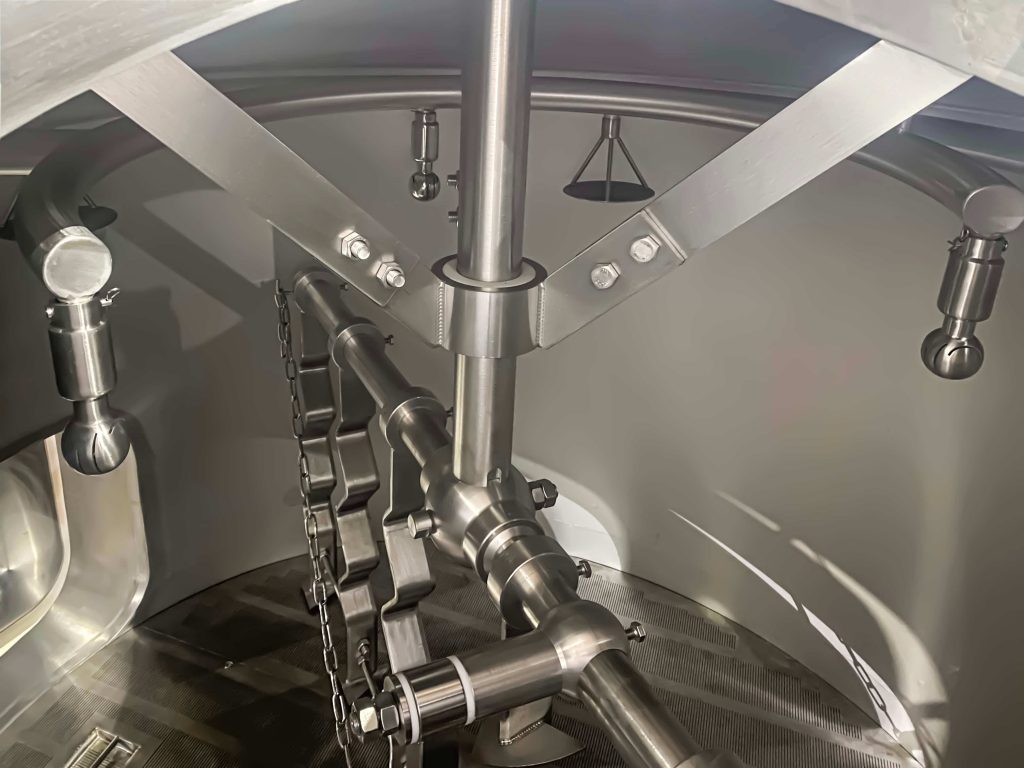
Beyond these core features, customization plays a significant role. Stainless steel blending tanks can be designed with various capacities, from small laboratory-scale units to massive industrial volumes. Components such as manways, sight glasses, spray balls for CIP systems, pressure relief valves, and specialized outlet valves can all be specified to meet exact operational requirements. The internal finish, ranging from standard mill finish to highly polished sanitary surfaces, also impacts cleanability and suitability for different products. For instance, pharmaceutical applications demand an ultra-smooth, crevice-free surface to prevent microbial entrapment.
SKE prides itself on providing highly customizable stainless steel blending tanks. We work closely with our clients to understand their specific processes, product characteristics, and regulatory requirements. Whether it’s a sterile blending tank for injectables or a robust agitated tank for chemical synthesis, our engineering team ensures that every detail, from the material grade (like 304 or 316L stainless steel) to the specific agitator geometry, is optimized for peak performance. This bespoke approach guarantees that our blending tanks are not just equipment, but integrated solutions that enhance efficiency and product quality. Our commitment to tailor-made solutions aligns with the precision required for processes like those involving a Milk Pasteurization Machine, where specific temperatures and holding times are critical.
Diverse Applications of Stainless Steel Blending Tanks Across Industries
The versatility of stainless steel blending tanks makes them an indispensable asset across a wide spectrum of industries. Their robust construction, hygienic properties, and customizable features allow them to handle an enormous range of products and processes, from delicate pharmaceutical compounds to abrasive industrial chemicals. Understanding these diverse applications highlights the critical role these blending tanks play in virtually every sector of modern manufacturing.
In the expansive food and beverage industry, stainless steel blending tanks are ubiquitous. They are used for mixing ingredients in dairy products such as milk, yogurt, and ice cream; blending juices, soft drinks, and alcoholic beverages; and preparing sauces, dressings, and confectionery. Their hygienic design prevents contamination and preserves the flavor and integrity of food products, meeting stringent health and safety regulations. Whether it’s agitating fruit pulp into a beverage base or homogenizing cream for dairy production, these blending tanks ensure consistency and high quality.
The pharmaceutical and biotechnology sectors demand the highest standards of purity and sterility, making stainless steel blending tanks the only viable option. Here, these tanks are crucial for compounding active pharmaceutical ingredients (APIs), preparing sterile solutions, blending vaccines, and culturing cells. Tanks used in these fields often feature advanced automation, precise temperature control, and a high degree of surface finish (e.g., electropolished) to eliminate crevices where bacteria could harbor. The non-reactive nature of pharmaceutical-grade stainless steel ensures that the drug formulation remains uncontaminated and potent.
In the chemical industry, stainless steel blending tanks are essential for mixing various compounds, from industrial solvents and detergents to paints and polymers. Their corrosion resistance is particularly important here, as many chemical reagents can be highly corrosive. These blending tanks also need to withstand elevated temperatures and pressures, and often incorporate specialized agitation to handle viscous or reactive mixtures safely and effectively. For instance, the production of adhesives or specialized coatings often relies on precise, controlled blending in these durable tanks.
The cosmetics and personal care industry also relies heavily on these vessels for blending lotions, creams, shampoos, and perfumes. The ability to maintain precise temperatures and perform gentle yet thorough mixing ensures product consistency, texture, and stability. Similarly, in the water treatment sector, blending tanks are used for mixing chemicals, flocculants, and neutralizing agents to purify water and manage wastewater. Our expertise in designing specific vessels, such as fermentation tanks, further demonstrates our capability to meet varied industrial requirements for specialized blending and processing. SKE’s extensive experience spans these diverse industries, allowing us to deliver customized stainless steel blending tanks that meet the specific operational pressures and quality demands of each sector, ensuring superior performance and reliability.
Maintenance and Longevity of Your Stainless Steel Blending Tanks
Investing in stainless steel blending tanks is a significant commitment for any business, and ensuring their longevity and optimal performance hinges on proper maintenance practices. While stainless steel is inherently durable and corrosion-resistant, a proactive approach to care and routine inspection is essential to maximize their lifespan, prevent costly downtime, and uphold product quality and safety standards. Neglecting maintenance can lead to unforeseen issues, impacting operations and potentially incurring substantial repair or replacement expenses.
One of the most critical aspects of maintaining stainless steel blending tanks is consistent and thorough cleaning and sanitization. Depending on the industry and the products being handled, this can range from daily wash-downs to comprehensive Clean-in-Place (CIP) or Sterilization-in-Place (SIP) cycles. Regular cleaning prevents build-up of product residues, which can foster microbial growth (especially in food and pharma) or lead to localized corrosion if highly acidic or alkaline substances are left to sit. It’s crucial to use cleaning agents compatible with stainless steel, avoiding harsh chlorides or abrasive materials that could compromise the passive layer and scratch the surface. After cleaning, ensuring complete rinsing and drying is important to prevent water spotting or mineral deposits.
Beyond cleaning, routine inspections are vital. Technicians should regularly check all components of the stainless steel blending tanks, including agitators, seals, gaskets, valves, and welds. Look for any signs of wear, pitting, crevice corrosion, or fatigue. Agitator shafts and blades should be inspected for alignment and wear, as an unbalanced agitator can lead to premature motor failure or tank stress. Gaskets and seals, being susceptible to wear and tear, should be replaced according to manufacturer recommendations or at the first sign of degradation to prevent leaks and cross-contamination.
Pressure vessels, if applicable, also require scheduled inspection and certification according to local regulations. Any heating or cooling jackets of the blending tanks should be checked for sediment build-up or blockages that could impair heat transfer efficiency. Moreover, keeping detailed maintenance logs helps track service history, identify recurring issues, and plan for preventative measures. This systematic approach not only extends the operational life of the stainless steel blending tanks but also ensures they continue to meet stringent quality and safety parameters. Adopting such rigorous maintenance protocols for your stainless steel blending tanks ensures peace of mind and sustained operational excellence. At SKE, we not only provide high-quality stainless steel equipment but also offer guidance on best practices for maintenance to help our clients maximize their investment.
Choosing the Right Stainless Steel Blending Tanks with SKE
Selecting the appropriate stainless steel blending tanks for your operation is a critical decision that can significantly impact efficiency, product quality, and long-term profitability. With a myriad of options available in the market, partnering with a knowledgeable and experienced manufacturer like SKE makes all the difference. Our commitment goes beyond merely supplying equipment; we offer comprehensive solutions tailored to the unique demands of your industry and specific applications, ensuring you receive a blending tank that is not just a purchase, but a strategic investment.
At SKE, we understand that “”one size fits all”” rarely applies when it comes to industrial blending. That’s why our approach begins with a thorough consultation to understand your product characteristics, process requirements, batch volumes, temperature control needs, and regulatory compliance. Whether you require a simple mixing vessel for low-viscosity liquids or a complex agitated stainless steel blending tank with high-shear capabilities for viscous slurries, we leverage our extensive engineering expertise to design and fabricate solutions that perfectly match your needs. We consider factors such as heating and cooling options (jacketing), various agitator types (propeller, turbine, anchor, high-shear), internal finishes, and specialized inlets/outlets to optimize your blending process.
Our blending tanks are meticulously constructed from premium-grade stainless steel – typically 304 or 316L, depending on the corrosiveness of the product and sterile requirements. This ensures superior corrosion resistance, exceptional hygiene, and enduring durability, hallmarks of SKE’s product quality. We adhere to stringent manufacturing standards, offering complete documentation packages to meet industry-specific certifications and audit requirements, especially critical for pharmaceutical and food-grade applications. Our dedication to quality extends to every weld, every polish, and every component, guaranteeing a reliable and efficient blending tank.
Moreover, SKE provides more than just the physical equipment. We offer comprehensive support, from initial design and engineering to installation guidance and after-sales service. Our team is equipped to assist with process integration, ensuring that your new stainless steel blending tanks seamlessly fit into your existing production line, optimizing overall operational flow. We pride ourselves on building lasting relationships with our clients, providing expert advice and responsive support throughout the lifespan of our equipment. Choosing SKE means choosing a partner committed to innovation, quality, and your success. Let us help you unlock new levels of efficiency and product excellence with our advanced stainless steel blending tanks. Explore our diverse range of processing solutions, including our specialized Milk Pasteurization Line, which demonstrates our holistic approach to system design and integration.
Frequently Asked Questions (FAQ) about Stainless Steel Blending Tanks
What are the primary advantages of using stainless steel for blending tanks compared to other materials?
Stainless steel offers unmatched corrosion resistance, exceptional hygiene due to its non-porous surface, superior durability, and inertness, meaning it won’t react with or contaminate the blended product. These properties make stainless steel blending tanks ideal for industries with strict sanitation and material integrity requirements, such as food, pharma, and chemical processing.
How do I choose the right agitator for my stainless steel blending tanks?
The choice of agitator depends on several factors: the viscosity of your product, the desired mixing intensity (e.g., gentle blending vs. high-shear emulsification), the specific process (e.g., solid suspension, heat transfer), and the tank’s capacity. Common types include propellers, turbines, anchors, and high-shear mixers. Consulting with an experienced manufacturer like SKE can help you determine the optimal agitator design for your specific stainless steel blending tanks to ensure efficiency and product quality.
Can stainless steel blending tanks be customized for specific industry needs?
Absolutely. Stainless steel blending tanks are highly customizable. Customization options include varying capacities, different grades of stainless steel (e.g., 304 or 316L), specialized agitator types and speeds, temperature control jackets, insulation, specific inlet/outlet configurations, manways, CIP spray balls, and various internal surface finishes (from mill finish to electropolished). This allows manufacturers like SKE to design blending tanks that meet exact operational requirements and regulatory standards for any industry.
What kind of maintenance do stainless steel blending tanks require?
Maintenance for stainless steel blending tanks primarily involves regular and thorough cleaning and sanitization, using compatible cleaning agents. Routine inspections of all components—including agitators, seals, gaskets, valves, and welds—are crucial to identify and address wear or damage. For pressure vessels, certifications and scheduled pressure checks are also required. Proper maintenance maximizes lifespan, prevents downtime, and ensures optimal performance and safety.
Optimize Your Blending Process with SKE Today!
Ready to enhance your production with high-quality, customized stainless steel blending tanks? Contact SKE for expert advice and bespoke solutions.
Connect with us:
Facebook |
Email: info@skeequipment.com
Or, fill out the contact form located at the bottom of our page for a personalized consultation!