
What Is an Automated Brewery? A Comprehensive Overview
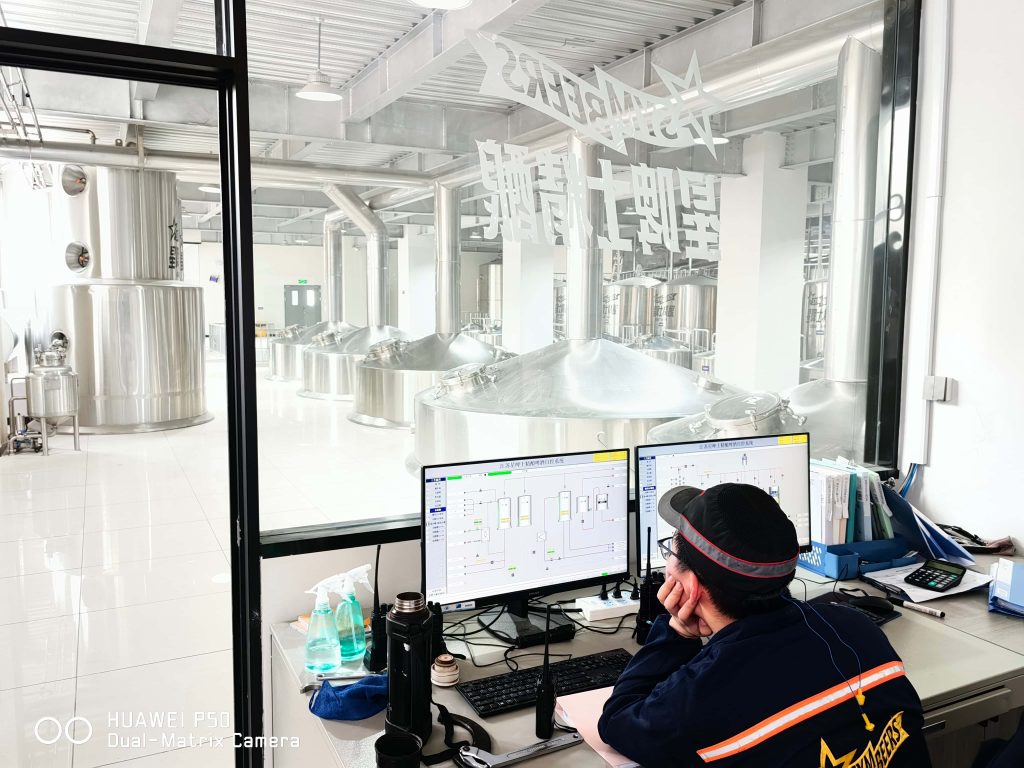
An automated brewery is a sophisticated system that uses advanced technology to automate and monitor the entire beer brewing process, minimizing manual intervention while maximizing precision and efficiency. Unlike traditional brewing, which relies on brewers to manually control every step—from measuring ingredients to adjusting temperatures and monitoring fermentation—automated breweries use a combination of hardware (sensors, pumps, valves, and tanks) and software to regulate each stage with unparalleled accuracy.
At its core, an automated brewery is designed to standardize the brewing process, ensuring that every batch of beer has the same flavor, aroma, and consistency. This is particularly critical for commercial breweries that need to maintain brand integrity and meet customer expectations across thousands of batches. For craft breweries, automation offers the flexibility to experiment with new recipes while maintaining control over critical parameters, allowing brewers to focus on creativity rather than repetitive tasks.
SKE’s automated brewery systems are engineered to be modular and scalable, meaning they can be customized to fit the specific needs of any brewery—whether it’s a small craft operation producing 100 liters per batch or a large-scale facility churning out thousands of liters daily. Our systems integrate seamlessly with beer management software and precision temperature control tools, creating a cohesive ecosystem that simplifies operations and drives consistent results.
Beer Brewing Technology: The Backbone of Automated Breweries
Beer brewing technology is the foundation of any automated brewery, encompassing the hardware, software, and processes that work together to transform raw ingredients (malt, hops, yeast, and water) into high-quality beer. Over the years, this technology has evolved significantly, from basic mechanical systems to advanced, IoT-enabled solutions that offer real-time monitoring and remote control.
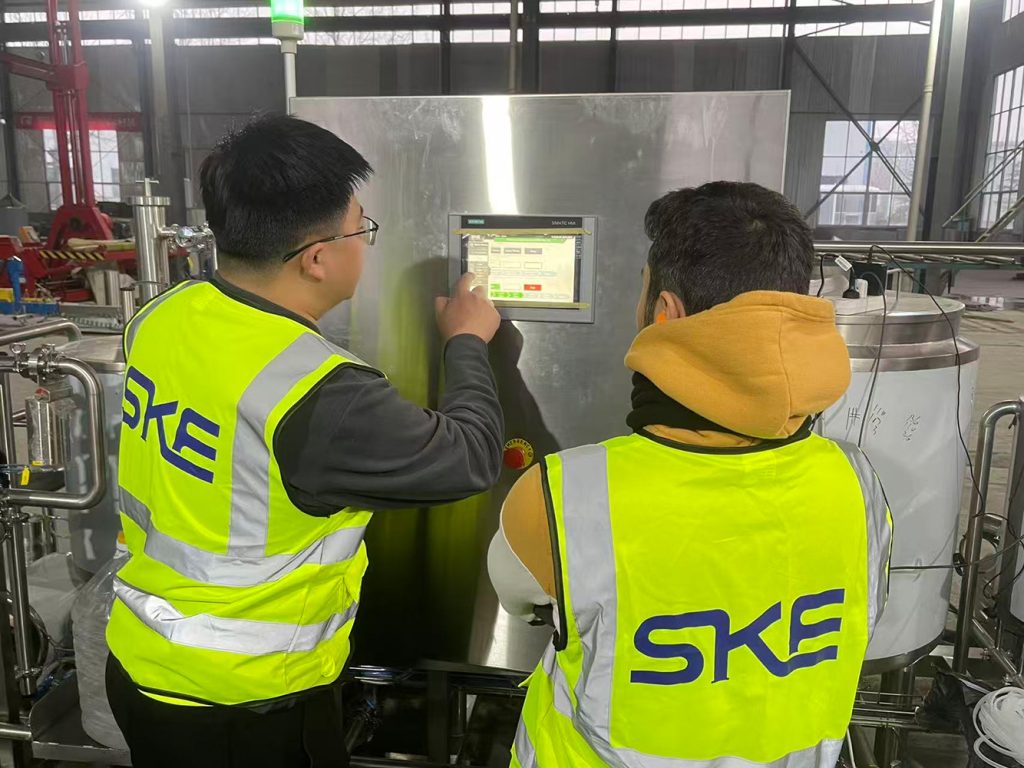
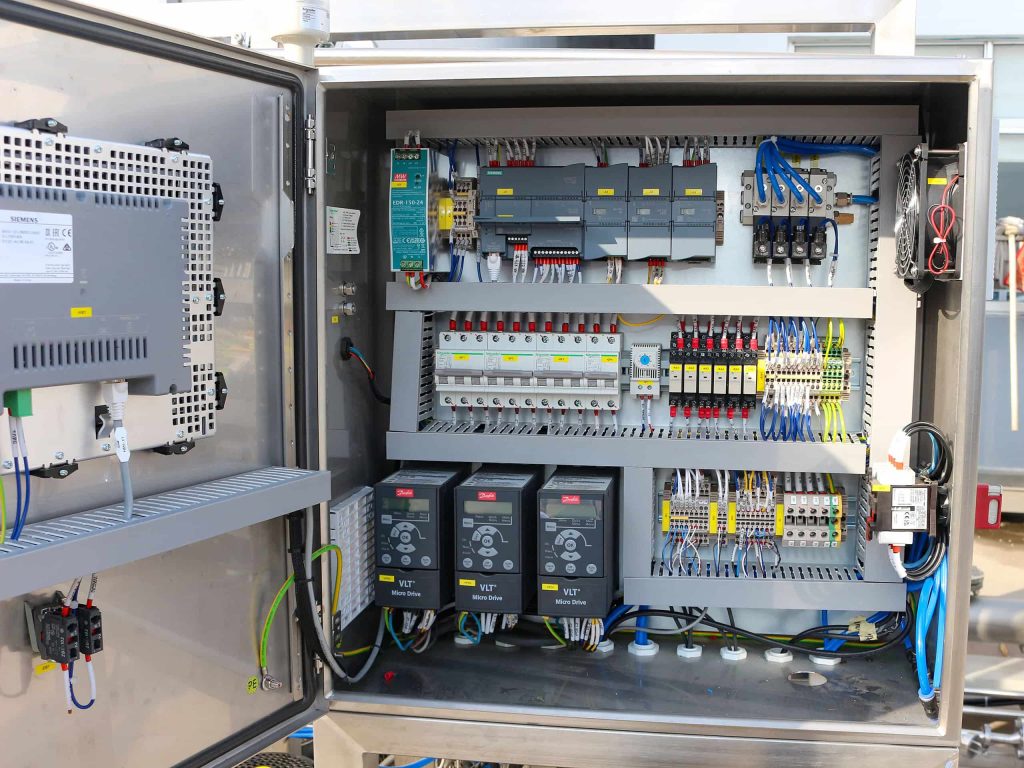
One of the key advancements in beer brewing technology is the integration of programmable logic controllers (PLCs) and human-machine interfaces (HMIs). PLCs act as the “brain” of the automated brewery, executing pre-programmed instructions to control pumps, valves, heaters, and coolers. HMIs, meanwhile, provide brewers with a user-friendly dashboard to monitor and adjust brewing parameters in real time, making it easy to fine-tune recipes and address any issues that arise.
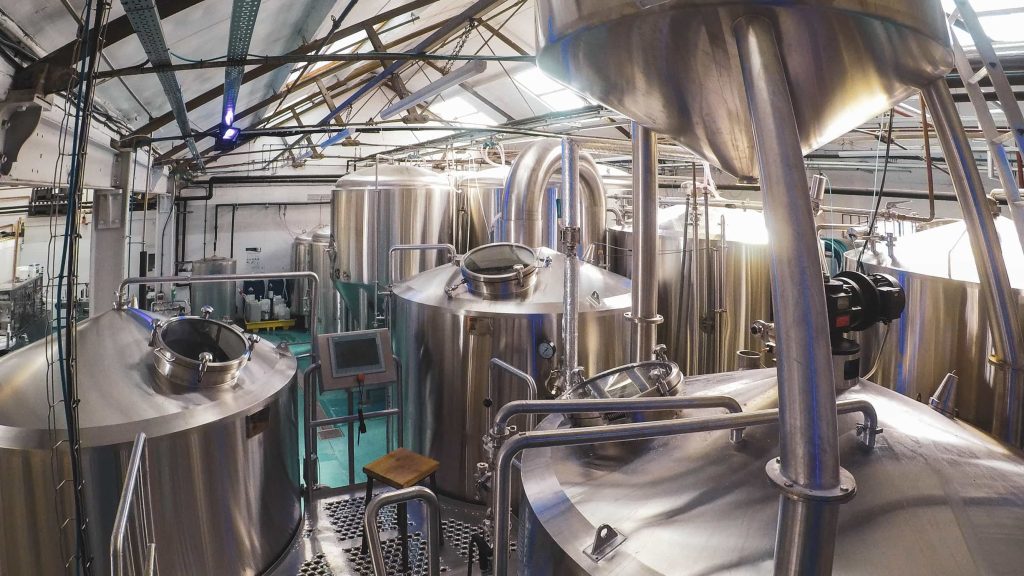
SKE incorporates state-of-the-art beer brewing technology into all our automated systems, including high-efficiency mash tuns, automated hop additions, and precision fermentation tanks. Our systems also feature advanced sensors that measure critical parameters such as specific gravity, pH levels, and dissolved oxygen, ensuring that every stage of the brewing process is optimized for quality. By leveraging this technology, breweries can reduce waste, improve efficiency, and produce beer that consistently meets their desired flavor profiles.
Another key aspect of beer brewing technology in automated breweries is automation of the cleaning-in-place (CIP) process. CIP systems eliminate the need for manual cleaning of tanks and pipelines, reducing labor costs and ensuring that equipment is sanitized to the highest standards. SKE’s CIP solutions are fully integrated into our automated brewery systems, allowing brewers to schedule cleaning cycles and monitor progress remotely, further streamlining operations.
Beer Brewing Temperature: The Critical Factor for Flavor and Consistency
Beer brewing temperature is one of the most critical parameters in the brewing process, as it directly impacts the flavor, aroma, and quality of the final product. From mashing to fermentation, every stage requires precise temperature control to ensure that enzymes, yeast, and other ingredients function optimally. In traditional breweries, maintaining consistent temperatures is a labor-intensive task, but automated breweries simplify this process with advanced temperature control technology.
During the mashing stage, temperature control is essential to activate enzymes in the malt that convert starches into fermentable sugars. Different temperatures trigger different enzymes—for example, beta-amylase is most active at 60–65°C (140–149°F), while alpha-amylase works best at 67–72°C (153–162°F). Automated breweries use precision heaters and coolers, controlled by PLCs, to maintain these temperatures with an accuracy of ±0.5°C, ensuring optimal sugar conversion and consistent mash efficiency.
Fermentation is another stage where beer brewing temperature control is critical. Yeast activity is highly temperature-dependent: ale yeasts thrive at 18–22°C (64–72°F), while lager yeasts require cooler temperatures of 7–13°C (45–55°F). Even small deviations in fermentation temperature can lead to off-flavors, such as diacetyl (buttery notes) or fusel alcohols (harsh, solvent-like flavors).
SKE’s automated brewery systems feature advanced temperature control systems that use glycol cooling and electric heating to maintain precise temperatures throughout fermentation. Our systems also include temperature sensors placed at multiple points in the fermentation tanks, allowing brewers to monitor temperature gradients and make adjustments in real time. This level of control ensures that yeast ferments efficiently, producing beer with the desired flavor and aroma profile every time.
Beer Management Software: Streamlining Operations and Enhancing Control
Beer management software is an integral component of any modern automated brewery, providing brewers with a centralized platform to monitor, control, and optimize every aspect of their operations. This software integrates with the brewery’s hardware (sensors, PLCs, and tanks) to collect real-time data, automate processes, and generate reports that help brewers make informed decisions.
One of the key benefits of beer management software is its ability to automate recipe management. Brewers can input and store recipes, including ingredient quantities, brewing times, and temperature profiles, and the software will automatically adjust the brewery’s equipment to follow these recipes. This eliminates the risk of human error and ensures that every batch is brewed to the exact specifications of the recipe.
Beer management software also provides real-time monitoring of the brewing process, allowing brewers to track parameters such as temperature, specific gravity, and pH levels from anywhere, using a computer or mobile device. This remote monitoring capability is particularly valuable for breweries with multiple locations or brewers who need to manage operations outside of regular working hours.
Comparative Table: Traditional Brewery vs. SKE Automated Brewery
|
Parameter
|
Traditional Brewery
|
SKE Automated Brewery
|
|---|---|---|
|
Beer Brewing Technology
|
Manual labor-dependent, basic mechanical equipment, high risk of human error
|
PLC and HMI integration, advanced sensors, automated CIP systems, IoT-enabled monitoring
|
|
Beer Brewing Temperature Control
|
Manual temperature adjustments, accuracy ±2–3°C, inconsistent results
|
Precision glycol cooling/electric heating, accuracy ±0.5°C, real-time temperature monitoring
|
|
Beer Management Software
|
Manual record-keeping, no centralized monitoring, limited recipe control
|
Integrated software for recipe management, real-time monitoring, inventory tracking, compliance reporting
|
|
Labor Requirements
|
High: 3–5 staff per batch (depending on size)
|
Low: 1–2 staff per batch, with remote monitoring capabilities
|
|
Batch Consistency
|
Low: Significant variation between batches due to manual error
|
High: Consistent flavor, aroma, and quality across all batches
|
|
Scalability
|
Limited: Difficult to expand without increasing labor and equipment significantly
|
High: Modular design allows easy expansion to meet growing production needs
|
|
Cost Efficiency
|
Low: High labor costs, high waste, inefficient energy use
|
High: Reduced labor costs, minimal waste, energy-efficient systems
|
FAQ: Common Questions About Automated Breweries
Q1: Can automated breweries produce craft beer, or are they only for large-scale production?
Automated breweries are ideal for both craft and large-scale production. In fact, many craft breweries use automated systems to maintain consistency while still having the flexibility to experiment with new recipes. SKE’s automated systems allow brewers to input custom recipes, adjust brewing parameters (such as temperature and hop additions), and test new flavor profiles—all while ensuring that each batch meets the desired quality standards. Automation frees up craft brewers from repetitive tasks, allowing them to focus on creativity and innovation.
Q2: Is beer management software difficult to learn and use?
No, most beer management software solutions—including those integrated with SKE’s automated systems—are designed to be user-friendly, even for brewers with limited technical experience. The software features intuitive dashboards, drag-and-drop recipe management, and real-time monitoring tools that make it easy to control and optimize the brewing process. SKE also provides comprehensive training and support to help brewers learn how to use the software effectively, ensuring that they can maximize the benefits of their automated system.
Q3: Can SKE’s automated brewery systems be customized to fit my brewery’s specific needs?
Yes, SKE’s automated brewery systems are fully customizable to fit the unique needs of each brewery. We work closely with our clients to understand their production volume, flavor goals, budget, and space constraints, and we design a system that meets those requirements. Customization options include tank size, number of fermentation vessels, hop addition systems, temperature control features, and software integrations. Whether you need a small system for a craft brewery or a large-scale system for commercial production, SKE can tailor a solution to your needs.
Q4: What kind of maintenance is required for an automated brewery?
Automated breweries require less maintenance than traditional brewing equipment, but regular maintenance is still essential to ensure optimal performance. SKE’s systems are designed with durability in mind, and we provide a comprehensive maintenance plan that includes regular inspections, sensor calibration, and equipment cleaning. The beer management software also includes maintenance alerts, notifying brewers when equipment needs attention. Our team of technicians is available 24/7 to provide support and address any maintenance issues, ensuring minimal downtime for your brewery.
Q5: How does automation impact the flavor of the beer?
Automation improves the flavor of beer by ensuring consistent control of critical parameters such as temperature, specific gravity, and hop additions. Traditional brewing methods are prone to human error, which can lead to off-flavors and inconsistent results. Automated systems eliminate these errors, ensuring that every batch is brewed to the exact specifications of the recipe. This consistency allows brewers to refine their recipes and produce beer with a more balanced, predictable flavor profile. Additionally, automation reduces the risk of contamination, as the system is sealed and sanitized automatically, further enhancing the quality of the beer.
Contact Us
If you have any further questions, feel free to reach out!
- Facebook: SKE Equipment Facebook
- Email: info@skeequipment.com
For more personalized assistance, please fill out the contact form at the bottom of this page. We look forward to helping you with your brewing needs!