
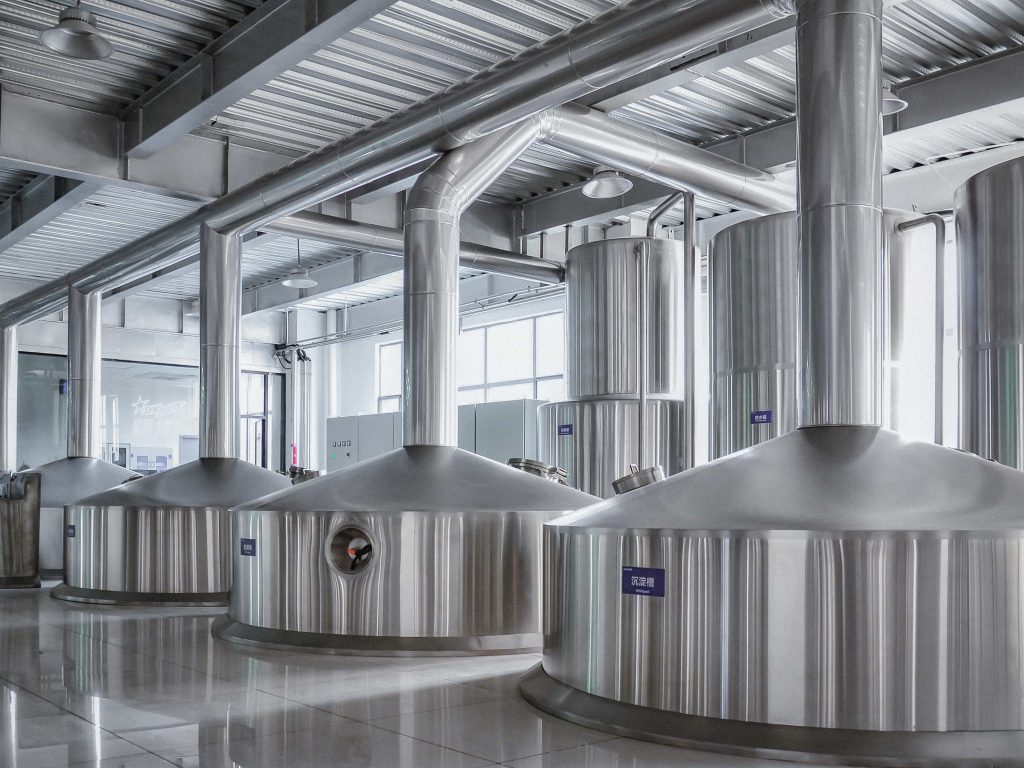
What is a Craft Brew House, and Why Does Automation Matter?
A craft brew house is more than just a facility where beer is made—it’s a hub of creativity, where brewers experiment with ingredients, flavors, and techniques to create unique, small-batch beers. Unlike large-scale commercial breweries, craft brew houses prioritize quality, innovation, and authenticity, often focusing on local ingredients and traditional brewing methods. However, this focus on artistry can sometimes conflict with the practical demands of running a business, especially as demand for craft beer grows.
This is where automated brewing becomes a game-changer. Automated beer brewing is not about replacing the brewer’s expertise; it’s about enhancing it. By automating repetitive, labor-intensive tasks—such as temperature control, ingredient measuring, and wort transfer—brewers can free up time to focus on recipe development, flavor refinement, and customer engagement. Automated brewing technologies ensure that every batch is consistent, reducing the risk of human error and waste, while also making it easier to scale production without sacrificing quality.
For craft brew houses, consistency is critical. Consumers return to their favorite craft beers because they know what to expect—and even small variations in flavor, aroma, or mouthfeel can damage a brand’s reputation. Automated beer brewing machines eliminate the variability that comes with manual brewing, ensuring that each batch adheres to the exact specifications set by the brewer. This consistency not only builds customer trust but also simplifies quality control and compliance with industry standards.
Understanding Automated Brewing: Key Terms and Technologies
Before diving into the benefits of automation for craft brew houses, it’s important to clarify the key terms and technologies involved. Let’s start with the core LSI keywords that define this space: automated beer brewing, automated beer brewing machine, and automated brewing. While these terms are often used interchangeably, they each have distinct meanings that are important for craft brewers to understand.
Automated brewing refers to the use of technology to automate any part of the brewing process, from ingredient handling to fermentation and packaging. This can range from simple, semi-automated systems (such as automated temperature controllers) to fully automated systems that handle the entire brewing process with minimal human intervention. Automated beer brewing is a broader term that specifically refers to the automation of beer production, as opposed to other fermented beverages.
An automated beer brewing machine is the physical equipment that enables this automation. These machines come in a variety of sizes and configurations, from small, tabletop units designed for home brewers to large, industrial systems for commercial craft brew houses. At SKE, we design and manufacture automated beer brewing machines that are tailored to the needs of craft brewers—combining precision engineering with user-friendly controls to make automation accessible even for small-batch operations.
The core technologies behind automated brewing include programmable logic controllers (PLCs), sensors, and software systems that work together to monitor and control every stage of the brewing process. PLCs act as the “brain” of the system, executing pre-programmed instructions to regulate temperature, pressure, and flow rates. Sensors continuously collect data on key parameters (such as wort temperature, pH levels, and fermentation progress), while software allows brewers to monitor, adjust, and optimize the process in real time.
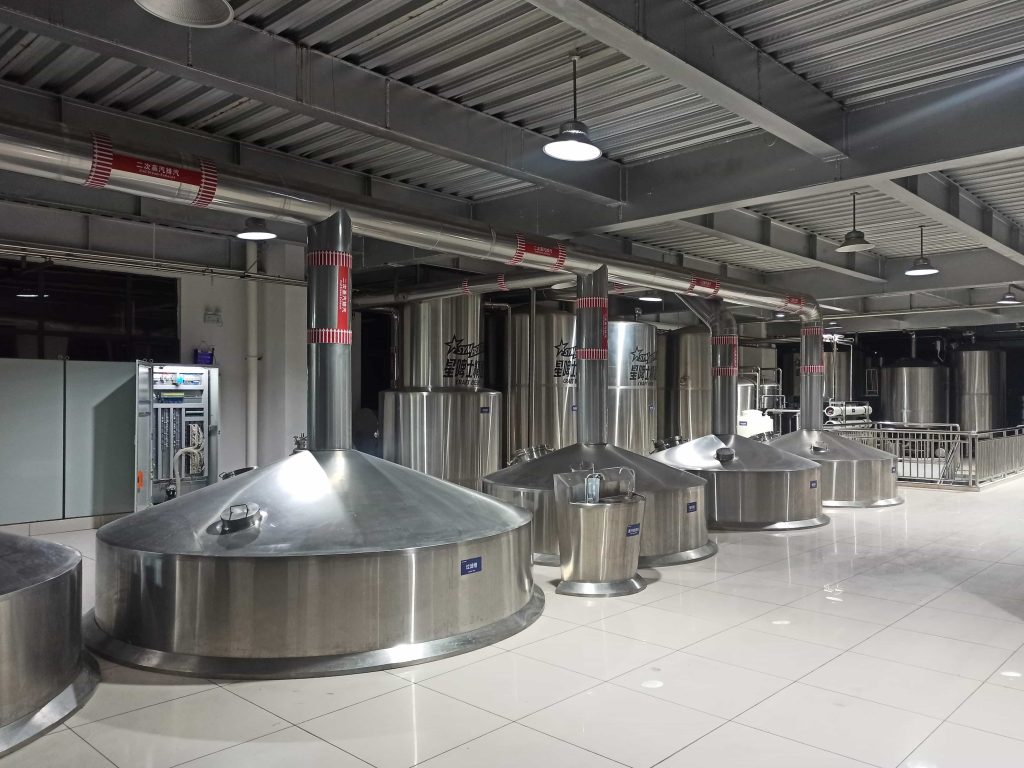
The Role of Automated Beer Brewing in Modern Craft Brew Houses
Craft brew houses have traditionally prided themselves on manual brewing methods, which are seen as a way to preserve the artisanal nature of beer making. However, as the industry evolves, more and more craft brewers are recognizing that automation can complement—rather than replace—their craft. In fact, automated brewing has become a key tool for craft brewers looking to balance creativity with efficiency.
One of the biggest advantages of automated beer brewing for craft brew houses is scalability. Many craft brewers start as small operations, producing just a few batches per week. As their brand grows and demand increases, they need to scale production without losing the quality that made their beer popular. Automated beer brewing machines make this possible by streamlining the brewing process, reducing the need for additional labor, and ensuring that consistency is maintained even as batch sizes increase.
Another key benefit is labor savings. Manual brewing is labor-intensive, requiring brewers to monitor the process around the clock—especially during critical stages like mashing and fermentation. Automated systems can handle these tasks automatically, allowing brewers to reduce their workforce or reallocate staff to more value-added tasks, such as recipe development, marketing, and customer service. This not only reduces labor costs but also reduces the risk of human error, which can lead to wasted ingredients and inconsistent batches.
Automated brewing also enables greater precision and control. Every stage of the brewing process—from mashing to fermentation—requires precise control of temperature, time, and ingredient ratios. Even small deviations can have a significant impact on the final product. Automated beer brewing machines use advanced sensors and controls to maintain these parameters with unparalleled accuracy, ensuring that every batch is consistent and meets the brewer’s exact specifications.
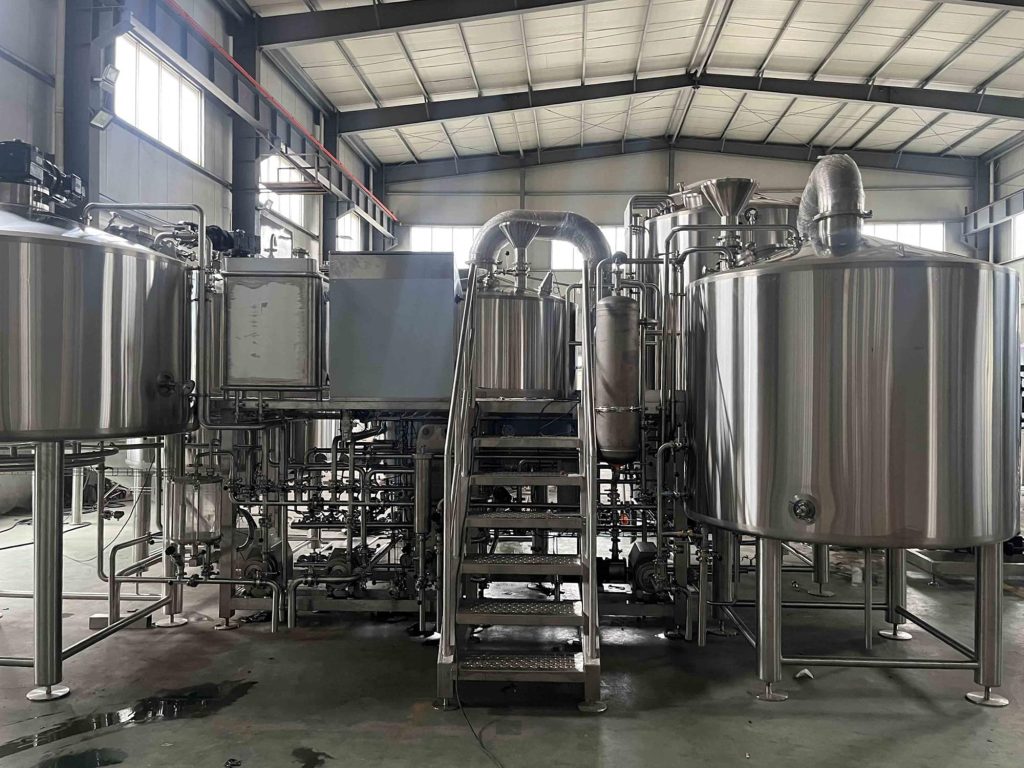
Traditional Brewing vs. Automated Brewing: A Comparative Analysis
To better understand the benefits of automated brewing for craft brew houses, it’s helpful to compare it to traditional manual brewing. While traditional methods have their merits, automated brewing offers distinct advantages that make it well-suited for modern craft operations. The table below highlights the key differences between the two approaches, with a focus on factors that matter most to craft brewers.
|
Factor
|
Traditional Manual Brewing
|
Automated Beer Brewing
|
|---|---|---|
|
Consistency
|
Highly variable; dependent on brewer’s skill and attention to detail. Small variations in temperature, timing, or ingredient measurements can lead to inconsistent batches.
|
Exceptionally consistent; automated systems maintain precise control over all parameters, ensuring every batch matches the brewer’s specifications.
|
|
Labor Requirements
|
Labor-intensive; requires constant monitoring during mashing, boiling, fermentation, and packaging. Typically requires a larger team for scaling production.
|
Low labor requirements; automated systems handle repetitive tasks, allowing a single brewer to manage multiple batches or focus on other tasks.
|
|
Scalability
|
Challenging to scale; increasing batch size requires more labor and increases the risk of inconsistency. Limited by the brewer’s ability to manage multiple tasks simultaneously.
|
Easy to scale; automated systems can handle larger batch sizes with minimal additional labor. Consistent quality is maintained even as production increases.
|
|
Precision
|
Limited precision; relies on manual measurements and visual checks. Difficult to maintain exact temperature, time, or ingredient ratios consistently.
|
High precision; advanced sensors and PLC controls monitor and adjust parameters in real time, ensuring optimal conditions at every stage.
|
|
Waste Reduction
|
Higher waste; human error can lead to overuse of ingredients, spoiled batches, or inefficient use of water and energy.
|
Lower waste; precise ingredient measurements and optimized processes reduce waste of raw materials, water, and energy.
|
|
Learning Curve
|
Steep learning curve; requires years of experience to master the nuances of manual brewing and consistently produce high-quality beer.
|
Gentler learning curve; user-friendly controls and pre-programmed recipes make it easier for new brewers to get started, while still allowing for customization.
|
|
Cost Efficiency (Long-Term)
|
Higher long-term costs; labor costs and waste add up over time. Difficult to reduce costs without sacrificing quality.
|
Lower long-term costs; labor savings and reduced waste offset the initial investment in equipment. Scalable systems grow with your business, reducing the need for costly upgrades.
|
It’s important to note that automated brewing does not eliminate the need for skilled brewers. Instead, it allows brewers to focus on the creative aspects of beer making—such as recipe development, flavor experimentation, and quality control—rather than spending hours on repetitive tasks. For craft brew houses, this means maintaining their artisanal identity while operating more efficiently and profitably.
Key Components of an Automated Beer Brewing Machine
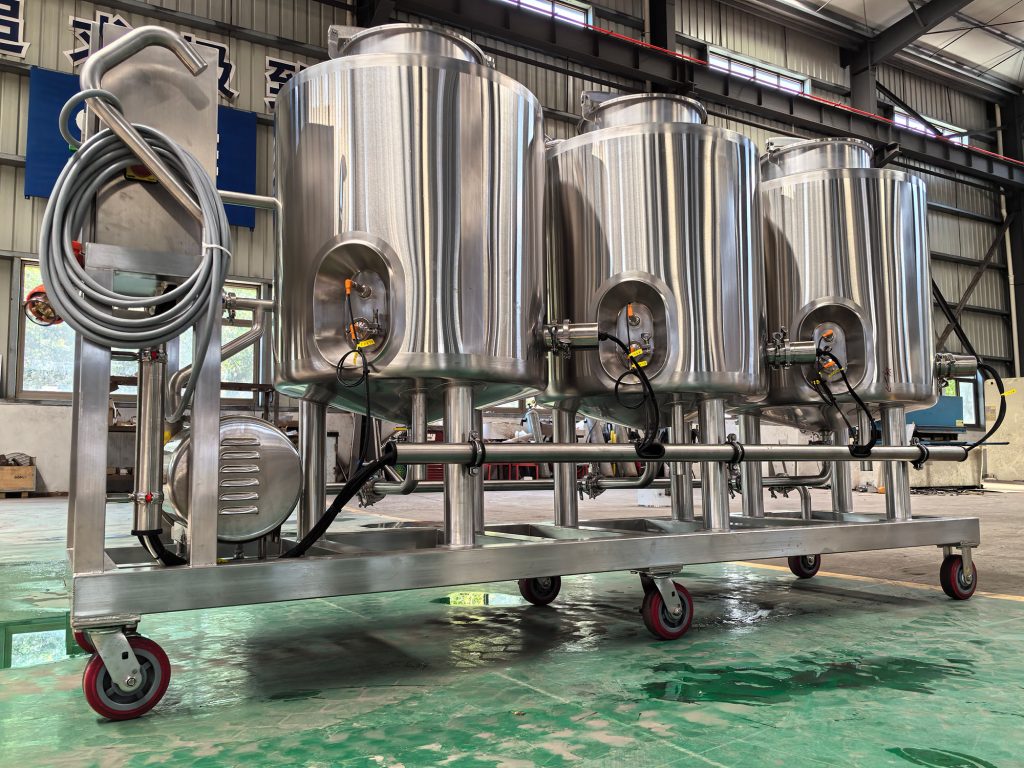
Automated beer brewing machines come in a variety of configurations, but they all share core components that work together to automate the brewing process. Understanding these components is essential for craft brewers looking to invest in automation, as it helps them choose the right system for their specific needs. Below, we break down the key components of a typical automated beer brewing machine, as designed and manufactured by SKE.
- Control System (PLC and HMI): The control system is the “brain” of the automated beer brewing machine. It consists of a programmable logic controller (PLC) and a human-machine interface (HMI)—usually a touchscreen display. The PLC executes pre-programmed instructions to control all aspects of the brewing process, while the HMI allows brewers to monitor progress, adjust settings, and input recipes. SKE’s control systems are user-friendly, with intuitive interfaces that make it easy for brewers to customize their processes without extensive technical knowledge.
- Ingredient Handling System: This component automates the measurement and delivery of raw materials—such as malt, hops, yeast, and water—to the brewing vessel. Automated ingredient handling ensures precise measurements, reducing waste and ensuring consistency. SKE’s systems can be configured to handle a wide range of ingredient types and batch sizes, making them suitable for both small and large craft brew houses.
- Mashing Vessel: The mashing vessel is where malt is mixed with hot water to convert starches into fermentable sugars. Automated mashing vessels use precise temperature control to maintain the optimal temperature for starch conversion, with sensors that monitor and adjust the temperature in real time. SKE’s mashing vessels are designed for efficiency, with features like automated stirring to ensure even mixing and maximum sugar extraction.
- Boiling Vessel: After mashing, the wort (the sugary liquid) is transferred to the boiling vessel, where hops are added to impart flavor, aroma, and bitterness. Automated boiling vessels control the boiling time and temperature, and can be programmed to add hops at specific intervals—ensuring consistency in every batch. SKE’s boiling vessels are equipped with energy-efficient heating systems to reduce operational costs.
- Fermentation Tank: Fermentation is a critical stage where yeast converts sugars into alcohol and carbon dioxide. Automated fermentation tanks maintain precise temperature and pressure control, which is essential for producing consistent, high-quality beer. SKE’s fermentation tanks are equipped with sensors that monitor fermentation progress, allowing brewers to track the process in real time and make adjustments as needed.
- Clean-in-Place (CIP) System: Cleaning is a time-consuming but essential part of the brewing process. Automated CIP systems clean and sanitize the brewing equipment without manual disassembly, saving time and reducing the risk of contamination. SKE’s CIP systems are fully integrated with the control system, allowing brewers to program cleaning cycles and ensure that equipment is always properly sanitized.
Common FAQs About Automated Brewing for Craft Brew Houses
We understand that many craft brewers have questions about adopting automated beer brewing technologies. Below are some of the most frequently asked questions we receive at SKE, along with detailed answers to help you make informed decisions about integrating automation into your craft brew house.
FAQ 1: Will automated brewing take away the “craft” from my craft beer?
No—automated brewing does not take away the craft; it enhances it. The “craft” of beer making lies in the brewer’s creativity, recipe development, and attention to quality—not in manual labor. Automated systems handle the repetitive, time-consuming tasks (like temperature control and ingredient measuring) so that you can focus on the creative aspects of brewing, such as experimenting with flavors, adjusting recipes, and perfecting your beer’s unique profile. In fact, automation can help you preserve your craft by ensuring that your vision is consistently translated into every batch.
FAQ 2: Is automated brewing only suitable for large craft brew houses?
No—automated brewing is suitable for craft brew houses of all sizes, from small startups to large operations. SKE offers a range of automated beer brewing machines, including small-batch systems that are ideal for startup breweries or home-based craft brewers. These systems are compact, user-friendly, and affordable, making automation accessible even for businesses with limited space or budget. As your business grows, you can easily scale up your automated system to handle larger batch sizes.
FAQ 3: How much does an automated beer brewing machine cost?
The cost of an automated beer brewing machine varies depending on the size, configuration, and features of the system. Small-batch systems (for 1-5 barrel batches) can range from $10,000 to $50,000, while larger systems (for 10+ barrel batches) can range from $50,000 to $200,000 or more. At SKE, we work with each customer to design a system that fits their budget and needs, offering flexible financing options to make automation more accessible. It’s important to consider the long-term cost savings—labor savings, reduced waste, and increased productivity—when evaluating the investment.
FAQ 4: How long does it take to learn to operate an automated beer brewing machine?
Most brewers can learn to operate SKE’s automated beer brewing machines in just a few days. Our systems feature intuitive touchscreen interfaces, pre-programmed recipes, and step-by-step guidance, making them easy to use even for those with no prior experience with automation. We also provide comprehensive training for your team, both on-site and remotely, to ensure that you have the knowledge and skills to operate the system effectively. Additionally, our support team is available 24/7 to answer any questions or address any issues that arise.
FAQ 5: Can automated brewing systems handle custom recipes?
Yes—SKE’s automated beer brewing machines are fully customizable, allowing you to input and store custom recipes. Our control systems allow you to adjust every parameter of the brewing process, including temperature, time, ingredient ratios, and hop additions. You can save multiple recipes in the system, making it easy to switch between batches or experiment with new flavors. Automation actually makes it easier to replicate custom recipes consistently, ensuring that every batch meets your exact specifications.
Contact Us
If you have any further questions, feel free to reach out!
- Facebook: SKE Equipment Facebook
- Email: info@skeequipment.com
For more personalized assistance, please fill out the contact form at the bottom of this page. We look forward to helping you with your brewing needs!