
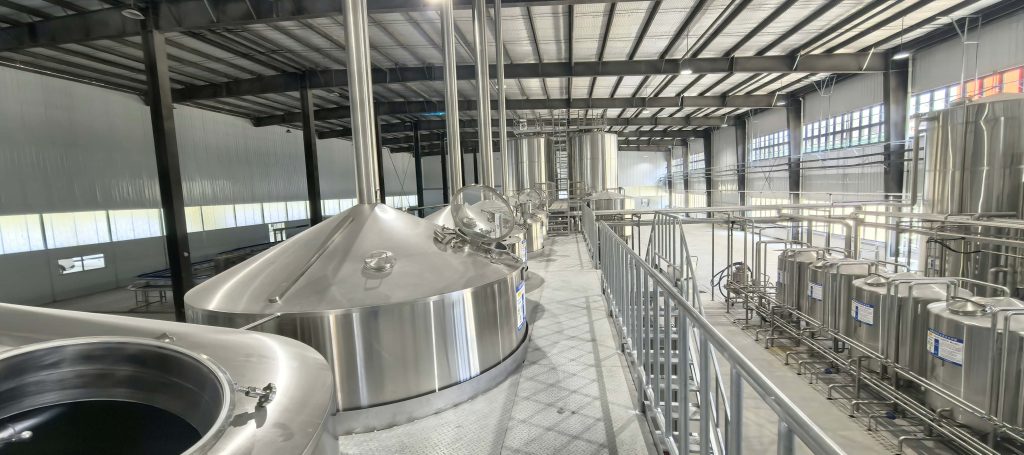
Beer is the third most consumed beverage in the world, right after water and tea. Every time you open a can of lager or a bottle of stout, you are holding the result of a complex global supply chain.
But have you ever wondered how your favorite beer is made in such large amounts?
Behind every famous brand stands a massive operation known as international breweries. These are not small garages with kettles. These are sprawling factories producing millions of barrels every year.
To keep up with the thirst of the world, these factories need serious hardware. This is where the science of at large brewing comes into play.
In this article, we will look at who runs the beer world, how they do it, and how SKE provides the steel backbone—like large fermentation tanks—that makes it all possible.
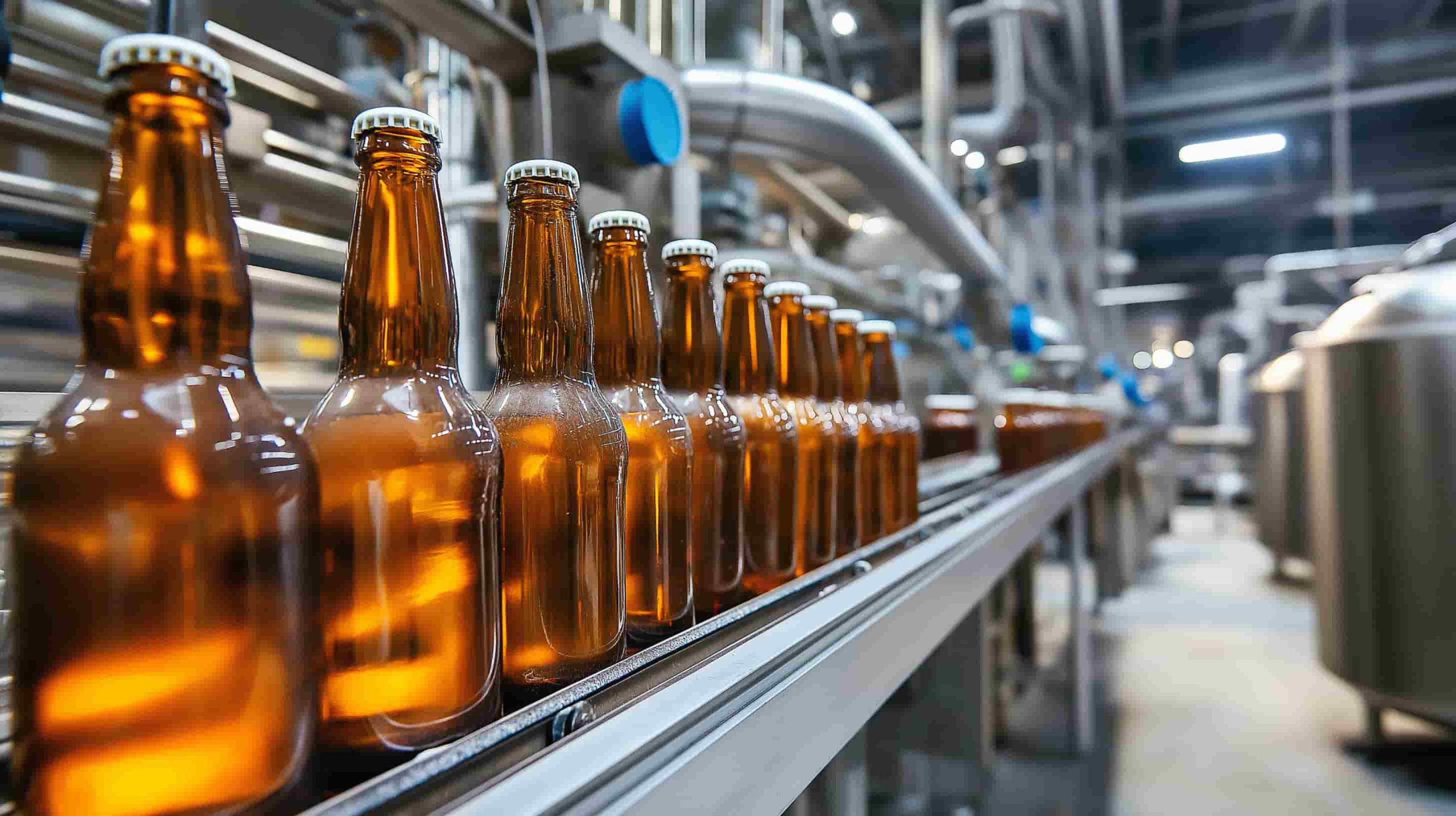
Who Rules the Suds? A Look at the World’s Largest Brewers
Before we talk about the tanks, let us look at the players. The beer industry is dominated by a few massive corporations. According to recent industry reports, the top three companies control more than half of the global market share.
We have listed the absolute giants of the industry in the table below. These are the world’s largest brewers by volume.
| Rank | Company Name | Home Country | 2024 Production (Million hl) | Famous Brands |
|---|---|---|---|---|
| 1 | AB InBev | Belgium | 495.49 | Budweiser, Corona, Stella Artois |
| 2 | Heineken | Netherlands | 240.70 | Heineken, Amstel, Tiger |
| 3 | China Res. Snow Breweries | China | 108.80 | Snow Beer |
| 4 | Carlsberg | Denmark | 101.20 | Carlsberg, Tuborg |
| 5 | Molson Coors | USA / Canada | 79.62 | Coors Light, Miller Lite |
| 6 | Tsingtao Brewery Group | China | 75.38 | Tsingtao Beer |
These numbers are hard to imagine. To put it in perspective, AB InBev alone produces over 495 million hectoliters. That is enough to fill about 20,000 Olympic-sized swimming pools every year.
To achieve this, these companies cannot rely on simple pots and pans. They rely on at large brewing techniques. This means using high-tech automation, precise temperature control, and massive tanks.
The Heart of the Factory: Why Large Fermentation Vessels Matter
So, how does a brewery go from brewing a tiny test batch to supplying an entire continent?
The answer lies in the Large Fermentation Vessel.
Imagine you are making soup for two people. It is easy. Now imagine making soup for 2 million people. Suddenly, keeping the temperature exactly right is very hard.
The same goes for beer. Yeast is a living thing. As it eats sugar, it creates alcohol and heat. If you put 500,000 liters of liquid in a steel tank, the temperature at the center can get much hotter than at the edges.
This is where SKE comes in.
For at large brewing, a fermentation tank needs three specific things:
-
Thermal Control: Jackets that keep the beer cool.
-
Pressure Management: Strong walls to hold pressure.
-
Sanitation: Surfaces smooth enough for yeast to let go during cleaning.
Without these, the beer will taste bad, or the batch will be wasted.
SKE’s Role: Building the Backbone of Brewing
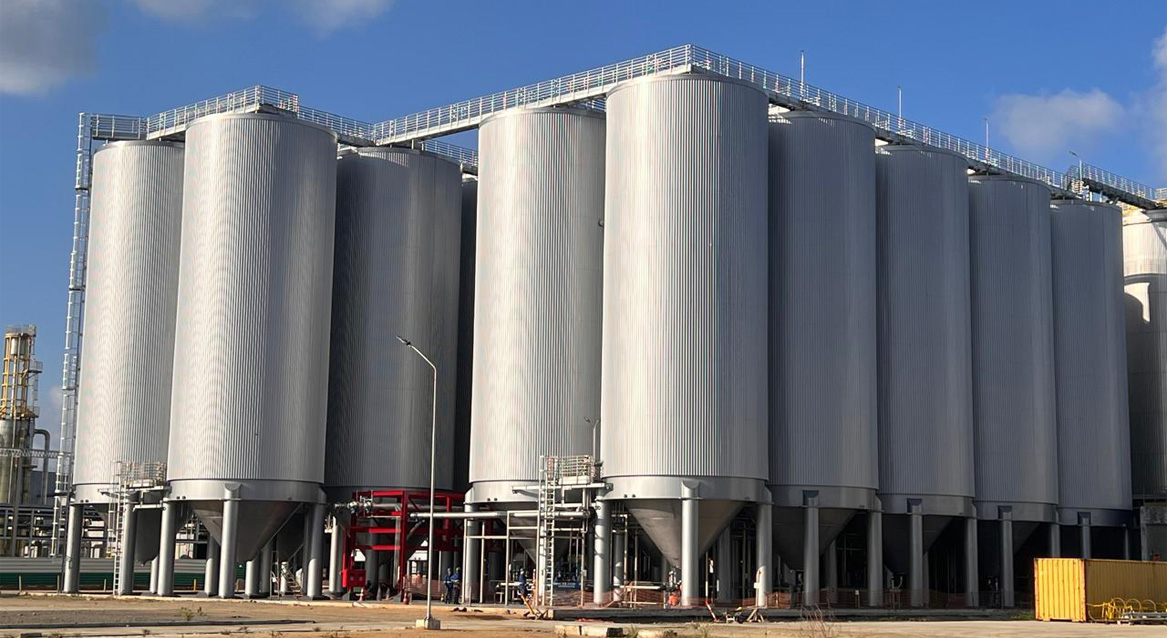
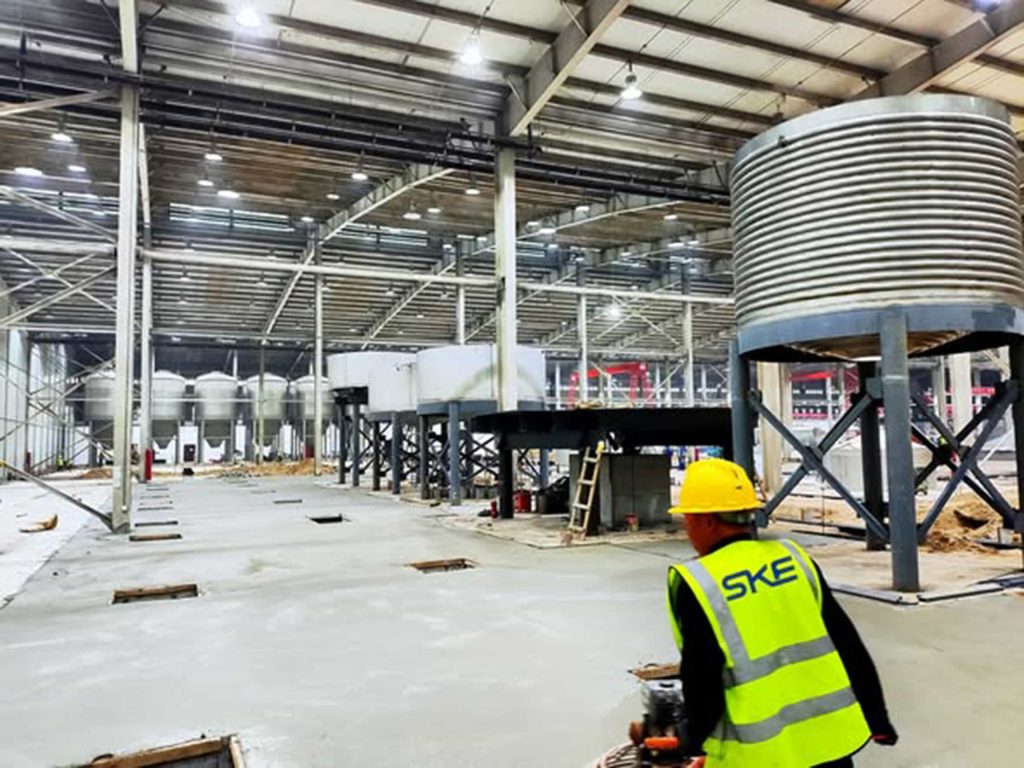
At SKE, we understand that a brewery is only as good as its equipment. We specialize in manufacturing the heavy steel tanks required for international breweries.
Whether you are a mid-sized craft brewery looking to expand or a giant industrial facility, SKE has the technical knowledge to help.
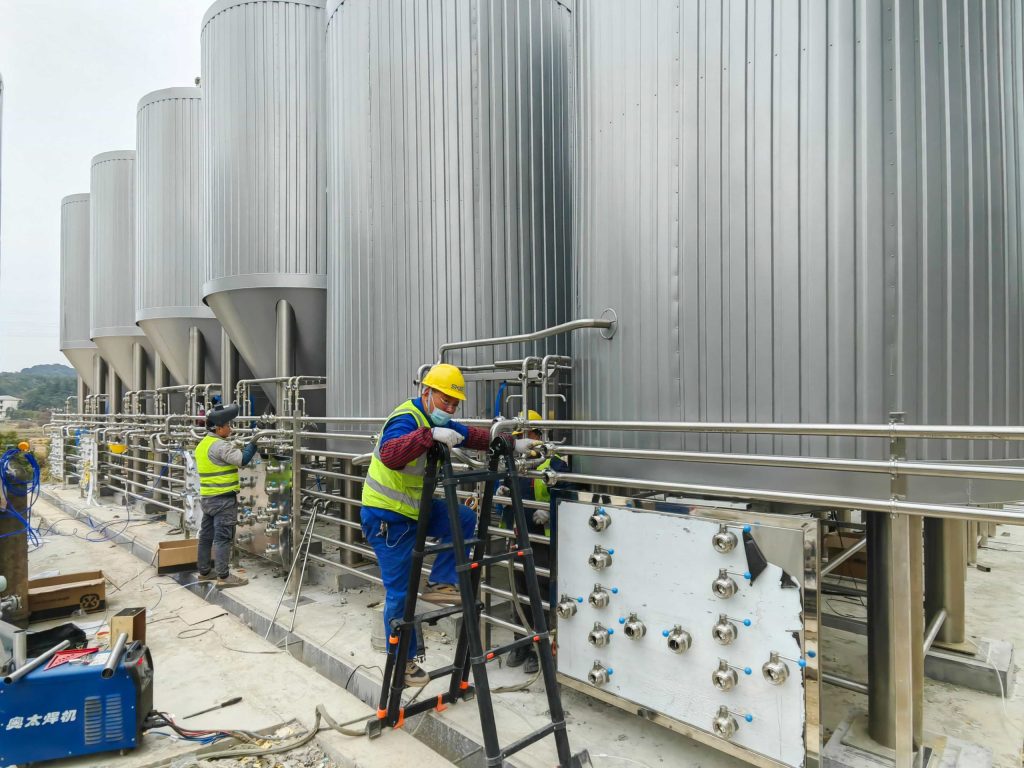
We produce the Large Fermentation Vessels that make at large brewing possible. Our tanks range from small 2,000-liter units for microbreweries to massive 500,000-liter giants for industrial parks.
Why do top engineers at world’s largest brewers choose SKE?
-
Precision Manufacturing: Our tanks are made with high-grade stainless steel (304 or 316L). This resists the acidic nature of beer and lasts for decades.
-
Advanced Cooling: We use dimpled jackets or welded channel jackets. This ensures the beer stays at the perfect temperature from the start of fermentation to the end of lagering.
-
Modular Design: We know that breweries grow. Our systems are designed to be expanded easily.
We recently showcased our technology at exhibitions like CBB in Shanghai and Drinktec in Munich. The feedback was clear: big brewers need reliable steel, and SKE delivers.
The Technology Behind the Taste
Let’s look closer at the science of at large brewing.
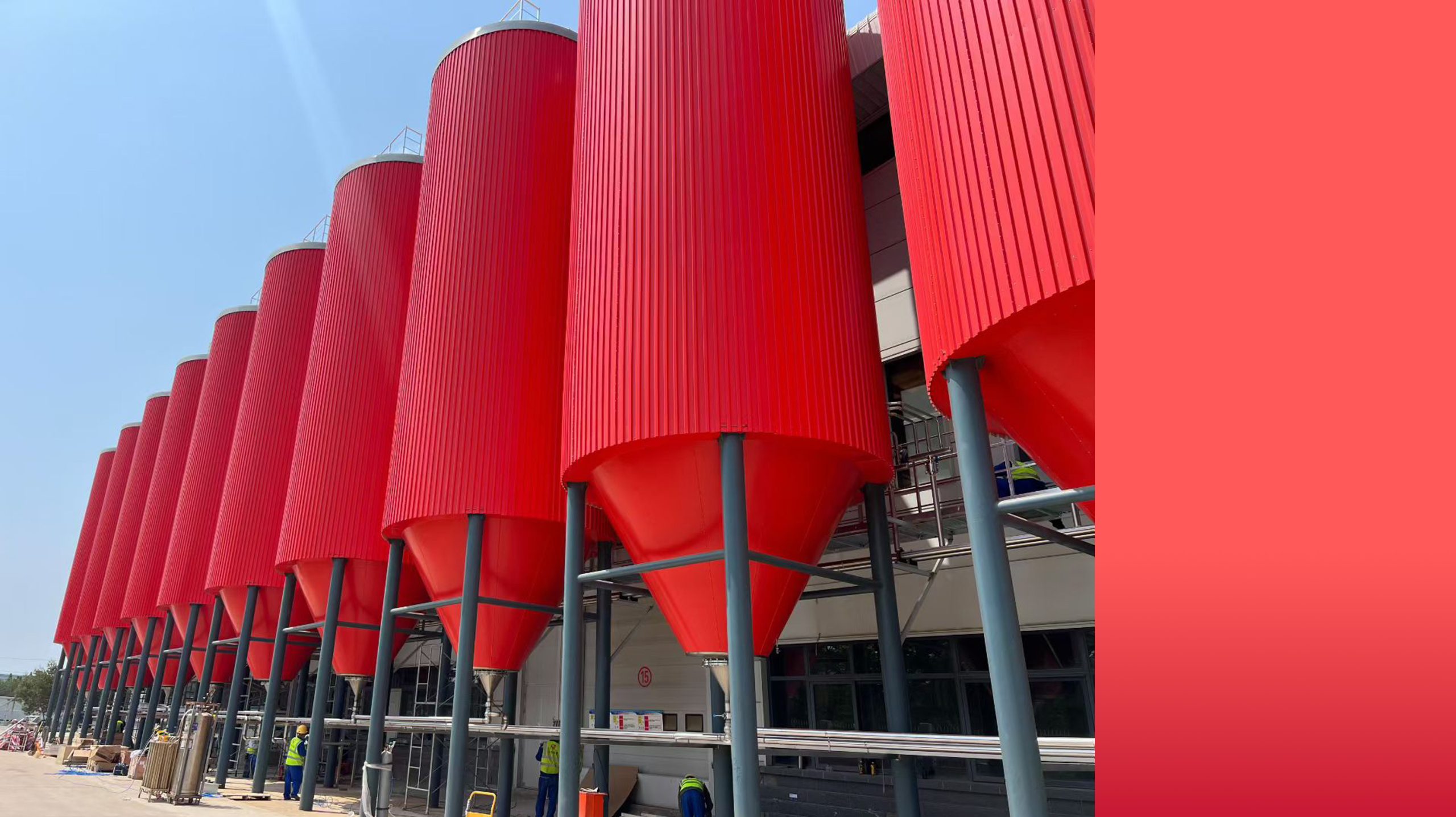
When you scale up a recipe, you cannot just multiply the ingredients. The physical forces change. For example, the pressure on the yeast at the bottom of a 20-meter tank is immense.
SKE designs vessels to handle this hydrostatic pressure.
Our Large Fermentation Vessels feature CIP (Clean-In-Place) systems. In a large factory, workers cannot climb inside a tank to scrub it after every batch. It is too dangerous and takes too long.
Instead, SKE integrates rotating spray balls. These blast hot water and caustic soda at high pressure to clean every inch of the interior. This automation is the secret to at large brewing efficiency.
Furthermore, we focus on thermal efficiency.
During fermentation, yeast generates heat. A good tank must remove that heat fast. SKE’s cooling jackets are CNC-bent to fit perfectly around the tank cone and cylinder. This eliminates hot spots.
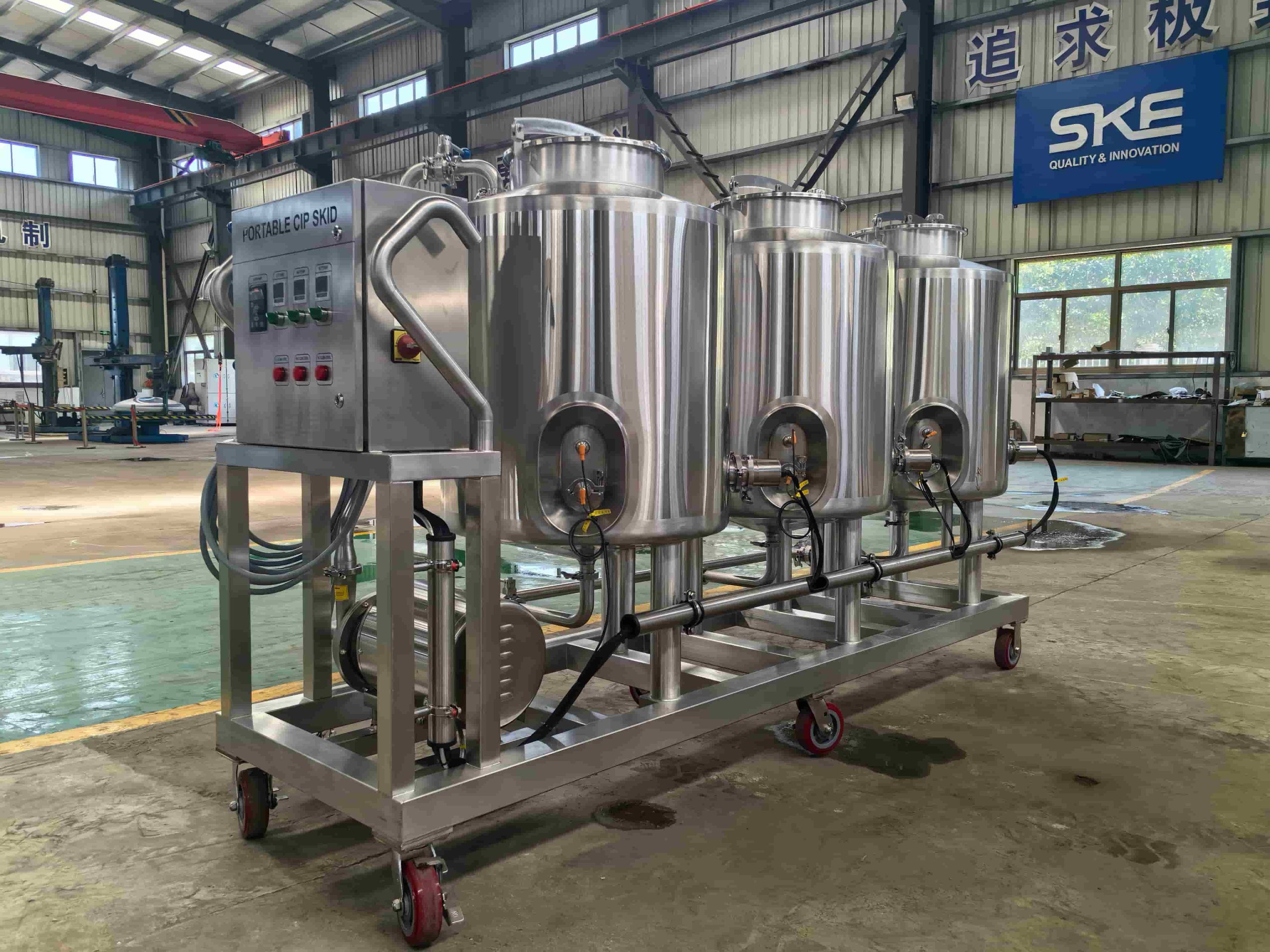
Case Study: Helping Mid-Sized Brewers Go Big
SKE doesn’t just sell to the world’s largest brewers. We love helping regional players step up to the international stage.
We have worked with many clients who owned brewpubs (brewing 500 liters at a time). They had great recipes but could not meet grocery store demand.
SKE provided the bridge.
We supplied a turnkey solution including:
-
Brewhouses: 20hl to 100hl capacity.
-
Fermentation Tanks: 50hl to 500hl conical units.
-
Automation: PLC control panels that allow one brewer to manage the whole facility.
These clients were able to triple their output without losing the flavor of their craft beer. That is the SKE promise: Flavor does not shrink when you scale up.
The Global Shift: Sustainability and Efficiency
Today, international breweries are under pressure to save water and energy. Water is the main ingredient in beer, but making it uses a lot of it.
SKE is leading the charge in sustainable at large brewing.
Our tanks are designed to work with Vapor Condensers and Heat Recovery Systems.
When you boil wort, you create steam. Usually, that hot steam just floats away. SKE systems can capture that steam, turn it back into hot water, and use it for the next batch.
By using SKE’s sturdy Large Fermentation Vessels and efficient process equipment, breweries can reduce their carbon footprint. This is crucial for selling beer in modern markets where customers care about the planet.
Conclusion: Your Partner in Growth
The list of the world’s largest brewers is impressive. But every giant started as a small dream. Whether you are aiming to be the next AB InBev or simply want to dominate your region, your equipment is your foundation.
SKE has the experience, the engineering team, and the manufacturing power to build your future. We specialize in Large Fermentation Vessels that make at large brewing profitable and consistent.
From Weifang to the world, SKE is your steel partner.
Frequently Asked Questions (FAQ)
Q1: What is considered a “Large Fermentation Vessel” in the beer industry?
A: Generally, any tank with a capacity over 100 hectoliters (10,000 liters) is considered large-scale equipment. At SKE, we regularly manufacture vessels up to 5,000 hectoliters (500,000 liters) for international breweries.
Q2: How does SKE ensure the quality of stainless steel for at large brewing?
A: We use food-grade stainless steel (usually 304 or 316L). We also perform X-ray scans on welds and pressure tests on every tank before it leaves our factory. This ensures safety and longevity for at large brewing applications.
Q3: Can SKE help with the automation of large fermentation vessels?
A: Yes. We provide fully automated systems. Our PLC controls allow brewers to monitor temperature, pressure, and gravity remotely. This is essential for modern world’s largest brewers who operate 24/7.
Q4: What does “Turnkey Project” mean at SKE?
A: It means we do not just sell tanks. We design the layout, install the pipes, set up the automation, and train your staff. When you buy SKE equipment for your international brewery, you get a ready-to-run factory.
Q5: How long does it take to manufacture a large fermentation tank?
A: It depends on the size, but generally, it takes 4 to 8 weeks for fabrication and testing. SKE works efficiently to help at large brewing projects stay on schedule.
Contact Us
If you have any further questions, feel free to reach out!
- Facebook: SKE Equipment Facebook
- Email: info@skeequipment.com
For more personalized assistance, please fill out the contact form at the bottom of this page. We look forward to helping you with your brewing needs!