The global alcohol industry is a universe of giants. When we look at the largest spirits companies, we see names like Diageo, Bacardí, and Suntory. When we scan the major brewing companies, we see titans like AB InBev and Heineken.
These names dominate your local store shelves. But have you ever wondered how they make so much product without tasting like chemicals?
The secret isn’t just in the recipe. It is in the brewing equipment.
Whether a company makes vodka, whiskey, or lager, the process of “brewing” is surprisingly similar. They all need to move liquid, heat tanks, and clean pipes.
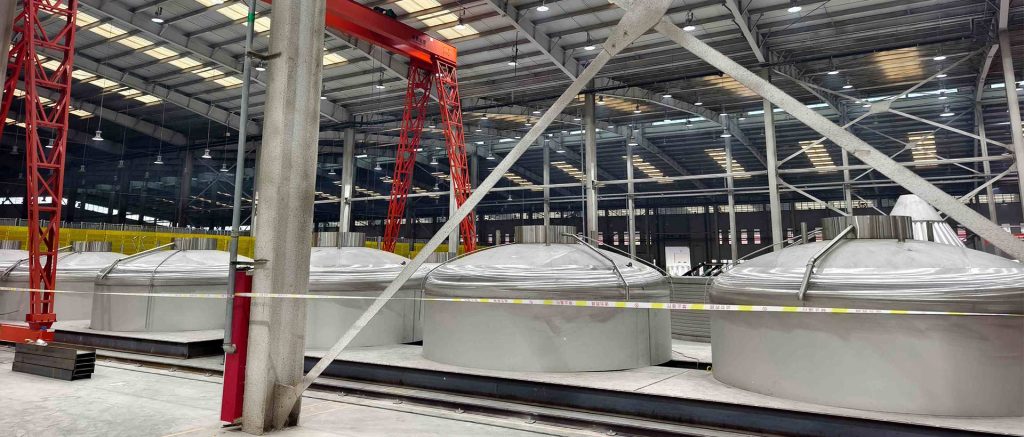
At SKE, we are the engineers behind the brewers. As a leading manufacturer of brewing equipment, we understand the mechanical nightmares that keep production managers awake at night.
In this article, we will explore the overlap between spirits and beer production. More importantly, we will show you how SKE solves the biggest problems in the industry.
The “Big Alcohol” Landscape: Who is Who?
To understand the equipment, you must first understand the scale. The largest spirits companies often own brands you think are independent. For example, Diageo owns Johnnie Walker and Smirnoff. Sazerac owns Buffalo Trace and Fireball.
On the beer side, the numbers are staggering. The major brewing companies like AB InBev produce over 495 million hectoliters of beer every year.
Why does this matter for equipment? Because scale changes everything.
A small pub brewery can clean a tank with a hose and a scrub brush. A factory owned by Heineken cannot. They need automation.
These massive corporations are currently facing a major transition. They are dealing with aging infrastructure. Some tanks were built 50 years ago. They need to upgrade to modern, efficient, and automated systems to stay profitable.
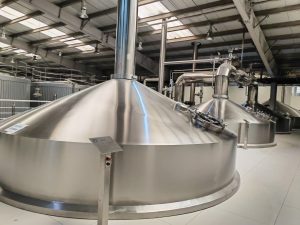
This is where SKE steps in. We provide the heavy-duty stainless steel solutions that keep the world’s favorite drinks flowing.
Why Brewing Equipment is the Same (and Different)
It is helpful to think of “brewing” as cooking on a massive scale. Major brewing companies cook beer using malted barley. Largest spirits companies often start with a “wash” or “mash” (similar to beer) before distilling it into vodka or whiskey.
Therefore, the front end of the factory is almost identical. Both need:
-
Milling equipment to crush grains.
-
Mash tuns to mix grain with hot water.
-
Fermentation tanks to turn sugar into alcohol.
The difference comes later. Beer is aged and packaged. Spirits are distilled.
However, the pain points are exactly the same: energy costs, consistency, and waste.
For example, making a light lager is precise. If the temperature fluctuates, the taste changes. The same goes for making vodka. If the fermentation is uneven, the spirit has a burn.
At SKE, we don’t just build tanks. We build control systems. Our automatic beer brewing machines use PLC (Programmable Logic Controller) technology. This allows a single operator to manage a batch from a tablet, ensuring the same result every single time.
Spirits vs. Beer: The Production Pain Points (Table)
To visualize the challenges faced by both major brewing companies and largest spirits companies, here is a comparison table. SKE equipment is designed to solve every row of this table.
| Production Stage | The Problem (Pain Point) | How SKE Solves It |
|---|---|---|
| Milling (Crushing) | Inconsistent crush size leads to stuck mashes or low sugar yield. | SKE’s adjustable 3-roller mills ensure a perfect, uniform crush every time. |
| Mashing (Heating) | “Hot spots” kill enzymes. If the mash tun isn’t even, you lose flavor. | Our dual-zone jackets maintain temperature within ±0.5°C for perfect enzyme activation . |
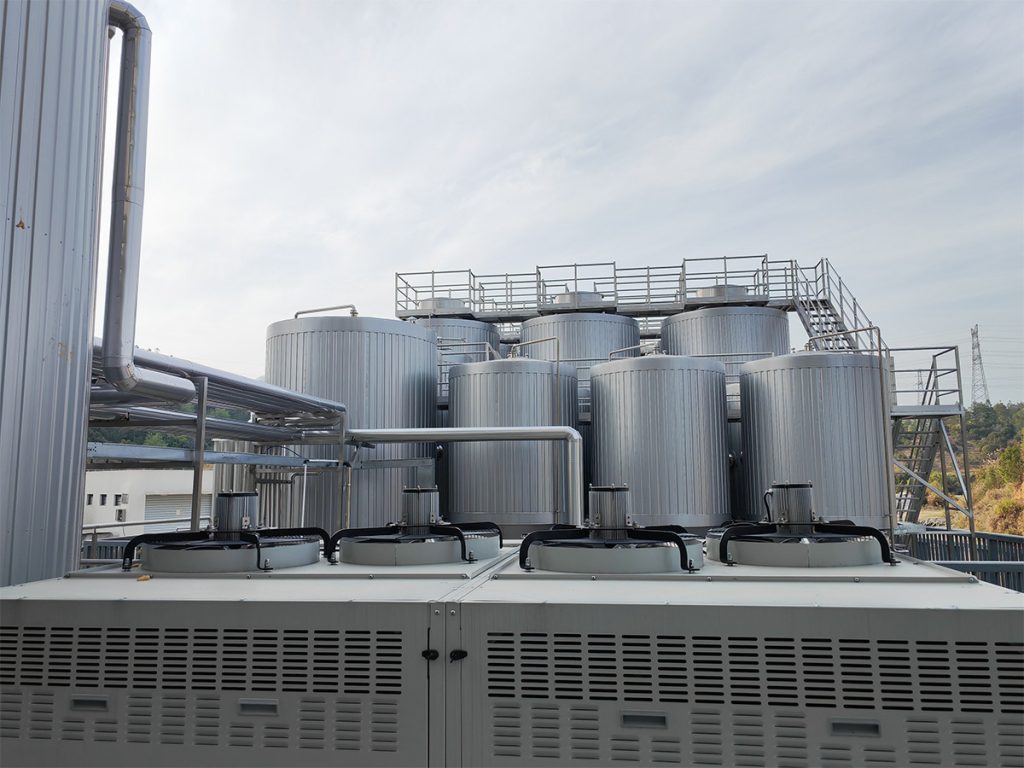
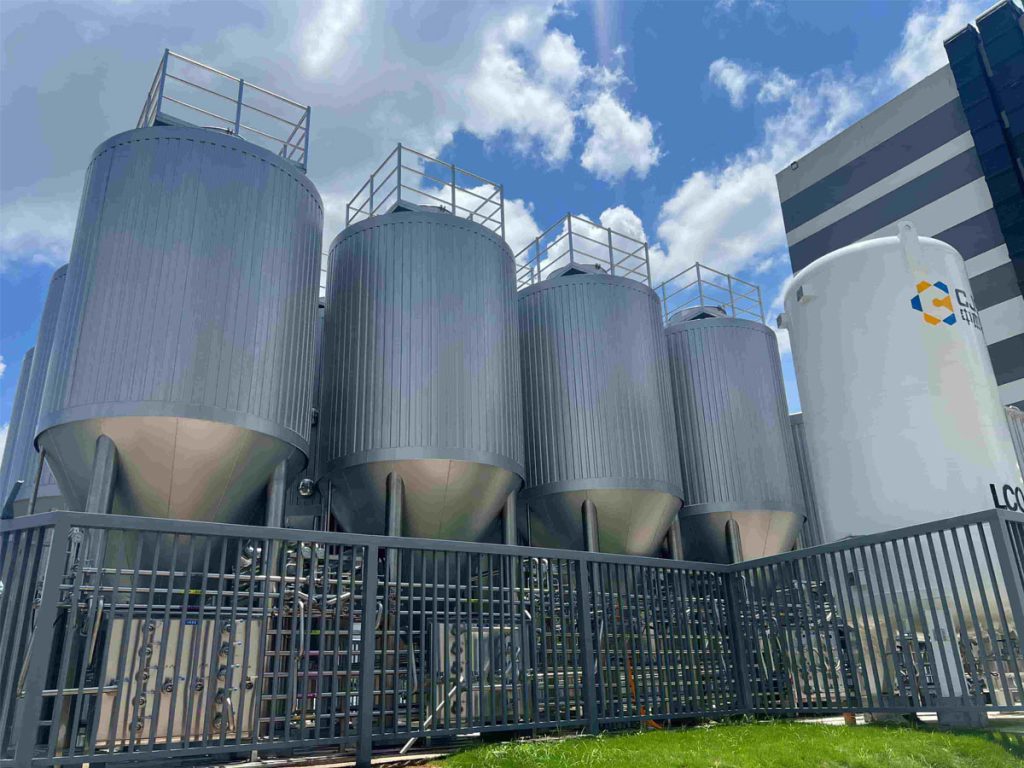
| Fermentation | Oxygen gets in. Wild yeast or bacteria ruins the batch (spoilage). | SKE conical fermenters are airtight with pressure relief valves, blocking contaminants. |
| Cleaning (CIP) | Manual cleaning takes hours of downtime. It costs money in labor and water. | Our automated CIP systems use 360° spray coverage, cutting sanitation time by 50% . |
| Energy Use | Old boilers and kettles waste steam, costing millions a year. | Dynamic low-pressure boiling technology reduces energy consumption by over 25% . |
Case Study: The “Hop Load” Nightmare
One of the biggest trends right now is Hazy IPAs and Flavored Spirits. For major brewing companies, this is a nightmare. Why? Because hops and fruit pulp clog everything.
Let’s look at beer first. When Carlsberg (a major brewing company) wanted to scale up their craft beer production, they faced a huge problem. The high amount of hops in modern IPAs was clogging their filters. They had to stop production constantly to clean the machines.
The same happens for largest spirits companies. If a vodka brand decides to make a lemon-flavored vodka, the citrus pulp creates sludge in the fermentation tanks.
The SKE Solution:
We design our brew kettles and lauter tuns with whirlpool functionality. This creates a vortex that separates the liquid from the solids (trub) before it even reaches the filter. It acts like a centrifuge.
Additionally, our external forced circulation process keeps the liquid moving. It prevents solids from settling and burning on the bottom of the tank. This means less cleaning, less waste, and more actual production time.
The Shift to Automation: Why the Giants are Switching
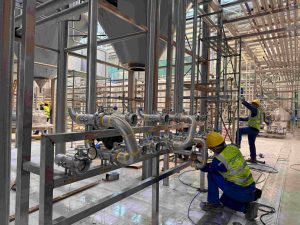
For decades, the industry relied on manual labor. A master brewer would walk around with a clipboard checking gauges. Today, the largest spirits companies are demanding Industry 4.0.
This means automation, data, and remote access.
A recent modernization project for Sleeman Breweries (a major brewing company) showed that upgrading to a fully automated system allowed them to go from 1 brew on Day 1 to 10 brews on Day 3.
SKE provides this level of automation. Our automatic beer brewing machines feature:
-
Real-Time Monitoring: See the temperature, density, and pressure on a screen.
-
Recipe Storage: Save your recipe for IPA or Stout. Press a button, and the machine replicates it perfectly.
-
Reduced Labor: One person can manage multiple 10,000-liter tanks.
If you are a craft distillery or a large brewery, automation is no longer a luxury. It is the only way to compete with the price of giants like AB InBev.
Why Brewers and Distillers Trust SKE
You might be asking, “Why SKE?”
There are many equipment suppliers out there. But few have the engineering depth to handle the scale required by major brewing companies, nor the precision required by premium spirits companies.
Here is why SKE is the partner for the top 40 brewers:
1. Material Quality
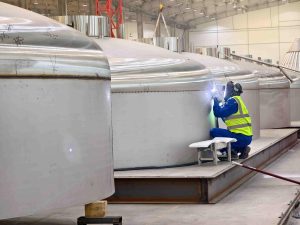
We use only food-grade 304 and 316 stainless steel. This is critical. Lower quality steel rusts. It pits. It holds bacteria. SKE equipment is built to last for 20+ years without degrading your product.
2. The “Dual-Zone” Advantage
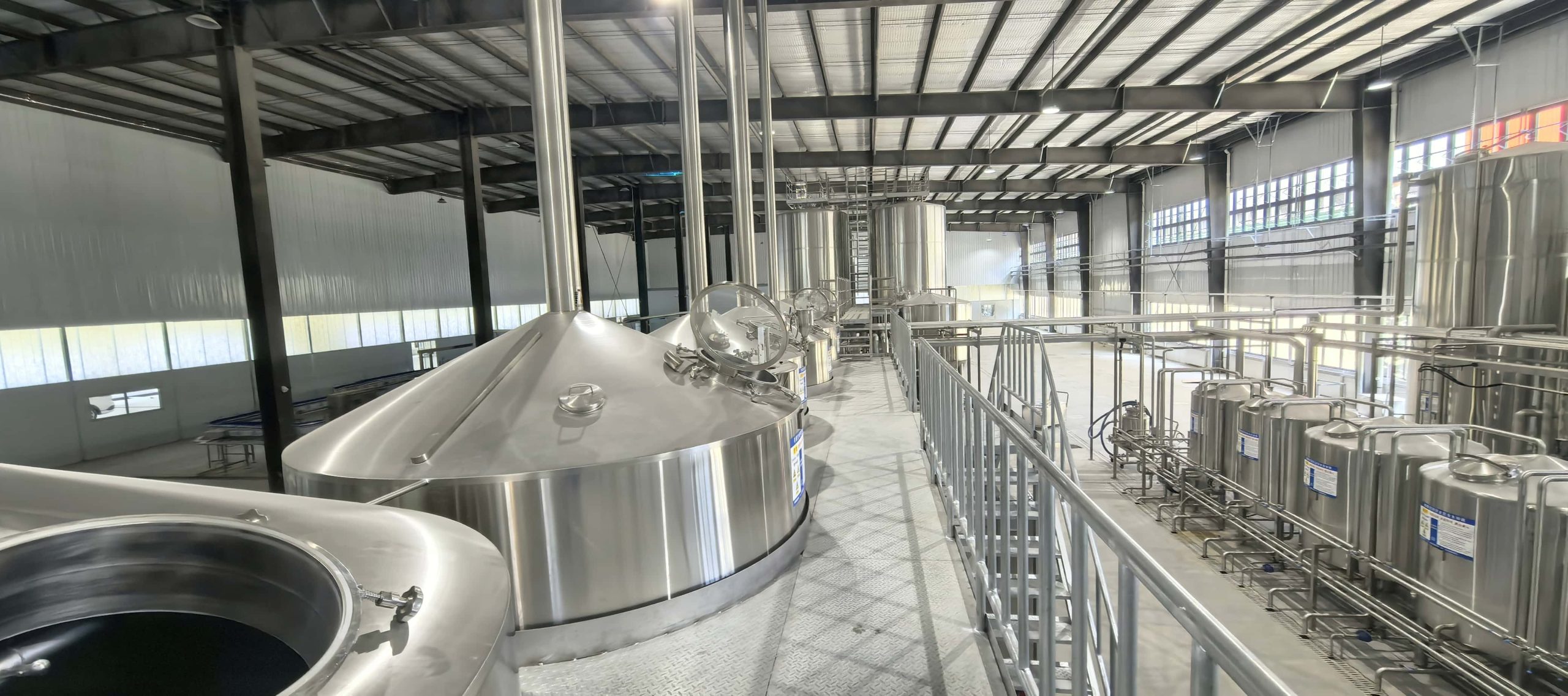
Most tanks have one heating jacket. Our mash tuns have two. This seems small, but it is revolutionary. It ensures the grain bed is heated evenly from top to bottom, which maximizes sugar extraction. You get more alcohol from less grain.
3. Sustainability
The world is demanding green production. Our systems are engineered to save water. Our CIP systems reduce water waste by up to 80%. Our boiling technology saves 25% energy . For a company like Heineken or Diageo, this saves millions of dollars and meets their ESG goals.
FAQ: Heavy-Duty Brewing Equipment
Q: Can SKE equipment be used for making spirits (whiskey/vodka) as well as beer?
Absolutely. The mashing and fermentation stages are identical. SKE supplies the “brewhouse” side of the distillery. You use our mash tun and fermenters to create the “beer” (wash), and then you send it to your stills. We specialize in the fermentation side, which is where 90% of the flavor develops.
Q: What is the biggest mistake companies make when scaling up production?
Under-sizing their heating and cooling systems. Many buyers focus on the tank size but forget the chiller. If your cooling system is weak, fermentation takes 3 weeks instead of 1 week. SKE provides fully balanced systems where the glycol chiller matches the tank capacity perfectly.
Q: How does SKE ensure consistency across different batches?
Through Automation. Human error is the #1 cause of bad beer. Our PLC systems control every valve and temperature gauge. Once you brew a perfect batch, we save that data. The machine will repeat that exact process 1,000 times without getting tired.
Q: Is SKE equipment expensive to maintain?
No. We design for durability. Our CIP (Clean-In-Place) systems automate the cleaning process, which is usually the hardest on equipment. Furthermore, we use modular parts. If a valve breaks, you replace that valve—not the whole pipe system. We also provide 24/7 global support and training.
Q: How does the “Hop Load” issue affect equipment design?
It requires larger surface areas for separation. In our brew kettles, we design the whirlpool specifically to handle high-solids loads. We also offer variable-speed agitators. For heavy hopping, you slow the agitator down to allow trub to settle; for fruit beers, you speed it up to keep solids suspended. It is about having the right tool for the recipe.
Conclusion: Built for the Big League
The largest spirits companies and major brewing companies did not get to the top by accident. They obsess over consistency.
But even the giants struggle with old equipment. If you are a mid-sized craft brewery or a distillery looking to join the big leagues, you need equipment that does not hold you back.
You need tanks that heat evenly.
You need automation that prevents mistakes.
You need cleaning systems that work while you sleep.
SKE is that partner. Whether you are brewing 500 liters or 500,000 liters, our beer making systems are engineered to maximize your yield, reduce your energy bill, and protect your flavor.
- Facebook: SKE Equipment Facebook
- Email: info@skeequipment.com
For more personalized assistance, please fill out the contact form at the bottom of this page. We look forward to helping you with your brewing needs!