
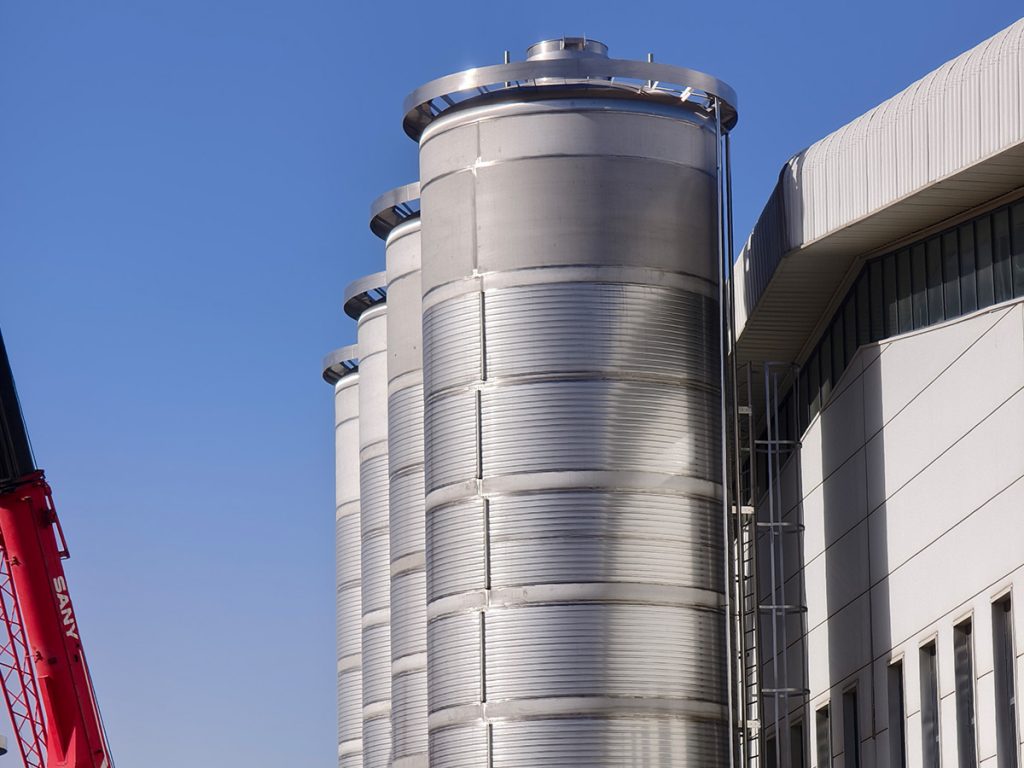
When we think about beer, we often think about barley, hops, and yeast. However, there is one ingredient that makes up about 95% of your favorite pint: water. For the world‘s biggest brewers, managing water is not just about turning on a tap. It is a complex science.
Whether you are a craft startup or a global giant aiming to become the world’s largest brewer, the quality of your beer starts with how you store your water.
In this article, we will explore the role of storage tank water in brewing. We will look at the challenges big breweries face and how SKE provides solutions. We are a professional beer equipment manufacturer dedicated to making your brewing process flawless.
Understanding Storage Tank Water
Before the mash tun starts working, water must be prepared. In a modern brewery, water is not just “held” in a tank; it is treated, temperature-controlled, and timed.
There are generally three types of water storage in a brewery:
-
Cold Liquor Tanks: For storing cold water used for cooling wort.
-
Hot Liquor Tanks (HLT): For storing hot water for mashing and cleaning (CIP).
-
Reverse Osmosis (RO) Water Tanks: For storing purified water to ensure consistent flavor.
The world‘s largest brewer knows that inconsistency in water chemistry ruins beer. If the water storage is unstable, the taste changes from batch to batch. That is why investing in high-quality storage tank water systems is not an option; it is a necessity for survival in the competitive market.
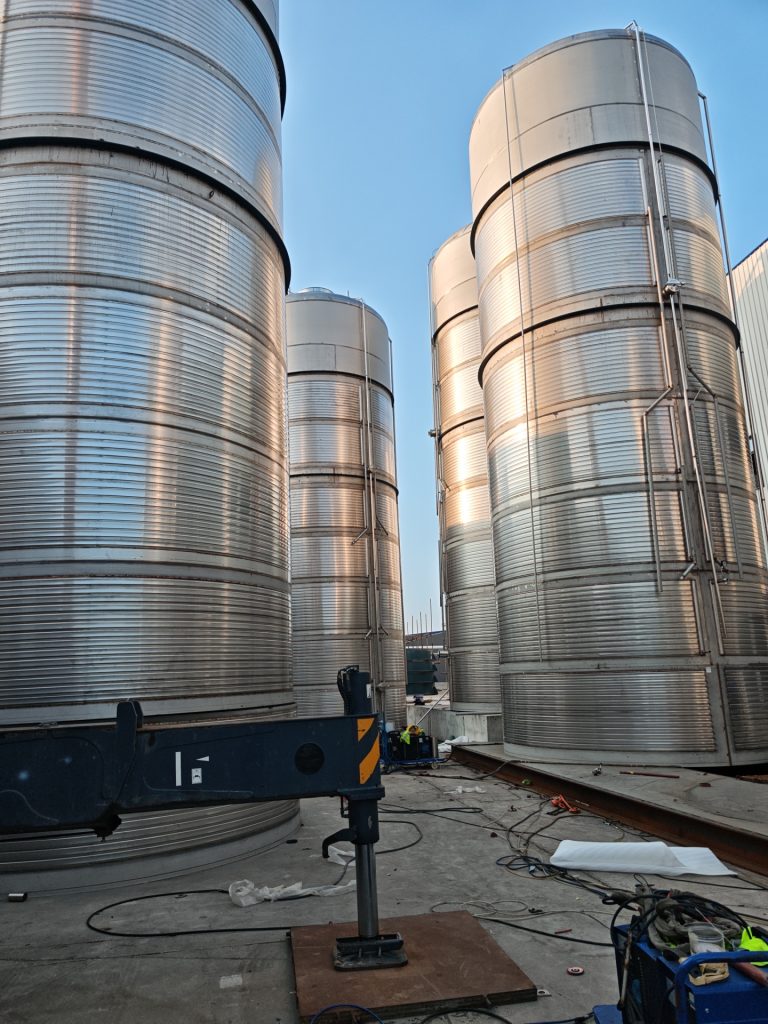
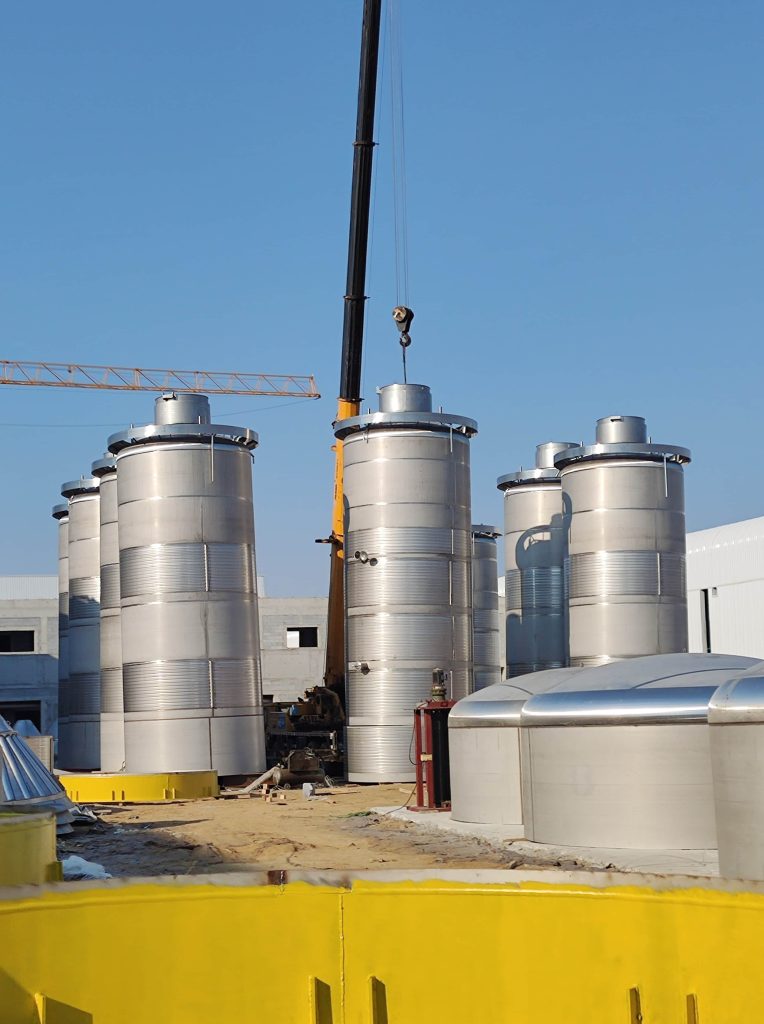
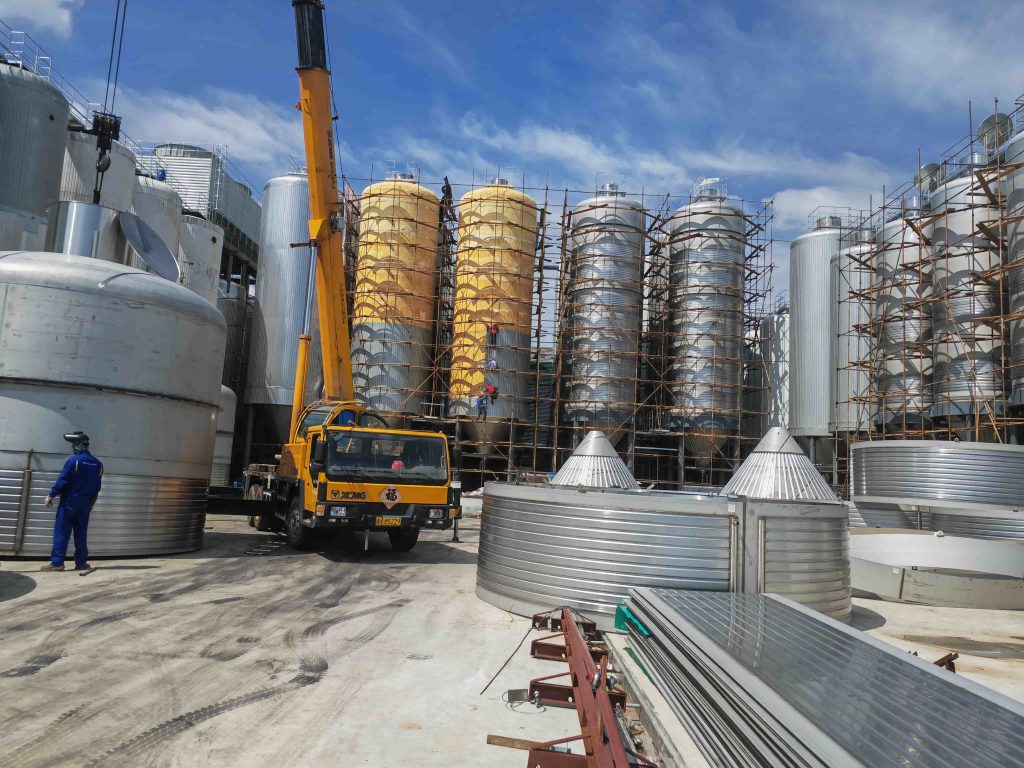
How the World’s Biggest Brewers Handle Water
Have you ever wondered how companies like Anheuser-Busch maintain the same taste in over 100 countries? Historically, the world’s biggest brewers like Anheuser-Busch built massive infrastructures.
Today, the stakes are higher. The world‘s largest brewer faces two main enemies: Oxygen and Bacteria. If the storage tank water contains dissolved oxygen, the beer will taste like cardboard. If bacteria enters via a faulty tank seal, millions of dollars of product go down the drain.
To prevent this, top-tier breweries rely on Stainless Steel 304 or 316L tanks. These tanks ensure that the water remains “pregnant” (pure and ready for use) until it hits the brewhouse.
The Silent Crisis: Common Water Storage Pain Points in Breweries
Even experienced brewers face issues with their water supply. Here are three major pain points that SKE helps solve.
1. Inconsistent Temperature Control
Imagine you are planning to mash in at 67°C, but your Hot Liquor Tank water is only 60°C. This throws off the enzyme activity entirely. Many breweries struggle with poor insulation or undersized heating jackets.
The SKE Solution:
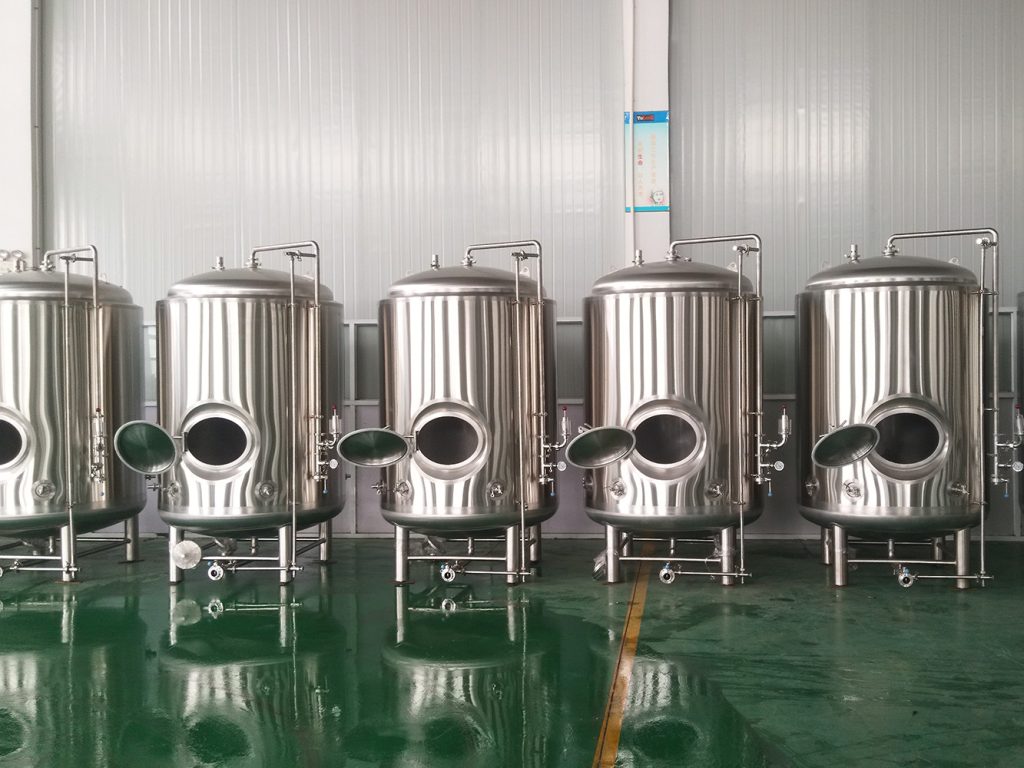
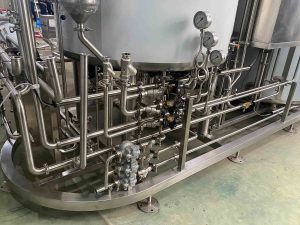
SKE stainless steel water tanks come with optional 3’’ PU foam insulation and cooling/heating jackets on the cylinder. This maintains precise temperatures for hours, saving energy and ensuring mash consistency.
2. Contamination and Sanitation Risks
Water is the perfect breeding ground for germs. If a tank has “dead legs” (areas where water doesn’t flow), bacteria like Lactobacillus can ruin the wort. Traditional tanks are sometimes hard to clean without dismantling everything.
The SKE Solution:
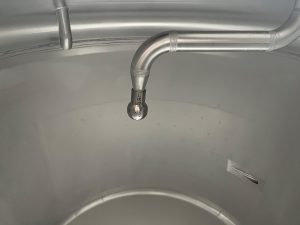
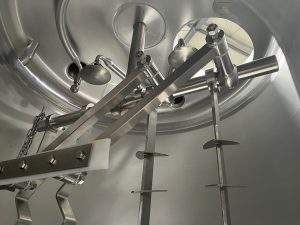
We design our tanks with sanitary CIP (Clean-in-Place) rotary spray balls and 2B finish internal shells (Ra≤0.6um) . This mirror-like finish prevents bacteria from sticking. Furthermore, the superior sealing performance keeps dust and microorganisms out.
3. Scalability Issues
A growing craft brewery often buys cheap tanks that can’t handle pressure or expansion. When they want to grow, they have to throw away their old tanks.
The SKE Solution:
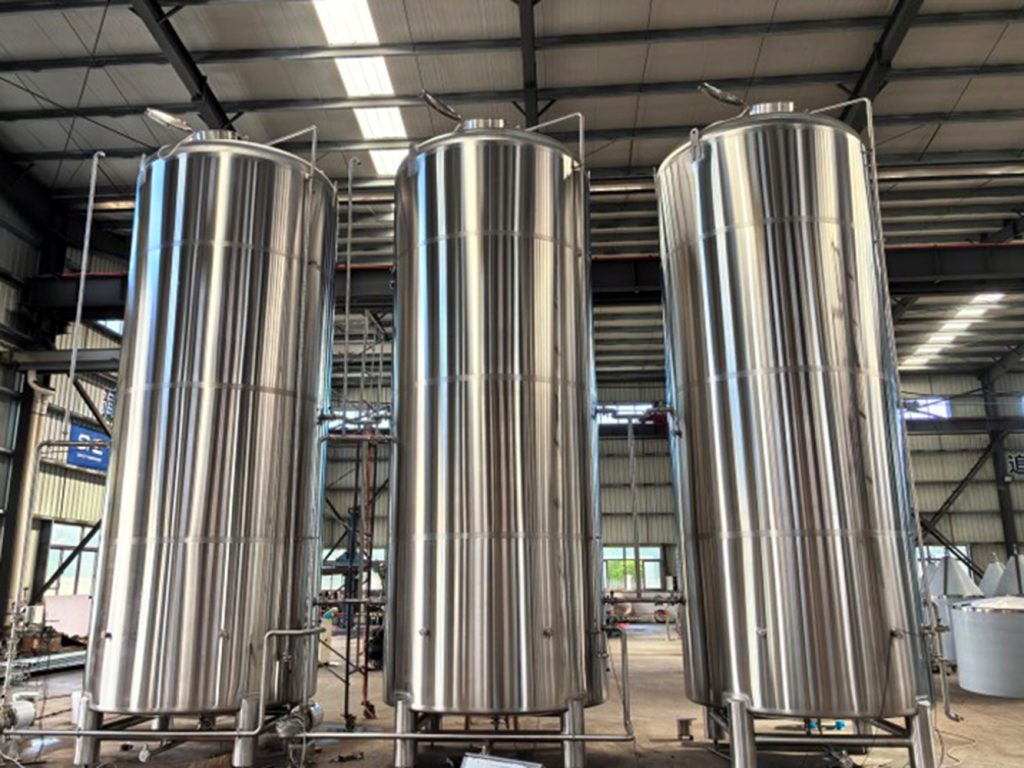
Our tanks are modular. Whether you need a 1hl tank for a nano-brewery or a 5000hl monster for a commercial facility, SKE customizes the capacity. We build for durability, offering a service life of 15-20 years with low maintenance costs.
The SKE Advantage: More Than Just a Tank
Why do breweries choose SKE for their storage tank water needs?
Food-Grade Safety First
SKE uses high-quality SS 304 or SS 316L stainless steel. This material is odorless and leaches no harmful substances into your water. For high-acidity beers or special brewing requirements, 316L offers superior corrosion resistance.
Easy Maintenance
Time is money. If you spend 4 hours scrubbing a tank, you lose production time. SKE tanks feature smooth, non-porous surfaces. Combined with a CIP system, you can clean a 5000l tank in minutes, not hours.
Precision Engineering
Our tanks are not just containers; they are vessels. They include features like:
-
Sanitary thermowells for precise temp readings.
-
Level gauges to know exactly how much water you have.
-
Breath/Overflow ports to protect against vacuum collapse .
Comparison Table: Standard Tank vs. SKE Stainless Steel Water Tank
To help you visualize the difference, here is a simple comparison between a generic storage tank and an SKE solution.
| Feature | Standard Industry Tank | SKE Stainless Steel Water Tank |
|---|---|---|
| Material | Low-grade steel / Plastic | Food-grade SS 304 / 316L |
| Inner Finish | Rough, with weld marks | Mirror 2B finish (Ra≤0.6um) |
| Insulation | None or basic foam | 3” PU foam for extreme energy saving |
| Cleaning Method | Manual hose / Foam | CIP Rotary Spray Ball (Automated) |
| Lifespan | 5-8 years (risk of rust) | 15-20 years |
| Pressure Rating | Atmospheric only | High pressure / Vacuum resistant |
Beyond Storage: The Complete SKE Ecosystem
While storage tank water is critical, SKE provides the entire brewing ecosystem. We manufacture everything from 2hl nano-brewery systems to 100hl microbrewery setups and even commercial distilleries.
Our goal is to ensure that every part of your process, from the malt handling to the package line, works in harmony. If your water tank is SKE, your brewhouse should be SKE, ensuring perfect thread fittings, seal compatibility, and automation signals.
Automation and Digital Integration
Modern breweries rely on data. SKE systems can integrate fully automatic control systems. Imagine monitoring your storage tank water levels and temperature from your phone while you are at home. That is the level of convenience we provide.
The Environmental Factor: Saving Water
The world‘s biggest brewers are under immense pressure to save water. Typically, producing 1 liter of beer uses 4 to 7 liters of water. By using high-quality storage tank water systems, breweries can capture, treat, and reuse rinse water.
SKE’s sanitary designs support wastewater treatment systems and DO Water Tanks (Deoxygenated Water). Reusing water isn’t just good for the planet; it is good for the profit margin.
Conclusion: Elevate Your Brew with SKE
From the smallest craft brewpub to the facilities competing to be the world‘s largest brewer, the formula for success remains the same: Great beer needs perfect water, and perfect water needs perfect storage.
Don’t let rusty tanks or inconsistent temperatures ruin your brand‘s reputation. With SKE, you get a partner who understands the science of brewing. We offer durable, sanitary, and intelligent storage tank water solutions tailored to your capacity and budget.
Whether you are upgrading an existing line or building a new facility, trust SKE to handle your liquid gold.
Frequently Asked Questions (FAQ)
Q1: Why is stainless steel better than plastic for water storage in breweries?
A: While plastic is cheaper, stainless steel (SS 304/316L) is non-porous and corrosion-resistant. It does not scratch easily, meaning bacteria have nowhere to hide. SKE tanks also handle high temperatures (boiling water) which plastic cannot.
Q2: What capacity tanks does SKE offer for water storage?
A: SKE offers fully customizable capacities ranging from 1 hectoliter (hl) to 5000 hectoliters (hl) . We can build a tank to fit your specific floor plan and production volume.
Q3: How do I clean my SKE water tank without taking it apart?
A: All SKE tanks come with an option for a CIP (Clean-in-Place) rotary spray ball. You simply connect the tank to your CIP pump; the spray ball rotates 360 degrees, blasting water/chemicals against the walls, and the wastewater drains out the bottom. No manual entry required.
Q4: Can SKE help me if I want to become one of the world’s biggest brewers?
A: Absolutely. SKE designs equipment for scalability. We provide commercial-grade systems that support high-volume production, similar to those used by the world’s largest brewer names, but with flexible pricing for growing businesses.
Q5: Does the tank affect the taste of the water?
A: Yes. Poor quality steel or seals can give water a metallic or plastic taste. SKE‘s food-grade 316L steel is inert. It preserves the “sensory profile” of your water, ensuring nothing alters the taste of your beer.
Contact Us
If you have any further questions, feel free to reach out!
- Facebook: SKE Equipment Facebook
- Email: info@skeequipment.com
For more personalized assistance, please fill out the contact form at the bottom of this page. We look forward to helping you with your brewing needs!