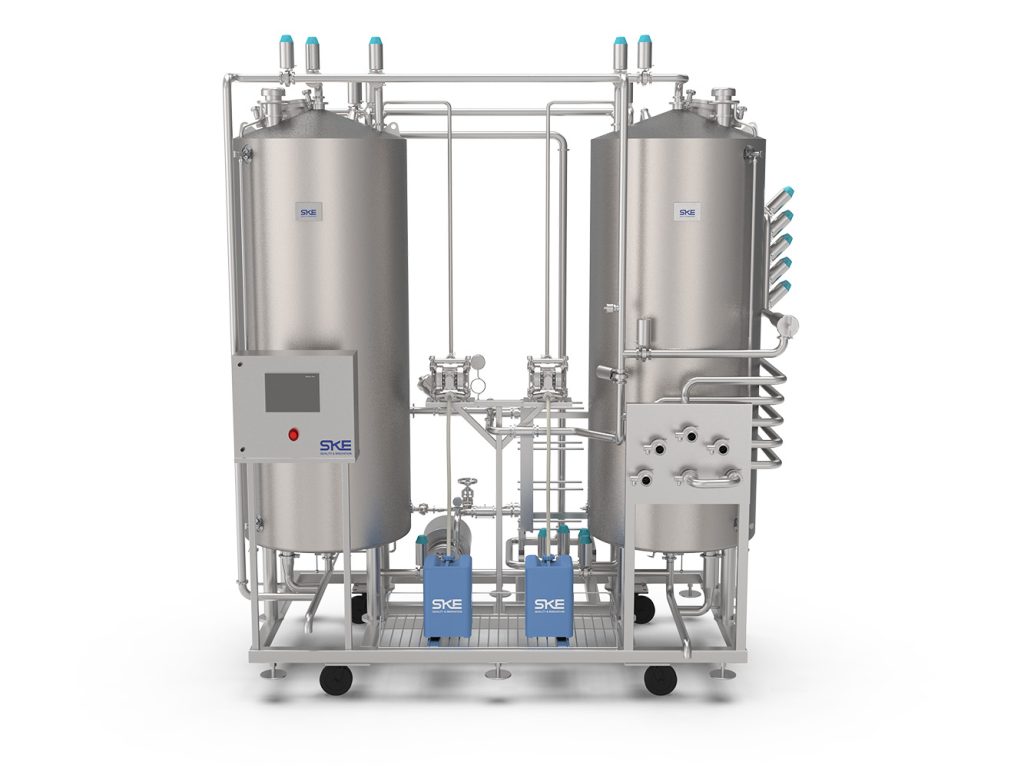
CIP technology has revolutionized how breweries clean their equipment, replacing manual disassembly and cleaning with a streamlined, automated process. Unlike traditional cleaning methods that are time-consuming, labor-intensive, and prone to human error, an Automated CIP System cleans internal surfaces of tanks, pipes, and brewing vessels in place, without the need for disassembly. This not only saves time and labor but also ensures consistent cleaning results, which is critical for maintaining beer quality and meeting strict industry regulations.
For breweries, whether they produce the top beer in USA or serve local craft markets, the choice between an Automatic CIP, a Trolley CIP, or a fully integrated Automated CIP System can impact their operational efficiency and product quality. In this comprehensive guide, we’ll break down the fundamentals of Automated CIP Systems, their role in the beer industry, key components, benefits, and how SKE’s solutions are tailored to meet the needs of breweries of all sizes.
What Is an Automated CIP System?
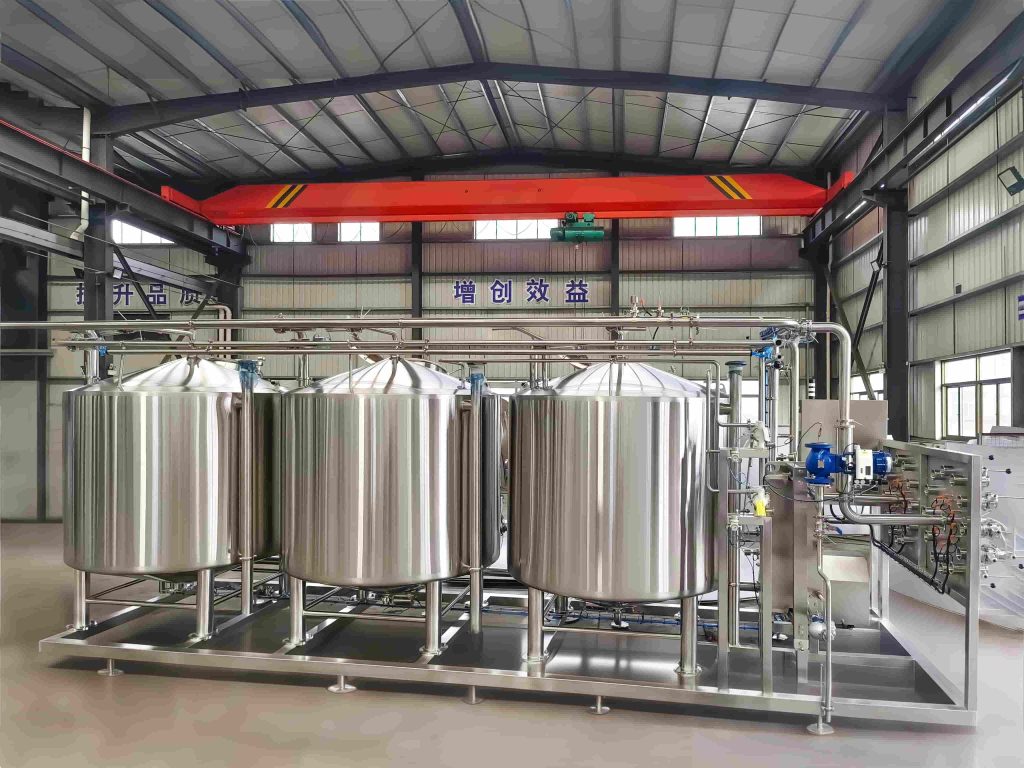
An Automated CIP System (Clean-In-Place System) is a specialized piece of beer equipment designed to clean and sanitize the internal surfaces of brewing machinery—including fermentation tanks, mash tuns, lauter tuns, bright tanks, and piping—without disassembling any components. The system uses a combination of chemical cleaning agents, water, and mechanical force (turbulent flow) to remove beer residues, yeast, proteins, and other contaminants that can affect beer flavor and safety.
Unlike manual cleaning, which relies on human effort and is often inconsistent, an Automated CIP System operates through pre-programmed cycles, ensuring that every surface is cleaned to the same high standard every time. This automation eliminates the risk of human error, reduces labor costs, and minimizes downtime, allowing breweries to focus on production rather than cleaning.
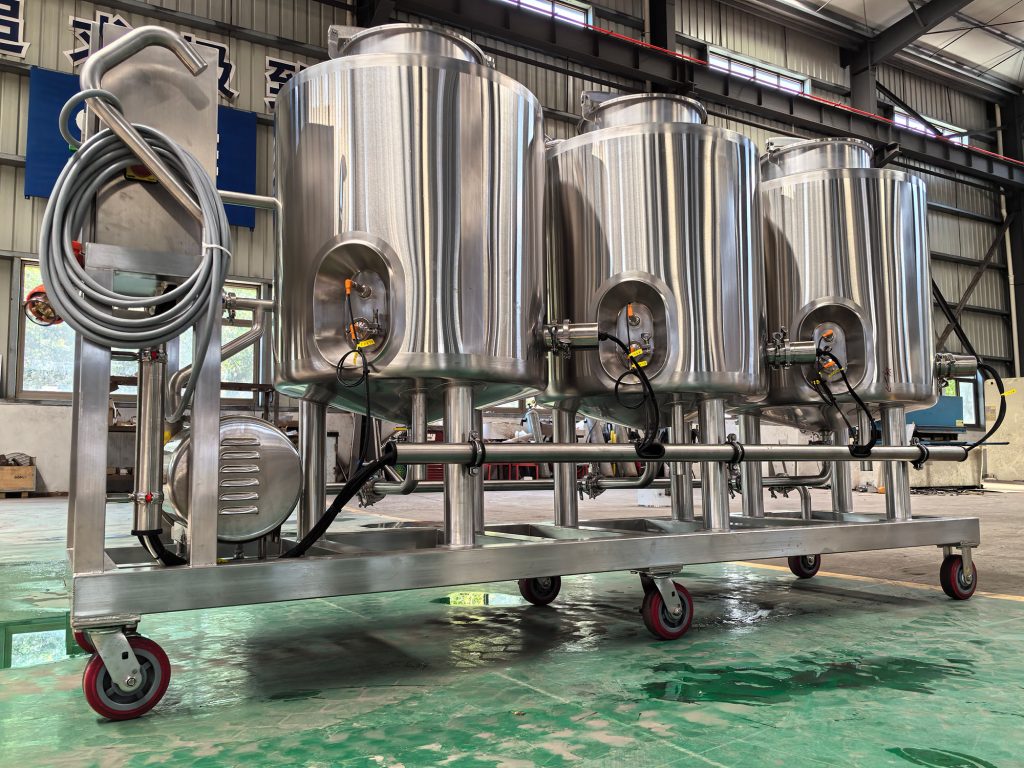
The terms “Automated CIP System” and “Automatic CIP” are often used interchangeably, but they refer to the same core technology: a system that automates the cleaning process. Some breweries may also use a Trolley CIP (a mobile, portable version of the system) for smaller equipment or areas that are difficult to reach with fixed CIP systems. Each type serves a specific purpose, but the goal remains the same: efficient, consistent, and hygienic cleaning.
Key Components of an Automated CIP System
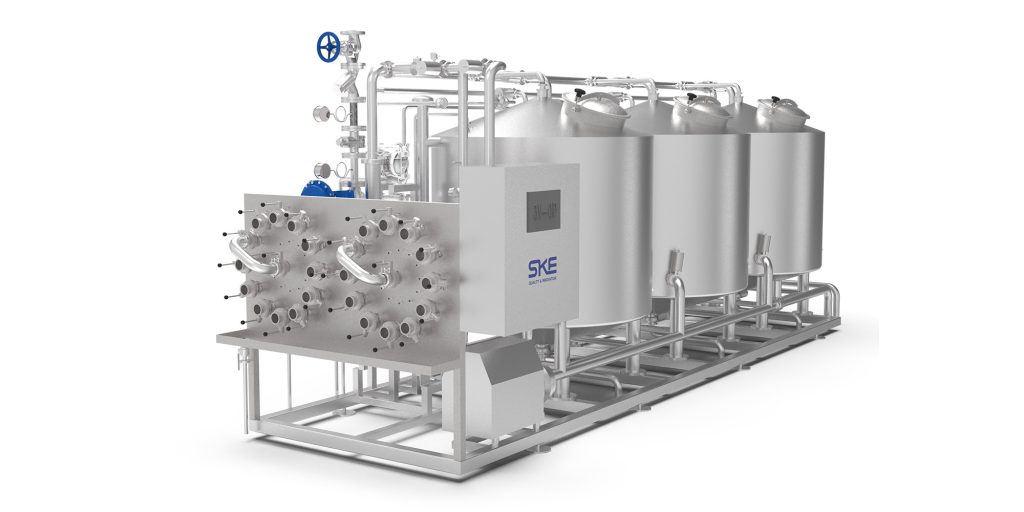
A high-quality Automated CIP System, such as those designed and manufactured by SKE, consists of several key components that work together to deliver effective cleaning. Each component plays a critical role in ensuring the system operates efficiently and meets the unique needs of beer brewing. Below is a breakdown of the essential components, along with their functions:
|
Component
|
Function
|
Importance in Beer Brewing
|
|---|---|---|
|
CIP Tanks
|
Storage tanks for cleaning solutions (caustic soda, acid, sanitizer) and rinse water. Equipped with level controls and temperature sensors to maintain optimal cleaning conditions.
|
Ensures a steady supply of cleaning agents at the correct concentration and temperature, critical for removing beer residues and preventing contamination.
|
|
High-Pressure Pumps
|
Deliver cleaning solutions and rinse water at high pressure to create turbulent flow, which dislodges contaminants from internal surfaces.
|
Turbulent flow is essential for cleaning hard-to-reach areas (e.g., pipe bends, tank corners) where residues often accumulate.
|
|
Heat Exchangers
|
Heat cleaning solutions to the optimal temperature (typically 60-80°C) to enhance the effectiveness of chemical cleaning agents.
|
Higher temperatures improve the solubility of proteins and sugars, making it easier to remove residues from brewing equipment.
|
|
PLC Control System
|
The “brain” of the system, pre-programmed to control cleaning cycles, temperature, pressure, and chemical concentration. Features an HMI interface for easy monitoring and adjustment.
|
Ensures consistent, repeatable cleaning cycles and allows operators to adjust settings based on specific equipment or contamination levels.
|
|
Control Valves
|
Direct cleaning solutions to target equipment, ensuring that each component (tanks, pipes, valves) is cleaned thoroughly.
|
Prevents cross-contamination between different parts of the brewing system and ensures efficient use of cleaning agents.
|
|
Return System
|
Recovers and reuses cleaning agents where applicable, reducing waste and lowering operational costs.
|
Helps breweries reduce water and chemical usage, making operations more sustainable and cost-effective.
|
|
Sensors (Conductivity, Temperature, Level)
|
Monitor the concentration of cleaning agents, temperature of solutions, and liquid levels in CIP tanks.
|
Ensures that cleaning cycles meet industry standards and prevents overuse of chemicals or water.
|
SKE’s Automated CIP Systems are built with high-quality stainless steel (304 and 316L) to resist corrosion from cleaning agents and ensure long-term durability. Our systems are also modular, allowing breweries to customize components based on their specific needs—whether they’re a small craft brewery using a Trolley CIP or one of the largest beer companies with a fully integrated automated system.
How Does an Automated CIP System Work in Beer Brewing?
The operation of an Automated CIP System follows a standardized, pre-programmed cycle that ensures thorough cleaning and sanitization. While the exact cycle may vary based on the type of equipment being cleaned and the level of contamination, the core steps remain consistent. Below is a step-by-step breakdown of the typical CIP cycle used in beer brewing:
1. Pre-Rinse
The first step in the CIP cycle is a pre-rinse with clean water (potable, de-ionized, or reverse osmosis water). This step flushes out loose residues, such as dissolved sugars, partially melted fats, and leftover beer, from the internal surfaces of the equipment. The pre-rinse helps reduce the amount of chemical cleaning agent needed in the next step and prevents residues from drying onto surfaces, which would make them harder to remove.
2. Caustic Wash
After the pre-rinse, a caustic solution (typically sodium hydroxide, NaOH) is circulated through the equipment at high temperature (60-80°C) and high pressure. The caustic solution breaks down organic residues, such as proteins, yeast, and hop debris, which are common in beer brewing. This step typically lasts 10-15 minutes, depending on the level of contamination.
3. Intermediate Rinse
After the caustic wash, an intermediate rinse with clean water removes any remaining caustic solution and dissolved residues. This step ensures that no caustic residue is left behind, which could react with the acid wash in the next step or contaminate the beer.
4. Acid Wash
Following the intermediate rinse, an acid solution (usually phosphoric acid or nitric acid) is circulated through the equipment. This step targets inorganic residues, such as mineral deposits (limescale), hard water stains, and oxide buildup, which can accumulate over time from water used in brewing and cleaning. These inorganic deposits are particularly common in regions with hard water and can damage equipment or harbor bacteria if left unaddressed.
5. Final Rinse
The final rinse is the last step in the CIP cycle, using clean, filtered water to remove any remaining acid solution and dissolved inorganic residues. This step is critical to ensuring that no chemical residues are left in the equipment, as even trace amounts can contaminate beer and pose health risks. The final rinse water is often tested for conductivity to confirm that all contaminants have been removed—conductivity readings at or near pure water levels indicate a successful rinse.
Automated CIP System vs. Trolley CIP: Which Is Right for Your Brewery?
|
Feature
|
Automated CIP System
|
Trolley CIP
|
|
Portability
|
Fixed installation, not portable. Integrated with the brewery’s existing piping system.
|
Highly portable, with wheels for easy movement. Can be used with multiple pieces of equipment.
|
|
Production Volume
|
Ideal for large breweries (high production volume) with multiple tanks and complex piping.
|
Perfect for small to medium craft breweries with lower production volume and fewer tanks.
|
|
Automation Level
|
Fully automated, with pre-programmed cycles and remote monitoring via PLC and HMI.
|
Semi-automated or manual; requires operator to connect hoses and start/stop cycles.
|
|
Cost
|
Higher initial investment, but lower long-term labor and operational costs.
|
Lower initial investment, but higher labor costs due to manual operation.
|
|
Space Requirements
|
Requires dedicated space for tanks, pumps, and control systems.
|
Compact design, requires minimal storage space when not in use.
|
|
Best For
|
Largest beer companies, high-volume craft breweries, and facilities with complex equipment layouts.
|
Small craft breweries, test breweries, and facilities with hard-to-reach equipment.
|
SKE offers both Automated CIP Systems and Trolley CIP solutions, tailored to the unique needs of each brewery. Our team of experts works with clients to assess their production volume, equipment layout, and budget, recommending the best CIP solution to maximize efficiency and hygiene. Whether you’re producing the top beer in USA or a local craft favorite, SKE’s CIP systems are designed to integrate seamlessly with your brewing process.
Benefits of Using an Automated CIP System in Beer Brewing
For breweries of all sizes, investing in an Automated CIP System offers numerous benefits that directly impact product quality, operational efficiency, and bottom-line profitability. From the largest beer companies to small craft operations, the advantages of automation in cleaning are clear. Below are the key benefits of implementing an Automated CIP System, such as those manufactured by SKE:
- Consistent Hygiene and Quality: The pre-programmed cycles of an Automated CIP System ensure that every surface is cleaned to the same high standard every time, eliminating human error. This consistency prevents contamination and ensures that each batch of beer maintains the same flavor profile—a critical factor for breweries aiming to build a loyal customer base, including those producing the top beer in USA.
- Reduced Labor Costs: Manual cleaning requires a team of workers to disassemble, clean, and reassemble equipment—a time-consuming process. An Automated CIP System operates with minimal human intervention, reducing the need for labor and allowing employees to focus on more critical tasks, such as brewing and quality control. This is particularly beneficial for large breweries, where labor costs can be a significant expense.
- Minimized Downtime: Traditional manual cleaning can take hours, if not days, depending on the size of the equipment. An Automated CIP System completes cleaning cycles in a fraction of the time, minimizing downtime and allowing breweries to increase production volume. For example, a typical CIP cycle for a fermentation tank takes 30-60 minutes, compared to 4-6 hours of manual cleaning.
- Cost Savings on Chemicals and Water: SKE’s Automated CIP Systems are designed to recover and reuse cleaning agents (caustic and acid solutions) and rinse water, reducing waste and lowering operational costs. This sustainability feature not only saves money but also aligns with modern environmental regulations and consumer demand for eco-friendly brewing practices.
Automated CIP Systems for the Largest Beer Companies and Top Beer in USA
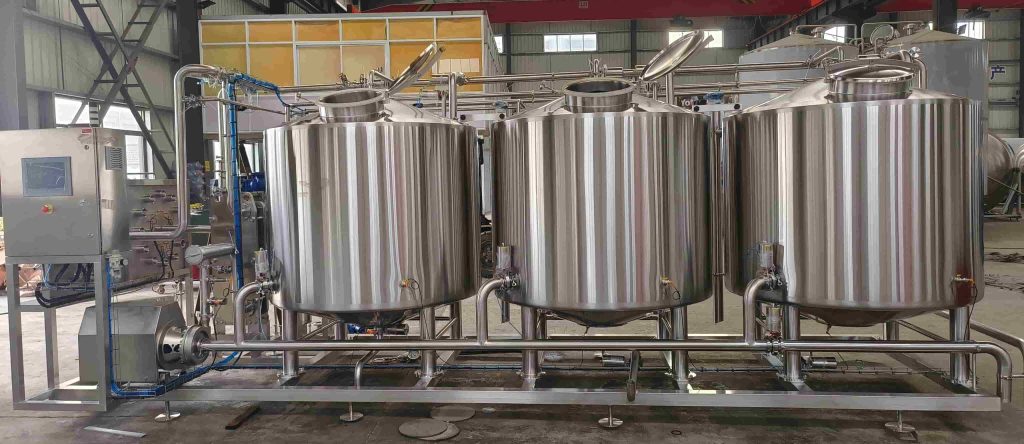
The largest beer companies and brands producing the top beer in USA have strict standards for quality and efficiency, and their choice of CIP system directly impacts their ability to meet these standards. These breweries operate at massive scales, with hundreds of tanks, miles of piping, and high production volumes—making a fully integrated Automated CIP System a necessity.
Brands producing the top beer in USA also rely on Automated CIP Systems to maintain their reputation for quality. Consumers expect consistent flavor and purity, and any contamination or off-flavor can damage a brand’s image. SKE’s systems are designed to eliminate even the smallest traces of residues, ensuring that each batch of beer meets the highest standards. Additionally, the sustainability features of our systems align with the eco-friendly initiatives that many top beer brands are adopting to appeal to modern consumers.
Even for smaller breweries aiming to compete with the top beer in USA, an Automated CIP System can be a game-changer. By investing in automation, small craft breweries can achieve the same level of hygiene and consistency as large companies, allowing them to produce high-quality beer that stands out in a competitive market. SKE’s Trolley CIP solutions are particularly popular among small breweries, offering the benefits of automation at a more affordable price point.
FAQ: Common Questions About Automated CIP Systems in Beer Brewing
Below are answers to the most frequently asked questions about Automated CIP Systems, Trolley CIP, and their role in beer brewing. These questions are commonly asked by brewery owners, operators, and anyone interested in understanding how CIP technology supports the beer industry—from small craft operations to the largest beer companies.
Q1: What is the difference between an Automated CIP System and an Automatic CIP?
A: There is no significant difference between an Automated CIP System and an Automatic CIP. The two terms are used interchangeably to refer to a system that automates the cleaning process of brewing equipment. Both systems use pre-programmed cycles to clean and sanitize equipment in place, eliminating the need for manual disassembly. The term “Automated CIP System” is often used to describe fully integrated, fixed systems, while “Automatic CIP” may sometimes refer to smaller, semi-automated systems—but the core technology is the same.
Q2: Is a Trolley CIP as effective as a fully integrated Automated CIP System?
A: Yes, a Trolley CIP can be just as effective as a fully integrated Automated CIP System, but it is designed for different use cases. Trolley CIP systems are portable and ideal for small breweries, test breweries, or areas of a brewery that are difficult to reach with fixed CIP systems. They use the same cleaning principles (chemicals, water, turbulent flow) as integrated systems but require manual connection to equipment. For large breweries with high production volumes, a fully integrated system is more efficient, but a Trolley CIP is a cost-effective and effective solution for smaller operations.
Q3: How often should an Automated CIP System be used in a brewery?
A: The frequency of CIP cycles depends on the type of equipment and the brewing process. Fermentation tanks, bright tanks, and piping should be cleaned after each batch to prevent residue buildup and contamination. Mash tuns and lauter tuns may require cleaning after every 2-3 batches, depending on the type of grain used. The largest beer companies often run CIP cycles multiple times per day to keep up with high production volumes, while small craft breweries may run cycles once per day or after each batch. SKE’s systems allow operators to customize cycle frequency based on their specific needs.
Q4: Can an Automated CIP System be customized for my brewery’s specific needs?
A: Yes, SKE’s Automated CIP Systems are fully customizable to meet the unique needs of each brewery. We offer modular components, allowing breweries to choose the size, capacity, and features that best fit their production volume and equipment layout. Whether you’re a small craft brewery using a Trolley CIP or one of the largest beer companies with a complex production line, we can design a system that integrates seamlessly with your existing equipment and meets your hygiene and efficiency goals. Our team of experts will work with you to assess your needs and recommend the best configuration.
Q5: How much does an Automated CIP System cost, and is it worth the investment?
A: The cost of an Automated CIP System varies depending on the size, capacity, and features of the system. Small Trolley CIP systems are more affordable (starting at a lower price point), while fully integrated systems for large breweries can be more expensive. However, the investment is almost always worth it for breweries of all sizes. The reduced labor costs, minimized downtime, improved quality, and compliance benefits far outweigh the initial investment. For the largest beer companies, the cost savings from automation can be significant, while small craft breweries benefit from the ability to produce consistent, high-quality beer without the need for extra labor.
Why Choose SKE for Your Automated CIP System Needs?
SKE has decades of experience designing and manufacturing high-quality Automated CIP Systems, Trolley CIP solutions, and other brewing equipment. We understand the unique challenges facing breweries of all sizes—from small craft operations to the largest beer companies—and we tailor our solutions to meet those challenges.
Our Automated CIP Systems are built with durability, efficiency, and hygiene in mind, using high-quality stainless steel (304 and 316L) to resist corrosion and ensure long-term performance. We offer fully customizable systems, with modular components that allow breweries to scale as their production grows. Our team of experts provides end-to-end support, from design and installation to maintenance and training, ensuring that your CIP system operates seamlessly with your brewing process.
If you have any further questions, feel free to reach out!
- Facebook: SKE Equipment Facebook
- Email: info@skeequipment.com
For more personalized assistance, please fill out the contact form at the bottom of this page. We look forward to helping you with your brewing needs!