If you work in the beer industry, you know that cleaning is not a simple task. Brewing equipment must be clean to make good beer. One wrong move and bacteria can ruin an entire batch.
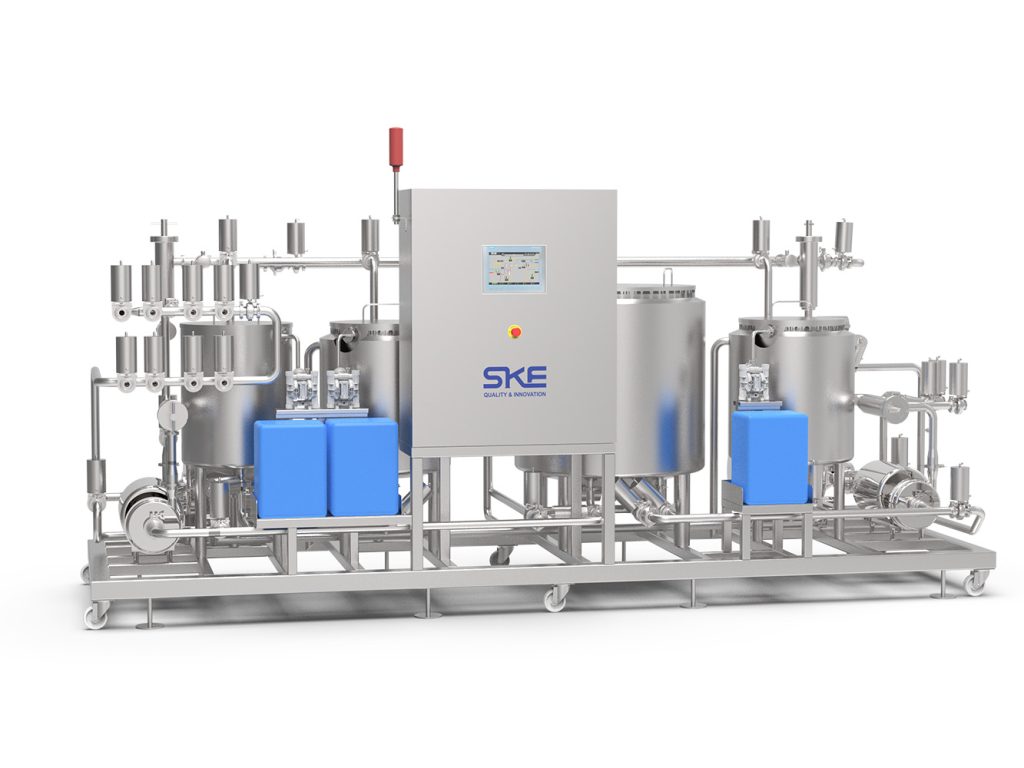
That is why professional breweries use CIP cleaning. CIP stands for “Clean-In-Place”. This method cleans tanks, pipes, and other equipment without taking them apart.
In this article, we will explain how CIP cleaning works. We will also look at the largest breweries in the world and how they use this system.
If you are looking for reliable beer equipment, SKE is here to help. We are a professional beer equipment manufacturer with years of experience.
What Is CIP Cleaning and Why Is It Important?
CIP cleaning is a method used to clean the inside of pipes, tanks, and vessels. The system pumps cleaning liquids through the equipment. These liquids include water, alkaline solutions, acid solutions, and sanitizers.
The operator does not need to open or disassemble anything. This saves time, labor, and money. It also reduces the risk of contamination.
In a brewery, CIP cleaning is critical. Beer is a sensitive product. If equipment is not clean, wild yeast or bacteria can grow. This changes the taste and smell of the beer.
In the worst case, the whole batch must be thrown away. That is a huge loss for any brewery. Large breweries produce millions of hectoliters of beer every year. For them, a cleaning failure is a disaster.
That is why the largest breweries in the world use advanced CIP systems. These systems are automated and run on strict schedules.
SKE designs CIP systems that are easy to use and very effective. Our systems work for small craft breweries and large industrial plants. We understand the science of cleaning and the needs of brewers.
How Does a CIP System Work in a Brewery?
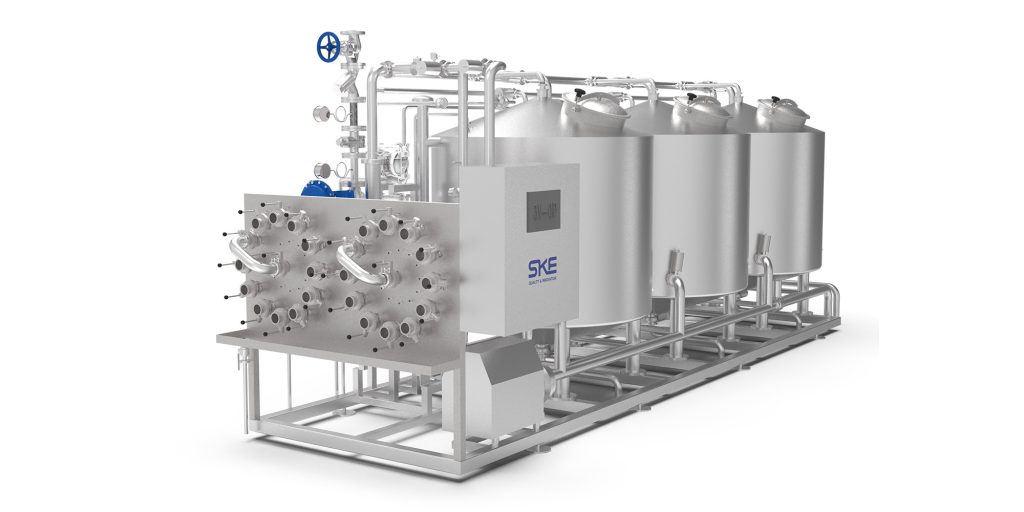
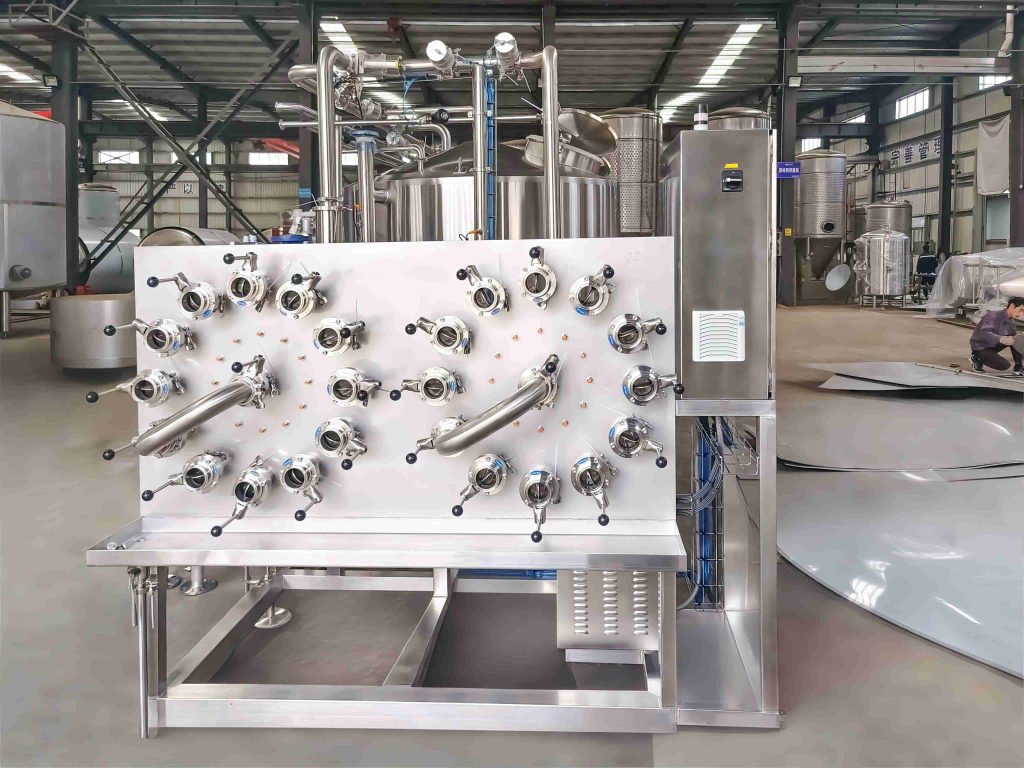
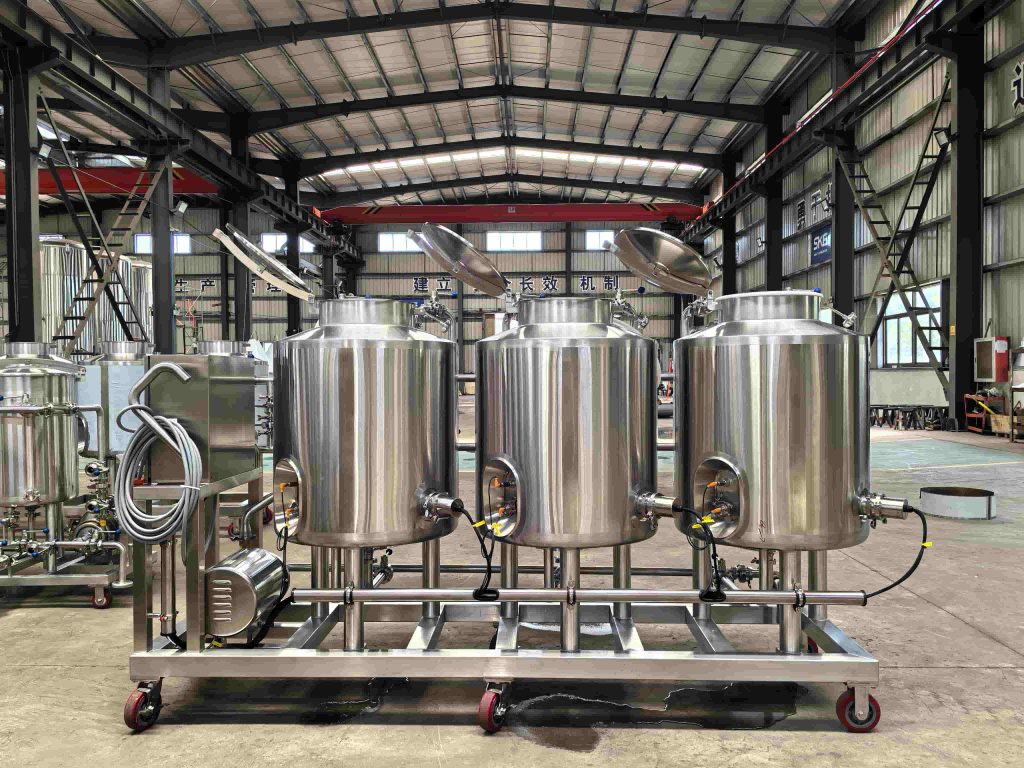
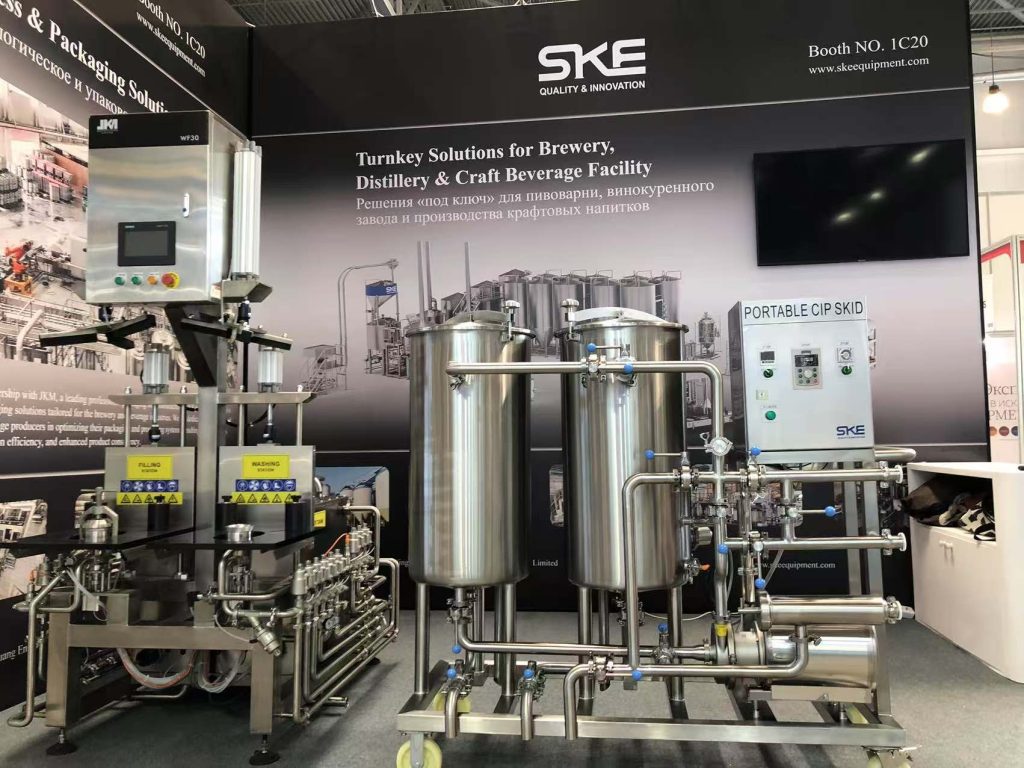
A typical CIP system has several parts. These include a supply tank, a pump, a heat exchanger, and spray balls or nozzles.
The cleaning process has several steps. First, the system sends hot water to rinse away loose soil. Then it sends an alkaline solution to remove organic soils like yeast and protein.
After that, it sends an acid solution to remove mineral scale or beer stone. Finally, it uses a sanitizer to kill any remaining microbes. Between each step, the system rinses with clean water.
The cleaning time and temperature depend on the soil type and equipment size. Most breweries run a full CIP cycle in 60 to 90 minutes.
Modern CIP systems are fully automated. They use sensors to check flow, temperature, and chemical concentration. If something is wrong, the system stops and sends an alert. This ensures that every cleaning cycle is successful.
For the largest breweries in the world, speed and reliability are everything. They cannot afford long cleaning times. They also cannot risk a failed cleaning.
That is why they use multi-tank CIP systems. These systems store pre-made cleaning solutions. They can switch from rinse to alkaline to acid in seconds.
Comparison of CIP Cleaning Methods in Breweries
There is more than one way to run a CIP system. Breweries choose a method based on their size, budget, and needs.
Below is a simple table. It shows the main CIP methods used in breweries today.
| CIP Method | How It Works | Best For | Water Use | Cost |
|---|---|---|---|---|
| Single-use CIP | Fresh solution used once, then drained | Small breweries, pilot plants | High | Low upfront |
| Reuse CIP | Solution collected and reused multiple times | Medium to large breweries | Medium | Medium |
| Multi-tank CIP | Several tanks with different solutions | Largest breweries in the world | Low | High upfront |
| Continuous CIP | Solutions flow in a closed loop | Automated industrial plants | Very low | Very high |
As you can see, the largest brewery operations prefer multi-tank or continuous CIP. These systems cost more at the start. But over time, they save water, chemicals, and labor.
For a very large brewery, those savings add up quickly.
SKE offers all of these CIP options. We work with each customer to find the right balance. We know that what works for a small brewpub is not the same as what works for one of the largest breweries in the world.
The Largest Breweries in the World: Who Are They?
Now let us look at the largest breweries in the world. These are not brands but individual beer production sites.
Some of these factories are huge. They produce over 10 million hectoliters of beer per year. To give you an idea, one hectoliter is 100 liters.
A small craft brewery might produce 5,000 hectoliters a year. So these giant breweries are on a completely different scale.
Based on recent data, some of the largest breweries in the world include:
-
AB InBev’s brewery in Cilegon, Indonesia – One of the biggest by volume.
-
Molson Coors’ brewery in Milwaukee, USA – A historic and high-volume site.
-
Heineken’s brewery in Zoeterwoude, Netherlands – The largest Heineken plant.
-
Carlsberg’s brewery in Fredericia, Denmark – Very high automation level.
-
Tsingtao Brewery in Qingdao, China – The largest brewery in China.
These breweries run 24 hours a day, 7 days a week. They use fully automated CIP systems.
Many of them clean tanks two or three times per week. Between batches, they may do a short “rinse and sanitize” cycle. Once a week, they do a full CIP with alkaline and acid.
SKE has studied these large operations. We have used that knowledge to design our own equipment. Our goal is to bring industrial-grade reliability to all our customers, whether they are large or small.
Common Problems in Brewery CIP Cleaning
Even a good CIP system can have problems. Here are some common issues found in breweries of all sizes.
1. Poor spray coverage – If spray balls or nozzles are blocked or placed wrong, some areas never get cleaned. This leaves biofilm behind. The solution is to check spray patterns regularly and clean nozzles.
2. Incorrect temperature – Alkaline cleaners work best at 70-85°C. If the water is too cold, the cleaner does not work well. If it is too hot, it can damage rubber seals or cause foam. Use a reliable temperature sensor.
3. Short cleaning time – Some operators rush the cycle. But soils need time to dissolve. Cutting the time by 10 minutes can leave residue behind. Always follow the validated cycle time.
4. Wrong chemical concentration – Too little chemical means no cleaning. Too much chemical wastes money and can be hard to rinse. Use automatic dosing systems to keep concentration steady.
5. Human error – Even on automated systems, people make mistakes. They may start the wrong cycle or forget to connect a hose. Good training and clear labels help prevent this.
How to Choose the Right CIP System for Your Brewery
Choosing a CIP system can feel confusing. But you can break it down into simple questions.
Step 1 – Know your tank sizes and shapes. Larger tanks need higher flow rates. Tanks with manways on top may need rotating spray balls. Tanks with internal coils need special nozzle placement.
Step 2 – Decide on automation level. Manual CIP systems are cheaper but require more labor. Semi-automated systems use timers and temperature control. Fully automated systems use PLC (programmable logic controller) and sensors.
The largest breweries in the world always choose fully automated.
Step 3 – Plan for future growth. If you think you will double production in three years, buy a CIP system that can handle that. It costs less than buying a new system later.
Step 4 – Check water quality. Hard water causes more scale. That means you may need stronger acid cleaning or more frequent cycles. A water softener can help.
Step 5 – Work with a trusted manufacturer. SKE has supplied CIP systems to breweries in over 30 countries. We can design a system that fits your space, budget, and production schedule.
We do not just sell equipment. We help you plan, install, train, and maintain. That is the SKE difference.

Frequently Asked Questions (FAQ)
Below are common questions from brewery owners about CIP cleaning.
Q1: How often should a brewery run a CIP cycle?
A: It depends on the tank type. Fermentation tanks are usually cleaned after every batch. Bright beer tanks may be cleaned every 2-3 batches. Pipes are cleaned after each use. SKE recommends keeping a cleaning log to track what works for your brewery.
Q2: Can I use the same CIP system for different tanks?
A: Yes. A central CIP system is designed to clean many tanks. You just connect it to the tank you want to clean. Many medium and large breweries use one CIP unit for all their tanks.
Q3: What chemicals are safe for brewery CIP cleaning?
A: Most breweries use sodium hydroxide (caustic) for alkaline cleaning and nitric acid or phosphoric acid for acid cleaning. For sanitizing, they use peracetic acid or hot water above 85°C. Always use chemicals made for food equipment.
Q4: Is CIP cleaning expensive?
A: The upfront cost can be high, especially for automated systems. But over time, it saves labor and reduces beer loss. For a commercial brewery, a CIP system usually pays for itself in 12 to 24 months.
Q5: Does SKE provide spare parts for CIP systems?
A: Yes, SKE keeps a full inventory of spare parts. We can ship most parts within 48 hours. We also offer remote troubleshooting and on-site service.
Conclusion: SKE Brings Large Brewery Technology to You
CIP cleaning is the backbone of modern beer production. Without it, breweries would waste time, beer, and money.
The largest breweries in the world know this. That is why they invest in multi-tank, fully automated CIP systems. These systems give them speed, reliability, and low operating costs.
But you do not need to be one of the largest breweries in the world to use good technology.
SKE offers CIP systems for every scale. Whether you are a startup craft brewery or a growing regional producer, we have a solution for you.
Our equipment is built to last. Our team is ready to help.
Contact SKE today to discuss your brewing needs. We will help you brew better beer, cleaner beer, and more profitable beer.
- Facebook: SKE Equipment Facebook
- Email: info@skeequipment.com
For more personalized assistance, please fill out the contact form at the bottom of this page. We look forward to helping you with your brewing needs!