

What Are Pro Brewing Systems?
Pro brewing systems are industrial-grade, integrated setups designed for commercial beer production. They encompass all the equipment needed to convert malt, hops, water, and yeast into finished beer, from raw material handling to fermentation and conditioning. These systems are built for efficiency, reliability, and scalability, allowing breweries to meet demand while maintaining consistent quality.
Unlike homebrewing equipment, which is typically small-scale and manual, pro brewing systems feature automated controls, larger capacity vessels, and specialized components that reduce human error and optimize the brewing process. They are customizable to fit the unique needs of each brewery, whether you’re producing 10 barrels per batch or 100, and can be tailored for different beer styles, from lagers to IPAs.
Core Components of Pro Brewing Systems
A complete pro brewing system is made up of several interconnected components, each playing a critical role in the brewing process. The heart of the system is the brewhouse equipment, which handles the mashing, lautering, boiling, and whirlpool stages. For all-grain brewing, specialized all grain brewing equipment — including the all grain brewing kettle — is essential to extract maximum flavor from the malt.
Below is a breakdown of the key components that make up a high-quality pro brewing system:
1. Brewhouse Equipment: The Heart of Pro Brewing
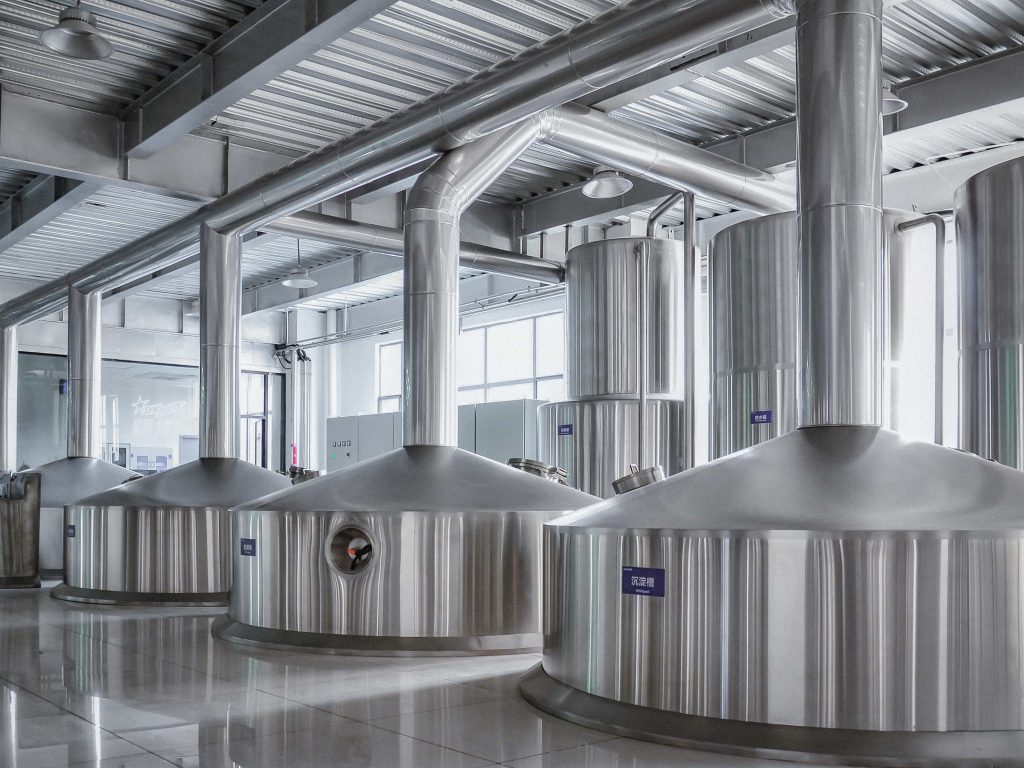
Brewhouse equipment is the core of anypro brewing system, responsible for converting grain into wort. This set of components includes mash tuns, lauter tuns, boiling kettles, and whirlpool tanks, each designed to perform a specific function in the wort production process.
Mash tuns are where crushed malt is mixed with hot water (lauter tun water) to activate enzymes that convert starches into fermentable sugars. SKE’s mash tuns feature advanced heating systems and agitators to ensure uniform temperature control and efficient starch conversion. Lauter tuns separate the sweet wort from the spent grain, using a false bottom and rakes to create a filter bed that removes solids.
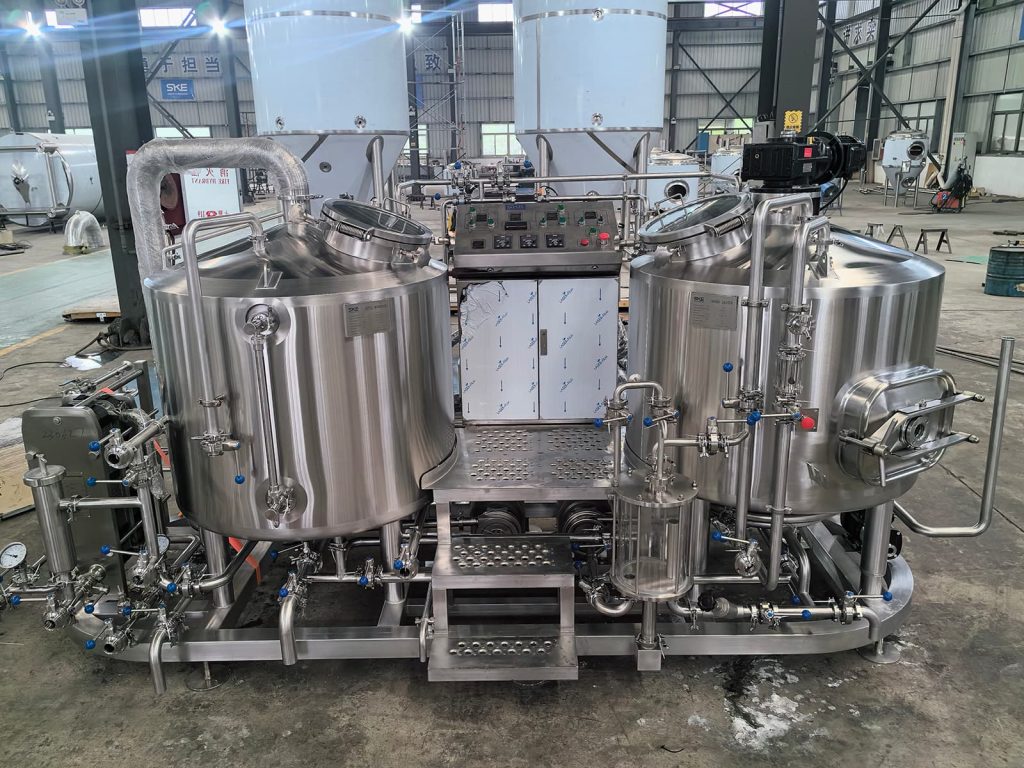
The boiling kettle — including the all grain brewing kettle for all-grain setups — is where the wort is boiled, hops are added, and unwanted compounds are evaporated. SKE’s boiling kettles are made from high-grade stainless steel, with precise temperature controls and energy-efficient heating systems to ensure consistent boiling and hop utilization. Whirlpool tanks use centrifugal force to separate trub (coagulated proteins and hop particles) from the wort, resulting in clearer, cleaner wort for fermentation.
2. All Grain Brewing Equipment: For Authentic, Full-Flavor Beer
All grain brewing equipment is designed specifically for brewers who want full control over the flavor profile of their beer. Unlike extract brewing, which uses pre-made malt extract, all-grain brewing uses whole malt grains, allowing brewers to adjust the mash temperature, grain bill, and brewing process to create unique, complex flavors.
The centerpiece of all grain brewing equipment is the all grain brewing kettle. This specialized kettle is larger and more robust than extract brewing kettles, designed to handle the larger volume of wort produced during all-grain mashing. SKE’s all grain brewing kettle features a thick stainless steel construction, efficient heating elements, and a spigot for easy wort transfer, as well as built-in thermometers for precise temperature monitoring.
Other key all grain brewing equipment includes grain mills (to crush malt grains), mash paddles (for stirring the mash), and wort chillers (to rapidly cool the wort after boiling, preventing off-flavors).
3. Fermentation & Conditioning Equipment
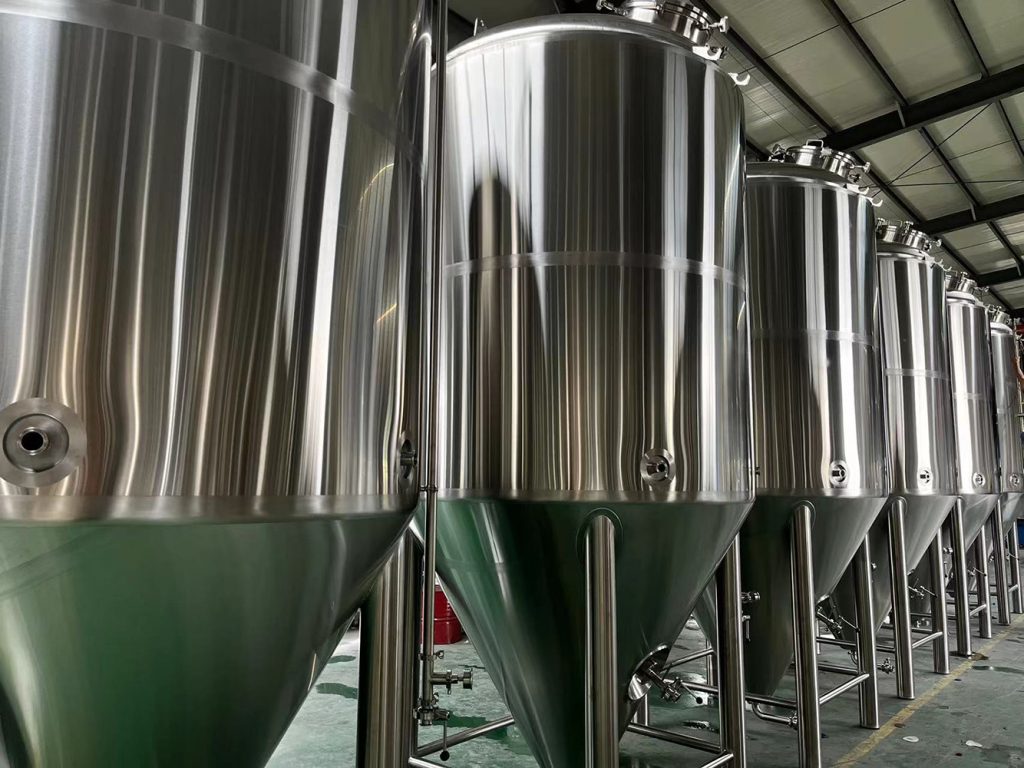
After the wort is produced in the brewhouse, it moves to the fermentation stage, where yeast converts sugars into alcohol and carbon dioxide. Pro brewing systems include fermentation tanks (conical or cylindrical) that are designed to maintain precise temperature control — a critical factor in yeast performance and flavor development.
SKE’s fermentation tanks are made from food-grade stainless steel, with double-walled insulation and temperature control systems to keep the wort at the ideal temperature for fermentation. Conical fermentation tanks are particularly popular in commercial breweries, as they allow for easy yeast harvesting and trub removal, reducing waste and improving beer quality.
Conditioning tanks are used to mature the beer after fermentation, allowing flavors to mellow and carbonation to develop. These tanks are often equipped with carbonation systems to ensure consistent carbonation levels, and they can be sized to fit the brewery’s production volume, from small craft operations to large-scale facilities.
4. Control Systems & Automation
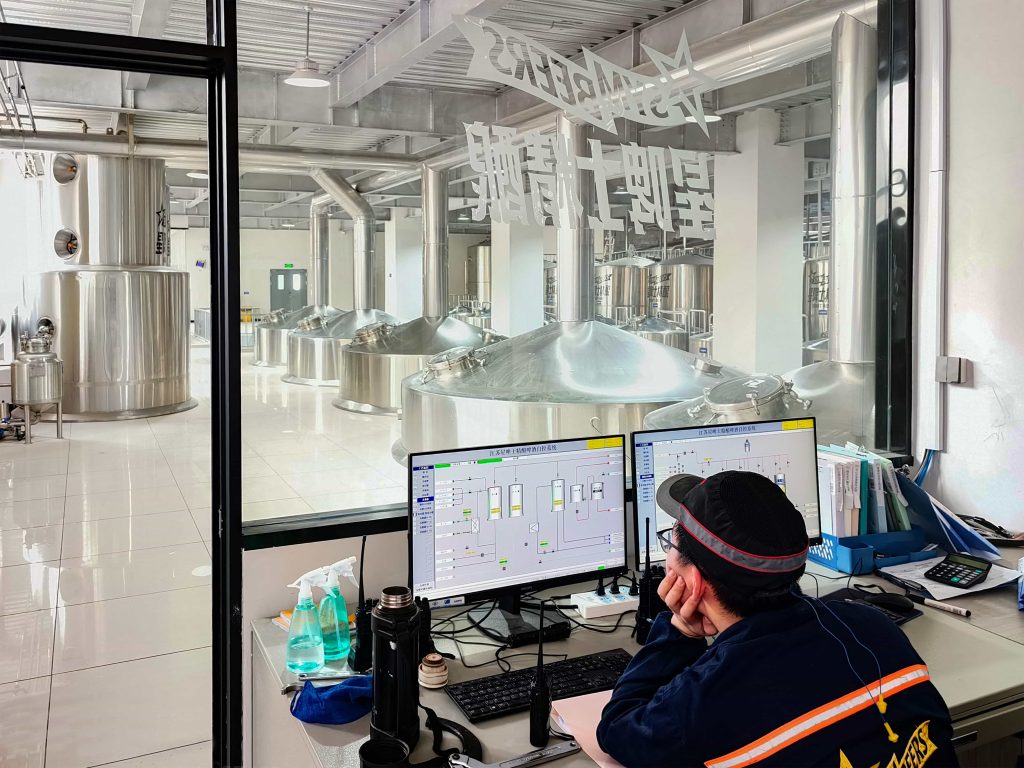
Modern pro brewing systems feature advanced control systems that automate many aspects of the brewing process, reducing human error and ensuring consistency. SKE’s systems are equipped with PLC (Programmable Logic Controller) and HMI (Human-Machine Interface) controls, allowing brewers to monitor and adjust key parameters — such as temperature, pressure, and flow rate — in real time.
Automation features include automatic temperature control for mashing and boiling, automated wort transfer, and programmable brewing cycles. These systems also include data logging capabilities, which allow brewers to track each batch’s parameters for quality control and recipe refinement. For breweries looking to scale their operations, automation is essential for maintaining consistency and efficiency.
Types of Pro Brewing Systems: Choosing the Right One for Your Brewery
Pro brewing systems come in a variety of types and sizes, each designed to fit the specific needs of different breweries. The right system for you depends on factors like production volume, brewing style (extract vs. all-grain), available space, and budget. Below is a breakdown of the most common types of pro brewing systems, along with their key features and applications.
|
System Type
|
Key Features
|
Ideal For
|
Core Equipment Included
|
|---|---|---|---|
|
All-Grain Pro Brewing Systems
|
Designed for full control over mashing; uses whole malt grains; includes specialized all grain brewing kettle and grain handling equipment; high flavor customization.
|
Craft breweries, microbreweries, and brewpubs focused on authentic, complex flavors.
|
All grain brewing kettle, mash tun, lauter tun, grain mill, wort chiller, fermentation tanks.
|
|
Extract Pro Brewing Systems
|
Uses pre-made malt extract; simpler setup; faster brewing time; lower initial cost; less equipment required.
|
Startup breweries, brewpubs with limited space, or brewers new to commercial production.
|
Boiling kettle, wort chiller, fermentation tanks, extract mixing equipment.
|
|
Hybrid Pro Brewing Systems
|
Combines all-grain and extract brewing; flexible for different recipes; balances control and convenience; scalable.
|
Breweries looking to experiment with both all-grain and extract recipes; growing operations.
|
All grain brewing kettle, mash tun, extract mixing equipment, fermentation tanks, wort chiller.
|
|
Turnkey Pro Brewing Systems
|
Complete, integrated systems; pre-engineered and pre-assembled; ready to install and use; includes all necessary brewhouse equipment and controls.
|
Startup breweries, busy brewpubs, or anyone looking to avoid the hassle of custom equipment assembly.
|
Full brewhouse equipment, all grain brewing equipment (optional), fermentation tanks, control systems, CIP systems.
|
At SKE, we offer all types of pro brewing systems, customizable to fit your brewery’s unique needs. Our turnkey solutions are particularly popular among startup breweries, as they include everything from brewhouse equipment to all grain brewing equipment, along with installation, commissioning, and training services. We also offer modular systems that can be scaled as your brewery grows, ensuring your equipment investment grows with your business.
Key Considerations When Choosing Pro Brewing Systems
Selecting the right pro brewing system is a critical decision for any brewery, as it will impact your production capacity, beer quality, and long-term profitability. Below are the key factors to consider when evaluating pro brewing systems, brewhouse equipment, and all grain brewing equipment.
1. Production Volume
The first step in choosing a pro brewing system is determining your desired production volume. Systems are typically sized by batch volume (in barrels, or bbl), with options ranging from 1 bbl (small brewpubs) to 100+ bbl (large commercial breweries). It’s important to choose a system that can handle your current demand while allowing for growth — SKE’s modular systems are designed to be expanded, so you don’t have to replace your entire system as your brewery grows.
2. Brewing Style & Equipment Compatibility
If you plan to brew all-grain beer, you’ll need a system that includes all grain brewing equipment, such as a dedicated all grain brewing kettle, mash tun, and grain mill. For extract brewing, a simpler system with a boiling kettle and wort chiller may be sufficient. Consider the types of beer you want to produce — IPAs require precise hop addition and boiling controls, while lagers need strict temperature control during fermentation.
3. Material & Durability
The material of your pro brewing systems and brewhouse equipment is critical for durability, hygiene, and beer quality. Stainless steel (304 or 316L) is the industry standard, as it is corrosion-resistant, easy to clean, and does not impart off-flavors to the beer. SKE uses high-grade 316L stainless steel for all our equipment, ensuring long-lasting performance and compliance with food safety standards.
4. Automation & Control
Automation level is another key consideration. Basic systems may require manual monitoring and adjustment, while advanced systems feature full automation with PLC controls, data logging, and remote monitoring. Automation reduces human error, improves consistency, and frees up staff to focus on other tasks. SKE’s pro brewing systems offer customizable automation options, from basic controls to fully integrated smart systems.
5. Space & Installation Requirements
Commercial breweries often have limited space, so it’s important to choose a pro brewing system that fits your facility. Compact systems are available for small brewpubs, while larger systems may require dedicated brewhouse space. SKE’s team of engineers can help design a system that optimizes your available space, with options for floor-mounted or skid-mounted setups for easy installation.
6. Budget & Total Cost of Ownership
While initial cost is important, it’s essential to consider the total cost of ownership (TCO) of your pro brewing system. This includes maintenance costs, energy efficiency, and lifespan. SKE’s equipment is engineered for energy efficiency and low maintenance, reducing long-term costs. Our turnkey solutions also include installation and training, ensuring you get the most out of your equipment from day one.
Frequently Asked Questions (FAQ) About Pro Brewing Systems
Below are answers to the most common questions we receive about pro brewing systems, brewhouse equipment, all grain brewing equipment, and all grain brewing kettles. If you have additional questions, our team of experts is always available to help.
Q1: What is the difference between pro brewing systems and homebrewing kits?
A: Pro brewing systems are designed for commercial use, with larger capacity (typically 1+ barrels per batch), durable construction, and automated controls to ensure consistency. They are built to withstand continuous use and meet food safety standards. Homebrewing kits are small-scale (usually 5-10 gallons per batch), manual, and designed for hobby use. Brewhouse equipment and all grain brewing equipment in pro systems are also more robust and specialized than homebrewing counterparts.
Q2: What size pro brewing system do I need for my brewery?
A: The size depends on your production goals and available space. For a small brewpub or taproom, a 1-5 bbl system is typically sufficient. For microbreweries distributing to local bars and restaurants, a 10-30 bbl system is ideal. Large commercial breweries may need 50+ bbl systems. SKE’s team can help you calculate your required batch volume based on your projected sales and growth plans, ensuring you choose the right size system.
Q3: How long does a pro brewing system last?
A: With proper maintenance, a high-quality pro brewing system from SKE can last 15-20 years or more. Our equipment is made from 316L stainless steel, which is corrosion-resistant and durable, and we use high-quality components to ensure long-lasting performance. Regular maintenance — such as cleaning, sanitizing, and replacing worn parts — will extend the lifespan of your system even further.
Q4: What maintenance is required for pro brewing systems?
A: Regular maintenance includes daily cleaning and sanitizing of brewhouse equipment and all grain brewing equipment to prevent contamination. Weekly tasks include inspecting valves, pumps, and hoses for leaks, and cleaning the grain mill. Monthly maintenance includes calibrating temperature and pressure sensors, and checking the heating elements. Annual maintenance includes a full system inspection, replacing worn gaskets and seals, and servicing the control system. SKE provides detailed maintenance guides and after-sales support to help you keep your system running smoothly.
Q5: How does the all grain brewing kettle differ from a standard boiling kettle?
A: An all grain brewing kettle is designed specifically for all-grain brewing, which produces a larger volume of wort and requires more precise temperature control. These kettles are typically larger, with thicker walls for better heat retention, and may include features like built-in thermometers, spigots for wort transfer, and agitators to prevent scorching. SKE’s all grain brewing kettles are made from 316L stainless steel and feature energy-efficient heating systems, ensuring consistent boiling and optimal hop utilization.
Conclusion
Pro brewing systems are the foundation of any successful commercial brewery, and choosing the right system is critical for producing consistent, high-quality beer. Whether you’re a startup brewpub or a large-scale commercial operation, the right brewhouse equipment and all grain brewing equipment will help you streamline your process, reduce waste, and create unique, delicious beer that stands out in a competitive market.
If you have any further questions, feel free to reach out!
- Facebook: SKE Equipment Facebook
- Email: info@skeequipment.com
For more personalized assistance, please fill out the contact form at the bottom of this page. We look forward to helping you with your brewing needs!