

For any brewer, from the dedicated home enthusiast to the craft brewery owner, the fermenter is where the magic happens. It’s where simple wort transforms into the complex, delicious beer we all love.
In this comprehensive guide, we will explore everything you need to know about fermenter for beer production. We’ll compare materials, dive into the professional advantages of stainless steel, and explain why SKE Equipment should be your trusted partner in this journey.
What is a Beer Fermenter and Why Does It Matter?
A beer fermenter is a vessel designed to hold wort and yeast during the fermentation process. It is not just a container; it is a controlled environment that directly influences the flavor, clarity, and quality of your final product.
While the principle remains the same, the type of fermenter for making beer you choose can drastically change your workflow and results. Many beginners start with a plastic fermenter bucket due to its low cost and simplicity. However, as any experienced brewer will tell you, the vessel is the second most important factor (after ingredients) in determining beer quality.
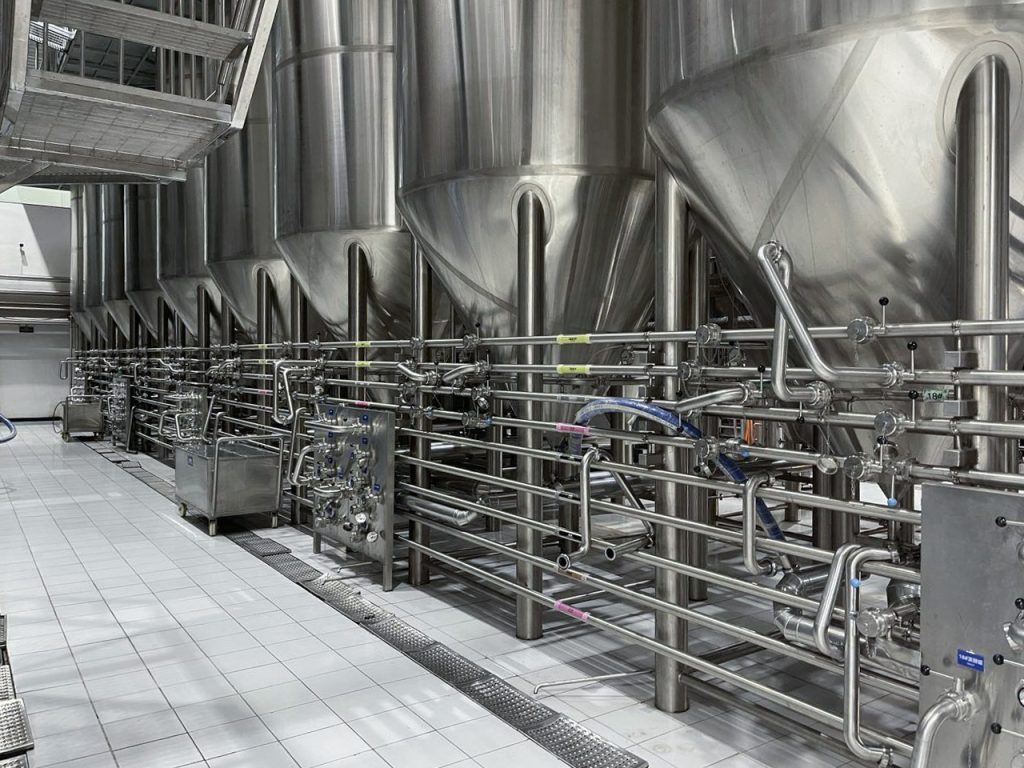
Stainless Steel vs. The Competition: A Detailed Comparison
To understand the value of a stainless steel fermenter for beer, it helps to see how it stacks up against other common materials. Below is a comparison table highlighting the key differences.
| Feature | Plastic Bucket / PET Carboy | Glass Carboy | Stainless Steel Conical Fermenter |
| Durability | Prone to scratching and cracking; limited lifespan (5-8 years) . | Fragile; risk of breakage and injury . | Virtually indestructible in normal use; lasts 15-20 years or more . |
| Oxygen Barrier | Permeable over time; can lead to off-flavors. | Good, but seals are often weak. | Excellent, especially with proper tri-clamp fittings and seals. |
| Cleanability | Scratches harbor bacteria; difficult to deep clean . | Difficult to clean due to narrow neck . | Smooth 304 stainless steel surface; easy to clean and sanitize; CIP compatible . |
| Temperature Control | Poor insulation; difficult to attach cooling solutions. | Poor insulation; fragile if using water baths. | Excellent; often includes cooling coils or jackets for precise control . |
| Sediment Collection | Flat bottom; leaves beer in contact with trub during racking. | Flat/shouldered bottom; difficult to dump yeast. | Conical bottom allows for easy yeast and trub collection without disturbing the beer . |
| Pressure Capability | None (unless specifically designed as a pressure fermenter). | None; risk of explosion. | Many are rated for pressure fermentation and closed transfers (e.g., Unitanks) . |
The Unbeatable Advantages of a Stainless Fermenter
Upgrading to a stainless fermenter is a game-changer. Here’s why professional breweries and serious homebrewers rely on them.
1. Hygiene and Longevity: The 304 Stainless Steel Advantage
High-quality fermenters, like those manufactured by SKE, are made from 304 stainless steel. This food-grade material is highly resistant to corrosion, acid, and alkali . Unlike plastic, stainless steel won’t scratch from vigorous cleaning. Scratches in plastic can become harbors for bacteria and wild yeast, leading to infected batches. Stainless steel ensures a smooth, non-porous surface that is easy to clean and sanitize, protecting the purity of your brew for decades.
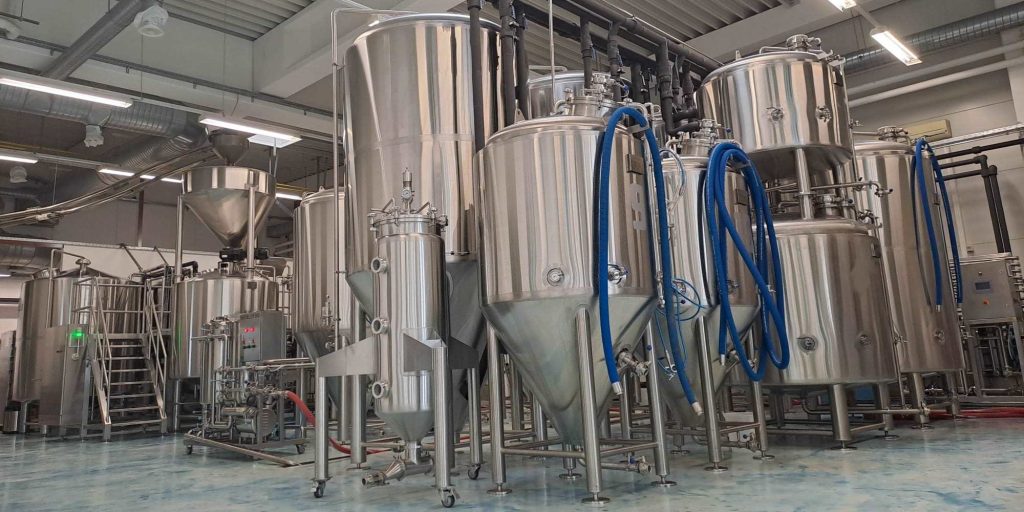
2. The Conical Bottom: Revolutionizing Sediment Management
One of the most significant innovations in beer fermenting is the conical shape. Traditional flat-bottomed fermenter buckets leave the finished beer sitting on top of the trub (dead yeast and hop sediment), which can lead to off-flavors if left too long.
A conical fermenter features a sloped bottom that directs sediment into a collection port at the apex . This allows brewers to:
-
Dump Trub Easily: Open the valve to remove sediment during or after fermentation.
-
Harvest Yeast: Collect healthy yeast slurry from the bottom for repitching into future batches, saving money on yeast.
-
Improve Clarity: By removing the beer from the sediment, you get clearer, brighter beer.
3. Precision Temperature Control
Yeast is a living organism, and temperature dictates its behavior. Fermenting too warm can create harsh fusel alcohols, while too cool can cause a stuck fermentation . Many stainless steel vessels are designed with integrated cooling coils (allowing connection to a glycol chiller) or triple-wall construction with glycol jackets . This level of control ensures that your yeast works exactly as intended, producing a clean and consistent flavor profile batch after batch.
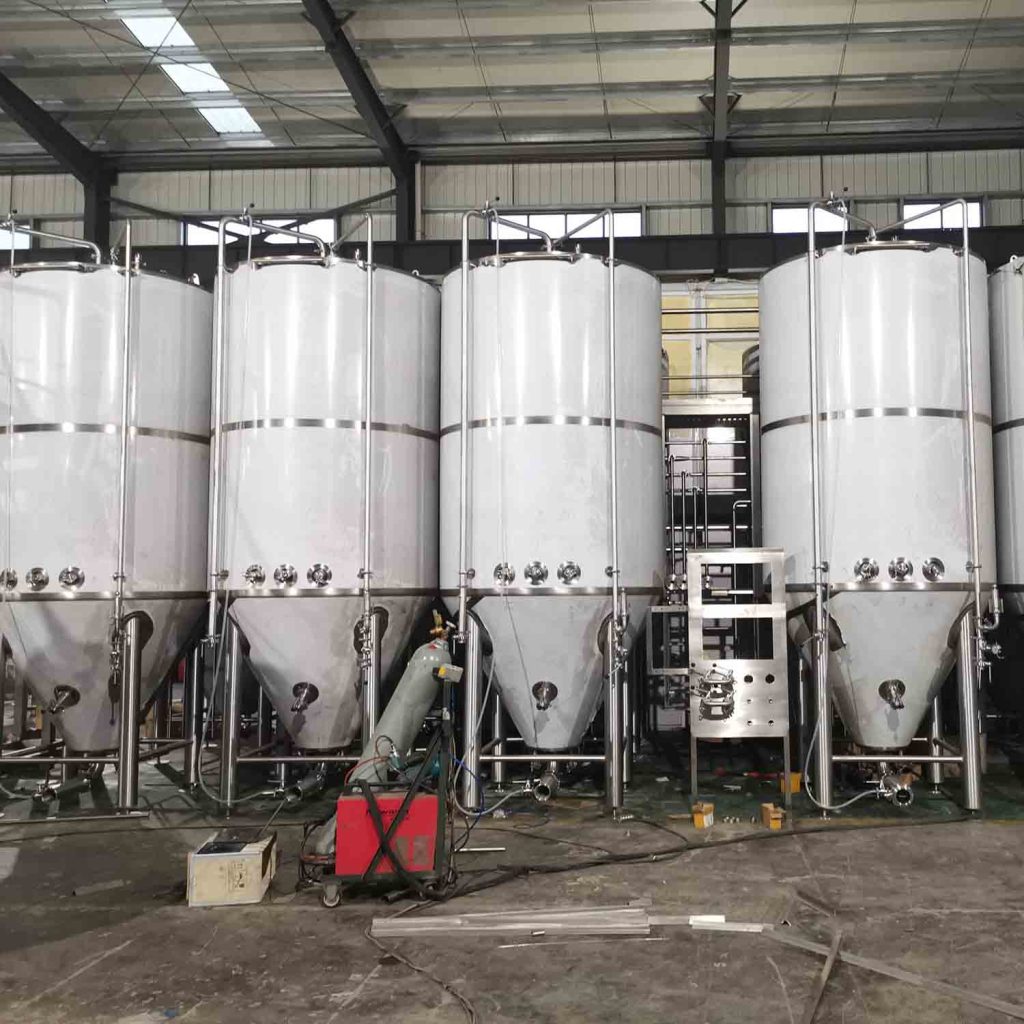
4. Pressure Fermenting and Closed Transfers
Modern stainless fermenter designs often double as Unitanks, meaning you can ferment and carbonate in the same vessel. Fermenting under pressure (5-15 PSI) can reduce the production of esters and fusels, resulting in a cleaner profile—ideal for lagers and crisp ales.
Furthermore, stainless steel allows for closed transfers. By using CO2 to push beer from the fermenter to a keg or brite tank, you eliminate oxygen exposure (oxidation), which is the enemy of fresh beer and shelf life.
How to Choose the Right Stainless Fermenter for Your Needs
Selecting the correct fermenter for making beer depends on your scale and goals.
For the Advanced Homebrewer
If you brew 1 to 15-gallon batches, look for features like:
-
Size: 7, 14, or 16-gallon conicals.
-
Wall Thickness: A sturdy gauge (e.g., 1.2mm to 1.5mm) for thermal stability.
-
Fittings: Tri-clamp ports for easy addition of thermowells, pressure gauges, and blow-off tubes.
For the Microbrewery and Craft Brewer
This is where SKE Equipment excels. When scaling up to commercial production, your fermenter becomes a critical business asset. You need:
-
Customizable Sizes: From 1 BBL to 100 BBL or more.
-
Engineering Compliance: Vessels must meet international standards like AS1210, PED, or ASME.
-
Automation: Integration with control systems for precise temperature and pressure monitoring.
-
Glycol Cooling: Built-in jackets for efficient heat transfer.
At SKE, our engineering team—supported by experienced Australian brewmasters—specializes in designing systems that are not only high-quality but also highly operable and hygienic . We understand that your brewery’s success depends on reliable, easy-to-clean equipment.
Maintenance: Cleaning and Passivation
To keep your stainless fermenter performing at its best, proper maintenance is crucial.
The First Use: Passivation
When you receive a new stainless steel tank, it must be passivated. During manufacturing, the natural chromium oxide layer that protects stainless steel can be compromised. Passivation rebuilds this layer to prevent corrosion.
-
Citric Acid Method: Fill the tank with a hot 3-5% citric acid solution and let it sit for 30-60 minutes. Rinse thoroughly and let it air dry.
-
Why it matters: This ensures your tank remains corrosion-resistant and flavor-neutral.
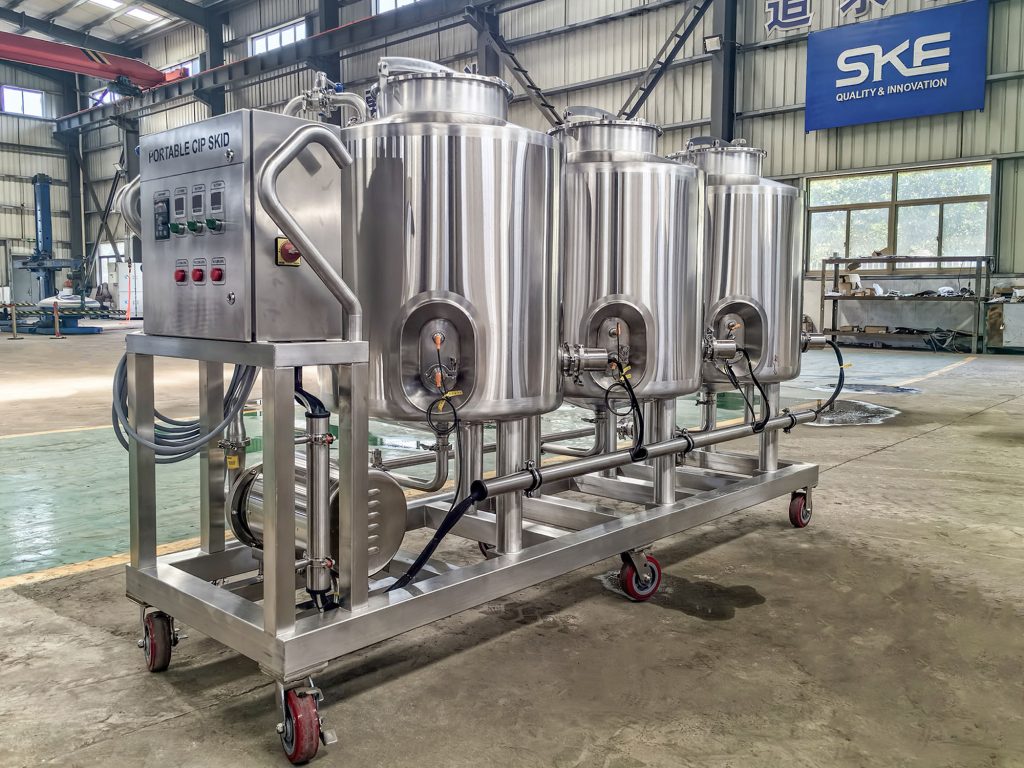
Routine Cleaning: The CIP Method
For conical fermenters, manual scrubbing is inefficient and risky. Clean-in-Place (CIP) is the standard.
-
Rinse: Immediately after emptying, rinse with warm water to remove bulk residue.
-
Caustic Wash: Recirculate an alkaline cleaner (like PBW or Chemipro Wash) at 50-70°C for 20-30 minutes to dissolve organic matter.
-
Rinse: Remove all traces of the cleaner with fresh water.
-
Sanitize: Before your next brew, recirculate a no-rinse sanitizer (like Star San or Chemipro SAN).
SKE’s tanks are designed with smooth welds and polished surfaces (down to ≤0.1μm) to make this process effortless and ensure no bacteria can hide.
Frequently Asked Questions (FAQ)
Q: Is a stainless steel fermenter really better than a plastic bucket?
A: Yes, for long-term quality and consistency. While plastic is cheap and light, stainless steel offers superior durability (lasting 15-20 years vs. 5-8 for plastic), is easier to clean without scratching, and provides better protection against oxygen and bacteria. Many brewers report more consistent results after switching due to better sanitation and temperature control.
Q: Can I use a stainless fermenter for both ales and lagers?
A: Absolutely. In fact, stainless steel fermenters with pressure capability are ideal for lagers. By fermenting under pressure (6-15 PSI), you can often ferment lagers at higher temperatures (like 60°F / 15°C) without generating off-flavors, reducing the need for intense refrigeration.
Q: What is the difference between a standard stainless fermenter and a Unitank?
A: A standard conical fermenter is great for fermentation and aging. A Unitank is a pressurized vessel that allows you to perform fermentation, cold crashing, carbonation, and yeast dumping all in one tank without transferring the beer. This minimizes oxidation and speeds up turnaround times.
Q: How do I clean the inside of a tall conical fermenter?
A: You shouldn’t have to reach inside. Professional-grade fermenters like those from SKE are designed for CIP. You use a spray ball and a pump to recirculate cleaning solutions, which do all the work for you.
Q: Why choose SKE for commercial brewing equipment?
A: SKE combines world-class Chinese manufacturing with the practical brewing expertise of seasoned Australian brewmasters. Our equipment is engineered to meet strict international standards (AS1210, CE, UL), ensuring safety and reliability. We don’t just sell tanks; we provide comprehensive engineering support, from P&ID drawings to full automation solutions, ensuring your brewery operates at peak efficiency.
Conclusion: Invest in the Heart of Your Brewery
Whether you are upgrading your home setup or outfitting a commercial microbrewery, the stainless fermenter is the cornerstone of quality beer. It represents a commitment to cleanliness, control, and craftsmanship. While the initial investment is higher than a simple fermenter bucket, the return in terms of beer quality, reduced risk of infection, and equipment longevity is unparalleled.
At SKE, we are passionate about advancing brewing technology. Our mission is to provide brewers with the tools they need to turn their concepts into reality. From custom-designed tanks to fully automated brewing systems, SKE is your partner in the pursuit of brewing perfection.
If you have any further questions, feel free to reach out!
- Facebook: SKE Equipment Facebook
- Email: info@skeequipment.com
For more personalized assistance, please fill out the contact form at the bottom of this page. We look forward to helping you with your brewing needs!