
Introduction to Professional Brewing
For many, the journey into brewing begins with a humble stovetop and a few basic ingredients. However, for those with a serious passion for craft beer, who dream of larger batches, consistent quality, and perhaps even a commercial venture, the natural progression leads to investing in a professional beer brewing kit. This isn’t just an upgrade in scale; it’s a fundamental shift in approach, equipment, and the very philosophy of brewing. A professional brewing setup provides the precision, control, and efficiency needed to transform a hobby into an art form or a viable business.
The transition to a professional beer brewing kit involves moving from manual, often variable processes, to automated or semi-automated systems that ensure repeatability and scalability. This is crucial for maintaining flavor profiles across batches, optimizing production schedules, and reducing labor. Whether you’re looking to open a microbrewery, a brewpub, or simply elevate your homebrewing to an unparalleled level of excellence, understanding the intricacies of such a kit is paramount. This comprehensive guide will delve into what constitutes a professional kit, why it’s a worthwhile investment, and how specific equipment, like that offered by SKE, can empower your brewing ambitions.
The pursuit of brewing perfection demands not only skill and knowledge but also the right tools. A professional beer brewing kit is designed to meet these demanding requirements, offering a robust foundation for creating exceptional beers. It moves beyond the limitations of entry-level systems, providing the capacity, durability, and technological advancements necessary for serious brewers. From malt milling to fermentation and packaging, every step is enhanced, allowing for greater control over variables such as temperature, pressure, and sanitation, which are critical for producing high-quality, consistent brews.
As the craft beer market continues to grow, so does the sophistication of brewing equipment. Brewers are constantly seeking ways to innovate and improve their products. A top-tier professional beer brewing kit from a reputable manufacturer like SKE offers the kind of reliability and performance that can make all the difference. We’ll explore how integrating such a system can streamline your operations, ensure batch consistency, and ultimately, help you craft beers that stand out in a competitive landscape.
The journey from a homebrewer to a professional brewer is an exciting one, marked by learning, experimentation, and a commitment to quality. Equipping yourself with a suitable professional beer brewing kit is the first, most crucial step in this transformation. It’s an investment not just in machinery, but in the future of your brewing endeavors, promising greater control, efficiency, and the ability to produce truly remarkable beers consistently.
Essential Components of a Professional Beer Brewing Kit
A truly professional beer brewing kit is a complex ecosystem of interconnected components, each playing a vital role in the transformation of raw ingredients into a finished brew. Understanding these components is critical for any brewer looking to achieve consistency, efficiency, and quality at a larger scale. The core of any such system typically includes a robust milling system, a multi-vessel brewhouse, advanced fermentation tanks, and a reliable packaging line.
Malt Milling System
The process begins with milling, where grains are crushed to expose the starches for mashing. A professional setup will feature a high-capacity, precision malt mill, often with adjustable roller gaps to control the grist size. This control is essential for optimal extract efficiency during mashing and to prevent issues like stuck sparges. Quality mills are durable, capable of handling large volumes, and integrated for cleanliness and safety. They are a foundational piece in any professional beer brewing kit, ensuring your brew starts on the right foot.
The Brewhouse: Mashing, Lautering, Boiling, and Whirlpooling
The brewhouse is the heart of the brewing process. A professional beer brewing kit will generally feature a multi-vessel brewhouse, commonly a 2-vessel, 3-vessel, or even 4-vessel system, each dedicated to a specific stage:
- Mash Tun: This insulated vessel is where the milled grains are mixed with hot water (mashing) to convert starches into fermentable sugars. Professional mash tuns feature sophisticated heating elements, agitators for uniform temperature distribution, and precise temperature control systems.
- Lauter Tun: Often a separate vessel, or combined with the mash tun in a 2-vessel system. The lauter tun is designed to separate the liquid wort from the spent grains. It features a false bottom with fine slots and a sparging arm to rinse residual sugars from the grain bed. Efficient lautering is crucial for maximizing yield.
- Kettle/Boil Kettle: Where the wort is boiled vigorously to sterilize it, isomerize hop acids for bitterness, and condense flavors. Professional kettles have powerful heating sources (steam, direct fire, or electric), often with internal calandrias for efficient boiling, and a vapor condenser to manage steam.
- Whirlpool Tun: After boiling, the wort is transferred to the whirlpool, where a tangential inlet creates a whirlpool effect. This process collects hop solids (trub) and other particulates into a cone in the center of the vessel, allowing for clear wort separation. Some systems integrate whirlpooling directly into the kettle.
Proper design and insulation are critical in these vessels, impacting energy efficiency and temperature stability, which are hallmarks of a high-quality professional beer brewing kit. SKE’s brewhouse solutions, for instance, are designed with these exact principles in mind, offering exceptional control and robust construction. Discover more about efficient brewhouse operations by visiting our article on brewhouse equipment.
Fermentation Vessels
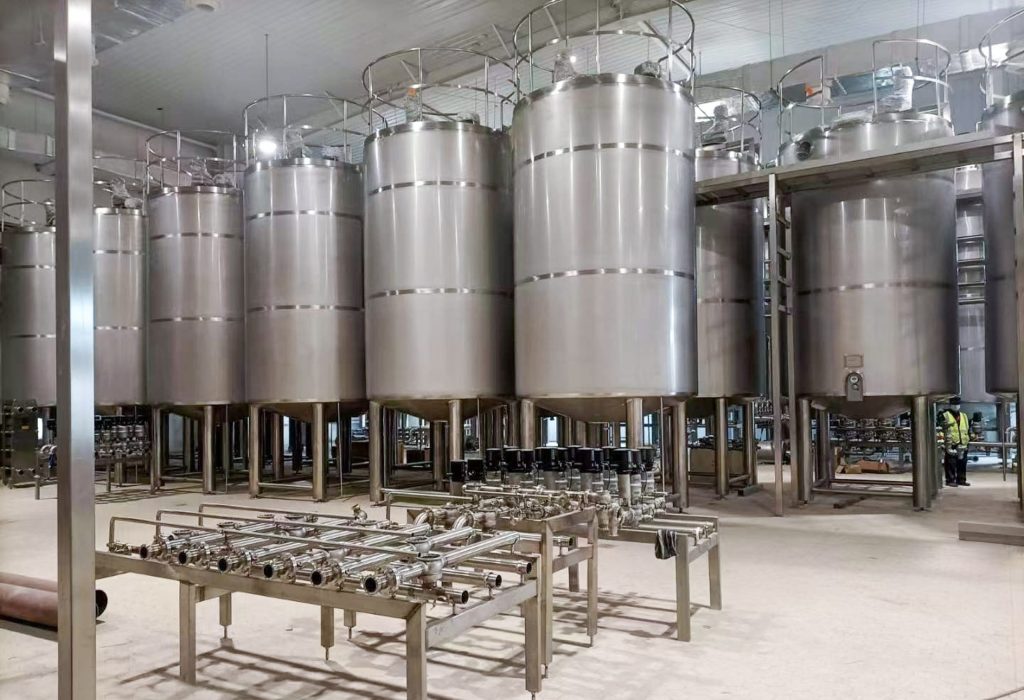
Fermentation is where the magic happens. Professional breweries rely on conical fermentation tanks (fermenters or unitanks). These tanks are designed for optimal yeast health and easy harvesting/dumping of yeast, as well as clear beer conditioning. Key features include:
- Conical Bottom: Facilitates easy yeast harvesting and trub removal.
- Jacketed Walls: Allow for precise temperature control, crucial for different yeast strains and fermentation profiles. Glycol jackets are standard for maintaining consistent temperatures.
- Pressure Capabilities: Rated for fermenting under pressure and often used as bright tanks for carbonation and conditioning.
- CIP (Clean-in-Place) Systems: Integrated spray balls and connections for automated cleaning cycles, ensuring maximum sanitation.
For larger operations, multiple fermenters of varying sizes are part of a complete professional beer brewing kit, allowing for diverse product lines and staggered production. These tanks are often integrated into a larger control system, providing real-time data and automated adjustments.
Chilling and Temperature Control
Rapid chilling of wort after the boil and precise temperature control during fermentation are non-negotiable for quality beer. A professional beer brewing kit includes a Plate Heat Exchanger (PHE) to cool the wort quickly before pitching yeast, and a Glycol Chiller system to maintain precise temperatures in fermenters and bright tanks. The Glycol Chiller circulates a chilled glycol solution through the jackets of the tanks, ensuring optimal conditions for yeast activity and beer conditioning. This level of temperature management is essential for preventing off-flavors and ensuring stable fermentation.
Bright Beer Tanks (BBTs)
After fermentation, beer is often transferred to Bright Beer Tanks (BBTs) for conditioning, carbonation, and clarification. These are typically jacketed, pressure-rated vessels, similar to fermenters but often with a dished bottom rather than a cone. They allow for natural conditioning, force carbonation, and act as a serving vessel for packaging. Consistent carbonation is vital, and a professional beer brewing kit ensures this can be achieved efficiently and accurately.
Cleaning and Sanitation Equipment
Sanitation is paramount in brewing. A professional beer brewing kit will include a CIP (Clean-in-Place) skid, which provides heated water, caustic, acid, and sanitizers to automatically clean fermenters, bright tanks, and brewhouse vessels. This minimizes manual labor and ensures thorough cleaning, critical for preventing contamination and maintaining beer quality. Additionally, robust pumps, hoses, and fittings designed for food-grade applications are standard.
Control Systems
Modern professional beer brewing kits feature advanced control panels, ranging from semi-automated to fully automated PLC (Programmable Logic Controller) systems. These systems monitor and control temperatures, pump speeds, valve positions, and other critical parameters, providing consistency, reducing human error, and offering data logging capabilities for process optimization. This automation represents a significant leap from manual brewing, giving brewers unparalleled control over their process.
Each of these components, when expertly integrated, forms a powerful and efficient professional beer brewing kit, capable of producing high-quality beer consistently and at scale. SKE specializes in manufacturing these robust and reliable systems, designed to meet the rigorous demands of professional brewers worldwide. We understand that every piece of equipment contributes to the final product, and our engineering reflects this commitment to excellence. For detailed insights into different types of brewing tanks, explore our article on choosing fermentation tanks.
The SKE Advantage: Elevating Your Brewing Setup
When investing in a professional beer brewing kit, the choice of manufacturer is as critical as the components themselves. SKE stands out in the industry for its unwavering commitment to quality, innovation, and comprehensive customer support. Our philosophy revolves around empowering brewers, from nascent craft operations to established breweries, with equipment that is not only robust and efficient but also designed for longevity and ease of use.
At SKE, we understand that a professional beer brewing kit is more than just a collection of stainless steel vessels; it’s the backbone of your brewing business. Our extensive range of brewing systems, from compact pilot systems to large-scale commercial brewhouses, are engineered with precision and built to the highest standards. We meticulously select food-grade stainless steel (typically 304 or 316L) for all contact surfaces, ensuring optimal hygiene, corrosion resistance, and the structural integrity essential for consistent, high-quality beer production.
Customization and Flexibility
No two breweries are exactly alike, and neither are their needs. The SKE advantage lies in our ability to provide highly customized solutions. Whether you require a specific brewhouse configuration—a 2-vessel, 3-vessel, or even a 4-vessel system—or specialized fermentation tanks with unique features, we work closely with clients to design a professional beer brewing kit that perfectly aligns with their production goals, space constraints, and budget. Our engineering team leverages years of experience to deliver bespoke solutions that maximize efficiency and output.
Advanced Technology Integration
Innovation is at the core of SKE’s product development. Our professional beer brewing kits integrate advanced control systems, ranging from intuitive semi-automatic interfaces to sophisticated fully automatic PLC systems. These systems offer unparalleled control over every stage of the brewing process, including temperature profiles, pump speeds, valve sequencing, and CIP cycles. This level of automation reduces human error, enhances repeatability, and frees up brewers to focus on recipe development and quality control. For more on optimizing your brewing process, check out our guide on optimizing brewing operations with industrial fermentation tanks.
Quality and Durability
Investing in a professional beer brewing kit is a significant decision. SKE equipment is built to last. Our welding techniques are among the best in the industry, ensuring seamless, sanitary surfaces that are easy to clean and resist bacterial harborage. Components like pumps, valves, and heat exchangers are sourced from reputable global suppliers, known for their reliability and performance. This commitment to durability means a lower total cost of ownership and fewer operational disruptions for our customers.
Comprehensive Support and Service
Beyond manufacturing, SKE offers comprehensive support. From initial consultation and system design to installation guidance and after-sales service, our team is dedicated to your success. We provide detailed documentation, operational manuals, and can offer commissioning assistance to ensure your new professional beer brewing kit is up and running smoothly. Our aim is to be a long-term partner in your brewing journey, offering expertise and technical assistance whenever you need it.
Choosing SKE means choosing a partner committed to your brewing excellence. Our professional beer brewing kits are designed to elevate your craft, allowing you to produce exceptional beers with confidence and consistency. With SKE, you’re not just buying equipment; you’re investing in a solution that provides superior performance, reliability, and support, propelling your brewing operations to new heights.
Beyond Hobby: Benefits of a Professional Setup
The decision to upgrade from a basic homebrewing setup to a professional beer brewing kit marks a significant leap, offering a myriad of benefits that extend far beyond simply producing larger quantities. This transition is about achieving unparalleled control, consistency, and efficiency, all of which are critical for anyone serious about brewing exceptional beer, whether for personal enjoyment at an advanced level or for commercial aspirations.
Enhanced Consistency and Quality
One of the primary benefits of a professional beer brewing kit is the ability to achieve consistent quality across multiple batches. Hobby setups often suffer from variations due to manual processes and less precise control over variables. Professional systems, however, incorporate advanced features like automated temperature control systems, precise measuring instruments, and robust brewhouse designs that minimize deviation. This means that if you perfect a recipe, you can replicate it with remarkable accuracy every time, building brand loyalty and ensuring customer satisfaction if you’re operating commercially.
Increased Efficiency and Scalability
A professional beer brewing kit is designed for efficiency. Larger brew kettles, efficient heat exchangers, and well-designed fermentation tanks reduce labor, energy consumption, and overall brewing time. For a commercial operation, this directly translates to higher production volumes and better profitability. The scalability of professional systems also means you can easily expand your capacity as demand grows, adding more fermenters or even upgrading brewhouse components without overhauling your entire setup. This makes long-term planning and growth much more manageable.
Superior Control and Flexibility
With a professional setup, brewers gain granular control over every aspect of the process. From multi-step mashing schedules in insulated mash tuns to precise fermentation temperature profiles in jacketed fermenters, the level of control is simply unmatched by smaller systems. This allows for greater flexibility in experimenting with different styles, yeast strains, and adjuncts, opening up a world of creative possibilities. The ability to control variables such as pH, specific gravity, and carbonation levels accurately contributes significantly to the final beer’s taste, aroma, and mouthfeel.
Improved Sanitation and Reduced Risk of Contamination
Sanitation is paramount in brewing, and professional beer brewing kits are built with this in mind. Integrated Clean-in-Place (CIP) systems, hygienic fittings, and polished stainless steel surfaces make cleaning and sanitization much more effective and less labor-intensive. This drastically reduces the risk of bacterial infections and wild yeast contamination, which can ruin an entire batch of beer. A clean brewing environment is essential for producing high-quality, stable, and great-tasting beer.
Durability and Longevity of Equipment
Unlike entry-level equipment that may require frequent replacements or repairs, a professional beer brewing kit is a long-term investment. Equipment from reputable manufacturers like SKE is built from high-grade materials, engineered for continuous operation, and designed to withstand the rigors of frequent use. This durability ensures a longer lifespan for your equipment, reducing downtime and saving on replacement costs in the long run. It’s an investment in the future of your brewing endeavors.
Professional Image and Regulatory Compliance
For those venturing into commercial brewing, a professional beer brewing kit immediately conveys an image of seriousness and quality. It also makes it easier to comply with industry regulations regarding hygiene, production standards, and safety. Having well-maintained, professional-grade equipment helps in obtaining necessary licenses and certifications, crucial bước for any brewing business.
In essence, moving to a professional beer brewing kit is about elevating your craft to an entirely new level. It empowers brewers with the tools and capabilities to create exceptional, consistent, and innovative beers efficiently and reliably, making it an indispensable investment for serious brewers. The SKE equipment line is specifically designed to deliver these benefits, ensuring that every professional beer brewing kit meets the demanding standards of craft excellence.
Mastering Advanced Brewing Techniques
With a professional beer brewing kit at your disposal, the realm of possibilities for what you can achieve as a brewer expands dramatically. Beyond the fundamental steps of mashing, boiling, and fermenting, professional-grade equipment unlocks the ability to master advanced brewing techniques that were previously inaccessible or impractical on a smaller scale. These techniques are crucial for developing complex flavor profiles, optimizing efficiency, and consistently producing award-winning beers.
Multi-Step Mashing and Decoction Mashing
A professional mash tun with precise temperature control and agitation capabilities allows for sophisticated mashing profiles. Multi-step mashing involves holding the mash at various temperature rests to activate different enzymes, influencing the fermentability and body of the final beer. For instance, a protein rest can improve head retention, while a beta-glucan rest can help with lautering efficiency for certain grains.
Decoction mashing, a traditional technique often used for lagers, involves removing a portion of the mash, boiling it separately, and then returning it to the main mash to raise its temperature. This technique enhances malt character, color, and mouthfeel through increased melanoidin formation. While labor-intensive, a well-designed professional beer brewing kit provides the heating and transfer capabilities to execute decoction mashes with greater ease and consistency.
Sparging Optimization and Vorlauf Efficiency
Efficient lautering is critical for maximizing extract yield. A professional lauter tun’s false bottom, coupled with an even distribution sparge arm, ensures optimal rinsing of sugars from the grain bed. Techniques like proper vorlauf (recirculating wort until clear before collecting) and controlled sparge rates are much easier to manage with a professional system, minimizing potential for a stuck sparge and ensuring clear wort. The use of flow meters and sight glasses on a professional beer brewing kit assists in precisely controlling these processes.
Controlled Fermentation and Yeast Management
The jacketed conical fermenters in a professional beer brewing kit are game-changers for fermentation control. Brewers can implement precise temperature profiles, allowing for cooler initial fermentation, specific diacetyl rests, and gradual temperature ramps, all crucial for managing yeast health and flavor development. The ability to harvest healthy yeast from the conical bottom for future batches (pitching rate control) is also a significant advantage, reducing costs and ensuring consistent yeast performance. This level of yeast management is paramount for consistency and quality across an entire product line.
Hop Stand, Whirlpool Hopping, and Dry Hopping
With a robust brewhouse and dedicated whirlpool tun, brewers can explore advanced hopping techniques. Hop stands and whirlpool hopping involve adding hops after the boil to extract aroma and flavor without adding significant bitterness. The efficient whirlpool action in a professional system ensures quick separation of hop material from the wort. For aromatic, hazy IPAs, controlled dry hopping in fermenters, often with specialized ports and CO2 purging capabilities, allows for maximum hop aroma extraction with minimal oxygen pickup.
Closed Transfers and Oxygen Management
Oxygen is the enemy of finished beer. A professional beer brewing kit facilitates closed transfers post-fermentation, minimizing oxygen exposure during racking to bright tanks and packaging. Using CO2 purging, counter-pressure filling, and careful handling significantly extends the shelf life and improves the stability of beers. This attention to detail in oxygen management truly separates professional brewing from casual homebrewing.
Carbonation and Conditioning Control
Bright beer tanks (BBTs) in a professional setup provide the ideal environment for conditioning and precise carbonation. Brewers can accurately force carbonate beer to specific volumes of CO2 using carbonation stones and pressure gauges, ensuring each beer style is presented optimally. The ability to cold-crash efficiently in jacketed BBTs also helps clarify beer naturally, reducing the need for costly filtration in some cases.
Mastering these advanced techniques requires not only skill and knowledge but also the reliable and precise equipment found in a professional beer brewing kit. SKE provides the foundational tools, engineered for control and efficiency, allowing brewers to push the boundaries of their craft and consistently produce exceptional, nuanced, and technically brilliant beers. Our systems support every stage of exploration and mastery in advanced brewing techniques, ensuring your creative vision can be translated into liquid art.
Choosing the Right Professional Beer Brewing Kit
Selecting the ideal professional beer brewing kit is a critical decision that will significantly impact your brewing operations, efficiency, and the quality of your final product. It’s an investment, and like any major investment, it requires careful consideration of various factors to ensure it aligns perfectly with your goals, whether you’re scaling up an existing operation or launching a new venture.
Determine Your Capacity Needs
The first and most important factor is capacity. How much beer do you intend to produce per batch and per year? Professional beer brewing kits come in various sizes, often measured in barrels (BBLs) or hectoliters (HL). For microbreweries or brewpubs, systems often range from 2 BBL to 30 BBL. Consider not only your immediate needs but also your projected growth over the next 3-5 years. It’s often wiser to invest in a slightly larger system than you currently need to accommodate future expansion, avoiding costly upgrades down the line.
Vessel Configuration: 2-Vessel, 3-Vessel, or 4-Vessel?
The brewhouse configuration significantly affects efficiency and floor space. Common options include:
- 2-Vessel System (Mash/Lauter Tun & Brew Kettle/Whirlpool): Ideal for smaller operations or those with space constraints. It allows for single-batch brewing with good efficiency but requires more time between batches.
- 3-Vessel System (Mash Tun, Lauter Tun, Brew Kettle/Whirlpool): Offers better efficiency and faster turnaround times as mashing and lautering can occur while the previous batch is boiling. This is a popular choice for many production breweries.
- 4-Vessel System (Mash Tun, Lauter Tun, Brew Kettle, Whirlpool): Provides the highest efficiency and flexibility, allowing for continuous brewing with minimal downtime between batches. Best suited for high-volume operations.
Your choice will depend on your desired production speed and budget for your professional beer brewing kit.
Heating Method: Steam, Electric, or Direct Fire?
The heating method for your brewhouse kettle impacts energy consumption, heating speed, and cost:
- Steam: Most common for professional systems, offering precise and even heating, reducing scorching risks. Requires a steam boiler.
- Electric: Suitable for smaller systems, requires significant electrical infrastructure, and can be less efficient for larger volumes.
- Direct Fire: Traditional and excellent for caramelization, but can lead to scorching if not managed carefully. More common for smaller or specialized kits.
SKE offers solutions across all these heating methods, ensuring your professional beer brewing kit is tailored to your utility capabilities.
Fermentation and Bright Tank Requirements
Once you’ve determined brewhouse size, consider your fermentation capacity. You’ll typically need 2-3 times your brewhouse volume in fermentation tanks to allow for staggered production and different beer styles. Evaluate:
- Number of Fermenters: How many different beers will you ferment simultaneously?
- Size of Fermenters: Match them to your batch size.
- Jacketed vs. Non-Jacketed: Jacketed fermenters with glycol chilling are essential for precise temperature control in a professional setup.
- Bright Beer Tanks (BBTs): For conditioning, carbonation, and packaging storage.
Remember, a professional beer brewing kit is incomplete without adequate fermentation and conditioning vessels.
Automation and Control Systems
Decide on the level of automation you desire. From manual valve operation to fully automated PLC-controlled systems, each offers varying degrees of precision, labor saving, and cost. Automated systems provide consistency and data logging, which are invaluable for diagnostics and process improvement. SKE specializes in integrating advanced control panels that streamline operations.
Budget and Manufacturer Reputation
Establish a realistic budget, but don’t compromise quality for cost. The cheapest professional beer brewing kit might lead to higher operational costs, maintenance issues, and inconsistent product. Research manufacturers, check their track record, read testimonials, and inquire about after-sales support. A reputable manufacturer like SKE not only provides high-quality equipment but also crucial ongoing support and spare parts. This relationship is vital for the long-term success of your brewery.
Space and Utility Considerations
Account for the physical space required for the equipment, including clearances for maintenance and operations. Also, consider utility hookups – water, electricity, drainage, ventilation, and potentially natural gas or steam lines. A well-planned layout can save significant time and effort in the long run.
Choosing the right professional beer brewing kit is a complex but rewarding process. By carefully evaluating these factors, you can select a system that not only meets your current needs but also supports your future growth and success in the exciting world of craft brewing. SKE is here to guide you through this selection process, offering expert advice and tailored solutions for your unique brewing aspirations.
Maintenance and Longevity of Your Brewing Investment
A professional beer brewing kit represents a significant investment, both financially and in terms of your brewing aspirations. To protect this investment and ensure consistent, high-quality beer production, rigorous maintenance and operational best practices are paramount. Proper care not only extends the lifespan of your equipment but also safeguards your product from contamination and ensures efficient operation day after day.
Daily Cleaning and Sanitation (CIP)
The most fundamental aspect of maintaining a professional beer brewing kit is daily cleaning and sanitation. This involves implementing robust Clean-in-Place (CIP) protocols for all vessels and lines that come into contact with wort or beer. After each use, brewhouse vessels, fermenters, and bright tanks must be thoroughly rinsed, cleaned with appropriate caustic solutions, rinsed again, acid-washed, and finally sanitized. Proper CIP cycles, including correct temperature, chemical concentration, and contact time, are critical. SKE’s equipment is designed with integrated CIP spray balls and efficient drainage to facilitate effective cleaning, reducing manual labor and the risk of contamination.
Regular Inspections and Leak Checks
Conduct routine visual inspections of all components in your professional beer brewing kit. Look for signs of wear and tear, corrosion, or scale buildup. Pay close attention to gaskets, seals, clamps, and connections, as these are common points for leaks or potential bacterial harborage. Any signs of leakage should be addressed immediately to prevent product loss, safety hazards, and potential contamination. Pressure gauges and safety valves on fermenters and bright tanks should be checked for proper function regularly.
Pump and Valve Maintenance
Pumps are the workhorses of any professional beer brewing kit. Regularly inspect pump seals, impellers, and motors. Lubricate moving parts as recommended by the manufacturer and replace worn components promptly. Similarly, valves (butterfly, ball, or diaphragm) should be inspected for proper sealing and ease of operation. Faulty valves can lead to leaks, inefficient transfers, or even cross-contamination between different streams. Keeping all these components in top condition ensures smooth liquid transfers and precise control.
Glycol System Care
The glycol chiller system is vital for precise temperature control during fermentation and conditioning. Regularly check the glycol concentration and pH, adding inhibitors as needed to prevent corrosion and biological growth within the cooling lines. Ensure the chiller’s condenser coils are clean for optimal efficiency and inspect for refrigerant leaks. A well-maintained glycol system saves energy and prevents costly downtime or ruined batches due to temperature fluctuations.
Control Panel and Automation System Checks
For professional beer brewing kits with advanced control panels, regularly verify the calibration of temperature probes, pressure sensors, and flow meters. Ensure all wiring connections are secure and free from corrosion. Software for automated systems should be kept up-to-date, and backups of programming should be made. Promptly address any error messages or inconsistencies in readings to prevent operational errors that could impact beer quality or safety.
Water Quality Management
While not directly part of the professional beer brewing kit hardware, water quality directly impacts equipment longevity and beer taste. Regular testing of your water source for minerals, pH, and contaminants is essential. Implement appropriate water treatment (filtration, reverse osmosis, carbon filters) to protect your equipment from scale buildup and to provide the ideal pH balance for brewing. Hard water can lead to mineral deposits in kettles and heat exchangers, reducing efficiency over time.
Scheduled Professional Servicing
Even with diligent in-house maintenance, consider scheduling periodic professional servicing for your professional beer brewing kit. Experts can identify subtle issues, calibrate sensitive instruments, and perform deeper inspections that might be missed during routine checks. This proactive approach can prevent major breakdowns and extend the overall life of your equipment.
By diligently adhering to these maintenance practices, brewers can ensure their professional beer brewing kit from SKE continues to operate at peak performance, consistently producing high-quality beer and providing a strong return on investment for many years to come.
Conclusion: The Future of Your Brew
Embarking on the journey of professional brewing is an exciting and rewarding endeavor, and at its heart lies the choice and implementation of a robust professional beer brewing kit. As we’ve explored, this isn’t merely an aggregation of larger versions of homebrewing equipment; it’s a strategically designed system engineered for precision, efficiency, scalability, and, most importantly, consistency in producing exceptional craft beer.
From the meticulous crushing of malt in a high-capacity mill to the nuanced control offered by multi-vessel brewhouses, and the artful transformation within temperature-controlled fermenters, each component of a professional beer brewing kit plays an indispensable role. It allows brewers to transcend the limitations of hobbyist setups, enabling them to master advanced techniques, experiment with complex recipes, and ensure that every batch meets the highest standards of quality and flavor.
The benefits of investing in a professional setup are manifold: heightened consistency, increased operational efficiency, superior control over every variable, and significantly improved sanitation practices. These advantages not only contribute to the creation of outstanding beer but also lay a stable foundation for commercial success and future growth within the dynamic craft beer industry.
When selecting your professional beer brewing kit, careful consideration of capacity, vessel configuration, heating methods, and the level of automation is crucial. Partnering with a reputable manufacturer that offers not just equipment, but also expertise and ongoing support—like SKE—can make all the difference. SKE is committed to providing brewers with custom-engineered solutions that are durable, technologically advanced, and backed by comprehensive service, ensuring your brewing vision becomes a reality.
Ultimately, a professional beer brewing kit is more than just machinery; it’s an investment in your passion, your craft, and your future. It’s the engine that drives your creativity, transforms ingredients into liquid art, and allows you to consistently deliver the highest quality brews to your audience. Choose wisely, maintain diligently, and watch as your brewing dreams flourish, batch after delicious batch.
Frequently Asked Questions About Professional Beer Brewing Kits
What is the typical starting capacity for a small professional beer brewing kit?
For a small professional setup, common starting capacities range from 2 BBL (barrels) to 7 BBL (approximately 2.3 HL to 8.2 HL) for the brewhouse. This size is ideal for brewpubs, microbreweries, or advanced homebrewers looking to significantly scale up their production and enter commercial operations. Many professional beer brewing kits are designed to be modular, allowing for future expansion by adding more fermentation capacity.
What are the key differences between a 2-vessel and a 3-vessel professional beer brewing kit?
A 2-vessel professional beer brewing kit typically combines a Mash Tun/Lauter Tun and a Brew Kettle/Whirlpool. This configuration is more compact and cost-effective but generally allows for one batch per brew day. A 3-vessel system, which includes separate Mash Tun, Lauter Tun, and Brew Kettle/Whirlpool vessels, offers greater efficiency as mashing and lautering can occur while the previous batch is boiling, significantly improving throughput and allowing for multiple batches in a single day. The choice depends on desired production volume and space.
Why is precise temperature control crucial in a professional beer brewing kit?
Precise temperature control is vital in a professional beer brewing kit for several reasons. During mashing, specific temperature rests activate different enzymes, impacting sugar conversion and the final beer’s body. During fermentation, consistent temperature management controls yeast activity, preventing off-flavors and ensuring proper attenuation. Professional systems with jacketed fermenters and glycol chillers provide the necessary control to maintain these critical temperatures, allowing brewers to consistently produce high-quality, stable beers.
Can I customize a professional beer brewing kit to fit my specific needs?
Absolutely. Reputable manufacturers like SKE specialize in offering highly customizable professional beer brewing kits. You can often specify brewhouse size and configuration, fermentation tank quantities and sizes, heating methods (steam, electric, direct fire), level of automation, and additional features like CIP systems or bespoke control panels. Customization ensures your kit perfectly matches your production goals, available space, and budget, optimizing your entire brewing process.
Ready to Elevate Your Brewing?
Discover how SKE can provide the perfect professional beer brewing kit for your needs. Connect with our experts today for a personalized consultation and take the next step towards brewing excellence.
Facebook |
Email: info@skeequipment.com
Or, fill out the contact form at the bottom of the page to get in touch with our team!