
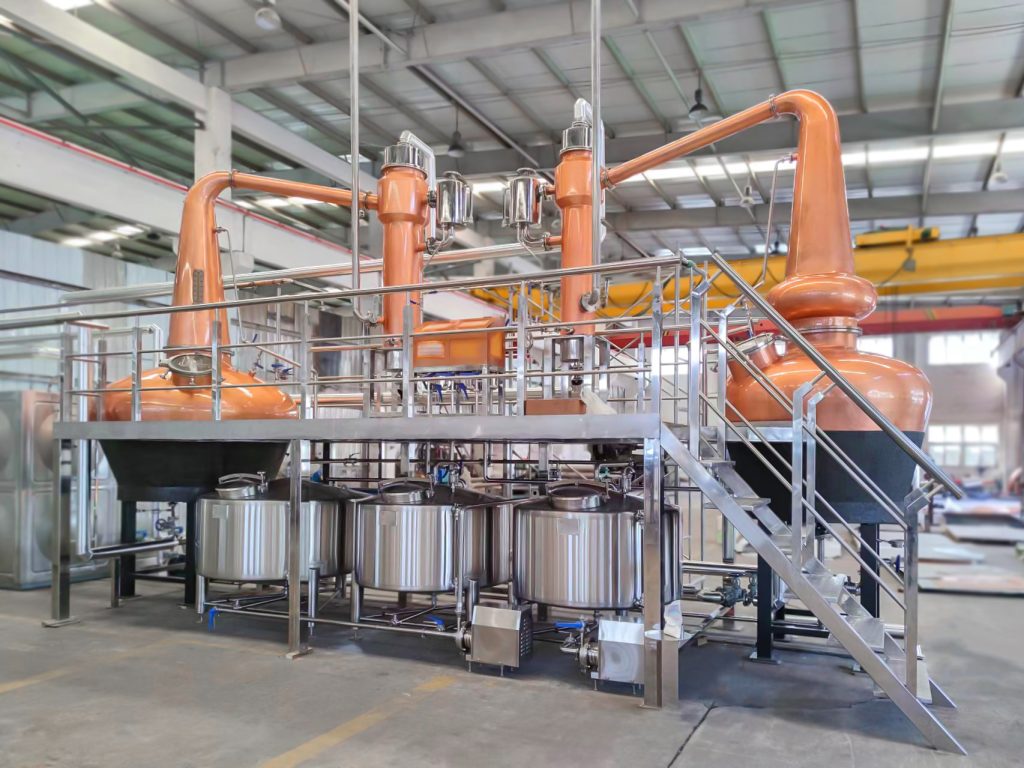
Introduction to Professional Distilling
The art and science of distillation have evolved significantly over centuries, transforming raw ingredients into exquisite spirits. Today, the demand for high-quality, craft spirits necessitates equally high-quality professional distilling equipment. For both budding craft distillers and established industrial producers, understanding the nuances of these systems is paramount to achieving consistent quality, efficiency, and scale.
Professional distilling equipment goes far beyond simple kettles and condensers; it represents a sophisticated array of machinery engineered for precision control over temperature, pressure, and separation processes. The goal is not merely to produce alcohol, but to craft spirits with distinct flavor profiles, aromas, and textures that resonate with consumers. This requires robust construction, advanced control systems, and an in-depth understanding of the distillation process itself. At SKE, we recognize the critical role that superior engineering plays in this endeavor, providing cutting-edge solutions for every stage of spirit production.
From the initial fermentation of the mash to the final polishing of the spirit, each step relies on specialized equipment. The right setup can optimize yield, enhance sensory characteristics, and ensure compliance with stringent industry standards. Without reliable professional distilling equipment, the pursuit of exceptional spirits remains an elusive dream. This comprehensive guide will explore the various facets of modern distilling hardware, offering insights into its function, importance, and how SKE continues to innovate in this dynamic field.
The journey of a spirit from grain to glass is complex, involving numerous chemical and physical transformations. The equipment acts as the conductor of this intricate orchestra, dictating the harmony and purity of the final product. Investing in high-grade professional distilling equipment is not merely an expenditure; it’s an investment in the quality, reputation, and profitability of a distillery. This article will delve into the technical aspects that define the best in class, helping distillers make informed decisions as they expand their operations or begin new ventures.
Understanding Different Types of Professional Distilling Equipment
The heart of any distillery is its still, and the choice between different types of professional distilling equipment significantly impacts the final product. Each still design offers unique advantagessuited for various spirit categories. Two primary categories dominate the landscape: pot stills and column stills, though hybrid systems are increasingly popular.
Pot Stills: The Traditional Choice
Pot stills are the elder statesmen of professional distilling equipment, known for producing spirits with rich character and complexity. They typically consist of a heated pot (or alembic) where the wash is boiled, and a lyne arm that connects to a condenser. The vapor rises from the pot, travels through the lyne arm, and cools in the condenser, turning back into liquid. This process usually requires multiple distillations (double or triple distillation) to achieve the desired alcohol content and purity. Pot stills are highly favored for whiskies, brandies, and certain rums, where retaining flavorful congeners is paramount. The unique shape and material, often copper, play a crucial role in sulfur removal and catalytic reactions, enhancing the spirit’s profile. SKE offers a range of beautifully crafted copper pot stills, designed to maximize flavor development and ensure efficient operation for distillers seeking traditional quality.
Column Stills: Efficiency and Purity
Column stills, also known as continuous stills or patent stills, are professional distilling equipment designed for much higher efficiency and purity. They consist of a series of plates or trays stacked within vertical columns. As vapor rises through the column, it constantly condenses and re-vaporizes, allowing for a highly efficient separation of ethanol from water and other compounds. This fractional distillation process can achieve very high proof alcohols in a single pass, making them ideal for neutral spirits like vodka, gin, and grain alcohol. The ability to control reflux precisely at different points in the column allows distillers to fine-tune the separation, yielding a very clean and pure spirit. SKE’s column stills are engineered with precision, incorporating advanced control systems to give distillers unparalleled command over their distilling process, a critical factor for large-scale operations and high-volume production of neutral spirits.
Hybrid Stills: The Best of Both Worlds
Hybrid stills combine features of both pot and column stills, offering distillers enhanced flexibility. They typically feature a traditional pot still base with a small rectifying column attached. This allows for the production of characterful spirits similar to those made in pot stills, but with the option to achieve higher proofs or a cleaner spirit profile through the column, reducing the number of runs. Hybrid professional distilling equipment is gaining popularity among craft distillers who wish to produce a diverse range of spirits – from whiskey to gin – using a single, versatile system. This versatility makes them an excellent investment for distilleries aiming for a wide product portfolio without the need for multiple, specialized stills. Understanding the intricacies of different distillation methods is key to selecting the most appropriate distiller equipment.
Each type of still presents distinct advantages and limitations. The choice depends on the distiller’s objectives: whether to prioritize flavor retention, alcohol purity, production volume, or versatility. Modern professional distilling equipment from SKE is designed to meet these diverse needs, offering customizable solutions that integrate seamlessly into any distillery setup, from start-ups to established operations looking to upgrade.
For more detailed technical insights into the science behind distillation, specifically continuous distillation, you might find valuable information in our blog post about continuous distillation systems, which explores how these advanced setups achieve their impressive efficiency.
Essential Components of a Professional Distilling System
Beyond the still itself, a complete professional distilling equipment setup comprises several crucial components that ensure efficient, safe, and effective operation. These elements work in concert to manage heat, cool vapors, and control the entire process from start to finish.
Heat Sources and Heating Systems
The method of heating the wash in the still is fundamental. Common heat sources for industrial and professional distilling equipment include steam, direct fire, electric heating elements, and hot oil jackets. Steam heating, often generated by a separate boiler, is highly preferred for larger stills due to its even heat distribution, precise temperature control, and reduced risk of scorching the wash, which can impart off-flavors. Direct fire is more traditional but harder to control and less efficient for large volumes. Electric heating is common for smaller systems and provides good control but can be costly for larger operations. SKE offers intelligent heating solutions tailored to the specific size and needs of your professional distilling equipment, ensuring optimal thermal efficiency and safety.
Condensers and Cooling Systems
After vaporization, the alcohol-rich vapor must be efficiently cooled back into liquid form. This is the role of the condenser. Liebig condensers, shell-and-tube condensers, and coil condensers are common types. Shell-and-tube condensers are highly efficient for professional distilling equipment, using a series of tubes through which vapor passes, surrounded by a jacket of cooling water. An effective cooling system, usually involving a recirculating chiller or a cooling tower, is essential to supply cold water to the condenser, maintaining a stable temperature to ensure complete condensation and minimize spirit loss. Proper sizing and maintenance of the cooling system are crucial for consistent distillation performance.
Storage Tanks and Fermenters
Before distillation, the raw ingredients undergo fermentation in specialized vessels. Fermenters (or fermentation tanks) must be designed to maintain optimal temperatures, allow for CO2 release, and facilitate easy cleaning. Stainless steel is the material of choice for its inertness, durability, and ease of sanitation. Post-distillation, spirit receiver tanks are used to collect the distilled product, often separated into “”heads,”” “”hearts,”” and “”tails.”” These tanks must be sealed, often made of stainless steel, and sometimes feature sampling ports to allow distillers to monitor the spirit quality. SKE provides a comprehensive range of stainless steel tanks, from fermenters to bright spirit tanks, all engineered to meet the stringent sanitation and quality requirements of professional distilling equipment setups.
Control Systems and Automation
Modern professional distilling equipment increasingly incorporates sophisticated control systems and automation. These systems monitor and regulate critical parameters such as temperature, pressure, flow rates, and pH levels, often in real-time. Programmable Logic Controllers (PLCs) combined with Human-Machine Interfaces (HMIs) allow distillers to pre-program distillation profiles, ensure consistency between batches, and troubleshoot issues rapidly. Automation enhances safety, reduces labor costs, and significantly improves product consistency, which is vital for commercial operations. SKE’s commitment to innovation is evident in our integrated control panels, offering intuitive interfaces and robust automation features for our professional distilling equipment, ensuring precision and reliability at every turn.
Each of these components, when properly selected and integrated, contributes to the overall efficiency and quality of the distillation process. A well-designed professional distilling equipment system is a synergy of these parts working in harmony.
SKE’s Approach to Professional Distilling Equipment Excellence
At SKE, we stand at the forefront of innovation in manufacturing professional distilling equipment. Our philosophy is rooted in a deep understanding of the distiller’s needs, combining traditional craftsmanship with state-of-the-art engineering to deliver systems that are not only efficient and reliable but also foster creativity and consistency in spirit production.
Our commitment begins with quality materials. We predominantly utilize high-grade copper and stainless steel, chosen for their superior thermal conductivity, corrosion resistance, and inertness. Copper, in particular, is cherished in distillation for its catalytic properties, which help remove sulfur compounds, leading to a smoother, cleaner spirit. Our skilled artisans and engineers work meticulously to fabricate stills and associated professional distilling equipment that meet the highest standards of craftsmanship and durability, ensuring longevity and peak performance for decades.
Innovation is a cornerstone of SKE. We continuously invest in R&D to incorporate the latest technological advancements into our professional distilling equipment. This includes developing advanced heating solutions, highly efficient condensers, and sophisticated automation and control systems. Our control panels offer intuitive interfaces that empower distillers with precise command over every variable, from temperature gradients in columns to reflux ratios, enabling unparalleled control over the spirit’s profile. Such attention to detail is what sets SKE apart in a competitive market, allowing our clients to produce award-winning spirits consistently.
Beyond our products, SKE provides comprehensive support. From initial consultation and custom design to installation, commissioning, and ongoing technical assistance, our team is dedicated to ensuring that every client’s professional distilling equipment operates at its optimal potential. We understand that each distillery has unique requirements and challenges, and we pride ourselves on offering tailored solutions that perfectly align with their production goals and space constraints. This holistic approach ensures that when you choose SKE, you’re not just purchasing equipment; you’re gaining a partner committed to your success.
Our expansive product portfolio encompasses everything a modern distillery might need, from small-batch craft stills to large-scale industrial systems. Whether you’re producing whiskey, gin, rum, vodka, or specialty spirits, SKE has the professional distilling equipment and expertise to support your vision. Our reputation is built on delivering robust, high-performance systems that elevate the craft of distillation. When setting up a new facility, it’s beneficial to consider the entire process, including proper pasteurization machine integration for certain spirit treatments, if applicable.
Materials and Construction: The Foundation of Quality
The materials employed in the construction of professional distilling equipment are not merely incidental; they are fundamental determinants of the spirit’s quality, the equipment’s lifespan, and the overall efficiency of the distillation process. Selecting the right materials and adhering to rigorous construction standards are paramount for any reputable manufacturer like SKE.
Copper: The Traditional Alchemist
Copper is revered in the distilling world, particularly for pot stills and components that interact directly with the spirit vapor. Its primary advantage lies in its catalytic properties. Copper reacts with sulfur compounds present in the fermenting wash, such as sulfides and mercaptans, converting them into non-volatile compounds that don’t pass into the final spirit. This action removes undesirable ‘off-notes,’ resulting in a smoother, cleaner, and more palatable distillate. Furthermore, copper boasts excellent thermal conductivity, allowing for rapid and even heat transfer, which contributes to more controlled and efficient distillation. However, copper is softer than stainless steel and requires more meticulous cleaning and maintenance, making it a specialized choice for professional distilling equipment where flavor development is key.
Stainless Steel: The Modern Workhorse
Stainless steel, particularly food-grade 304 or 316L, is widely used in modern professional distilling equipment for its strength, corrosion resistance, and ease of cleaning. It is the material of choice for fermenters, mash tuns, storage tanks, condensers, and column sections in column stills. Its inert nature ensures that it does not impart any flavors or contaminants to the wort or spirit, preserving product purity. Stainless steel is also incredibly durable and hygienic, making it ideal for large-scale operations where sanitation and longevity are critical. SKE meticulously fabricates all its stainless steel components, ensuring smooth, crevice-free welds that prevent bacterial growth and simplify cleaning-in-place (CIP) processes, a vital feature for maintaining the highest standards in professional distilling equipment.
Precision Welding and Fabrication
Beyond the choice of material, the quality of construction, particularly welding, is crucial. Sloppy welds can create fissures where bacteria can harbor or leads to leaks and structural weaknesses. SKE employs advanced welding techniques and highly skilled welders to ensure all seams are smooth, strong, and sanitary. Our professional distilling equipment undergoes rigorous quality control inspections, including hydrostatic testing and material audits, to guarantee that every piece of equipment meets our exacting standards and industry regulations. This meticulous attention to detail from raw material to finished product ensures that our kettles, columns, and other components are built to last, providing distillers with reliable performance for years to come.
The combination of superior materials and expert craftsmanship is what gives SKE professional distilling equipment its reputation for excellence. We understand that the structural integrity and material purity of our systems are directly linked to the quality and safety of the spirits our clients produce.
System Integration and Automation for Modern Distilleries
In today’s competitive spirits market, efficiency, consistency, and scalability are paramount. This is where the intelligent integration of professional distilling equipment with advanced automation systems becomes a game-changer. Modern distilleries are moving beyond manual control, embracing technology to optimize every aspect of the production process.
The Power of Integrated Control Systems
An integrated control system serves as the central nervous system of a modern distillery. It connects and manages various pieces of professional distilling equipment, including mash tun temperature, fermenter dynamics, still heating, reflux ratios, and cooling systems. These systems typically utilize Programmable Logic Controllers (PLCs) which execute complex logical operations based on inputs from sensors located throughout the distillery. The data collected provides real-time insights into crucial parameters, allowing for immediate adjustments and maintaining optimal operating conditions.
For instance, precise temperature control during mashing and fermentation is critical for enzyme activity and yeast health, directly impacting the final alcohol yield and flavor profile. With SKE’s automated professional distilling equipment, distillers can program specific temperature ramps and holds, ensuring consistency from batch to batch. This level of precision is difficult, if not impossible, to achieve consistently with manual methods. Automating the heating and cooling cycles of the still also allows for repeatable cuts between heads, hearts, and tails, which directly influences the quality and consistency of the final spirit. This technological leap helps distilleries not just in achieving perfect consistency but also in scaling up operations successfully.
Human-Machine Interface (HMI) and Data Logging
A user-friendly Human-Machine Interface (HMI) is essential for distillers to interact with the complex automation system. SKE’s professional distilling equipment often includes intuitive touchscreen HMIs that display real-time data, trend graphs, and alarm notifications. Distillers can easily monitor the progress of a distillation run, adjust setpoints, and troubleshoot potential issues with just a few taps. Beyond control, these systems are invaluable for data logging. They record historical data on temperature, pressure, flow rates, and energy consumption, providing a rich dataset for analysis. This data can be used to optimize recipes, identify areas for energy savings, assist in quality control, and streamline future production cycles. The ability to revisit specific batch parameters offers an invaluable resource for continuous improvement and maintaining intellectual property related to unique spirit profiles.
Remote Monitoring and Diagnostics
The integration capabilities of SKE’s professional distilling equipment extend to remote monitoring. With secure network connectivity, distillery operators can monitor their systems from off-site locations via computers or mobile devices. This provides peace of mind, allowing for checks on system status, responding to alarms, or even making minor adjustments without being physically present. Remote diagnostic capabilities can also significantly reduce downtime, enabling SKE’s technical support team to assist with troubleshooting and maintenance remotely, often before a minor issue escalates into a major problem.
In essence, advanced system integration and automation transform professional distilling equipment from mere hardware into an intelligent, responsive, and highly efficient production powerhouse. It not only boosts productivity and consistency but also empowers distillers to focus more on the art of distillation and the subtle nuances of flavor creation, knowing that the technical processes are perfectly controlled.
Choosing the Right Professional Distilling Equipment
The decision of which professional distilling equipment to acquire is one of the most critical choices a distiller will make. It profoundly impacts production capacity, product range, operational efficiency, and ultimately, the profitability and brand reputation. Making an informed decision requires careful consideration of several key factors.
Define Your Product and Vision
Before even looking at equipment specifications, clearly define what spirits you intend to produce. Are you focused on traditional single malt whiskies requiring heavy copper pot stills? Or are you aiming for neutral spirits like vodka and high-purity gin, which benefit from highly efficient column stills? Perhaps a diverse portfolio suggests a versatile hybrid still. Your product vision dictates the core professional distilling equipment needed. Furthermore, consider the desired batch size. Are you a small craft distillery aiming for limited, artisanal runs, or do you plan for a larger, more industrial output? SKE offers customizable solutions designed to match specific production goals.
Budget and Scale of Operation
Professional distilling equipment represents a significant capital investment. Establish a realistic budget, but also consider the long-term return on investment. Cheaper equipment might save money upfront but could lead to higher operating costs, frequent breakdowns, or inconsistent product quality down the line. Scale of operation directly correlates with equipment size and complexity. A larger still will produce more per batch but requires more space, energy, and a larger initial investment. SKE’s expert consultants can help you balance your budget with your growth projections, advising on scalable solutions that allow for future expansion without complete overhaul.
Space and Infrastructure Requirements
Distilleries require substantial space for equipment, raw material storage, fermentation, distillation, and aging. Before committing to specific professional distilling equipment, assess your facility’s footprint. Consider ceiling height, floor loading capacity, ventilation, water and power supply, and drainage. Larger stills and associated equipment like boilers and cooling towers will have more demanding infrastructure requirements. It’s crucial to consult with equipment suppliers, like SKE, early in the planning phase to ensure that the chosen equipment integrates seamlessly into your existing or planned facility layout. This forward-thinking approach can save significant costs and delays during installation.
Regulatory Compliance and Safety
Distilling operates under strict governmental regulations regarding alcohol production, safety, and environmental impact. Ensure that any professional distilling equipment you consider is designed and built to meet all local and international safety standards (e.g., ASME, PED for pressure vessels). Material certifications, explosion-proof components, and proper ventilation systems are critical. A reputable manufacturer like SKE will design and build equipment that adheres to these regulations, providing necessary documentation and certifications. Prioritizing safety not only protects your investment and personnel but also ensures smooth operations devoid of legal complications.
Manufacturer Reputation and Support
Finally, the reputation of the professional distilling equipment manufacturer is paramount. Look for a company with a proven track record, positive customer testimonials, and comprehensive after-sales support. A manufacturer who offers installation, training, and readily available spare parts can be an invaluable partner. SKE prides itself on its global reputation for quality, innovation, and unwavering customer support. Our team provides end-to-end guidance, from initial concept to ongoing maintenance, ensuring that your investment in professional distilling equipment is a sound one that fosters long-term success.
By carefully evaluating these factors, distillers can confidently select professional distilling equipment that aligns with their vision, budget, and operational needs, laying a solid foundation for a successful and thriving distillery. If you are also considering other aspects of beverage production, you might find our article on the essential beer factory equipment useful for comparison, as there are many overlapping principles in equipment selection.
Maintenance and Longevity of Distilling Systems
Investing in professional distilling equipment is a substantial commitment, and ensuring its longevity and optimal performance requires a dedicated approach to maintenance. Proper care not only extends the lifespan of the equipment but also guarantees consistent product quality, operational efficiency, and safety within the distillery.
Routine Cleaning and Sanitation
Regular cleaning is perhaps the most critical aspect of maintaining professional distilling equipment. Residues from mashes, fermentations, and distillations can build up, leading to off-flavors, reduced efficiency, and potential bacterial contamination. Stainless steel components should be thoroughly cleaned and sanitized after each use, often utilizing Clean-in-Place (CIP) systems that circulate cleaning solutions and sanitizers. Copper components, while beneficial for flavor, can oxidize and tarnish. Regular polishing or acid washes (specifically formulated for copper) are necessary to maintain their catalytic properties and aesthetic appeal. Neglecting cleaning can also lead to blockages in condensers and tubes, significantly impairing performance. SKE designs its professional distilling equipment with ease of cleaning in mind, incorporating features like large access ports and CIP spray balls.
Preventative Maintenance Schedule
Beyond daily cleaning, a comprehensive preventative maintenance schedule is essential. This includes regular inspections of all professional distilling equipment components: pumps, valves, gaskets, seals, heating elements, and control systems. Moving parts should be lubricated, pressure gauges and thermometers calibrated, and electrical connections checked for wear or corrosion. Identifying and replacing worn components before they fail can prevent costly downtime and major repairs. For automated systems, software updates and sensor recalibration should be part of the routine. Following the manufacturer’s recommended maintenance guidelines, such as those provided by SKE, is crucial for maximizing the operational life of your distilling system.
Water Quality and Treatment
The quality of water used in distillation, both for the wash and for cooling, significantly impacts equipment longevity. Hard water can lead to scale buildup in heating elements and condensers, reducing efficiency and potentially causing damage. A proper water treatment system, including softeners or reverse osmosis, can mitigate these issues, extending the life of heating coils and preventing mineral deposits that might affect spirit flavor. Regularly checking cooling water loops for algae or sediment is also important, as these can restrict flow and impair condenser performance.
Professional Servicing and Spare Parts
Even with diligent in-house maintenance, professional servicing by qualified technicians is often necessary. Complex professional distilling equipment, especially large stills and advanced control systems, benefits from periodic inspections and tuning by experts. Keep an inventory of essential spare parts, such as gaskets, seals, and fuses, to facilitate quick repairs. A reliable manufacturer like SKE offers comprehensive after-sales support, including readily available spare parts and technical assistance, ensuring that any issues can be resolved promptly to minimize disruption to production.
By adhering to these maintenance practices, distillers can ensure their professional distilling equipment remains in peak condition, reliably producing high-quality spirits for many years, thus protecting their significant investment and contributing to the sustained success of their distillery.
Frequently Asked Questions About Professional Distilling Equipment
What are the main types of professional distilling equipment?
The two primary types of professional distilling equipment are pot stills and column stills. Pot stills are traditional, often made of copper, and are ideal for producing characterful spirits like whiskey and brandy through batch distillation. Column stills (or continuous stills) are more efficient, typically made of stainless steel, and are used for producing higher proof, purer spirits like vodka and neutral grain spirits. Hybrid stills combine features of both for greater versatility.
Why is copper preferred for some professional distilling equipment?
Copper is preferred for certain professional distilling equipment, particularly in pot stills and vapor path components, due to its catalytic properties. It reacts with and removes sulfur compounds (often described as ‘off-notes’) from the spirit vapor, resulting in a cleaner, smoother, and more palatable distillate. Copper also has excellent thermal conductivity, which aids in efficient heat transfer during distillation.
How does SKE ensure the quality of its professional distilling equipment?
SKE ensures the quality of its professional distilling equipment through several rigorous steps: utilizing high-grade materials like food-grade stainless steel and pure copper, employing advanced precision welding techniques, conducting strict quality control inspections including hydrostatic testing, and providing robust automation and control systems for consistent performance. We also offer comprehensive support from design to installation and after-sales service.
What are the benefits of automation in professional distilling equipment?
Automation in professional distilling equipment offers numerous benefits, including enhanced consistency in product quality, increased operational efficiency, reduced labor costs, and improved safety. Automated systems allow for precise control over parameters like temperature, pressure, and reflux, leading to repeatable results. They also provide real-time monitoring and data logging, which are invaluable for optimization and troubleshooting.
What factors should I consider when choosing professional distilling equipment for a new distillery?
When choosing professional distilling equipment, consider your intended product type (e.g., whiskey, vodka), desired production scale, available budget, facility space and infrastructure (e.g., ceiling height, utilities), regulatory compliance and safety standards, and the reputation and support services of the equipment manufacturer. SKE offers expert consultation to help tailor solutions to your specific needs.
Ready to Elevate Your Distillery’s Production with SKE?
Discover how SKE’s cutting-edge professional distilling equipment can transform your craft. For custom solutions, expert advice, or to learn more about our innovative systems, contact us today!
Connect on Facebook
Email Us: info@skeequipment.com
Or, fill out the contact form at the bottom of the page to speak with an SKE specialist.