The global alcohol and beer industry is a huge and connected market. Many big companies work as producers and distributors to bring beer, wine and spirits to shops, bars and end customers. If you run a brewery, plan to build a new beer factory, or work in the beverage supply chain, you need to know about the largest alcohol distributors and the largest brewery in the world.
Our company
SKE is a
professional beer equipment manufacturer that serves small craft breweries, medium-sized factories and large industrial brewing projects worldwide. Understanding global industry leaders helps us design better brewing systems that match real market needs and quality standards.
Beer is the most popular alcoholic drink globally. It takes up nearly 40% of total alcohol sales volume. The whole chain depends on two key groups: breweries that make the product, and distributors that handle transport, storage, rules and retail sales. Many large breweries also run their own distribution networks to control cost, quality and market reach.
Top Largest Alcohol Distributors in the World
Alcohol distribution is a strict and regulated business. Different countries have special laws for selling and delivering alcohol. Only strong, large companies can cover wide areas, manage big brand portfolios and keep stable supply. Below we list the world’s largest alcohol distributors with clear background, business range and main strengths.
Global Largest Alcohol Distributors Comparison Table
| Distributor Name |
Business Type |
Annual Revenue (USD) |
Coverage Area |
Main Products |
Core Advantages |
| Southern Glazer’s |
Pure Distributor |
Over 25 Billion |
North America, Caribbean |
Beer, Wine, Spirits |
Large logistics, big brand partners, digital system |
| Breakthru Beverage |
Pure Distributor |
Over 18 Billion |
North America, Europe |
Craft Beer, Wine, Spirits |
Craft market focus, smart stock control |
| RNDC |
Pure Distributor |
Over 16 Billion |
USA, Puerto Rico |
Beer, Wine, Spirits |
Local law expertise, stable regional layout |
| Diageo |
Producer + Distributor |
Over 15 Billion |
180+ Countries |
Spirits, Beer, Wine |
Global layout, high-end market strength |
| Pernod Ricard |
Producer + Distributor |
Over 14 Billion |
160+ Countries |
Spirits, Wine, Beer |
European & Asian market leadership |
| Constellation Brands |
Producer + Distributor |
Over 12 Billion |
USA, Mexico, Europe |
Imported Beer, Wine |
Professional cold chain, fresh beer guarantee |
Key Trends in Alcohol Distribution
The alcohol distribution industry is changing fast, and we can see several clear trends in recent years. First, more
big breweries choose vertical integration. They build their own distribution teams to reduce cost, control selling price and protect product quality. This trend affects small breweries, which must work with independent top distributors to survive and grow.
Second, the market moves toward premium and high-quality products. Ordinary cheap beer still sells in large volume, but distributors make higher profit from craft beer, limited-edition drinks and high-end spirits. This creates huge opportunities for new craft breweries that need reliable brewing equipment from manufacturers like SKE.
Third, sustainability becomes a basic rule. Top distributors use electric delivery cars, recycled packaging and energy-saving storage. They prefer to work with breweries that save water, reduce waste and use green production methods. As a result, modern beer factories must choose energy-efficient brewing tanks and water recycling systems.
Fourth, online sales grow quickly. Distributors now use websites and mobile apps to connect with small shops and even direct customers. This digital change requires stable production and fixed product taste, so brewing equipment must keep high consistency every batch.
World’s Largest Brewery – Global Ranking Overview
Top 5 Largest Breweries Global Data Table
| Brewery |
Origin |
Annual Beer Volume (Million hl) |
Annual Revenue (USD) |
Global Market Share |
Key Famous Brands |
| AB InBev |
Belgium |
495.49 |
59.32 Billion |
~25% |
Budweiser, Stella Artois, Corona |
| Heineken |
Netherlands |
240.70 |
34.26 Billion |
~12% |
Heineken, Tiger, Desperados |
| CR Snow |
China |
108.80 |
14.50 Billion |
~5.5% |
Snow Beer |
| Carlsberg |
Denmark |
101.20 |
12.80 Billion |
~5.1% |
Carlsberg, Tuborg, 1664 |
| Molson Coors |
USA / Canada |
79.62 |
11.60 Billion |
~4.0% |
Coors Light, Miller Lite, Blue Moon |
Important Trends for Global Breweries
Several key trends change how modern breweries build factories and choose equipment. First, non-alcoholic and low-alcohol beer grows very fast. More people choose healthier drinking options, so large breweries create special production lines for NA beer. This needs professional fermentation and filtering technology.
Second, craft beer continues to rise. Big breweries buy small craft brands, while independent craft breweries open new factories and work with top alcohol distributors. This increases demand for medium-sized, flexible brewing equipment that can make many beer styles.
Third, sustainability is now a basic rule. Almost all top breweries plan to reach carbon neutrality in the next 10–20 years. They save water, use renewable energy and reduce production waste. Equipment makers must follow this direction, and SKE designs all brewing tanks and production lines with energy-saving and water-recycling functions.
Fourth, emerging markets in Asia, Africa and Latin America grow fast. Middle-class people have more money to spend on beer, so new breweries are built every year. These new projects need full turnkey solutions: equipment design, factory layout, installation and worker training — all services provided by SKE.
Why Largest Distributors & Breweries Matter for SKE Beer Equipment
As a professional beer equipment manufacturer,
SKE learns closely from the world’s largest alcohol distributors and largest brewery in the world. The standards set by these industry leaders become the design rules for our brewing systems.
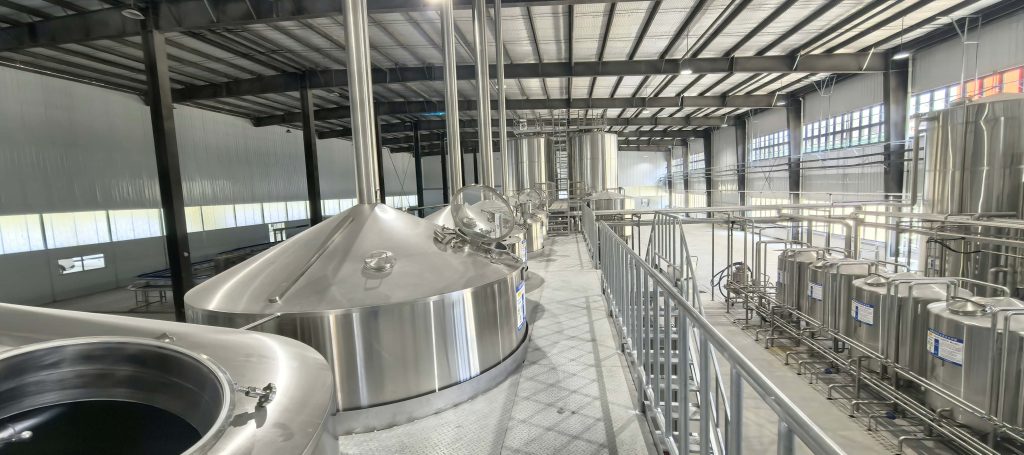
For large industrial brewery projects, big groups need high-capacity, fully automatic equipment. SKE provides large brewhouse systems, automatic fermentation tanks and central control panels that match the production level of AB InBev, Heineken and other global giants. The equipment runs stably for long periods and saves energy and water.
For medium and craft breweries that rely on top distributors to sell their beer, product taste stability and hygiene level are the first check points. Distributors will refuse brands with unstable flavor or poor production conditions. SKE craft brewing equipment keeps precise temperature control, strict sanitation and stable fermentation, helping new breweries pass distributor quality checks easily.
Market trends such as sustainability, flexible production and online sales also guide our product development. We add water recycling systems, energy-saving cooling units and multi-style brewing flexibility into every series. When global distributors and breweries move toward green production, SKE keeps the same pace to support clients long-term.
FAQ
Q1: Who is the largest alcohol distributor in the world?
A: Southern Glazer’s Wine & Spirits is the largest pure alcohol distributor worldwide. If we include producer-distributor groups, Diageo also ranks at the top by global business scale.
Q2: Which is the largest brewery in the world?
A: AB InBev is the clear world largest brewery. It has the highest beer production volume, the most global factories and the biggest market share.
Q3: What is the best-selling beer brand globally?
A: Snow Beer from CR Snow is the best-selling single beer brand in the world by sales volume.
Q4: Do big breweries run their own distribution?
A: Yes. Most top breweries build their own distribution networks to control quality and cost. They still work with independent distributors to cover more local shops and bars.
Q5: How do alcohol distributors influence craft breweries?
A: Distributors help craft breweries deliver goods, follow local laws and enter thousands of retail stores. Without distributor support, small craft brands cannot grow quickly to a national or global level.
Q6: What trends are changing the beer and distribution industry?
A: The main trends are premium product demand, non-alcoholic beer growth, green and low-carbon production, digital online sales, and fast expansion in emerging markets.
Q7: How can SKE support new and existing breweries?
A: SKE supplies full sets of beer brewing equipment for large industrial factories, medium breweries and small craft breweries. We offer factory layout design, equipment production, on-site installation and technical training. Our systems follow international quality and sustainability standards to help clients cooperate with top global alcohol distributors and brewery chains.
Conclusion
Contact Us
If you have any further questions, feel free to reach out!
For more personalized assistance, please fill out the contact form at the bottom of this page. We look forward to helping you with your brewing needs!