Introduction
Have you ever dreamed of starting your own brewery? Maybe you already run a small brewpub. Or perhaps you want to become the largest brewer in your region. No matter your goal, the equipment you choose is the heart of your business.
Making beer at home is fun. But making beer for thousands of people is a different challenge. You need industrial brewing equipment. This machinery is strong, reliable, and built for high volume.
In this guide, we will explain everything you need to know. We will talk about beer brewing equipment commercial options for small, medium, and large breweries. We will also introduce you to SKE, a trusted manufacturer of brewing systems.
What Is Industrial Brewing Equipment?
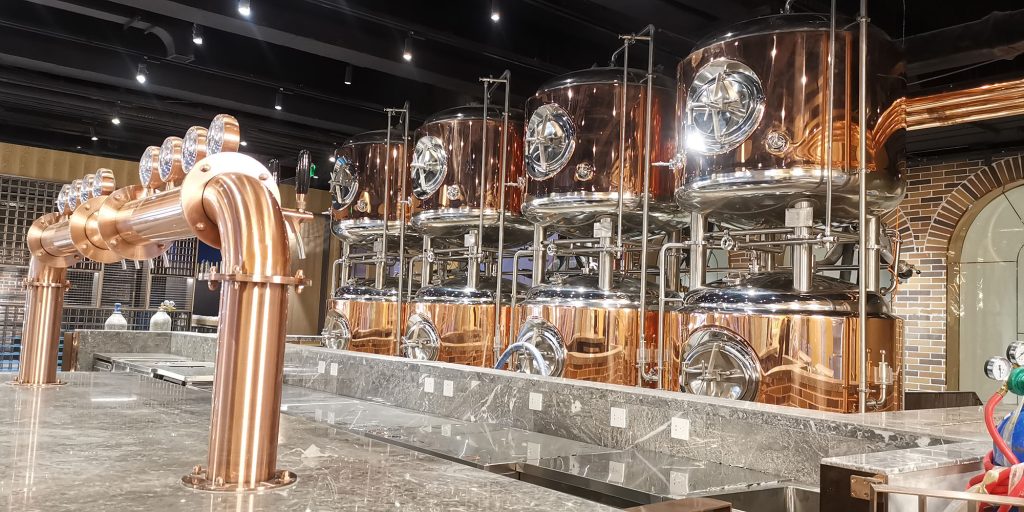
Industrial brewing equipment refers to machines designed for large-scale beer production. Unlike home brewing kits, these systems are made of high-quality stainless steel. They can produce hundreds or even thousands of liters per batch.
The main parts include mash tuns, lauter tuns, brew kettles, whirlpools, and fermentation tanks. Each part has a specific job. Together, they turn raw ingredients like malt, hops, water, and yeast into delicious beer.
For example, a largest brewer like Budweiser or Heineken uses huge industrial systems. These systems are fully automated. They control temperature, pressure, and time very precisely.
But you do not need to be the largest brewer to use industrial gear. Small craft breweries also use scaled-down versions. These are called microbrewery systems. They still use the same technology, just in smaller sizes.
SKE builds equipment for all levels. Whether you make 500 liters or 50,000 liters per batch, we have a solution for you.
Why Choose Commercial Beer Brewing Equipment?
Home brewing is fun for learning. But beer brewing equipment commercial grade is a must for selling beer. Why? Because commercial equipment is:
- More Durable – Made for daily use over many years.
- More Efficient – Uses less energy and water per liter of beer.
- More Consistent – Every batch tastes the same, which builds your brand.
- Safer – Designed with pressure relief valves, temperature controls, and sanitary fittings.
If you want to grow your business, you need to upgrade. Even a small brewpub needs professional gear. A 500-liter system from SKE is still “commercial.” It follows the same safety and quality rules as a giant system.
Types of Industrial Brewing Systems by Size
Not all breweries are the same. Some are tiny brewpubs. Others are regional factories. Here are the three main sizes of industrial brewing equipment.
Small Systems (Nano & Micro Breweries)
- Batch size: 50 – 1,000 liters
- Best for: Pubs, restaurants, and very small craft breweries
- Features: Manual or semi-automatic control. Small footprint. Easy to clean.
SKE offers compact systems for small spaces. You can put a 500-liter brewhouse in a garage or basement. These systems include everything: mash mixer, lauter tun, brew kettle, and whirlpool. They also include fermentation tanks and a glycol cooling system.
Medium Systems (Regional Breweries)
- Batch size: 1,000 – 10,000 liters
- Best for: Breweries selling in multiple cities or states
- Features: Semi-automatic or fully automatic. More energy-efficient. Larger hot water tanks.
Medium systems are very popular today. Many craft breweries grow from 500 to 3,000 liters in just two years. SKE helps you plan this growth. We design systems that can be expanded later. For example, you can add more fermenters or a larger brew kettle.
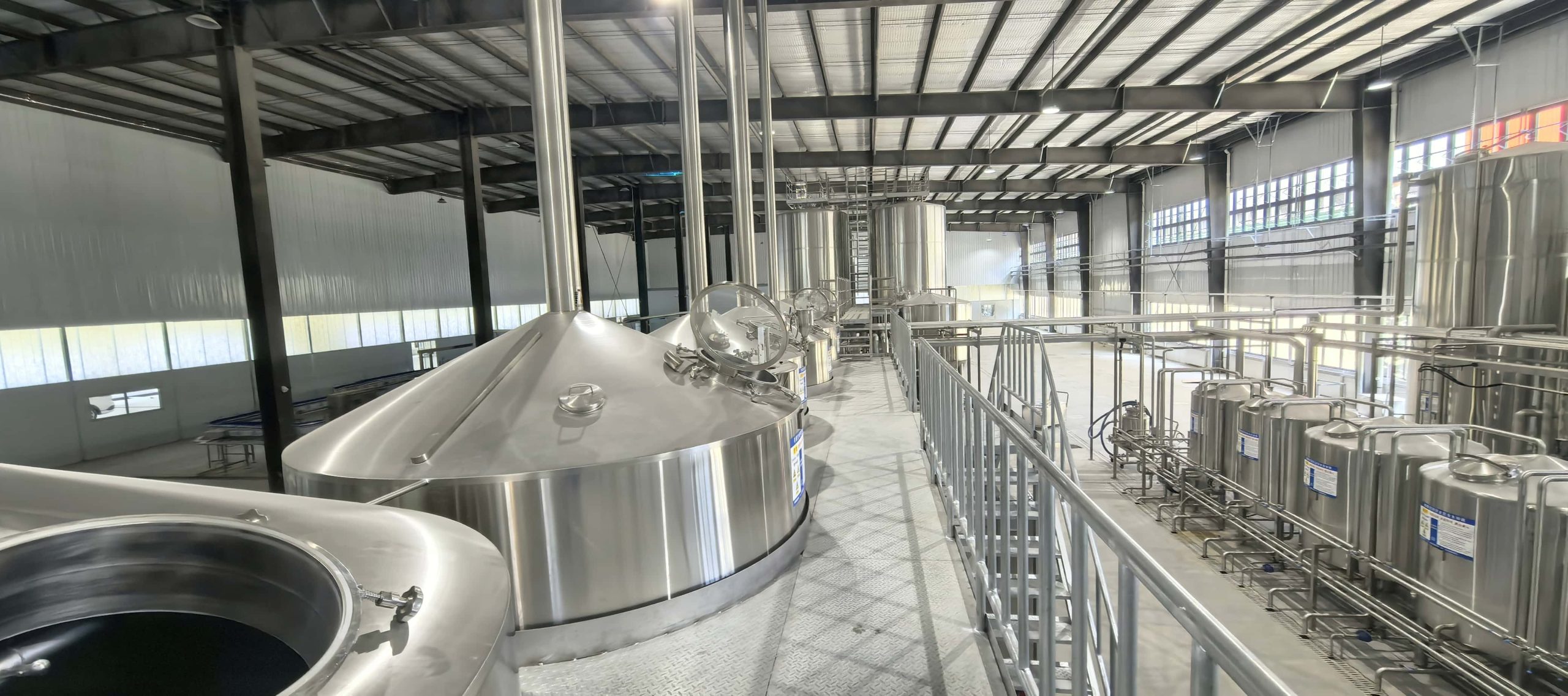
Large Systems (Industrial & Macro Breweries)
- Batch size: 10,000 – 100,000+ liters
- Best for: Becoming the largest brewer in a country or region
- Features: Fully automatic. CIP (clean-in-place) systems. High efficiency. Heat recovery systems.
These systems are for serious production. They run 24 hours a day. They fill thousands of kegs, cans, or bottles every hour. SKE has experience building systems for very large breweries. We use the same quality materials as the largest brewer in the world.
Key Components of a Commercial Brewery
Let’s look at the main parts of beer brewing equipment commercial. Each part plays a role in turning grain into beer.
| Component | Function | Typical Material | Size Range |
|---|---|---|---|
| Mash Tun | Mixes crushed grain with hot water to convert starches to sugars | Stainless steel 304 or 316 | 500L – 100,000L |
| Lauter Tun | Separates liquid wort from solid grain husks | Stainless steel with false bottom | 500L – 100,000L |
| Brew Kettle | Boils wort with hops to add bitterness and flavor | Stainless steel, steam-jacketed | 500L – 100,000L |
| Whirlpool | Removes solid hop particles and coagulated proteins | Stainless steel | 500L – 100,000L |
| Fermentation Tank | Holds wort while yeast turns sugar into alcohol and CO2 | Stainless steel, insulated, with cooling jackets | 500L – 200,000L |
| Bright Beer Tank | Stores finished beer before packaging; used for carbonation | Stainless steel, pressure-rated | 500L – 200,000L |
| Glycol Cooling System | Cools fermentation and storage tanks | Copper pipes, stainless steel chiller | 1 – 100+ HP |
| CIP System | Automatically cleans tanks without disassembly | Stainless steel with spray balls and pumps | 200L – 5,000L tank |
Every SKE system includes these core parts. We also offer extras like yeast propagators, water treatment units, and spent grain silos.
If you want to become the largest brewer in your area, you need all these components working together perfectly. SKE helps you design the right layout.
Key Components of a Commercial Brewery
Let’s look at the main parts of beer brewing equipment commercial. Each part plays a role in turning grain into beer.
Every SKE system includes these core parts. We also offer extras like yeast propagators, water treatment units, and spent grain silos.
If you want to become the largest brewer in your area, you need all these components working together perfectly. SKE helps you design the right layout.
The Largest Brewers and Their Equipment
What does the largest brewer in the world use? Companies like AB InBev, Heineken, and Carlsberg use massive systems. Their kettles can hold 500,000 liters or more. Their fermenters are as tall as buildings.
But here is a secret: The technology is the same as a small 1,000-liter brewery. Only the scale changes. They still mash, lauter, boil, whirlpool, ferment, and condition. They just do it with bigger pipes, pumps, and tanks.
The largest brewer also focuses on efficiency. They reuse hot water. They capture CO2 from fermentation. They recycle spent grain as animal feed. These practices save money and help the environment.
You can use the same methods on a smaller scale. SKE builds energy-efficient systems for any size. We add heat recovery and water-saving features. This reduces your operating costs. It also prepares you to grow into a major player.
Remember: Today’s small brewery could be tomorrow’s largest brewer in the region. Invest in quality beer brewing equipment commercial now. SKE will grow with you.
Why Choose SKE as Your Brewing Equipment Manufacturer?
There are many companies selling industrial brewing equipment. Why choose SKE?
Experience and Quality
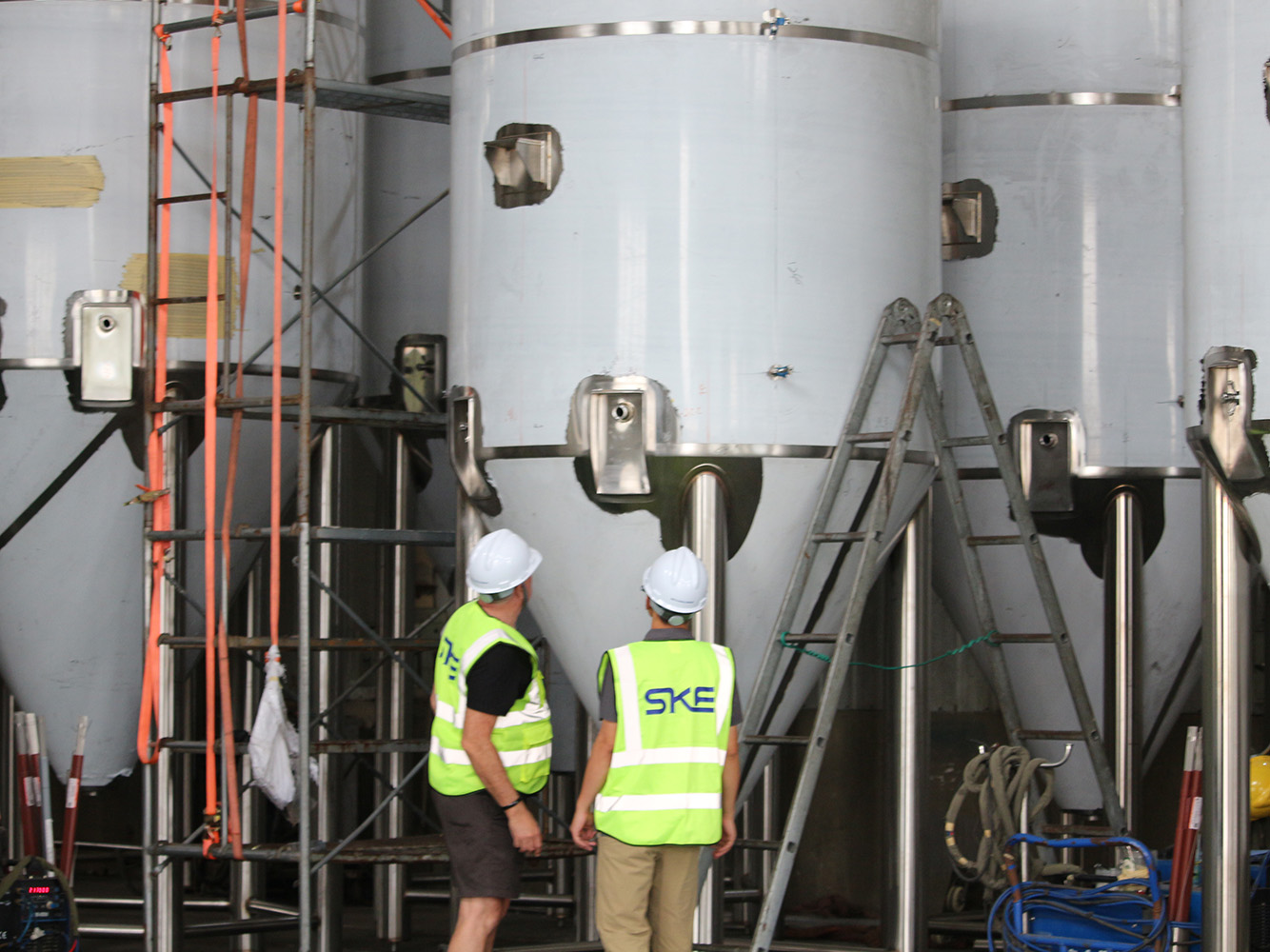
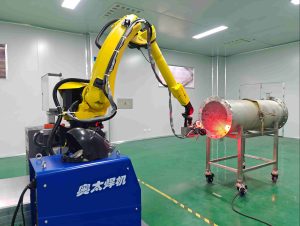
SKE has been making brewing systems for over 15 years. We ship to more than 50 countries. Our tanks are made from food-grade stainless steel (304 or 316). All welds are smooth and sanitary. We pressure-test every tank before it leaves our factory.
Custom Solutions
No two breweries are the same. SKE customizes everything. Do you need a 2-vessel system? Or a 4-vessel system? Do you want electric or steam heating? Do you need a spent grain auger? Just tell us.
We also help future largest brewer candidates. We design modular systems that can expand from 1,000 to 50,000 liters over time.
Frequently Asked Questions (FAQ)
Here are common questions about industrial brewing equipment. Read these answers to make a better decision.
Q1: What is the minimum order quantity with SKE?
A: There is no minimum. You can buy one 500-liter fermenter or a full 10,000-liter brewhouse. SKE works with small startups and large companies alike.
Q2: How long does it take to build a brewing system?
A: Small systems (500-2,000L) take 30-45 days. Medium systems (3,000-10,000L) take 60-90 days. Large systems (over 10,000L) take 4-6 months. Shipping adds 2-6 weeks depending on your location.
Q3: Do you offer financing?
A: SKE does not offer direct financing, but we can provide documents to help you apply for a bank loan or leasing company.
Q4: Can I see a factory or visit a running brewery?
A: Yes. We welcome customers to visit our factory. We can also connect you with past clients in your region. Seeing the equipment in action builds confidence.
Q5: What is the difference between 304 and 316 stainless steel?
A: 304 is standard for most brewing applications. It is strong and rust-resistant. 316 has more molybdenum, which resists salt and strong acids. Use 316 for tanks that hold very caustic cleaners or for coastal breweries near salty air.
Contact Us
If you have any further questions, feel free to reach out!
- Facebook: SKE Equipment Facebook
- Email: info@skeequipment.com
For more personalized assistance, please fill out the contact form at the bottom of this page. We look forward to helping you with your brewing needs!