
Before You Buy: 3 Key Questions to Ask First
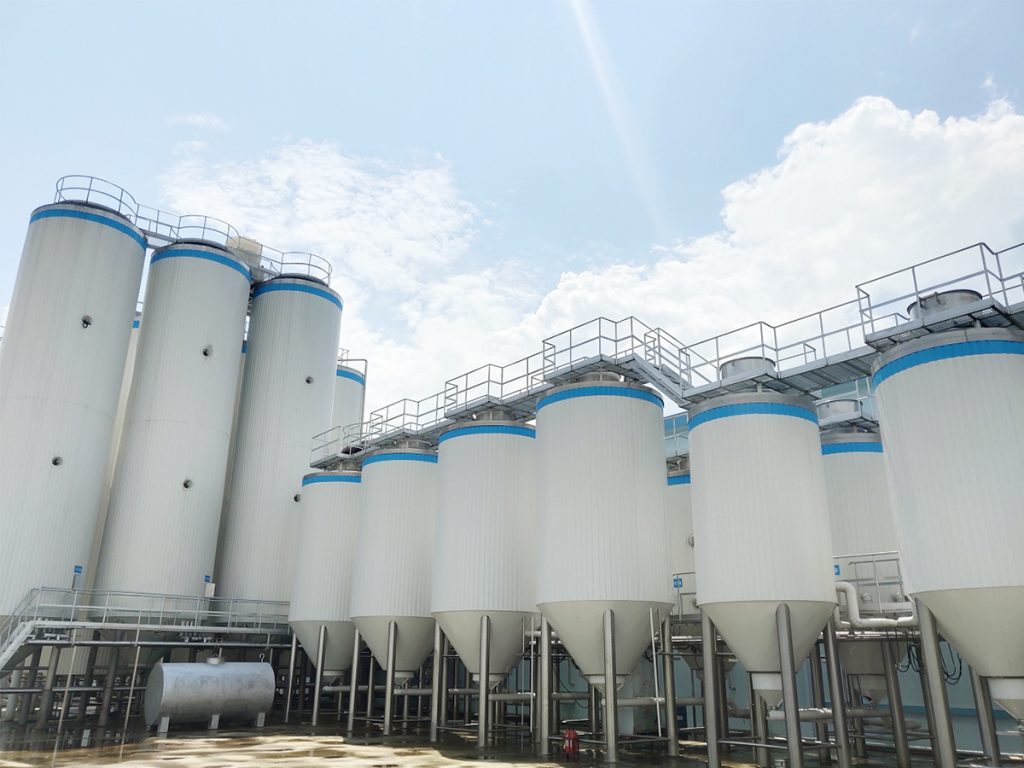
Before deciding to purchase a Large Juice Storage Tank or other Liquid Storage Tanks for your production line, every beverage plant needs to answer three core questions: What product will you store?How much volume do you need?How long will the storage period be? The answers to these questions determine the material, capacity, and features of the tank. Whether you also need a Mixing Tank for blending ingredients, the same careful consideration applies.
Juice, milk, carbonated drinks, pure water, soy milk, and wine—each liquid has different chemical properties, storage requirements, and shelf life. Juice is acidic, milk requires strict low temperatures, carbonated drinks need pressure resistance, and wine is sensitive to oxygen. No single tank can perfectly handle all products. However, SKE offers a wide range of models and customization options to help you find the best fit for your needs.
Key Features of a Large Juice Storage Tank for Juice Storage
Juice contains high levels of sugar, vitamins, and natural pigments, making it very sensitive to temperature and oxygen. High storage temperatures can cause fermentation and color changes, while oxygen exposure leads to vitamin C loss and flavor degradation. A well-designed Large Juice Storage Tank must address these challenges effectively.
A suitable Large Juice Storage Tank for juice should have the following features:
-
Precise temperature control jacket: Uses circulating glycol solution to maintain a stable temperature of 8-10°C
-
Nitrogen blanketing system: Creates an inert gas layer above the liquid surface to block oxygen
-
AISI 316 stainless steel material: Offers better acid resistance and prevents corrosion
-
Hygienic internal surface polishing: Smooth and seamless for easy CIP cleaning
For concentrated juice, which has high sugar content and viscosity, we recommend a tank with slow-speed agitation to prevent sugar sedimentation. SKE’s Liquid Storage Tanks are designed with these features as standard options, ensuring your juice retains its natural flavor and nutritional value throughout the storage period.
Milk Storage Solutions: Both Low Temperature and High Cleanliness Matter
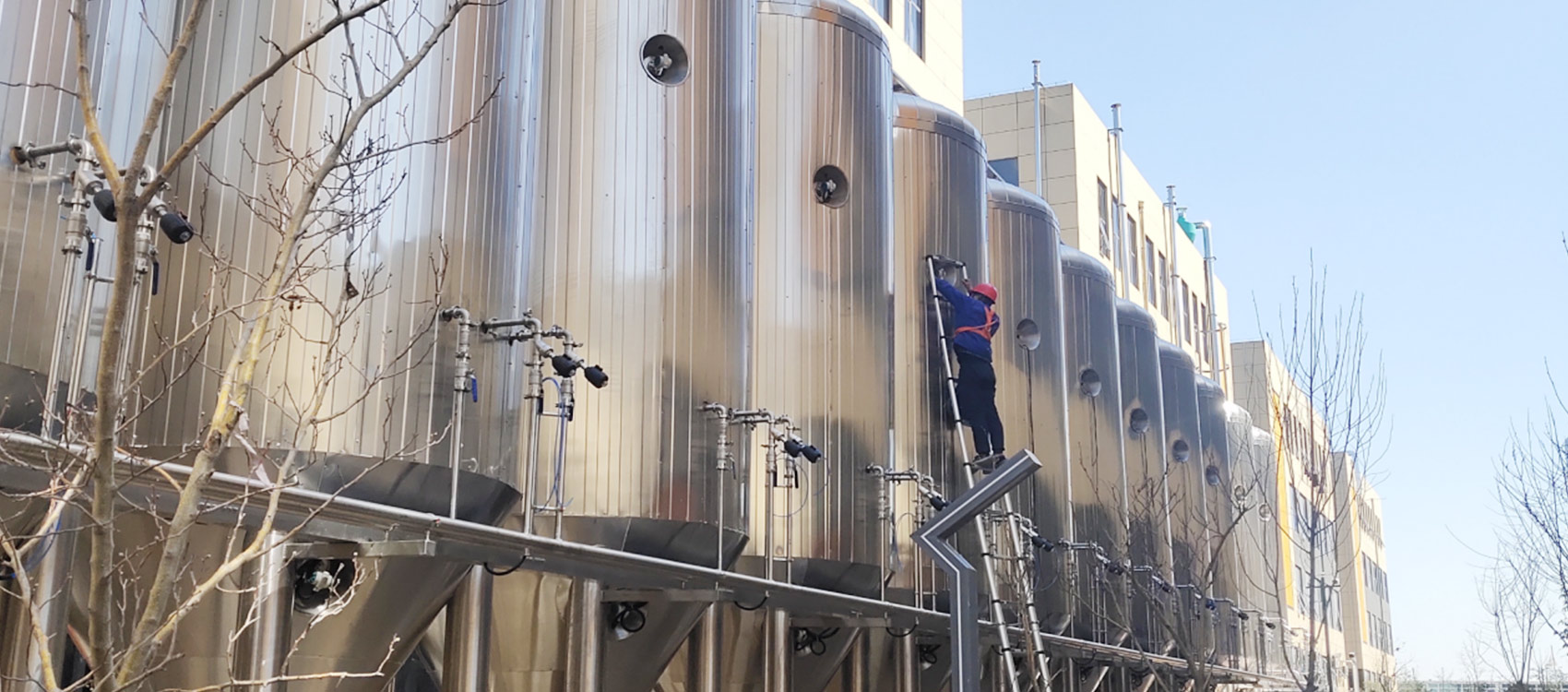
Milk is highly perishable and requires stricter storage conditions than juice. The storage temperature must be kept below 4°C, and the tank must meet the special hygiene standards required for dairy products.
Recommended tank features for milk storage:
-
Powerful cooling system: Ensures uniform temperature throughout the tank with no hot spots
-
High-precision temperature sensors: Monitor and record temperature changes in real time
-
Special hygienic design: All welds are smooth, and gaskets are made of food-grade silicone
-
Sealed tank top: Prevents external contaminants and odors from entering
Milk tanks typically do not require nitrogen protection, but they do need more frequent cleaning. SKE’s Liquid Storage Tanks are equipped with efficient CIP systems that can quickly complete cleaning and disinfection, meeting the strict requirements of dairy production. The same high standards apply to our Mixing Tank units used for milk-based product blending.
Carbonated Drink Storage Solutions: Pressure Resistance and Sealing Are Prerequisites
The biggest difference between carbonated drinks and other beverages is the presence of carbon dioxide gas, which creates positive pressure inside the tank. Therefore, tanks used for carbonated drink storage must have excellent pressure resistance and sealing performance.
Key selection points for carbonated drink tanks:
-
Pressure-rated design: The tank body and heads must be designed and manufactured according to pressure vessel standards
-
Strong sealing performance: All connections and manholes must ensure zero leakage
-
Material choice: AISI 304 is sufficient, but AISI 316 offers better corrosion resistance
-
Safety valve installation: Prevents dangers from abnormal pressure increases
Carbonated drinks are usually filled and packaged soon after production, so storage time is relatively short. However, if you need to store syrup base, we recommend using a Mixing Tank with agitation to maintain uniform syrup concentration. SKE’s Liquid Storage Tanks can be customized with pressure-rated features to safely handle carbonated products.
Pure Water Storage Solutions: Simple but Still Important
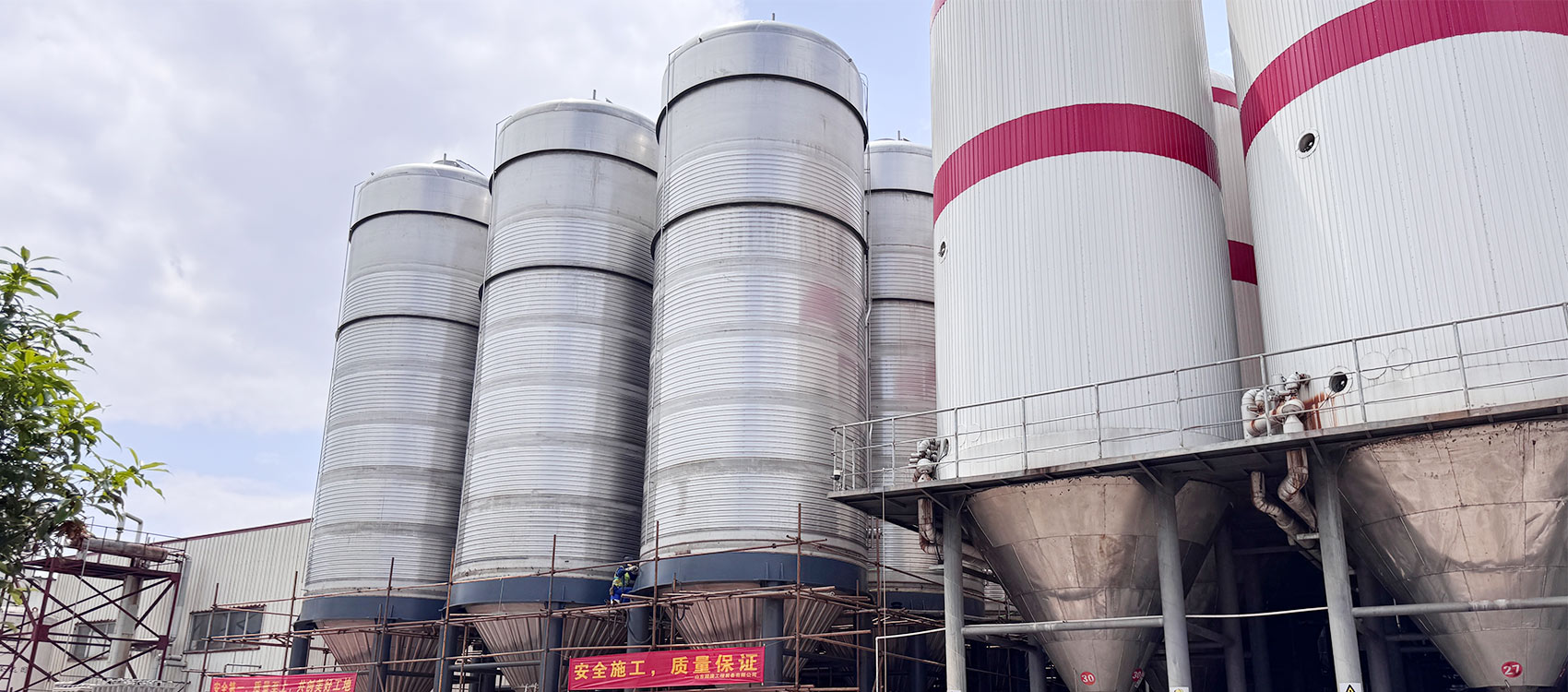
Pure water may seem simple, but improper storage can still cause problems. Pure water has strong dissolving power and can leach trace metal ions from tank materials. Additionally, pure water lacks residual disinfectants like chlorine, making it susceptible to microbial growth.
Recommendations for pure water tanks:
-
AISI 304 or 316 stainless steel: Prevents metal ion leaching
-
Sealed design: Prevents dust and bacteria from the air from entering
-
Regular cleaning: Even though pure water is clean, tanks still require periodic CIP cleaning
-
Level indicator: Makes inventory management easier
Pure water tanks have a relatively simple structure and lower cost, but they are still an essential auxiliary piece of equipment for any beverage plant. SKE offers cost-effective Liquid Storage Tanks for pure water that maintain the same high quality standards as our other products.
Soy Milk Storage Solutions: Preventing Sedimentation Is the Key
Soy milk is rich in plant protein, which tends to sediment and separate during storage. In addition, soy milk has a near-neutral pH value, allowing microorganisms to multiply quickly.
Recommended tank configurations for soy milk:
-
Low-speed agitation function: Continuous or intermittent stirring to prevent settling
-
Rapid cooling system: Quickly cools after boiling to the storage temperature
-
Insulation layer: Maintains stable temperature and reduces energy consumption
-
Easy-to-clean design: Protein easily adheres to tank walls and requires thorough cleaning
SKE’s Mixing Tank is an excellent choice for soy milk storage and blending. The agitator effectively maintains the uniformity of the soy milk. Many of our Liquid Storage Tanks can also be equipped with optional agitation systems to handle soy milk’s unique properties.
Wine Storage Solutions: Inert Gas Protection Is a Must
Wine storage is extremely sensitive to oxygen. Even a tiny amount of oxygen can alter wine’s flavor and even lead to acetification. Therefore, the nitrogen blanketing system is the most important feature for wine storage tanks.
Key considerations for wine storage tanks:
-
Nitrogen or carbon dioxide blanketing: Ensures the liquid surface is always protected by inert gas
-
Stable temperature: The ideal storage temperature for wine is 12-16°C
-
Light-proof design: UV rays accelerate wine aging
-
AISI 316 stainless steel: Acid-resistant and does not affect wine body and flavor
Many wineries still use oak barrels for aging, but stainless steel tanks have irreplaceable advantages for bulk storage and blending. SKE’s Large Juice Storage Tank designs are equally suitable for wine, with the same attention to material quality and precision manufacturing that winemakers demand.
Quick Comparison Table for Tank Selection
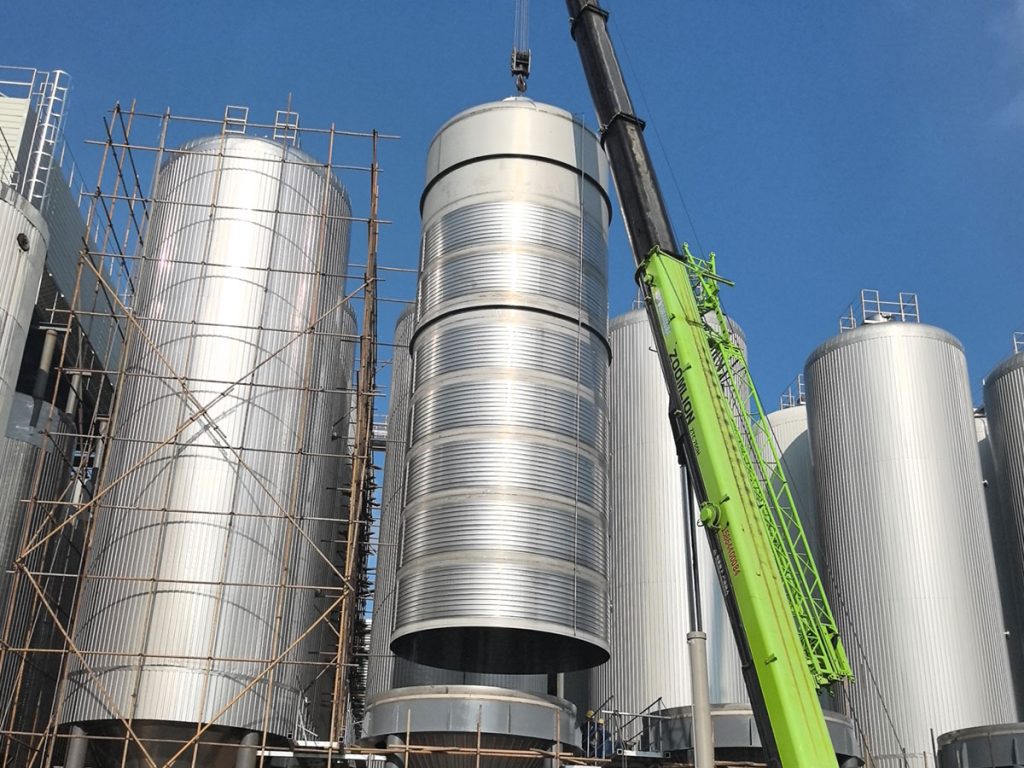
The table below helps you quickly compare the tank configuration requirements for different beverages.
| Beverage Type | Recommended Material | Temperature Control | Nitrogen Blanketing | Agitation Needed | Special Requirements |
|---|---|---|---|---|---|
| Juice | AISI 316 | 8-10°C | Yes | Concentrate needs it | Acid resistance |
| Milk | AISI 304/316 | < 4°C | No | No | High hygiene standards |
| Carbonated Drinks | AISI 304/316 | Ambient or chilled | No | Syrup needs it | Pressure-rated design |
| Pure Water | AISI 304 | Ambient | No | No | Microbial prevention |
| Soy Milk | AISI 304 | < 4°C | No | Yes | Sediment prevention |
| Wine | AISI 316 | 12-16°C | Yes | For blending | Light protection |
Frequently Asked Questions (FAQ)
1. Can juice tanks and milk tanks be shared?
It is not recommended. Juice is acidic while milk is neutral, and the cleaning requirements and temperature parameters are different. Sharing may lead to cross-contamination and flavor transfer. If sharing is unavoidable, thorough CIP cleaning and disinfection must be performed before each product changeover.
2. What pressure rating do carbonated drink tanks need?
Generally, the internal pressure for carbonated drinks is between 2-4 bar. The tank’s design pressure should reach at least 6 bar, and a safety valve must be installed. Please confirm the exact pressure parameters based on your specific production process.
3. How do I determine the right tank capacity?
Tank capacity should be calculated based on batch output, storage period, and daily consumption. A general rule of thumb: Tank Capacity = Daily Output × Storage Days × 1.2 (safety factor). SKE offers a full range of Liquid Storage Tanks from 5,000 liters to 100,000 liters and above.
4. How much more expensive is a custom tank compared to a standard one?
The cost of a custom tank varies depending on the specific configuration, typically 15%-40% higher than standard models. However, customization ensures perfect integration with your production line, saving space and labor costs in the long run.
Conclusion: Choose the Right Tank for Better Results
Selecting large storage tanks is not just about “buying a container.” It is a systematic process that requires comprehensive consideration of product characteristics, production scale, plant layout, and budget constraints.
Juice needs temperature control, milk needs low temperatures, carbonated drinks need pressure resistance, soy milk needs sedimentation prevention, and wine needs nitrogen blanketing—each product has its most suitable tank solution. Whether you are looking for a Large Juice Storage Tank, a general-purpose Liquid Storage Tank, or a Mixing Tank for blending, SKE has the expertise to guide you.
As a professional manufacturer of beer and beverage equipment, SKE leverages years of industry experience and strict material quality control to provide you with both standard and custom storage solutions.
Our products are known for excellent hygiene, reliability, safety, and durability, helping medium and large beverage plants achieve efficient and stable production operations. We pay great attention to raw material selection and manufacturing quality, ensuring every tank delivers long-term value.
For more product details or to get a customized tank solution, please feel free to contact the SKE team. We look forward to working with you to build a high-quality beverage production line.
- Facebook: SKE Equipment Facebook
- Email: info@skeequipment.com
Fill out the contact form below for customized solutions. We fully support all your production equipment demands for breweries and beverage plants.