
Introduction: What Fermentation Is and Why It Matters
Fermentation is the most important step in making beer. Without it, beer would just be sweet barley water. So, what fermentation is in simple terms? It is a natural process where yeast consumes sugar and turns it into alcohol, carbon dioxide, and flavour compounds. This reaction gives beer its strength, bubbles, and unique taste.
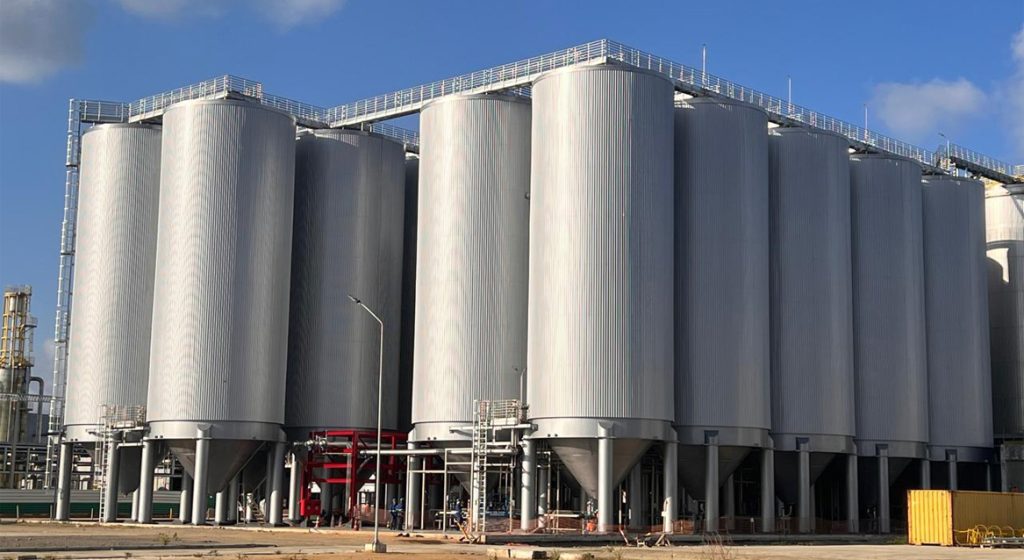
In commercial breweries, the beer fermentation process is carefully managed. Brewers control every variable for consistent results. This is why modern breweries use advanced equipment. Among all choices, stainless steel tanks are the industry standard. They offer benefits other materials cannot match.
This article explains the beer fermentation process. It also shows why stainless steel tanks are best for medium and large breweries.
Chapter 1: Understanding What Fermentation Is in Brewing
1.1 The Basic Science Behind Fermentation
To understand brewing, you must know what fermentation is. Fermentation is a process carried out by yeast. Yeast eats simple sugars like glucose. In return, it produces alcohol and carbon dioxide. This reaction also creates other compounds called esters and phenols. These give beer its aroma and flavour.
The simple equation is C₆H₁₂O₆ → 2 C₂H₅OH + 2 CO₂. But the real beer fermentation process is more complex. Yeast produces many other substances in tiny amounts. These small amounts greatly affect taste.
Yeast health is very important. Weak yeast causes slow fermentation. Strong yeast works quickly and produces clean flavours. Brewers always check yeast before adding it to the wort.
1.2 Two Types of Fermentation in Beer Making
There are two main types of beer fermentation. The first is top-fermentation for ales. Yeast works at 18-24°C and rises to the top. The second is bottom-fermentation for lagers. Yeast works at 8-14°C and sinks to the bottom.
Each type produces different flavours. Ales are fruity and complex. Lagers are clean and crisp. The beer fermentation process also includes conditioning. This is when beer matures and flavours balance.
Brewers choose the type based on their beer style. Both need careful temperature control.
Chapter 2: The Beer Fermentation Process Step by Step
2.1 Preparation and Pitching Yeast
The beer fermentation process starts with wort. Wort is sugary liquid from malted barley. Brewers boil it with hops, then cool it. The next step is pitching, which means adding yeast.
The amount of yeast is critical. Too little causes slow fermentation. Too much creates off-flavours. Brewers calculate the pitch rate carefully. They also check yeast health. The wort needs oxygen to help yeast grow. Good preparation leads to good beer.
2.2 Primary Fermentation
Primary fermentation is the most active stage. It lasts 3-7 days for ales and up to 2 weeks for lagers. Yeast multiplies rapidly. The tank fills with foam and CO₂.
Temperature must stay stable. Too hot creates bad flavours. Too cold stops fermentation. Brewers monitor gravity, which measures sugar content. When gravity stops dropping, primary fermentation is complete. The beer is now called “green beer.”
2.3 Conditioning and Carbonation
After primary fermentation, the beer moves to conditioning. This lasts 1-6 weeks. Yeast cleans up unwanted compounds like diacetyl. The beer becomes smoother and clearer.
The final steps are filtration and carbonation. Filtration removes yeast and haze. Carbonation adds the right fizziness. The beer is then packaged. The whole beer fermentation process takes 2-8 weeks.
Chapter 3: Fermentation in Large Breweries
3.1 Scaling Up
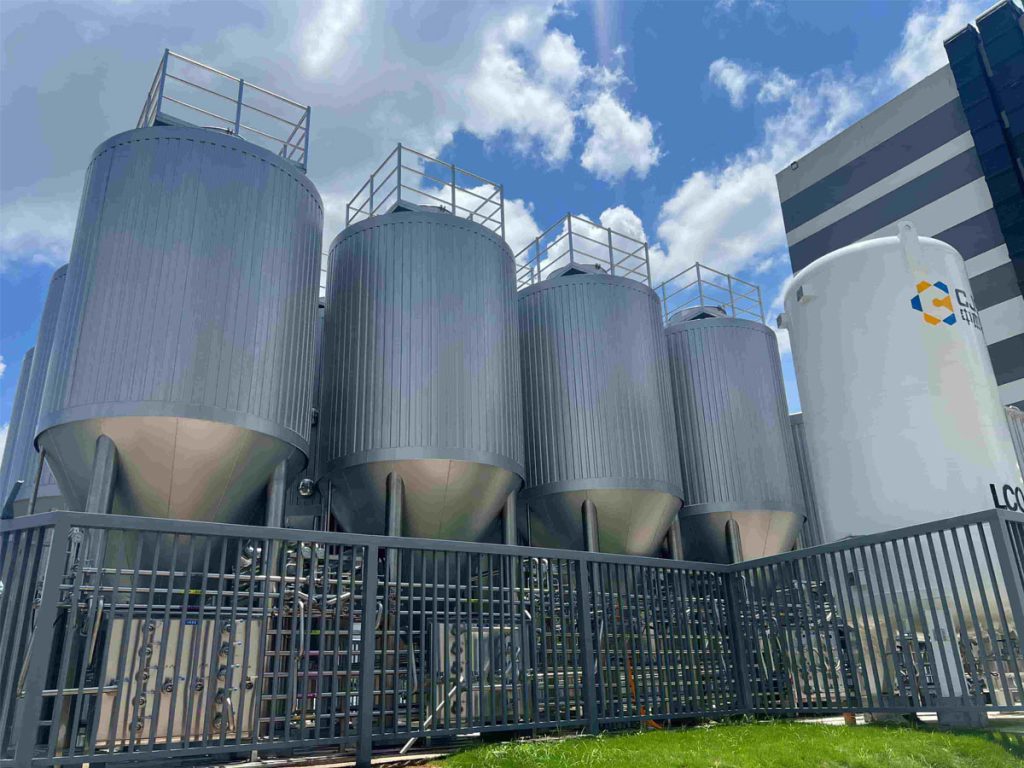
The beer fermentation process in large breweries is similar in principle. But the scale is different. A homebrewer makes 20 litres. A large brewery makes millions of litres.
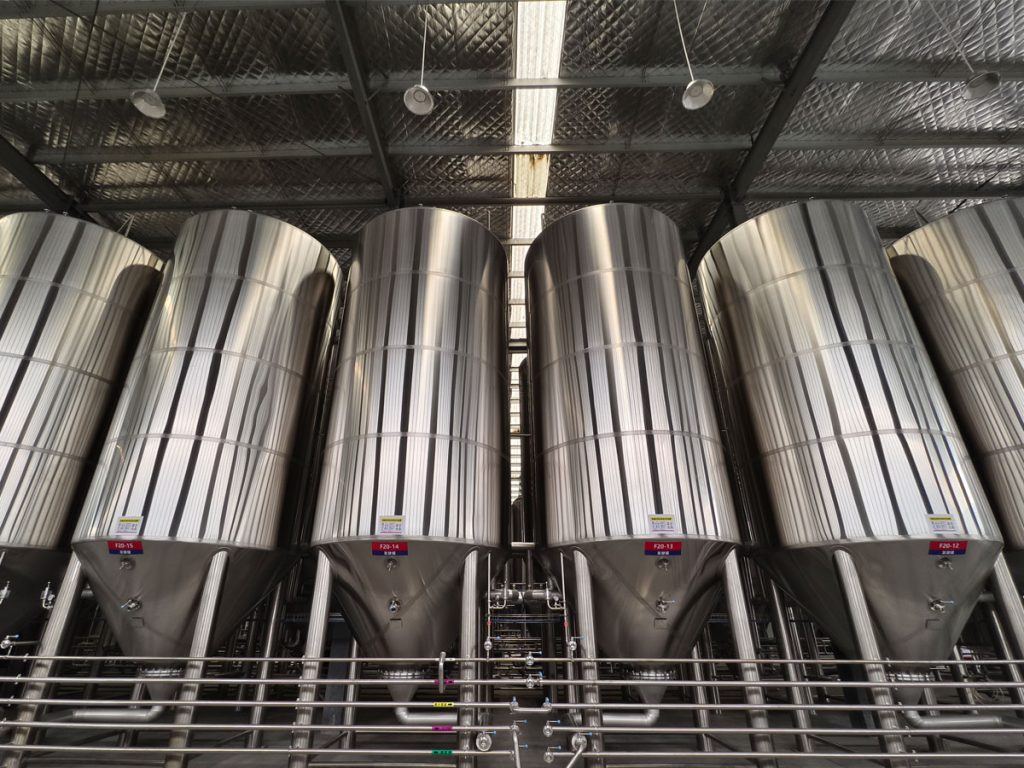
Temperature control is harder at large volumes. Fermentation creates heat. The centre of a big tank can be warmer than the walls. This can ruin the beer. Large breweries need good cooling systems. Stainless steel helps with this.
Consistency is another challenge. Every batch must taste the same. This requires precise control. Stainless steel tanks provide a stable environment for yeast.
3.2 Commercial Timeline
| Stage | Duration | Temperature | Key Activities |
|---|---|---|---|
| Pitching | 1 hour | 18-22°C | Add yeast to wort |
| Primary Fermentation | 4-7 days | 18-22°C | Sugar to alcohol |
| Conditioning | 1-2 weeks | 2-4°C | Maturation and clearing |
| Carbonation | 2-3 days | 2-4°C | Add CO₂ |
| Packaging | 1 day | 2-4°C | Fill containers |
For lagers, the process takes longer. Primary fermentation is 1-2 weeks. Conditioning is 4-6 weeks. Total time can be over 8 weeks.
Chapter 4: Why Stainless Steel Is Best
4.1 Durability
Stainless steel is very durable. It does not rust or corrode. Fermentation creates an acidic environment. Many metals would corrode. Corrosion ruins beer and damages tanks.
Stainless steel contains chromium. This forms a protective layer. A good tank can last 30 years or more. Other materials have problems. Aluminium reacts with acid. Copper is expensive. Plastic scratches and hides bacteria.
4.2 Hygiene and Cleanability
Stainless steel has a smooth, non-porous surface. Bacteria cannot hide. This makes cleaning easy. Brewers use CIP systems with hot cleaning solutions. The smooth surface allows effective cleaning.
Stainless steel does not absorb flavours. You can ferment different beer styles in the same tank. The next batch will not taste like the previous one. This is essential for breweries with multiple products.
4.3 Temperature Control
Temperature control is very important. Yeast is sensitive to temperature. Even a few degrees change the flavour. Stainless steel conducts heat well.
Most tanks have cooling jackets with glycol or chilled water. The liquid removes heat efficiently. The whole tank stays at the same temperature. Plastic or concrete tanks have poor heat transfer. They create hot spots. Stainless steel gives precise control for consistent quality.
Chapter 5: Key Tank Features
5.1 Cooling Jackets and Insulation
Quality tanks have advanced cooling jackets. The jackets have a dimpled surface for better heat exchange. They are divided into zones for independent control. Good insulation reduces energy costs.
| Feature | Benefit | Effect on Fermentation |
|---|---|---|
| Dimpled jackets | Efficient heat transfer | Even temperature |
| Multi-zone cooling | Independent control | Optimized yeast performance |
| Good insulation | Low energy loss | Lower costs |
| Smooth finish | Easy cleaning | Prevents contamination |
| Conical bottom | Easy yeast collection | Better yeast management |
5.2 Conical Bottom
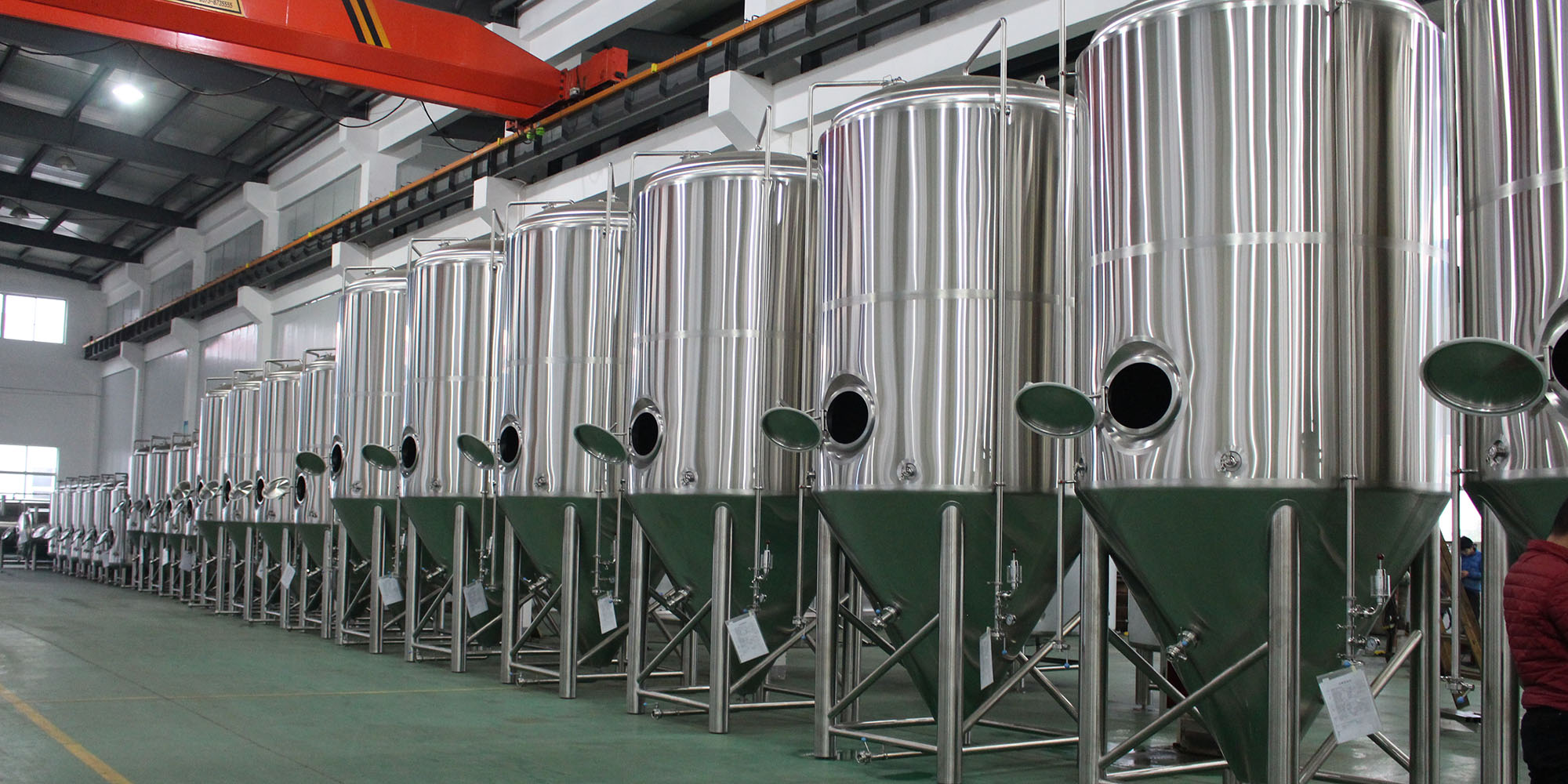
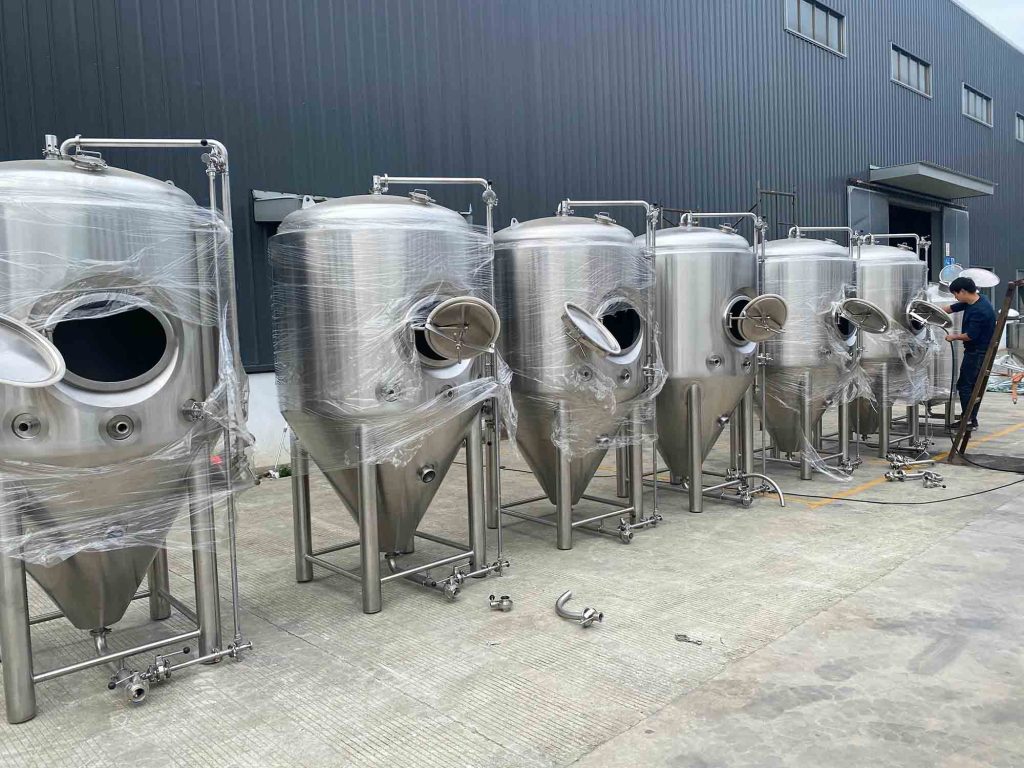
The conical bottom collects yeast and sediment. Brewers can open a valve to remove yeast. This is called cropping. Reusing yeast saves money and ensures consistency.
The cone angle is 60-75 degrees. This allows yeast to slide down easily. It also prevents yeast from compacting too much. The design helps with cleaning and reduces contamination risk.
5.3 Pressure and Safety
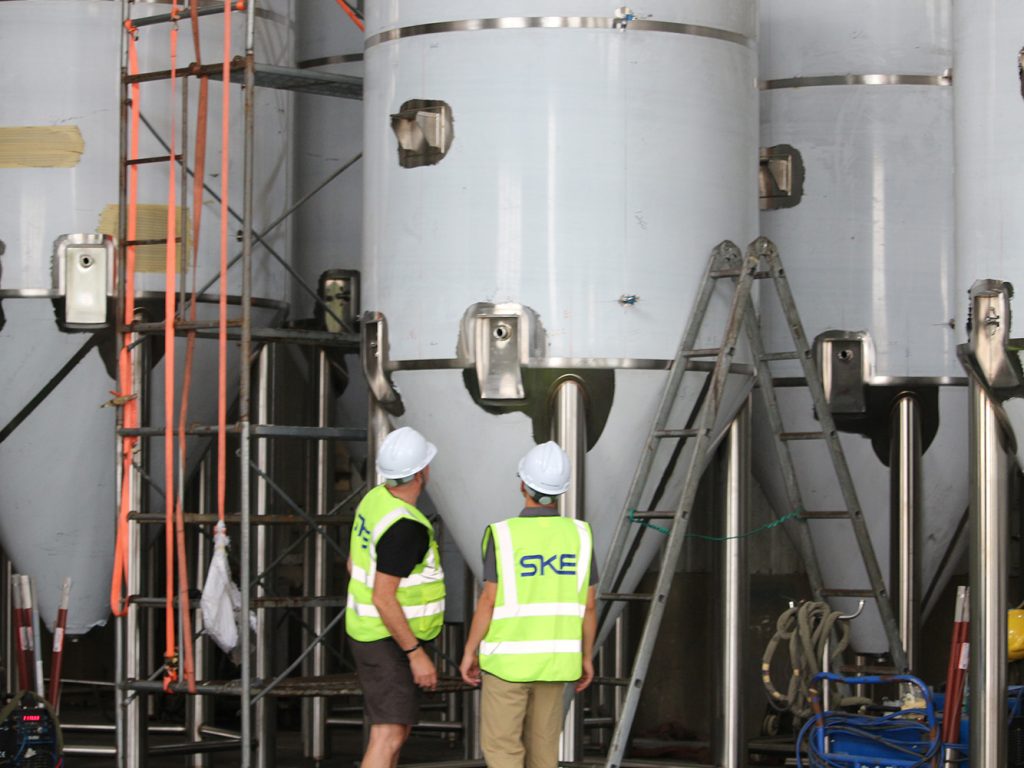
Fermentation produces CO₂, which creates pressure. Standard tanks handle 1.5-3.0 bar. Safety features include pressure relief valves and burst discs. These prevent accidents. Tanks also have manways for access and inspection. Good tanks meet international safety standards.
Chapter 6: Material Comparison
| Material | Cost | Durability | Cleanability | Temp Control | Flavour Impact |
|---|---|---|---|---|---|
| Stainless Steel | High | Excellent | Excellent | Excellent | Neutral |
| Plastic | Low | Poor | Fair | Poor | Absorbs flavours |
| Copper | Very High | Good | Fair | Good | Reactive |
| Aluminium | Medium | Fair | Good | Good | Reactive |
| Wood | High | Fair | Poor | Poor | Adds flavour |
| Concrete | High | Good | Fair | Poor | Neutral (lined) |
Plastic is cheap but scratches and absorbs flavours. Copper is beautiful but expensive and reactive. Aluminium reacts with acid. Wood is traditional but hard to clean. Concrete is heavy and difficult to install. Stainless steel is the best all-round choice.
Chapter 7: How Quality Tanks Improve Fermentation
7.1 Yeast Health
Quality tanks maintain stable temperature. This reduces yeast stress. Healthy yeast produces fewer off-flavours. Tanks also allow oxygenation for yeast growth. This leads to complete fermentation and better beer.
7.2 Consistency and Quality
Consistency is a main goal. Quality tanks provide precise temperature control. They are easy to clean. They provide accurate pressure control. Instrumentation like sensors and gauges gives real-time data. Brewers can monitor and adjust quickly.
7.3 Long-Term Savings
Quality tanks cost more upfront but save money later. They last 30+ years. They need less maintenance. They save energy. They reduce product loss. Over 10 years, they are more cost-effective than other materials.
Chapter 8: FAQ
Q1: What fermentation is in beer brewing?
A: Fermentation is the process where yeast turns sugar into alcohol, CO₂, and flavours. It makes beer from sweet wort.
Q2: Why is temperature control important?
A: Temperature affects yeast activity and flavour. Too warm causes off-flavours. Too cold slows fermentation.
Q3: Can I use plastic for commercial brewing?
A: Plastic is okay for homebrewing but not for commercial. It scratches, absorbs flavours, and has poor temperature control.
Q4: What is a conical bottom for?
A: It collects yeast and sediment for easy removal and reuse. It also helps with cleaning.
Q5: Are stainless steel tanks easy to clean?
A: Yes, they have smooth surfaces and work with CIP systems. Cleaning is quick and thorough.
Q6: Can tanks be custom-made?
A: Yes, many manufacturers offer custom solutions for space, budget, and production needs.
Conclusion
The beer fermentation process is the heart of brewing. It determines flavour, clarity, and alcohol content. To control it well, you need the right equipment. Stainless steel tanks are the clear winner for durability, hygiene, and temperature control.
Choosing stainless steel is one of the best decisions for any brewery. It offers long-term value and consistent results. Whether you are expanding or starting a new brewery, invest in quality equipment.
For breweries looking for reliable fermentation solutions, SKE provides high-quality stainless steel tanks designed for professional use. Our tanks are built to last and help you produce excellent beer every time. Contact us for more information.
If you have any further questions, feel free to reach out!
- Facebook: SKE Equipment Facebook
- Email: info@skeequipment.com
Fill out the contact form below for customized solutions. We fully support all your production equipment demands for breweries and beverage plants.