
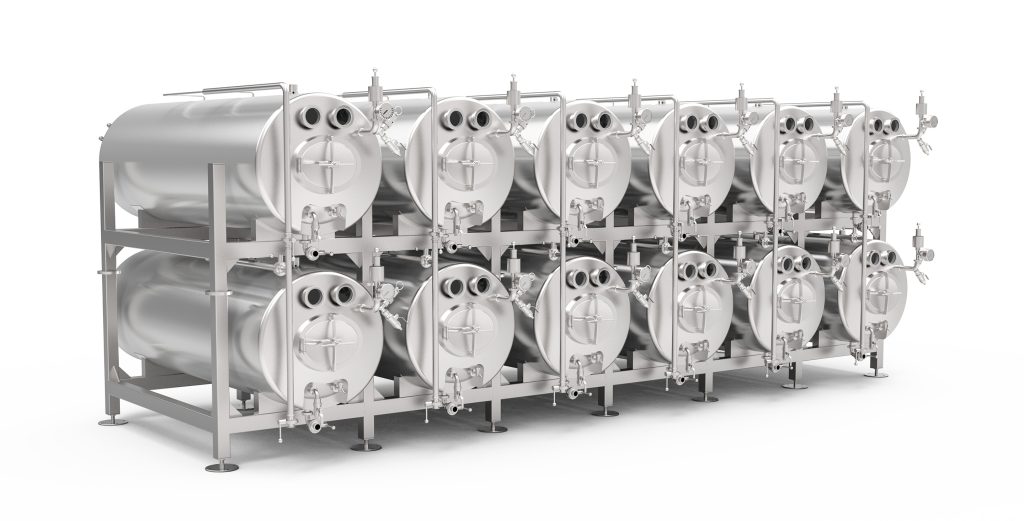
A practical guide for modern breweries
Introduction
A brite beer tank is a stainless steel tank that can hold pressure. Brewers use it after fermentation. Its main jobs are to make the beer clear, add carbonation, and store it before packaging. The name comes from the “bright” or clear beer that comes out of it.
For breweries that are growing, the choice of brite beer tanks affects many things. It affects beer quality, production speed, and costs. A good tank design helps you produce consistent beer. A poor choice can lead to problems with carbonation, cleaning, and space.
In this guide, we will explore why brite beer tanks are important for medium to large breweries. We will focus on design, benefits, and best practices. We will also look at how stainless steel water tank technology has influenced modern brite tank design.
Chapter 1: What is a Brite Beer Tank?
Definition and Main Jobs
A brite beer tank is a special tank. It is the last stop for beer before it goes into bottles, cans, or kegs. It is not a fermenter. Fermenters are for turning sugar into alcohol. The brite tank is for finishing the beer.
Here are its main jobs:
-
Clarification: After fermentation, beer has yeast and hop particles. The brite tank allows these solids to settle. This gives you clear beer. The tank has a special bottom that collects sediment.
-
Carbonation: This is a very important step. The tank has a carbonation stone at the bottom. Brewers put CO2 through this stone. Cold temperature helps the gas dissolve quickly.
-
Storage: The tank holds finished beer. This creates a buffer between fermentation and packaging. You can run the packaging line at a steady speed.
-
Maturation: Some beer styles need more time to mature. The brite tank provides a cold, stable place for this.
-
Quality Control: Brewers can take samples from the tank. They check taste, carbonation level, and clarity.
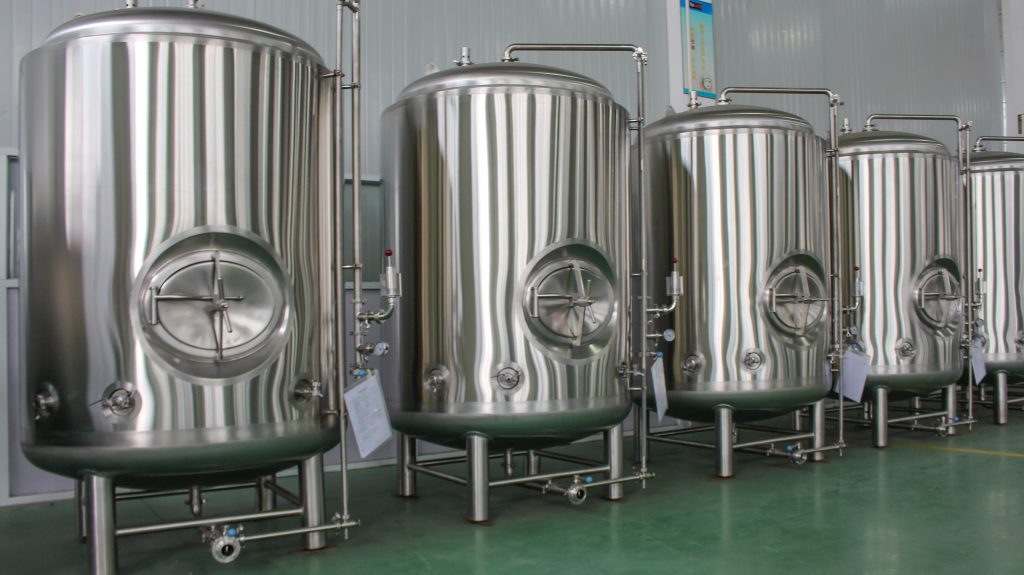
Main Parts of a Brite Tank
Every brite beer tank has specific parts. Here is a list of the main parts:
| Part | What it does |
|---|---|
| Pressure Vessel | Made of stainless steel (304 or 316 grade). Holds pressure (usually 2-3 bar). |
| Cooling Jacket | Surrounds the tank. Cold glycol runs through it. Keeps beer at 0-2°C. |
| Carbonation Stone | Creates very small CO2 bubbles. They dissolve into the beer easily. |
| CIP Spray Ball | Sprays cleaning solution. Allows for automatic cleaning. |
| Pressure Relief Valve | Safety device. Opens if pressure gets too high. |
| Sample Valve | For taking samples to test beer quality. |
| Racking Arm | Movable pipe. Takes beer from above the sediment. |
Brite Tank vs. Fermenter
It is important to know the difference. Some brewers use unitanks (which do both jobs), but a dedicated brite tank is better for quality.
| Feature | Fermenter (Unitank) | Brite Beer Tank |
|---|---|---|
| Main Use | Fermentation | Conditioning, carbonation, storage |
| Bottom Shape | Conical (for yeast collection) | Dished or slightly flat |
| Yeast Management | Designed for yeast collection | Sediment is removed |
| Volume Efficiency | Less usable volume | Close to 100% usable volume |
| Carbonation Focus | Lower priority | High priority and precision |
Using a dedicated brite tank frees up your fermenters. This means you can brew more batches. You also get better control over the final product. As a brewery grows, this becomes very important.
Chapter 2: Vertical vs. Horizontal Brite Tanks
The Vertical Brite Tank
The vertical brite tank is the most common design. It stands upright like a tall cylinder. SKE recommends this design for most clients.
Advantages:
-
Good for Small Spaces: Vertical tanks take up less floor space. You can fit more capacity in the same area.
-
Better Carbonation: CO2 rises naturally. In a tall tank, the gas has a longer path through the beer. This helps it dissolve.
-
Easy Sediment Removal: Particles settle to the bottom. They are easy to remove.
-
Simple Cleaning: The spray ball can reach all surfaces. Fewer places for dirt to hide.
-
Standard Design: Most suppliers make vertical tanks. They are cheaper and faster to deliver.
Limitation: The main limitation is ceiling height. Vertical tanks need tall ceilings.
The Horizontal Brite Tank
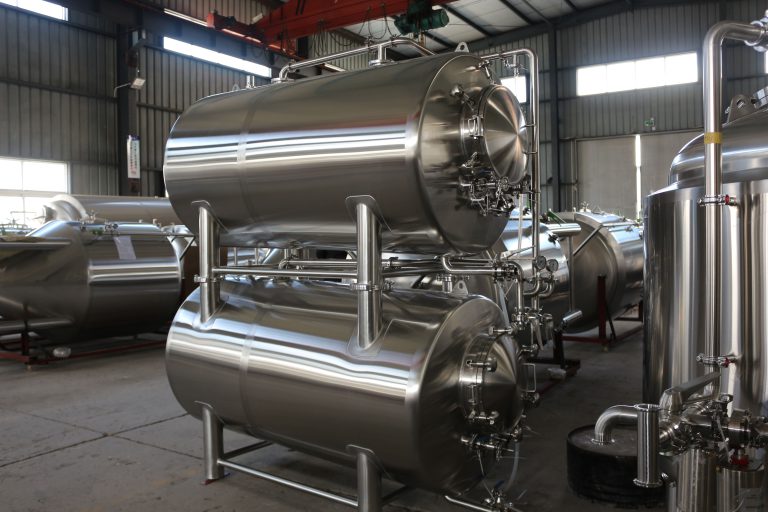
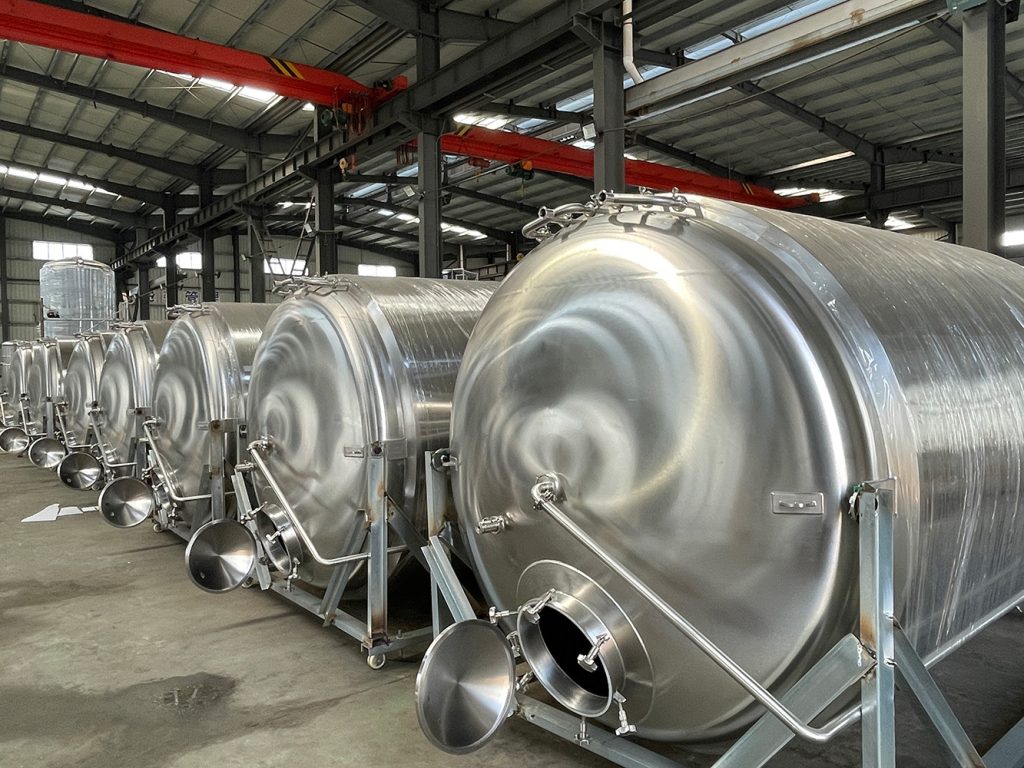
Horizontal brite tanks lie on their side. They are less common.
Advantages:
-
Low Height: They do not need tall ceilings. Good for basements or low buildings.
-
Easy Access: Valves are at a comfortable height. No ladders needed.
Limitations:
-
Large Footprint: They take up a lot of floor space.
-
Less Efficient Carbonation: CO2 does not dissolve as easily. It takes longer.
-
Harder to Clean: Spray coverage can be uneven.
-
Higher Cost: They are often custom-built and more expensive.
Chapter 3: How Brite Tanks Improve Brewery Operations
Better Carbonation Control
Beer quality is the most important thing. A brite tank gives you precise control over carbonation. This is hard to achieve in a fermenter.
The carbonation stone creates very small bubbles. The beer is chilled to near freezing. This helps the CO2 dissolve. The tank is pressurized. This forces gas into the beer. The carbonation stone can reduce carbonation time to only 10% to 20% of what a fermenter would need.
Brewers can achieve exact carbonation levels. This is important for different beer styles. Lagers need high carbonation (2.6–3.0 volumes). Ales need less (2.2–2.7 volumes). Wheat beers need more (3.0–3.5 volumes). A dedicated brite tank makes it easy to hit these targets.
Frees Up Fermenters
Time is money in a brewery. Fermenters are often the bottleneck. If you condition beer in a fermenter, it is tied up for days. You cannot start the next batch.
A brite tank solves this. You move beer to the brite tank after fermentation. The fermenter is now free. You can clean it and fill it with new wort. Many breweries use one brite tank for every four to five fermenters. This increases production without buying more fermenters.
Temperature Control and Stability
Temperature is very important for beer quality. Finished beer needs to stay cold. This protects flavor and keeps beer stable. Brite tanks have high-quality cooling jackets.
Cold glycol runs through these jackets. They cool the beer evenly. The dimple design is very efficient. It can cool the beer even if the tank is not full. The system keeps beer at a constant temperature.
Sediment Management
Clarity is a sign of quality. After fermentation, beer still contains sediment. A brite tank removes this sediment.
The tank bottom allows sediment to settle. The racking arm takes beer from above the sediment. This ensures only clear beer goes to packaging. The result is a bright, professional-looking beer.
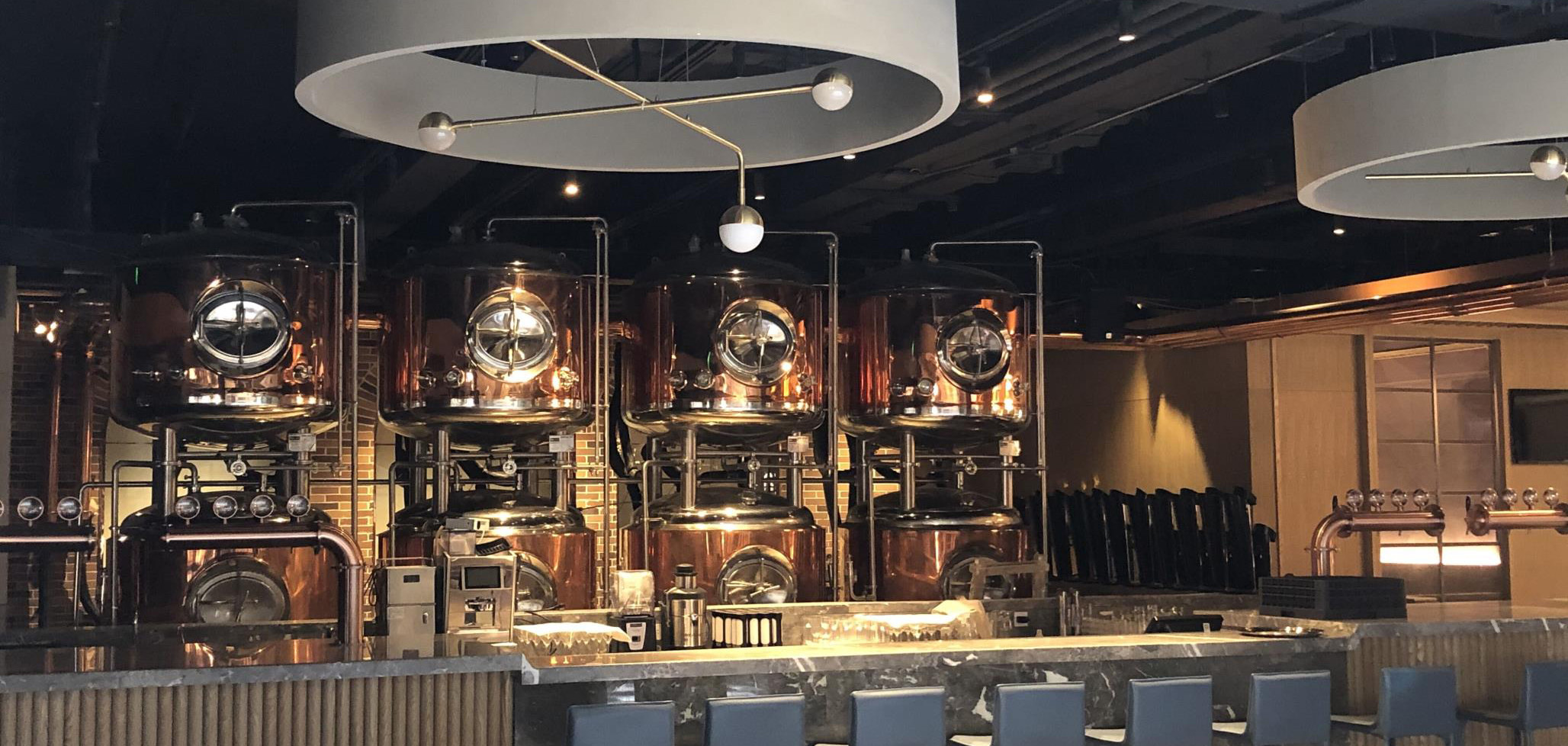
Chapter 4: The Role of Stainless Steel
Why Stainless Steel is Best
Brite tanks are almost always made of stainless steel. It has several key properties that make it ideal for brewing. SKE uses high-quality stainless steel for all tanks.
1. It Does Not Rust: Beer is acidic. It can damage many metals. Stainless steel has chromium. This forms a protective layer. It resists rust. It also prevents metallic flavors in the beer.
2. It is Hygienic: Stainless steel is smooth with no pores. Bacteria cannot hide. This makes it easy to clean and sanitize. This prevents contamination.
3. It is Strong: Stainless steel can withstand high pressure. It handles hot and cold cycles. A well-built tank can last for decades.
4. It is Safe: The steel is “food-grade.” It meets safety standards. It does not release harmful chemicals into the beer.
Chapter 5: Why Medium and Large Breweries Need Brite Tanks
Meeting Production Targets
As a brewery grows, demand increases. You need to produce more beer. A dedicated brite tank system helps you do this.
Without a brite tank, fermenters do two jobs. With a brite tank, the fermenter is only used for fermentation. This greatly increases production. This is why dedicated brite tanks are common in world largest brewery operations.
Ensuring Consistency
Consistency is key to building a brand. Customers expect the same taste every time. A brite tank helps achieve this.
The tank gives you a controlled environment for carbonation. Every batch gets the same treatment. This results in a consistent product. It builds trust with customers.
Making Packaging Easier
Packaging is the final step. It is often a bottleneck. A brite tank acts as a buffer. It holds finished beer ready for packaging. You can run the packaging line at a steady speed. The tank maintains pressure. This helps filling machines work properly and reduces waste.
FAQ: Common Questions About Brite Tanks
1. Is a brite tank the same as a bright tank?
Yes. These are two names for the same equipment. They are used interchangeably.
2. Why do large breweries use brite tanks?
They use them for clarification, precise carbonation, and storage. They also free up fermenters to produce more beer.
3. What is the difference between a brite tank and a fermenter?
A fermenter is for fermentation. A brite tank is for finishing the beer. A brite tank has a different bottom shape and is better for carbonation.
4. How does a brite tank carbonate beer?
It uses a carbonation stone. Cold beer is pressurized. CO2 is pumped through the stone, creating small bubbles that dissolve.
5. Can I use a horizontal tank instead of a vertical one?
Yes, but it has limitations. Horizontal tanks take up more space and are less efficient. They are usually chosen only when height is restricted.
Conclusion
The brite beer tank is an important part of modern brewing. For medium and large breweries, it is essential for quality and production. It gives you control over the final stage. This ensures clear, properly carbonated, and consistent beer.
We have looked at the features and benefits of brite tanks. We compared vertical and horizontal designs. We discussed the importance of stainless steel. We also learned why the world largest brewery relies on them.
If you have any further questions, feel free to reach out!
- Facebook: SKE Equipment Facebook
- Email: info@skeequipment.com
Fill out the contact form below for customized solutions. We fully support all your production equipment demands for breweries and beverage plants.