Introduction
Keeping brewery equipment clean is essential for making high-quality beer. Even small amounts of yeast, protein, or bacteria can affect beer flavor and shorten shelf life. For medium and large breweries, manual cleaning takes too much time and may not provide consistent results.
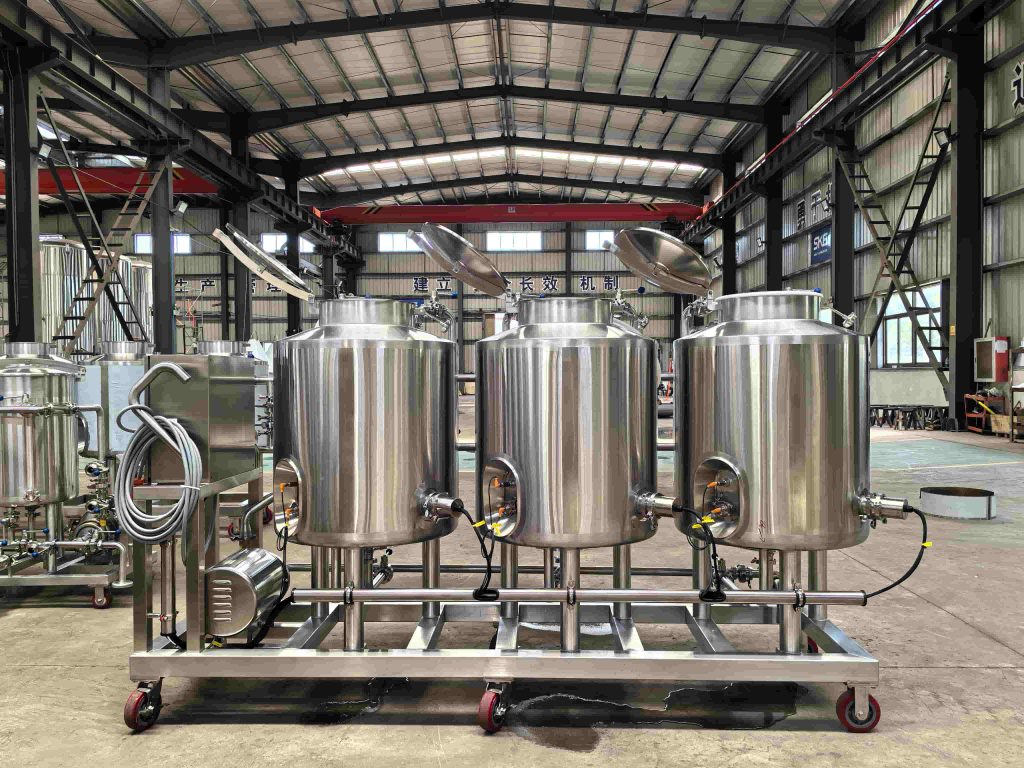
The CIP cleaning process, also known as CIP cleaning in place, is the standard cleaning method used in modern breweries. It cleans tanks, pipes, valves, and heat exchangers without taking the equipment apart. Using automatic CIP pumps and carefully selected CIP solutions, breweries can clean faster, reduce labor costs, and improve production efficiency.
At SKE, we design brewery equipment that works perfectly with automatic CIP systems, helping breweries maintain high hygiene standards while reducing operating costs.
What Is a CIP Cleaning Process?
A CIP cleaning process is a system that cleans the inside of brewery equipment without disassembly. Cleaning liquids circulate through tanks and pipelines at the correct temperature, pressure, and flow rate. This removes product residue, yeast, proteins, and bacteria safely and efficiently.
Compared with manual cleaning, CIP cleaning in place offers many benefits.
- Saves cleaning time
- Reduces labor costs
- Improves cleaning consistency
- Increases worker safety
- Reduces water and chemical use
- Supports food safety standards
Because every cleaning cycle follows the same program, breweries achieve more stable cleaning results and lower the risk of contamination.
How Does the CIP Cleaning Process Work?
A typical brewery CIP system follows five simple steps.
| Stage | Purpose |
|---|---|
| Pre-rinse | Remove loose residue |
| Caustic Wash | Remove proteins, yeast, and sugar |
| Intermediate Rinse | Remove remaining alkali |
| Acid Wash | Remove beerstone and mineral deposits |
| Final Rinse | Remove chemical residue |
The process starts with warm water to wash away loose materials. Next, an alkaline cleaner removes organic deposits such as yeast and proteins. After another rinse, an acid solution removes beerstone and mineral scale from the stainless steel surface. Finally, clean water removes any remaining chemicals before the equipment is ready for the next batch.
Most brewery CIP cycles take 60 to 90 minutes, depending on tank size and the level of residue.
Why Are CIP Pumps and CIP Solutions Important?
The success of a CIP cleaning process depends on both reliable CIP pumps and effective CIP solutions.
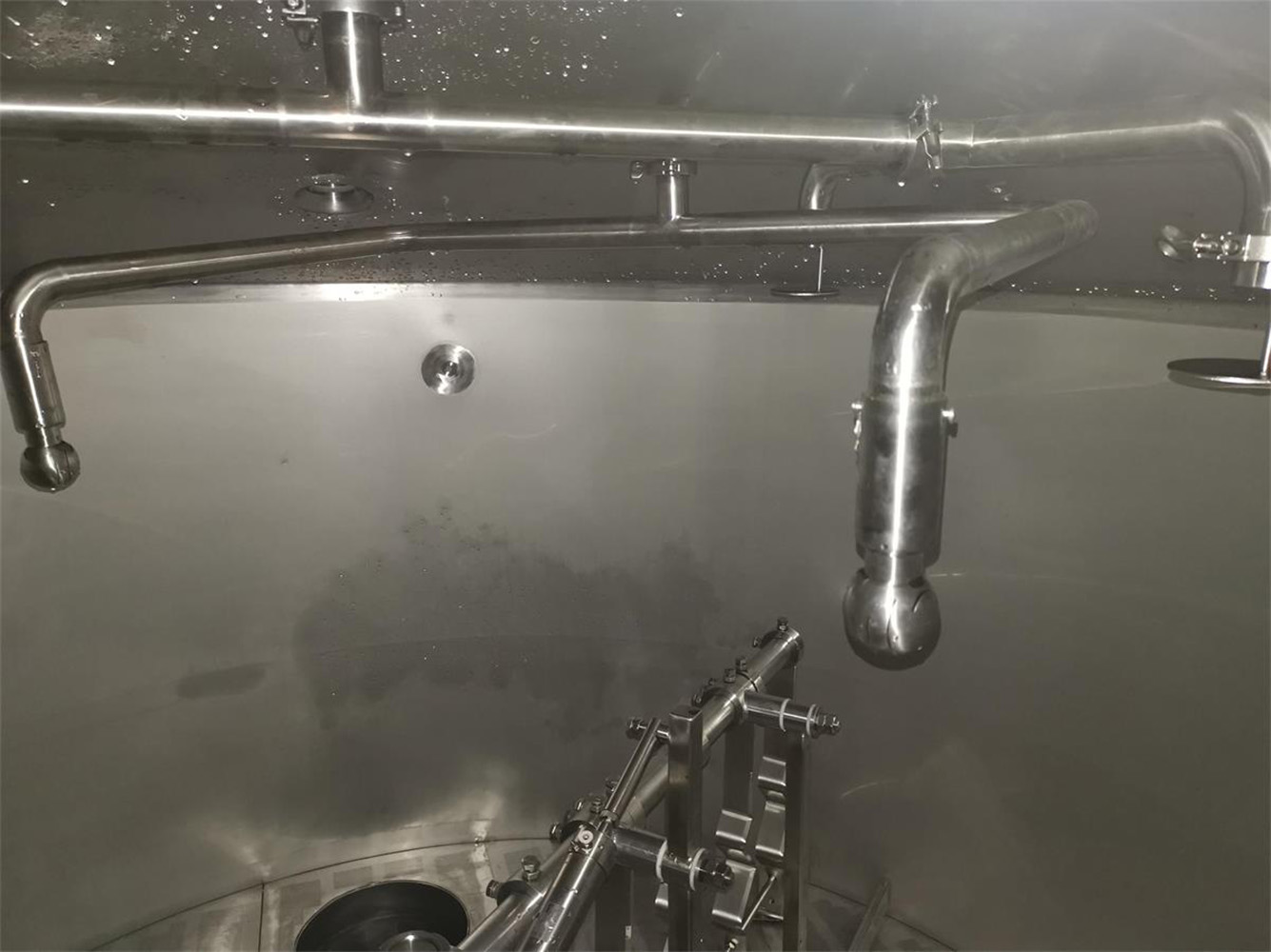
CIP pumps move the cleaning liquid through the entire system. A stable flow rate creates enough force to clean pipes, valves, spray balls, and tanks. If the flow is too low, some areas may not be cleaned properly.
Different CIP solutions remove different types of dirt.
| CIP Solution | Main Function |
|---|---|
| Water | Remove loose residue |
| Caustic Soda | Remove yeast, proteins, and sugars |
| Nitric Acid | Remove beerstone and minerals |
| Sanitizer | Reduce microorganisms |
Using the correct temperature and chemical concentration is just as important as choosing the right cleaning solution. Automatic dosing systems help breweries achieve consistent cleaning while reducing chemical waste.
What Makes a Good CIP Cleaning Process?
A successful CIP system depends on four key factors.
- Time – The cleaning solution needs enough time to work.
- Temperature – Warm solutions clean more effectively.
- Chemical Concentration – The correct amount removes dirt safely.
- Mechanical Action – Good flow helps wash every surface.
These four factors work together. If one factor changes, the others may need to be adjusted to keep cleaning performance stable.
Modern automated systems monitor these conditions automatically, helping breweries improve both hygiene and production efficiency.
How Does SKE Improve the CIP Cleaning Process?
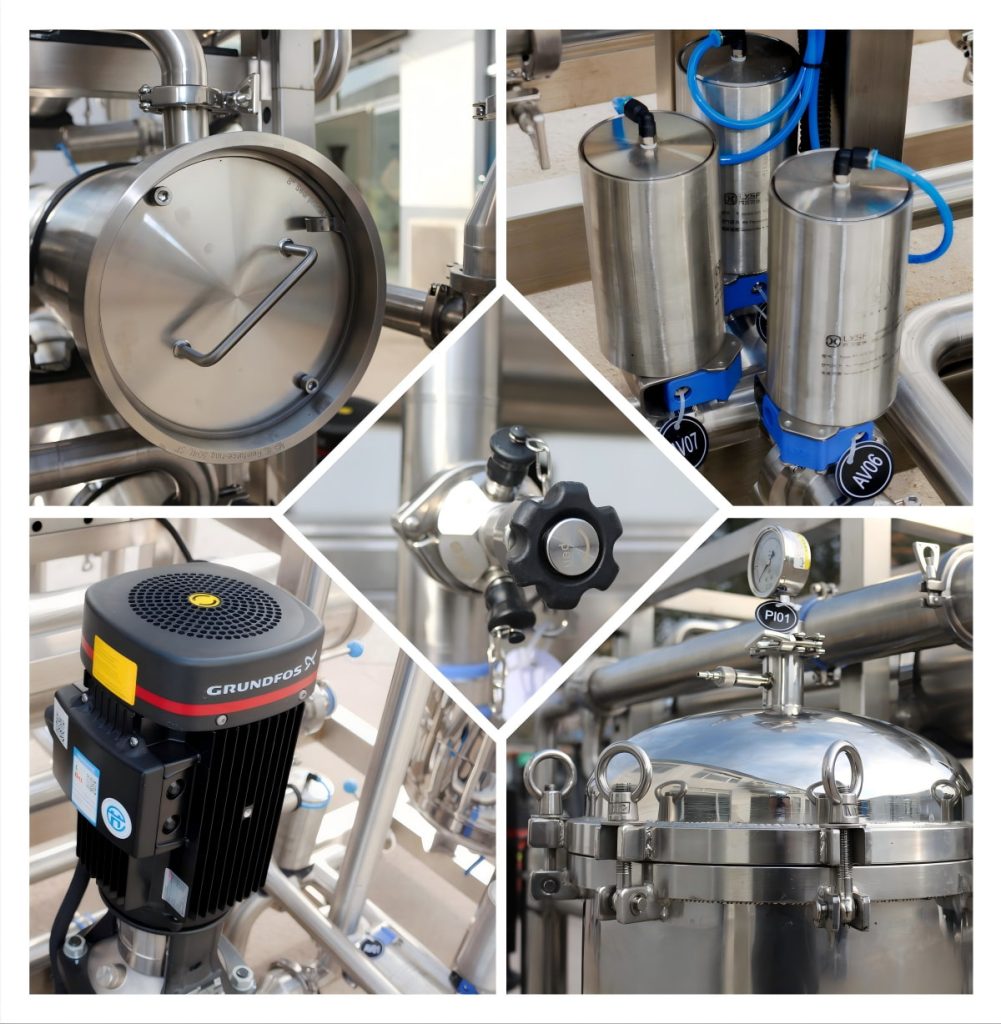
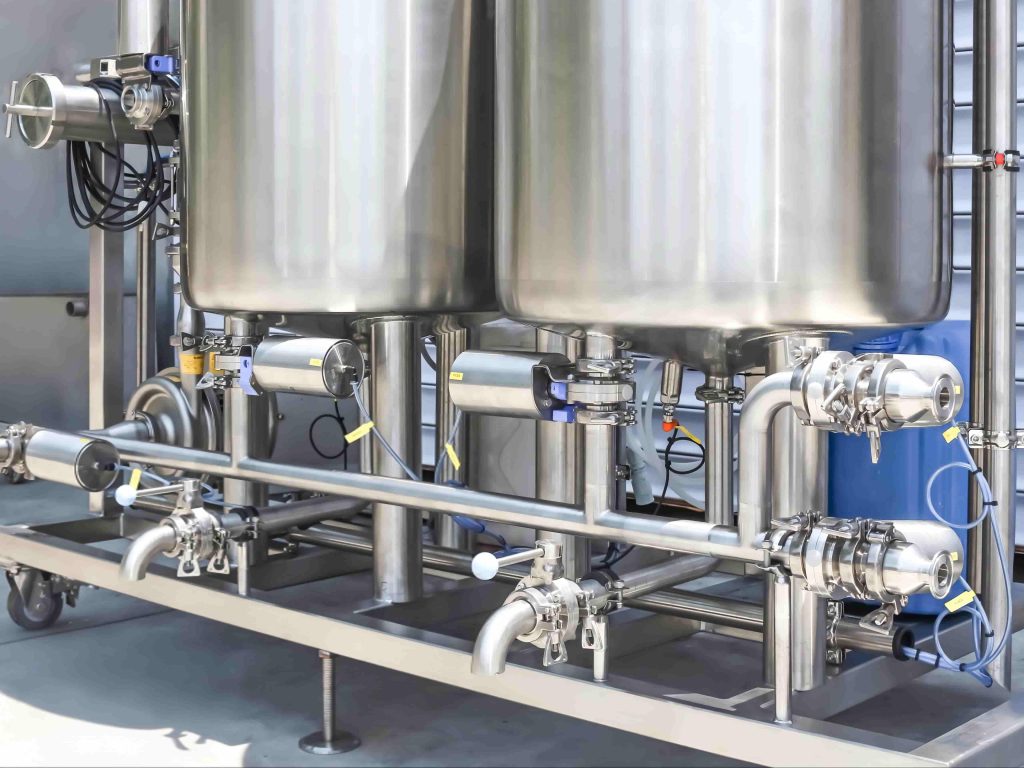
A good CIP system needs more than quality chemicals and reliable pumps. It also depends on hygienic equipment design. At SKE, we design brewery equipment to make cleaning easier, faster, and more efficient.
Our fermentation tanks and bright beer tanks are made from high-quality SS304 or SS316L stainless steel. The smooth inner surface helps reduce residue after production. We also use sanitary welding and minimize dead corners, allowing CIP solutions to reach every part of the tank.
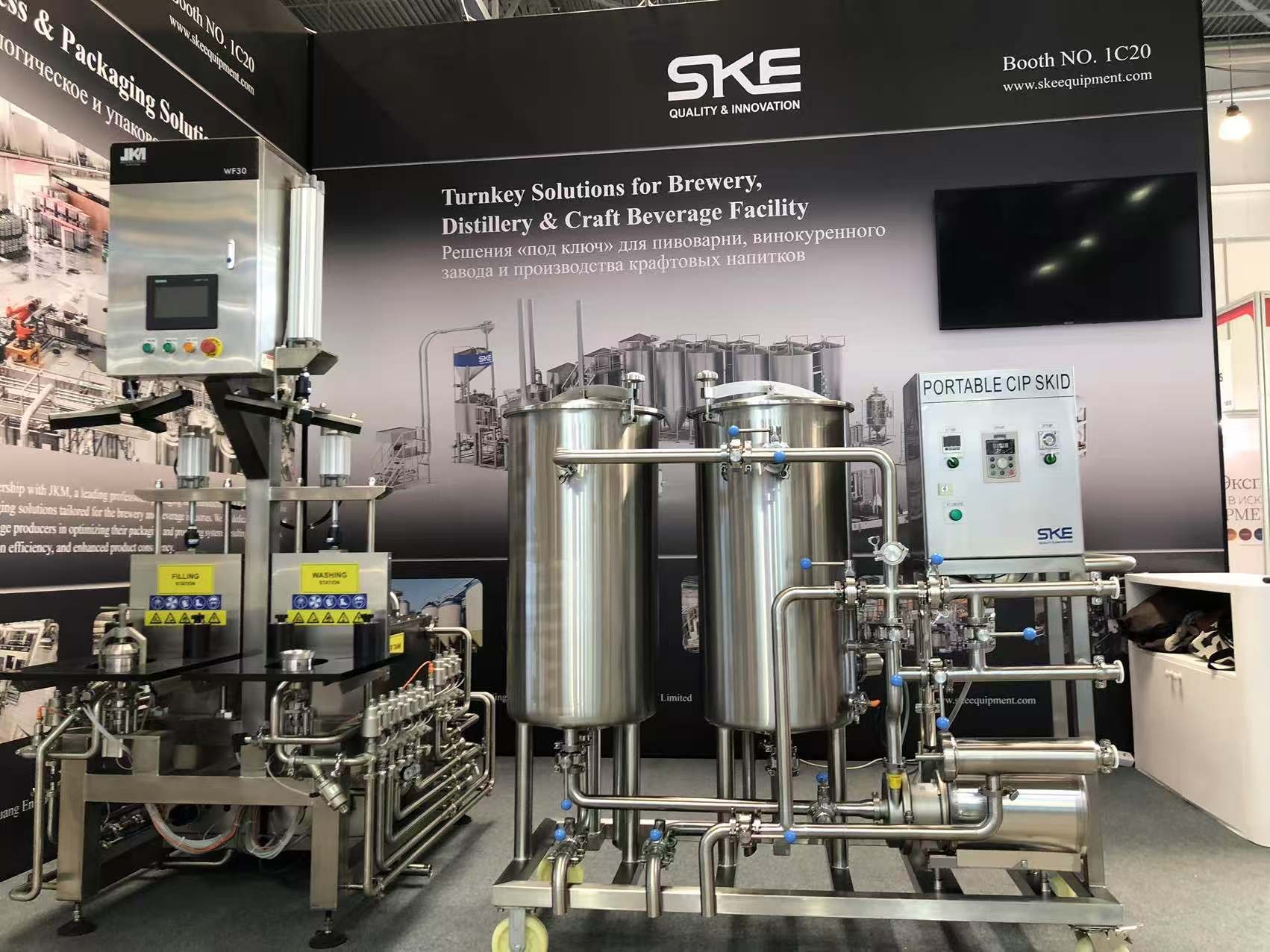
SKE can provide customized CIP stations for different brewery sizes. Whether you operate a 10HL craft brewery or a large commercial brewery, we can design a cleaning system that matches your production process.
Our brewery equipment offers several advantages:
- Smooth stainless steel surfaces for easier cleaning
- Reliable CIP pumps with stable flow
- Automatic PLC control for consistent cleaning
- Hygienic pipeline design with fewer dead corners
- Lower water, chemical, and energy consumption
- Custom solutions for different brewery capacities
With a well-designed CIP system, breweries can reduce downtime, improve beer quality, and lower operating costs.
Conclusion
The CIP cleaning process is an important part of modern brewery production. It helps breweries clean equipment quickly, improve hygiene, and reduce labor costs. By using the right CIP pumps and CIP solutions, breweries can keep tanks and pipelines clean while maintaining consistent beer quality.
Choosing hygienic equipment is just as important as choosing the right cleaning program. Well-designed tanks and pipelines make every cleaning cycle more effective.
At SKE, we provide complete brewery equipment and customized CIP systems for medium and large breweries. Our goal is to help customers improve production efficiency, reduce operating costs, and produce high-quality beer with confidence.
Frequently Asked Questions
1. What is a CIP cleaning process?
A CIP cleaning process is a method of cleaning tanks, pipes, and other equipment without taking them apart. It improves hygiene and saves time.
2. What is the difference between CIP cleaning and manual cleaning?
Manual cleaning requires workers to open and clean the equipment by hand. CIP cleaning in place is automatic, faster, safer, and provides more consistent results.
3. What are the main CIP solutions used in breweries?
Most breweries use water, caustic soda, nitric acid, and a sanitizer. Each solution removes a different type of residue.
4. Why are CIP pumps important?
CIP pumps circulate the cleaning liquid through tanks and pipelines. A stable flow helps clean every surface and improves cleaning efficiency.
5. How long does a brewery CIP cycle take?
Most CIP cycles take 60–90 minutes, depending on the tank size, cleaning program, and amount of residue.
Contact Us
If you have any further questions, feel free to reach out!
- Facebook: SKE Equipment Facebook
- Email: info@skeequipment.com
Fill out the contact form below for customized solutions. We fully support all your production equipment demands for breweries and beverage plants.