
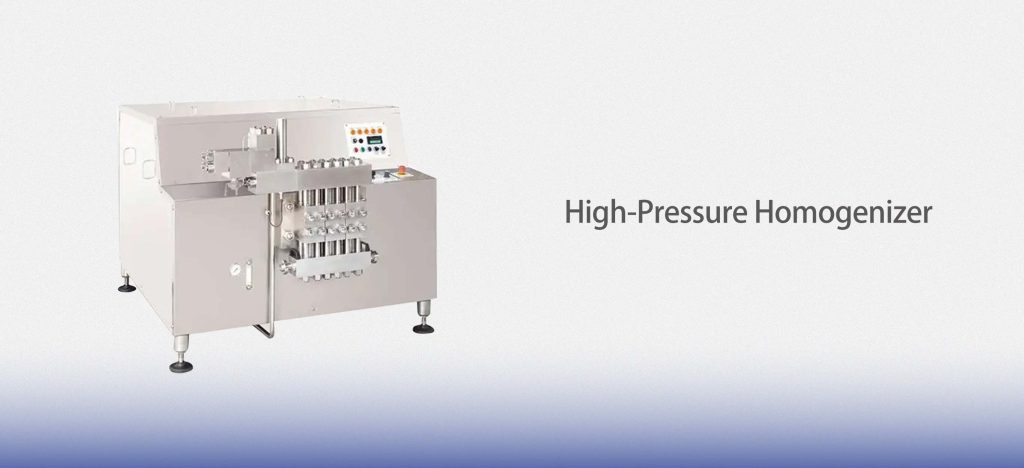
Adding fruit, flavorings, or oil-based components to beer raises a stability problem traditional lagers never had to solve: oil separation and particle sedimentation that trigger flavor drift and visual defects. A high pressure homogenizer is the tool breweries reach for when conventional mixing can’t hold a specialty formulation together.
It works by forcing product through an extremely narrow gap under intense pressure, breaking down particles and droplets into a uniform, stable product. Traditional beers rarely need this; specialty beers with fruit, spice, or oil ingredients often do. SKE has designed and manufactured brewery equipment long enough to know exactly where that line falls, and this guide covers what a buyer actually needs to know.
Key Takeaways
- High pressure homogenization for beverage applications typically runs 150–400 bar, well within the broader 150–1,500 bar range used across emulsion and dispersion applications industry-wide (USPTO 8,979,696).
- At 350 bar, median particle sizes around 0.58 µm are achievable, with essentially all particle volume under 5 µm — roughly an order of magnitude finer than a standard rotor-stator mixing homogenizer (Pion Inc.).
- Homogenization is not a substitute for validated pasteurization: it addresses physical stability, not microbial safety, and the two technologies typically work together rather than replacing each other.
What Is a High Pressure Homogenizer?
A high pressure homogenizer is a precision machine that forces product through a very narrow gap at high pressure, typically 150 to 400 bar for beverage applications. As the liquid passes through, it experiences three forces at once: shear (from liquid layers moving at different speeds), impact (particles colliding at high velocity), and cavitation (microscopic bubbles forming and collapsing). Together, these reduce particle and droplet size well beyond what conventional mixing can achieve, and the resulting product can stay stable for months without separation.
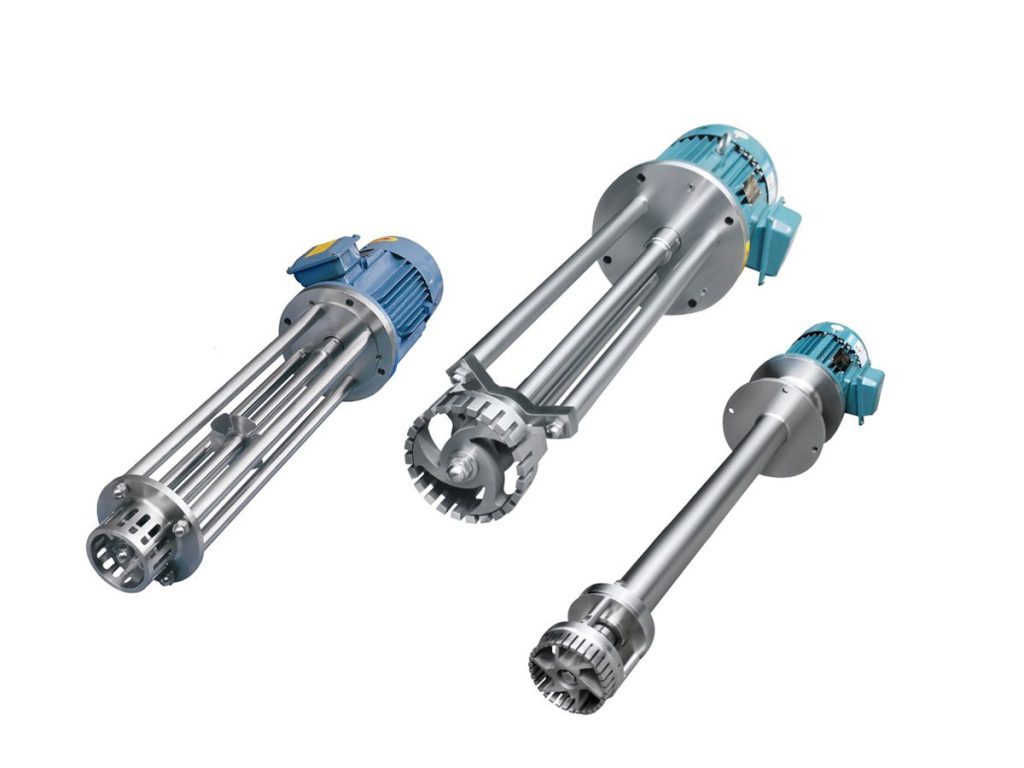
It’s worth comparing this to a standard mixing homogenizer, which uses high-speed blades and works well for general blending but can’t match the same particle reduction. Many brewers use a mixing homogenizer for initial blending and a high pressure unit for final stabilization — the two aren’t competitors, they’re complementary.

How Does a High Pressure Homogenizer Work?
The process follows a clear sequence. First, product feeding: beer moves from a process tank into the homogenizer, and for beer applications the feed system’s hygienic design matters as much as its flow stability, since every product-contact component needs to be easy to clean.
Second, pressure increase: a high-pressure pump raises the product to its operating pressure, which depends on the formulation rather than a fixed default — a fruit beverage and a beer with essential oils don’t necessarily want the same pressure, and higher isn’t automatically better.
Third, passage through the homogenizing valve: the pressurized liquid crosses a small, adjustable gap, experiencing extreme shear and turbulence that breaks larger droplets and particles into much smaller structures, which then distribute evenly through the liquid and resist separation.
For oil-based ingredients specifically, the homogenizer functions as an emulsifying homogenizer, creating a stable emulsion between oil and water so citrus oils or chili oils stay suspended throughout the beer rather than separating out — consistent flavor from first sip to last.
High Pressure Homogenizer vs. Mixing Homogenizer
A rotor-stator mixing homogenizer creates shear through mechanical movement. It’s useful for blending liquids and dispersing powders, but its particle reduction tops out around 10 to 50 microns. A high pressure homogenizer, using a pump and specialized valve instead of blades, can reduce particles below 1 micron — a genuinely different level of refinement, not just an incremental improvement.
This isn’t an argument for replacing every mixing system, though. Traditional beers do fine with conventional mixing; high pressure homogenization earns its cost when a brewery genuinely needs finer dispersion and better emulsion stability, and many brewers run both types of equipment side by side.
Why Do Breweries Use High Pressure Homogenization?
The core reason is consistency. Malt, hops, yeast, and water behave predictably with standard methods, but modern brewing increasingly involves fruit purees, spices, essential oils, lactose, and other specialty ingredients that don’t stay evenly dispersed on their own.
The mechanism differs by ingredient type, which matters for troubleshooting: for particle dispersion, the homogenizer breaks down fruit pulp and fiber until it’s too small to settle during storage; for oil dispersion, it breaks oil droplets down so they stay suspended rather than forming a ring at the top of the can. A brewery seeing a specific defect (ring at the top vs. sediment at the bottom) is often looking at two different failure modes that call for different pressure and valve settings, not just “more homogenization.”
How to Choose a High Pressure Homogenizer
Start with formulation: what’s actually in the product, and does it contain oil, fiber, or pulp? That determines the type of homogenization required, and oil-based flavors specifically call for emulsifying-homogenizer capability.
Required flow rate matters just as much — the unit has to match production capacity, and a small craft brewery and a large industrial plant have very different needs. Operating pressure should follow the product and the desired result, not a default setting, since higher pressure means more intensity but also more energy consumption; testing with the actual recipe is the reliable way to land on the right number.
Temperature control matters too, since high-pressure processing raises product temperature and a cooling system protects heat-sensitive beverages. Hygienic design (stainless steel surfaces, hygienic valves, easy cleaning) is non-negotiable for beer equipment, and integration with existing tanks, pumps, and the packaging line needs to be part of the evaluation from the start.
Where Should a Homogenizer Be Installed?
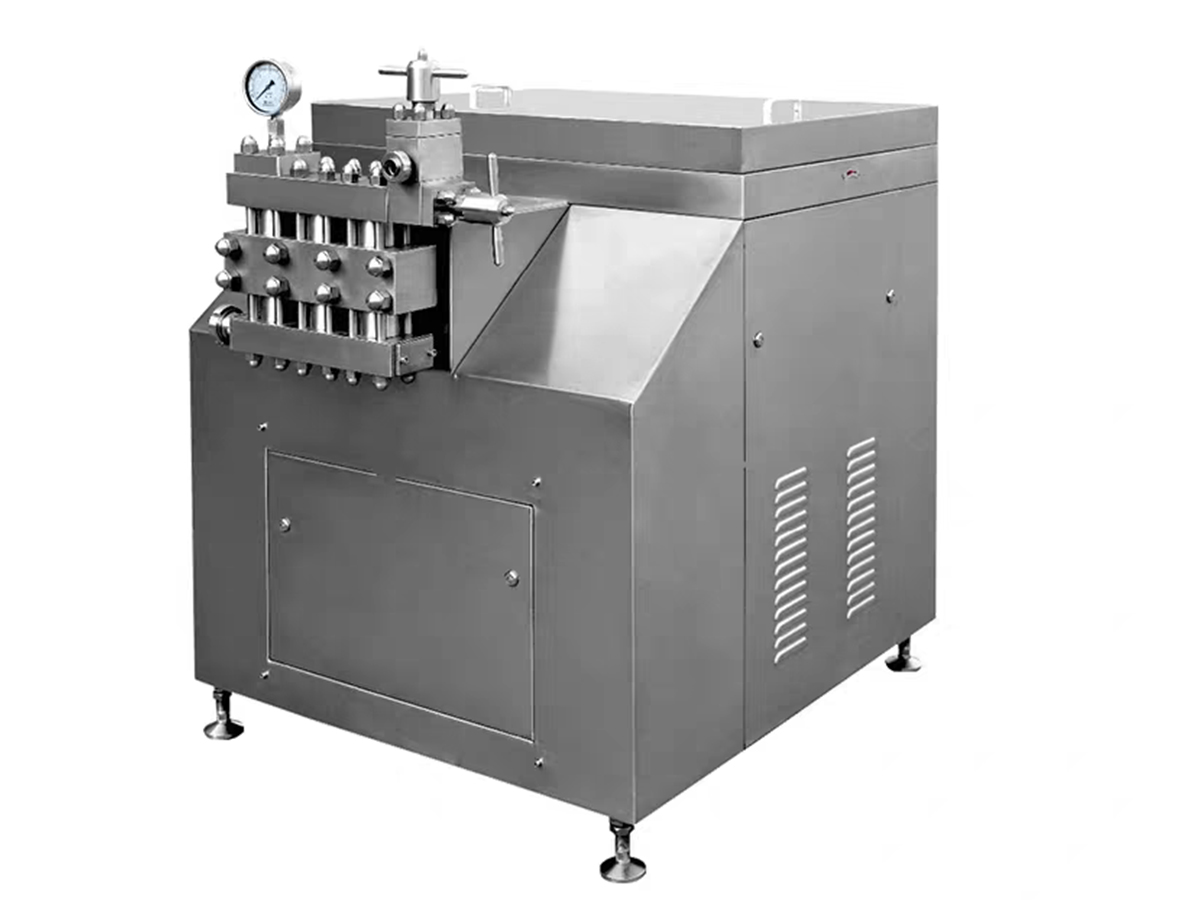
The right installation point depends on process design rather than a universal rule. For specialty beers, homogenization typically happens after fermentation and before packaging, but the best location depends on filtration, pasteurization, and storage methods.
Some brewers place it after the bright beer tank, right before the filler, to lock in stability benefits at the last possible moment. Others install it after blending, ahead of storage tanks. A process engineer should evaluate the complete production line before settling on a position — SKE can help determine the optimal placement for a specific brewery.
Can Homogenization Replace Pasteurization?
Not automatically, and this point matters. High pressure homogenization may reduce some microorganisms, but it shouldn’t replace a validated pasteurization process. Pasteurization uses controlled heat specifically for microbial reduction; if a brewery needs a validated safety process, it has to be designed and validated as its own step.
Homogenization and pasteurization solve different problems: homogenization is about physical stability, pasteurization about microbial safety. In most production lines that need both, the two technologies run together rather than one substituting for the other.
Maintenance and Reliability
High pressure equipment needs regular maintenance: the homogenizing valve, pump components, and seals should all be inspected on a schedule. Good maintenance prevents unexpected downtime, pressure instability, and product leakage, and it extends equipment life.
Breweries running high-volume lines should keep critical spare parts on hand rather than ordering after a failure. SKE provides maintenance manuals, spare parts kits, and remote diagnostic tools, with technical support available when something needs troubleshooting.
How SKE Supports Brewery Homogenization Projects
SKE provides complete brewery and beverage processing solutions for a homogenization project: the homogenizer itself, feed pump, cooling equipment, hygienic piping, valves, and control systems, configured around a specific product, capacity, and site conditions.
SKE supports integration into an existing or new production line with operator training, technical support, and customized engineering, for craft-scale and industrial-scale needs alike. Our equipment meets international standards including ASME, PED, and CE certifications.
Frequently Asked Questions
Is a high pressure homogenizer necessary for all beer?
No. Traditional lagers and ales don’t normally need it. It becomes useful once a product contains fruit solids, oils, or other specialty ingredients.
What is the difference between a high pressure homogenizer and a mixing homogenizer?
A mixing homogenizer uses blades for general blending, typically reaching 10–50 micron particle size. A high pressure homogenizer uses high pressure and a specialized valve to reach well below 1 micron.
Can a high pressure homogenizer work as an emulsifying homogenizer?
Yes — when the goal is a stable oil-water emulsion, the same equipment functions as an emulsifying homogenizer by breaking oil droplets into very small sizes.
Can a high pressure homogenizer replace a pasteurizer?
Generally no. Homogenization targets physical stability; pasteurization targets microbial safety. Most brewers use both together rather than one instead of the other.
What pressure does a high pressure homogenizer need?
There’s no single number — it depends on formulation, product viscosity, and the desired result. Testing with the actual recipe is the recommended way to settle on it.
Can a homogenizer be added to an existing brewery?
In most cases, yes. A retrofit should check existing tanks, pumps, piping, and available space; a customized skid-mounted system often simplifies integration.
Conclusion
A high pressure homogenizer is a genuinely valuable tool for breweries handling fruit, spices, oils, and other specialty ingredients, but it’s not a universal upgrade every brewery needs. The right results come from matching pressure, capacity, and configuration to the specific product, not from buying the most powerful unit available.
Contact SKE to work through the right homogenization setup for your production line.