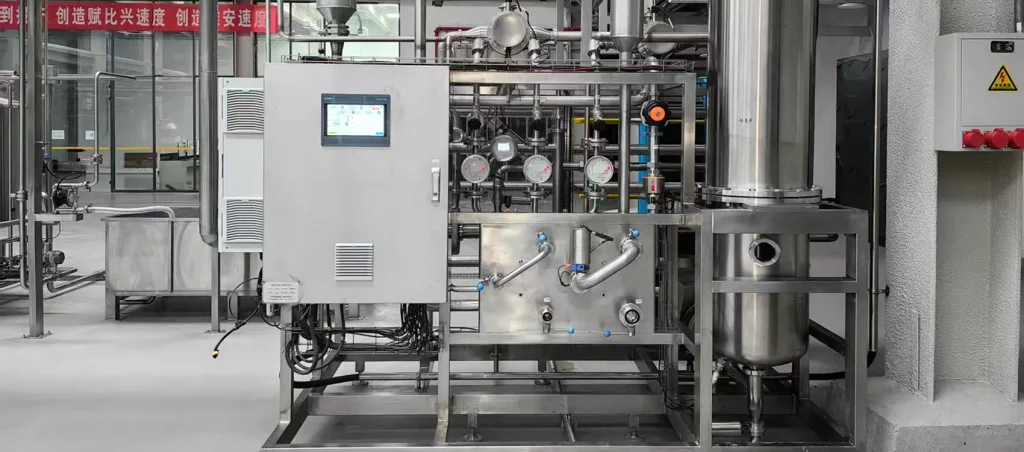
Soft drinks may look simple, but producing them at an industrial scale requires accurate mixing, temperature control, and hygienic equipment. A Soft Drink Blender is an important part of this process. It combines water, sugar, flavors, acids, and other ingredients to create a stable and uniform beverage base.
For beverage producers, good blending is not only about mixing ingredients. It also affects product quality, production efficiency, and consistency from batch to batch.
SKE designs stainless steel beverage equipment for breweries and beverage producers worldwide. Our Soft Drink Blender can be customized for different recipes, production capacities, and process requirements.
This guide explains what a beverage blending tank does, how it works, what features to consider, and how it fits into a modern carbonated beverage production line.
Key Takeaways
- A soft drink blender mixes water, sugar, flavors, and acids into a uniform beverage base before filtration, carbonation, and filling.
- Food-grade stainless steel (304 or 316) is standard for beverage contact surfaces under 3-A Sanitary Standards.
- Blending and carbonation are usually kept as separate process steps so each can be controlled independently.
- Tank size should be based on batch size, production schedule, and future expansion, not daily output alone.
What Is a Soft Drink Blender?
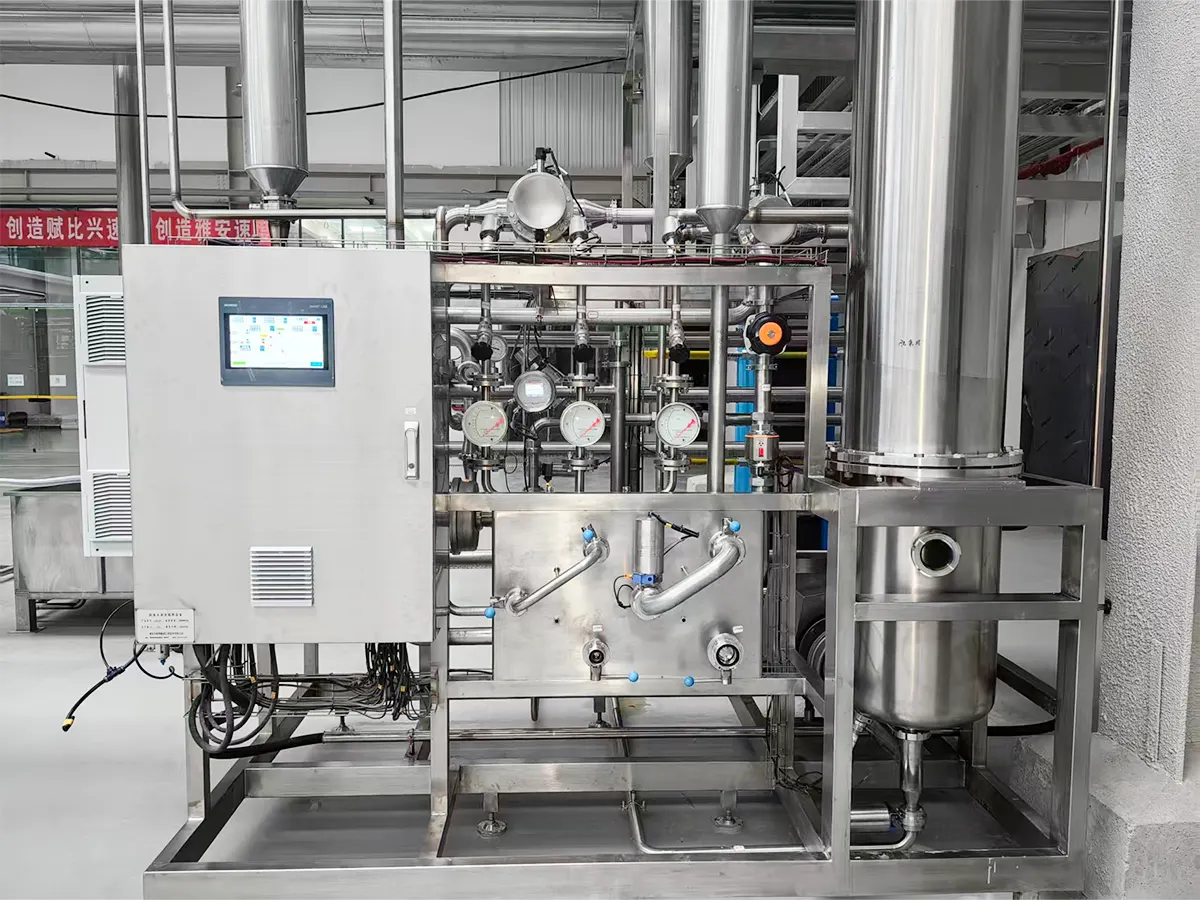
A Soft Drink Blender is industrial equipment used to mix beverage ingredients into a uniform liquid. It is also known as a beverage blending tank, beverage mixing tank, or syrup blending tank, depending on the production process.
The main part of the system is a stainless steel tank. It normally includes an agitator or mixing system. The agitator keeps the liquid moving and helps different ingredients spread evenly through the tank.
A blending tank may also include:
- Heating or cooling jackets
- Temperature sensors
- Level sensors
- Spray balls or CIP cleaning systems
- Sanitary valves and pipes
- Sampling ports
- PLC control systems
- Load cells or flow meters
The exact configuration depends on the beverage recipe and production capacity.
For example, a small beverage producer may need a simple mixing tank. A large factory may require an automatic blending system connected to water treatment, filtration, carbonation, filling, and packaging equipment.
How Does a Beverage Blending Tank Work?
The blending process can vary between factories, but the basic principle is simple.
First, treated water enters the tank. Sugar, syrup, flavor, acid, color, or other ingredients are then added according to the recipe.
The agitator starts mixing the product. Its speed and design are selected according to the liquid properties and the ingredients being used.
For dry ingredients, proper mixing is important to prevent lumps and improve dissolution. For liquid ingredients, the mixing system helps distribute them evenly throughout the tank.
Temperature can also be controlled during the process. Some recipes require heating to help dissolve ingredients. Other products should be kept cool to protect flavor and product quality.
After blending, the finished beverage base can move to the next stage, such as filtration, cooling, carbonation, or filling.
A typical process may look like this:
Water Treatment → Ingredient Preparation → Blending → Filtration → Cooling → Carbonation → Filling → Packaging
Not every beverage line uses exactly the same process. SKE can design the equipment layout according to the product and production requirements.
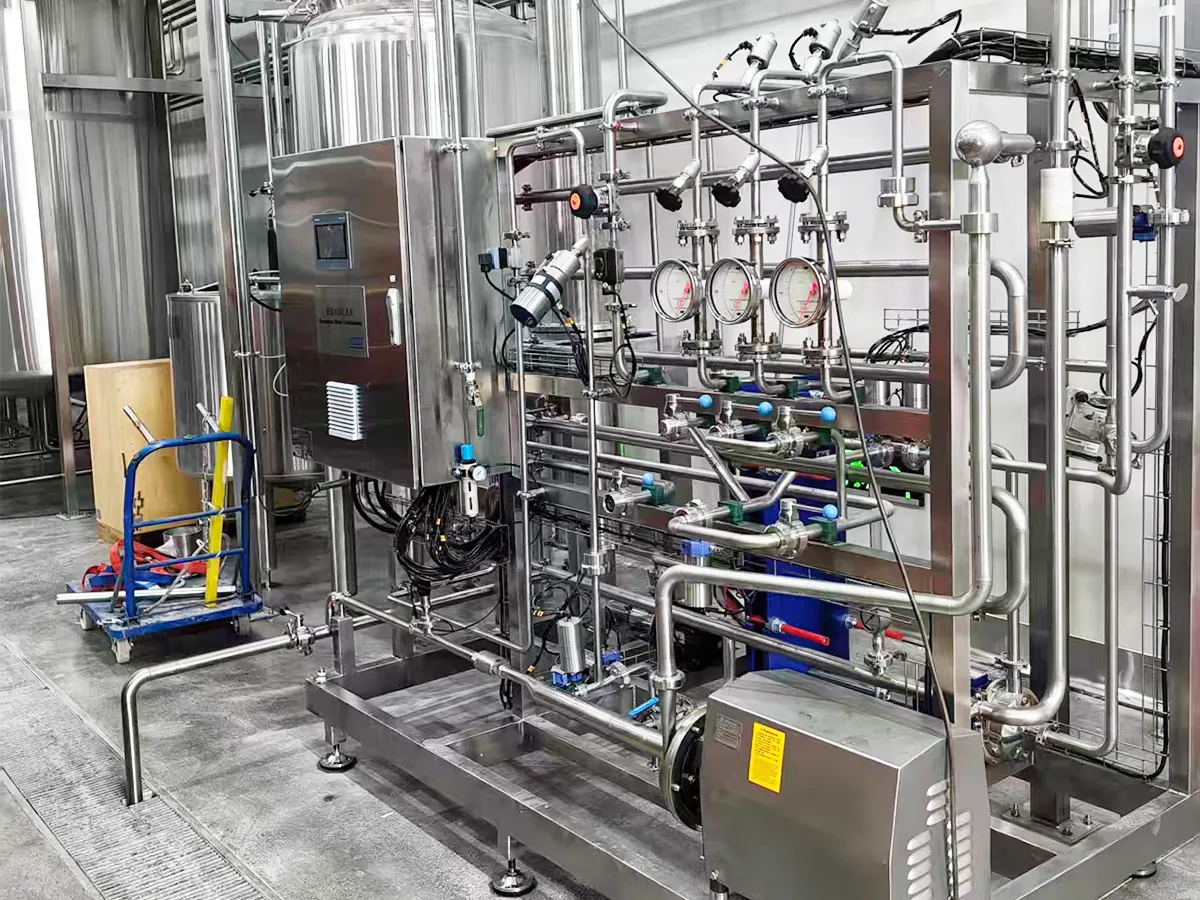
Why Blending Matters in Carbonated Beverage Production
A consistent recipe is essential for every carbonated beverage producer.
Consumers expect the same taste every time they buy a product. Small changes in sugar, acid, flavor, or other ingredients can affect the final beverage.
Poor blending can create several problems:
- Uneven sweetness
- Poor ingredient dissolution
- Inconsistent flavor
- Color differences
- Product waste
- Longer production times
A well-designed blending tank helps solve these problems by providing controlled and repeatable mixing.
The mixing process can also affect the carbonation stage. Carbon dioxide dissolves more easily in cold liquid and under controlled pressure. Therefore, the beverage must reach the correct composition and temperature before carbonation.
For this reason, the blending system should work as part of the complete beverage process rather than as an isolated machine.
Key Features of a Soft Drink Blender
When choosing a Soft Drink Blender, producers should look beyond tank capacity. The mixing system, material, controls, cleaning method, and process connections are all important.
1. Food-Grade Stainless Steel
Stainless steel is widely used in beverage production because it is durable, corrosion-resistant, and easy to clean.
SKE can manufacture beverage tanks using stainless steel such as 304 or 316, depending on the product and process requirements. Both grades meet the material requirements set out in the 3-A Sanitary Standards used across the food and beverage industry.
The internal surface can be designed with a sanitary finish to reduce areas where product residue can collect.
2. Efficient Agitation
The agitator is one of the most important parts of a blending tank.
Its design depends on factors such as:
- Liquid viscosity
- Tank size
- Ingredient type
- Mixing time
- Required mixing speed
A suitable agitator helps create uniform mixing without unnecessary energy use.
For some recipes, standard agitation is enough. For products that contain difficult-to-dissolve powders or higher-viscosity ingredients, a more specialized mixing system may be required.
3. Temperature Control
Temperature can affect ingredient dissolution, product stability, and carbonation.
A tank jacket can be used for heating or cooling when required. Temperature sensors allow operators or the control system to monitor the process.
Keeping temperature within the required range helps improve batch consistency.
4. Hygienic Design
Hygiene is critical in beverage production.
A beverage tank should have smooth internal surfaces and sanitary connections. Dead legs and difficult-to-clean areas should be minimized during the equipment design.
Many industrial systems use CIP (Clean-in-Place) technology. CIP allows the tank and connected pipes to be cleaned without removing the equipment.
This saves labor and helps create a more consistent cleaning process.
5. Automatic Control
Modern beverage plants often use PLC-based control systems.
A control system can manage:
- Ingredient dosing
- Mixing time
- Agitator speed
- Temperature
- Tank level
- Valve operation
- CIP sequences
Automation reduces manual work and helps operators repeat the same process for every batch.
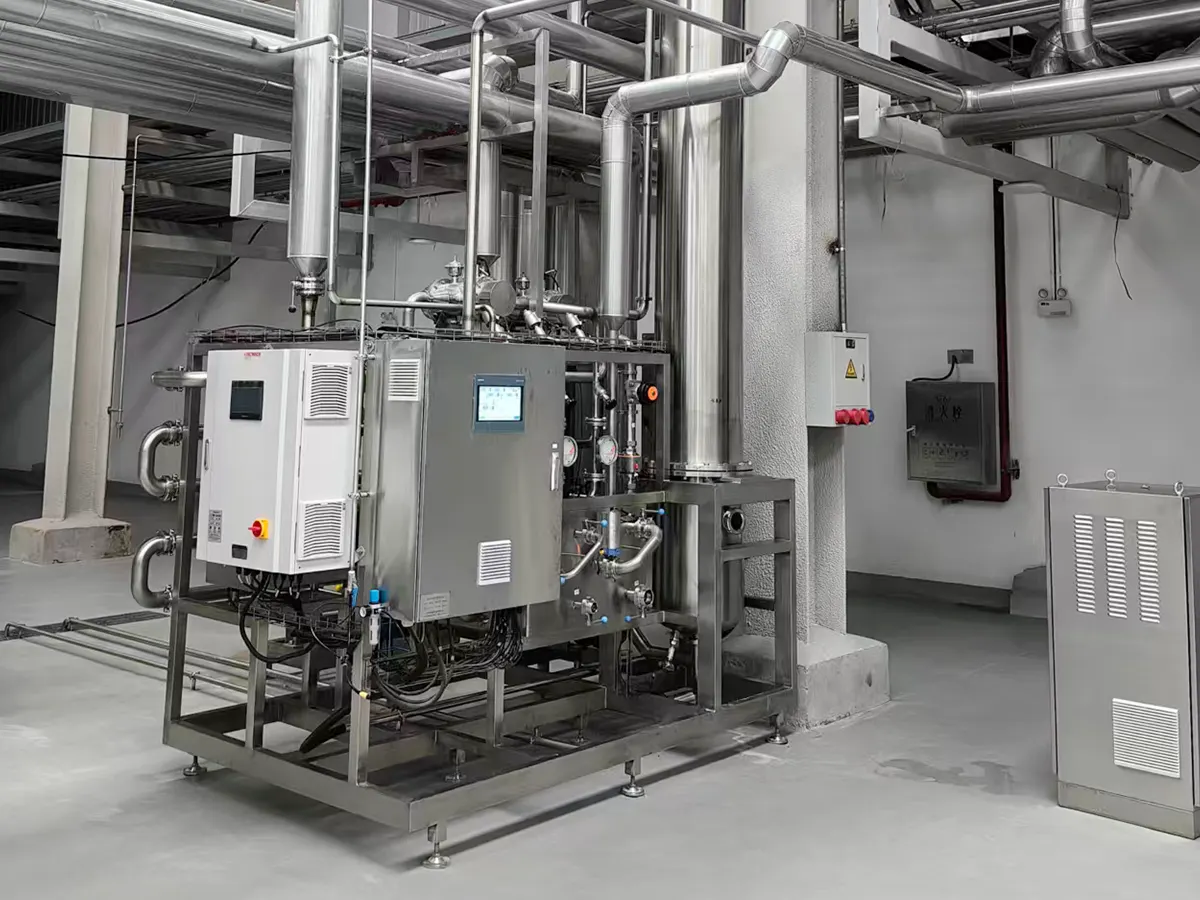
How to Choose the Right Blending Tank
The correct tank size should be based on more than daily production.
Producers should consider:
Batch Size
The tank should provide enough working volume for the required batch while leaving suitable headspace.
Production Schedule
A plant producing several batches per day may need a different tank size from a plant running continuous production.
Product Type
Cola, lemonade, flavored water, juice-based drinks, and other beverages can have different mixing requirements.
Ingredient Type
Powders, syrups, oils, acids, and other ingredients may require different mixing methods.
Automation Level
A small plant may prefer manual operation, while a large factory may benefit from automatic dosing, PLC control, and integrated CIP.
Future Expansion
If production is expected to grow, it can be useful to consider additional capacity or modular equipment during the initial design.
For example, a producer making 10,000 liters per day may use several smaller batches instead of one large batch. The best solution depends on production time, recipes, available space, and downstream equipment.
Soft Drink Blender for Different Beverage Applications
A beverage blending tank is not limited to traditional soda.
Depending on its design, it can be used for:
- Carbonated soft drinks
- Lemonade
- Flavored water
- Energy drinks
- Functional beverages
- Juice-based beverages
- Syrup preparation
- Other liquid beverage products
Each application may require different mixing, heating, cooling, or cleaning conditions.
This is why industrial beverage equipment should be designed around the actual product rather than selected only by tank volume.
From Blending to Carbonation
Blending is only one stage in carbonated beverage production.
After the beverage base is prepared, it may be filtered and cooled before entering a carbonation system. Carbon dioxide is then dissolved into the liquid under controlled conditions.
The carbonation process depends on factors such as product temperature, pressure, and CO₂ concentration.
A stable blending process makes it easier to control the downstream process because the beverage has a consistent composition.
In larger production plants, the blender and carbonator are normally separate pieces of equipment. This gives the producer better control over each process.
The finished carbonated beverage can then move to a filling machine and packaging line.
What Can Breweries Learn from Beverage Blending?
SKE has extensive experience in brewery and beverage equipment. Although beer and soft drinks are different products, both industries need accurate process control and hygienic stainless steel equipment.
Large global beer brands also rely on controlled mixing, blending, and process automation to maintain consistent product quality across production sites.
Breweries pay close attention to ingredient ratios, temperature, cleaning, and process records. These same principles are important for soft drink production.
For SKE, experience in brewing equipment provides useful knowledge when designing beverage systems. The same focus on stainless steel construction, hygienic design, temperature control, and process automation can be applied to many beverage applications.
Cleaning and Maintenance
Regular cleaning is essential for any Soft Drink Blender.
Sugar, flavor compounds, acids, and other ingredients can leave product residue inside the tank and pipes. If this residue is not removed correctly, it can affect product quality and hygiene.
A good cleaning program should include:
- Cleaning after production according to the required process.
- Inspection of valves, seals, and agitator components.
- Regular CIP checks to make sure cleaning cycles work correctly.
- Inspection of temperature and level sensors.
- Replacement of worn components before they affect production.
- Production records to help operators track process performance.
The cleaning method should always follow the equipment design and the cleaning chemicals recommended for the application.
Why Choose a Customized Blending System?
Every beverage factory has different requirements.
Production capacity, recipes, floor space, automation level, cleaning method, and local regulations can all affect equipment design.
For this reason, SKE does not treat every blending tank as a standard product. We can customize the tank size, agitator, heating or cooling system, control system, sanitary connections, and CIP configuration according to the customer’s process.
A complete beverage system can also be designed to connect the blending stage with other equipment, including water treatment, filtration, carbonation, filling, and packaging systems.
This approach helps create a more efficient production flow and makes future operation and maintenance easier.
FAQ
1.What is the main function of a Soft Drink Blender?
A Soft Drink Blender mixes water and beverage ingredients to create a uniform product. It helps control recipe consistency, ingredient distribution, and the overall blending process.
2.Can a blending tank mix both liquids and powders?
Yes. A properly designed system can handle many liquid and dry ingredients. The correct agitator and mixing method depend on the type and concentration of the ingredients.
3.What material is best for a beverage blending tank?
Food-grade stainless steel, commonly 304 or 316, is widely used for beverage applications. The best material depends on the product, cleaning process, and operating conditions.
4.Does a Soft Drink Blender include a carbonation system?
Not always. In many industrial beverage lines, blending and carbonation are separate processes. Keeping them separate can provide better control over mixing and carbonation.
5.How do I choose the right tank capacity?
Consider batch size, daily output, production schedule, recipe, available space, and future expansion plans. A beverage equipment manufacturer can help calculate the appropriate working volume.
6.Is CIP necessary for a beverage blending tank?
CIP is highly useful for industrial beverage production because it allows the equipment to be cleaned without disassembly. The exact CIP system should be selected according to the tank and production process.
Written by Mandy, Marketing Specialist at SKE Equipment with two years of experience covering the company’s brewing and beverage processing equipment. Technical details in this guide were reviewed by SKE’s engineering team before publication.
Conclusion
A Soft Drink Blender is an important part of modern beverage production. It helps manufacturers combine water, sugar, flavors, acids, and other ingredients into a consistent beverage base.
Good blending supports product quality, process control, and efficient production. When combined with proper temperature control, hygienic design, CIP cleaning, and automation, a well-designed blending tank can become a reliable part of a complete beverage production line.
SKE provides customized stainless steel blending tanks and beverage processing equipment for different production requirements. From individual tanks to integrated beverage systems, our team can help design equipment around your product, capacity, and process.
If you are planning a new beverage production line or upgrading an existing system, contact SKE to discuss your blending requirements.
- Facebook: SKE Equipment Facebook
- Email: info@skeequipment.com
Fill out the contact form below for customized solutions. We fully support all your production equipment demands for breweries and beverage plants.