
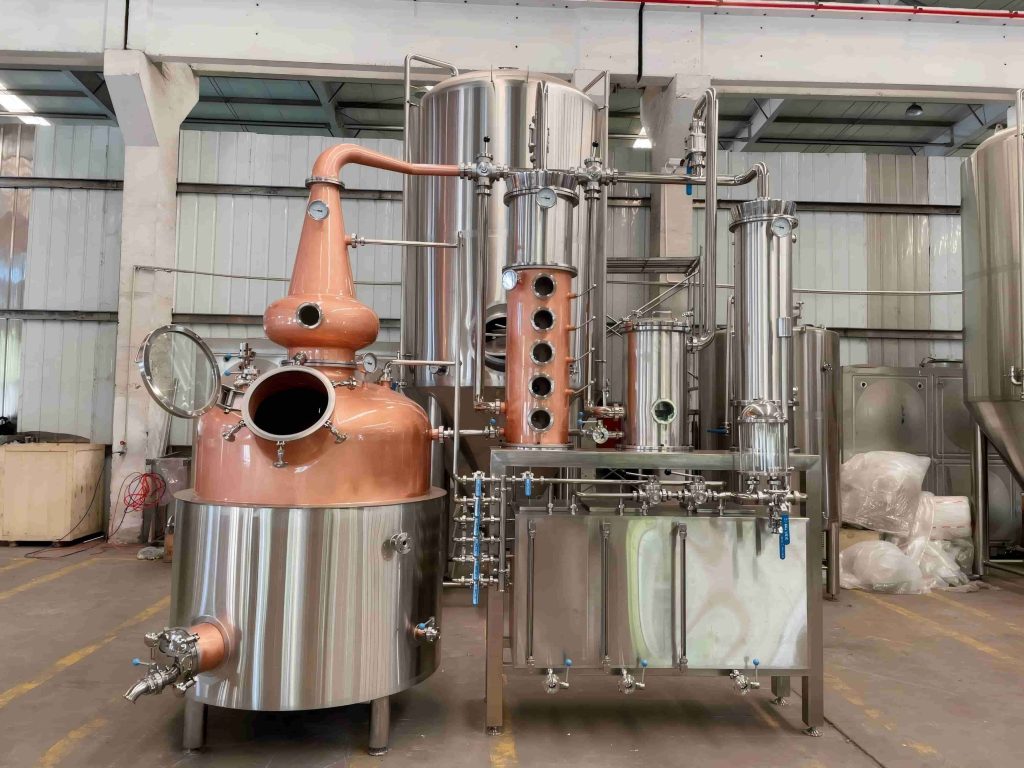
Starting a small beverage plant requires careful equipment planning. Two important systems are an alcohol distillation machine and a small flash pasteurizer.
These machines have different jobs. An alcohol distillation machine separates and concentrates alcohol from a fermented liquid. A flash pasteurizer uses controlled heat to reduce target microorganisms and extend shelf life.
Some plants need only one system. Others need both. The right choice depends on your beverage, production volume, utilities, and future growth.
Key Takeaways
- Distillation and pasteurization solve different problems — separating/concentrating alcohol vs. reducing microorganisms — so most plants need only one, not both, unless they run multiple product lines.
- Pot stills keep more flavor character for craft spirits; column stills trade character for purity and continuous throughput.
- Flow rate, not tank size, is usually the limiting spec for a flash pasteurizer — it has to match your filling line’s actual output.
- Commercial alcohol distillation in the US is regulated by the TTB (27 CFR Part 19), which affects equipment metering and security requirements beyond process design alone.
Why Distillation and Pasteurization Matter
Distillation and pasteurization are separate processes, but both are important in beverage production. For a broader look at how distillation systems fit into a beverage plant, see our equipment overview.
An alcohol distillation machine is mainly used for spirits and products that require alcohol separation or concentration. It can affect flavor, alcohol strength, and production efficiency. In the US, commercial spirits production also falls under TTB requirements for distilled spirits plants.
A small flash pasteurizer is used for juice, beer, tea, dairy beverages, and some ready-to-drink products. It heats the product for a controlled time, then cools it quickly.
For a small plant, do not select an alcohol distillation machine by price alone. Capacity, heating, cooling, cleaning, controls, and future expansion also matter.
When you compare the best distillation equipment, look at the full production process, not just one machine.
What Is an Alcohol Distillation Machine?
It separates components in a fermented liquid by using differences in boiling points.
The liquid is heated. Alcohol-rich vapor is produced, then condensed back into liquid. Depending on the design, the product can reach a higher alcohol concentration.
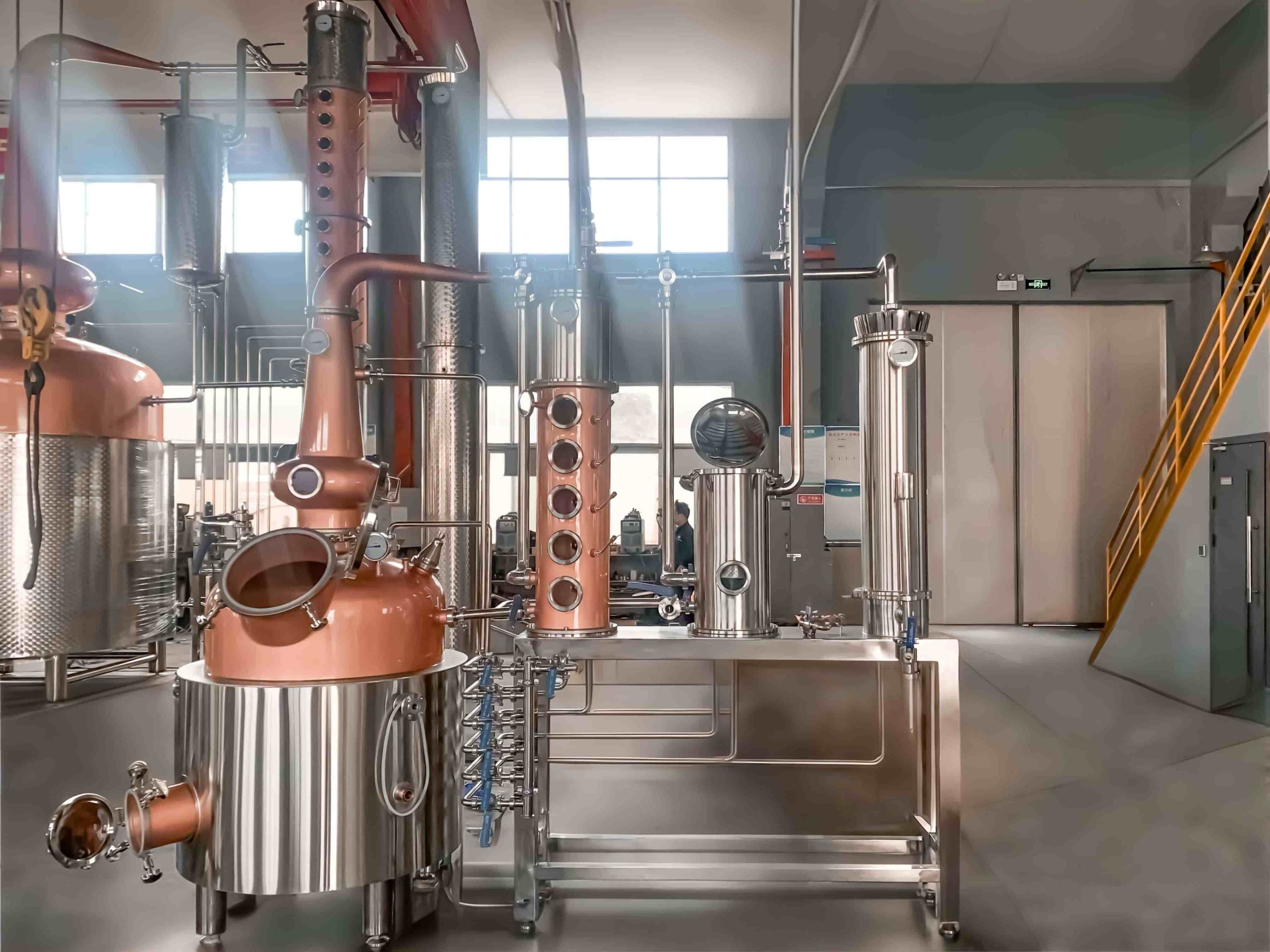
A typical setup includes a heating vessel, a distillation column, a condenser, a collection tank, temperature sensors, a control system, and pumps and valves.
For small plants, three common options are pot stills, column stills, and hybrid systems.
Pot Still
A pot still is a batch system. It is often used when flavor is important. The process is simple, so pot stills suit smaller production. They are common for whiskey and rum, where character from the fermented liquid matters.
Column Still
A column still offers higher separation efficiency and higher alcohol purity. It is useful when you need a more neutral spirit or higher production efficiency. Column systems can also run continuously or semi-continuously.
Hybrid System
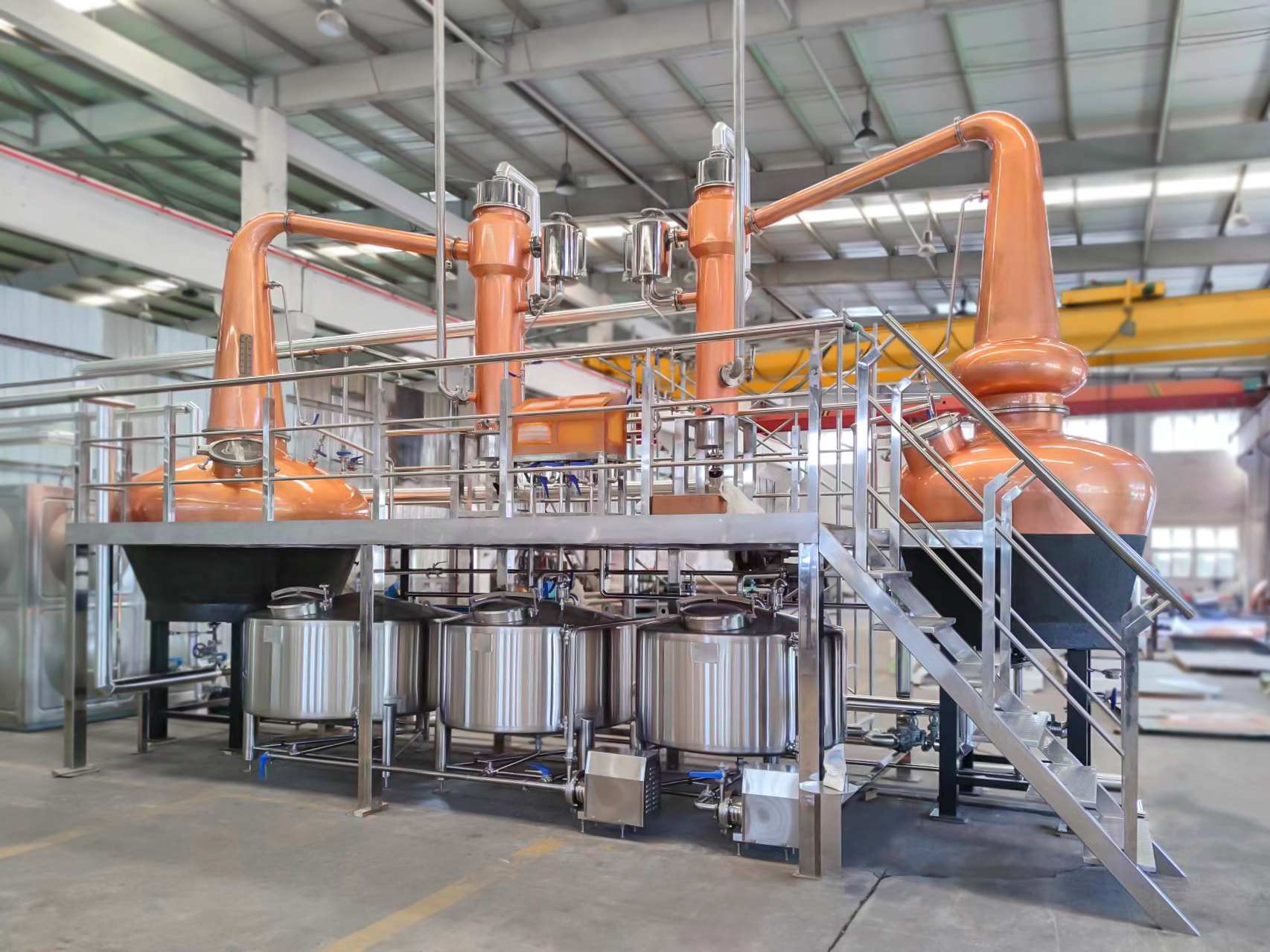
A hybrid system combines pot and column features. This gives a small plant more flexibility for different spirits. However, it is usually more complex than a basic pot still.
The right choice depends on your required alcohol strength, product flavor, volume, and operating method.
Key Factors When Choosing a Distillation Machine
Choosing an alcohol distillation machine requires more than checking tank volume — see how SKE approaches distillation system design for more context.
1. Production Capacity
Start with your real production plan. Consider fermentation volume, batches per week, target output, storage, and future growth.
A machine that is too small may become a bottleneck. One that is too large may raise investment and utility costs. Size the still around your complete plan.
2. Heating Method
Electric and steam heating are common. Electric heating is simple to install and works well for smaller operations. Steam heating becomes more practical at higher volumes, especially if you already have a steam system.
Consider energy cost, available utilities, and local conditions.
3. Column Design
For column systems, diameter, height, internal configuration, and reflux control affect separation. A plant wanting higher purity needs a different column from one that wants more flavor. Design the column around your product.
4. Material and Surface Finish
Food-contact parts should use food-grade materials. Stainless steel is durable, hygienic, and easy to clean. Some systems also use copper, which reacts with certain sulfur compounds (such as dimethyl sulfide) during distillation and helps remove them from the spirit — see this review of sulfur compounds in distilled spirits for the underlying chemistry.
Check welding quality, surface finish, seals, valves, and connections. Poor fabrication causes cleaning problems and shortens equipment life.
When reviewing the electric distillation equipment, ask for material certificates and welding reports.
5. Controls and Automation
Manual equipment costs less but needs more operator attention. Semi-automatic and automatic systems improve batch consistency. For a commercial plant, check sensors, alarms, valves, and data monitoring.
Distillation Equipment Comparison
| Feature | Small Pot Still | Column Still | Hybrid System |
|---|---|---|---|
| Process | Batch | Continuous or semi-continuous | Flexible |
| Alcohol purity | Medium | High | Adjustable |
| Flavor retention | High | Lower | Medium to high |
| Operation | Simple | More complex | More flexible |
| Space requirement | Lower | Medium to high | Medium |
| Typical use | Flavorful spirits | Neutral spirits | Multi-product plants |
Use this table as a starting point when comparing options. Actual performance varies by design and product.
What Is a Small Flash Pasteurizer?
A small flash pasteurizer uses controlled heating and rapid cooling to reduce target microorganisms; see the basics of flash pasteurization for the full process.
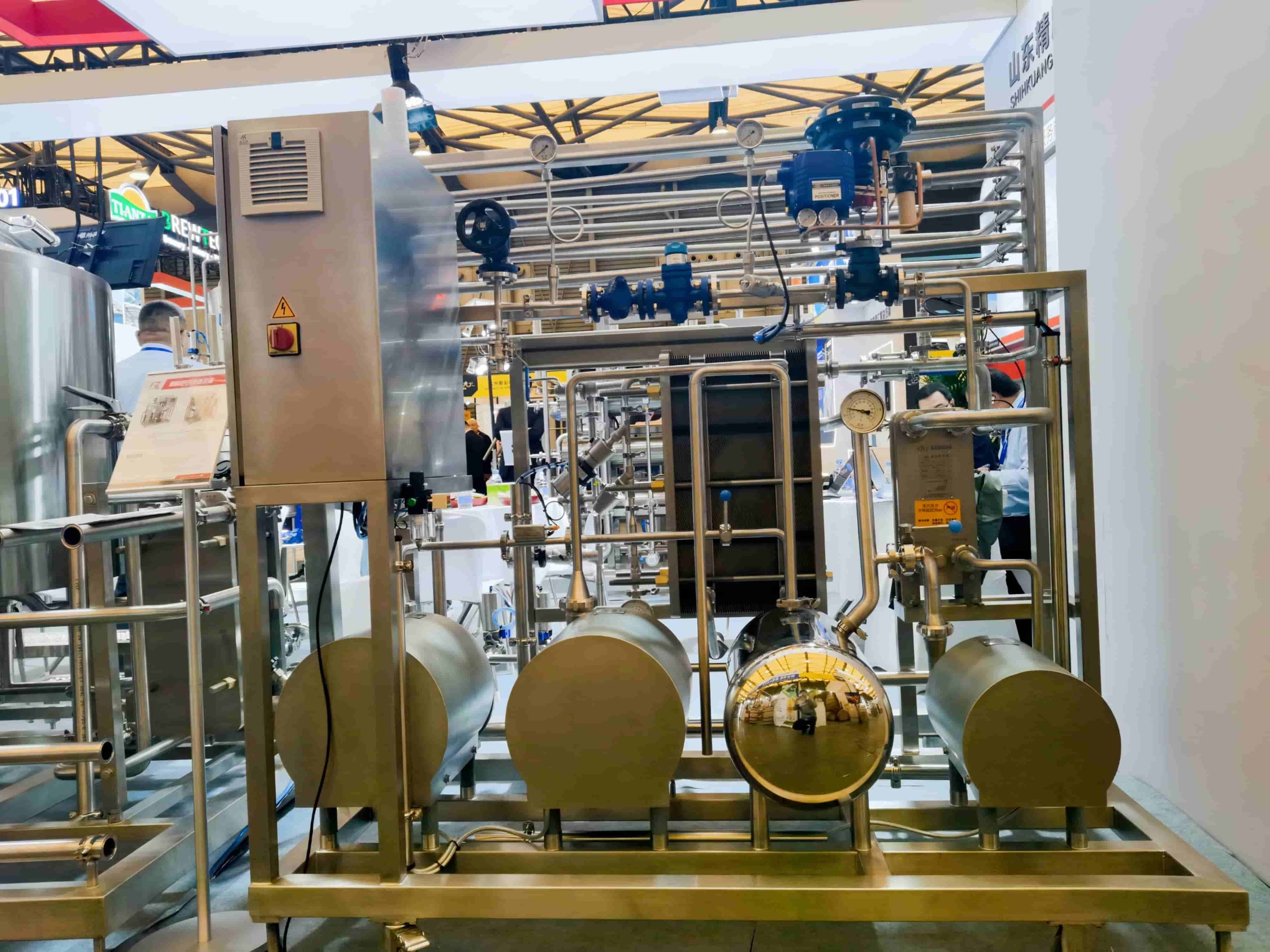
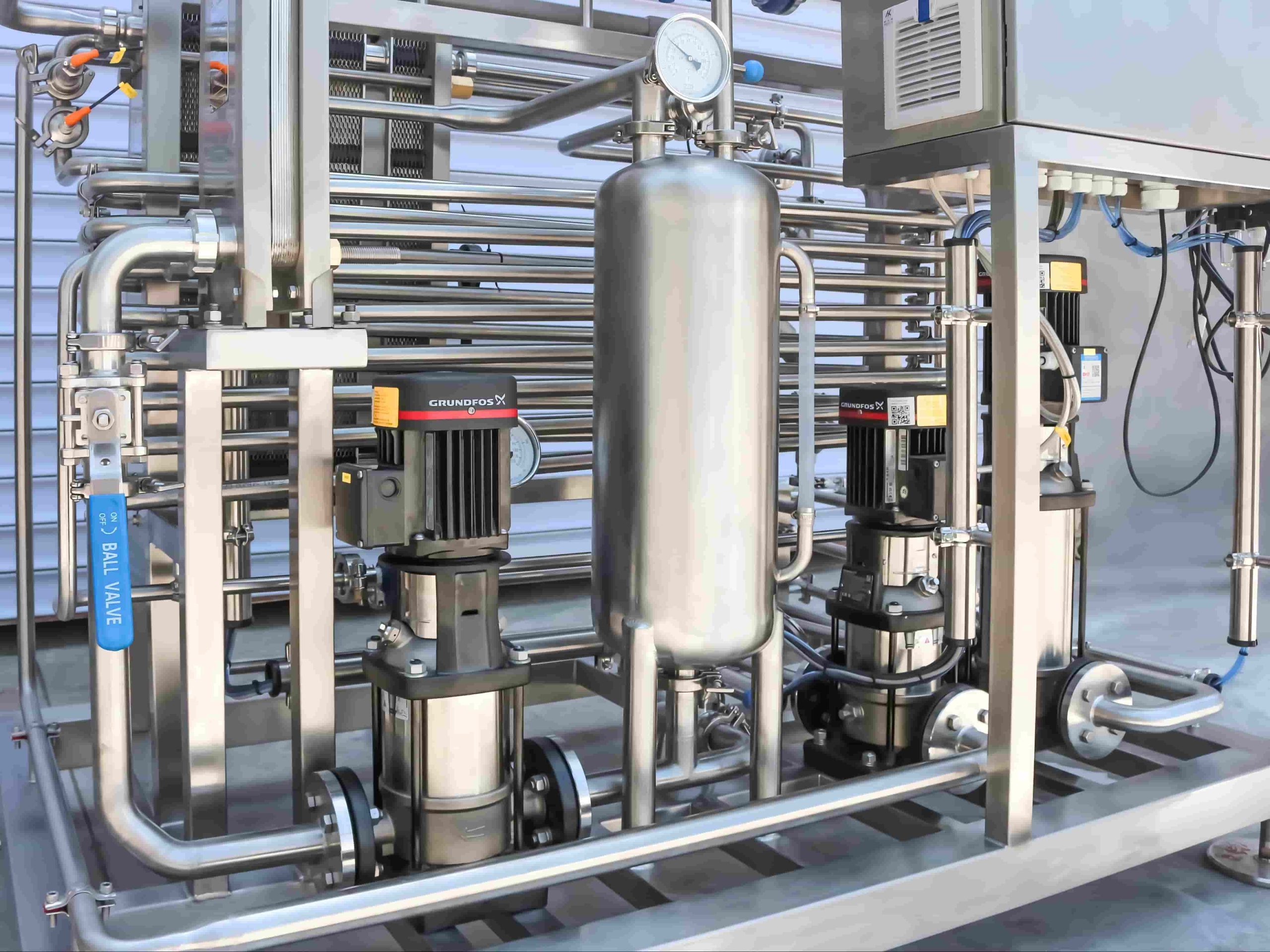
Unlike long heating, flash pasteurization uses a short holding time at a controlled temperature. A typical system includes a product pump, a heat exchanger, a holding tube, temperature sensors, a control panel, a cooling section, and valves and piping.
Plate heat exchangers are common because they offer efficient heat transfer in a compact design.
It can handle juice, beer, tea, dairy beverages, and some ready-to-drink products. The exact thermal process must be designed for each product. Temperature and holding time vary with composition, pH, viscosity, microbial targets, packaging, and regulations.
How to Choose a Small Flash Pasteurizer
The right pasteurizer should match your complete filling and packaging process.
1. Product Type
Different beverages need different thermal conditions. Juice, beer, dairy, and tea may all require different settings. Some products are more sensitive to heat and flavor change. Your supplier should understand your product before recommending temperature and holding time.
2. Flow Rate
Flow rate is one of the most important specifications. A pasteurizer that is too small limits the filling line. One that is much larger than needed raises equipment and energy costs.
Match it with filling machine capacity, tank volume, packaging speed, daily output, and future plans.
3. Heating and Cooling Capacity
Flash pasteurization needs both heating and cooling. The heating section raises the product to process temperature. The holding tube provides controlled residence time. The cooling section then lowers the temperature.
Make sure you have enough hot water, steam, chilled water, or glycol capacity.
4. Heat Recovery
Heat recovery reduces energy use. A well-designed heat exchanger transfers heat between incoming and outgoing product streams. This lowers external heating and cooling needs. For regular production, heat recovery is an important part of operating cost control.
5. CIP and Maintenance
Hygienic design is critical. It should be designed for effective CIP, following the surface and geometry practices in 3-A Sanitary Standards. Smooth product-contact surfaces, suitable valves, sanitary connections, and proper drainage make cleaning easier. The system should also allow easy inspection and maintenance.
Distillation Machine vs. Flash Pasteurizer
These two systems are not alternatives. They do different jobs — see our flash pasteurizer pricing and selection tips for the pasteurizer side specifically.
| Equipment | Main Function | Typical Applications |
|---|---|---|
| Alcohol distillation machine | Separate and concentrate alcohol | Spirits, distilled beverages |
| Small flash pasteurizer | Reduce target microorganisms | Juice, beer, tea, dairy drinks, RTD beverages |
| Both systems | Support different production stages | Multi-product beverage plants |
A spirits producer may focus mainly on distillation. A ready-to-drink producer may need pasteurization after blending. The actual process flow depends on your product and method.
How to Match Both Systems in One Plant
Some small plants make more than one product type. In this case, both systems may be useful.
One plant may run: Fermentation → Distillation → Spirit Storage → Blending → Pasteurization → Filling
Another may run: Ingredient Preparation → Blending → Flash Pasteurization → Filling
Plan the equipment as one complete process. Size heating and cooling together. Also consider power, steam, chilled water, compressed air, drainage, CIP, and floor space.
Future expansion matters too. A modular system makes it easier to increase production later without replacing the whole line.
Common Equipment Selection Mistakes
Small plants often decide based only on initial price. This creates problems later.
- Choosing capacity without a production plan. A low-capacity machine may look attractive, but it becomes a bottleneck when sales grow.
- Ignoring utility requirements. Distillation and pasteurization both need energy and cooling. Check your heating, cooling, power, and water capacity.
- Focusing only on the main machine. A full system also includes pumps, valves, tanks, piping, controls, CIP, and utility connections.
- Forgetting cleaning requirements. Poor cleaning design increases labor and creates hygiene risks. Consider sanitary design from the start.
- Buying without future expansion in mind. Modular equipment and well-planned utilities make growth easier.
Why Choose an Experienced Equipment Manufacturer?
Equipment selection should be based on the complete production process, not just one machine.
An experienced manufacturer can help evaluate product type, required capacity, distillation method, pasteurization process, heating and cooling needs, automation level, CIP requirements, plant space, and future expansion.
SKE provides customized beverage processing equipment and complete production solutions. Our equipment can be designed around different capacities and process requirements, helping producers build practical and scalable lines.
Whether you need an alcohol distillation machine, a small flash pasteurizer, or a complete production line, SKE can help you find the right solution.
FAQ
1. What makes the best distillation equipment for a small plant?
The right equipment matches your product, capacity, and budget. Look for food-grade material, reliable controls, good welding quality, and local service support. It should also be easy to clean and maintain.
2. When does a beverage plant need a small flash pasteurizer?
One may be needed when a beverage requires a controlled thermal process to improve microbiological stability and shelf life. The exact requirement depends on the product and local regulations.
3. What heating method is best for an alcohol distillation machine?
Electric and steam heating are both common. Electric heating suits smaller systems. Steam is useful for larger operations or plants that already have a steam system.
4. How does flash pasteurization work?
The product passes through a heat exchanger, reaches the required process temperature, stays for a controlled holding time, then cools quickly. The exact process depends on the beverage.
5. What should I check before buying a small flash pasteurizer?
Check product type, flow rate, heating and cooling capacity, heat recovery, CIP design, control system, sanitary construction, and future production needs.
6. Can SKE customize beverage processing equipment?
Yes. SKE can design equipment around product requirements, production capacity, plant layout, utilities, and future expansion needs.
Written by Mandy, Marketing Specialist at SKE Equipment with two years of experience covering the company’s brewing and beverage processing equipment. Technical details in this guide were reviewed by SKE’s engineering team before publication.
Contact Us
If you have any further questions, feel free to reach out!
- Facebook: SKE Equipment Facebook
- Email: info@skeequipment.com
Fill out the contact form below for customized solutions. We fully support all your production equipment demands for breweries and beverage plants.