
Carbonation is an important part of beer production. It affects beer aroma, mouthfeel, head retention, and pouring performance. If the beer has too little CO₂, it can taste flat. If it has too much CO₂, it may become foamy and difficult to pour.
For breweries, the goal is not just to carbonate beer. The goal is to reach the target CO₂ level consistently from batch to batch.
Traditional tank carbonation can achieve good results, but it may require long holding times and repeated pressure adjustments. As production grows, breweries often look for faster and more automatic process control.
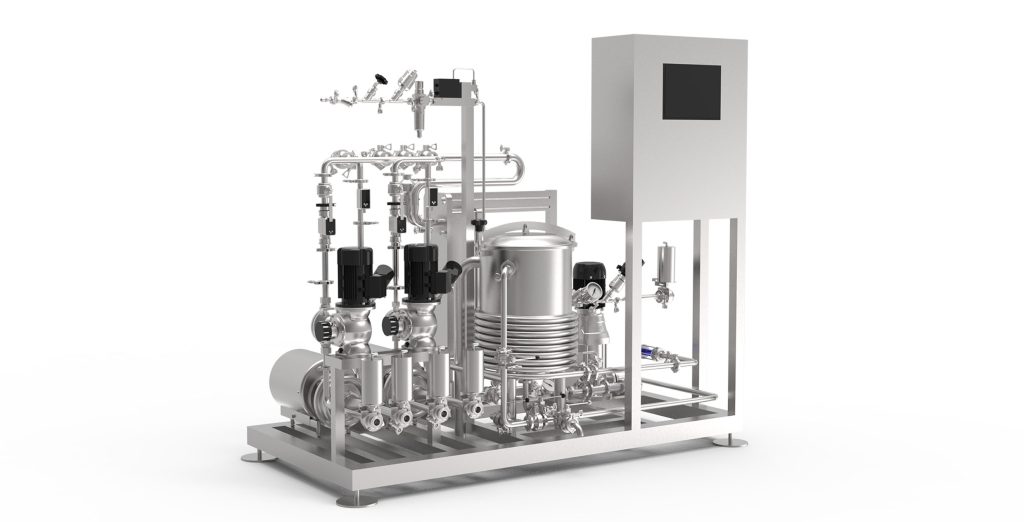
This is where an online blender becomes useful. An online blender works directly in the product flow. Depending on the system design, it can blend liquids, inject CO₂, or combine blending and carbonation functions.
An online blender gives breweries more control over the final product. It also reduces the need for long tank-based adjustments.
Key Takeaways
- Inline carbonation adds CO₂ while beer flows through the pipeline, replacing the long hold-and-adjust cycle of tank carbonation with continuous, automated control.
- Beer temperature is the biggest lever on CO₂ solubility — most breweries carbonate between 2°C and 6°C, and getting this wrong undermines everything downstream.
- An online blender and an inline carbonation system are related but not identical: one focuses on liquid ratios (e.g., high-gravity beer plus deaerated water), the other on CO₂ injection.
- Target carbonation varies by style — roughly 1.8–2.2 volumes for stouts, 2.2–2.7 for most ales and lagers, and 2.8–3.2 for wheat beers (matching the ranges cited later in this guide), so the same setpoint will not work across a whole product line.
Manual Carbonation: The Traditional Approach
Traditional carbonation is often performed in a bright beer tank or another pressure-rated vessel.
The brewer first cools the beer and connects a CO₂ supply to the tank. CO₂ then enters the beer through a carbonation stone, valve, or other gas-diffusion device. The brewer controls the pressure and waits for the gas to dissolve into the beer.
A carbonation stone is a porous metal or ceramic device. It creates many small CO₂ bubbles. Small bubbles dissolve faster than large ones because they have more surface contact with the beer. This is why stones are common in tank carbonation.
This method is simple and widely used. However, it requires close operator attention.
What Is Inline Carbonation?
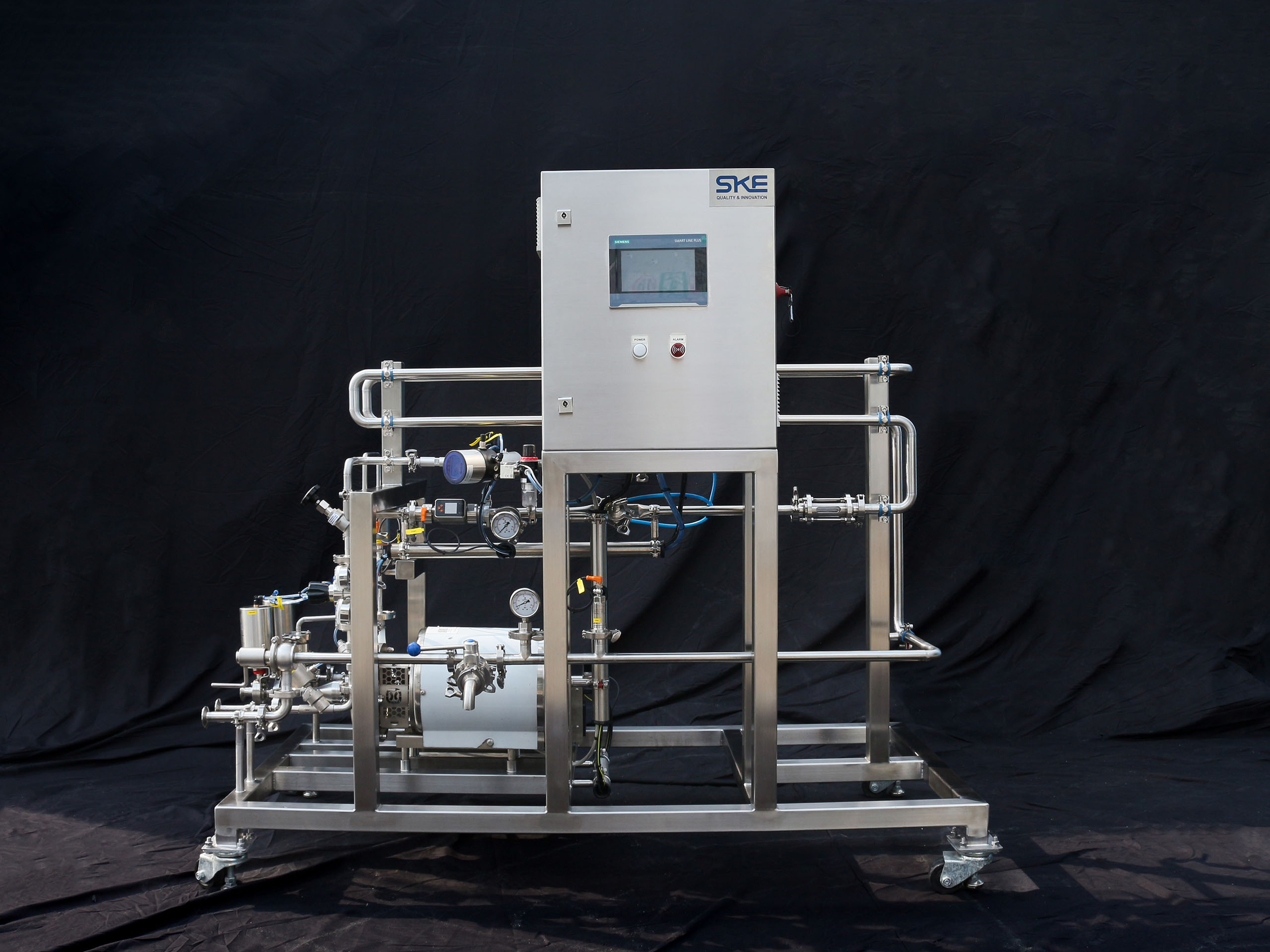
Inline carbonation adds CO₂ directly into the beer while the beer is flowing through a sanitary pipeline.
Instead of waiting for a large tank to reach the target carbonation level, the system controls gas injection during product transfer.
A typical inline carbonation process includes several key components:
-
Beer flow measurement
-
CO₂ injection point
-
Gas control valve
-
Gas and liquid mixing device
-
Inline CO₂ measurement
-
PLC control system
-
Sanitary piping and valves
The exact design depends on the brewery’s production capacity, beer type, target carbonation level, and process layout.
The main idea is simple: measure the process, control the CO₂ addition, and keep the carbonation level within the required range.
How Does Inline Auto Carbonation Work?
An inline auto carbonation system uses automatic controls to manage CO₂ addition during beer transfer.
The process normally starts after filtration, centrifugation, or another suitable beer-processing step. The beer enters the product pipeline and passes through the carbonation system.
1. Beer Flow Measurement
A flow meter measures the amount of beer moving through the pipeline.
This information is important because CO₂ addition must match the beer flow rate. If the beer flow changes, the gas injection rate may also need to change.
2. CO₂ Injection
CO₂ is introduced into the beer through a dedicated injection point.
The injection system is designed to help distribute the gas through the beer. Depending on the equipment design, a special injector, gas-diffusion device, or mixing section may be used.
3. Gas and Liquid Mixing
Simply adding CO₂ to the pipeline is not enough. The gas must dissolve into the beer.
An online blender can help improve gas and liquid mixing. Some online blender systems use static mixers or other sanitary mixing designs to increase contact between CO₂ and beer.
4. Inline CO₂ Measurement
An inline analyzer can monitor the CO₂ level during production.
The control system compares the measured value with the target value. If the carbonation level needs adjustment, the system can change the CO₂ flow through an automatic control valve.
5. PLC Control
The PLC works as the main control unit.
It receives information from flow meters, analyzers, pressure sensors, and other instruments. It then controls valves and other components according to the programmed process.
This reduces the amount of manual adjustment required from the operator.
What Affects Beer Carbonation?
Inline carbonation is not controlled by CO₂ pressure alone. Several process conditions can affect the final result.
Beer Temperature
Temperature has a major effect on CO₂ solubility. Lower beer temperatures generally allow CO₂ to dissolve more easily.
For this reason, breweries normally control beer temperature carefully before and during carbonation. Most breweries carbonate beer between 2 °C and 6 °C.
Beer Pressure
Pressure affects the ability of CO₂ to remain dissolved in beer. The pressure must be suitable for the beer temperature and target carbonation level.
Beer Flow Rate
The flow rate determines how much beer passes through the carbonation system.
A change in flow rate can affect gas injection, mixing, and the available contact time. Automatic control helps the system respond to these changes.
CO₂ Injection Rate
The amount of CO₂ added must match the required carbonation level.
Too little CO₂ can result in under-carbonation. Too much can create excessive carbonation and foaming problems.
Mixing Performance
Efficient gas and liquid mixing helps CO₂ spread through the beer.
This is why injector and static mixer design can be important parts of an online blender. A well-designed online blender improves mixing performance and carbonation stability.
Target Carbonation Level
Different beer styles may require different carbonation levels.
For example, a lager is often carbonated to about 2.4–2.7 volumes of CO₂. An ale may sit around 2.2–2.6 volumes. A stout may be lower, around 1.8–2.2 volumes. A wheat beer may be higher, around 2.8–3.2 volumes. These ranges are consistent with published carbonation guidelines by beer style, though house recipes can vary.
An automatic system allows operators to set and repeat the required process parameters for each product.
What Is an Inline Blender System?
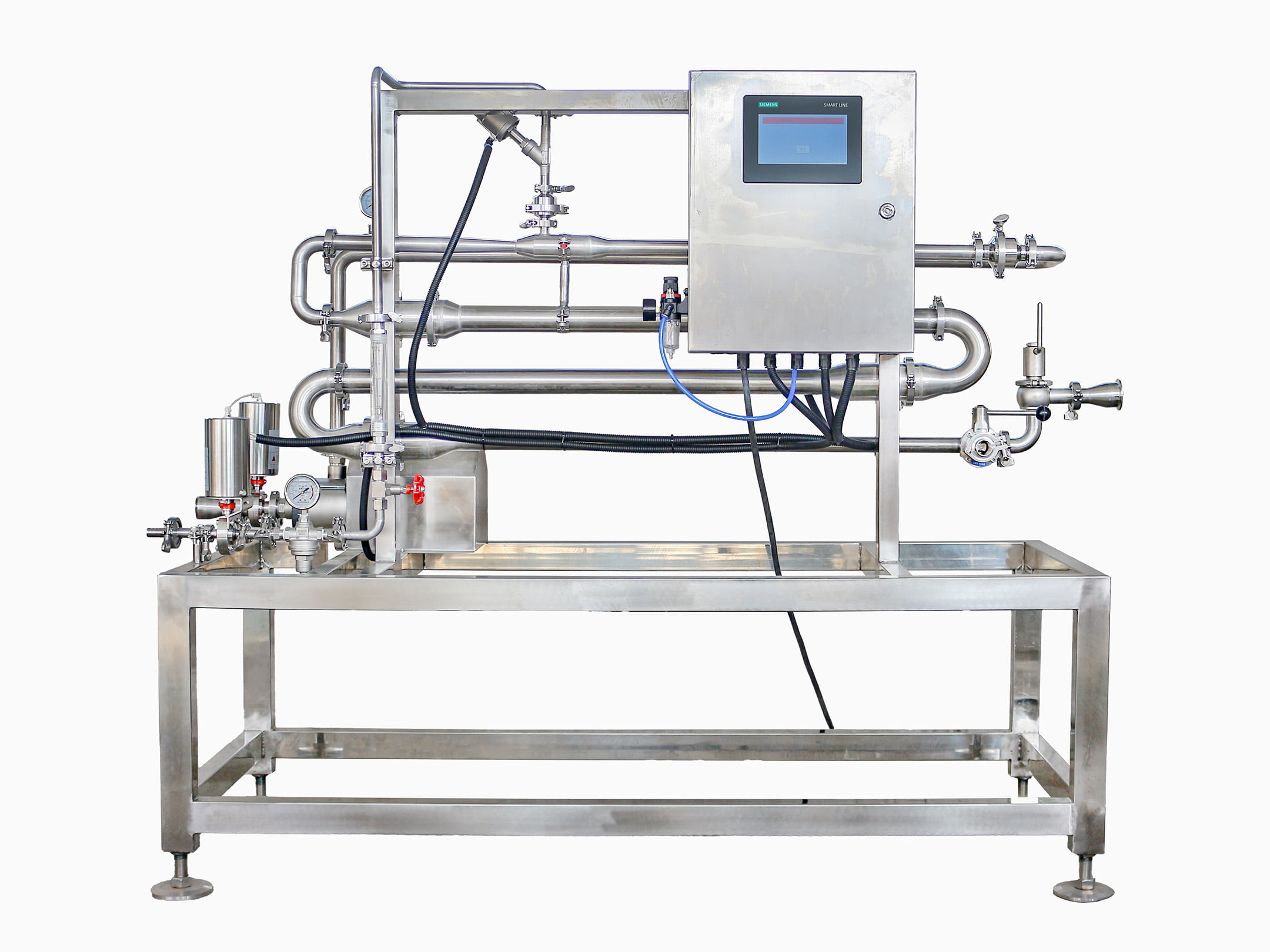
The term inline blender system can refer to different types of equipment used to mix liquids during production.
In brewing, one important application is high-gravity beer blending.
A brewery can produce high-gravity beer and then blend it with deaerated water before packaging. The inline blender system uses controlled flow rates to maintain the required product ratio.
This process can help breweries produce the final beer strength while using fermentation and processing equipment efficiently.
An inline blender system can also be designed to work with carbonation equipment. In this type of process, the system can control liquid blending and CO₂ addition as part of the same production line.
For breweries that produce several beer products, this type of system can provide greater process flexibility.
Online Blender vs. Inline Carbonation System
Although the terms are sometimes used together, they do not always mean exactly the same thing.
| Feature | Online Blender | Inline Carbonation System |
|---|---|---|
| Main function | Blends liquids in the product line | Adds CO₂ to beer |
| Typical application | Beer and deaerated water blending | Beer carbonation |
| Flow control | Controls liquid ratios | Controls beer and CO₂ flow |
| Gas injection | Optional | Main process function |
| CO₂ measurement | May be included | Common in automatic systems |
| PLC control | Optional or integrated | Common in automatic systems |
| Typical benefit | Accurate product blending | Consistent carbonation |
A combined online blender and inline carbonation system can provide both functions when the brewery process requires liquid blending and carbonation.
The right configuration depends on the product recipe and the brewery’s process design.
Benefits of Inline Auto Carbonation for Breweries
Faster Production
Inline carbonation can reduce the time associated with waiting for a large tank to reach the target CO₂ level.
This can be useful when a brewery has high product turnover or needs to move beer through the packaging process quickly.
More Consistent Carbonation
Automatic measurement and control can help maintain a stable target.
This is especially useful for breweries that need the same carbonation profile across multiple production batches.
Better Process Control
A PLC-based online blender system can connect flow meters, pressure sensors, CO₂ analyzers, and control valves.
This gives operators a clearer view of the process and makes parameter adjustment easier.
Lower Manual Work
Operators do not need to make every CO₂ adjustment by hand.
The system can perform automatic control according to the programmed process settings.
Flexible Production
Different beer products may require different carbonation and blending settings.
An automatic online blender system can store or use different process parameters, helping breweries change products more efficiently.
Better Use of Production Space
When carbonation is performed in the product line, the brewery may reduce the need to use large tanks only for extended carbonation holding.
The actual space benefit depends on the brewery’s existing tank capacity and process layout.
Online Blender and Carbonation Solutions from SKE
SKE provides brewery equipment and engineering solutions for different production requirements.
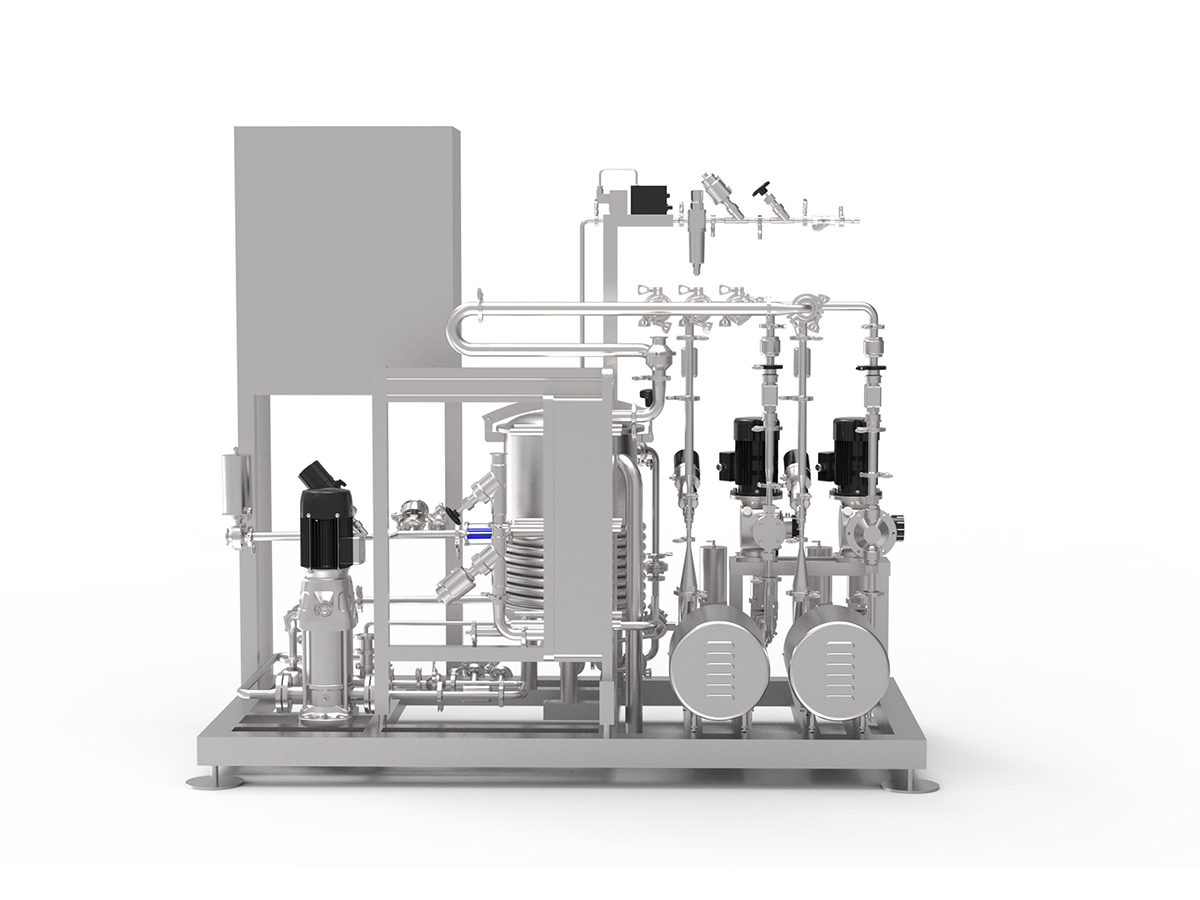
Depending on the application, SKE can design manual, semi-automatic, or fully automatic online blender systems for beer blending and carbonation.
SKE’s engineering team can design the online blender system according to the brewery’s production capacity, process flow, product requirements, and available space.
For breweries expanding production or upgrading an existing line, the online blender can also be designed to work with existing tanks and process equipment.
The goal is not simply to add another machine. The goal is to create a carbonation and blending process that fits the complete brewery production line.
FAQ
1.What is an online blender in brewing?
An online blender is equipment that mixes liquids directly in the product flow. In brewing, it can be used for applications such as high-gravity beer and deaerated water blending. Some online blender systems can also integrate carbonation functions.
2.What is inline auto carbonation?
Inline auto carbonation is an automated process that adds CO₂ to beer while the beer flows through a pipeline. Flow meters, CO₂ measurement, control valves, and PLC controls can be used to manage the process.
3.Is inline carbonation better than tank carbonation?
The two methods serve different production needs. Tank carbonation is simple and suitable for many breweries. Inline carbonation can provide faster processing and more automatic control when the production line requires continuous or highly repeatable carbonation.
4.What factors affect beer carbonation?
Beer temperature, pressure, beer flow rate, CO₂ injection rate, mixing performance, and the target carbonation level can all affect the final result.
5.Can an online blender also carbonate beer?
Yes. Some online blender systems can be designed to combine liquid blending and CO₂ injection. The exact functions depend on the equipment configuration and brewery process.
6.Is inline carbonation equipment compatible with CIP?
Many modern brewery systems can be designed for CIP cleaning. The final CIP method depends on the equipment design, sanitary components, piping layout, and the brewery’s cleaning procedure.
Written by Mandy, Marketing Specialist at SKE Equipment with two years of experience covering the company’s brewing and beverage processing equipment. Technical details in this guide were reviewed by SKE’s engineering team before publication.
Conclusion: More Control Over Modern Beer Production
Carbonation is an important quality parameter in beer production. Traditional tank carbonation can work well, but it may require more time and operator attention.
An online blender moves the process into the beer pipeline. With flow measurement, controlled CO₂ injection, mixing, inline measurement, and PLC automation, breweries can achieve more repeatable carbonation control.
SKE provides customized online blender equipment and engineering support to help breweries build practical blending and carbonation solutions for their production needs.
If you have any further questions, feel free to reach out!
- Facebook: SKE Equipment Facebook
- Email: info@skeequipment.com
Fill out the contact form below for customized solutions. We fully support all your production equipment demands for breweries and beverage plants.