A contaminated keg can affect the quality of an entire keg of beer and lead to product loss. For craft breweries, proper keg cleaning is an important part of the packaging process.
A craft brewery keg washer delivers controlled cleaning and sanitization of reusable beer kegs prior to refilling. Unlike manual cleaning, the machine maintains consistent control over cleaning duration, temperature, water flow and chemical dosing.
For growing breweries, the right automated keg washing system can also reduce labor, water consumption, chemical use, and operator workload.
This guide explains how a brewery keg washer works, the main components, common system configurations, and the key factors breweries should consider when choosing a beer keg washer.
Why Keg Washing Matters for Craft Breweries
Beer quality does not depend only on brewing and fermentation. Packaging equipment and reusable kegs also play an important role.
After a keg is emptied, beer residue and yeast can remain inside the vessel. Over time, organic deposits and mineral buildup may become harder to remove. Poor cleaning can increase the risk of contamination and may contribute to unwanted flavors or unstable packaging performance.
Proper keg cleaning helps breweries:
-
Remove beer residue and yeast
-
Reduce the risk of microbial contamination
-
Remove protein and mineral deposits
-
Prepare kegs for the next filling cycle
-
Improve cleaning consistency
-
Reduce manual cleaning work
-
Protect reusable stainless steel kegs
For breweries handling a high number of returnable kegs, manual cleaning can become difficult to manage. A craft brewery keg washer provides a repeatable cleaning process and allows operators to handle more kegs with less manual intervention.
What Is a Craft Brewery Keg Washer?
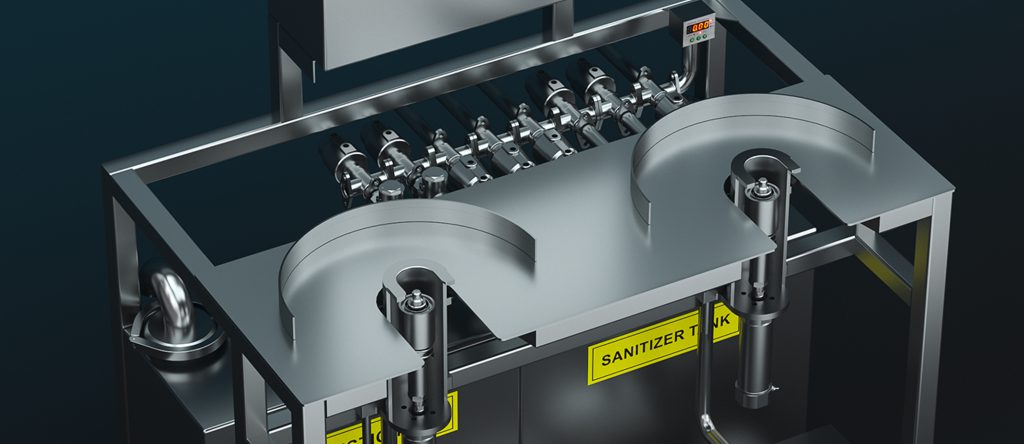
A craft brewery keg washer is a machine designed to clean and sanitize reusable beer kegs before they are filled again.
The system normally uses tanks, pumps, valves, heating equipment, cleaning heads, sensors, and a control system. These components work together to circulate water and cleaning solutions through the inside of the keg.
A basic brewery keg washer may perform several cleaning stages, such as:
-
Keg draining
-
Pre-rinsing
-
Caustic cleaning
-
Intermediate rinsing
-
Acid cleaning when required
-
Final rinsing
-
Sanitizing
-
CO₂ purging
The exact process depends on the brewery’s cleaning requirements, keg condition, cleaning chemicals, and machine configuration.
A beer keg washer can be manually operated, semi-automatic, or fully automated. For larger production volumes, a craft brewery keg washer with PLC control can manage the cleaning recipe and improve process repeatability.
How Does an Automated Keg Washing System Work?
The cleaning sequence can be adjusted according to the brewery’s process requirements. A typical cycle includes the following stages.
Step 1: Keg Positioning and Draining
The operator places the keg on the cleaning station and connects the appropriate keg coupler or cleaning head.
The machine opens the keg valve and drains remaining beer or liquid before the main cleaning cycle begins.
Step 2: Pre-Rinse
Water is circulated through the keg to remove loose beer residue, foam, and other easily removable material.
Pre-rinsing reduces the organic load before the caustic cleaning stage. This can also help improve the efficiency of the cleaning solution.
Step 3: Caustic Cleaning
A heated alkaline cleaning solution is circulated through the keg.
Caustic cleaning is commonly used to remove beer residue, proteins, yeast, and organic deposits. The cleaning temperature and contact time depend on the cleaning recipe and chemical supplier’s recommendations.
In systems with caustic recovery, the cleaning solution can be collected and reused when its condition remains suitable for the process.
Step 4: Intermediate Rinse
Water is used to remove the remaining caustic solution before the next cleaning stage.
Proper rinsing helps reduce chemical carryover and prepares the keg for further treatment.
Step 5: Acid Cleaning
Some breweries use an acid cleaning stage to help remove mineral deposits and beer stone.
This stage is not required for every cleaning cycle. Its use depends on keg condition, water quality, cleaning procedures, and brewery requirements.
Step 6: Final Rinse
The keg is rinsed with suitable water to remove remaining cleaning chemicals.
The required water quality depends on the brewery’s process and sanitation requirements.
Step 7: Sanitizing
The keg can then be sanitized using an appropriate chemical sanitizer or, where the system is designed for it, steam.
Peracetic acid and other brewery-approved sanitizers are commonly used in beverage applications. Steam can also be used in systems designed for steam sanitation.
Step 8: CO₂ Purging
After cleaning and sanitation, CO₂ can be used to purge air from the keg before filling.
Reducing oxygen exposure is important for beer quality because oxygen can contribute to flavor changes and product aging.
The complete cycle depends on the cleaning recipe, keg condition, machine design, and production requirements. A craft brewery keg washer with PLC control allows these parameters to be repeated from one cycle to the next.
Key Components of a Craft Brewery Keg Washer
A professional brewery keg washer is made up of several systems that work together.
Cleaning Heads
The cleaning head connects the machine to the keg and allows cleaning liquid, rinse water, gas, or steam to enter the vessel.
The design should match the keg type used by the brewery, such as Sanke or DIN systems.
Cleaning Tanks
The machine may include separate tanks for caustic solution, hot water, acid, or sanitizer.
The number and size of tanks depend on the cleaning process and required production capacity.
Heating System
Heating equipment maintains the required temperature for hot water and cleaning solutions.
Depending on the brewery’s utilities, a beer keg washer may use steam heating or electric heating.
Steam can provide fast heating and recovery when a suitable steam supply is available. Electric heating can be easier to install for smaller breweries without an existing boiler system.
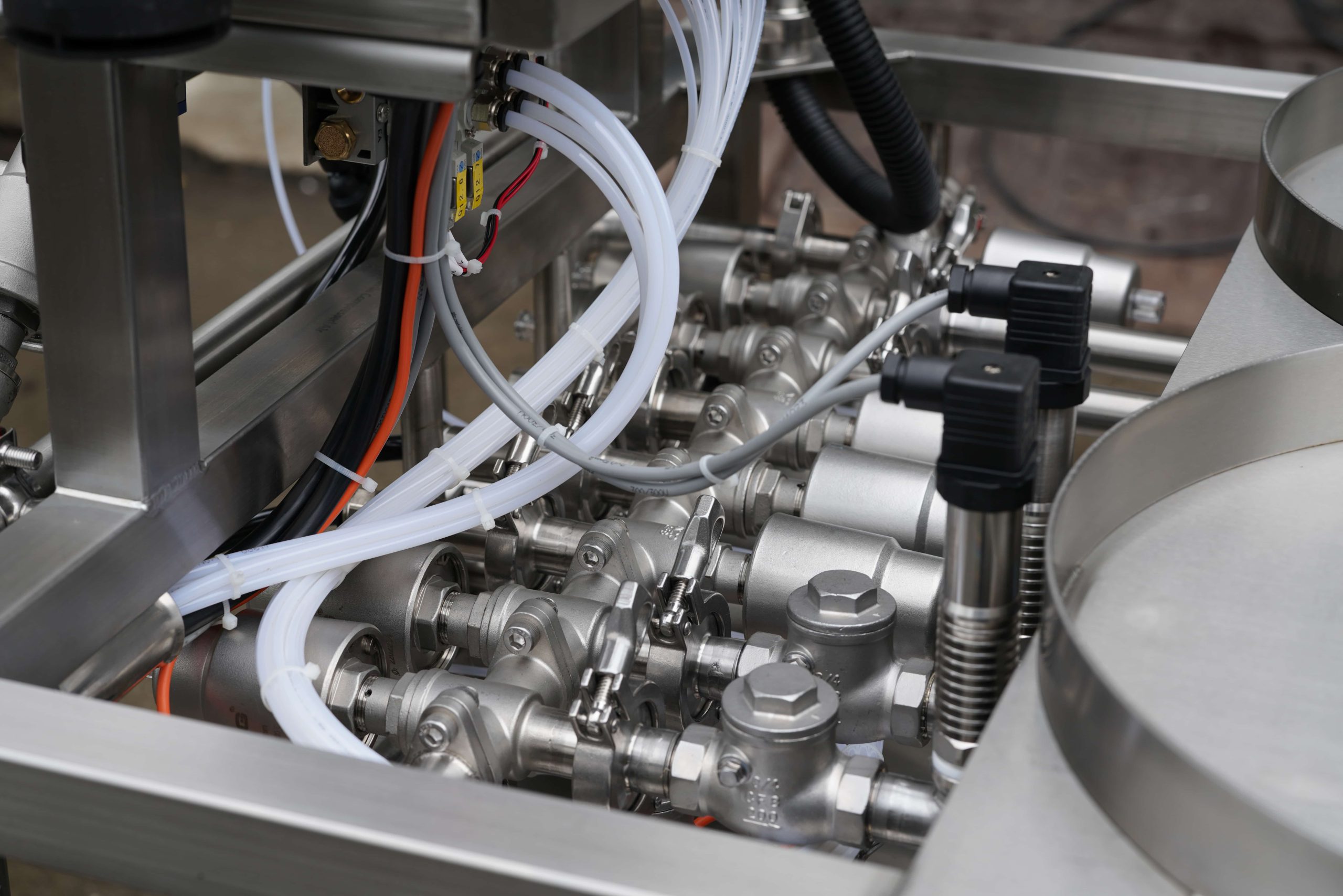
Pumps and Valves
Pumps circulate water and cleaning solutions through the keg and the machine.
Valves control the direction and timing of the cleaning process. A craft brewery keg washer can use pneumatic or electrically actuated valves for repeatable operation.
Sensors
Temperature, liquid level, flow, and other sensors can monitor important process conditions.
These sensors help the control system maintain the required cleaning parameters and reduce operator errors.
PLC Control System
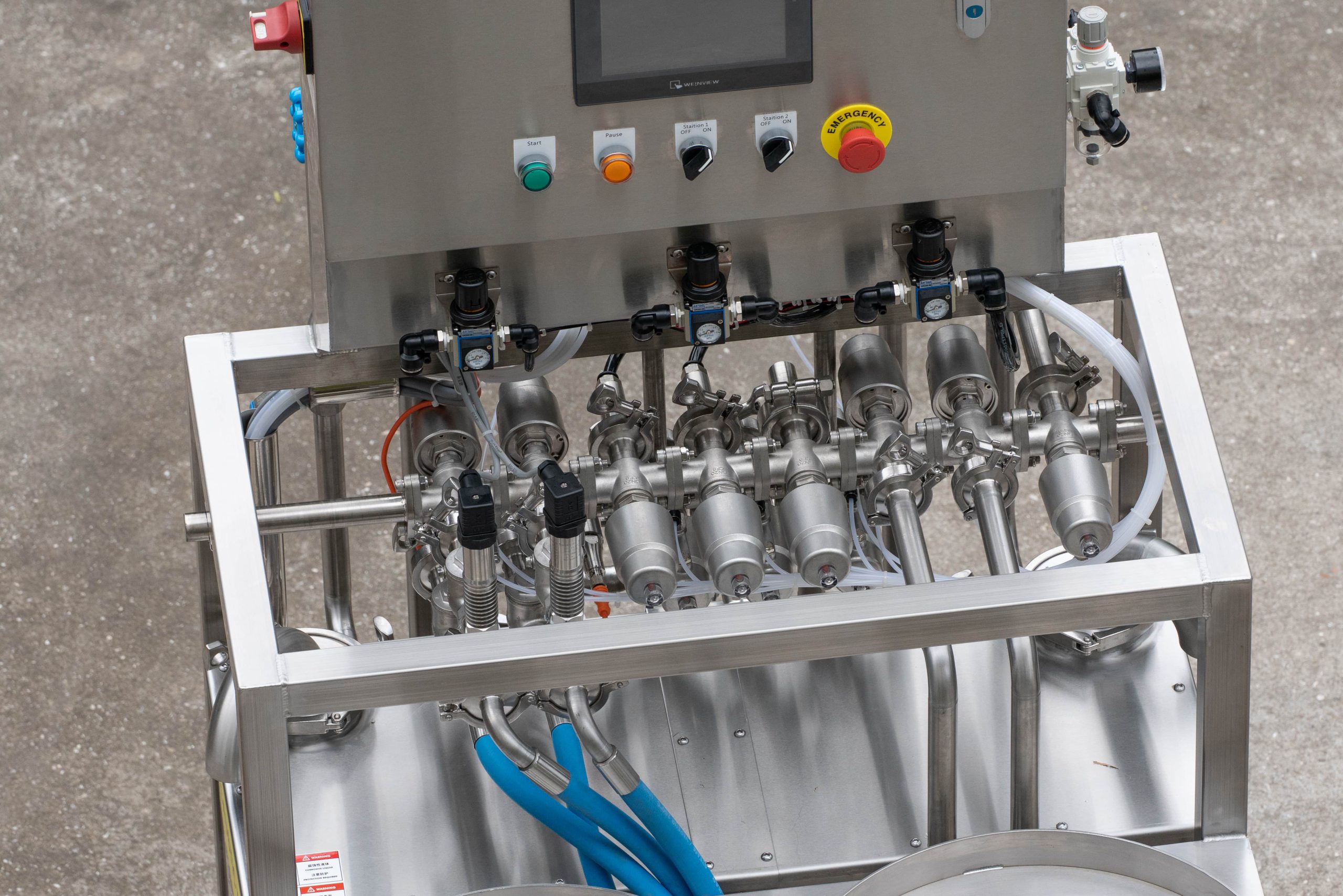
The PLC is the control center of an automated keg washing system.
Operators can select a cleaning recipe, and the PLC controls the programmed sequence. Depending on the system, the recipe can include different times, temperatures, valve positions, pump operations, and other process settings.
This helps breweries achieve more consistent cleaning results from batch to batch.

Craft Brewery Keg Washer Options: Manual, Semi-Automatic, and Automated
The right keg cleaning configuration depends on keg volume, available labor, production requirements, and future expansion plans.
| Feature | Manual System | Semi-Automatic System | Automated System |
|---|---|---|---|
| Operation | Manual cleaning | Operator loads kegs, machine runs the cycle | Programmed cleaning cycle |
| Operator Work | High | Medium | Lower |
| Cleaning Consistency | Depends on operator | Good | High |
| Process Control | Manual | Partial | PLC controlled |
| Water Management | Basic | Controlled | Can include recovery |
| Chemical Management | Manual | Controlled | Programmable |
| Production Capacity | Lower | Medium | Medium to high |
| Suitable For | Very small operations | Small and medium breweries | Growing and larger breweries |
The actual capacity depends on the number of cleaning heads, cycle time, keg size, cleaning recipe, and machine configuration. For this reason, breweries should compare systems based on their actual keg turnover rather than capacity numbers alone.
Water and Chemical Efficiency
Water and chemical consumption are important when a brewery cleans a large number of kegs every day.
Traditional cleaning methods may use fresh water for multiple rinse stages. Modern automated keg washing systems can improve efficiency by recovering suitable rinse water and cleaning solutions.
For example, recovered rinse water can sometimes be redirected to an earlier pre-rinse stage. This reduces the amount of fresh water required for each cleaning cycle.
Caustic recovery can provide another source of savings. Instead of sending the cleaning solution directly to drain after one cycle, a brewery keg washer can collect and reuse it when the solution remains within the required process condition.
Steam vs. Electric Heating for Keg Washers
Both steam and electric heating can be used in keg washing equipment.
| Heating Method | Main Advantage | Main Limitation | Suitable Application |
|---|---|---|---|
| Steam | Fast heating and recovery | Requires a suitable steam supply | Medium and large breweries |
| Electric | Simple installation | May have slower recovery at high loads | Small and medium breweries |
Steam heating is useful for breweries that already operate a boiler system. It can provide fast heating for cleaning tanks and support continuous production.
Electric heating does not require a boiler, which can simplify installation. However, the required electrical load should be considered when selecting a craft brewery keg washer.
The correct choice depends on the brewery’s existing utilities, production capacity, installation conditions, and operating costs.
Why Choose SKE for Your Craft Brewery Keg Washer?
SKE provides brewery equipment for craft breweries and commercial beverage production.
Our automated keg washing systems are designed to support repeatable cleaning, efficient operation, and practical brewery maintenance.
SKE systems can be configured for different production requirements. A smaller brewery may need a compact single-head beer keg washer, while a larger production brewery may require multiple cleaning heads for higher throughput.
The system can also be customized according to keg type, cleaning process, available utilities, and plant layout.
Beyond equipment supply, SKE provides engineering support for installation, commissioning, operator training, and maintenance. This helps breweries operate the brewery keg washer correctly and maintain stable performance over time.

Frequently Asked Questions
1.How often should beer kegs be cleaned?
Reusable beer kegs should be properly cleaned and sanitized before each refill. The exact cleaning procedure depends on the brewery’s sanitation program and keg condition.
2.Can one keg washer clean different keg sizes?
Many systems can be configured to handle different keg sizes and connection types. The brewery should confirm keg dimensions and coupler requirements before ordering the equipment.
3.Can a keg washer reduce water consumption?
Yes. Automated keg washing systems with rinse-water recovery and optimized cleaning programs can reduce fresh-water consumption. The actual reduction depends on the machine design and operating process.
4.Can a keg washer also fill kegs?
Yes. Some systems combine keg washing and filling functions. This can reduce keg handling and save floor space, depending on the brewery’s production requirements.
5.How long can a keg washer last?
A quality brewery keg washer can provide many years of service with proper maintenance. The actual service life depends on machine construction, operating hours, water and chemical conditions, maintenance, and replacement of wear components.
Conclusion
A craft brewery keg washer is an important part of an efficient keg packaging operation. Proper cleaning helps remove beer residue, yeast, proteins, and mineral deposits before the next filling cycle.
For breweries with higher keg volumes, automated keg washing systems provide better process control and more repeatable cleaning. PLC automation, water recovery, caustic recovery, and suitable heating systems can also help reduce operator workload and operating costs.
When selecting a brewery keg washer, breweries should consider keg type, cleaning capacity, cleaning recipe, water and chemical consumption, heating method, automation level, and future production needs.
SKE provides customizable keg washing solutions for craft breweries and commercial beer producers. From compact systems to higher-capacity automated equipment, SKE can configure the system according to keg type, production requirements, plant utilities, and cleaning process.
If you are planning a new brewery, expanding keg production, or replacing an existing cleaning system, contact SKE to discuss the right beer keg washer for your operation.
- Facebook: SKE Equipment Facebook
- Email: info@skeequipment.com
Fill out the contact form below for customized solutions. We fully support all your production equipment demands for breweries and beverage plants.