
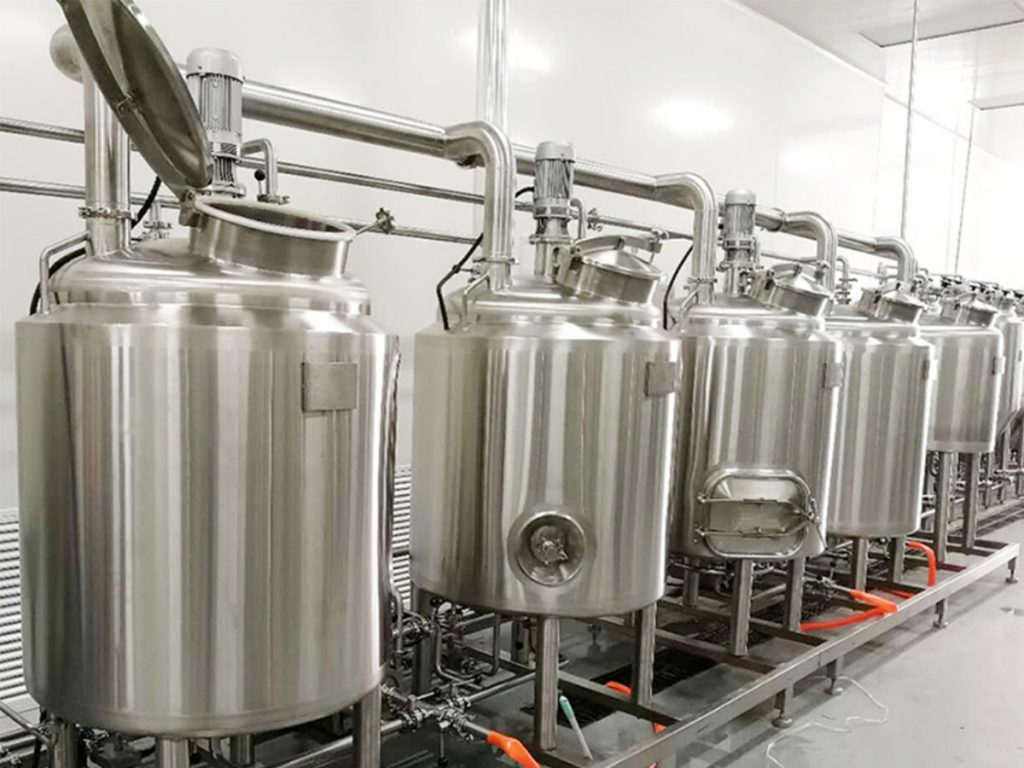
For decades, brewing has relied on steam boilers, gas burners, and the experience of skilled brewers. These methods still work well, but modern equipment offers new ways to improve heating control, process consistency, and production efficiency. The electric brewing system has become an option for both small and commercial breweries, offering a different approach to heat, automation, and process management.
At SKE, we design brewing equipment for producers who value repeatable results and efficient operation. This article explains how an electric brewing system works, how electronic automation improves brewing control, and what breweries should consider before choosing this technology.
What Makes an Electric Brewing System Different?
The main difference is how heat is generated. Instead of using a gas burner or a steam-heated jacket, an electric brewing system uses electrical heating elements to heat the wort or the vessel. The exact design depends on the equipment and process requirements.
An electric brewing system can reduce the need for gas lines, open flames, and a separate boiler room. For breweries in urban buildings or facilities without suitable gas infrastructure, electric heating may be a practical option.
Electric heating also produces little noise at the heating point, which can improve the working environment. However, pumps and other equipment still create noise during operation.
The main challenge for an electric brewing system is electrical capacity. Commercial electric heating requires enough power to reach target temperatures within the required production time. Small pilot systems may use single-phase power, while many commercial brewhouses use three-phase industrial power. The actual requirement depends on heating capacity, voltage, local electrical standards, and the available site supply.

The Role of the Electronic Automated Brewing System
Heating is only part of the process. What separates a modern electronic automated brewing system from a basic electric kettle is the use of sensors, controllers, pumps, and valves to manage brewing operations.
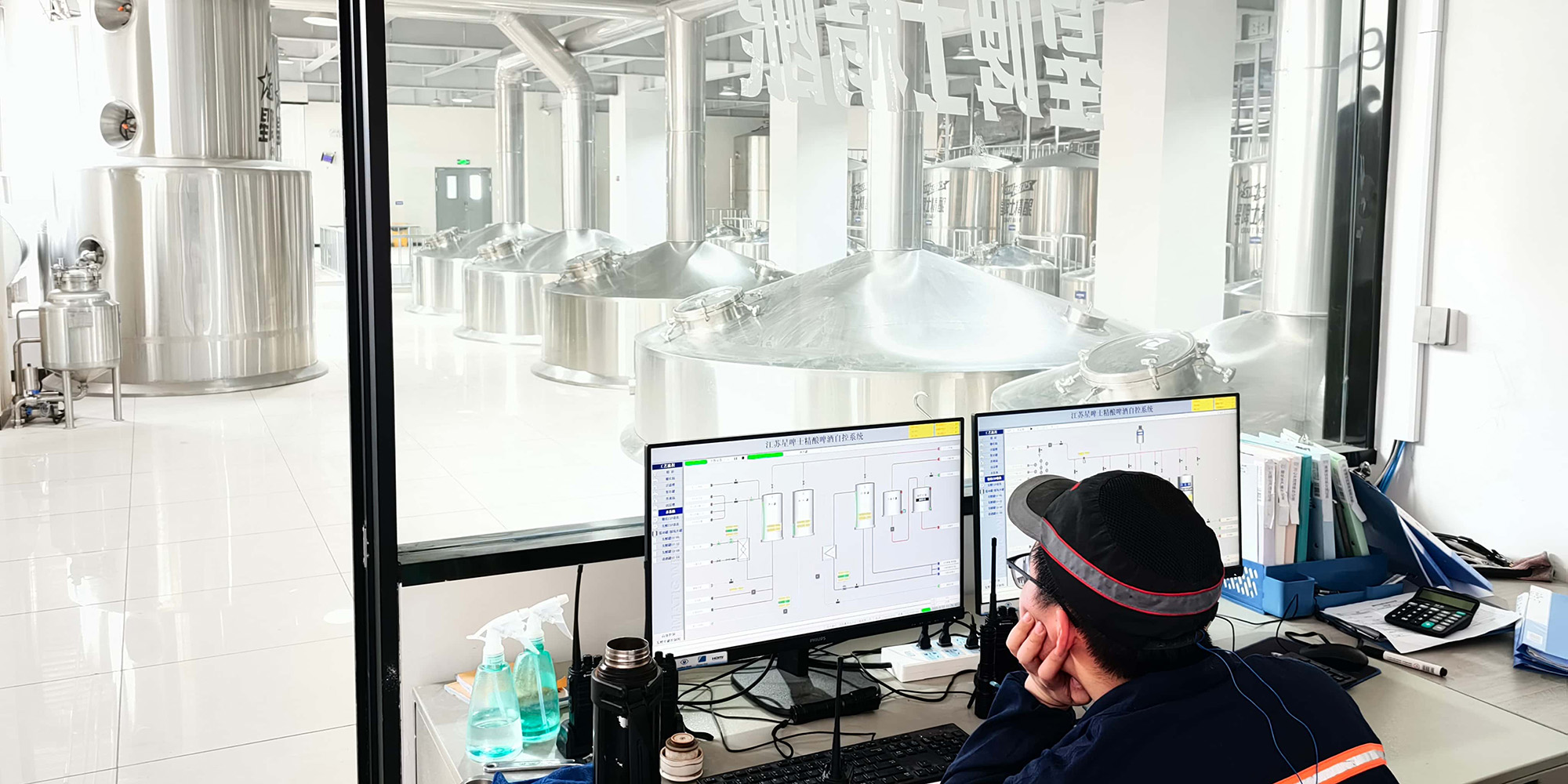
In an electric brewing system with automation, temperature sensors measure conditions inside each vessel and send readings to a central controller. When the mash needs to remain at 65°C, the controller adjusts heating output to keep the temperature close to the target. During boiling, it regulates heat input to maintain the required boil intensity.
Automation can also control liquid transfer and circulation. Motorized valves open and close according to the brewing program, while pumps move wort between vessels or recirculate it through the grain bed. Depending on the system design, the controller can coordinate key steps such as filling, heating, mashing, sparging, boiling, whirlpooling, and wort transfer.
For a production brewery, the main benefit is repeatability. When the same recipe uses the same temperature settings, process times, and equipment sequences, brewers can reduce differences between batches. Automation also reduces routine manual work and allows operators to focus more on process monitoring and quality control.
However, automation does not replace good recipe design, raw material control, or operator experience. It helps the brewery repeat a well-designed process more consistently.
Inside the Electronic Control System
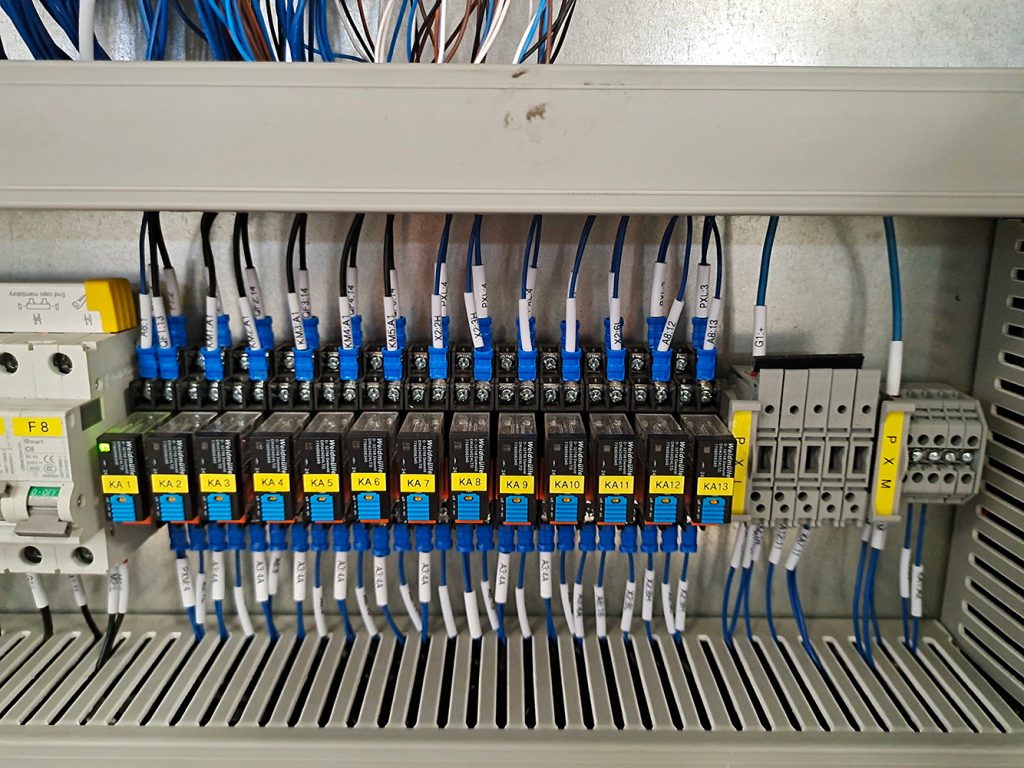
In a modern electric brewing system, the electronic control system is the central part of an automated brewhouse. It usually includes a programmable logic controller (PLC) or another suitable controller, a user interface, sensors, and outputs that control heaters, pumps, and valves.
The user interface may be a touchscreen or a control panel with buttons and displays. Operators can set target temperatures, adjust process times, select recipes, and monitor equipment status. Depending on the configuration, the system may also record temperature data, process steps, alarms, and operating history.
Behind the interface, the controller follows the programmed process logic. Proportional-integral-derivative (PID) control is commonly used for temperature regulation. It adjusts heating output based on the difference between the target temperature and the measured temperature, helping reduce overshoot and maintain more stable conditions.
Safety functions are equally important. Depending on the design, the system may include low-liquid-level protection, over-temperature protection, motor overload protection, and alarms for sensor faults. Appropriate interlocks can stop heating or pause a process when an unsafe condition is detected.
The exact safety functions should be confirmed during equipment selection. A reliable control system combines suitable hardware, clear operating logic, and practical manual procedures.
Key Components of a Commercial Electric Brewhouse
A commercial electric brewing system is more than a kettle with a heating element. Its performance depends on the design and coordination of several components.
| Component | Main Function | What to Evaluate |
|---|---|---|
| Heating elements | Convert electrical energy into heat | Power rating, watt density, material compatibility, and cleaning access |
| Temperature sensors | Measure process temperatures | Sensor placement, accuracy, and fault detection |
| Recirculation pump | Moves wort through the system | Flow rate, temperature rating, and compatibility with the process |
| Motorized valves | Control liquid flow | Response, seal materials, and maintenance access |
| Control panel | Manages equipment and process steps | Ease of use, recipe settings, alarms, and data logging |
| Whirlpool fittings | Help separate trub from wort | Flow pattern, vessel design, and cleaning access |
In any electric brewing system, heating element design deserves special attention. High-watt-density elements concentrate heat over a smaller surface area. If local temperatures become too high or deposits build up, they may increase the risk of scorching and unwanted flavors. Lower-watt-density elements spread heat over a larger surface area and can help reduce this risk.
However, element design alone cannot prevent scorching. Liquid coverage, wort circulation, heating output, and cleaning practices also affect performance. High-gravity wort may require particular attention because its composition and flow properties can increase the risk of deposits or localized overheating under certain conditions.
The recirculation path is another important factor. During mashing, wort may be drawn from the lower part of the vessel and returned to the top to support circulation through the grain bed. At the end of the boil, a suitable pump and piping arrangement can create a whirlpool to help collect trub near the center of the vessel.
Automated valve control can make these transitions easier, but the piping, pump capacity, and vessel fittings must be designed for the intended process.
Cleaning should also be considered during equipment selection. Heating elements should be easy to inspect and clean, and the vessel should support effective cleaning without unnecessary dead spaces. Where CIP is used, spray coverage, liquid flow, and the cleaning procedure must match the equipment design.
Electric vs. Steam vs. Direct Fire: A Practical Comparison
Breweries often compare electric heating with steam and direct-fired gas heating. The best choice depends on production capacity, site infrastructure, energy prices, and operating requirements.
| Consideration | Electric | Steam | Direct Fire (Gas) |
|---|---|---|---|
| Initial investment | Depends on power and system design | Includes boiler and steam distribution costs | Depends on burner and gas installation |
| Installation | Requires sufficient electrical capacity | Requires a boiler, piping, and related safety systems | Requires a suitable gas supply and ventilation |
| Temperature control | Precise with a suitable controller | Precise with a well-designed system | Depends on burner and control design |
| Scorching risk | Depends on element design and circulation | Generally low with suitable indirect heating | Depends on burner design and heat distribution |
| Noise | Heating elements are quiet | Heating is quiet at the vessel, but the boiler may create noise | Burner operation can be noisy |
| Maintenance | Element inspection and electrical maintenance | Boiler maintenance, water treatment, and piping checks | Burner maintenance and gas-system inspection |
| Typical fit | Projects with sufficient electrical capacity | Breweries with suitable steam infrastructure or larger process needs | Sites with suitable gas infrastructure |
For small and medium-sized breweries, an electric brewing system can be attractive when the site has enough electrical capacity and the required heating power is practical. It can reduce the need for a separate boiler and simplify some parts of installation.
Steam heating can be a strong option for larger facilities or breweries that already use a central steam system. It provides indirect heating and can serve multiple production processes. Direct-fired systems may suit breweries that have suitable gas infrastructure and prefer a relatively simple heating arrangement.
No method is automatically the most efficient or least expensive in every situation. A proper comparison should consider equipment cost, installation, energy prices, heat losses, maintenance, production schedules, and future expansion plans.

What to Look For When Choosing an Electric Brewing System
Not all electric brewing systems are designed to the same standard. Before purchasing equipment, breweries should evaluate the following points.
Heating element access and cleaning
Heating elements need regular inspection and cleaning. Removable fittings can make maintenance easier, but the complete design should also allow safe access, effective cleaning, and proper drainage. Confirm how the elements are protected against low liquid levels and overheating.
Controller expandability
A control system for an electric brewing system should match current production needs and allow reasonable future expansion. If the brewery plans to add another vessel, pump, or temperature-control loop, check whether the controller has enough inputs, outputs, and suitable control functions.
Documentation and technical support
Clear electrical drawings, operating instructions, alarm descriptions, and maintenance guidance help operators use the system correctly. Technical support is also important during installation, commissioning, and troubleshooting.
Safety and manual control
Check the available electrical protection, grounding, emergency stop functions, and process interlocks. Where appropriate, manual operating options can help trained staff manage certain situations safely. All electrical and control equipment should meet the applicable local requirements.
Site conditions and production goals
Before confirming the system, assess the available power supply, target batch size, heating time, brewing schedule, and future capacity needs. This information helps determine the required heating power and the most suitable control configuration.
FAQ
Q: Can an electric brewing system handle high-gravity beers?
A: Yes. The system must be designed for the required heating load and wort characteristics. Low-watt-density elements, adequate liquid coverage, suitable circulation, and effective cleaning can help reduce the risk of deposits and localized overheating.
Q: What electrical supply does a commercial electric brewhouse need?
A: Many commercial electric brewing systems in the 3–10 barrel range use three-phase power, but requirements vary by heating capacity, voltage, and local standards. Confirm the electrical supply and circuit capacity before installation.
Q: How does automation improve recipe consistency?
A: In an electric brewing system, automation helps repeat temperature steps, process times, and valve sequences. This reduces variation caused by manual timing and operation. Consistent raw materials, recipe design, and fermentation control remain essential to final beer quality.
Q: Is electric brewing more expensive to operate than gas?
A: It depends on local energy prices, heating requirements, and system efficiency. Electric heating can transfer energy efficiently to the process, but electricity may cost more per unit of energy than gas in some regions. Compare total operating costs rather than energy prices alone.
Q: Can an existing kettle be upgraded with electric heating and controls?
A: In some cases, yes. The kettle must be checked for suitable element mounting, vessel materials, electrical safety, cleaning access, and control integration. A technical assessment is recommended before deciding whether a retrofit or a new electric brewing system is the better option.
Building for Control, Not Just Heat
An electric brewing system is often described by what it replaces: gas burners, fuel lines, or a separate boiler. Its greater value may be the control it provides over the brewing process.
When an electric brewing system works with an electronic automated brewing system and a well-designed electronic control system, brewers can manage temperatures, process times, and equipment sequences more consistently. This supports repeatable production and helps operators monitor each batch.
At SKE, we focus on brewing equipment that matches the producer’s process, capacity, and site conditions. By evaluating heating power, vessel design, automation requirements, and cleaning needs together, breweries can choose an electric brewhouse that supports reliable daily operation and future growth. SKE can help assess whether an electric brewing system matches your project requirements.
- Facebook: SKE Equipment Facebook
- Email: info@skeequipment.com
Fill out the contact form below for customized solutions. We fully support all your production equipment demands for breweries and beverage plants.