
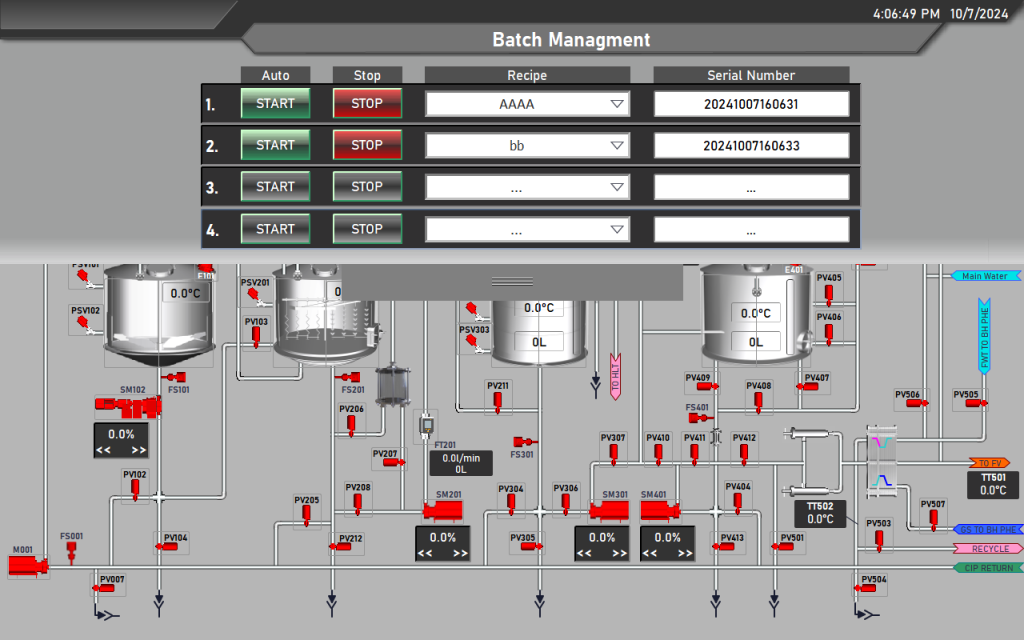
Modern breweries need more than good stainless steel tanks to produce consistent beer. They also need accurate process control. Temperature changes, flow rates, transfer timing, and cleaning conditions all affect beer quality and production efficiency. When these factors are not controlled properly, breweries face inconsistent batches, extra labor, longer cleaning cycles, and wasted resources.
Process control equipment helps breweries manage these challenges. It connects sensors, controllers, valves, pumps, and software to monitor and control key production steps. With the right system, operators can follow set process conditions, watch equipment status, and respond to problems quickly.
As a brewery equipment manufacturer, SKE integrates process control solutions into brewing systems based on each brewery’s production needs. This guide explains how process control equipment works in a brewery, which components matter most, and what to consider when choosing automation equipment.
What Is Process Control Equipment?
Process control equipment includes the hardware and software used to measure, monitor, and adjust industrial processes. In a brewery, it controls temperatures, liquid levels, flow rates, pump operation, valve positions, and cleaning sequences.
A typical system has three main parts:
-
Sensors measure process conditions such as temperature, pressure, flow, and liquid level.
-
Controllers receive sensor signals, compare actual values with target values, and run programmed control logic.
-
Actuators carry out commands by operating valves, pumps, and heating devices.
A programmable logic controller (PLC) is often the central control unit. Operators use a human-machine interface (HMI), usually a touchscreen, to view process information, select operating modes, and respond to alarms.
For example, during mashing, a temperature sensor sends readings to the PLC. If the temperature falls below the recipe target, the controller adjusts the heating system. When the target is reached, it reduces or stops heating as programmed. This reduces constant manual adjustment, but it does not remove the need for trained operators. Brewers still set recipes, check quality, and make decisions when conditions change. Good process control equipment supports those decisions rather than replacing them.
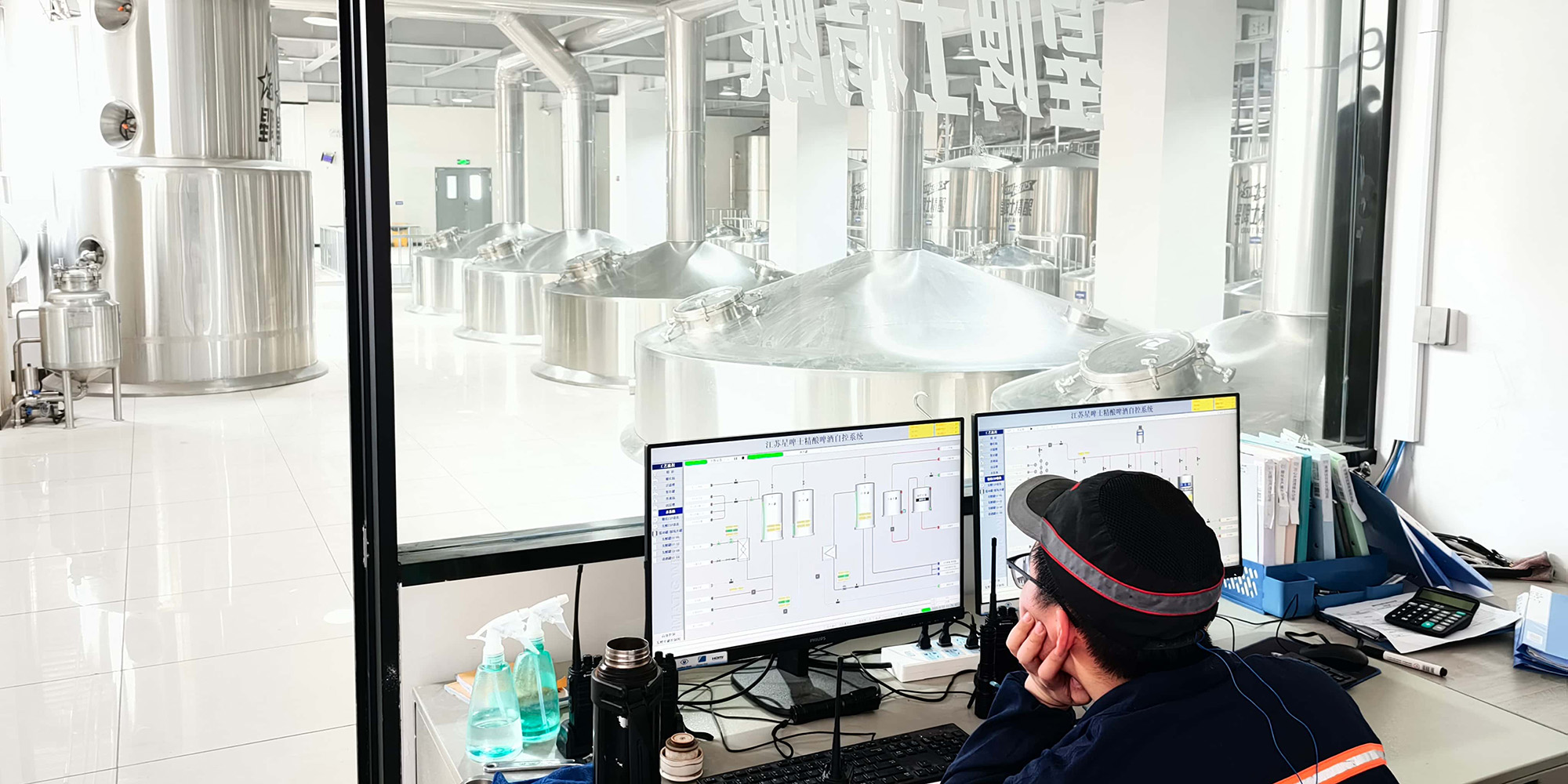
How Brewhouse Automation Control Works
Brewhouse automation control manages key hot-side operations: mashing, lautering, wort boiling, and whirlpool processing. Each stage has different control needs, so the system must match the brewery’s process design. The process control equipment behind these stages is what keeps each step repeatable.
Mashing and Temperature Control
During mashing, temperature affects enzyme activity and the conversion of malt starch into fermentable sugars. The control system monitors mash temperature and manages heating according to the selected recipe.
Depending on equipment design, the system may control steam valves, hot water flow, or other heating devices. Multiple temperature sensors help operators understand conditions at different points in the process. Accurate control helps the brewery repeat established mash profiles and reduces the risk of temperature changes caused by inconsistent manual operation. Here, process control equipment turns a recipe into a repeatable sequence.
Lautering, Wort Transfer, and Boiling
During lautering, the brewer separates sweet wort from spent grain. Flow rate and liquid level are important because poor conditions can slow the process or cause a stuck grain bed. Flow meters, level sensors, and automated valves help operators monitor the process and adjust liquid movement.
During wort transfer, the control system manages pump operation and valve sequences to reduce incorrect routing. This is especially useful in breweries with several connected vessels and multiple transfer lines. During boiling, the system manages heating and monitors process time. After boiling, the whirlpool stage uses valve sequencing and pump control to support the planned flow path. Together, these functions reduce repetitive manual tasks and keep operating conditions more consistent.
Automated CIP System: Reliable Cleaning in Place
Cleaning is essential to beer quality and hygiene. Residual yeast, protein, hop material, and other organic deposits can remain inside tanks and pipelines after production. If cleaning is incomplete, these residues may affect later batches or create conditions for microbial contamination.
An automated CIP system, or Clean-in-Place system, circulates cleaning solutions through tanks, pipes, and process equipment without full dismantling. A typical program may include pre-rinse, detergent wash, intermediate rinse, acid wash when required, final rinse, and drain. The process control equipment in a CIP system manages every stage of this sequence.
Key Control Parameters in CIP
A reliable automated CIP system must do more than start a pump and run a timer. It should help operators manage the parameters that affect cleaning performance:
-
Temperature supports the action of the cleaning solution.
-
Flow rate provides suitable circulation through the cleaning path.
-
Contact time allows the solution to act for the required period.
-
Chemical concentration confirms the solution is within the specified range.
-
Valve position and sequence direct the solution through the correct tanks and pipelines.
Conductivity sensors can help monitor the concentration of certain cleaning solutions. Well-designed process control equipment records process data and generates alarms when conditions fall outside defined limits.
This helps operators review cleaning performance and investigate problems. Automation can also support more efficient water and chemical use through controlled rinsing and repeatable sequences, though actual savings depend on the original cleaning method and system design.

Key Components of Brewery Process Control Equipment
Each component has a specific role in brewery automation. Sensors, controllers, valves, and pumps must work together as one system. The table below shows the main parts of process control equipment in a brewery.
| Component | Main Function | Value to the Brewery |
|---|---|---|
| PLC controller | Executes control logic and programmed sequences | Supports repeatable process operation |
| Temperature sensors | Measure temperatures in tanks and pipelines | Helps maintain target process conditions |
| Flow meters | Measure liquid flow and total volume | Supports transfer monitoring and process control |
| Level sensors | Monitor liquid levels in vessels | Helps prevent overflow and dry-running |
| Pneumatic or motorized valves | Control liquid flow paths | Supports automatic routing and sequencing |
| Variable-frequency drives | Adjust compatible motor speeds | Allows controlled pump operation |
| Touchscreen HMI | Displays process status, settings, and alarms | Improves operator visibility |
| Conductivity sensors | Monitor conductivity in cleaning solutions | Supports CIP concentration monitoring |
The exact component list depends on production capacity, process layout, and the required level of automation. A small brewery may need a straightforward control panel, while a larger facility may require more sensors, additional control zones, and advanced data management.
Brewery Automation Equipment: How SKE Supports Your Project
SKE designs and manufactures brewing equipment for breweries with different production requirements. Process control can be built into a new brewhouse project or added as part of an upgrade to an existing system. The goal is not simply to add more automation, but to make equipment, control logic, and operating procedures work together.
Integrated Control Panels and Operator Interfaces
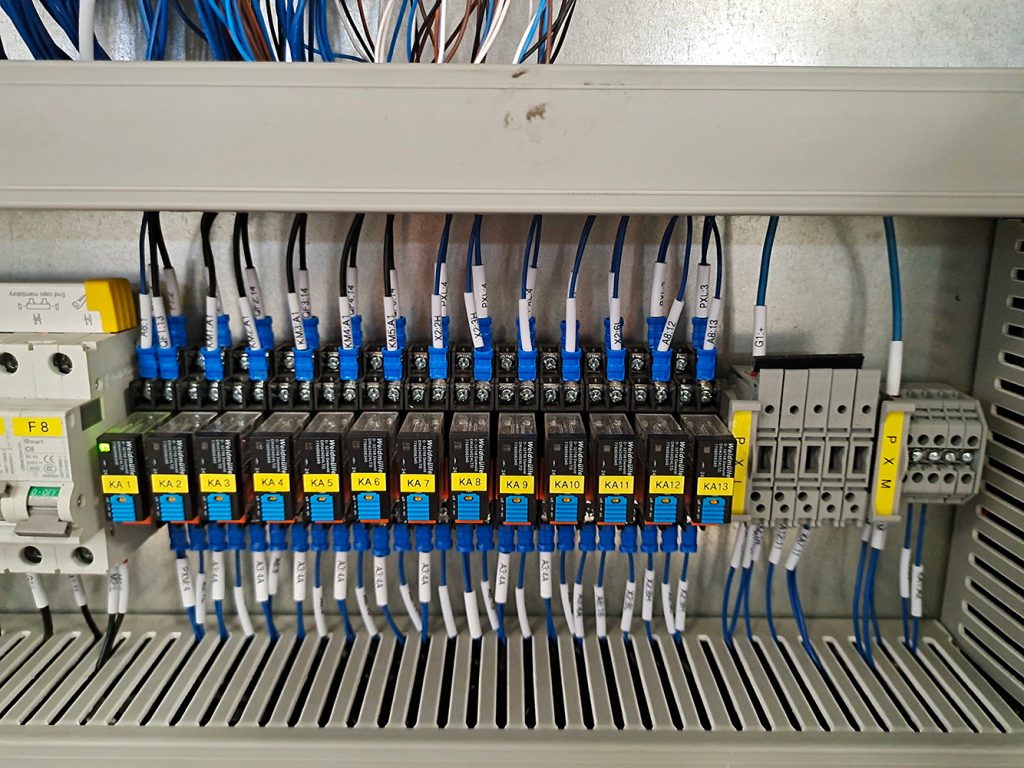
A PLC-based control panel coordinates equipment operations, including pump starts, valve sequences, temperature regulation, and process timing. A touchscreen HMI gives operators a clear view of equipment status and lets them manage available functions. Depending on configuration, the system may support recipe settings, alarms, process monitoring, and data records.
Matching Automation to Production Needs
For a new brewery, control design should begin with the process flow. Engineers need to understand how wort, beer, water, and cleaning solutions move between vessels and pipelines. For an existing brewery, the first step is to assess installed equipment. Tank connections, valve types, sensor compatibility, and electrical systems all affect the upgrade plan.
Not every brewery needs a fully automatic system. Semi-automatic control may suit operators who want direct control over selected brewing steps. More extensive automation becomes useful as production volume, staffing requirements, and process complexity increase. When planning brewery automation equipment, SKE recommends considering annual production and batch size, recipes and process requirements, vessel count and transfer routes, CIP cleaning needs, operator training, future expansion, and required monitoring and data records.

Why Integrated Process Control Matters
A brewery operates as a connected production process. Problems in one stage can affect later operations, so individual machines should not be considered in isolation. When brewhouse automation, tank controls, transfer systems, and CIP equipment are designed to work together, operators can follow clearer process sequences and reduce unnecessary manual intervention.
For example, a control system can be configured to prevent a pump from starting when a required valve position has not been confirmed. It may also use level or pressure signals to trigger alarms or stop selected operations when limits are reached. Process records help the brewery investigate problems. If a temperature deviation or unexpected interruption occurs, available trends and alarms show when the event happened and what conditions were present.
However, automation alone cannot guarantee beer quality. Raw material quality, recipe design, operator decisions, equipment maintenance, and process validation remain important. The strongest results come from combining suitable equipment with clear procedures and trained staff.
FAQ: Process Control Equipment for Breweries
1. Do I need full automation to produce good beer?
No. Manual and semi-automatic systems can produce excellent beer when properly operated. Automation becomes more valuable when a brewery needs repeatable process conditions, lower manual workload, and consistent production as output grows.
2. Can SKE help upgrade an existing brewery control system?
An upgrade may be possible, depending on the existing equipment and its compatibility with new controls. The assessment should cover sensors, valves, pumps, electrical connections, piping, and the required automation functions before the upgrade scope is confirmed.
3. How long does an automated CIP cycle take?
There is no single cycle time for every brewery. Cleaning time depends on vessel size, residue type, chemical concentration, temperature, flow conditions, and the required cleaning procedure. The program should be established and verified for the specific equipment and application.
4. Can process control equipment reduce brewery operating costs?
It can help reduce manual work, improve process consistency, and support more efficient use of water, cleaning chemicals, and energy. The actual financial benefit depends on the original operating method, equipment configuration, production volume, and implementation cost.
Conclusion
Process control equipment is an important part of modern brewery automation. By connecting sensors, PLC controllers, valves, pumps, and operator interfaces, breweries can monitor critical process conditions and manage production steps more consistently.
Brewhouse automation control helps manage mashing, lautering, boiling, and wort transfer. An automated CIP system supports repeatable cleaning procedures and better process monitoring. When these systems are designed as part of an integrated brewery control system, operators gain clearer process visibility and more reliable control over daily operations.
SKE works with breweries to match brewing equipment and automation solutions to their production goals, process requirements, and future plans. Whether you are building a new brewery or upgrading existing equipment, the right control strategy starts with understanding your process.
Contact SKE to discuss your brewery equipment project and identify a process control solution that fits your production needs.
- Facebook: SKE Equipment Facebook
- Email: info@skeequipment.com
Fill out the contact form below for customized solutions. We fully support all your production equipment demands for breweries and beverage plants.