When breweries choose a cleaning chemical, the first question is usually simple: Does it clean well? This is important, but it is not the only factor to consider.
The more important question is whether your keg cleaning solution can work properly inside your keg washing machine. A cleaning solution may perform well in laboratory tests but deliver poor results in an actual keg washing system. It may also increase chemical consumption, cause equipment problems, and even damage empty kegs.
Your keg cleaning solution and the washing machine must work as one system. Tank design, heating capacity, chemical concentration, and pressure control all affect the final cleaning result. This article explains how different cleaning chemicals interact with keg washing equipment and what breweries should check before choosing a keg cleaning solution.
Two Types of Soil, Two Types of Cleaning Chemistry
Choosing the right keg cleaning solution starts with understanding what is inside the keg. Beer kegs mainly collect two types of deposits: organic residue and mineral deposits.
The first type includes protein, yeast, and other organic materials left behind by beer. The second is beer stone, a hard deposit mainly formed by calcium and magnesium salts, including oxalates. These deposits require different cleaning methods.
Caustic Soda: Effective Against Organic Residue
Caustic soda (sodium hydroxide, NaOH) is widely used in traditional keg washing machines. It breaks down protein and other organic materials, making them easier to remove during cleaning.
It is relatively economical and can often be recovered and reused. Breweries can add fresh chemical when the concentration drops, helping control operating costs. However, caustic soda has a limitation: it is not effective at removing heavy beer stone deposits. Mineral buildup usually requires an acid cleaning step.
Acid Cleaner: Designed for Beer Stone Removal
Acid cleaners help dissolve mineral deposits that caustic solutions cannot remove effectively. Common formulations may contain nitric acid, phosphoric acid, or a combination of different acids.
Acid cleaning solutions are often drained after use, depending on their formulation, contamination level, and recovery system design. Their reuse should follow chemical supplier recommendations and regular testing.
This creates an equipment challenge. If a keg washing machine has only one cleaning tank, the brewery may need to drain the existing keg cleaning solution, clean the tank, and refill it before switching between caustic and acid cleaning. This increases changeover time and may interrupt production.
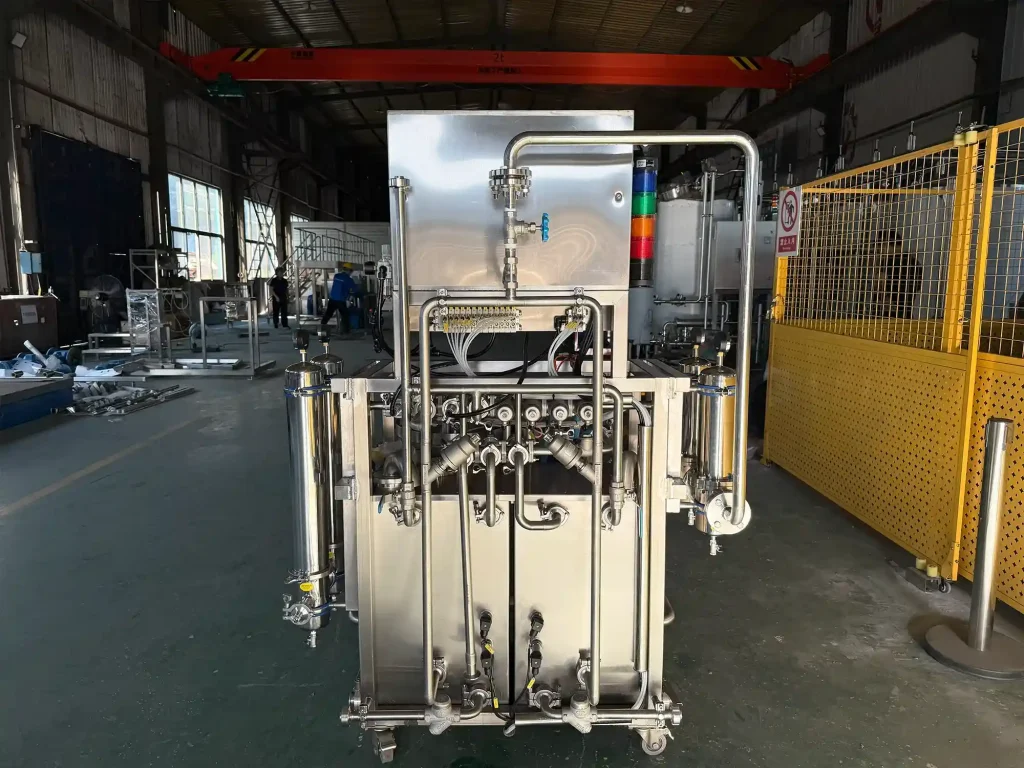
A dual-tank keg washing machine offers a more flexible solution. In SKE’s dual-tank configuration, one tank is used for heated caustic cleaning, while the second tank is reserved for a separate acid cleaning or sanitizing stage, depending on the selected process. This allows different keg cleaning solution types to operate in separate circuits without unnecessary mixing or frequent tank changes.
Carbon Dioxide: A Hidden Risk in Keg Cleaning
Carbon dioxide is one of the most overlooked factors in keg washing. Empty beer kegs often contain residual CO₂ when they return from the market. If the keg cleaning solution enters the keg before this gas is removed, a chemical reaction can take place.
CO₂ reacts with sodium hydroxide to form sodium carbonate and, under different reaction conditions, sodium bicarbonate. This reaction consumes free NaOH and reduces the effective caustic concentration. As a result, the keg cleaning solution may become weaker even when the tank still appears to contain enough liquid.
There is another potential risk: vacuum formation. In a closed keg, CO₂ can be consumed during the reaction. If the gas pressure inside the keg drops significantly, a pressure difference develops between the inside and outside. In extreme cases, the keg may deform inward under external atmospheric pressure. Keg collapse is uncommon, but it is a real equipment safety concern.
Why Pre-Purging Matters
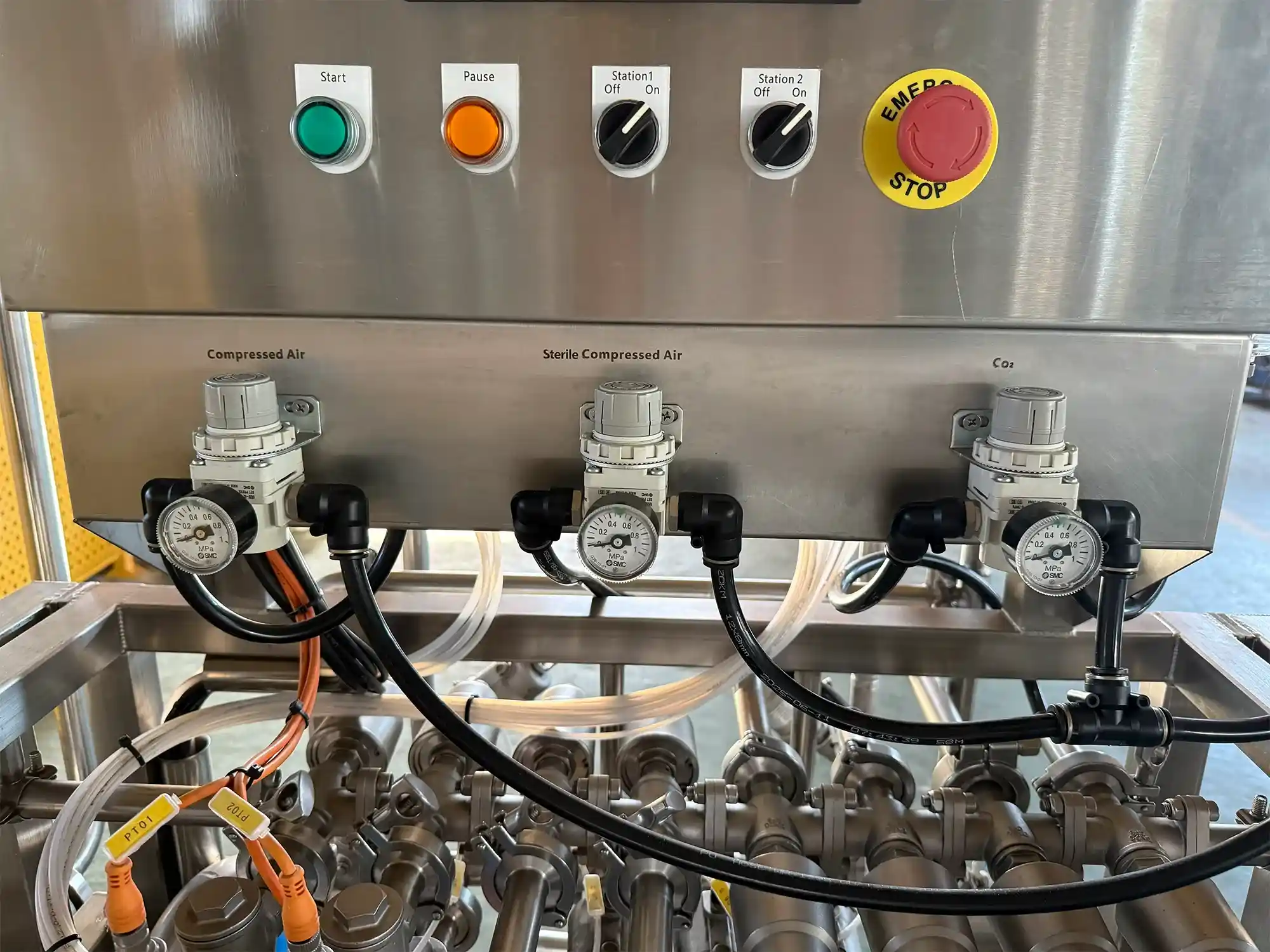
Before caustic enters the keg, the washing machine should remove residual gas through a properly designed pre-purge stage. A typical keg washing cycle may include:
-
Residual beer discharge.
-
Compressed-air pre-purge to reduce remaining CO₂.
-
Pre-rinsing with water.
-
Caustic cleaning and solution circulation.
-
Fresh water rinsing.
-
Acid cleaning or sanitizing, if required by the process.
-
Final CO₂ pressure adjustment.
The exact sequence depends on the machine design and brewery cleaning procedure. A reliable pre-purge stage helps reduce CO₂ entering the caustic cleaning process. However, purging alone is not a replacement for proper pressure control, vacuum protection, and regular inspection of safety devices. For breweries using caustic-based cleaning, the pre-purge system is just as important as the keg cleaning solution itself.
Temperature and Concentration: The Machine Sets the Limits
Suppliers of your keg cleaning solution provide recommended working temperatures, concentrations, and contact times. These conditions must be maintained if the chemical is expected to deliver consistent results.
Caustic solutions are commonly used at elevated temperatures to improve the removal of protein and organic residue. Acid cleaners may operate at different temperatures depending on their formulation and the type of mineral deposits being removed.
However, choosing the correct temperature is only the first step. The keg washing machine must be able to maintain it during operation. If the heating capacity is too low, the keg cleaning solution may lose temperature during continuous cleaning cycles. If chemical concentration is not checked and adjusted, repeated use can gradually reduce cleaning performance.
Three equipment functions are especially important:
1. Heating and Temperature Control
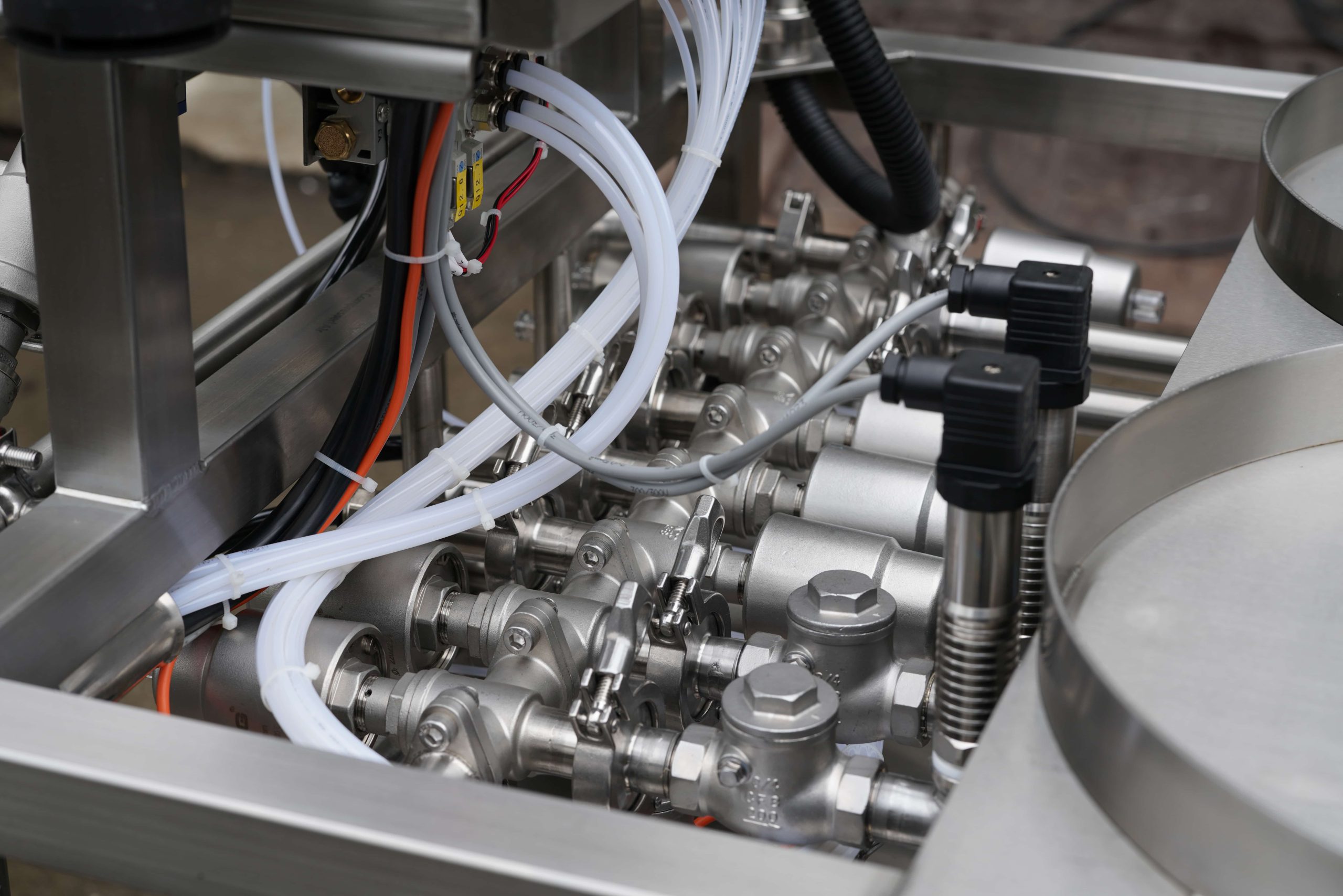
A suitable heating system maintains the required working temperature during circulation. Temperature sensors allow the control system to monitor the solution and help prevent large temperature changes.
2. Chemical Concentration Management
Chemical concentration should be checked regularly. Conductivity sensors can help monitor changes in cleaning solution conditions, while titration can confirm the remaining free caustic concentration.
Conductivity readings alone may not show the actual active NaOH concentration because sodium carbonate and bicarbonate also affect conductivity. For this reason, regular chemical testing is important, especially in systems where caustic is recovered and reused.
3. Liquid Level Monitoring
Level switches help maintain the correct liquid level in each cleaning tank. This supports stable pump operation and helps prevent heating elements from operating under unsuitable conditions.
SKE keg washing equipment can be configured with temperature sensors, liquid level switches, and automatic control functions. These features help operators maintain more stable cleaning conditions and reduce dependence on manual operation. The exact configuration should match the chemical process, keg throughput, and production requirements.
Caustic Soda vs. Acid Cleaner: What Is the Difference?
| Comparison | Caustic Soda (NaOH) | Acid Cleaner |
|---|---|---|
| Main cleaning target | Protein and organic residue | Beer stone and mineral deposits |
| Main function | Breaks down organic soil | Dissolves mineral deposits |
| Reuse | Often recoverable with testing and replenishment | Depends on formulation and contamination |
| Reaction with CO₂ | Consumes free NaOH | No caustic neutralization reaction |
| Equipment requirements | Heating, pre-purge, and concentration control | Separate chemical circuit and compatible materials |
| Main limitation | Poor removal of heavy beer stone | Not a complete replacement for caustic cleaning |
No single keg cleaning solution covers both soil types equally well. The comparison shows why many breweries need more than one cleaning stage. Caustic and acid cleaners perform different jobs, and the washing machine must support the selected cleaning process.

Check Your Keg Washing System Before Choosing a Chemical
Choosing a keg cleaning solution should not be treated as a chemical purchasing decision alone. It is part of the overall cleaning process design. Before selecting a chemical, breweries should answer three important questions.
1. How Much Beer Stone Builds Up in Your Kegs?
If kegs are returned quickly and washed regularly, caustic cleaning may handle most organic residue effectively. However, if kegs remain in storage for several weeks, mineral deposits may become harder to remove. In this situation, an additional acid cleaning stage may be necessary.
2. How Many Separate Cleaning Tanks Does Your Machine Have?
A single-tank keg washing machine is suitable for simpler cleaning processes and lower production volumes. However, switching between different keg cleaning solution types requires draining, refilling, and additional cleaning time.
A dual-tank system provides greater flexibility. It allows caustic and acid cleaning solutions to remain in separate tanks, reducing changeover work and supporting different cleaning stages. For breweries with higher keg throughput, this can improve operating efficiency.
3. Does Your Keg Washer Have Reliable Pre-Purge and Temperature Control?
If residual CO₂ is not removed before caustic enters the keg, the keg cleaning solution may lose strength faster than expected. At the same time, unstable temperature and poor concentration management can lead to inconsistent cleaning results.
A well-designed keg washing machine should provide suitable gas purging, heating control, liquid level monitoring, and pressure protection. If these functions are missing, changing to a more expensive keg cleaning solution may not solve the real problem. Improving the washing process or upgrading the equipment may be a better long-term solution.
Frequently Asked Questions
Q1: Can I use only an acid cleaner and stop using caustic soda?
An acid-based keg cleaning solution removes beer stone effectively, but it is not a complete replacement for caustic soda. It is generally less suitable for removing protein and organic residue. Breweries should select a cleaning process based on the actual deposits found in their kegs. A separate caustic cleaning stage may still be necessary.
Q2: Can the reaction between caustic soda and CO₂ really damage a beer keg?
Yes. When residual CO₂ reacts with caustic soda inside a closed keg, the internal pressure may decrease. If the pressure difference becomes too large, the keg can deform inward. A properly designed pre-purge stage, pressure control, and suitable vacuum protection help reduce this risk.
Q3: Is a dual-tank keg washing machine better than a single-tank system?
It depends on production volume and cleaning requirements. A single-tank machine may be suitable for smaller breweries with simpler cleaning processes. A dual-tank system offers greater flexibility because caustic and acid solutions can be stored separately. It can also reduce changeover time in breweries that need both cleaning stages.
Q4: How do I know if my caustic keg cleaning solution is still strong enough?
Conductivity monitoring can help track changes in the cleaning solution, but it does not always show the actual free NaOH concentration. Regular titration is a more reliable way to confirm the remaining active caustic. Small breweries without automatic monitoring should establish a regular testing schedule based on chemical supplier recommendations and actual operating conditions.
Q5: How does SKE keg washing equipment support different cleaning processes?
SKE keg washing equipment can be configured with separate cleaning tanks, heated caustic circuits, temperature sensors, liquid level switches, and automatic control functions. Different cleaning cycles can be adjusted according to the selected keg cleaning solution and process. The final configuration depends on keg capacity, cleaning requirements, and brewery production volume.
Choosing the Right Keg Washing Machine
The right keg cleaning solution is only one part of an effective keg washing process. Your keg washing machine must also provide suitable tank capacity, stable heating, reliable chemical control, and proper pressure protection.
SKE provides keg washing equipment with configurable tank arrangements and automatic control options for different brewery production requirements. Whether you are building a new keg cleaning line or upgrading an existing system, choosing the right equipment configuration can help improve cleaning consistency, reduce chemical waste, and minimize unnecessary downtime.
Tell us your keg volume and soil type, and we will recommend a keg cleaning solution and machine configuration that fit together. Contact SKE to discuss your keg washing requirements and find a suitable keg washing machine for your brewery.
- Facebook: SKE Equipment Facebook
- Email: info@skeequipment.com
Fill out the contact form below for customized solutions. We fully support all your production equipment demands for breweries and beverage plants.