Bag-in-box packaging has moved far beyond boxed wine. Today, this flexible format carries juices, dairy, liquid foods, and beer. For beverage producers, the appeal is clear: lower shipping weight, longer freshness after opening, and major savings on storage space compared to rigid containers.
At its core, bag-in-box packaging is a flexible multilayer bag with a dispensing tap, housed inside a corrugated or paperboard box. The bag collapses as product is drawn out, limiting contact with air and preserving freshness. This simple principle makes it practical for craft producers and large commercial operations alike.
For companies adopting this format, one decision matters most: the filling equipment. Should you invest in a full-automatic line or start with a semi-automatic system? This guide explains both options and helps you match bag-in-box packaging technology to your production reality.
What Is Bag-in-Box Packaging?
The structure of bag-in-box packaging is straightforward but highly functional. The inner bag is typically made from multiple layers of food-grade film, often including aluminum foil or metallized barriers to block light and oxygen. The outer box provides structural support and protects the bag during transport and storage.
A critical component of bag-in-box packaging is the fitment and tap assembly. The bag is filled through a spout, which later becomes the dispensing point. The tap design prevents backflow of air into the bag, allowing product to be dispensed over weeks without spoilage. This is why the format is common for products consumed gradually rather than all at once.
From a sustainability angle, bag-in-box packaging offers advantages. The packaging is lightweight, reducing fuel consumption during shipping. Box material is usually recyclable, and recent industry developments focus on mono-material bag films that fit existing recycling streams more easily. For beverage producers, these factors increasingly matter to business customers and environmentally conscious consumers.
Why Filling Equipment Decides Your Success
Filling is the most critical step in bag-in-box packaging. The equipment must fill the bag accurately, remove air to prevent oxidation, and seal the spout securely. Poor filling practice leads to leaks, shortened shelf life, and unhappy customers.
Two main equipment categories serve producers of bag-in-box packaging: semi-automatic and full-automatic. Both perform the same core tasks—bag placement, filling, and closing—but differ in how much human involvement is required. The right choice depends on daily volume, product sensitivity, labor availability, and budget.
This filling process differs from bottle filling. The bag is flexible and unsupported until placed in the box. Equipment must handle the bag gently, control foaming (especially for beer and carbonated products), and ensure the spout is clean before sealing. These requirements shape how semi-automatic and full-automatic systems are designed.
Semi-Automatic Filling: Flexibility with Control
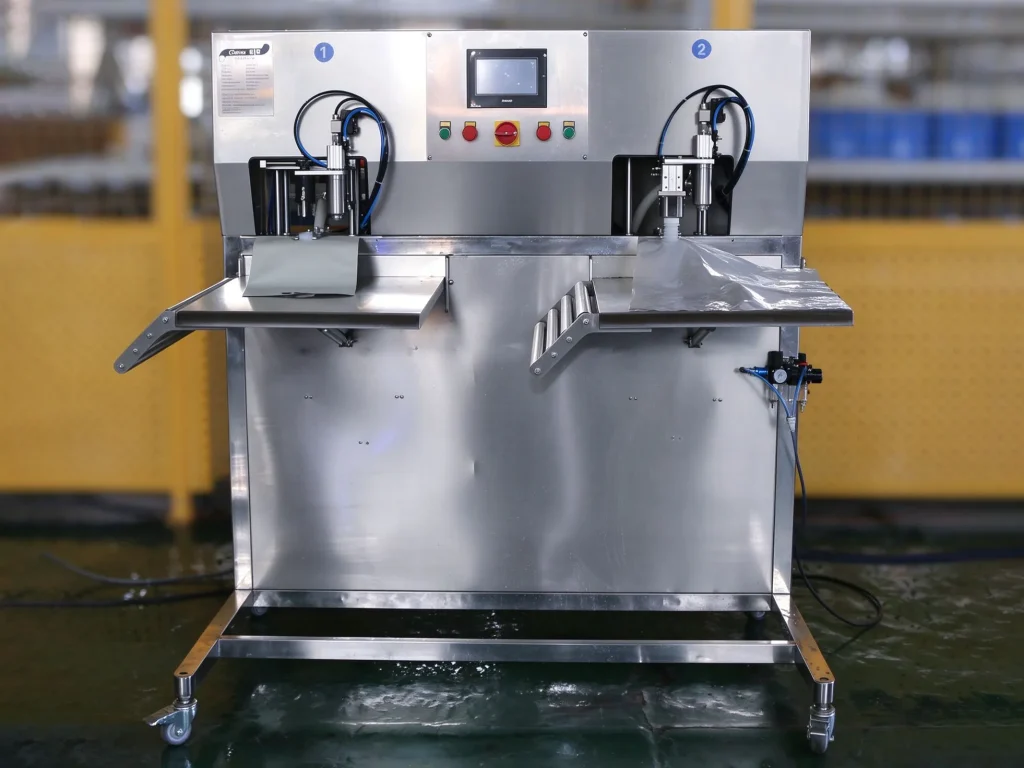
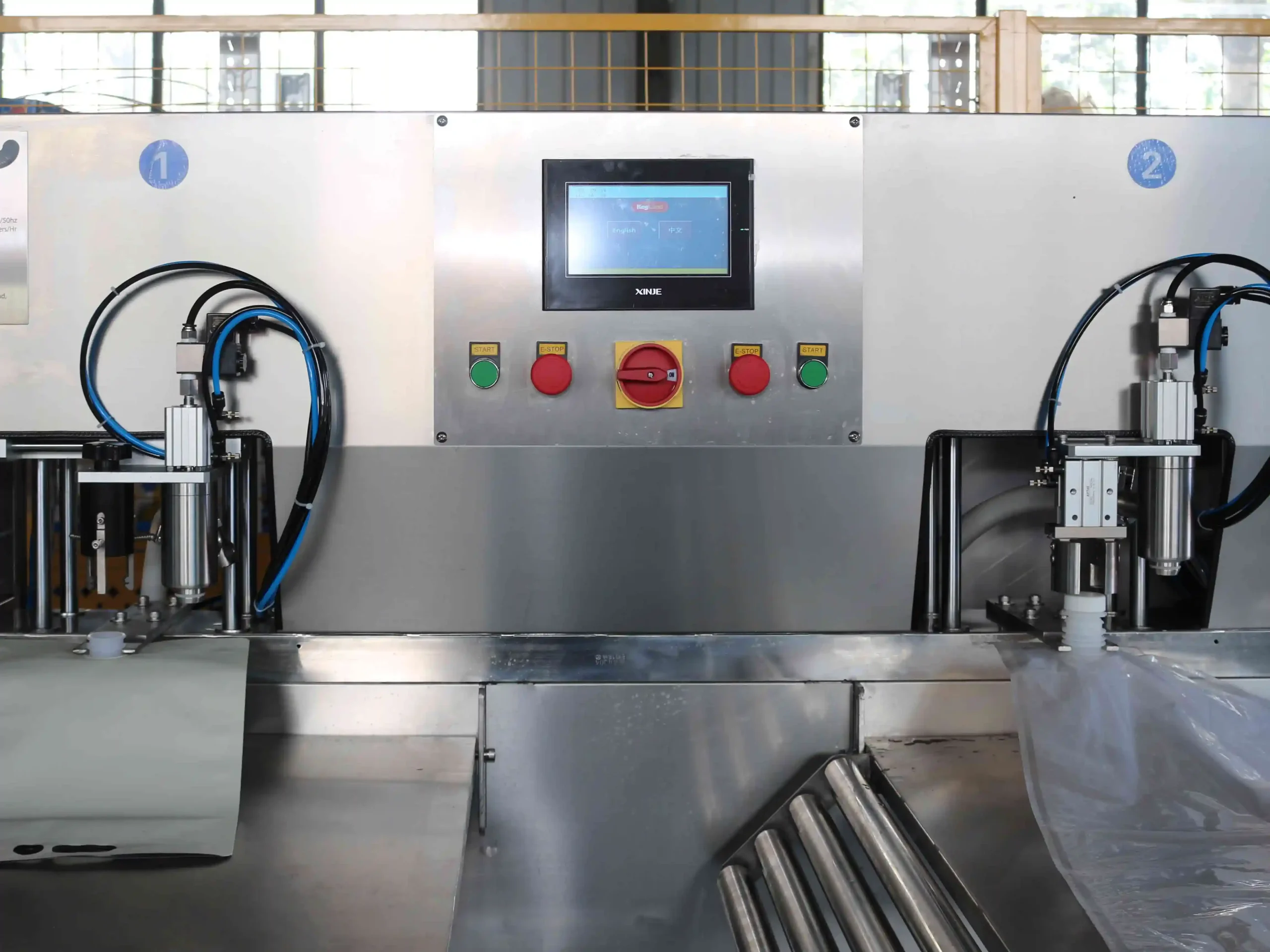
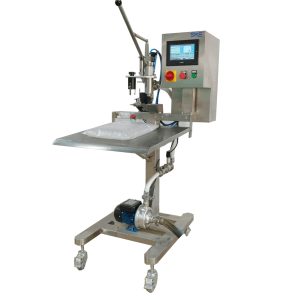
A semi-automatic filler requires an operator to place the bag onto the filling head and start each cycle. The machine then performs the fill and often a pre-vacuum or nitrogen flush, after which the operator removes the filled bag and closes the cap. This human involvement makes semi-automatic bag-in-box packaging systems adaptable to different bag sizes and spout types with minimal changeover time.
For small and medium producers, semi-automatic equipment offers a sensible entry point. The investment is significantly lower than a full-automatic line, and the footprint is compact enough for a modest production space. Semi-automatic fillers also suit producers with mixed product ranges, where the same bag-in-box packaging line might run juice one day and a different beverage the next.
The trade-off is throughput and labor dependency. A typical single-head semi-automatic filler fills around 80 to 100 bags per hour for 20-liter bags, depending on operator speed and product characteristics. Higher speeds are possible with dual-head configurations, but pace is ultimately tied to the operator’s rhythm.
Full-Automatic Filling: Speed and Consistency
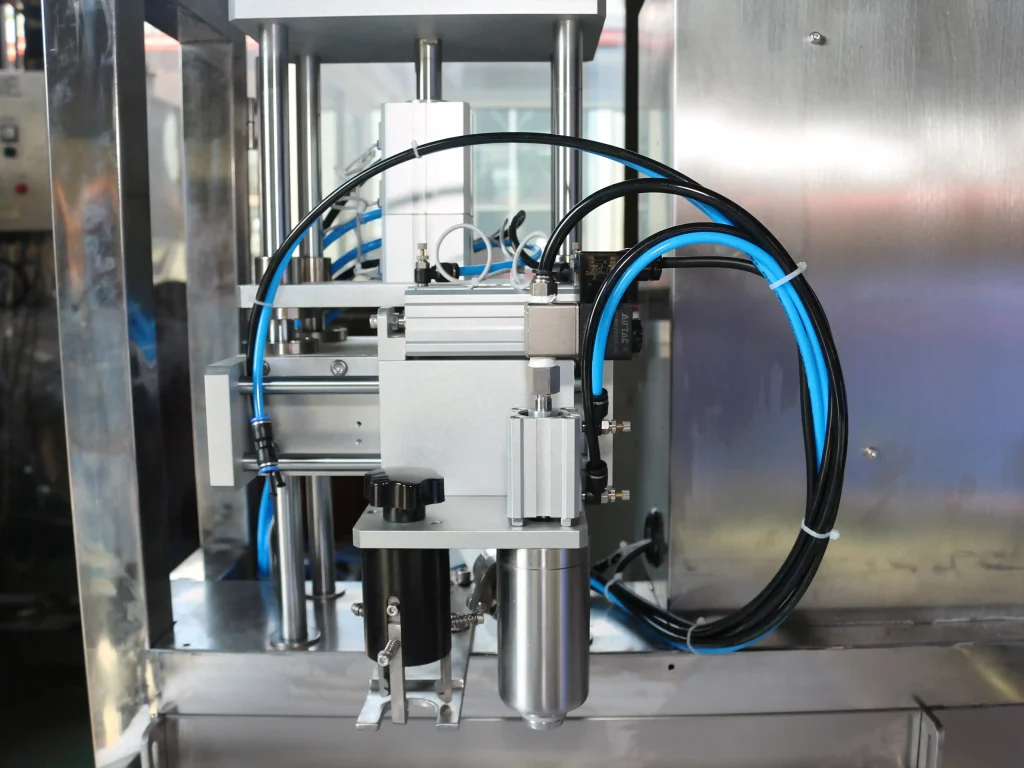
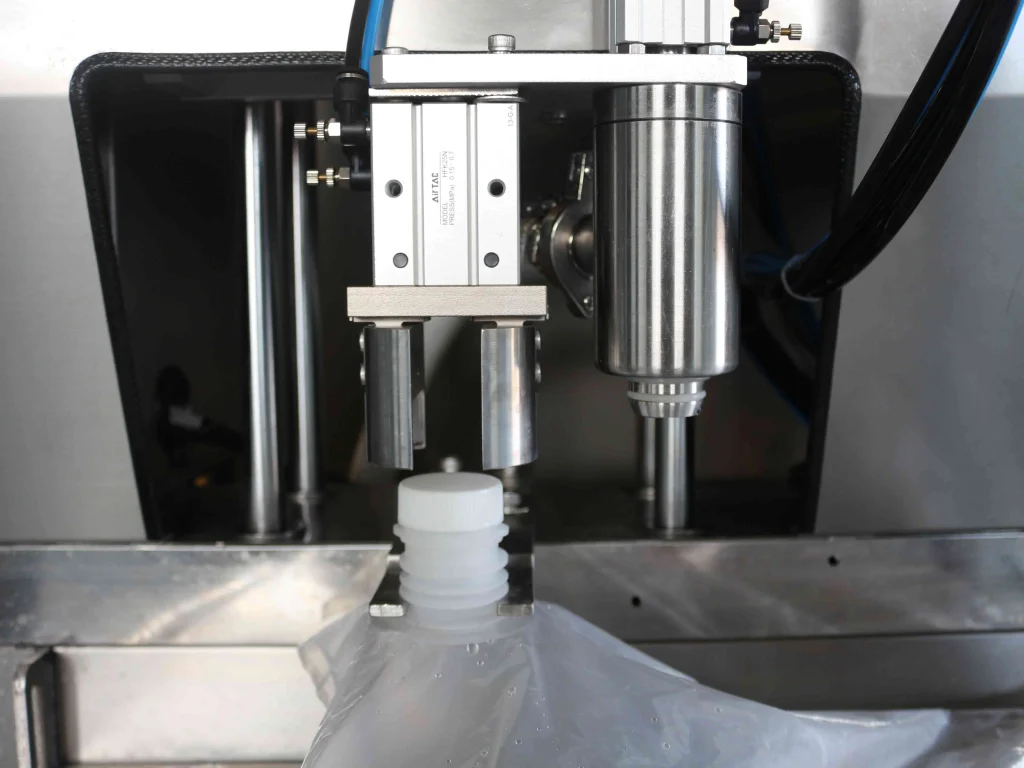
A full-automatic filler handles the entire cycle without operator intervention for each bag. Depending on configuration, the machine automatically picks and places bags, opens the spout, fills, injects nitrogen if required, and closes the cap. The operator’s role shifts from manual handling to monitoring and replenishing bag and box supplies.
The primary advantage of full-automatic bag-in-box packaging is consistency. Automated systems repeat the same fill cycle thousands of times with minimal variation, which matters for fill accuracy and shelf-life reliability. For products sensitive to oxygen pickup—such as beer, wine, and certain juices—automated control of vacuum and gas flushing reduces the risk of human error.
Full-automatic lines are also the better fit when daily volumes are stable and high. A single-head automatic filler might reach 110 to 120 bags per hour for 20-liter bags, and multi-head or higher-speed models can push output further. The higher capital cost is offset by reduced labor per bag and the ability to run longer shifts without fatigue-related slowdowns.
Matching Machines to Your Production Reality
The decision between semi-automatic and full-automatic bag-in-box packaging machines should start with an honest assessment of daily volume and product mix. If you produce small batches of several different products, a semi-automatic line gives you flexibility to switch between bag-in-box packaging runs without lengthy setup. If you run one or two products at steady volume, an automatic line pays back through labor savings and repeatability.
Product sensitivity is the second factor. Oxygen-sensitive beverages benefit from automated vacuum and gas-flush sequences that depend less on operator attention. For less sensitive products, the manual controls of a semi-automatic system may be entirely adequate.
The table below summarizes the main differences to frame your bag-in-box packaging decision.
| Feature | Semi-Automatic | Full-Automatic |
|---|---|---|
| Operator involvement | High—each bag placed and removed manually | Low—machine handles the full cycle |
| Typical speed (20L bag) | 80–100 bags/hour | 110–120+ bags/hour |
| Initial investment | Lower | Higher |
| Best fit | Small to medium volume, mixed products | Stable volume, single or few products |
| Changeover flexibility | High | Moderate |
| Labor cost per bag | Higher | Lower |
Why SKE Focuses on Practical Solutions
SKE builds filling equipment for beverage producers who need reliable performance without unnecessary complexity. The company’s bag-in-box packaging fillers are designed around practical production realities: accurate flow-meter filling, stainless-steel construction for hygiene, and controls operators can learn quickly.
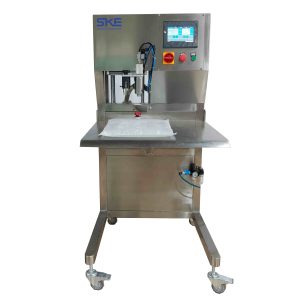
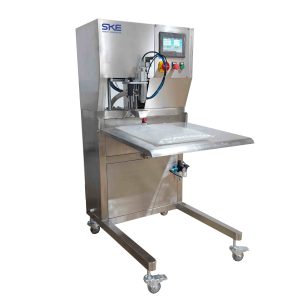
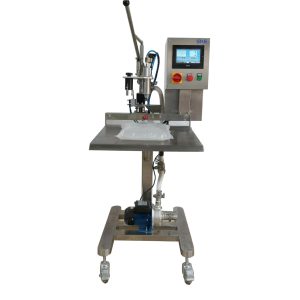
Both semi-automatic and full-automatic models are available to match different production scales. The semi-automatic single-head unit delivers filling precision of around ±1% and handles bags from 1 liter to 30 liters, making it suitable for craft producers and co-packers with varied orders. The full-automatic version increases output while maintaining the same focus on fill accuracy and product protection.
SKE’s background in brewery and beverage equipment means the fillers are built with an understanding of how liquids behave—foaming tendencies, viscosity changes with temperature, and the importance of minimizing oxygen pickup. For producers extending their bag-in-box packaging range beyond bottles and kegs, this experience translates into equipment that integrates smoothly into existing workflows.
Frequently Asked Questions
1.What products can be filled into bag-in-box packaging?
Bag-in-box packaging works well for low- to medium-viscosity liquids. Common products include juices, wine, liquid dairy, syrups, and beer. Products with large particles may require special filling heads or may not be suitable. Always test your specific product with the equipment supplier before committing to a configuration.
2.How long does this packaging keep product fresh?
Shelf life depends on the product, the barrier properties of the bag film, and the filling process. With proper vacuum and nitrogen flushing, many beverages achieve several weeks of freshness after opening because the bag collapses and limits air contact. Unopened shelf life is typically determined by the product itself and the sterilization or pasteurization applied before filling.
3.Can I start with a semi-automatic machine and upgrade later?
Yes. Many producers begin with a semi-automatic filler to establish their line and learn the market. As volume grows, they add a second head or move to a full-automatic model. SKE designs its bag-in-box packaging equipment with this progression in mind, so the early investment does not become wasted when production scales up.
4.What is the maintenance requirement?
Daily cleaning of product-contact parts is essential, especially for dairy and juice applications. Semi-automatic and full-automatic fillers both benefit from routine inspection of seals, spout grippers, and flow meters. SKE provides documentation and remote support to help operators maintain consistent performance over the equipment’s life.
5.How do I choose between single-head and dual-head configurations?
Single-head is the standard starting point and suits most small to medium operations. Dual-head doubles output with a modest increase in footprint and cost. If your volume projections suggest you will outgrow a single-head within a year or two, the dual-head or automatic bag-in-box packaging option may be the more economical long-term choice.
Conclusion
Bag-in-box packaging offers beverage producers a practical way to reduce packaging weight, extend product freshness after opening, and differentiate their offerings. The filling equipment you choose shapes how efficiently you capture those benefits. Semi-automatic systems provide accessible entry and flexibility for varied production, while full-automatic lines deliver speed and consistency for stable, higher-volume operations.
SKE approaches bag-in-box packaging with the same engineering focus it applies to brewing and beverage processing equipment: accurate, durable, and built around the operator’s needs. Whether you are exploring this format for the first time or expanding an existing line, matching the automation level to your actual production pattern is the surest path to a return on investment.
- Facebook: SKE Equipment Facebook
- Email: info@skeequipment.com
Fill out the contact form below for customized solutions. We fully support all your production equipment demands for breweries and beverage plants.