
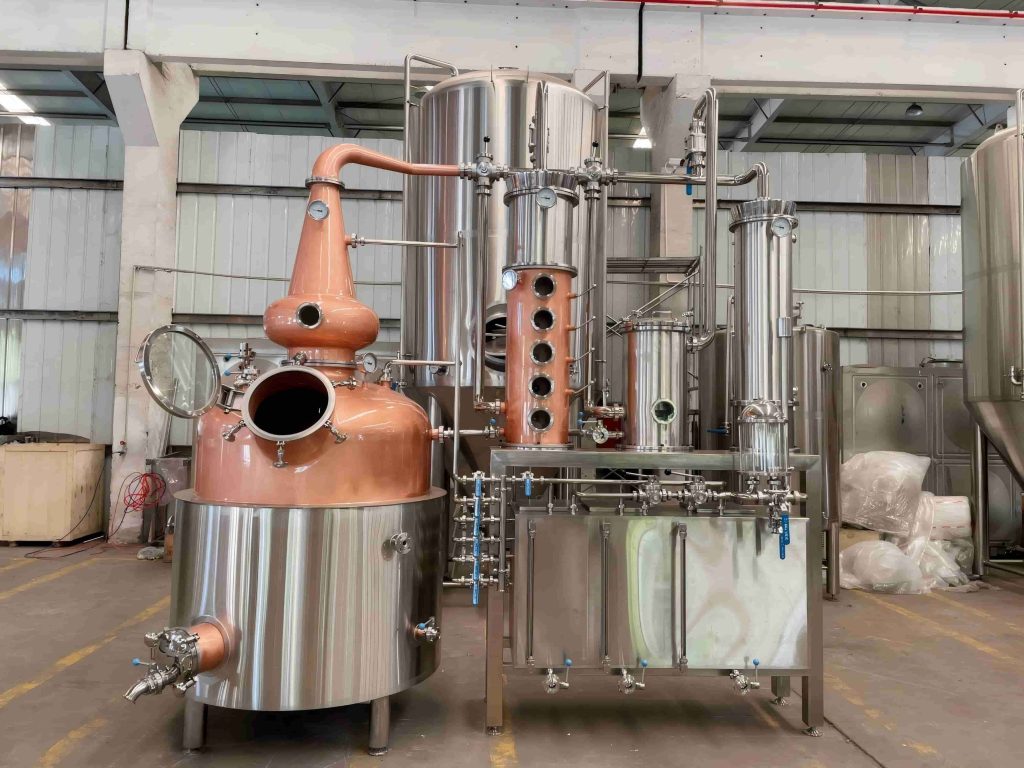
Industrial and commercial breweries are increasingly turning to distillery systems as a way to grow. These systems let a brewery turn surplus beer or waste streams into spirits, adding a new product line without building a separate facility from scratch. For any brewery considering this step, understanding the right beer distillery equipment is essential.
At SKE, we have spent over 20 years building brewing and distillation solutions for industrial and commercial producers. This guide explains how distillery systems work with beer, what equipment you actually need, and how to choose a beer distillery kit that fits your production goals. It also covers the full process—from raw material handling to aging—along with capacity, materials, controls, efficiency, and licensing.
What Makes Beer Distillation Different?
Beer and spirits share a common beginning: fermented liquid. However, the liquid that enters a distillery system from a commercial brewery is different from a traditional distiller’s wash. Beer typically contains 4–8% alcohol, along with hops, residual sugars, and proteins. These components influence how distillation must be handled at industrial scale.
Hops are the biggest challenge. Volatile hop oils can carry harsh, vegetal notes into the distillate if temperatures run too high. Traditional pot distillation can degrade these delicate compounds, leaving a spirit that tastes nothing like the beer it came from. For this reason, modern distillery systems designed for beer often include options for lower-temperature operation or vacuum assistance to preserve aromatic qualities.
Another factor is volume. Commercial breweries often have large quantities of beer that cannot be sold—whether due to expiration, off-flavors, or overproduction. A properly sized system lets you process these volumes efficiently rather than treating them as waste. Some breweries also distill beer intentionally, using it as a base for whiskey-style spirits or experimental releases. In both cases, the goal is the same: consistent output with minimal loss.
Core Components of a Beer Distillery System
A complete distillery system for beer is more than just a still. It is an integrated set of vessels and controls that move liquid through heating, vaporization, condensation, and collection. The main components include:
The Pot or Column Still. The heart of any system. Pot stills are preferred for flavor-rich spirits, while column stills offer higher purity and throughput. Many modern setups combine both, using a pot for initial distillation and a column section for rectification.
The Heat Source. Steam jackets and electric elements are the most common options. Steam provides gentler, more even heating—important when working with beer that contains proteins prone to scorching. Direct electric heating works well for smaller batches but requires careful agitation.
The Condenser. This converts vapor back into liquid. Copper is the traditional material because it reacts with sulfur compounds, removing off-flavors. Stainless steel is easier to clean and more durable, but it lacks copper’s catalytic benefits. Many high-quality systems use copper in the vapor path and stainless steel elsewhere.
Controls and Instrumentation. Temperature control is critical when distilling beer. A system with PID controllers and digital temperature readouts allows operators to make precise cuts, separating desirable hearts from harsh heads and tails.
For industrial and commercial breweries adding distillation alongside existing operations, SKE offers systems from 1HL craft scale to 50HL commercial capacity. This range allows a small taproom brewery and a regional production facility to use the same fundamental technology.
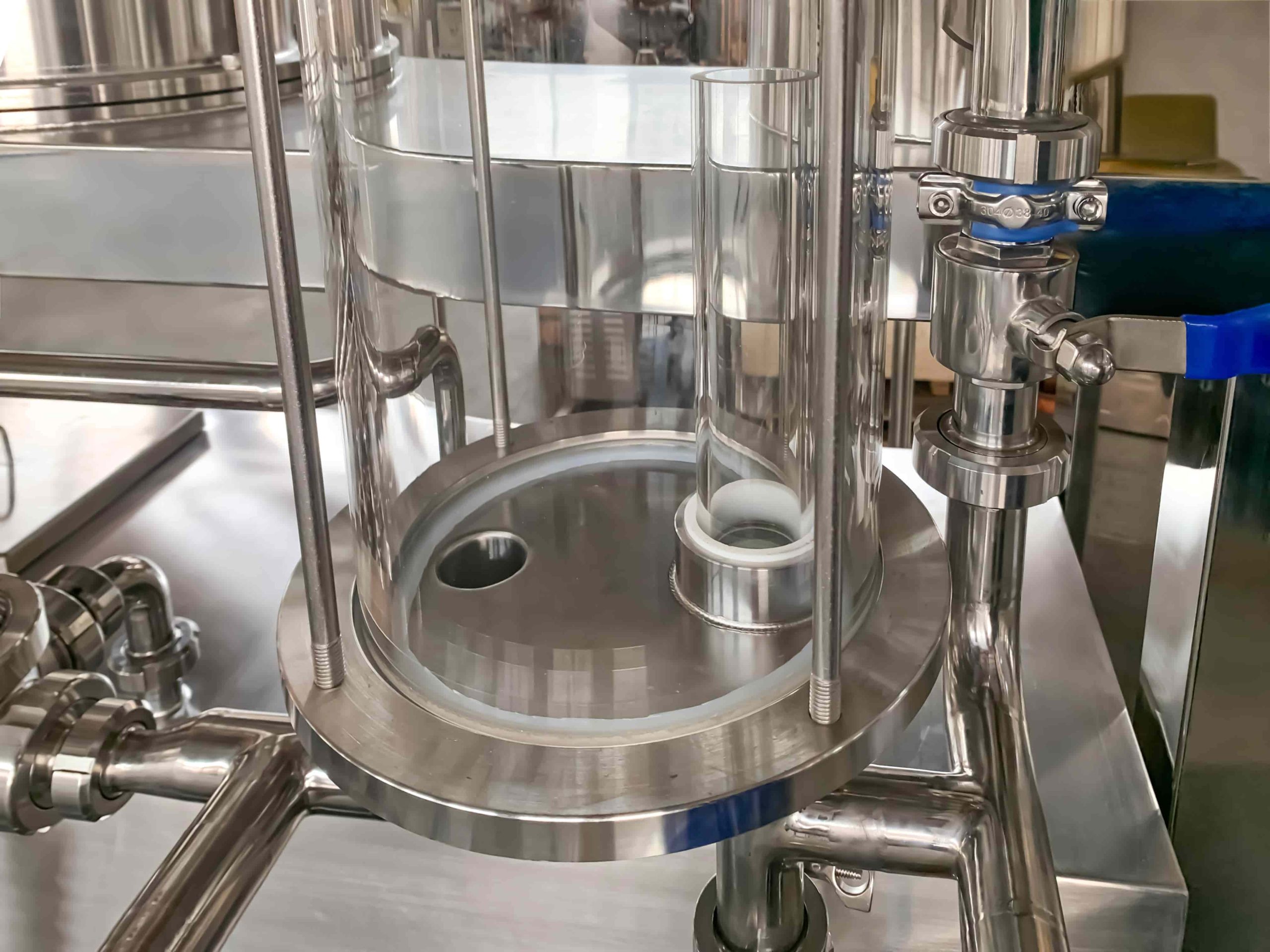
A Complete Distillery System: From Raw Material to Aging
A full distillery system is not a single machine but a production line. Each stage connects to the next, and the design of one stage affects the performance of the others. Below is how a complete system covers the entire process, from grain to aged spirit.
Stage 1: Raw Material Handling. Grain is received, weighed, and cleaned. Milling equipment grinds the grain to the right particle size for efficient sugar extraction. Storage silos and conveyors keep material dry and move it to the next stage without manual labor.
Stage 2: Mashing. Milled grain is mixed with hot water in a mash tun. Enzymes convert starch into fermentable sugar. Temperature control is critical here—different rest temperatures activate different enzymes. A well-designed mash system includes agitation and precise heating.
Stage 3: Fermentation. The sweet liquid, now called wort, is cooled and transferred to fermenters. Yeast converts sugar into alcohol. Fermentation tanks with temperature jackets keep the process stable, which matters for consistent flavor and yield.
Stage 4: Initial Distillation. The fermented liquid, or wash, enters the pot still. Heat separates alcohol from water and solids. The first run produces a low-strength distillate called low wines. This stage removes most of the water and heavy compounds.
Stage 5: Rectification. Low wines pass through a column still or a second pot run. Here, operators make cuts—separating heads, hearts, and tails. The hearts are the clean, desirable spirit. A column with multiple plates improves separation and purity.
Stage 6: Storage and Aging. Fresh spirit is diluted to barrel strength and filled into oak casks. Time in the barrel adds color, flavor, and smoothness. A complete system includes tank farms, barrel storage, and bottling equipment to finish the process.
SKE designs each stage to work as one integrated line. Breweries can start with part of the line—for example, fermentation and distillation—and add mashing or aging capacity later as production grows.
Understanding Beer Distillery Kits
The term beer distillery kit can mean very different things depending on who is selling it. At the small end, kits are sold for home or pilot use—often simple stainless pots with copper coils, thermometers, and basic fittings. These entry-level units typically handle 20–70 liters and cost a few hundred dollars. They are useful for testing recipes but are not built for industrial or commercial production.
Commercial beer distillery kits from manufacturers like SKE are turnkey packages that include the still, condenser, collection vessel, piping, and control panel. These kits are assembled and tested before shipping, reducing installation time on site. They also include safety features—pressure relief valves, level sensors, and emergency stops—that home kits lack.
| Feature | Entry-Level Kit | Commercial Kit (SKE) |
|---|---|---|
| Capacity | 20–70 L | 100 L – 5,000+ L |
| Material | SUS201 or thin 304 | Heavy-gauge 304/316L + copper |
| Heating | Electric element | Steam jacket or electric with agitation |
| Controls | Analog thermometer | PID temperature control, digital display |
| Safety | Basic relief valve | Full pressure relief, level sensors, E-stop |
| Cleaning | Manual disassembly | CIP (Clean-In-Place) compatible |
The key difference is not just size but engineering intent. A commercial kit is designed for repeated daily use, consistent output, and regulatory compliance. For a brewery planning to sell spirits, the investment in proper beer distillery equipment pays back through reliability and product quality.

Matching Distillery Systems to Your Brewery’s Needs
Before selecting equipment, industrial and commercial breweries should answer three practical questions.
- First, what volume of beer do you need to process per week? A brewery with 200 liters of waste beer weekly has very different needs from one with 2,000 liters.
- Second, what spirit style are you targeting? Whiskey-style spirits benefit from copper pot stills and longer distillation runs. Clear spirits like vodka or gin require column rectification and possibly carbon filtration.
- Third, what is your available space and utility capacity? Distillery systems require steam, cooling water, and ventilation. A system that fits your budget but not your building is not a good purchase. Power supply, floor drainage, and ceiling height all matter more than most buyers expect.
SKE works with each client to map these requirements before recommending a configuration. For breweries uncertain about scale, starting with a pilot system and scaling up later is a common approach. The pilot unit can remain useful for recipe development even after a larger system is installed.
Energy and Efficiency Considerations
Distillation is energy-intensive. Heating, boiling, and cooling all consume resources, and commercial breweries already carry significant utility costs. Choosing an efficient system reduces operating expenses over time.
Modern distillery systems often include heat recovery features. The condenser generates hot water that can be redirected to the next batch or to cleaning circuits. Steam systems with well-insulated jackets lose less heat than uninsulated electric setups. Automated controls also help by preventing overheating and reducing waste.
For breweries processing waste beer, efficiency has a second meaning. Instead of paying for disposal, the beer becomes a raw material. The value of the finished spirit often exceeds the cost of processing, especially when the system is sized correctly and runs at steady utilization.

Frequently Asked Questions
1.Can I use my existing brewery equipment for distillation?
Fermenters can sometimes be reused for wash storage, but the still itself is specialized equipment. Brewery kettles are not designed for vapor containment or distillation temperature control. You need a dedicated distillery system.
2.What alcohol strength can I expect from beer distillation?
A single pot distillation of beer typically yields 35–45% ABV. Double distillation or a column system can reach 60–90% ABV depending on the number of plates and reflux ratio.
3.How long does a distillation run take?
For a 500-liter system processing beer at 6% ABV, expect 4–6 hours including heating, distillation, and cool-down. Larger systems scale up in volume but not proportionally in time.
4.Do I need a license to distill beer into spirits?
Yes. In nearly every jurisdiction, producing spirits requires a distillery license separate from a brewery license. Requirements vary widely, so consult local authorities before purchasing equipment.
5.How much space does a distillery system require?
A small 100–200 liter system can fit in a compact room with adequate ventilation. Commercial systems of 1,000 liters or more need dedicated floor space, steam supply, cooling water, and safe access for cleaning and maintenance.
6.Why choose SKE for beer distillery equipment?
SKE has over two decades of experience in both brewing and distillation engineering. We design systems that address the specific challenges of beer distillation—hop preservation, protein management, and energy efficiency. Our equipment is built for daily commercial use, and we provide installation support, training, and ongoing service.
Conclusion
Adding distillery systems to an industrial or commercial brewery is a significant step, but it is one that more producers are taking to reduce waste and create new revenue. The right beer distillery equipment makes the difference between a frustrating experiment and a reliable production line. Whether you begin with a small beer distillery kit or invest in a full commercial system, understanding the components and their functions will help you make a decision you can grow with.
SKE builds distillation solutions for breweries that demand consistency, safety, and flavor quality. If you are evaluating options for your industrial or commercial facility, our team can help you identify the right configuration for your volume and product goals.
- Facebook: SKE Equipment Facebook
- Email: info@skeequipment.com
Fill out the contact form below for customized solutions. We fully support all your production equipment demands for breweries and beverage plants.